Results by title
4741 books match the query 'Religion' and 371 start with a
A Guide to John Henry Newman
His Life and ThoughtJuan R. Velez
Catholic University of America Press, 2022

A Historian and His World
A Life of Christopher Dawson, 1889-1970Christina Scott
Catholic University of America Press, 2023
A Historical Archaeology of Jerusalem
Bronze and Iron AgesYuval Gadot
SBL Press, 2026
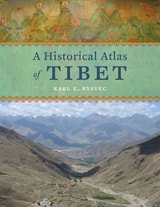
A Historical Atlas of Tibet
Karl E. Ryavec
University of Chicago Press, 2015
Cradled among the world’s highest mountains—and sheltering one of its most devout religious communities—Tibet is, for many of us, an ultimate destination, a place that touches the heavens, a place only barely in our world, at its very end. In recent decades Western fascination with Tibet has soared, from the rise of Tibetan studies in academia to the rock concerts aimed at supporting its independence to the simple fact that most of us—far from any base camp—know exactly what a sherpa is. And yet any sustained look into Tibet as a place, any attempt to find one’s way around its high plateaus and through its deep history, will yield this surprising fact: we have barely mapped it. With this atlas, Karl E. Ryavec rights that wrong, sweeping aside the image of Tibet as Shangri-La and putting in its place a comprehensive vision of the region as it really is, a civilization in its own right. And the results are absolutely stunning.
The product of twelve years of research and eight more of mapmaking, A Historical Atlas of Tibet documents cultural and religious sites across the Tibetan Plateau and its bordering regions from the Paleolithic and Neolithic times all the way up to today. It ranges through the five main periods in Tibetan history, offering introductory maps of each followed by details of western, central, and eastern regions. It beautifully visualizes the history of Tibetan Buddhism, tracing its spread throughout Asia, with thousands of temples mapped, both within Tibet and across North China and Mongolia, all the way to Beijing. There are maps of major polities and their territorial administrations, as well as of the kingdoms of Guge and Purang in western Tibet, and of Derge and Nangchen in Kham. There are town plans of Lhasa and maps that focus on history and language, on population, natural resources, and contemporary politics.
Extraordinarily comprehensive and absolutely gorgeous, this overdue volume will be a cornerstone in cartography, Asian studies, Buddhist studies, and in the libraries or on the coffee tables of anyone who has ever felt the draw of the landscapes, people, and cultures of the highest place on Earth.

A History of German Jewish Bible Translation
Abigail Gillman
University of Chicago Press, 2018
This book is the first in English to offer a close analysis of German Jewish translations as part of a larger cultural project. Looking at four distinct waves of translations, Abigail Gillman juxtaposes translations within each that sought to achieve similar goals through differing means. As she details the history of successive translations, we gain new insight into the opportunities and problems the Bible posed for different generations and gain a new perspective on modern German Jewish history.

A History of Pentateuchal Traditions
Martin Noth
SBL Press, 1981
Now Available from Duke University Press
Originally published in German in 1948, Noth’s application of a traditio-historical approach has made this book required reading for students and scholars
A History of Religious Ideas, Volume 1
From the Stone Age to the Eleusinian MysteriesMircea Eliade
University of Chicago Press, 1978
A House Divided
Orthodoxy and Schism in Nineteenth-Century Central European JewryJacob Katz
University Press of New England, 2005
A Jewish Word or Two
Charles Reznikoff's ModernismJoel Bettridge
University of Iowa Press, 2026
The son of Jewish immigrants from Russia to New York, Charles Reznikoff found himself at the intersection of modernist innovation, ethnic otherness, and economic hardship. He both appreciated the modernists’ formal radicalism and critiqued their political failings—a task he accomplished by writing short lyric poems depicting the hardship and charm of urban life, as well as long poems presenting histories of horrific violence, from factory accidents to the Holocaust. But despite his contributions to American poetry, Reznikoff has remained a somewhat secondary figure, in part because his work—at times—is painful to read.
A Jewish Word or Two recasts Reznikoff ’s poetry as pleasurable and masterful even when disturbing. In their humor, their encounters with Jewish history, holiness, and identity, as well as their use of drama, horror, joy, and beauty, Reznikoff ’s poems help us celebrate what is simultaneously strange, surprising, lovely, and uncanny in our everyday lives.
A Kingdom Transformed
Early Mormonism and the Modern LDS Church, New EditionGordon Shepherd and Gary Shepherd
University of Utah Press, 2015
The first edition showed how early twentieth century LDS leaders were fairly liberal in mainstreaming church doctrines and social teaching, but by mid-twentieth century, as the church became more stable, accepted, and successful, church authorities reversed several earlier modifications and began emphasizing a stricter, more conservative theology that coincided with an increasingly conservative political orientation. The new book adds current issues of concern, such as the role of women in the church and international growth versus member retention. It also introduces a new conceptual framework for interpreting findings.
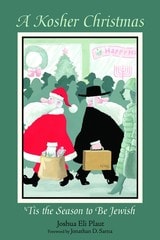
A Kosher Christmas
'Tis the Season to be JewishJoshua Eli Plaut
Rutgers University Press, 2012
Christmas is not everybody’s favorite holiday. Historically, Jews in America, whether participating in or refraining from recognizing Christmas, have devised a multitude of unique strategies to respond to the holiday season. Their response is a mixed one: do we participate, try to ignore the holiday entirely, or create our own traditions and make the season an enjoyable time? This book, the first on the subject of Jews and Christmas in the United States, portrays how Jews are shaping the public and private character of Christmas by transforming December into a joyous holiday season belonging to all Americans.
Creative and innovative in approaching the holiday season, these responses range from composing America’s most beloved Christmas songs, transforming Hanukkah into the Jewish Christmas, creating a national Jewish tradition of patronizing Chinese restaurants and comedy shows on Christmas Eve, volunteering at shelters and soup kitchens on Christmas Day, dressing up as Santa Claus to spread good cheer, campaigning to institute Hanukkah postal stamps, and blending holiday traditions into an interfaith hybrid celebration called “Chrismukkah” or creating a secularized holiday such as Festivus.
Through these venerated traditions and alternative Christmastime rituals, Jews publicly assert and proudly proclaim their Jewish and American identities to fashion a universally shared message of joy and hope for the holiday season.
See also: http://www.akosherchristmas.org
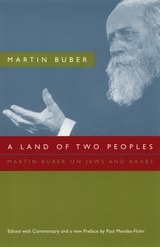
A Land of Two Peoples
Martin Buber on Jews and ArabsMartin Buber
University of Chicago Press, 2005
Collected in ALand of Two Peoples are the private and open letters, addresses, and essays in which Buber advocated binationalism as a solution to the conflict in the Middle East. A committed Zionist, Buber steadfastly articulated the moral necessity for reconciliation and accommodation between the Arabs and Jews. From the Balfour Declaration of November 1917 to his death in 1965, he campaigned passionately for a "one state solution.
With the Middle East embroiled in religious and ethnic chaos, A Land of Two Peoples remains as relevant today as it was when it was first published more than twenty years ago. This timely reprint, which includes a new preface by Paul Mendes-Flohr, offers context and depth to current affairs and will be welcomed by those interested in Middle Eastern studies and political theory.
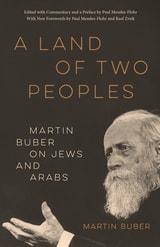
A Land of Two Peoples
Martin Buber on Jews and ArabsMartin Buber
University of Chicago Press, 2025
The theologian and philosopher Martin Buber (1878–1965) was committed to radical socioeconomic reconstruction in pursuit of international peace. His voluminous writings on Arab-Jewish relations in Palestine interweave his religious and philosophical teachings with his politics, each essential to Buber’s vision of democratic and religious life.
A Land of Two Peoples collects the letters, talks, and essays in which Buber advocated for a binationalism that reconciled Arabs and Jews as a solution to the conflict in the Middle East. As relevant today as when it was first published nearly fifty years ago, this edition of A Land of Two Peoples includes two forewords from the preeminent Jewish and Palestinian scholars Paul Mendes-Flohr and Raef Zreik.
A Latin-Greek Index of the Vulgate New Testament
Theodore A. Bergren
SBL Press, 2003
A Learned Faith
Principles, Problems, and Ends of Catholic Theology: Essays in Honor of Reinhard HuetterThomas Pfau
Catholic University of America Press, 2026
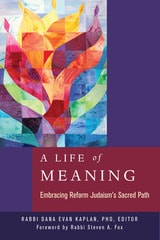
A Life of Meaning
Embracing Reform Judaism's Sacred PathRabbi Dana Evan Kaplan, PHD
Central Conference of American Rabbis, 2018
A Memorandum for the President of the Royal Audiencia and Chancery Court of the City and Kingdom of Granada
Francisco Núñez Muley
University of Chicago Press, 2007
Now available in its first English translation, Núñez Muley’s account is an invaluable example of how Spain’s former Muslims made active use of the written word to challenge and openly resist the progressively intolerant policies of the Spanish Crown. Timely and resonant—given current debates concerning Islam, minorities, and cultural and linguistic assimilation—this edition provides scholars in a range of fields with a vivid and early example of resistance in the face of oppression.
A Menorah for Athena
Charles Reznikoff and the Jewish Dilemmas of Objectivist PoetryStephen Fredman
University of Chicago Press, 2001
Stephen Fredman illuminates the relationship of Jewish intellectuals to modernity through a close look at Reznikoff's life and writing. He shows that when we regard the Objectivists as modern Jewish poets, we can see more clearly their distinctiveness as modernists and the reasons for their profound impact upon later poets, such as Allen Ginsberg and Charles Bernstein. Fredman also argues that to understand Reznikoff's work more completely, we must see it in the context of early, nonsectarian attempts to make the study of Jewish culture a force in the construction of a more pluralistic society. According to Fredman, then, the indelible images in Reznikoff's poetry open a window onto the vexed but ultimately successful entry of Jewish immigrants and their children into the mainstream of American intellectual life.
A Mieke Bal Reader
Mieke Bal
University of Chicago Press, 2006
This Reader is organized into four parts, reflecting the fields that Bal has most profoundly influenced: literary study, interdisciplinary methodology, visual analysis, and postmodern theology. The essays include some of Bal’s most characteristic and provocative work, capturing her at the top of her form. “Narration and Focalization,” for example, provides the groundwork for Bal’s ideas on narrative, while “Reading Art?” clearly outlines her concept of reading images. “Religious Canon and Literary Identity” reenvisions Bal’s own work at the intersection of theology and cultural analysis, while “Enfolding Feminism” argues for a new feminist rallying cry that is not a position but a metaphor. More than a dozen other essays round out the four sections, each of which is interdisciplinary in its own right: the section devoted to literature, for instance, ranges widely over psychoanalysis, theology, photography, and even autobiography.
A Mieke Bal Reader is the product of a capacious intellect and a sustained commitment to critical thinking. It will prove to be instructive, maddening, and groundbreaking—in short, all the hallmarks of intellectual inquiry at its best.
A Ministry of Presence
Chaplaincy, Spiritual Care, and the LawWinnifred Fallers Sullivan
University of Chicago Press, 2014
In A Ministry of Presence, Winnifred Fallers Sullivan explores how chaplaincy works in the United States—and in particular how it sits uneasily at the intersection of law and religion, spiritual care, and government regulation. Responsible for ministering to the wandering souls of the globalized economy, the chaplain works with a clientele often unmarked by a specific religious identity, and does so on behalf of a secular institution, like a hospital. Sullivan's examination of the sometimes heroic but often deeply ambiguous work yields fascinating insights into contemporary spiritual life, the politics of religious freedom, and the never-ending negotiation of religion's place in American institutional life.
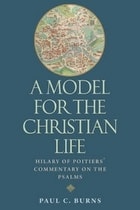
A Model for the Christian Life
Hilary of Poitier's Commentary on the PsalmsPaul C. Burns
Catholic University of America Press, 2012
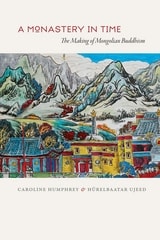
A Monastery in Time
The Making of Mongolian BuddhismCaroline Humphrey and Hurelbaatar Ujeed
University of Chicago Press, 2013
A Most Reliable Witness
Essays in Honor of Ross Shepard KraemerSusan Ashbrook Harvey
SBL Press, 2015
Celebrate a trailblazer in the areas of women and re
Celebrate a trailblazer in the areas of women and religion, Jews and Judaism, and earliest Christianity in the ancient Mediterranean
Ross Kraemer is Professor Emerita in the Department of Religious Studies at Brown University. This volume of essays, conceived and produced by students, colleagues, and friends bears witness to the breadth of her own scholarly interests. Contributors include Theodore A. Bergren, Debra Bucher, Lynn Cohick, Mary Rose D’Angelo, Nathaniel P. DesRosiers, Robert Doran, Jennifer Eyl, Paula Fredriksen, John G. Gager, Maxine Grossman, Kim Haines-Eitzen, Susan Ashbrook Harvey, Jordan Kraemer, Robert A. Kraft, Shira L. Lander, Amy-Jill Levine, Susan Marks, E. Ann Matter, Renee Levine Melammed, Susan Niditch, Elaine Pagels, Adele Reinhartz, Jordan Rosenblum, Sarah Schwarz, Karen B. Stern, Stanley K. Stowers, Daniel Ullucci, Arthur Urbano, Heidi Wendt, and Benjamin G. Wright.Features:
- Articles that examine both ancient and modern texts in cross-cultural and trans-historical perspective
- Twenty-eight original essays on ancient Judaism, Christianity, and women in the Greco-Roman world
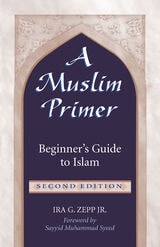
A Muslim Primer
A Beginner's Guide to IslamIra G. Zepp
University of Arkansas Press, 2000
A Muslim Primer covers the basic beliefs of Islam and provides an informative source for both lay and professional readers. First published in 1992, it has proven to be a valuable handbook for all attempting to better understand the tenets of the religion of a major portion of the world’s population. The reader is introduced to the authority of the Quran, the prophethood of Muhammad, the Wisdom of the Law, the Five Pillars of Islam, and to other fundamental principles of the religion. Distinctions are made between Sunni and Shiite traditions and the Sufi mystical dimension of Islam.
Well organized, visually appealing, and accurate, A Muslim Primer is useful to pre-collegiate and collegiate students of Islam, church and community study groups, and travelers, both tourists and business people.

A Nation of Behavers
Martin E. Marty
University of Chicago Press, 1980
"This is a book for everyone, more than for the scholar of American religion. . . . Its value is in breadth of vision and new interpretation."—Dean R. Hoge, Theology Today
"As a means of making sense out of the potpourri of competing groups that compose religious America today, A Nation of Behavers is a first-rate tool."—Edward A. Fiske, New York Times
A New Approach to Textual Criticism
An Introduction to the Coherence-Based Genealogical MethodTommy Wasserman
SBL Press, 2017
An essential introduction for scholars and students of New Testament Greek
With the publication of the widely used 28th edition of Nestle-Aland’s Novum Testamentum Graece and the 5th edition of the United Bible Society Greek New Testament, a computer-assisted method known as the Coherence-Based Genealogical Method (CBGM) was used for the first time to determine the most valuable witnesses and establish the initial text. This book offers the first full-length, student-friendly introduction to this important new method. After setting out the method’s history, separate chapters clarify its key concepts, including genealogical coherence, textual flow diagrams, and the global stemma. Examples from across the New Testament are used to show how the method works in practice. The result is an essential introduction that will be of interest to students, translators, commentators, and anyone else who studies the Greek New Testament.
Features
- A clear explanation of how and why the text of the Greek New Testament is changing
- Step-by-step guidance on how to use the CBGM in textual criticism
- Diagrams, illustrations, and glossary of key terms
A New England Prison Diary
Slander, Religion, and Markets in Early AmericaMartin J. Hershock
University of Michigan Press, 2012
In 1812, New Hampshire shopkeeper Timothy M. Joy abandoned his young family, fleeing the creditors who threatened to imprison him. Within days, he found himself in a Massachusetts jailhouse, charged with defamation of a prominent politician. During the months of his incarceration, Joy kept a remarkable journal that recounts his personal, anguished path toward spiritual redemption. Martin J. Hershock situates Joy's account in the context of the pugnacious politics of the early republic, giving context to a common citizen's perspective on partisanship and the fate of an unfortunate shopkeeper swept along in the transition to market capitalism.
In addition to this close-up view of an ordinary person's experience of a transformative period, Hershock reflects on his own work as a historian. In the final chapter, he discusses the value of diaries as historical sources, the choices he made in telling Joy's story, alternative interpretations of the diary, and other contexts in which he might have placed Joy's experiences. The appendix reproduces Joy's original journal so that readers can develop their own skills using a primary source.
A New Vision for Missions
William Cameron Townsend, The Wycliffe Bible Translators, and the Culture of Early Evangelical Faith Missions, 1917-1945William Lawrence Svelmoe
University of Alabama Press, 2008
A Particular Place
Urban Restructuring and Religious Ecology in a Southern ExurbEiesland, Nancy L
Rutgers University Press, 2000
A Particular Place tells the story of the dramatic changes that take place in the religious lives of a community faced with urban restructuring—in this case, Dacula, Georgia, a once-quiet small town on the outskirts of Atlanta. The demographics of Dacula were changed dramatically by the population inflow, service sector development, and housing expansion brought on by the growing metropolis.
Nancy L. Eiesland provides a qualitative study of how the local religious congregations altered themselves, their relations with one another, and—over time—their community in light of this disruption to their social order. Eiesland accounts for these changes by examining the lives of area newcomers and long-time residents, discussing the responses of locals to the emergence of a megachurch in their community, investigating the wrenching processes of congregational birth and deaths, and studying responses to community conflicts.Applying population ecology approaches to the study of religious organizations within their local contexts, A Particular Place addresses together two types of restructuring that are often mutually implicated—urban and religious restructuring. This book demonstrates all that can be learned from studious attention to a particular place.
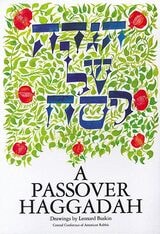
A Passover Haggadah
Rabbi Herbert Bronstein
Central Conference of American Rabbis, 0
This classic Haggadah has sold over 1 million copies since its introduction. Illustrated with twenty-three original full-color watercolors by Leonard Baskin and written in contemporary, gender-inclusive language, it contains a complete Passover home service, an extensive song section, and supplemental readings and meditations from which participants can choose during the course of the Seder. All optional selections are printed in color.
A Passover Haggadah - Russian-Hebrew Edition
Rabbi Herbert Bronstein
Central Conference of American Rabbis, 1982
A Peaceful Conquest
Woodrow Wilson, Religion, and the New World OrderCara Lea Burnidge
University of Chicago Press, 2016
With A Peaceful Conquest, Cara Lea Burnidge presents the most detailed analysis yet of how Wilson’s religious beliefs affected his vision of American foreign policy, with repercussions that lasted into the Cold War and beyond. Framing Wilson’s intellectual development in relationship to the national religious landscape, and paying greater attention to the role of religion than in previous scholarship, Burnidge shows how Wilson’s blend of Southern evangelicalism and social Christianity became a central part of how America saw itself in the world, influencing seemingly secular policy decisions in subtle, lasting ways. Ultimately, Burnidge makes a case for Wilson’s religiosity as one of the key drivers of the emergence of the public conception of America’s unique, indispensable role in international relations.
As the presidential election cycle once again raises questions of America’s place in the world, A Peaceful Conquest offers a fascinating excavation of its little-known roots.
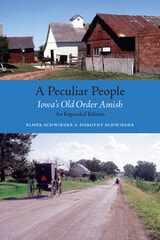
A Peculiar People
Iowa's Old Order AmishElmer Schwieder
University of Iowa Press, 1975
A Peculiar People explores the origin and growth of the Old Order Amish in Iowa, their religious practices, economic organization, family life, the formation of new communities, and the vital issue of education. Included also are appendixes giving the 1967 “Act Relating to Compulsory School Attendance and Educational Standards”; a sample “Church Organization Financial Agreement,” demonstrating the group’s unusual but advantageous mutual financial system; and the 1632 Dortrecht Confession of Faith, whose eighteen articles cover all the basic religious tenets of the Old Order Amish.
Thomas Morain’s new essay describes external and internal issues for the Iowa Amish from the 1970s to today. The growth of utopian Amish communities across the nation, changes in occupation (although The Amish Directory still lists buggy shop operators, wheelwrights, and one lone horse dentist), the current state of education and health care, and the conscious balance between modern and traditional ways are reflected in an essay that describes how the Old Order dedication to Gelassenheit—the yielding of self to the interests of the larger community—has served its members well into the twenty-first century.
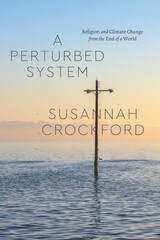
A Perturbed System
Religion and Climate Change from the End of a WorldSusannah Crockford
University of Chicago Press, 2026
Our ecological system is disturbed, and with it, every other system we’ve built to inhabit it. We do not face inevitable destruction, yet many of us cannot conceive of climate change as anything but the end of the world, an apocalypse with all its biblical trappings. Why?
In A Perturbed System, anthropologist Susannah Crockford argues that we must understand the climate emergency as a spiritual crisis, a result of Christian colonialism that we (religious or not) still struggle to describe without religious language. Climate discourse in the United States and northern Europe, Crockford shows, is framed by the same theological motifs that drove extraction, including ideas about prophecy, mediation, sacrifice, original sin, cult, messiah, and apocalypse. By listening to people on the edge of the crisis, A Perturbed System reveals a world in transition, what happens when worlds end—ecologically, socially, politically, and personally—and how we might live through these endings together.
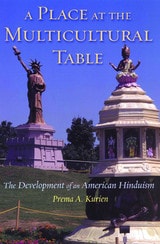
A Place at the Multicultural Table
The Development of an American HinduismKurien, Prema
Rutgers University Press, 2007
In A Place at the Multicultural Table, Prema A. Kurien shows how various Hindu American organizations--religious, cultural, and political--are attempting to answer the puzzling questions of identity outside their homeland. Drawing on the experiences of both immigrant and American-born Hindu Americans, Kurien demonstrates how religious ideas and practices are being imported, exported, and reshaped in the process. The result of this transnational movement is an American Hinduism--an organized, politicized, and standardized version of that which is found in India.
This first in-depth look at Hinduism in the United States and the Hindu Indian American community helps readers to understand the private devotions, practices, and beliefs of Hindu Indian Americans as well as their political mobilization and activism. It explains the differences between immigrant and American-born Hindu Americans, how both understand their religion and their identity, and it emphasizes the importance of the social and cultural context of the United States in influencing the development of an American Hinduism.
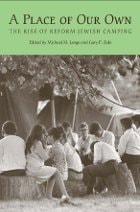
A Place of Our Own
The Rise of Reform Jewish CampingEdited by Michael M. Lorge and Gary P. Zola
University of Alabama Press, 2006
The history of educational summer camps in American Reform Judaism. Reform Judaism is not the only religious community in America to make the summer camp experience a vital part of a faith community's effort to impart its values and beliefs to its adolescents, but perhaps no group relied more on summer camp as an adjunct to home and community for this purpose. Summer camp became an important part of Reform group identity, a bulwark against the attraction of assimilation into the greater society and mere nominal Judaism.
These essays, which commemorate the fiftieth anniversary of the founding of the first Reform Jewish educational camp in the United States (Olin-Sang-Ruby Union Institute [OSRUI], in Oconomowoc, Wisconsin) cover a wide range of topics related to both the Reform Judaism movement and the development of the Reform Jewish camping system in the United States. Donald M. Splansky’s chapter on “Prayer at Reform Jewish Camps” documents changes in prayer services that took place both at OSRUI and in the Reform movement in general; Michael Zeldin’s “Making the Magic in Reform Jewish Summer Camps” describes the educational philosophies employed at many camps and analyzes their effectiveness; and Jonathan D. Sarna’s “The Crucial Decade in Jewish
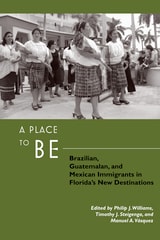
A Place to Be
Brazilian, Guatemalan, and Mexican Immigrants in Florida's New DestinationsEdited by Philip J. Williams, Timothy J. Steigenga, and Manuel A. Vásquez
Rutgers University Press, 2009
Contributors to this volume include Patricia Fortuny Loret de Mola, Carol Girón Solórzano, Silvia Irene Palma, Lúcia Ribeiro, Mirian Solfs Lizama, José Claúdio Souza Alves, Timothy J. Steigenga, Manuel A. Vásquez, and Philip J. Williams.

A Poisonous Cocktail?
Aum Shinrikyo's Path to ViolenceIan Reader
National University of Singapore Press, 1996
This highly acclaimed study describes Aum Shinrikyo’s history, examines the various conflicts it was involved in, and discusses the contents of Asahara’s sermons and prophecies. Reader suggests that the Aum case is not unique but similar to other cases of religious violence.
The March 1995 gas attack on the Tokyo subway system killed 12 people and injured thousands. Massive police raids and the subsequent investigation linked this attack (plus a variety of other criminal activities including murders) to Aum Shinrikyo, a small religious movement whose leader, Asahara Shoko, had prophesied that Armageddon was at hand.
Many questions have been raised by the Aum affair. What were Aum's spiritual roots and the focus of Asahara's teaching? Why did a religious movement ostensibly focused on yoga, meditation, asceticism and the pursuit of enlightenment become involved in violent activities? What factors brought Aum into conflict with society at large, caused it to believe it was the victim of a huge conspiracy to destroy it, and impelled it to experiment with making nerve gasses, build weapons and form its own 'alternative government'?
Ian Reader examines these questions by describing Aum's history, examining the various conflicts it was involved in, and discussing the contents of Asahara's sermons and prophesies. In so doing, he points to a combination of factors which together took Aum down a path of violence. Suggesting that the Aum case is not unique, he shows how it displays similarities with other cases of violence and conflict among religious and political movements in Japan and elsewhere.
A Political History of the Arameans
From Their Origins to the End of Their PolitiesK. Lawson Younger Jr.
SBL Press, 2016
K. Lawson Younger Jr. presents a political history of the Arameans from their earliest origins to the demise of their independent entities. The book investigates their tribal structures, the development of their polities, and their interactions with other groups in the ancient Near East. Younger utilizes all of the available sources to develop a comprehensive picture of this complex, yet highly important, people whose influence and presence spanned the Fertile Cresent.
Features:
- The best, recent understanding of tribal political structures, aspects of mobile pastoralism, and models of migration
- A regional rather than a monolithic approach to the rise of Aramean polities
- Thorough integration of the complex relationships and interactions of the Arameans with the Luwians, the Assyrians, the Israelites, and others
A Prayer for the Night
An Ohio Amish MysteryP. L. Gaus
Ohio University Press, 2006
Amid a whirlwind of drugs, sex, and other temptations of the “English” world, a group of Amish teenagers on their Rumschpringe test the limits of their parents’ religion to the breaking point. The murder of one and the abduction of another challenge Professor Michael Branden as he confronts the communal fear that the young people can never be brought home safely.
Along with Holmes County Sheriff Bruce Robertson and Pastor Cal Troyer, Professor Branden works against the clock to find a murderer and a kidnapper, and to break a drug ring operating in the county, determined, wherever the trail may lead him, to restore the shattered community. In his desperate search, Branden struggles with the reluctance of the Amish to trust the law to help them find the answers to their problems.
In A Prayer for the Night, his fifth Ohio Amish Mystery, P. L. Gaus deftly balances the pace and practices of Amish life in northern Ohio against the unfolding urgency of a hostage situation. As Gaus has proven before, the mystery gains from its exploration of the ever-widening chasm between the traditional life of the Amish people and their interaction with the outside world.
A Preface to Theology
W. Clark Gilpin
University of Chicago Press, 1996
Gilpin approaches this goal indirectly, by investigating the historic social roles of Protestant theologians and the educational institutions in which they have pursued their scholarship and teaching. Ranging from analyses of the New England Puritan Cotton Mather to contemporary theologians as "public intellectuals," Gilpin proposes that we find out what theology is by asking what theologians do.
By showing how particular cultural problems have always shaped the work of theologians, Gilpin's work profoundly illuminates the foundations of American academic theology, providing insights that will help guide its future.
A Professor in the Wilderness
Peter Damian Before the Gregorian ReforJohn Howe
Catholic University of America Press, 2027
A Prophet of the People
Isaiah Shembe and the Making of a South African ChurchLauren V. Jarvis
Michigan State University Press, 2024

A Quarter Century of Common Knowledge
Eleven ConversationsJeffrey M. Perl, special issue editor
Duke University Press, 0
Contributors. M. H. Abrams, Edward Albee, Barry Allen, Wayne Andersen, Kwame Anthony Appiah, Sir Isaiah Berlin, Marianna Birnbaum, Sir John Boardman, G. W. Bowersock, Aldo Buzzi, Caroline Walker Bynum, Anne Carson, William M. Chace, J. M. Coetzee, Cornelius Castoriadis, Stanley Cavell, Stuart Clark, Inga Clendinnen, Francis X. Clooney, Christopher Coker, Maria Conterno, Michael Cook, Lorraine Daston, Lydia Davis, Natalie Zemon Davis, Thibault De Meyer, Gunter Eich, Sir John H. Elliott, Caryl Emerson, Mikhail Epstein, Péter Esterházy, Roger Cardinal Etchegaray, Fang Lizhi, Paul Feyerabend, Michael Fried, Joseph Frank, Manfred Frank, Luis Garcia, Clifford Geertz, Carlo Ginzburg, Philip Gossett, Stephen Greenblatt, Thom Gunn, Jürgen Habermas, Ian Hacking, Václav Havel, Sir Edward Heath, Albert O. Hirschman, David Hollinger, Darrel Alejandro Holnes, Miroslav Holub, Maya Jasanoff, Albert R. Jonsen, Stanley N. Katz, Hugh Kenner, Sir Anthony Kenny, Sir Frank Kermode, Jee Leong Koh, Joseph Leo Koerner, Yusef Komunyakaa, György Konrád, Bruce Krajewski, László Krasznahorkai, Anton O. Kris, Julia Kristeva, Bruno Latour, Ewa Lipska, Greil Marcus, Steven Marcus, Samuel Menashe, Adam Michnik, Jack Miles, Alexander Nehamas, Reviel Netz, Sari Nusseibeh, Jeffrey M. Perl, Marjorie Perloff, J. G. A. Pocock, W. V. Quine, Belle Randall, Nadja Reissland, Colin Richmond, Richard Rorty, Ingrid Rowland, Hanna Segal, Amartya Sen, Quentin Skinner, Barbara Herrnstein Smith, A. L. Snijders, Timothy Snyder, Susan Sontag, Isabelle Stengers, Wis?awa Szymborska, Miguel Tamen, G. Thomas Tanselle, Sir Keith Thomas, Stephen Toulmin, Anna Lowenhaupt Tsing, Michiko Urita, Bas van Fraassen, Marina Vanzolini, Gianni Vattimo, Helen Vendler, Charlie Samua Veric, Eduardo Viveiros de Castro, Sir Bernard Williams, Lord (Rowan) Williams, H. R. Woudhuysen, Grzegorz Wróblewski, Santiago Zabala
A Quest for the Historical Christ
Scientia Christi and the Modern Study of JesusAnthony Giambrone, OP
Catholic University of America Press, 2021
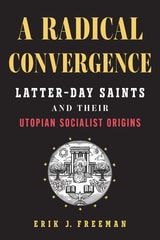
A Radical Convergence
Latter-day Saints and Their Utopian Socialist OriginsErik J. Freeman
University of Illinois Press, 2026
Erik J. Freeman uses the lives of radical converts to explore the international socialist politics that permeated the early Church. These energetic newcomers fueled LDS expansion even as they laid the foundation for a global religion. At the same time, utopian socialists within the Church helped lay the groundwork for later political and social movements and progressive ideas. The Church in the United States pivoted toward capitalism after the turn of the century, but socialist thought remained—and remain—an important thread throughout LDS communities around the world.
Provocative and sweeping, A Radical Convergence tells the surprising story of utopian socialism's place in Church history.
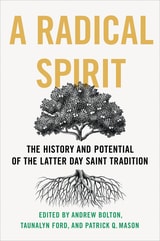
A Radical Spirit
The History and Potential of the Latter Day Saint TraditionEdited by Andrew Bolton, Taunalyn Ford, and Patrick Q. Mason
University of Illinois Press, 2027
Early followers of Joseph Smith believed their new faith could organize society from the ground up and create a religious community shaped by justice, equality, and spiritual transformation. The essayists look at the movement’s diverse influences—religious, philosophical, and cultural—alongside the economic, gender, and racial issues that informed its radicalism. They also trace the competing pressures inside and outside the movement that helped determine which radical ideas survived and which faded or were later enhanced.
Eye-opening and expansive, A Radical Spirit rediscovers implications of the original heart of the Restoration tradition that thrived among the marginalized poor in the USA, Canada and in Europe—a radical Spirit of Jesus that offers possibilities for our times.
Contributors: Andrew Bolton, Gerard Charmley, Rebekah Clark, Taunalyn Ford, Russell Arben Fox, Erik J. Freeman, David J. Howlett, Brad A. Martell, Lori Martell, Patrick Q. Mason, Michael Ratcliffe, Jennifer Reeder, Joseph M. Spencer, Jordan T. Watkins, Walker Wright
A Ransom for Israel
Jesus and Jewish Salvation in MatthewNicholas J. Schaser
SBL Press, 2025
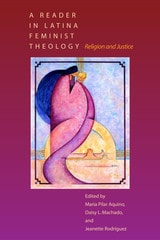
A Reader in Latina Feminist Theology
Religion and JusticeEdited by María Pilar Aquino, Daisy L. Machado, and Jeanette Rodríguez
University of Texas Press, 2002
Speaking for the growing community of Latina feminist theologians, the editors of this volume write, "With the emergence and growth of the feminist theologies of liberation, we no longer wait for others to define or validate our experience of life and faith.... We want to express in our own words our plural ways of experiencing God and our plural ways of living our faith. And these ways have a liberative tone."
With twelve original essays by emerging and established Latina feminist theologians, this first-of-its-kind volume adds the perspectives, realities, struggles, and spiritualities of U.S. Latinas to the larger feminist theological discourse. The editors have gathered writings from both Roman Catholics and Protestants and from various Latino/a communities. The writers address a wide array of theological concerns: popular religion, denominational presence and attraction, methodology, lived experience, analysis of nationhood, and interpretations of life lived on a border that is not only geographic but also racial, gendered, linguistic, and religious.
A Religion, Not a State
Ali 'Abd al-Raziq's Islamic justification of Political SecularismSouad T Ali
University of Utah Press, 2009
Utah Series in Middle East Studies
In this notable work, Souad T. Ali examines the seminal writings of Egyptian reformist scholar Ali'Abd al-Raziq, often regarded as the intellectual father of Islamic secularism, and his controversial argument that the caliphate should be considered a human innovation, rather than a religious imperative. 'Abd al Raziq contended that Islam is "a religion, not a state; a message, not a government," a major departure from the traditional view that religious and political spheres are intertwined and inseparable in Islam.
Opponents denounced 'Abd al-Raziq's ideas as a foreign corruption imported from the West. Ali's careful, objective, and scholarly examination of 'Abd al-Raziq's work, however, reveals that his arguments are not based in Western thought. Rather, they sit firmly within the dictates of Islam's sacred texts, particularly the Quran and Hadith, and also enjoy considerable support from the historical record.
This analysis critically challenges prevalent misinterpretations of Islam that have endured for centuries. Ali recognizes the varied models and discourses that have arisen throughout different epochs, especially so the role that Western intervention has played in placing the question of Islam's modernity at the forefront of intellectual debate. Throughout, the study emphasizes the atmosphere of openness and tolerance that is a requisite for free, intelligent debate.