598 books match the query 'Religious' and 59 start with a
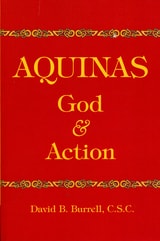
cover of Aquinas: God and Action

Aquinas

God and Action

David B. Burrell C.S.C.

University of Scranton Press, 2008
First published 30 years ago and long out of print, Aquinas: God and Action appears here for the first time in paperback. This classic volume by eminent philosopher and theologian David Burrell argues that Aquinas’s is not the god of Greek metaphysics, but a god of both being and activity. Aquinas’s plan in the Summa Theologiae, according to Burrell, is to instruct humans how to find eternal happiness through acts of knowing and loving. Featuring a new foreword by the author, this edition will be welcomed by philosophers and theologians alike.
 
[more]
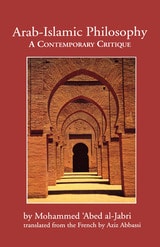
cover of Arab-Islamic Philosophy: A Contemporary Critique

Arab-Islamic Philosophy

A Contemporary Critique

By Mohammed al-Jabri

University of Texas Press, 1999

The distinguished Moroccan philosopher Mohammed Abed al-Jabri, in this summary of his own work, examines the status of Arab thought in the late twentieth century. Al-Jabri rejects what he calls the current polarization of Arab thought between an imported modernism that disregards Arab tradition and a fundamentalism that would reconstruct the present in the image of an idealized past.

Both past and present intellectual currents are examined. Al-Jabri first questions the current philosophical positions of the liberals, the Marxists, and the fundamentalists. Then he turns to history, exploring Arab philosophy in the tenth and twelfth centuries, a time of political and ideological struggle. In the writings of Ibn Hazm and Averroës, he identifies the beginnings of Arab rationalism, a rationalism he traces through the innovative fourteenth–century work of Ibn Khaldun.

Al-Jabri offers both Western readers and his own compatriots a radical new approach to Arab thought, one that finds in the past the roots of an open, critical rationalism which he sees as emerging in the Arab world today.
[more]
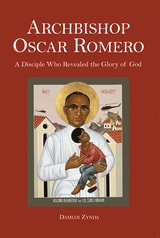
cover of Archbishop Oscar Romero: A Disciple Who Revealed the Glory of God

Archbishop Oscar Romero

A Disciple Who Revealed the Glory of God

Damian Zynda

University of Scranton Press, 2010

During his lifetime, Archbishop Oscar Romero chose to live the Christian Gospel in a radical way, defending, supporting, and serving the poor, and confronting the oppressive and murderous violence of the Salvadoran dictatorship. As a result, in March 1980, while celebrating Mass in a small chapel in El Salvador, he was assassinated.

             
With Archbishop Oscar Romero, Damian Zynda offers a compelling examination of the bishop’s eventful life. Zynda delves into the psychological and spiritual depths of Romero’s faith, tracing its progression from age thirteen up to the episcopacy and his prophetic stand against the government.

[more]
cover of Archive Fever: A Freudian Impression

Archive Fever

A Freudian Impression

Jacques Derrida

University of Chicago Press, 1996

In Archive Fever, Jacques Derrida deftly guides us through an extended meditation on remembrance, religion, time, and technology—fruitfully occasioned by a deconstructive analysis of the notion of archiving. Intrigued by the evocative relationship between technologies of inscription and psychic processes, Derrida offers for the first time a major statement on the pervasive impact of electronic media, particularly e-mail, which threaten to transform the entire public and private space of humanity. Plying this rich material with characteristic virtuosity, Derrida constructs a synergistic reading of archives and archiving, both provocative and compelling.

"Judaic mythos, Freudian psychoanalysis, and e-mail all get fused into another staggeringly dense, brilliant slab of scholarship and suggestion."—The Guardian

"[Derrida] convincingly argues that, although the archive is a public entity, it nevertheless is the repository of the private and personal, including even intimate details."—Choice

"Beautifully written and clear."—Jeremy Barris, Philosophy in Review

"Translator Prenowitz has managed valiantly to bring into English a difficult but inspiring text that relies on Greek, German, and their translations into French."—Library Journal

[more]
cover of Archive Fever: A Freudian Impression

Archive Fever

A Freudian Impression

Jacques Derrida

University of Chicago Press, 1996

In Archive Fever, Jacques Derrida deftly guides us through an extended meditation on remembrance, religion, time, and technology—fruitfully occasioned by a deconstructive analysis of the notion of archiving. Intrigued by the evocative relationship between technologies of inscription and psychic processes, Derrida offers for the first time a major statement on the pervasive impact of electronic media, particularly e-mail, which threaten to transform the entire public and private space of humanity. Plying this rich material with characteristic virtuosity, Derrida constructs a synergistic reading of archives and archiving, both provocative and compelling.

"Judaic mythos, Freudian psychoanalysis, and e-mail all get fused into another staggeringly dense, brilliant slab of scholarship and suggestion."—The Guardian

"[Derrida] convincingly argues that, although the archive is a public entity, it nevertheless is the repository of the private and personal, including even intimate details."—Choice

"Beautifully written and clear."—Jeremy Barris, Philosophy in Review

"Translator Prenowitz has managed valiantly to bring into English a difficult but inspiring text that relies on Greek, German, and their translations into French."—Library Journal

[more]
cover of Armor & Ornament

Armor & Ornament

Christopher Lee Miles

University of Alaska Press, 2019

Armor & Ornament turns away from the popular trends of contemporary poetry, calling instead upon traditional and Biblical forms. Rather than drawing on recent styles and modern trends, Miles looks to the texts that have inspired artists for millennia. These are Christian poems that have a deep and unapologetic understanding of God’s world, and they explore, with steady faith, all sides of this world.

As a military veteran, Miles also centers his poetry amongst war. Through tone and voice, warfare permeates these poems, providing poetry that relies less on the traditional, Christian tension of doubt and shaken faith than on the inherent tension of a broken world. This resonant new collection melds deep-rooted spirituality with contemporary tensions, offering modern psalms for a tumultuous and uncertain age.
[more]
cover of Aspects of Orality and Formularity in Gregorian Chant

Aspects of Orality and Formularity in Gregorian Chant

Theodore Karp

Northwestern University Press, 1998

Aspects of Orality and Formularityin Gregorian Chant is a milestone publication in the study of medieval monophonic music. In its movement away from the concept of chants as products and toward the idea of chants as processes, it will markedly change accepted ways of thinking about this musical form.

The essays are loosely connected through their bearing on one or more of three themes: the role of orality in the transmission of chant circa 700-1400; varying degrees of stability or instability in the transmission of chant; and the role of the formula in the construction of chant. Throughout, Karp uses 202 musical examples.

The first essay evaluates forms of evidence that may shed light on the nature of orality that led to the surviving notational records of Gregorian chant and assembles evidence that supports the conclusion that fidelity of transmission represented an important goal of the Franks. The second essay treats formulas that cross the boundaries of individual liturgical genres and modes. The third essay defines the varying kinds of musical formulas in chant and proposes a chronological ordering of the genre of second-mode tracts.

The fourth essay treats the transmission of a stable melody and explores the ways in which one basic melody may be adapted to texts of widely differing structures and lengths. The fifth essay deals with a group of unstable melodies that furnished difficulties in modal classification. The sixth essay explores the problems faced by scribes seeking to represent in diastematic notation melodies employing tones not normally admitted into the medieval gamut. The seventh essay takes up the role of the formula in introits, a neumatic genre intended forchoral performance.

The two final essays look at second-mode tracts and at the interrelationship between Roman and Gregorian chant.
[more]
cover of Authentically Jewish: Identity, Culture, and the Struggle for Recognition

Authentically Jewish

Identity, Culture, and the Struggle for Recognition

Stuart Z. Charmé

Rutgers University Press, 2022

This book analyzes the different conceptions of authenticity that are behind conflicts over who and what should be recognized as authentically Jewish.  Although the concept of authenticity has been around for several centuries, it became a central focus for Jews since existentialist Jean-Paul Sartre raised the question in the 1940s. Building on the work of Sartre, later Jewish thinkers, philosophers, anthropologists, and cultural theorists, the book offers a model of Jewish authenticity that seeks to balance history and tradition, creative freedom and innovation, and the importance of recognition among different groups within an increasingly multicultural Jewish community.
 
Author Stuart Z. Charmé explores how debates over authenticity and struggles for recognition are a key to understanding a wide range of controversies between Orthodox and liberal Jews, Zionist and diaspora Jews, white Jews and Jews of color, as well as the status of intermarried and messianic Jews, and the impact of Jewish genetics.  In addition, it discusses how and when various cultural practices and traditions such as klezmer music, Israeli folk dance, Jewish yoga and meditation, and others are recognized as authentically Jewish, or not.
 
[more]
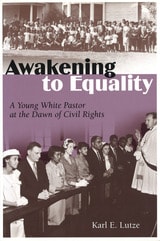
cover of Awakening to Equality: A Young White Pastor at the Dawn of Civil Rights

Awakening to Equality

A Young White Pastor at the Dawn of Civil Rights

Karl E. Lutze

University of Missouri Press, 2006

When Karl Lutze arrived in Oklahoma in 1945, he stepped into another world. A newly ordained clergyman born in Wisconsin, he was a young white man assigned to minister among Muskogee’s African American community. He soon found that in the South, crosses were as likely to be burned as revered. His recollections of postwar Oklahoma provide a compelling testament to the era’s racial conflict and some steps taken toward its resolution.
Awakening to Equality offers a unique perspective on an often-violent era that witnessed the gradual dismantling of segregation. Serving congregations in Muskogee and Tulsa, Lutze encountered a cross section of both communities—from the white and black power brokers to the most disempowered black and biracial families—and a stratified society buttressed by intimidation, cross burnings, and bombs. His activism in the Urban League and other local civil rights organizations gave him firsthand experience with forces moving toward change, as well as with the more entrenched forces resisting it.
Blending personal anecdotes and recollections of key players in this unfolding drama, Lutze puts a human face on historical and journalistic accounts of social change during the crucial early years of the civil rights movement. He takes readers back to small-town and urban Oklahoma in a time when African Americans were beginning to challenge segregation in Muskogee’s public transportation and a handful of liberal whites were trying to move their communities toward desegregation. Throughout this rich memoir, we meet actual people creating a future—one that involved the very redefinition of America.
More than a view of an earnest young clergyman trying to grow beyond the racial and social limitations of the church of his day, Awakening to Equality also depicts the struggles of Lutze’s own denomination to overcome its earlier accommodation of racism. Lutze’s success in his ministries made his achievements a model for mission work among African Americans and led to his appointment in 1959 first as field secretary and then shortly thereafter as executive director of the Lutheran Human Relations Association, a pioneering civil rights organization. Simultaneously, he taught classes as Associate Professor of Theology at Valparaiso University.
Lutze not only witnessed important events but also participated in them and found that his entire career was shaped by the experience. Awakening to Equality is a moving story that captures the real-life education of a prominent clergyman during a critical period in American life.
[more]