Results by title
22277 books match the query 'Social Science' and 1819 start with a

A Contemporary Archaeology of London's Mega Events
From the Great Exhibition to London 2012Jonathan Gardner
University College London, 2022
This book explores the traces of London’s most significant modern “mega events”: the Great Exhibition of 1851, the 1951 Festival of Britain’s South Bank Exhibition, and the 2012 Olympic and Paralympic Games. Though only open for a few weeks or months, mega events permanently and disruptively reshape their host cities and societies: they demolish and rebuild whole districts, they draw in materials and participants from around the globe, and their organizers self-consciously seek to leave a “legacy” that will endure for decades or more. The book argues that these spectacles must thus be seen as long-lived and persistent, rather than simply transient or short-term phenomena. It explores the long-term history of each event through contemporary archaeology, examining the contents and building materials of the Great Exhibition’s Crystal Palace and their extraordinary afterlife at Sydenham, South London; how the Festival of Britain’s South Bank Exhibition employed displays of ancient history to construct a new postwar British identity; and how London 2012 dealt with competing visions of the past as archaeology, waste, and heritage in creating a vision of the future.
A Contemporary History of Exclusion
The Roma Issue in Hungary from 1945 to 2015György Majtényi
Central European University Press, 2016
A Contest without Winners
How Students Experience Competitive School ChoiceKate Phillippo
University of Minnesota Press, 2019
Seeing the consequences of competitive school choice policy through students’ eyes
While policymakers often justify school choice as a means to alleviate opportunity and achievement gaps, an unanticipated effect is increased competition over access to coveted, high-performing schools. In A Contest without Winners, Kate Phillippo follows a diverse group of Chicago students through the processes of researching, applying to, and enrolling in public high school. Throughout this journey, students prove themselves powerful policy actors who carry out and redefine competitive choice.
Phillippo’s work amplifies the voices of students—rather than the parents, educators, public intellectuals, and policymakers who so often inform school choice research—and investigates how students interact with and emerge from competitive choice academically, developmentally, and civically. Through students’ experiences, she shows how competitive choice legitimates and exacerbates existing social inequalities; collides with students’ developmental vulnerability to messages about their ability, merit, and potential; and encourages young people’s individualistic actions as they come to feel that they must earn their educational rights. From urban infrastructure to income inequality to racial segregation, Phillippo examines the factors that shape students’ policy enactment and interpretation, as policymakers and educators ask students to compete for access to public resources.
With competitive choice, even the winners—the lucky few admitted to their dream schools—don’t outright win. A Contest without Winners challenges meritocratic and market-driven notions of opportunity creation for young people and raises critical questions about the goals we have for public schooling.
A Contested Borderland
Competing Russian and Romanian Visions of Bessarabia in the Second Half of the 19th and Early 20th CenturyAndrei Cusco
Central European University Press, 2017
A Contested Caribbean Indigeneity
Language, Social Practice, and Identity within Puerto Rican Taíno ActivismSherina Feliciano-Santos
Rutgers University Press, 2021
A Country of Defiance
Mapping the Casamance in SenegalMark W. Deets
Ohio University Press, 2023
A County of Culture
Twentieth-Century China Seen from the Village Schools of Zouping, ShandongStig Thogersen
University of Michigan Press, 2002
A County of Culture demonstrates how changes in educational policies have exerted considerable influence on social life in Zouping, from the macro level of nation building and state formation to the micro level of individual careers. It also shows that the rural population has been far from being a passive object of reform, and that it has been extremely difficult for educational reformers to achieve their goals as a result of the social, economic, and mental realities of China's villages. The fate of educational reforms has thus been decided in the tension between two poles: the visions of educational planners and reformers on the one hand, and the expectations of the rural population on the other.
Not only pertinent to specialists of Chinese education, this book will also be useful to anyone interested in state-society relations in modern China and to students of comparative education and rural development.
Stig Thøgersen is Associate Professor of Chinese Language and Society, University of Aarhus.

A Courageous Fool
Marie Deans and Her Struggle against the Death PenaltyTodd C. Peppers
Vanderbilt University Press, 2017
Marie found herself fighting to bring justice to the legal process and to bring humanity not only to prisoners on death row but to the guards and wardens as well. During Marie's time as a death penalty opponent in South Carolina and Virginia, she experienced the highs of helping exonerate the innocent and the lows of standing death watch in the death house with thirty-four condemned men.
A Critical Dictionary of Sociology
Raymond Boudon and François Bourricaud
University of Chicago Press, 1989
A Critical Synergy
Race, Decoloniality, and World CrisesMeghji, Ali
Temple University Press, 2023
The differences between decolonial thought and CRT, Meghji insists, does not necessarily imply one approach is stronger. Rather, he asserts, they often provide alternative but not incompatible viewpoints of the same social problem. Meghji presents case studies of capitalism, the COVID-19 pandemic, climate crisis, and twenty-first-century far-right populism to show that with both theories, we can understand more, as insights may be lost by using only one.
Meghji is not calling for a universal theoretical synthesis in A Critical Synergy, but rather a practice that can help open sociology and social science to the tradition of pluriversality much more broadly.

A Critique of the Study of Kinship
David M. Schneider
University of Michigan Press, 1984
The critique uses a novel device in that the same set of ethnographic “facts” are looked at through different theories. This reveals a good deal about the different theories. By the same token, of course, this critique goes into the question of what a “fact” of “kinship” might be and how to recognize one either at home or in the field.
Schneider’s critique also uses history to raise cogent questions about how kinship has been studied. But it is not as 20/20 hindsight that history is used. Due respect is paid to the climate of the time, as well as the climatic changes and the ways in which these helped to create the emperor’s clothes. Right, wrong, or indifferent, Schneider’s study of how the emperor “kinship” was dressed and then redressed as the winds of change threatened disarray, proves challenging to the theories by which anthropology lives, as well as to the specifically privileged domain of “kinship.” The implications of this study for a wide range of problems within theoretical anthropology are striking.
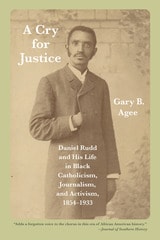
A Cry for Justice
Daniel Rudd and His Life in Black Catholicism, Journalism, and Activism, 1854-1933Gary B. Agee
University of Arkansas Press, 2017
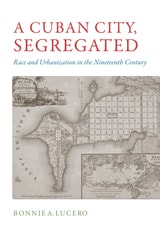
A Cuban City, Segregated
Race and Urbanization in the Nineteenth CenturyBonnie A. Lucero
University of Alabama Press, 2019
Founded as a white colony in 1819, Cienfuegos, Cuba, quickly became home to people of African descent, both free and enslaved, and later a small community of Chinese and other immigrants. Despite the racial, ethnic, and cultural diversity that defined the city’s population, the urban landscape was characterized by distinctive racial boundaries, separating the white city center from the heterogeneous peripheries. A Cuban City, Segregated: Race and Urbanization in the Nineteenth Century explores how the de facto racial segregation was constructed and perpetuated in a society devoid of explicitly racial laws.
Drawing on the insights of intersectional feminism, Bonnie A. Lucero shows that the key to understanding racial segregation in Cuba is recognizing the often unspoken ways specifically classed notions and practices of gender shaped the historical production of race and racial inequality. In the context of nineteenth-century Cienfuegos, gender, race, and class converged in the concept of urban order, a complex and historically contingent nexus of ideas about the appropriate and desired social hierarchy among urban residents, often embodied spatially in particular relationships to the urban landscape.
As Cienfuegos evolved subtly over time, the internal logic of urban order was driven by the construction and defense of a legible, developed, aesthetically pleasing, and, most importantly, white city center. Local authorities produced policies that reduced access to the city center along class and gendered lines, for example, by imposing expensive building codes on centric lands, criminalizing poor peoples’ leisure activities, regulating prostitution, and quashing organized labor. Although none of these policies mentioned race outright, this new scholarship demonstrates that the policies were instrumental in producing and perpetuating the geographic marginality and discursive erasure of people of color from the historic center of Cienfuegos during its first century of existence.

A Cuban in Mayberry
Looking Back at America's HometownBy Gustavo Perez Firmat
University of Texas Press, 2014
Half a century after viewers first watched a father and son walking to the local fishing hole, whistling a simple, yet unforgettable, tune, The Andy Griffith Show remains one of the most popular sitcoms in the history of American television. Tens of millions of viewers have seen the show either in its original run, its ongoing reruns, on DVD, or on the internet. Websites devoted to the show abound, hundreds of fan clubs bring enthusiasts together, and a plethora of books and Mayberry-themed merchandise have celebrated all things Mayberry. A small cottage industry has even developed around the teachings of the show’s episodes. But why does a sitcom from the 1960s set in the rural South still evoke such devotion in people today?
In A Cuban in Mayberry, acclaimed author Gustavo Pérez Firmat revisits America’s hometown to discover the source of its enduring appeal. He approaches the show from a unique perspective—that of an exile who has never experienced the rootedness that Andy and his fellow Mayberrians take for granted, as folks who have never strayed from home or lived among strangers. As Pérez Firmat weaves his personal recollections of exile from Cuba with an analysis of the show, he makes a convincing case that the intimacy between person and place depicted in TAGS is the secret of its lasting relevance, even as he reveals the surprising ways in which the series also reflects the racial, generational, and political turbulence of the 1960s.

A Cultural History of the Disneyland Theme Parks
Middle Class KingdomsSabrina Mittermeier
Intellect Books, 2020
When the first Disneyland opened its doors in 1955, it reinvented the American amusement park and transformed the travel, tourism, and entertainment industries forever. Now a global vacation empire, the original park in Anaheim, California, has been joined by massive complexes in Florida, Tokyo, Paris, Hong Kong, and Shanghai.
Spanning six decades, three continents, and five distinct cultures, Sabrina Mittermeier presents an interdisciplinary examination of the parks, situating them in their proper historical context and exploring the distinct cultural, social, and economic landscapes that defined each one at the time of its construction. Mittermeier then spotlights the central role of class in the subsequent success or failure of each venture. The first comparative study of the Disney theme parks, the book closes a significant gap in existing research and is an important new contribution to the field.
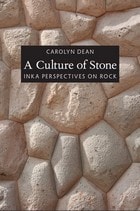
A Culture of Stone
Inka Perspectives on RockCarolyn Dean
Duke University Press, 2010
A Cup of Tea in Pamplona
Robert Laxalt
University of Nevada Press, 1993

A Date Which Will Live
Pearl Harbor in American MemoryEmily S. Rosenberg
Duke University Press, 2005
Rosenberg considers the emergence of Pearl Harbor’s symbolic role within multiple contexts: as a day of infamy that highlighted the need for future U.S. military preparedness, as an attack that opened a "back door" to U.S. involvement in World War II, as an event of national commemoration, and as a central metaphor in American-Japanese relations. She explores the cultural background that contributed to Pearl Harbor’s resurgence in American memory after the fiftieth anniversary of the attack in 1991. In doing so, she discusses the recent “memory boom” in American culture; the movement to exonerate the military commanders at Pearl Harbor, Admiral Husband Kimmel and General Walter Short; the political mobilization of various groups during the culture and history "wars" of the 1990s, and the spectacle surrounding the movie Pearl Harbor. Rosenberg concludes with a look at the uses of Pearl Harbor as a historical frame for understanding the events of September 11, 2001.
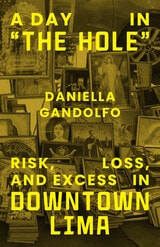
A Day in "The Hole"
Risk, Loss, and Excess in Downtown LimaDaniella Gandolfo
University of Chicago Press, 2025
A single day in a semilegal market in Lima, Peru, reveals a social world that defies conventional economic logic.
In the heart of Lima’s historic center, the markets of El Hueco (“The Hole”) and sprawling Mesa Redonda pulse with life, with thousands of vendors selling everything from knockoff electronics to religious icons. In A Day in “The Hole,” anthropologist Daniella Gandolfo immerses readers in a single, tumultuous day—the thirty-fourth anniversary of a vendors’ cooperative—while examining the dynamics that sustain these marketplaces.
Through a blend of cinematic storytelling and incisive anthropological insight, Gandolfo reveals a world with its own unique codes. She inspects how vendors embrace expenditure over profit and instability over order, and moving through the sights and sounds of El Hueco and Mesa Redonda, she finds a dissident economy that is as much about survival as it is about spectacle. Gandolfo redefines how we think about urban economies and the unexpected ways these defiant communities thrive in this textured portrait of Lima’s markets and the people who animate them.

A Deadly Wind
The 1962 Columbus Day StormJohn Dod
Oregon State University Press, 2018
The Columbus Day Storm of 1962 was a freak of nature, a weather outlier with deadly winds topping one hundred miles per hour. The storm killed dozens, injured hundreds, damaged more than fifty thousand homes, and leveled enough timber to build one million homes. To find an equally ferocious storm of its kind, fast-forward fifty years and cross the continent to Superstorm Sandy’s 2012 attack on the East Coast. While Superstorm Sandy was predicted days in advance, the Columbus Day Storm caught ill-equipped weather forecasters by surprise.
This unrivalled West Coast windstorm fueled the Asian log export market, helped give birth to the Oregon wine industry, and influenced the 1962 World Series. It remains a cautionary tale and the Pacific Northwest benchmark for severe windstorms in this era of climate change and weather uncertainty. From its genesis in the Marshall Islands to its final hours on Vancouver Island, British Columbia, the storm plowed an unparalleled path of destruction.
In A Deadly Wind, veteran journalist John Dodge tells a compelling story spiced with human drama, Cold War tension, and Pacific Northwest history. This is a must-read for the tens of thousands of storm survivors, for history buffs, and for anyone interested in the intersection of severe weather events and climate change.
A Deaf Adult Speaks Out
Leo Jacobs
Gallaudet University Press, 1989
This new edition includes an update of services by and for deaf people, and an expanded chapter on legislation and social issues that have had an impact on the Deaf community in the last ten years.
A Decade of Negative Thinking
Essays on Art, Politics, and Daily LifeMira Schor
Duke University Press, 2009
In essays such as “The ism that dare not speak its name,” “Generation 2.5,” “Like a Veneer,” “Modest Painting,” “Blurring Richter,” and “Trite Tropes, Clichés, or the Persistence of Styles,” Schor considers how artists relate to and represent the past and how the art market influences their choices: whether or not to disavow a social movement, to explicitly compare their work to that of a canonical artist, or to take up an exhausted style. She places her writings in the rich transitory space between the near past and the “nextmodern.” Witty, brave, rigorous, and heartfelt, Schor’s essays are impassioned reflections on art, politics, and criticism.
A Decolonial Feminism
Francoise Verges
Pluto Press, 2021
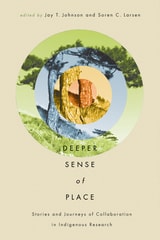
A Deeper Sense of Place
Stories and Journeys of Collaboration in Indigenous ResearchJay T. Johnson and Soren C. Larsen
Oregon State University Press, 2013
These first-person narratives offer insight into the challenges faced by Native and non-Native scholars to their academic and personal approaches during research with Indigenous communities. By addressing the ethical, political, intellectual, and practical meanings of collaboration with Indigenous peoples, A Deeper Sense of Place highlights the ways in which collaborative research can help Indigenous and settler communities find common ground through a shared commitment to land, people, and place.
A Deeper Sense of Place will inform students and academics engaged in research with Indigenous communities, as well as those interested in the challenges of employing critical, qualitative methodologies.
A Democratic Enlightenment
The Reconciliation Image, Aesthetic Education, Possible PoliticsMorton Schoolman
Duke University Press, 2020
A Democratic Theory of Judgment
Linda M. G. Zerilli
University of Chicago Press, 2016
Zerilli deftly outlines the limitations of existing debates, both those that concern themselves with the impossibility of judging across cultures and those that try to find transcendental, rational values to anchor judgment. Looking at Kant through the lens of Arendt, Zerilli develops the notion of a public conception of truth, and from there she explores relativism, historicism, and universalism as they shape feminist approaches to judgment. Following Arendt even further, Zerilli arrives at a hopeful new pathway—seeing the collapse of philosophical criteria for judgment not as a problem but a way to practice judgment anew as a world-building activity of democratic citizens. The result is an astonishing theoretical argument that travels through—and goes beyond—some of the most important political thought of the modern period.

A Desire for Women
Relational Psychoanalysis, Writing, and Relationships between WomenJuhasz, Suzanne
Rutgers University Press, 2003
Uniquely weaving together psychoanalytic, feminist, queer, and literary theory as well as memoir to examine the value and meaning of relationships between women, Juhasz explores the writings of adult daughters, mothers, and lovers to consider how language both traces and shapes the contours of experience. She emphasizes the initial bond between mother and infant as the bedrock of identity formation, a process involving love, recognition, desire, and language, and shows how that relationship serves as source and model for all future loves.
Juhasz's lucid prose unravels the meaningful yet overlooked intricacies of the relationships that inflect much of women's writing in the twentieth century.
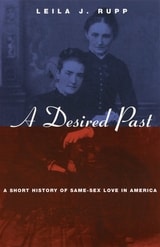
A Desired Past
A Short History of Same-Sex Love in AmericaLeila J. Rupp
University of Chicago Press, 1999
"Most extraordinary about Leila J. Rupp's indeed short, two-hundred-page history of 'same-sex love and sexuality' is not that it manages to account for such a variety of individuals, races, and classes or take in such a broad chronological and thematic range, but rather that it does all this with such verve, lucidity, and analytical rigor. . . . [A]n elegant, inspiring survey." —John Howard, Journal of American History

A Dialogue of Voices
Feminist Literary Theory and BakhtinKaren Hohne and Helen Wussow, Editors
University of Minnesota Press, 1994
A Dialogue of Voices was first published in 1994. Minnesota Archive Editions uses digital technology to make long-unavailable books once again accessible, and are published unaltered from the original University of Minnesota Press editions.
The work of the Russian theorist Mikhail Bakhtin, particularly his notions of dialogics and genre, has had a substantial impact on contemporary critical practices. Until now, however, little attention has been paid to the possibilities and challenges Bakhtin presents to feminist theory, the task taken up in A Dialogue of Voices. The original essays in this book combine feminism and Bakhtin in unique ways and, by interpreting texts through these two lenses, arrive at new theoretical approaches. Together, these essays point to a new direction for feminist theory that originates in Bakhtin-one that would lead to a feminine être rather than a feminine écriture.
Focusing on feminist theorists such as Hélène Cixous, Teresa de Lauretis, Julia Kristeva, and Monique Wittig in conjunction with Bakhtin's concepts of dialogism, heteroglossia, and chronotope, the authors offer close readings of texts from a wide range of multicultural genres, including nature writing, sermon composition, nineteenth-century British women's fiction, the contemporary romance novel, Irish and French lyric poetry, and Latin American film. The result is a unique dialogue in which authors of both sexes, from several countries and different eras, speak against, for, and with one another in ways that reveal their works anew as well as the critical matrices surrounding them.Karen Hohne is an independent scholar and artist living in Moorhead, Minnesota. Helen Wussow is an assistant professor of English at Memphis State University.
A Dictionary of New Mexico and Southern Colorado Spanish
Revised and Expanded EditionRubén Cobos
Museum of New Mexico Press, 2011
Ruben Cobos spent a decade working on the revised and expanded edition of the dictionary, published in 2003. The Dictionary of New Mexico and Southern Colorado Spanish has assumed its place as the most authoritative reference on the archaic dialect of Spanish spoken in this region.

A Different Hunger
Writings on Black ResistanceA. Sivanandan
Pluto Press, 1991

A Diné History of Navajoland
Klara Kelley and Harris Francis
University of Arizona Press, 2019
The early chapters, based on ceremonial origin stories, tell about Diné forebears. Next come the histories of Diné clans from late pre-Columbian to early post-Columbian times, and the coming together of the Diné as a sovereign people. Later chapters are based on histories of families, individuals, and communities, and tell how the Diné have struggled to keep their bond with the land under settler encroachment, relocation, loss of land-based self-sufficiency through the trading-post system, energy resource extraction, and climate change.
Archaeological and documentary information supplements the oral histories, providing a comprehensive investigation of Navajo history and offering new insights into their twentieth-century relationships with Hispanic and Anglo settlers.
For Diné readers, the book offers empowering histories and stories of Diné cultural sovereignty. “In short,” the authors say, “it may help you to know how you came to be where—and who—you are.”

A Dream of Resistance
The Cinema of Kobayashi MasakiPrince, Stephen
Rutgers University Press, 2017
A Dream of Resistance is the first book in English to explore Kobayashi’s entire career, from the early films he made at Shochiku studio, to internationally-acclaimed masterpieces like The Human Condition, Harakiri, and Samurai Rebellion, and on to his final work for NHK Television. Closely examining how Kobayashi’s upbringing and intellectual history shaped the values of his work, Stephen Prince illuminates the political and religious dimensions of Kobayashi’s films, interpreting them as a prayer for peace in troubled times. Prince draws from a wealth of rare archives, including previously untranslated interviews, material that Kobayashi wrote about his films, and even the young director’s wartime diary. The result is an unprecedented portrait of this singular filmmaker.

A Dream to Conjure
Emergent Forms in Caribbean Art and CinemaYasmine Espert
Duke University Press, 2027

A Drunkard's Defense
Alcohol, Murder, and Medical Jurisprudence in Nineteenth-Century AmericaMichele Rotunda
University of Massachusetts Press, 2021
Is drunkenness a defense for murder? In the early nineteenth century, the answer was a resounding no. Intoxication was considered voluntary, and thus provided no defense. Yet as the century progressed, American courts began to extend exculpatory value to heavy drinking. The medicalization of alcohol use created new categories of mental illness which, alongside changes in the law, formed the basis for defense arguments that claimed unintended consequences and lack of criminal intent. Concurrently, advocates of prohibition cast “demon rum” and the “rum-seller” as the drunkard's accomplices in crime, mitigating offenders' actions. By the postbellum period, a backlash, led by medical professionals and an influential temperance movement, left the legacy of an unsettled legal standard.
In A Drunkard's Defense, Michele Rotunda examines a variety of court cases to explore the attitudes of nineteenth-century physicians, legal professionals, temperance advocates, and ordinary Americans toward the relationship between drunkenness, violence, and responsibility, providing broader insights into the country's complicated relationship with alcohol.
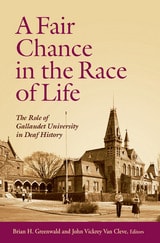
A Fair Chance in the Race of Life
The Role of Gallaudet University in Deaf HistoryBrian H. Greenwald
Gallaudet University Press, 2008
Despite its prominence as a world cultural center and a locus of research on deaf culture, history, education, and language for more than 150 years, Gallaudet University has only infrequently been the focal point of historical study. Eminent historians Brian H. Greenwald and John Vickrey Van Cleve have remedied this scarcity with A Fair Chance in the Race of Life: The Role of Gallaudet University in Deaf History. In this collection, a remarkable cast of scholars examine the university and its various roles through time, many conducting new research in the Gallaudet University Archives, an unsurpassed repository of primary sources of deaf history.
Pulitzer-Prize-winning historian James M. McPherson sets the stage in his essay “A Fair Chance in the Race of Life,” President Abraham Lincoln’s statement when he chartered the first college for deaf students. The papers that follow scrutinize Gallaudet’s long domination by hearing presidents, its struggle to find a place within higher education, its easy acquiescence to racism, its relationship with the federal government, and its role in creating, shaping, and nurturing the deaf community.
These studies do more than simply illuminate the university, however. They also confront broad issues that deal with the struggles of social conformity versus cultural distinctiveness, minority cohesiveness, and gender discrimination. “Deaf” themes, such as the role of English in deaf education, audism, and the paternalism of hearing educators receive analysis as well.
A Faith Of Our Own
Second-Generation Spirituality in Korean American ChurchesKim, Sharon
Rutgers University Press, 2010
A Faith of Our Own investigates the development and growth of these houses of worship, a recent and rapidly increasing phenomenon in major cities throughout the United States.
Immigration historians have depicted the second-generation as a transitional generation--on the steady march toward the inevitable decline of ethnic identity and allegiance. Sharon Kim suggests an alternative path. By harnessing religion and innovatively creating hybrid religious institutions, second-generation Korean Americans are assertively defining and shaping their own ethnic and religious futures. Rather than assimilating into mainstream American evangelical churches or inheriting the churches of their immigrant parents, second-generation pastors are creating their own hybrid third space--new autonomous churches that are shaped by multiple frames of reference.
Including data gathered over ten years at twenty-two churches, A Faith of Our Own is the most comprehensive study of this topic that addresses generational, identity, political, racial, and empowerment issues.
A Fan Studies Primer
Method, Research, EthicsPaul Booth
University of Iowa Press, 2021
A Fatal Drifting Apart
Democratic Social Knowledge and Chicago ReformLaura M. Westhoff
The Ohio State University Press, 2007
A Fatal Drifting Apart: Democratic Social Knowledge and Chicago Reform explores the efforts of diverse groups within Chicago during the Progressive Era. This backdrop of industrialization, emerging classes, and ethnic and racial pluralism frequently riven with class conflict set the stage on which Chicago reformers took up the seemingly impossible challenge of enacting democracy. Laura M. Westhoff examines historic events and well-known individuals of the period and brings them together in an unusual framework that offers a new perspective on the reorientation of knowledge, civic identity, and democratic culture at the dawn of the twentieth century, which she terms democratic social knowledge. The book raises important questions that continue to resonate: In a democracy, who has the power to define social problems and offer solutions, and whose experience and knowledge are seen as legitimate?
A Fateful Day in 1698
The Remarkable Sobaipuri-O’odham Victory over the Apaches and Their AlliesDeni J. Seymour
University of Utah Press, 2014
Translations of original Spanish accounts by Father Kino and others convey important details about the battle, while the archaeological record and ethnographic and oral traditions provide important correctives to the historic account. A new battlefield signature of native American conflict is identified, and the fiery context of the battle provides unprecedented information about what the Sobaipuri grew and hunted in this out-of-the-way location, including the earliest known wheat.
That this tumultuous time was a period of flux is reflected in the defensive, communal, and ceremonial architecture of the O'odham, which accommodated Spanish tastes and techniques. Practices specific to the O’odham as they relate to the day’s events and to village life illuminate heretofore unexplained aspects of the battle. The book also records a visit by descendant O’odham, reinforcing the importance of identifying the historically documented location.
A Fateful Day in 1698 will be of significant interest to archaeologists and historians.
A Fateful Time
The Background And Legislative History Of The Indian Reorganization ActElmer R. Rusco
University of Nevada Press, 2026
The Indian Reorganization Act (IRA) of 1934 has been generally acknowledged as the most important statute affecting Native Americans after the General Allotment Act of 1887, and it is probably the most important single statute affecting Native Americans during the two-thirds of a century since its passage. Over half the Native governments in the contemporary U.S. are organized under its provisions or under separate statutes that parallel the IRA in major ways. Although the impact of the IRA has been widely studied and debated, no scholar until now has looked closely at the forces that shaped its creation and passage. Author Elmer Rusco spent over a decade of research in national and regional archives and other repositories to examine the legislative intent of the IRA, including the role of issues like the nature and significance of judge-made Indian law; the allotment policy and its relation to Indian self-government; the nature of Native American governments before the IRA; the views and actions of John Collier, commissioner of Indian Affairs and leader in the campaign to reform the nation’s Indian policy; and the influence of relations between the president and Congress during the second year of the New Deal. Rusco also discusses the role of conflicting ideologies and interests in this effort to expand the rights of Native Americans; the general ignorance of Native American concerns and policy on the part of legislators engaged in the writing and passage of the law; and the limited but crucial impact of Indian involvement in the struggle over the IRA.
A Fatherless Child
Autobiographical Perspectives of African American MenTara T. Green
University of Missouri Press, 2009
Through her analysis, Green emphasizes the role of community as a father-substitute in producing successful black men, the impact of fatherlessness on self-perceptions and relationships with women, and black men’s engagement with healing the pain of abandonment. She also looks at why these four men visited Africa to reclaim a cultural history and identity, showing how each developed a clearer understanding of himself as an American man of African descent.

A Favored Place
San Juan River Wetlands, Central Veracruz, A.D. 500 to the PresentBy Alfred H. Siemens
University of Texas Press, 1998
The wetlands of the San Juan Basin in Central Veracruz, Mexico, have been a favored place since the fifth century A.D., when Prehispanic people built an extensive network of canals and raised fields that allowed for almost year-round agriculture. Alfred Siemens' discovery of the remains of this network in the 1970s led him to uncover fifteen centuries of land-use history in the region. This book contains a full record of his findings.
Siemens organizes his history of the San Juan Basin around the question: What relationships exist between Prehispanic agriculture and the production systems of the tropical lowlands in our own time? This focus allows him to chart the changes in human perceptions and uses of the landscape, from the Prehispanic wetland agricultural system to the drained pastures of today's cattle ranches.
Amplified with air oblique photography, maps, and tables, and enriched with data from archaeology and colonial archives, this is an authoritative historical geography of a wetland landscape. Or, in the author's more modest words, "It seems to me that what I have here is a biography of a swamp."
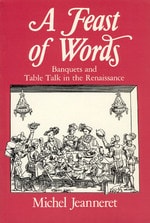
A Feast of Words
Banquets and Table Talk in the RenaissanceMichel Jeanneret
University of Chicago Press, 1991
A Feminist Ethnomusicology
Writings on Music and GenderEllen Koskoff
University of Illinois Press, 2014
In this intellectual memoir, Koskoff describes her journey through the maze of social history and scholarship related to her work examining the intersection of music and gender. Koskoff collects new, revised, and hard-to-find published material from mid-1970s through 2010 to trace the evolution of ethnomusicological thinking about women, gender, and music, offering a perspective of how questions emerged and changed in those years, as well as Koskoff's reassessment of the early years and development of the field. Her goal: a personal map of the different paths to understanding she took over the decades, and how each inspired, informed, and clarified her scholarship. For example, Koskoff shows how a preference for face-to-face interactions with living people served her best in her research, and how her now-classic work within Brooklyn's Hasidic community inflamed her feminist consciousness while leading her into ethnomusicological studies.
An uncommon merging of retrospective and rumination, A Feminist Ethnomusicology: Writings on Music and Gender offers a witty and disarmingly frank tour through the formative decades of the field and will be of interest to ethnomusicologists, anthropologists, scholars of the history and development of feminist thought, and those engaged in fieldwork.
Includes a foreword by Suzanne Cusick framing Koskoff's career and an extensive bibliography provided by the author.
A Feminist Perspective in the Academy
The Difference It MakesEdited by Elizabeth Langland and Walter Gove
University of Chicago Press, 1983
In the essays collected here, nine distinguished scholars provide an overview of the differences the feminist perspective makes—and could make—in scholarship in the humanities and social sciences. Carefully documented and judiciously critical, these essays inform the reader about developments in feminist scholarship in literary criticism, the performing arts, religion, history, political science, economics, anthropology, psychology, and sociology. The authors point out achievements of lasting value and indicate how these might become an integral part of the various disciplines.

A Feminist Reader in Early Cinema
Jennifer M. Bean and Diane Negra, eds.
Duke University Press, 2002
While fostering new ways of thinking about film history, A Feminist Reader in Early Cinema illuminates the many questions that the concept of "early cinema" itself raises about the relation of gender to modernism, representation, and technologies of the body. The contributors bring a number of disciplinary frameworks to bear, including not only film studies but also postcolonial studies, dance scholarship, literary analysis, philosophies of the body, and theories regarding modernism and postmodernism.
Reflecting the stimulating diversity of early cinematic styles, technologies, and narrative forms, essays address a range of topics—from the dangerous sexuality of the urban flâneuse to the childlike femininity exemplified by Mary Pickford, from the Shanghai film industry to Italian diva films—looking along the way at birth-control sensation films, French crime serials, "war actualities," and the stylistic influence of art deco. Recurring throughout the volume is the protean figure of the New Woman, alternately garbed as childish tomboy, athletic star, enigmatic vamp, languid diva, working girl, kinetic flapper, and primitive exotic.
Contributors. Constance Balides, Jennifer M. Bean, Kristine Butler, Mary Ann Doane, Lucy Fischer, Jane Gaines, Amelie Hastie, Sumiko Higashi, Lori Landay, Anne Morey, Diane Negra, Catherine Russell, Siobhan B. Somerville, Shelley Stamp, Gaylyn Studlar, Angela Dalle Vacche, Radha Vatsal, Kristen Whissel, Patricia White, Zhang Zhen
A Feminist Reading of Debt
Luci Cavallero
Pluto Press, 2021
***Winner of an English PEN Award 2021***
In this sharp intervention, authors Lucí Cavallero and Verónica Gago defiantly develop a feminist understanding of debt, showing its impact on women and members of the LGBTQ+ community and examining the relationship between debt and social reproduction.
Exploring the link between financial activity and the rise of conservative forces in Latin America, the book demonstrates that debt is intimately linked to gendered violence and patriarchal notions of the family. Yet, rather than seeing these forces as insurmountable, the authors also show ways in which debt can be resisted, drawing on concrete experiences and practices from Latin America and around the world.
Featuring interviews with women in Argentina and Brazil, the book reveals the real-life impact of debt and how it falls mainly on the shoulders of women, from the household to the wider effects of national debt and austerity. However, through discussions around experiences of work, prisons, domestic labour, agriculture, family, abortion and housing, a narrative of resistance emerges.
Translated by Liz Mason-Deese.
A Feminist Reading of Debt
Luci Cavallero
Pluto Press, 2021
***Winner of an English PEN Award 2021***
"Of great value to those interested in the financialisation of everyday life and social reproduction."—LSE Review of Books
In this sharp evaluation and call to action, authors Lucí Cavallero and Verónica Gago defiantly develop a feminist understanding of debt, showing its impact on women and members of the LGBTQ+ community and examining the relationship between debt and social reproduction.
Exploring the link between financial activity and the rise of conservative forces in Latin America, the book demonstrates that debt is intimately linked to gendered violence and patriarchal notions of the family. Yet, rather than seeing these forces as insurmountable, the authors also show ways in which debt can be resisted, drawing on concrete experiences and practices from Latin America and around the world. Chapters include:
*Debt and Social Reproduction
*Debt as a “Counter-revolution” of Everyday Life
*The writing on the Body of Women
*Neither Victims not Entrepreneurs
*Feminist Insubordination and Fascist Neoliberalism
*The Patriarchy Has My Missing Contributions
*Hunger and Gender Mandates
*Us Against Debt
The authors state in their Introduction, “Our investigations and activism show that there is an urgent need to develop a specifically feminist analysis of finance. Here we do so by bringing together methodological elements, political hypotheses, and narratives of practices elaborated by the feminist movement that are challenging finance.”
Featuring interviews with women in Argentina and Brazil, the book reveals the real-life impact of debt and how it falls mainly on the shoulders of women, from the household to the wider effects of national debt and austerity. However, through discussions around experiences of work, prisons, domestic labor, agriculture, family, abortion and housing, a narrative of resistance emerges.

A Feminist Theory of Violence
A Decolonial PerspectiveFrançoise Vergès
Pluto Press, 2022
***Winner of an English PEN Award 2022***
The mainstream conversation surrounding gender equality is a repertoire of violence: harassment, rape, abuse, femicide. These words suggest a cruel reality. But they also hide another reality: that of gendered violence committed with the complicity of the State.
In this book, Françoise Vergès denounces the carceral turn in the fight against sexism. By focusing on 'violent men', we fail to question the sources of their violence. There is no doubt as to the underlying causes: racial capitalism, ultra-conservative populism, the crushing of the Global South by wars and imperialist looting, the exile of millions and the proliferation of prisons - these all put masculinity in the service of a policy of death.
Against the spirit of the times, Françoise Vergès refuses the punitive obsession of the State in favour of restorative justice.