Results by title
4038 books match the query 'Social aspects' and 296 start with a

A Social Ecology of Capital
Éric Pineault
Pluto Press, 2022
An original theory of contemporary capitalist growth and its socio-ecological contradictions
Capital is pushing into motion ever larger global material flows. In doing so it has come to depend on massive expenditures of energy, putting to work fossil fuels and the machines they animate to transform the world, accumulate power and grow the economy. The ecological relations and crises of today’s societies are driven by the processes of extraction of the elements that come together as a throughput of material and energy flows controlled by capital and shaped by its imperative of valorization.
In A Social Ecology of Capital, Éric Pineault proposes an original model of the fossil social metabolism that has sustained the growth of advanced capitalism in the last century.
Drawing on ecological economics and critical political economy, the book analyses how the social structures of accumulation, production, consumption and waste determine and regulate the material flow and the accumulation of material artifacts. Showing how social relations shape the ecology of capital, the book highlights the contradictions humanity now faces.

A Social History of Iranian Cinema, Volume 1
The Artisanal Era, 1897-1941Hamid Naficy
Duke University Press, 2011
Volume 1 depicts and analyzes the early years of Iranian cinema. Film was introduced in Iran in 1900, three years after the country’s first commercial film exhibitor saw the new medium in Great Britain. An artisanal cinema industry sponsored by the ruling shahs and other elites soon emerged. The presence of women, both on the screen and in movie houses, proved controversial until 1925, when Reza Shah Pahlavi dissolved the Qajar dynasty. Ruling until 1941, Reza Shah implemented a Westernization program intended to unite, modernize, and secularize his multicultural, multilingual, and multiethnic country. Cinematic representations of a fast-modernizing Iran were encouraged, the veil was outlawed, and dandies flourished. At the same time, photography, movie production, and movie houses were tightly controlled. Film production ultimately proved marginal to state formation. Only four silent feature films were produced in Iran; of the five Persian-language sound features shown in the country before 1941, four were made by an Iranian expatriate in India.
A Social History of Iranian Cinema
Volume 1: The Artisanal Era, 1897–1941
Volume 2: The Industrializing Years, 1941–1978
Volume 3: The Islamicate Period, 1978–1984
Volume 4: The Globalizing Era, 1984–2010

A Social History of Iranian Cinema, Volume 2
The Industrializing Years, 1941–1978Hamid Naficy
Duke University Press, 2011
Volume 2 spans the period of Mohammad Reza Shah’s rule, from 1941 until 1978. During this time Iranian cinema flourished and became industrialized, at its height producing more than ninety films each year. The state was instrumental in building the infrastructures of the cinema and television industries, and it instituted a vast apparatus of censorship and patronage. During the Second World War the Allied powers competed to control the movies shown in Iran. In the following decades, two distinct indigenous cinemas emerged. The more popular, traditional, and commercial filmfarsi movies included tough-guy films and the “stewpot” genre of melodrama, with plots reflecting the rapid changes in Iranian society. The new-wave cinema was a smaller but more influential cinema of dissent, made mostly by foreign-trained filmmakers and modernist writers opposed to the regime. Ironically, the state both funded and censored much of the new-wave cinema, which grew bolder in its criticism as state authoritarianism consolidated. A vital documentary cinema also developed in the prerevolutionary era.
A Social History of Iranian Cinema
Volume 1: The Artisanal Era, 1897–1941
Volume 2: The Industrializing Years, 1941–1978
Volume 3: The Islamicate Period, 1978–1984
Volume 4: The Globalizing Era, 1984–2010

A Social History of Iranian Cinema, Volume 3
The Islamicate Period, 1978–1984Hamid Naficy
Duke University Press, 2012
In Volume 3, Naficy assesses the profound effects of the Islamic Revolution on Iran's cinema and film industry. Throughout the book, he uses the term Islamicate, rather than Islamic, to indicate that the values of the postrevolutionary state, culture, and cinema were informed not only by Islam but also by Persian traditions. Naficy examines documentary films made to record events prior to, during, and in the immediate aftermath of the revolution. He describes how certain institutions and individuals, including prerevolutionary cinema and filmmakers, were associated with the Pahlavi regime, the West, and modernity and therefore perceived as corrupt and immoral. Many of the nation's moviehouses were burned down. Prerevolutionary films were subject to strict review and often banned, to be replaced with films commensurate with Islamicate values. Filmmakers and entertainers were thrown out of the industry, exiled, imprisoned, and even executed. Yet, out of this revolutionary turmoil, an extraordinary Islamicate cinema and film culture emerged. Naficy traces its development and explains how Iran's long war with Iraq, the gendered segregation of space, and the imposition of the veil on women encouraged certain ideological and aesthetic trends in film and related media. Finally, he discusses the structural, administrative, and regulatory measures that helped to institutionalize the new evolving cinema.
A Social History of Iranian Cinema
Volume 1: The Artisanal Era, 1897–1941
Volume 2: The Industrializing Years, 1941–1978
Volume 3: The Islamicate Period, 1978–1984
Volume 4: The Globalizing Era, 1984–2010

A Social History of Iranian Cinema, Volume 4
The Globalizing Era, 1984–2010Hamid Naficy
Duke University Press, 2012
The extraordinary efflorescence in Iranian film, TV, and the new media since the consolidation of the Islamic Revolution animates Volume 4. During this time, documentary films proliferated. Many filmmakers took as their subject the revolution and the bloody eight-year war with Iraq; others critiqued postrevolution society. The strong presence of women on screen and behind the camera led to a dynamic women's cinema. A dissident art-house cinema—involving some of the best Pahlavi-era new-wave directors and a younger generation of innovative postrevolution directors—placed Iranian cinema on the map of world cinemas, bringing prestige to Iranians at home and abroad. A struggle over cinema, media, culture, and, ultimately, the legitimacy of the Islamic Republic, emerged and intensified. The media became a contested site of public diplomacy as the Islamic Republic regime as well as foreign governments antagonistic to it sought to harness Iranian popular culture and media toward their own ends, within and outside of Iran. The broad international circulation of films made in Iran and its diaspora, the vast dispersion of media-savvy filmmakers abroad, and new filmmaking and communication technologies helped to globalize Iranian cinema.
A Social History of Iranian Cinema
Volume 1: The Artisanal Era, 1897–1941
Volume 2: The Industrializing Years, 1941–1978
Volume 3: The Islamicate Period, 1978–1984
Volume 4: The Globalizing Era, 1984–2010

A Social History of Truth
Civility and Science in Seventeenth-Century EnglandSteven Shapin
University of Chicago Press, 1994
In A Social History of Truth, Shapin engages these universal questions through an elegant recreation of a crucial period in the history of early modern science: the social world of gentlemen-philosophers in seventeenth-century England. Steven Shapin paints a vivid picture of the relations between gentlemanly culture and scientific practice. He argues that problems of credibility in science were practically solved through the codes and conventions of genteel conduct: trust, civility, honor, and integrity. These codes formed, and arguably still form, an important basis for securing reliable knowledge about the natural world.
Shapin uses detailed historical narrative to argue about the establishment of factual knowledge both in science and in everyday practice. Accounts of the mores and manners of gentlemen-philosophers are used to illustrate Shapin's broad claim that trust is imperative for constituting every kind of knowledge. Knowledge-making is always a collective enterprise: people have to know whom to trust in order to know something about the natural world.
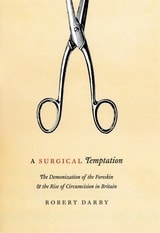
A Surgical Temptation
The Demonization of the Foreskin and the Rise of Circumcision in BritainRobert Darby
University of Chicago Press, 2005
Why Britain adopted a practice it had traditionally abhorred and then abandoned it after only two generations is the subject of A Surgical Temptation. Robert Darby reveals that circumcision has always been related to the question of how to control male sexuality. This study explores the process by which the male genitals, and the foreskin especially, were pathologized, while offering glimpses into the lives of such figures as James Boswell, John Maynard Keynes, and W. H. Auden. Examining the development of knowledge about genital anatomy, concepts of health, sexual morality, the rise of the medical profession, and the nature of disease, Darby shows how these factors transformed attitudes toward the male body and its management and played a vital role in the emergence of modern medicine.

A Tale of Two Murders
Passion and Power in Seventeenth-Century FranceJames R. Farr
Duke University Press, 2005
James R. Farr reveals the Giroux affair not only as a riveting murder mystery but also as an illuminating point of entry into the dynamics of power, justice, and law in seventeenth-century France. Drawing on the voluminous trial records, Farr uses Giroux’s experience in the court system to trace the mechanisms of power—both the formal power vested by law in judicial officials and the informal power exerted by the nobility through patron-client relationships. He does not take a position on Giroux’s guilt or innocence. Instead, he allows readers to draw their own conclusions about who did what to whom on that ill-fated evening in 1638.

A Theory of ISIS
Political Violence and the Global OrderMohammad-Mahmoud Ould Mohamedou
Pluto Press, 2017
Against these established narratives, Mohammad-Mahmoud Ould Mohamedou now presents his new theory of ISIS. Tracing the genealogy of ISIS and documenting its evolution in Iraq and Syria, he argues that ISIS has actually transcended Osama Bin Laden’s original scheme of Al Qaeda, mutating into a unprecedented hybrid between postcolonial violence, postmodernity, and postglobalization. A Theory of ISIS offers an original take on the militant group. Mohamedou explains the proliferation of terrorist attacks on the West and deepens our understanding of the group's impact on the very nature of contemporary political violence.

A Thirsty Land
The Fight for Water in TexasBy Seamus McGraw
University of Texas Press, 2018
As a changing climate threatens the whole country with deeper droughts and more furious floods that put ever more people and property at risk, Texas has become a bellwether state for water debates. Will there be enough water for everyone? Is there the will to take the steps necessary to defend ourselves against the sea? Is it in the nature of Americans to adapt to nature in flux?
The most comprehensive—and comprehensible—book on contemporary water issues, A Thirsty Land delves deep into the challenges faced not just by Texas but by the nation as a whole, as we struggle to find a way to balance the changing forces of nature with our own ever-expanding needs. Part history, part science, part adventure story, and part travelogue, this book puts a human face on the struggle to master that most precious and capricious of resources, water. Seamus McGraw goes to the taproots, talking to farmers, ranchers, businesspeople, and citizen activists, as well as to politicians and government employees. Their stories provide chilling evidence that Texas—and indeed the nation—is not ready for the next devastating drought, the next catastrophic flood. Ultimately, however, A Thirsty Land delivers hope. This deep dive into one of the most vexing challenges facing Texas and the nation offers glimpses of the way forward in the untapped opportunities that water also presents.
A Thousand Cuts
Digital Repression and Pro-Democracy Movements in ThailandJanjira Sombatpoonsiri
University of Wisconsin Press, 2027
In response to the 2020–21 youth-led protests throughout Thailand, which were largely fueled by discourse on digital platforms, the government launched a sweeping program of technological suppression. Smear campaigns were orchestrated to discredit young activists, laws were weaponized to criminalize their activities, and surveillance technologies were deployed to keep tabs on them.
In A Thousand Cuts, Janjira Sombatpoonsiri traces the historical development of repression in Thailand, detailing how “traditional” methods of repression have been merged with digital tools to maintain the status quo since 2005, when mass mobilization started to move online. By examining the adverse effects of digital repression on individual activists—their mental health, private lives, and socioeconomic resources—Sombatpoonsiri also offers one of the first systematic analyses of the “reception” side of repression, shedding light on its detrimental consequences for activists and mass movements as a whole.
A Thousand Screenplays
The French Imagination in a Time of CrisisSabine Chalvon-Demersay
University of Chicago Press, 1999
The time of crisis presented by the amateur writers was not one of war, famine, or disease—it was the millennial dilemma of representation. In a world plagued by alienation, individualization, and a lack of mobility, how can members of a society combat their declining senses of self?
Although the contestants wrote about life in France, their concerns and struggles have a distinctly universal ring. A lucid, witty writer, Chalvon-Demersay offers a clear, if still developing, photograph of the contemporary imagination.
A User's Guide to the Age of Tech
Grant Wythoff
University of Minnesota Press, 2025
How users experience and influence technological change—when so much of that change feels out of our control
Every day, we casually employ one of the most complex tools ever created, using it to read the news, plan our day, and connect with friends. In A User’s Guide to the Age of Tech, Grant Wythoff investigates the process by which now-ubiquitous technologies like our phones become integrated into our lives, showing how the “gadget” stage—before devices are widely adopted—opens the door for users to co-create these technologies and adapt them toward unexpected ends.
In this elegant, approachable work, Wythoff offers a view of how users make new technology their own, subverting dominant power structures and imagining uses never intended by their creators. Rooted in a detailed look into the history of technique (focusing on how we do things with tools rather than the tools themselves), A User’s Guide to the Age of Tech proceeds to complicate, and influence, discussion of subjects like the digital divide and AI.
Drawing on a range of sources, including novels, patents, and newspapers, Wythoff explores the vernacular philosophies that have emerged from users and their diverse, everyday practices, bringing down to earth the conversation about digital titans, away from the abstracted domains of server farms and algorithms. Lodging a passionate argument that we know ourselves better than the data brokers who appear to wield influence over our psyches, Wythoff invites readers (and tech users) to imagine their own digital technique, acknowledge their vast expertise, and see its immense value.
Retail e-book files for this title are screen-reader friendly with images accompanied by short alt text and/or extended descriptions.
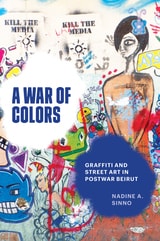
A War of Colors
Graffiti and Street Art in Postwar BeirutNadine A. Sinno
University of Texas Press, 2024
Demonstrates the role of Beirut’s postwar graffiti and street art in transforming the cityscape and animating resistance.
Over the last two decades in Beirut, graffiti makers have engaged in a fierce “war of colors,” seeking to disrupt and transform the city’s physical and social spaces. In A War of Colors, Nadine Sinno examines how graffiti and street art have been used in postwar Beirut to comment on the rapidly changing social dynamics of the country and region. Analyzing how graffiti makers can reclaim and transform cityscapes that were damaged or monopolized by militias during the war, Sinno explores graffiti’s other roles, including forging civic engagement, commemorating cultural icons, protesting political corruption and environmental violence, and animating resistance. In addition, she argues that graffiti making can offer voices to those who are often marginalized, especially women and LGBTQ people. Copiously illustrated with images of graffiti and street art, A War of Colors is a visually captivating and thought-provoking journey through Beirut, where local and global discourses intersect on both scarred and polished walls in the city.
A Will for the Machine
Computerization, Automation, and the Arts in South AfricaMark Sanders
University of Chicago Press, 2026
There are many books about the history and discourses of computerization in the United States but relatively little about these phenomena anywhere in the Global South. In A Will for the Machine, Mark Sanders outlines South Africa’s entry into the computer age in the 1960s and ’70s and explains how it coincided with the high point of apartheid. South Africa’s government viewed automation and computerization as one way of barring Black Africans from skilled work and reserving it for whites. Sanders unpacks this peculiar history, relates it to early twentieth-century struggles around mechanization in mining and telephony in South Africa, and analyzes responses to it by the writers Miriam Tlali and J. M. Coetzee, the artist William Kentridge, and Handspring Puppet Company. Showing how the arts realize ideas about the ethics and politics of automation, Sanders contributes to debates about locally divergent understandings of computer technology and human-computer interaction.
A World Growing Old
Jeremy Seabrook
Pluto Press, 2004
Yet this is only half the story. Populations in the poorer countries of the South are also ageing. Life-expectancy has increased due the availability of lifesaving medicine. Child mortality has decreased, so people are having smaller families. India will soon have one of the largest populations of over-sixties. The one-child policy in China will similarly lead to a severe imbalance in the age-profile of the people.
In A World Grown Old, Jeremy Seabrook examines the real implications of the ageing phenomenon and challenges our preconceptions about how it should be tackled. Arguing that the accumulated skills of the elderly should be employed to enrich society, rather than being perceived as a 'burden', he calls for a radical rethinking of our attitude to population issues, migration, social structures and employment policy.

ADVERSARIES OF DANCE
FROM THE PURITANS TO THE PRESENTAnn Wagner
University of Illinois Press, 1997
Whether in the private parlor, public hall, commercial "dance palace," or sleazy dive, dance has long been opposed by those who viewed it as immoral--more precisely as being a danger to the purity of those who practiced it, particularly women. In Adversaries of Dance, Ann Wagner presents a major study of opposition to dance over a period of four centuries in what is now the United States.
Wagner bases her work on the thesis that the tradition of opposition to dance "derived from white, male, Protestant clergy and evangelists who argued from a narrow and selective interpretation of biblical passages," and that the opposition thrived when denominational dogma held greater power over people's lives and when women's social roles were strictly limited.
Central to Wagner's work, which will be welcomed by scholars of both religion and dance, are issues of gender, race, and socioeconomic status.

AIDS Alibis
Sex, Drugs, and Crime in the AmericasStephanie Kane
Temple University Press, 1998
The stories reveal the dynamics that determine how the policy decisions of white-collar health care professionals actually play out in real life. By focusing on life-changing social problems, the narratives highlight the contradictions between public health and criminal law. Look at how HIV has transformed our social consciousness, from intimate touch to institutional outreach. But, Kane argues, these changes are dwarfed by the United States's refusal to stop the war on drugs, in effect misdirecting resources and awareness.
AIDS Alibis combines empirical and interpretive methods in a path-breaking attempt to recognize the extent to which coercive institutional practices are implicated in HIV transmission patterns. Kane shows how th e virus feeds on the politics of inequality and indifference, even as it exploits the human need for intimacy and release.

AIDS Doesn't Show Its Face
Inequality, Morality, and Social Change in NigeriaDaniel Jordan Smith
University of Chicago Press, 2014
Drawing on twenty years of fieldwork in Nigeria, Smith tells a story of dramatic social changes, ones implicated in the same inequalities that also factor into local perceptions about AIDS—inequalities of gender, generation, and social class. Nigerians, he shows, view both social inequality and the presence of AIDS in moral terms, as kinds of ethical failure. Mixing ethnographies that describe everyday life with pointed analyses of public health interventions, he demonstrates just how powerful these paired anxieties—medical and social—are, and how the world might better alleviate them through a more sensitive understanding of their relationship.
AIDS and the Distribution of Crises
Jih-Fei Cheng, Alexandra Juhasz, and Nishant Shahani, editors
Duke University Press, 2020
Contributors. Cecilia Aldarondo, Pablo Alvarez, Marlon M. Bailey, Emily Bass, Darius Bost, Ian Bradley-Perrin, Jih-Fei Cheng, Bishnupriya Ghosh, Roger Hallas, Pato Hebert, Jim Hubbard, Andrew J. Jolivette, Julia S. Jordan-Zachery, Alexandra Juhasz, Dredge Byung'chu Kang-Nguyễn, Theodore (Ted) Kerr, Catherine Yuk-ping Lo, Cait McKinney, Viviane Namaste, Elton Naswood, Cindy Patton, Margaret Rhee, Juana María Rodríguez, Sarah Schulman, Nishant Shahani, C. Riley Snorton, Eric A. Stanley, Jessica Whitbread, Quito Ziegler

AIDS and the National Body
Thomas E. Yingling
Duke University Press, 1997
Contemplating the contradictions of individual identity from within a human body adapting to and living within a collective national culture, Yingling delves into such issues as canon formation, poetic theory, and the rhetoric of the body in American popular culture. In addition to Wiegman’s illuminating introduction, the conversation is joined by four other scholars—Michael Awkward, Robert L. Caserio, Stephen Melville, and David Román—whose critical and personal responses to Yingling’s writing weigh in throughout the volume. What emerges is a collection that embodies the particular difficulties of living with AIDS, of outliving someone who has died of AIDS, and of losing prematurely an important thinker.
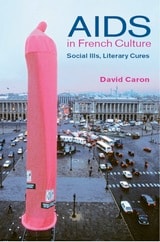
AIDS in French Culture
Social Ills, Literary CuresDavid Caron
University of Wisconsin Press, 2001
The deluge of metaphors triggered in 1981 in France by the first public reports of what would turn out to be the AIDS epidemic spread with far greater speed and efficiency than the virus itself. To understand why it took France so long to react to the AIDS crisis, AIDS in French Culture analyzes the intersections of three discourses—the literary, the medical, and the political—and traces the origin of French attitudes about AIDS back to nineteenth-century anxieties about nationhood, masculinity, and sexuality.

Aazheyaadizi
Worldview, Language, and the Logics of DecolonizationMark D. Freeland
Michigan State University Press, 2020

Abalone Tales
Collaborative Explorations of Sovereignty and Identity in Native CaliforniaLes W. Field
Duke University Press, 2008
Tales about abalone and their historical and contemporary meanings are related by Field and his coauthors, who include the chair and other members of the Muwekma Ohlone Tribe; a Point Arena Pomo elder; the chair of the Wiyot tribe and her sister; several Hupa Indians; and a Karuk scholar, artist, and performer. Reflecting the divergent perspectives of various Native groups and people, the stories and analyses belie any presumption of a single, unified indigenous understanding of abalone. At the same time, they shed light on abalone’s role in cultural revitalization, struggles over territory, tribal appeals for federal recognition, and connections among California’s Native groups. While California’s abalone are in danger of extinction, their symbolic power appears to surpass even the environmental crises affecting the state’s vulnerable coastline.

Abject Performances
Aesthetic Strategies in Latino Cultural ProductionLeticia Alvarado
Duke University Press, 2018

Abject Relations
Everyday Worlds of AnorexiaWarin, Megan
Rutgers University Press, 2009
Unraveling anorexia's complex relationships and contradictions, Warin provides a new theoretical perspective rooted in a socio-cultural context of bodies and gender. Abject Relations departs from conventional psychotherapy approaches and offers a different "logic," one that involves the shifting forces of power, disgust, and desire and provides new ways of thinking that may have implications for future treatment regimes.
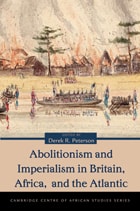
Abolitionism and Imperialism in Britain, Africa, and the Atlantic
Derek R. Peterson
Ohio University Press, 2010
The abolition of the slave trade is normally understood to be the singular achievement of eighteenth-century British liberalism. Abolitionism and Imperialism in Britain, Africa, and the Atlantic expands both the temporal and the geographic framework in which the history of abolitionism is conceived. Abolitionism was a theater in which a variety of actors—slaves, African rulers, Caribbean planters, working-class radicals, British evangelicals, African political entrepreneurs—played a part. The Atlantic was an echo chamber, in which abolitionist symbols, ideas, and evidence were generated from a variety of vantage points. These essays highlight the range of political and moral projects in which the advocates of abolitionism were engaged, and in so doing it joins together geographies that are normally studied in isolation.
Where empires are often understood to involve the government of one people over another, Abolitionism and Imperialism shows that British values were formed, debated, and remade in the space of empire. Africans were not simply objects of British liberals’ benevolence. They played an active role in shaping, and extending, the values that Britain now regards as part of its national character. This book is therefore a contribution to the larger scholarship about the nature of modern empires.
Contributors: Christopher Leslie Brown, Seymour Drescher, Jonathon Glassman, Boyd Hilton, Robin Law, Phillip D. Morgan, Derek R. Peterson, John K. Thornton

Abolitionist Intimacies
Queer and Trans Migrants against the Deportation StateEithne Luibheid
Duke University Press, 2025

Abortion at Work
Ideology and Practice in a Feminist ClinicSimonds, Wendy
Rutgers University Press, 1996
These are the questions that drive Wendy Simonds' Abortion at Work. Simonds documents the ways in which workers at a feminist clinic construct compelling feminist visions, and also watch their ideals fall short in practice. Simonds interprets these women's narratives to get at how abortion works on feminism, and to show what feminism can gain by rethinking abortion utilizing these activists' terms. In thoroughly engaging prose, Simonds frames her analysis with a moving account of her own personal understanding of the issues.
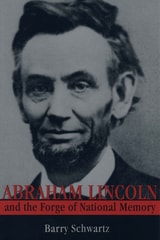
Abraham Lincoln and the Forge of National Memory
Barry Schwartz
University of Chicago Press, 2000
Schwartz draws on a wide array of materials—painting and sculpture, popular magazines and school textbooks, newspapers and oratory—to examine the role that Lincoln's memory has played in American life. He explains, for example, how dramatic funeral rites elevated Lincoln's reputation even while funeral eulogists questioned his presidential actions, and how his reputation diminished and grew over the next four decades. Schwartz links transformations of Lincoln's image to changes in the society. Commemorating Lincoln helped Americans to think about their country's development from a rural republic to an industrial democracy and to articulate the way economic and political reform, military power, ethnic and race relations, and nationalism enhanced their conception of themselves as one people.
Lincoln's memory assumed a double aspect of "mirror" and "lamp," acting at once as a reflection of the nation's concerns and an illumination of its ideals, and Schwartz offers a fascinating view of these two functions as they were realized in the commemorative symbols of an ever-widening circle of ethnic, religious, political, and regional communities. The first part of a study that will continue through the present, Abraham Lincoln and the Forge of National Memory is the story of how America has shaped its past selectively and imaginatively around images rooted in a real person whose character and achievements helped shape his country's future.

Absolute Erotic, Absolute Grotesque
The Living, Dead, and Undead in Japan's Imperialism, 1895-1945Mark Driscoll
Duke University Press, 2010

Abstract Barrios
The Crises of Latinx Visibility in CitiesJohana Londoño
Duke University Press, 2020
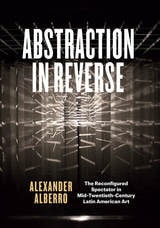
Abstraction in Reverse
The Reconfigured Spectator in Mid-Twentieth-Century Latin American ArtAlexander Alberro
University of Chicago Press, 2017
Alexander Alberro demonstrates that artists such as Tomás Maldonado, Jesús Soto, Julio Le Parc, and Lygia Clark, in breaking with the core tenets of the form of abstract art known as Concrete art, redefined the role of both the artist and the spectator. Instead of manufacturing autonomous art, these artists produced artworks that required the presence of the spectator to be complete. Alberro also shows the various ways these artists strategically demoted regionalism in favor of a new modernist voice that transcended the traditions of the nation-state and contributed to a nascent globalization of the art world.
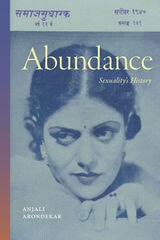
Abundance
Sexuality’s HistoryAnjali Arondekar
Duke University Press, 2023
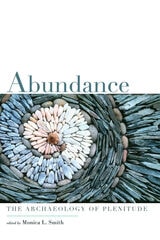
Abundance
The Archaeology of PlenitudeMonica L. Smith
University Press of Colorado, 2020
Using case studies from around the globe—including Mesoamerica, North and South America, Africa, China, and the Greco-Roman world—and across multiple time periods, the authors in this volume make the case that abundance provides an essential explanatory perspective on ancient peoples’ choices and activities. Economists frequently focus on scarcity as a driving principle in the development of social and economic hierarchies, yet focusing on plenitude enables the understanding of a range of cohesive behaviors that were equally important for the development of social complexity.
Our earliest human ancestors were highly mobile hunter-gatherers who sought out places that provided ample food, water, and raw materials. Over time, humans accumulated and displayed an increasing quantity and variety of goods. In households, shrines, tombs, caches, and dumps, archaeologists have discovered large masses of materials that were deliberately gathered, curated, distributed, and discarded by ancient peoples. The volume’s authors draw upon new economic theories to consider the social, ideological, and political implications of human engagement with abundant quantities of resources and physical objects and consider how individual and household engagements with material culture were conditioned by the quest for abundance.
Abundance shows that the human propensity for mass consumption is not just the result of modern production capacities but fulfills a longstanding focus on plenitude as both the assurance of well-being and a buffer against uncertainty. This book will be of great interest to scholars and students in economics, anthropology, and cultural studies.
Contributors: Traci Ardren, Amy Bogaard, Elizabeth Klarich, Abigail Levine, Christopher R. Moore, Tito E. Naranjo, Stacey Pierson, James M. Potter, François G. Richard, Christopher W. Schmidt, Carol Schultze, Payson Sheets, Monica L. Smith, Katheryn C. Twiss, Mark D. Varien, Justin St. P. Walsh, María Nieves Zedeño

Academic Disciplines
Holland's Theory and the Study of College Students and FacultyJohn C. Smart
Vanderbilt University Press, 2000
Using as a framework the "theory of careers" developed by John L. Holland, the authors of this volume examine the patterns of student stability and change inherent in the college experience, as well as the variations in professional attitudes and behaviors of college faculty. Their goal is to learn more about what colleges and universities might do to facilitate the retention, satisfaction, and learning of their students.
For example, why should faculties split over student-oriented teaching strategies, one group favoring the formal, structured classroom, the other a freer, more spontaneous environment? Why do some undergraduates become independent thinkers with strong analytical, mathematical, and scientific competencies while others develop powerful interpersonal and group leadership skills?
Holland's theory--at its core a person-environment fit theory--assumes that there are six personality types and six analogous academic environments and that the educational persistence, satisfaction, and achievement of students are a function of the congruence or "fit" between students and their academic environments. The authors also assume that there are circumstances under which the environments of the major field exert more influence on students than do the students' own personality traits. Applying Holland's theory to distinctive clusters of academic disciplines, the authors have found that the answers to such fundamental questions as those asked above emanate from a basic understanding of the influences of academic disciplines and the manner by which they shape the patterns of thought and behavior of both college students and faculty.
Academic Disciplines will benefit researchers and graduate students who study college students and faculty, as well as administrators and policymakers responsible for the performance of colleges and universities.
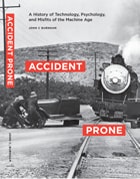
Accident Prone
A History of Technology, Psychology, and Misfits of the Machine AgeJohn C. Burnham
University of Chicago Press, 2009
Technology demands uniformity from human beings who encounter it. People encountering technology, however, differ from one another. Thinkers in the early twentieth century, observing the awful consequences of interactions between humans and machines—death by automobiles or dismemberment by factory machinery, for example—developed the idea of accident proneness: the tendency of a particular person to have more accidents than most people. In tracing this concept from its birth to its disappearance at the end of the twentieth century, Accident Prone offers a unique history of technology focused not on innovations but on their unintended consequences.
Here, John C. Burnham shows that as the machine era progressed, the physical and economic impact of accidents coevolved with the rise of the insurance industry and trends in twentieth-century psychology. After World War I, psychologists determined that some people are more accident prone than others. This designation signaled a shift in social strategy toward minimizing accidents by diverting particular people away from dangerous environments. By the 1960s and 1970s, however, the idea of accident proneness gradually declined, and engineers developed new technologies to protect all people, thereby introducing a hidden, but radical, egalitarianism.
Lying at the intersection of the history of technology, the history of medicine and psychology, and environmental history, Accident Prone is an ambitious intellectual analysis of the birth, growth, and decline of an idea that will interest anyone who wishes to understand how Western societies have grappled with the human costs of modern life.
Accounting for Capitalism
The World the Clerk MadeMichael Zakim
University of Chicago Press, 2018
The story of how everyday nineteenth-century clerks helped to articulate modern capitalism.
The clerk attended his desk and counter at the intersection of two great themes of modern historical experience: the development of a market economy and a society governed from below. Who better illustrates the daily practice and production of this modernity than someone of no particular account assigned with overseeing all the new buying and selling? In Accounting for Capitalism, Michael Zakim has written their story, a social history of capital that seeks to explain how the “bottom line” became a synonym for truth in an age shorn of absolutes, grafted onto our very sense of reason and trust.
This is a big story, told through an ostensibly marginal event: the birth of a class of “merchant clerks” in the United States in the middle of the nineteenth century. The personal trajectory of these young men from farm to metropolis, homestead to boarding house, and, most significantly, from growing things to selling them exemplified the enormous social effort required to domesticate the profit motive and turn it into the practical foundation of civic life. As Zakim reveals in his highly original study, there was nothing natural or preordained about the stunning ascendance of this capitalism and its radical transformation of the relationship between “Man and Mammon.”

Accounting for Violence
Marketing Memory in Latin AmericaKsenija Bilbija and Leigh A. Payne, eds.
Duke University Press, 2011
Contributors. Rebecca J. Atencio, Ksenija Bilbija, Jo-Marie Burt, Laurie Beth Clark, Cath Collins, Susana Draper, Nancy Gates-Madsen, Susana Kaiser, Cynthia E. Milton, Alice A. Nelson, Carmen Oquendo Villar, Leigh A. Payne, José Ramón Ruisánchez Serra, Maria Eugenia Ulfe
Accumulation
The Art, Architecture, and Media of Climate ChangeNick Axel
University of Minnesota Press, 2022
Examines how images of accumulation help open up the climate to political mobilization
The current epoch is one of accumulation: not only of capital but also of raw, often unruly material, from plastic in the ocean and carbon in the atmosphere to people, buildings, and cities. Alongside this material growth, image-making practices embedded within the fields of art and architecture have proven to be fertile, mobile, and capacious. Images of accumulation help open up the climate to cultural inquiry and political mobilization and have formed a cultural infrastructure focused on the relationships between humans, other species, and their environments.
The essays in Accumulation address this cultural infrastructure and the methodological challenges of its analysis. They offer a response to the relative invisibility of the climate now seen as material manifestations of social behavior. Contributors outline opportunities and ambitions of visual scholarship as a means to encounter the challenges emergent in the current moment: how can climate become visible, culturally and politically? Knowledge of climatic instability can change collective behavior and offer other trajectories, counteraccumulations that draw the present into a different, more livable, future.
Contributors: Emily Apter, New York U; Hans Baumann; Amanda Boeztkes, U of Guelph; Dominic Boyer, Rice U; Lindsay Bremner, U of Westminster; Nerea Calvillo, U of Warwick; Beth Cullen, U of Westminster; T. J. Demos, U of California, Santa Cruz; Jeff Diamanti, U of Amsterdam; Jennifer Ferng, U of Sydney; Jennifer Gabrys, U of Cambridge; Ian Gray, U of California, Los Angeles; Gökçe Günel, Rice U; Orit Halpern, Concordia U; Gabrielle Hecht, Stanford U; Cymene Howe, Rice U; Wendy Hui Kyong Chun, Simon Fraser U; Robin Kelsey, Harvard U; Bruno Latour, Sciences Po, Paris; Hannah le Roux, U of the Witwatersrand, Johannesburg; Stephanie LeMenager, U of Oregon; Nashin Mahtani; Kiel Moe, McGill U; Karen Pinkus, Cornell U; Stephanie Wakefield, Life U; McKenzie Wark, The New School; Kathryn Yusoff, Queen Mary U of London.

Acid Hype
American News Media and the Psychedelic ExperienceSteven Siff
University of Illinois Press, 2015
Acid Hype offers the untold tale of LSD's wild journey from Brylcreem and Ivory soap to incense and peppermints. As Stephen Siff shows, the early attention lavished on the drug by the news media glorified its use in treatments for mental illness but also its status as a mystical--yet legitimate--gateway to exploring the unconscious mind. Siff's history takes readers to the center of how popular media hyped psychedelic drugs in a constantly shifting legal and social environment, producing an intricate relationship between drugs and media experience that came to define contemporary pop culture. It also traces how the breathless coverage of LSD gave way to a textbook moral panic, transforming yesterday's refined seeker of truths into an acid casualty splayed out beyond the fringe of polite society.

Acknowledging Writing Partners
Laura Micciche
University Press of Colorado, 2017
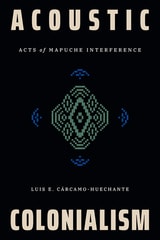
Acoustic Colonialism
Acts of Mapuche InterferenceLuis E. Cárcamo-Huechante
Duke University Press, 2025
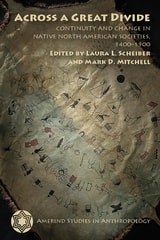
Across a Great Divide
Continuity and Change in Native North American Societies, 1400–1900Edited by Laura L. Scheiber and Mark D. Mitchell
University of Arizona Press, 2010
The contributors address a series of interlocking themes. Several consider the role of indigenous agency in the processes of colonial interaction, paying particular attention to gender and status. Others examine the ways long-standing native political economies affected, and were in turn affected by, colonial interaction. A third group explores colonial-period ethnogenesis, emphasizing the emergence of new native social identities and relations after 1500. The book also highlights tensions between the detailed study of local cases and the search for global processes, a recurrent theme in postcolonial research.
If archaeologists are to bridge the artificial divide separating history from prehistory, they must overturn a whole range of colonial ideas about American Indians and their history. This book shows that empirical archaeological research can help replace long-standing models of indigenous culture change rooted in colonialist narratives with more nuanced, multilinear models of change—and play a major role in decolonizing knowledge about native peoples.
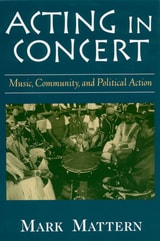
Acting in Concert
Music, Community, and Political ActionMattern, Mark
Rutgers University Press, 1998
More than just entertainment, Mattern argues that popular music can serve as a social glue for bringing together a multitude of voices that might otherwise remain silent, and that political action through music can increase the potential for relatively marginalized people to choose and determine their own fate.
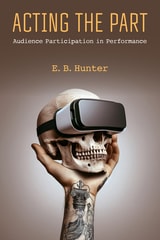
Acting the Part
Audience Participation in PerformanceE. B. Hunter
University of Michigan Press, 2025

Acting with the World
Agency in the AnthropoceneAndrew Pickering
Duke University Press, 2025
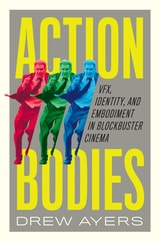
Action Bodies
VFX, Identity, and Embodiment in Blockbuster CinemaDrew Ayers
University of Texas Press, 2026
Exploring how digital visual effects have changed the representations of the body and identity in action films.
When Harrison Ford appeared digitally de-aged in Indiana Jones and the Dial of Destiny, audiences witnessed more than a technical feat; they saw how visual effects are reshaping what bodies can be on screen. In Action Bodies, Drew Ayers examines how the contemporary action genre redefines embodiment across human, superhuman, animal, and machine forms. Ayers argues that action films are a crucial site for understanding how popular media both reflect and shape cultural debates about identity, citizenship, disability, and ethics in the era of big data and algorithmic culture.
Through case studies including Top Gun: Maverick, The Woman King, The Fast & the Furious franchise, and Avatar: The Way of Water, Ayers explores how VFX-altered bodies carry ideological weight. While the action genre has long leaned conservative in its politics of identity, its digitally mediated bodies also generate unexpected opportunities: glimpses of more inclusive and flexible modes of embodiment. As artificial intelligence and synthetic imagery continue to transform film production, Action Bodies demonstrates why careful attention to action cinema is essential for understanding how contemporary culture imagines and engineers the future of the body.

ActivAmerica
Meagan Cass
University of North Texas Press, 2018

Activism and the Olympics
Dissent at the Games in Vancouver and LondonBoykoff, Jules
Rutgers University Press, 2014
In Activism and the Olympics, Boykoff provides a critical overview of the Olympic industry and its political opponents in the modern era. After presenting a brief history of Olympic activism, he turns his attention to on-the-ground activism through the lens of the Vancouver 2010 Winter Olympics and the 2012 Summer Olympics in London. Here we see how anti-Olympic activists deploy a range of approaches to challenge the Olympic machine, from direct action and the seizure of public space to humor-based and online tactics. Drawing on primary evidence from myriad personal interviews with activists, journalists, civil libertarians, and Olympics organizers, Boykoff angles in on the Games from numerous vantages and viewpoints.
Although modern Olympic authorities have strived—even through the Cold War era—to appear apolitical, Boykoff notes, the Games have always been the site of hotly contested political actions and competing interests. During the last thirty years, as the Olympics became an economic juggernaut, they also generated numerous reactions from groups that have sought to challenge the event’s triumphalism and pageantry. The 21st century has seen an increased level of activism across the world, from the Occupy Movement in the United States to the Arab Spring in the Middle East. What does this spike in dissent mean for Olympic activists as they prepare for future Games?