Results by title
22279 books match the query 'Social Science' and 1819 start with a
Alternative Realities
Carl Plantinga
Rutgers University Press, 2021
Alternative Realities explores how these distinctions between cinematic fantasy and filmic realism are more porous than we might think. Through a close analysis of CGI-heavy blockbusters like Wonder Woman and Guardians of the Galaxy, it considers how even popular fantasies are grounded in emotional and social realities. Conversely, it examines how mockumentaries like This is Spinal Tap satirically call attention to the highly stylized techniques documentarians use to depict reality.
Alternative Realities takes us on a journey through many different genres of film, from the dream-like and subjective realities depicted in movies like Eternal Sunshine of the Spotless Mind and Memento, to the astonishing twists of movies like Shutter Island and The Matrix, which leave viewers in a state of epistemic uncertainty. Ultimately, it shows us how the power of cinema comes from the unique way it fuses together the objective and the subjective, the fantastical and the everyday.
Alternatives to Assimilation
The Response of Reform Judaism to American Culture, 1840–1930Alan Silverstein
Brandeis University Press, 1995
Altruism, Morality, and Economic Theory
Edmund S. Phelps
Russell Sage Foundation, 1975
Altruistically Inclined?
The Behavioral Sciences, Evolutionary Theory, and the Origins of ReciprocityAlexander J. Field
University of Michigan Press, 2004
Altruistically Inclined? examines the implications of recent research in the natural sciences for two important social scientific approaches to individual behavior: the economic/rational choice approach and the sociological/anthropological. It considers jointly two controversial and related ideas: the operation of group selection within early human evolutionary processes and the likelihood of modularity—domain-specific adaptations in our cognitive mechanisms and behavioral predispositions.
Experimental research shows that people will often cooperate in one-shot prisoner's dilemma (PD) games and reject positive offers in ultimatum games, contradicting commonly accepted notions of rationality. Upon first appearance, predispositions to behave in this fashion could not have been favored by natural selection operating only at the level of the individual organism.
Emphasizing universal and variable features of human culture, developing research on how the brain functions, and refinements of thinking about levels of selection in evolutionary processes, Alexander J. Field argues that humans are born with the rudiments of a PD solution module—and differentially prepared to learn norms supportive of it. His emphasis on failure to harm, as opposed to the provision of affirmative assistance, as the empirically dominant form of altruistic behavior is also novel.
The point of departure and principal point of reference is economics. But Altruistically Inclined? will interest a broad range of scholars in the social and behavioral sciences, natural scientists concerned with the implications of research and debates within their fields for the conduct of work elsewhere, and educated lay readers curious about essential features of human nature.
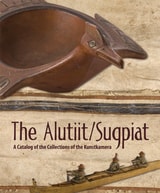
Alutiit/Sugpiat
A Catalog of the Collections of the KunstkameraEdited by Yuri E. Berezkin
University of Alaska Press, 2012
This beautifully photographed book catalogs the collection of nearly five hundred Alutiiq cultural items held by the Peter the Great Museum of Anthropology and Ethnography, or the Kunstkamera, in St. Petersburg, Russia. Gathered between 1780 and 1867, many of the artifacts are composed of fur, feathers, gut, hair, and other delicate materials, which prevent their transport for display or study.
Always an Academic Immigrant
A Collective MemoirDafna Lemish
Rutgers University Press, 2025
Always an Academic Immigrant is a collective memoir that gives voice to eighty-one academics who immigrated from thirty-seven countries for a career in an institution of higher education, in either the United States or one of ten other countries. Through in-depth interviews and observations from her own experiences as an immigrant scholar, Dafna Lemish shares the highs and the lows that academic immigrants feel as they search for both a country and an institution they can call home. She discovers the formative events that led these scholars to pursue careers outside their native lands and details the challenges they faced adapting to unspoken expectations in their new countries and workplaces. Ultimately, this book reveals the strategies that immigrant professors use to bridge their native and adoptive cultures while highlighting the vital contributions they have made to academia as scholars, teachers, and leaders.
Am I Still A Woman
Hysterectomy And Gender IdentityJean Elson
Temple University Press, 2003
Am I That Name
Feminism And The Category Of Women In HistoryDenise Riley
University of Minnesota Press, 2003
Writing about changes in the notion of womanhood, Denise Riley examines, in the manner of Foucault, shifting historical constructions of the category of “women” in relation to other categories central to concepts of personhood: the soul, the mind, the body, nature, the social.
Feminist movements, Riley argues, have had no choice but to play out this indeterminacy of women. This is made plain in their oscillations, since the 1790s, between concepts of equality and of difference. To fully recognize the ambiguity of the category of “women” is, she contends, a necessary condition for an effective feminist political philosophy.
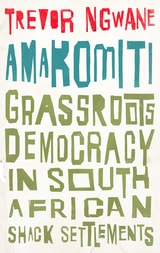
Amakomiti
Grassroots Democracy in South African Shack SettlementsTrevor Ngwane
Pluto Press, 2021
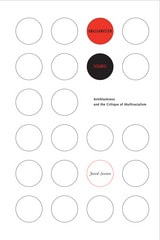
Amalgamation Schemes
Antiblackness and the Critique of MultiracialismJared Sexton
University of Minnesota Press, 2008
Despite being heralded as the answer to racial conflict in the post–civil rights United States, the principal political effect of multiracialism is neither a challenge to the ideology of white supremacy nor a defiance of sexual racism. More accurately, Jared Sexton argues in Amalgamation Schemes, multiculturalism displaces both by evoking long-standing tenets of antiblackness and prescriptions for normative sexuality.
In this timely and penetrating analysis, Sexton pursues a critique of contemporary multiracialism, from the splintered political initiatives of the multiracial movement to the academic field of multiracial studies, to the melodramatic media declarations about “the browning of America.” He contests the rationales of colorblindness and multiracial exceptionalism and the promotion of a repackaged family values platform in order to demonstrate that the true target of multiracialism is the singularity of blackness as a social identity, a political organizing principle, and an object of desire. From this vantage, Sexton interrogates the trivialization of sexual violence under chattel slavery and the convoluted relationship between racial and sexual politics in the new multiracial consciousness.
An original and challenging intervention, Amalgamation Schemes posits that multiracialism stems from the conservative and reactionary forces determined to undo the gains of the modern civil rights movement and dismantle radical black and feminist politics.
Jared Sexton is assistant professor of African American studies and film and media studies at the University of California, Irvine.

Amateur Images and Global News
Kari Andén-Papadopoulos and Mervi Pantti
Intellect Books, 2011
Modern technology has enabled anyone with a digital camera or cell phone to capture images of newsworthy events as they develop, and news organizations around the world increasingly depend on these amateur images for their coverage of unfolding events. However, with globalization facilitating wider circulation, critics have expressed strong concern over exactitude and objectivity. The first book on this topic, Amateur Images and Global News considers at length the ethical and professional issues that arise with the use of amateur images in the mainstream news media—as well as their role in producing knowledge and framing meanings of disasters in global and national contexts.
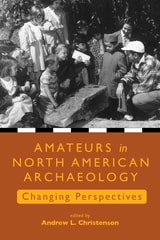
Amateurs in North American Archaeology
Changing PerspectivesEdited by Andrew L. Christenson
University of Utah Press, 2025
Until the mid-twentieth century, professional archaeologists readily worked alongside amateur or avocational archaeologists—those who did not have an academic, professional, or governmental affiliation. However, the gulf between professionals and amateurs has grown in recent decades, and amateurs are now often viewed more warily and are even conflated with looters. Amateurs in North American Archaeology traces the trajectory of this change, noting its implications for archaeological studies across the continent.
The volume’s contributors discuss time periods, noteworthy individuals, archaeological societies, and geographical regions, offering a wide-ranging perspective on a topic that is frequently overlooked. Though the book evaluates the past, it also makes crucial claims for the future of effective, inclusive archaeological study, emphasizing the importance of diverse perspectives and alternate interpretations.
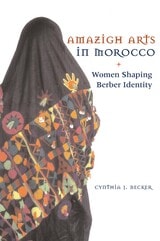
Amazigh Arts in Morocco
Women Shaping Berber IdentityBy Cynthia Becker
University of Texas Press, 2006
In southeastern Morocco, around the oasis of Tafilalet, the Ait Khabbash people weave brightly colored carpets, embroider indigo head coverings, paint their faces with saffron, and wear ornate jewelry. Their extraordinarily detailed arts are rich in cultural symbolism; they are always breathtakingly beautiful—and they are typically made by women. Like other Amazigh (Berber) groups (but in contrast to the Arab societies of North Africa), the Ait Khabbash have entrusted their artistic responsibilities to women. Cynthia Becker spent years in Morocco living among these women and, through family connections and female fellowship, achieved unprecedented access to the artistic rituals of the Ait Khabbash. The result is more than a stunning examination of the arts themselves, it is also an illumination of women's roles in Islamic North Africa and the many ways in which women negotiate complex social and religious issues.
One of the reasons Amazigh women are artists is that the arts are expressions of ethnic identity, and it follows that the guardians of Amazigh identity ought to be those who literally ensure its continuation from generation to generation, the Amazigh women. Not surprisingly, the arts are visual expressions of womanhood, and fertility symbols are prevalent. Controlling the visual symbols of Amazigh identity has given these women power and prestige. Their clothing, tattoos, and jewelry are public identity statements; such public artistic expressions contrast with the stereotype that women in the Islamic world are secluded and veiled. But their role as public identity symbols can also be restrictive, and history (French colonialism, the subsequent rise of an Arab-dominated government in Morocco, and the recent emergence of a transnational Berber movement) has forced Ait Khabbash women to adapt their arts as their people adapt to the contemporary world. By framing Amazigh arts with historical and cultural context, Cynthia Becker allows the reader to see the full measure of these fascinating artworks.
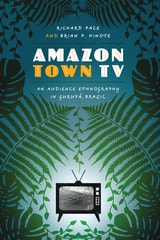
Amazon Town TV
An Audience Ethnography in Gurupá, BrazilBy Richard Pace and Brian P. Hinote
University of Texas Press, 2013
In 1983, anthropologist Richard Pace began his fieldwork in the Amazonian community of Gurupá one year after the first few television sets arrived. On a nightly basis, as the community’s electricity was turned on, he observed crowds of people lining up outside open windows or doors of the few homes possessing TV sets, intent on catching a glimpse of this fascinating novelty. Stoic, mute, and completely absorbed, they stood for hours contemplating every message and image presented. So begins the cultural turning point that is the basis of Amazon Town TV, a rich analysis of Gurupá in the decades during and following the spread of television.
Pace worked with sociologist Brian Hinote to explore the sociocultural implications of television’s introduction in this community long isolated by geographic and communication barriers. They explore how viewers change their daily routines to watch the medium; how viewers accept, miss, ignore, negotiate, and resist media messages; and how television’s influence works within the local cultural context to modify social identities, consumption patterns, and worldviews.
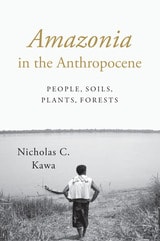
Amazonia in the Anthropocene
People, Soils, Plants, ForestsBy Nicholas C. Kawa
University of Texas Press, 2016
Widespread human alteration of the planet has led many scholars to claim that we have entered a new epoch in geological time: the Anthropocene, an age dominated by humanity. This ethnography is the first to directly engage the Anthropocene, tackling its problems and paradoxes from the vantage point of the world’s largest tropical rainforest.
Drawing from extensive ethnographic research, Nicholas Kawa examines how pre-Columbian Amerindians and contemporary rural Amazonians have shaped their environment, describing in vivid detail their use and management of the region’s soils, plants, and forests. At the same time, he highlights the ways in which the Amazonian environment resists human manipulation and control—a vital reminder in this time of perceived human dominance. Written in engaging, accessible prose, Amazonia in the Anthropocene offers an innovative contribution to debates about humanity’s place on the planet, encouraging deeper ecocentric thinking and a more inclusive vision of ecology for the future.
Amazonian Indians from Prehistory to the Present
Anthropological PerspectivesAnna Roosevelt
University of Arizona Press, 1994
CONTENTS
Amazonian Anthropology: Strategy for a New Synthesis, Anna C. Roosevelt
The Ancient Amerindian Polities of the Amazon, Orinoco and Atlantic Coast: A Preliminary Analysis of Their Passage from Antiquity to Extinction, Neil Lancelot Whitehead
The Impact of Conquest on Contemporary Indigenous Peoples of the Guiana Shield: The System of Orinoco Regional Interdependence, Nelly Arvelo-Jiménez and Horacio Biord
Social Organization and Political Power in the Amazon Floodplain: The Ethnohistorical Sources, Antonio Porro
The Evidence for the Nature of the Process of Indigenous Deculturation and Destabilization in the Amazon Region in the Last 300 Years: Preliminary Data, Adélia Engrácia de Oliveira
Health and Demography of Native Amazonians: Historical Perspective and Current Status, Warren M. Hern
Diet and Nutritional Status of Amazonian Peoples, Darna L. Dufour
Hunting and Fishing in Amazonia: Hold the Answers, What are the Questions?, Stephen Beckerman
Homeostasis as a Cultural System: The Jivaro Case, Philippe Descola
Farming, Feuding, and Female Status: The Achuara Case, Pita Kelekna
Subsistence Strategy, Social Organization, and Warfare in Central Brazil in the Context of European Penetration, Nancy M. Flowers
Environmental and Social Implications of Pre- and Post-Contact Situations on Brazilian Indians: The Kayapo and a New Amazonian Synthesis, Darrell Addison Posey
Beyond Resistance: A Comparative Study of Utopian Renewal in Amazonia, Michael F. Brown
The Eastern Bororo Seen from an Archaeological Perspective, Irmhilde Wüst
Genetic Relatedness and Language Distributions in Amazonia, Harriet E. Manelis Klein
Language, Culture, and Environment: Tup¡-Guaran¡ Plant Names Over Time, William Balée and Denny Moore
Becoming Indian: The Politics of Tukanoan Ethnicity, Jean E. Jackson

Amazons of the Huk Rebellion
Gender, Sex, and Revolution in the PhilippinesVina A. Lanzona
University of Wisconsin Press, 2009
Drawing on interviews with over one hundred veterans of the movement, Vina A. Lanzona explores the Huk rebellion from the intimate and collective experiences of its female participants, demonstrating how their presence, and the complex questions of gender, family, and sexuality they provoked, ultimately shaped the nature of the revolutionary struggle.
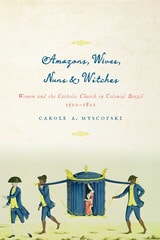
Amazons, Wives, Nuns, and Witches
Women and the Catholic Church in Colonial Brazil, 1500-1822By Carole A. Myscofski
University of Texas Press, 2013
The Roman Catholic church played a dominant role in colonial Brazil, so that women’s lives in the colony were shaped and constrained by the Church’s ideals for pure women, as well as by parallel concepts in the Iberian honor code for women. Records left by Jesuit missionaries, Roman Catholic church officials, and Portuguese Inquisitors make clear that women’s daily lives and their opportunities for marriage, education, and religious practice were sharply circumscribed throughout the colonial period. Yet these same documents also provide evocative glimpses of the religious beliefs and practices that were especially cherished or independently developed by women for their own use, constituting a separate world for wives, mothers, concubines, nuns, and witches.
Drawing on extensive original research in primary manuscript and printed sources from Brazilian libraries and archives, as well as secondary Brazilian historical works, Carole Myscofski proposes to write Brazilian women back into history, to understand how they lived their lives within the society created by the Portuguese imperial government and Luso-Catholic ecclesiastical institutions. Myscofski offers detailed explorations of the Catholic colonial views of the ideal woman, the patterns in women’s education, the religious views on marriage and sexuality, the history of women’s convents and retreat houses, and the development of magical practices among women in that era. One of the few wide-ranging histories of women in colonial Latin America, this book makes a crucial contribution to our knowledge of the early modern Atlantic World.

Ambient Media
Japanese Atmospheres of SelfPaul Roquet
University of Minnesota Press, 2016
Ambient Media examines music, video art, film, and literature as tools of atmospheric design in contemporary Japan, and what it means to use media as a resource for personal mood regulation. Paul Roquet traces the emergence of ambient styles from the environmental music and Erik Satie boom of the 1960s and 1970s to the more recent therapeutic emphasis on healing and relaxation.
Focusing on how an atmosphere works to reshape those dwelling within it, Roquet shows how ambient aesthetics can provide affordances for reflective drift, rhythmic attunement, embodied security, and urban coexistence. Musicians, video artists, filmmakers, and novelists in Japan have expanded on Brian Eno’s notion of the ambient as a style generating “calm, and a space to think,” exploring what it means to cultivate an ambivalent tranquility set against the uncertain horizons of an ever-shifting social landscape. Offering a new way of understanding the emphasis on “reading the air” in Japanese culture, Ambient Media documents both the adaptive and the alarming sides of the increasing deployment of mediated moods.
Arguing against critiques of mood regulation that see it primarily as a form of social pacification, Roquet makes a case for understanding ambient media as a neoliberal response to older modes of collective attunement—one that enables the indirect shaping of social behavior while also allowing individuals to feel like they are the ones ultimately in control.

Ambient Television
Visual Culture and Public SpaceAnna McCarthy
Duke University Press, 2001
Discussing the roles television has played in different institutions from 1945 to the present day, McCarthy draws on a wide array of sources. These include retail merchandising literature, TV industry trade journals, and journalistic discussions of public viewing, as well as the work of cultural geographers, architectural theorists, media scholars, and anthropologists. She also uses photography as a research tool, documenting the uses and meanings of television sets in the built environment, and focuses on such locations as the tavern and the department store to show how television is used to support very different ideas about gender, class, and consumption. Turning to contemporary examples, McCarthy discusses practices such as Turner Private Networks’ efforts to transform waiting room populations into advertising audiences and the use of point-of-sale video that influences brand visibility and consumer behavior. Finally, she inquires into the activist potential of out-of-home television through a discussion of the video practices of two contemporary artists in everyday public settings.
Scholars and students of cultural, visual, urban, American, film, and television studies will be interested in this thought-provoking, interdisciplinary book.
Ambientes
New Queer Latino WritingLázaro Lima and Felice Picano
University of Wisconsin Press, 2011
As the U.S. Latino population grows rapidly, and as the LGBTQ Latino community becomes more visible and a more crucial part of our literary and artistic heritage, there is an increasing demand for literature that successfully highlights these diverse lives. Edited by Lázaro Lima and Felice Picano, Ambientes is a revolutionary collection of fiction featuring stories by established authors as well as emerging voices that present a collective portrait of gay, lesbian, bisexual, and transgender experience in America today. With a preface by Picano and an introduction by Lima that sets the stage for understanding Latino literary and cultural history, this is the first anthology to cross cultural and regional borders by offering a wide variety of urban, rural, East Coast, West Coast, and midwestern perspectives on Latina and Latino queers from different walks of life. Stories range from sensual pieces to comical romances and from inner-city dramas fueled by street language to portraits of gay domesticity, making this a much-needed collection for many different kinds of readers. The stories in this collection reflect a vibrant and creative community and redefine received notions of “gay” and “lesbian.”
Finalist, Over the Rainbow selection, American Library Association
Finalist, LGBT Anthology, Lambda Literary Awards
Best Special Interest Books, selected by the American Association of School Librarians
Ambiguities of Domination
Politics, Rhetoric, and Symbols in Contemporary SyriaLisa Wedeen
University of Chicago Press, 1999
Wedeen concludes that Asad's cult acts as a disciplinary device, generating a politics of public dissimulation in which citizens act as if they revered their leader. By inundating daily life with tired symbolism, the regime exercises a subtle, yet effective form of power. The cult works to enforce obedience, induce complicity, isolate Syrians from one another, and set guidelines for public speech and behavior. Wedeen's ethnographic research demonstrates how Syrians recognize the disciplinary aspects of the cult and seek to undermine them. Provocative and original, Ambiguities of Domination is a significant contribution to comparative politics, political theory, and cultural studies.
Ambiguity and Gender in the New Novel of Brazil and Spanish America
A Comparative AssessmentPayne, Judith A.
University of Iowa Press, 1993
Ambiguous Lives
Free Women of Color in Rural Georgia, 1789–1879Adele Logan Alexander
University of Arkansas Press, 1992
1992 Myers Center Outstanding Book on Human Rights
Historians have produced scores of studies on white men, extraordinary white women, and even the often anonymous mass of enslaved Black people in the United States. But in this innovative work, Adele Logan Alexander chronicles there heretofore undocumented dilemmas of one of nineteenth-century America’s most marginalized groups—free women of color in the rural South.
Ambiguous Lives focuses on the women of Alexander’s own family as representative of this subcaste of the African-American community. Their forbears, in fact, included Africans, Native Americans, and whites. Neither black nor white, affluent nor impoverished, enslaved nor truly free, these women of color lived and died in a shadowy realm situated somewhere between the legal, social, and economic extremes of empowered whites and subjugated blacks. Yet, as Alexander persuasively argues, these lives are worthy of attention precisely because of these ambiguities—because the intricacies, gradations, and subtleties of their anomalous experience became part of the tangled skein of American history and exemplify our country’s endless diversity, complexity, and self-contradictions.
Written as a “reclamation” of a long-ignored substratum of our society, Ambiguous Lives is more than the story of one family—it is a well-researched and fascinating profile of America, its race and gender relations, and its complex cultural weave.

Ambition and Accommodation
How Women View Gender RelationsRoberta S. Sigel
University of Chicago Press, 1996
By juxtaposing the voices of women and men from all walks of life, Sigel finds that women's perceptions of gender relations are complex and often contradictory. Although most women see gender discrimination pervading nearly all social interactions—private as well as public—they do not invariably feel that they personally have been its victims. They want to see discrimination ended, but believe that men do not necessarily share this goal. Women are torn, according to Sigel, between the desire to improve their positions relative to men and the desire to avoid open conflict with them. Their desire not to jeopardize their relations with men, Sigel holds, helps explain women's willingness to accommodate a less-than-egalitarian situation by, for example, taking on the second shift at home or by working harder than men on the job. Sigel concludes that, although men and women agree on the principle of gender equality, definitions as well as practice differ by gender.
This complex picture of how women, while not always content with the status quo, have chosen to accommodate to the world they must face every day is certain to provoke considerable debate.
Ambition and Adjustment
The Making and Unmaking of Postcolonial Development in AfricaPriya Lal
University of Chicago Press, 2026
How the best intentions of African socialism became the useful tools of capitalism.
In the mid-twentieth century, skilled labor was seen as the key to national development. For newly independent African countries, this posed a formidable challenge: to build thriving economies, they needed to rapidly educate workers. As it turns out, that wasn’t their only obstacle.
Ambition and Adjustment reveals how responses to this human capital problem from the political left and right converged in unlikely ways to block Africa’s postcolonial progress. Focusing on nation-building projects in Zambia and Tanzania, Priya Lal recounts how the first generations of Africa’s professional class faced pressures on all sides—from foreign planners prioritizing economic growth and from local socialists decrying higher education and professionalization as wasteful and elitist. When African development stalled, international institutions like the World Bank took up parts of both approaches, justifying structural adjustment programs that defunded African universities and hospitals in the name of social equity. Indeed, Lal shows that neoliberal austerity in the 1990s was packaged in Africa’s socialist narratives from the 1960s.
By unearthing this forgotten history, Ambition and Adjustment upends traditional accounts of postcolonial development, exposing how socialism and capitalism both conflicted and overlapped to shape Africa’s trajectory since independence.
Ambivalent Childhoods
Speculative Futures and the Psychic Life of the ChildJacob Breslow
University of Minnesota Press, 2021
Explores childhood in relation to blackness, transfeminism, queerness, and deportability to interrogate what “the child” makes possible
The concept of childhood contains many contested and ambivalent meanings that have extraordinary implications, particularly for those staking their claim for belonging and justice on the wish for inclusion within it. In Ambivalent Childhoods, Jacob Breslow examines contemporary U.S. social justice movements (including Black Lives Matter, transfeminism, queer youth activism, and antideportation movements) to discover and reveal how childhood operates within and against them.
Ambivalent Childhoods brings together critical race, trans, feminist, queer, critical migration, and psychoanalytic theories to explore the role of childhood in shaping and challenging the disposability of young black life, the steadfastness of the gender binary, the queer life of children’s desires, and the precarious status of migrants. Through an engagement with“the psychic life of the child” that combines theoretical discussions of childhood, blackness, transfeminism, and deportability with critical readings of films, narrative, images, and social justice movements, Breslow demonstrates how childhood requires sustained attention as a complex and ambivalent site for contesting the workings of power, not only for the young.
Ambivalent Childhoods is a forward-thinking and intersectional analysis of how childhood affects activism, national belonging, and the violence directed against queer, trans, and racialized people.

Ambivalent Desires
Affect and Boys Love in ChinaLiang Ge
University of Michigan Press, 2027
Ambivalent Desires carefully investigates Chinese danmei creators’ and fans’ everyday affective experiences in the dynamic yet ambivalent boys love cultural ecology of China. Emerging in mainland China in the late 1990s and flourishing in the 2010s, danmei, also known as boys love fiction, is a genre that features male-male romances or erotica. This book offers a rich, empirically grounded account of danmei, examining the complex and embodied lived experiences of those producing and consuming male homoeroticism and framing ambivalence as an ongoing queer feminist project.
Proposing a novel theoretical framework of “the grammar of ambivalences,” Liang Ge seeks to understand how desires, affects, and queer feminist politics operate within and against the everyday heteropatriarchal and party-state conditions of postsocialist China. Ambivalent Desires attends simultaneously to the backward-looking normativities infused within danmei culture and the forward-facing transformative potential it generates, refusing the reductive binary of resistance versus escapism that has structured much existing scholarship.
Ambivalent Encounters
Childhood, Tourism, and Social Change in Banaras, IndiaHuberman, Jenny
Rutgers University Press, 2012
Jenny Huberman provides an ethnographic study of encounters between western tourists and the children who work as unlicensed peddlers and guides along the riverfront city of Banaras, India. She examines how and why these children elicit such powerful reactions from western tourists and locals in their community as well as how the children themselves experience their work and render it meaningful.
Ambivalent Encounters brings together scholarship on the anthropology of childhood, tourism, consumption, and exchange to ask why children emerge as objects of the international tourist gaze; what role they play in representing socio-economic change; how children are valued and devalued; why they elicit anxieties, fantasies, and debates; and what these tourist encounters teach us more generally about the nature of human interaction. It examines the role of gender in mediating experiences of social change—girls are praised by locals for participating constructively in the informal tourist economy while boys are accused of deviant behavior. Huberman is interested equally in the children’s and adults’ perspectives; her own experiences as a western visitor and researcher provide an intriguing entry into her interpretations.
Download the open access ebook here.
Ambivalent Journey
U.S. Migration and Economic Mobility in North-Central MexicoRichard C. Jones
University of Arizona Press, 1995
Jones's study focuses on the ways in which U.S. migration affects the lives of families in these two subregions. Migrants from Zacatecas have traditionally come from rural areas and have gone to California and Illinois. Migrants from Coahuila, on the other hand, usually come from urban areas and have almost exclusively preferred locations in nearby Texas. The different motivations of both groups for migrating, and the different economic and social effects upon their home areas realized by migrating, form the core of this book. The comparison also lends the book its uniqueness, since no other study has made such an in-depth comparison of two areas.
Jones addresses the basic dichotomy of structuralists (who maintain that dependency and disinvestment are the rule for families and communities in sending areas) and functionalists (who believe that autonomy and reinvestment are the case of migrants and their families in home regions). Jones finds that much of the primary literature is based on uneven and largely outdated data that leans heavily on two sending states, Jalisco and Michoacan. His fresh analysis shows that communities and regions of Mexico, rather than families only, account for differing migration patterns and differing social and economic results of these patterns.
Jones's study will be of value not only to scholars and practitioners working in the field of Mexican migration, but also, for its innovative methodology, to anthropologists, sociologists, political scientists, and historians whose interests include human migration patterns in any part of the world
Amelia Gayle Gorgas
A BiographyMary Tabb Johnston
University of Alabama Press, 1978
The definitive biography Amelia Gayle Gorgas, one of the most influential people in the history of the University of Alabama
Amelia Gayle Gorgas: A Biography is a richly documented and deeply compelling portrait of one of Alabama’s most influential nineteenth‑century women. Drawing on the unparalleled depth of the Gayle‑Gorgas Collection—letters, journals, family papers, and contemporary accounts—this biography argues that Amelia’s life offers enduring insight into the resilience, intellect, and quiet leadership that shaped Southern society before, during, and after the Civil War.
Far more than the daughter of a governor, wife of Confederate ordnance chief Josiah Gorgas, or mother of famed physician William Crawford Gorgas, Amelia emerges here as a figure of remarkable adaptability and personal strength. The book traces her journey from a lively Greensboro childhood through the upheavals of war‑torn Richmond, the hardships of Reconstruction‑era Alabama, and her transformative service as librarian at The University of Alabama. Its chapters illuminate the themes that define her legacy: intellectual curiosity without formal schooling, deft management of family and community crises, a gift for nurturing students and soldiers alike, and an ability to thrive in environments as varied as Maine, Charleston, Sewanee, and Tuscaloosa.
Vivid storytelling blends seamlessly with meticulous scholarship, giving readers both an intimate family narrative and a sweeping social history of the nineteenth‑century South. This biography will appeal especially to readers of Southern history, women’s history, university and library heritage, Civil War studies, and anyone drawn to strong, quietly trailblazing figures whose lives illuminate broader cultural change. Amelia’s story endures because it speaks to the universal work of holding families, institutions, and communities together in times of profound upheaval.
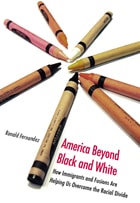
America Beyond Black and White
How Immigrants and Fusions Are Helping Us Overcome the Racial DivideRonald Fernandez
University of Michigan Press, 2007
“This book is both powerful and important. Powerful for the testimony it provides from Americans of many different (and even mixed races) about their experiences. And important because there is a racial revolution underway that will upend race as we know it during the twenty-first century.”
—John Kenneth White, Catholic University of America
America Beyond Black and White is a call for a new way of imagining race in America. For the first time in U.S. history, the black-white dichotomy that has historically defined race and ethnicity is being challenged, not by a small minority, but by the fastest-growing and arguably most vocal segment of the increasingly diverse American population—Mexicans, Chinese, Japanese, Koreans, Indians, Arabs, and many more—who are breaking down and recreating the very definitions of race.
Drawing on interviews with hundreds of Americans who don’t fit conventional black/white categories, the author invites us to empathize with these “doubles” and to understand why they may represent our best chance to throw off the strictures of the black/white dichotomy.
The revolution is already underway, as newcomers and mixed-race “fusions” refuse to engage in the prevailing Anglo- Protestant culture. Americans face two choices: understand why these individuals think as they do, or face a future that continues to define us by what divides us rather than by what unites us.
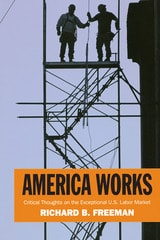
America Works
Thoughts on an Exceptional U.S. Labor MarketRichard B. Freeman
Russell Sage Foundation, 2007
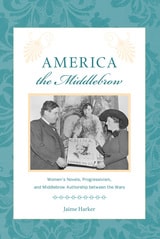
America the Middlebrow
Women's Novels, Progressivism, and Middlebrow Authorship between the WarsJaime Harker
University of Massachusetts Press, 2007
Between the two world wars, American publishing entered a “golden age” characterized by an explosion of new publishers, authors, audiences, distribution strategies, and marketing techniques. The period was distinguished by a diverse literary culture, ranging from modern cultural rebels to working-class laborers, political radicals, and progressive housewives. In America the Middlebrow, Jaime Harker focuses on one neglected mode of authorship in the interwar period—women's middlebrow authorship and its intersection with progressive politics.
With the rise of middlebrow institutions and readers came the need for the creation of the new category of authorship. Harker contends that these new writers appropriated and adapted a larger tradition of women's activism and literary activity to their own needs and practices. Like sentimental women writers and readers of the 1850s, these authors saw fiction as a means of reforming and transforming society. Like their Progressive Era forebears, they replaced religious icons with nationalistic images of progress and pragmatic ideology. In the interwar period, this mode of authorship was informed by Deweyan pragmatist aesthetics, which insisted that art provided vicarious experience that could help create humane, democratic societies.
Drawing on letters from publishers, editors, agents, and authors, America the Middlebrow traces four key moments in this distinctive culture of letters through the careers of Dorothy Canfield, Jessie Fauset, Pearl Buck, and Josephine Herbst. Both an exploration of a virtually invisible culture of letters and a challenge to monolithic paradigms of modernism, the book offers fresh insight into the ongoing tradition of political domestic fiction that flourished between the wars.

America's Americans
Population Issues in U.S. Society and PoliticsEdited by Philip D. Davies
University of London Press, 2007
Topics include:
Latino immigrant incorporation
- racial and ethnic integration in metropolitan contexts
- population self-determination, and Native Americans
- public policy issues relating to immigration
- growth of the U.S. prison population
- changing nature of poverty in the United States
- politics of demographic and social change at national and local levels
- historical change in the labor force participation of women

America's Blessings
How Religion Benefits Everyone, Including AtheistsRodney Stark
Templeton Press, 2013
A few years ago, a debate between atheists and religious believers spilled out from the halls of academia and the pews of America’s churches and into the public spotlight. A crop of atheist manifestos led the charge, surmounting and holding the tops of the nonfiction bestseller lists. This debate brought on an outpouring of religious rebuttals as both sides exchanged spirited volleys, accusations were leveled; myths, stereotypes, and strawmen arguments were perpetuated; and bitter hostility filled the air. Today many of these misconceptions and myths linger on, along with the generally acrimonious spirit of the debate.
In America’s Blessings, distinguished researcher Rodney Stark seeks to clear the air of this hostility and debunk many of the debate’s most widely perpetuated misconceptions by drawing from an expansive pool of sociological findings. Stark rises above the fray and focuses exclusively on facts by examining the measurable effects of religious faith and practice on American society. His results may surprise many atheists and believers alike.
Starting with a historical overview, Stark traces America’s religious roots from the country’s founding to the present day, showing that religiosity in America has never been consistent, static, or monolithic. Interestingly, he finds that religious practice is now more prevalent than ever in America, despite any claims to the contrary. From here, Stark devotes whole chapters to unpacking the latest research on how religion affects the different facets of modern American life, including crime, family life, sexuality, mental and physical health, sophistication, charity, and overall prosperity. The cumulative effect is that when translated into comparisons with western European nations, the United States comes out on top again and again. Thanks in no small part to America’s rich religious culture, the nation has far lower crime rates, much higher levels of charitable giving, better health, stronger marriages, and less suicide, to note only a few of the benefits.
In the final chapter, Stark assesses the financial impact of these religious realities. It turns out that belief benefits the American economy—and all 300 million citizens, believers, and nonbelievers alike—by a conservative estimate of $2.6 trillion a year. Despite the atheist outcry against religion, the remarkable conclusion is clear: all Americans, from the most religious among us to our secular neighbors, really ought to count our blessings.
America's Children
Resources from Family, Government, and the EconomyDonald J. Hernandez
Russell Sage Foundation, 1993
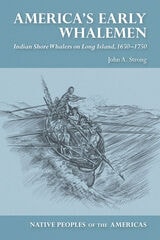
America's Early Whalemen
Indian Shore Whalers on Long Island, 1650–1750John A. Strong
University of Arizona Press, 2018
America’s Early Whalemen examines this early chapter of an iconic American historical experience. John A. Strong’s research draws on exhaustive sources, domestic and international, including little-known documents such as the whaling contracts of 340 Native American whalers, personal accounting books of whaling company owners, London customs records, estate inventories, and court records. Strong addresses labor relations, the role of alcohol and debt, the patterns of cultural accommodations by Native Americans, and the emergence of corporate capitalism in colonial America.
When Strong began teaching at Long Island University in 1964, he found little mention of the local Indigenous people in history books. The Shinnecocks and the neighboring tribes of Unkechaugs and Montauketts were treated as background figures for the celebratory narrative of the “heroic” English settlers. America’s Early Whalemen highlights the important contributions of Native peoples to colonial America.

America's Favorite Radio Station
WKRP in CincinnatiMichael B. Kassel
University of Wisconsin Press, 1993

America's First Black Town
Brooklyn, Illinois, 1830-1915Sundiata Keita Cha-Jua
University of Illinois Press, 2000
Sundiata Keita Cha-Jua traces Brooklyn's transformation from a freedom village into a residential commuter satellite that supplied cheap labor to the city and the region. He examines why Brooklyn remained unindustrialized while factories and industrial complexes were built in nearly all the neighboring white-majority towns. As Brooklyn's population tilted more heavily toward single young men employed in the factories and as the city's cheaper retail businesses drew the town's consumer dollars, local businesses--except those catering to nightlife and vice--withered away.
Drawing on town records, regional and African American newspapers, census data, and other sources, Cha-Jua provides a detailed social and political history of America's first Black town. He places Brooklyn in the context of Black-town development and African American nationalism and documents the dedicated efforts of its Black citizens to achieve political control and build a thriving, autonomous, Black-majority community.
America's First Black Town challenges scholarly assumptions that Black political control necessarily leads to internal unity and economic growth. Outlining dynamics that presaged the post-1960s plight of Gary, Detroit, and other Black-dominated cities, Cha-Jua confirms that, despite Brooklyn's heroic struggle for autonomy, Black control was not enough to stem the corrosive tide of internal colonialism.
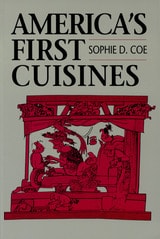
America's First Cuisines
By Sophie D. Coe
University of Texas Press, 1994
After long weeks of boring, perhaps spoiled sea rations, one of the first things Spaniards sought in the New World was undoubtedly fresh food. Probably they found the local cuisine strange at first, but soon they were sending American plants and animals around the world, eventually enriching the cuisine of many cultures.
Drawing on original accounts by Europeans and native Americans, this pioneering work offers the first detailed description of the cuisines of the Aztecs, the Maya, and the Inca. Sophie Coe begins with the basic foodstuffs, including maize, potatoes, beans, peanuts, squash, avocados, tomatoes, chocolate, and chiles, and explores their early history and domestication. She then describes how these foods were prepared, served, and preserved, giving many insights into the cultural and ritual practices that surrounded eating in these cultures. Coe also points out the similarities and differences among the three cuisines and compares them to Spanish cooking of the period, which, as she usefully reminds us, would seem as foreign to our tastes as the American foods seemed to theirs. Written in easily digested prose, America's First Cuisines will appeal to food enthusiasts as well as scholars.

America's Founding Fruit
The Cranberry in a New EnvironmentSusan Playfair
University Press of New England, 2014
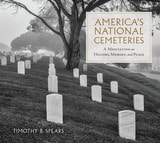
America's National Cemeteries
A Meditation on History, Memory, and PlaceTimothy B. Spears, Foreword by Roderick Gainer
University of Alabama Press, 2025
A poignant photographic tour of honor, sacrifice, and memory within America's national cemeteries
In America’s National Cemeteries, Timothy B. Spears takes the reader on a grand tour of these singular places of commemoration, the final resting place for more than four million American military personnel who died either in wartime, during their time of service, or after their honorable discharge. His absorbing account—part historical narrative and part travelogue—is enhanced by 180 of his remarkable photographs, which capture the spirit, beauty, and solemn remembrance to be found in each of the 156 national cemeteries across America.
Spears details the history of the cemeteries since their establishment during the American Civil War and explores their ongoing evolution and importance to American society and the commitment America has made to honoring its military dead. With headstones neatly arrayed in rows and each soldier typically buried in an identical fashion, the cemeteries symbolize an enduring connection between human mortality and national identity. They also reflect the nation’s persistent challenges with inequalities and injustice, violence and racism, lingering questions about “good” versus “bad” wars, and the vexed legacies of America’s military forays.
In this unique meditation on American history, memory, and place, Spears embraces the impact of the past on the present, offering an original perspective on the meaning of military service, mortality, and remembrance and how these national cemeteries have evolved into truly iconic and emblematic American spaces. The book also features a foreword by Roderick Gainer, Chief Curator of Arlington National Cemetery since 2013.
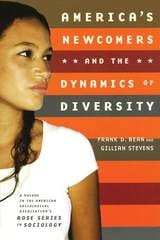
America's Newcomers and the Dynamics of Diversity
Frank D. Bean
Russell Sage Foundation, 2003
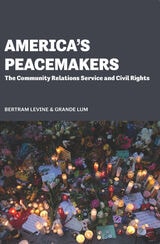
America's Peacemakers
The Community Relations Service and Civil RightsBertram Levine
University of Missouri Press, 2020
Covered in this expanded edition are the post–9/11 efforts of the CRS to prevent violence and hate crimes against those perceived as Middle Eastern. Also discussed are the cross-border Elián González custody dispute and the notable tragedies of Trayvon Martin and Michael Brown, both of which brought police interaction with communities of color back into the spotlight.
The 2009 Matthew Shepard and James Byrd, Jr., Hate Crimes Prevention Act substantially altered CRS’s jurisdiction, which began to focus on gender, gender identity, religion, sexual orientation, and disability in addition to race, color, and national origin. Lum’s documentation of this expanded jurisdiction provides insight into the progression of civil rights. The ongoing story of the Community Relations Service is a crucial component of the national narrative on civil rights and conflict resolution. This new edition will be highly informative to all readers and useful to professionals and academics in the civil rights, dispute resolution, domestic and international peacemaking, and law enforcement-community relations fields.

America's Religions
From Their Origins to the Twenty-first CenturyPeter W. Williams
University of Illinois Press, 2015
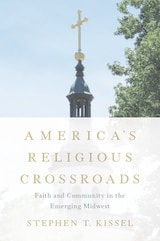
America's Religious Crossroads
Faith and Community in the Emerging MidwestStephen T. Kissel
University of Illinois Press, 2021
Perceptive and broad in scope, America’s Religious Crossroads illuminates the integral relationship between communal and spiritual growth in early Midwestern history.

America's Working Man
Work, Home, and Politics Among Blue Collar Property OwnersDavid Halle
University of Chicago Press, 1984
America
Exploration and TravelSteven E. Kagel
University of Wisconsin Press, 1979
Travel gets us from one place to another—often with wonderful attendant enjoyment–but exploration makes us understand our travel, the places we travel to—and ourselves. The essays in this collection constitute a major step toward this understanding. They open up new areas for concern and draw many valuable insights and conclusions.
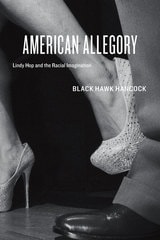
American Allegory
Lindy Hop and the Racial ImaginationBlack Hawk Hancock
University of Chicago Press, 2013
In American Allegory, Black Hawk Hancock offers an embedded and embodied ethnography that situates dance within a larger Chicago landscape of segregated social practices. Delving into two Chicago dance worlds, the Lindy and Steppin’, Hancock uses a combination of participant-observation and interviews to bring to the surface the racial tension that surrounds white use of black cultural forms. Focusing on new forms of appropriation in an era of multiculturalism, Hancock underscores the institutionalization of racial disparities and offers wonderful insights into the intersection of race and culture in America.