Results by title
18284 books match the query 'United States' and 1653 start with a
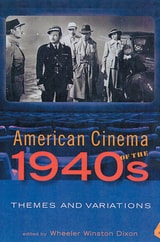
American Cinema of the 1940s
Themes and VariationsDixon, Wheeler Winston
Rutgers University Press, 2005
The 1940s was a watershed decade for American cinema and the nation. Shaking off the grim legacy of the Depression, Hollywood launched an unprecedented wave of production, generating some of its most memorable classics, including Citizen Kane, Rebecca, The Lady Eve, Sergeant York, and How Green Was My Valley. In 1942, Hollywood joined the national war effort with a vengeance, creating a series of patriotic and escapist films, such as Casablanca, Mrs. Miniver, The Road to Morocco, and Yankee Doodle Dandy.
With the end of the war, returning GIs faced a new America, in which the country had been transformed overnight. Film noir reflected a new public mood of pessimism and paranoia, in such classic films of betrayal and conflict as Kiss of Death, Force of Evil, Caught, and Apology for Murder, depicting a poisonous universe of femme fatales, crooked lawyers, and corrupt politicians.
With the threat of the atom bomb lurking in the background and the beginnings of the Hollywood Blacklist, the 1940s was a decade of crisis and change. Featuring essays by a group of respected film scholars and historians, American Cinema of the 1940s brings this dynamic and turbulent decade to life. Illustrated with many rare stills and filled with provocative insights, the volume will appeal to students, teachers, and to all those interested in cultural history and American film of the twentieth century.
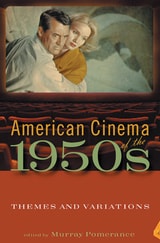
American Cinema of the 1950s
Themes and VariationsPomerance, Murray
Rutgers University Press, 2005
From cold war hysteria and rampant anticommunist witch hunts to the lure of suburbia, television, and the new consumerism, the 1950s was a decade of sensational commercial possibility coupled with dark nuclear fears and conformist politics. Amid this amalgamation of social, political, and cultural conditions, Hollywood was under siege: from the Justice Department, which pressed for big film companies to divest themselves of their theater holdings; from the middleclass, whose retreat to family entertainment inside the home drastically decreased the filmgoing audience; and from the House Un-American Activities Committee, which was attempting to purge the country of dissenting political views. In this difficult context, however, some of the most talented filmmakers of all time, including John Ford, Alfred Hitchcock, Vincente Minnelli, Nicholas Ray, and Billy Wilder produced some of their most remarkable work.
Bringing together original essays by ten respected scholars in the field, American Cinema of the 1950s explores the impact of the cultural environment of this decade on film, and the impact of film on the American cultural milieu. Contributors examine the signature films of the decade, including From Here to Eternity, Sunset Blvd., Singin' in the Rain, Shane, Rear Window, and Rebel Without a Cause, as well as lesser-known but equally compelling films, such as Dial 1119, Mystery Street, Suddenly, Summer Stock, The Last Hunt, and many others.
Provocative, engaging, and accessible to general readers as well as scholars, this volume provides a unique lens through which to view the links between film and the prevailing social and historical events of the decade.
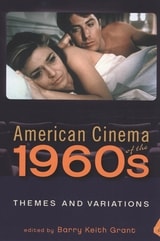
American Cinema of the 1960s
Themes and VariationsGrant, Barry Keith
Rutgers University Press, 2008
At the same time, American cinema underwent radical change as well. The studio system crumbled, and the Production Code was replaced by a new ratings system. Among the challenges faced by the film industry was the dawning shift in theatrical exhibition from urban centers to surburban multiplexes, an increase in runaway productions, the rise of independent producers, and competition from both television and foreign art films. Hollywood movies became more cynical, violent, and sexually explicit, reflecting the changing values of the time.
In ten original essays, American Cinema of the 1960s examines a range of films that characterized the decade, including Hollywood movies, documentaries, and independent and experimental films. Among the films discussed are Elmer Gantry, The Apartment, West Side Story, The Manchurian Candidate, To Kill a Mockingbird, Cape Fear, Bonnie and Clyde, 2001: A Space Odyssey, Midnight Cowboy, and Easy Rider.
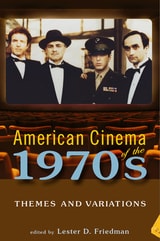
American Cinema of the 1970s
Themes and VariationsFriedman, Lester D
Rutgers University Press, 2007
Far from a placid era, the seventies was a decade of social upheavals. Events such as the killing of students at Kent State and Jackson State universities, the Watergate investigations, the legalization of abortion, and the end of the American involvement in Vietnam are only a few among the many landmark occurrences that challenged the foundations of American culture. The director-driven movies of this era reflect this turmoil, experimenting with narrative structures, offering a gallery of scruffy antiheroes, and revising traditional genre conventions.
Bringing together ten original essays, American Cinema of the 1970s examines the range of films that marked the decade, including Jaws, Rocky, Love Story, Shaft, Dirty Harry, The Godfather, Deliverance, The Exorcist, Shampoo, Taxi Driver, Star Wars, Saturday Night Fever, Kramer vs. Kramer,and Apocalypse Now .
American Cinema of the 1980s
Themes and VariationsPrince, Stephen
Rutgers University Press, 2007
Bringing together original essays by ten respected scholars in the field, American Cinema of the 1980s examines the films that marked the decade, including Ordinary People, Body Heat, Blade Runner, Zelig, Platoon, Top Gun, Aliens, Blue Velvet, Robocop, Fatal Attraction, Die Hard, Batman, and sex, lies & videotape.
American Cinema of the 1990s
Themes and VariationsHolmlund, Chris
Rutgers University Press, 2008
The essays in American Cinema of the 1990s examine the big-budget blockbusters and critically acclaimed independent films that defined the decade. The 1990s' most popular genre, action, channeled anxieties about global threats such as AIDS and foreign terrorist attacks into escapist entertainment movies. Horror films and thrillers were on the rise, but family-friendly pictures and feel-good romances netted big audiences too. Meanwhile, independent films captured hearts, engaged minds, and invaded Hollywood: by decade's end every studio boasted its own "art film" affiliate.
American Cinema of the 2000s
Themes and VariationsCorrigan, Timothy
Rutgers University Press, 2012
The decade from 2000 to 2009 is framed, at one end, by the traumatic catastrophe of the 9/11 attacks on the World Trade Center and, at the other, by the election of the first African American president of the United States. In between, the United States and the world witnessed the rapid expansion of new media and the Internet, such natural disasters as Hurricane Katrina, political uprisings around the world, and a massive meltdown of world economies.
Amid these crises and revolutions, American films responded in multiple ways, sometimes directly reflecting these turbulent times, and sometimes indirectly couching history in traditional genres and stories. In American Cinema of the 2000s, essays from ten top film scholars examine such popular series as the groundbreaking Matrix films and the gripping adventures of former CIA covert operative Jason Bourne; new, offbeat films like Juno; and the resurgence of documentaries like Michael Moore’s Fahrenheit 9/11. Each essay demonstrates the complex ways in which American culture and American cinema are bound together in subtle and challenging ways.
American Cinema of the 2010s
Themes and VariationsDennis Bingham
Rutgers University Press, 2022
The newest installment in the Screen Decades series, American Cinema in the 2010s takes a close look at the memorable movies, visionary filmmakers, and behind-the-scenes drama that made this decade such an exciting time to be a moviegoer. Each chapter offers an in-depth examination of a specific year, covering a wide variety of films, from blockbuster superhero movies like Black Panther and animated films like Frozen to smaller-budget biopics like I, Tonya and horror films like Hereditary. This volume introduces readers to a decade in which established auteurs like Quentin Tarantino were joined by an exceptionally diverse set of new talents, taking American cinema in new directions.
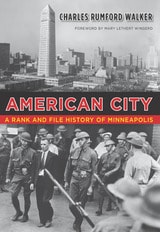
American City
A Rank and File History of MinneapolisCharles Rumford Walker
University of Minnesota Press, 2005
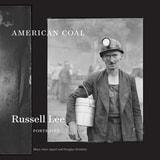
American Coal
Russell Lee PortraitsMary Jane Appel and Douglas Brinkley
University of Texas Press, 2024
More than 100 powerful images by noted photographer Russell Lee that document the working conditions and lives of coal mining communities in the postwar United States; publication coincides with an exhibition at the National Archives in Washington, DC.
In 1946 the Truman administration made a promise to striking coal miners: as part of a deal to resume work, the government would sponsor a nationwide survey of health and labor conditions in mining camps. One instrumental member of the survey team was photographer Russell Lee. Lee had made his name during the Depression, when, alongside Dorothea Lange and Walker Evans, he used his camera to document agrarian life for the Farm Security Administration (FSA). Now he trained his lens on miners and their families to show their difficult circumstances despite their essential contributions to the nation's first wave of postwar growth.
American Coal draws from the thousands of photographs that Lee made for the survey—also on view in the US National Archives and Records Administration’s exhibition Power & Light—and includes his original, detailed captions as well as an essay by biographer Mary Jane Appel and historian Douglas Brinkley. They place his work in context and illuminate how Lee helped win improved conditions for his subjects through vivid images that captured an array of miners and their communities at work and at play, at church and in school, in moments of joy and struggle, ultimately revealing to their fellow Americans the humanity and resilience of these underrecognized workers.

American Commonplace
Essays on the Popular Culture of the United StatesUniversity of Wisconsin Press, 1982
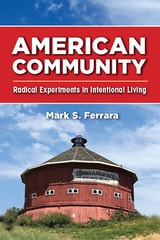
American Community
Radical Experiments in Intentional LivingMark S. Ferrara
Rutgers University Press, 2020
American Community takes us inside forty of the most interesting intentional communities in the nation’s history, from the colonial era to the present day. You will learn about such little-known experiments in cooperative living as the Icarian communities, which took the utopian ideas expounded in a 1840 French novel and put them into practice, ultimately spreading to five states over fifty years. Plus, it covers more recent communities such as Arizona’s Arcosanti, designed by architect Paolo Soleri as a model for ecologically sustainable living.
In this provocative and engaging book, Mark Ferrara guides readers through an array of intentional communities that boldly challenged capitalist economic arrangements in order to attain ideals of harmony, equality, and social justice. By shining a light on these forgotten histories, it shows that far from being foreign concepts, communitarianism and socialism have always been vital parts of the American experience.

American Congregations, Volume 1
Portraits of Twelve Religious CommunitiesEdited by James P. Wind and James W. Lewis
University of Chicago Press, 1994
"This study refreshingly illuminates [congregations'] strengths as places where the public and private lives of their members meet in dynamic creativity and as havens of religious meaning and comfort in the midst of a secular world."—Choice
"A major contribution to how debates about American religion will be framed in the years ahead. . . . In giving us these case histories and a set of excellent interpretive essays, Wind and Lewis have reminded us that American religion must be understood in its particular, local, gathered, human forms. They remind us that congregations matter."—Nancy T. Ammerman, First Things
"Well-presented and engaging essays, by some of the foremost religious scholars working today, examining the histories of twelve diverse religious institutions. . . . A fascinating and important social history of religion."—Kirkus Reviews
"Scholarship and the religious traditions have been enriched by the labors of the Congregational History Project. Theologically, its pioneering research invites us to examine ourselves."—Gabriel Fackre, Christian Century
American Congregations, Volume 2
New Perspectives in the Study of CongregationsEdited by James P. Wind and James W. Lewis
University of Chicago Press, 1994
Published simultaneously, these two volumes combine engaging historical studies with incisive scholarsly analysis to focus attention on the central role of congregational studies in research and teaching of American religion.
"This two volume study of American congregations is of compelling importance to anyone interested in civil society, community, and belief in contemporary America. . . . Extraordinarily rich in detail."—Association for Research on Non-profit Organizations and Voluntary Action News
"[An] informative and stimulating study."—John A. Saliba, Journal of Contemporary Religion
"These congregational histories are important pieces of both social and religious history. They tell us much about the convictions and experience of a great variety of people, different styles of leadership and of how these distinctive local cultures both bear and shape the larger traditions they represent."—Gordon Harland, Studies in Religion
"Both volumes of American Congregations resulted from pioneering efforts, and they are timely and useful. They should force American religious historians to ask new questions. . . . Any American religious historian who fails to take this two-volume work seriously in the future will find his or her own scholarship terribly deficient."—Lewis V. Baldwin, Journal of American History
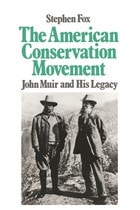
American Conservation Movement
John Muir And His LegacyStephen Fox
University of Wisconsin Press, 1986
John Muir and His Legacy is at once a biography of this remarkable man—the first work to make unrestricted use of all of Muir’s manuscripts and personal papers—and a history of the century-old fight to save the natural environment. Stephen Fox traces the conservation movement's diverse, colorful, and tumultuous history, from the successful campaign to establish Yosemite National Park in 1890 to the movement's present day concerns of nuclear waste and acid rain.
Conservation has run a cyclical course, Fox contends, from its origins in the 1890s when it was the province of amateurs, to its takeover by professionals with quasi-scientific notions, and back, in the 1960s to its original impetus. Since then man’s view of himself as “the last endangered species” has sparked an explosion of public interest in environmentalism.
First published in 1981 by Little, Brown, this book was warmly received as both a biography of Muir and a history of the American conservation movement. It is now available in this new Wisconsin paperback edition.
American Conservatism
Thinking It, Teaching ItPaul Lyons
Vanderbilt University Press, 2009
Lyons begins with the premise that most universities have been negligent in helping undergraduates understand a movement that has shaped the political landscape for half a century. In addition, in a series of essays that frame the teaching log, he makes the case that conservatives have too often failed to adhere to basic, Burkean principles, and that the best of conservatism has often appeared as a form of liberalism from thinkers such as Hannah Arendt, Reinhold Niebuhr, and George Kennan. The essays also cover the history of conservatism, conservative use of the city-on-a-hill metaphor, and an examination of how the promise of Camelot sophistication was subverted by a resurgence of right-wing populism.
American Conversations
Ellen Bigler
Temple University Press, 1999
The impassioned debate that erupted between long-time white ethnic residents and more recently arrived Puerto Rican citizens in the de-industrialized city the author calls "Arnhem" was initially sparked by one school board member's disparaging comments about Latinos. The conflict led to an investigation by the attempts to implement multicultural reforms in the city's schools. American Conversations follows the ensuing conflict, looks at the history of racial formation in the United States, and considers the specific economic and labor histories of the groups comprising the community in opposition. Including interviews with students, teachers, parents, and community leaders, as well as her own observations of exchanges among them inside and outside the classroom, Bigler's book explores the social positions, diverging constructions of history, and polarized understandings of contemporary racial/ethnic dynamics in Arnhem. Through her retelling of one community's crisis, Bigler illuminates the nature of racial politics in the United States and how both sides in the debate over multicultural education struggle to find a common language.
American Conversations will appeal to anyone invested in education and multiculturalism in the United States as well as those interested in anthropology, sociology, racial and ethnic studies, educational institutions, migration and settlement, the effects of industrial restructuring, and broad issues of community formation and conflict.
American Corruption Talk
A Political EtymologyRobert G. Boatright and Molly Brigid McGrath
Temple University Press, 2025
Robert Boatright and Molly Brigid McGrath focus on the role corruption talk plays in American political discourse. They distinguish between two ways people speak about corruption—corruption talk in the style of a purifier, who wishes to expunge the evil forces or drain the swamp, and corruption talk in the style of the mender, who thinks of managing, replacing, or repairing.
American Corruption Talk begins by tracing how the concept of political corruption was developed by philosophers and political thinkers, leading up to its use in the American context, especially in the Progressive Era. It also compares modes of contemporary corruption talk in different areas of public life. In doing so, the authors hope to resolve confusion and partisan disagreements about what corruption is and to discourage the tendency to label actions, events, and ideas that we merely disagree with as corrupt.
American Cosmos
Globes and the Global Imagination in Early AmericaTamara Plakins Thornton
University of Chicago Press, 2027
The first book to explore the forgotten terrestrial and celestial globes of early America—and the global imagination they shaped.
Ranging from early modern Europe to the modern United States, American Cosmos introduces the objects, people, practices, and ideas that constituted the long-forgotten world of globes. As Tamara Plakins Thornton shows, paired terrestrial and celestial globes were important components of early American social, cultural, and intellectual life. They served as markers of learnedness and social status, provided a material vision of a human-centered cosmos, and as 3-D problem-solving devices, offered distinctive imaginative perspectives on global connections and human difference. Only some had access to these globes—including genteel families, men of science, navigators, and students in colleges, academies, and missionary schools—but in the nineteenth century, many more encountered mass-produced, stripped-down globes in common school classrooms and parlors. Yet with new cultural concerns taking root, these modern globes assumed a much-diminished role in American life and thought, and an older world of globes, rich with meaning and possibility, disappeared.
As we increasingly encounter global-scale experience—climate change, pandemics, human migrations, the economy—and as American historians strive to look beyond national borders, we can learn about the origins of American global thinking by looking at globes themselves and the people who used them.
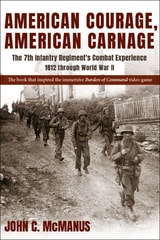
American Courage, American Carnage
The 7th Infantry Regiment's Combat Experience, 1812 through World War IIJohn C. McManus
University of Missouri Press, 2025
In the months leading up to the War of 1812, Congress authorized the creation of this regiment. It fought with distinction at the Battle of New Orleans, anchoring General Andrew Jackson's main defensive line, forever earning the nickname "Cottonbalers" because the soldiers of the 7th were said to have battled the British from behind large rows of cotton bales. From now on, whenever Americans went to war, the Cottonbalers would always find themselves in the center of the action, where the danger was greatest.
Between these covers is the whole story, told through the eyes of the soldiers—the realities of combat expressed in raw human terms. From the marshy grounds of the Chalmette plantation in New Orleans to the daunting heights of Chapultepec in Mexico City; from the bloody horror of the long, stone wall at Fredericksburg to the deadly crossfire of the Wheatfield at Gettysburg, from the shocking gore of Custer's massacre at Little Bighorn to the desperation of dusty frontier battles; from the foggy hills of Santiago in Cuba to the muddy, pockmarked no man's land of Belleau Wood in France; from the invasion of North Africa to Sicily, Anzio, southern France, the Vosges Mountains, the breaching of the Rhine, and the 7th's triumphant capture of Hitler's mountain home at Berchtesgaden in May, 1945, this remarkable book chronicles multiple generations of Cottonbalers who have fought and bled for their country.
American Courage, American Carnage is an inside look at the drama, tragedy, fatigue and pathos of war, from America's early nineteenth century struggles as a fledgling republic to its emergence as a superpower in the twentieth. Based on nearly a decade of archival research, battlefield visits, interviews, and intensive study, and illustrated with copious maps and photographs, this book is a moving, authoritative, tale of Americans in combat.
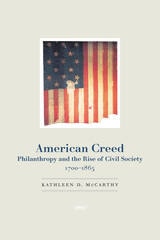
American Creed
Philanthropy and the Rise of Civil Society, 1700-1865Kathleen D. McCarthy
University of Chicago Press, 2003
The market revolution, participatory democracy, and voluntary associations have all been closely linked since the birth of the United States. American Creed explores the relationships among these three institutions, showing how charities and reform associations forged partnerships with government, provided important safety valves for popular discontent, and sparked much-needed economic development. McCarthy also demonstrates how the idea of philanthropy became crucially wedded to social activism during the Jacksonian era. She explores how acts of volunteerism and charity became involved with the abolitionist movement, educational patronage, the struggle against racism, and female social justice campaigns. What resulted, she contends, were heated political battles over the extent to which women and African Americans would occupy the public stage.
Tracing, then, the evolution of civil society and the pivotal role of philanthropy in the search for and exercise of political and economic power, this book will prove essential to anyone interested in American history and government.
American Culture, Canons, and the Case of Elizabeth Stoddard
Robert McClure Smith
University of Alabama Press, 2003
Elizabeth Stoddard was a gifted writer of fiction, poetry, and journalism; successfully published within her own lifetime; esteemed by such writers as William Dean Howells and Nathaniel Hawthorne; and situated at the epicenter of New York’s literary world. Nonetheless, she has been almost excluded from literary memory and importance. This book seeks to understand why. By reconsidering Stoddard’s life and work and her current marginal status in the evolving canon of American literary studies, it raises important questions about women’s writing in the 19th century and canon formation in the 20th century.
Essays in this study locate Stoddard in the context of her contemporaries, such as Dickinson and Hawthorne, while others situate her work in the context of major 19th-century cultural forces and issues, among them the Civil War and Reconstruction, race and ethnicity, anorexia and female invalidism, nationalism and localism, and incest. One essay examines the development of Stoddard’s work in the light of her biography, and others probe her stylistic and philosophic originality, the journalistic roots of her voice, and the elliptical themes of her short fiction. Stoddard’s lifelong project to articulate the nature and dynamics of woman’s subjectivity, her challenging treatment of female appetite and will, and her depiction of the complex and often ambivalent relationships that white middle-class women had to their domestic spaces are also thoughtfully considered.
The editors argue that the neglect of Elizabeth Stoddard’s contribution to American literature is a compelling example of the contingency of critical values and the instability of literary history. This study asks the question, “Will Stoddard endure?” Will she continue to drift into oblivion or will a new generation of readers and critics secure her tenuous legacy?
American Datelines
Major News Stories from Colonial Times to the PresentEdited by Ed Cray, Jonathan Kotler, and Miles Beller
University of Illinois Press, 1990
The original articles in this compelling collection are arranged chronologically and appear as they were first published, providing a lively and unique view of the events that have most influenced politics and culture. Readers can experience the thrill and excitement of breaking news from the real story of Jesse James and the capture of Al Capone to a vibrant portrayal of baseball's first professional African American player and a probing look at the shocking New York Armory show where modern art was born. This first paperback edition features an updated introduction by the editors and several newsworthy additions, including the fall of the Berlin Wall, the O. J. Simpson trial, the Clinton impeachment trial, the home run race between Mark McGwire and Sammy Sosa, and Bush v. Gore.
American Daughter
A Midcentury Memoir of Black Life on the PlainsEra Bell Thompson
University of Chicago Press, 2026
A portrait of Black life in the Great Plains, written by a key figure in the Chicago Renaissance and decades-long editor of Ebony.
Era Bell Thompson grew up on the plains of North Dakota, where she and her family were some of the only Black people amid an overwhelmingly white population. American Daughter, originally published in 1946, recounts her childhood in the rural West, her college years in Iowa, and the social and racial revelations she experienced upon arriving in Chicago, where she first encountered a large Black community.
Her memories defy contemporary assumptions. She was a popular high school student, even if she was forced to disarm ignorant questions from her peers. She describes her father’s work for the governor, her family’s interactions with diverse Midwestern immigrant communities, the natural beauty of the landscape, and the collaborative spirit necessary to survive the harsh weather conditions in North Dakota. As an adult in Chicago, she discovered lifestyles and attitudes that were entirely unfamiliar after her childhood in predominantly white spaces. While Thompson endured discrimination in rural and urban settings alike, she relied on her trademark humor to defuse tensions and bridge differences. Her memoir similarly radiates optimism, curiosity, and wit.
Long out of print, this new edition includes a foreword by the Chicago-based journalist Natalie Y. Moore, who not only contextualizes the memoir for contemporary readers but also explores Thompson’s life after American Daughter, including her trailblazing career as an editor for Ebony magazine.
American Denominational History
Perspectives on the Past, Prospects for the FutureEdited by Keith Harper
University of Alabama Press, 2008
Fruitful questions that are posed by the positions and experiences of the various groups are carefully examined. American Denominational History points the way for the next decade of scholarly effort.
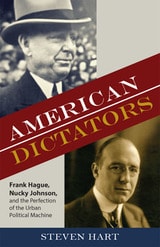
American Dictators
Frank Hague, Nucky Johnson, and the Perfection of the Urban Political MachineHart, Steven
Rutgers University Press, 2013
One man was tongue-tied and awkward around women, in many ways a mama's boy at heart, although his reputation for thuggery was well earned. The other was a playboy, full of easy charm and ready jokes, his appetite for high living a matter of public record. One man tolerated gangsters and bootleggers as long as they paid their dues to his organization. The other was effectively a gangster himself, so crooked that he hosted a national gathering of America's most ruthless killers. One man never drank alcohol. The other, from all evidence, seldom drank anything else.
American Dictators is the dual biography of two of America’s greatest political bosses: Frank Hagueand Enoch “Nucky” Johnson. Packed with compelling information and written in an informal, sometimes humorous style, the book shows Hague and Johnson at the peak of their power and the strength of their political machines during the years of Prohibition and the Great Depression. Steven Hart compares how both men used their influence to benefit and punish the local citizenry, amass huge personal fortunes, and sometimes collaborate to trounce their enemies.
Similar in their ruthlessness, both men were very different in appearance and temperament. Hague, the mayor of Jersey City, intimidated presidents and wielded unchallenged power for three decades. He never drank and was happily married to his wife for decades. He also allowed gangsters to run bootlegging and illegal gambling operations as long as they paid protection money. Johnson, the political boss of Atlantic City, and the inspiration for the hit HBO series Boardwalk Empire, presided over corruption as well, but for a shorter period of time. He was notorious for his decadent lifestyle. Essentially a gangster himself, Johnson hosted the infamous Atlantic City conference that fostered the growth of organized crime.
Both Hague and Johnson shrewdly integrated otherwise disenfranchised groups into their machines and gave them a stake in political power. Yet each failed to adapt to changing demographics and circumstances. In American Dictators, Hart paints a balanced portrait of their accomplishments and their failures.
American Diplomacy
George F. Kennan
University of Chicago Press, 1985
This expanded edition retains the lectures and essays first published in 1951 as American Diplomacy, 1900-1950 and adds two lectures delivered in 1984 as well as a new preface by the author. In these additional pieces, Kennan explains how some of his ideas have changed over the years. He confronts the events and topics that have come to occupy American opinion in the last thirty years, including the development and significance of the Cold War, the escalation of the nuclear arms race, and the American involvement in Vietnam.
"A book about foreign policy by a man who really knows something about foreign policy."—James Reston,New York Times Book Review
"These celebrated lectures, delivered at the University of Chicago in 1950, were for many years the most widely read account of American diplomacy in the first half of the twentieth century. . . . The second edition of the work contains two lectures from 1984 that reconsider the themes of American Diplomacy"—Foreign Affairs, Significant Books of the Last 75 Years.
American Diplomacy
Sixtieth-Anniversary Expanded EditionGeorge F. Kennan
University of Chicago Press, 2012
For more than sixty years, George F. Kennan’s American Diplomacy has been a standard work on American foreign policy. Drawing on his considerable diplomatic experience and expertise, Kennan offers an overview and critique of the foreign policy of an emerging great power whose claims to rightness often spill over into self-righteousness, whose ambitions conflict with power realities, whose judgmentalism precludes the interests of other states, and whose domestic politics frequently prevent prudent policies and result in overstretch. Keenly aware of the dangers of military intervention and the negative effects of domestic politics on foreign policy, Kennan identifies troubling inconsistencies in the areas between actions and ideals—even when the strategies in question turned out to be decided successes.
In this expanded sixtieth-anniversary edition, a substantial new introduction by John J. Mearsheimer, one of America’s leading political realists, provides new understandings of Kennan’s work and explores its continued resonance. As America grapples with its new role as one power among many—rather than as the “indispensable nation” that sees “further into the future”—Kennan’s perceptive analysis of the past is all the more relevant. Today, as then, the pressing issue of how to wield power with prudence and responsibility remains, and Kennan’s cautions about the cost of hubris are still timely. Refreshingly candid, American Diplomacy cuts to the heart of policy issues that continue to be hotly debated today.
“These celebrated lectures, delivered at the University of Chicago in 1950, were for many years the most widely read account of American diplomacy in the first half of the twentieth century.”—Foreign Affairs, Significant Books of the Last 75 Years
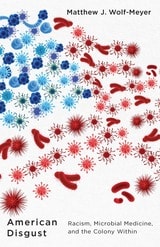
American Disgust
Racism, Microbial Medicine, and the Colony WithinMatthew J. Wolf-Meyer
University of Minnesota Press, 2024
Examining the racial underpinnings of food, microbial medicine, and disgust in America
American Disgust shows how perceptions of disgust and fears of contamination are rooted in the country’s history of colonialism and racism. Drawing on colonial, corporate, and medical archives, Matthew J. Wolf-Meyer argues that microbial medicine is closely entwined with changing cultural experiences of digestion, excrement, and disgust that are inextricably tied to the creation of whiteness.
Ranging from nineteenth-century colonial encounters with Native people to John Harvey Kellogg’s ideas around civilization and bowel movements to mid-twentieth-century diet and parenting advice books, Wolf-Meyer analyzes how embedded racist histories of digestion and disgust permeate contemporary debates around fecal microbial transplants and other bacteriotherapeutic treatments for gastrointestinal disease.
At its core, American Disgust wrestles with how changing cultural notions of digestion—what goes into the body and what comes out of it—create and impose racial categories motivated by feelings of disgust rooted in American settler-colonial racism. It shows how disgust is a changing, yet fundamental, aspect of American subjectivity and that engaging with it—personally, politically, and theoretically—opens up possibilities for conceptualizing health at the individual, societal, and planetary levels.
American Dove
US Foreign Policy and the Failure of ForceZachary C. Shirkey
University of Michigan Press, 2020
American Drama in the Age of Film
Zander Brietzke
University of Alabama Press, 2007
Is theater really dead? Does the theater, as its champions insist, really provide a more intimate experience than film? If so, how have changes in cinematic techniques and technologies altered the relationship between stage and film? What are the inherent limitations of representing three-dimensional spaces in a two-dimensional one, and vice versa?
American Drama in the Age of Film examines the strengths and weaknesses of both the dramatic and cinematic arts to confront the standard arguments in the film-versus-theater debate. Using widely known adaptations of ten major plays, Brietzke seeks to highlight the inherent powers of each medium and draw conclusions not just about how they differ, but how they ought to differ as well. He contrasts both stage and film productions of, among other works, David Mamet’s Glengarry Glen Ross, Sam Shepard’s True West, Edward Albee’s Who’s Afraid of Virginia Woolf, Margaret Edson’s Wit, Tony Kushner’s Angels in America, Tennessee Williams’s Cat on a Hot Tin Roof, Arthur Miller’s Death of a Salesman, and August Wilson’s The Piano Lesson. In reading the dual productions of these works, Brietzke finds that cinema has indeed stolen much of theater’s former thunder, by making drama more intimate, and visceral than most live events.
But theater is still vital and matters greatly, Brietzke argues, though for reasons that run counter to many of the virtues traditionally attributed to it as an art form, such as intimacy and spontaneity. Brietzke seeks to revitalize perceptions of theater by challenging those common pieties and offering a new critical paradigm, one that champions spectacle and simultaneity as the most, not least, important elements of drama.
American Dream, American Nightmare
Fiction since 1960Kathryn Hume
University of Illinois Press, 2000
In breaking down the divisions among standard categories of race, religion, ethnicity, and gender, Hume identifies shared core concerns, values, and techniques among seemingly disparate and unconnected writers including T. Coraghessan Boyle, Ralph Ellison, Russell Banks, Gloria Naylor, Tim O'Brien, Maxine Hong Kingston, Walker Percy, N. Scott Momaday, John Updike, Toni Morrison, William Kennedy, Julia Alvarez, Thomas Pynchon, Leslie Marmon Silko, and Don DeLillo.
Hume explores fictional treatments of the slippage in the immigrant experience between America's promise and its reality. She exposes the political link between contemporary stories of lost innocence and liberalism's inadequacies. She also invites us to look at the literary challenge to scientific materialism in various searches for a spiritual dimension in life.
The expansive future promised by the American Dream has been replaced, Hume finds, by a sense of tarnished morality and a melancholy loss of faith in America's exceptionalism. American Dream, American Nightmare examines the differing critiques of America embedded in nearly a hundred novels and points to the source for recovery that appeals to many of the authors.
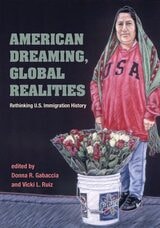
American Dreaming, Global Realities
Rethinking U.S. Immigration HistoryEdited by Donna R. Gabaccia and Vicki L. Ruiz
University of Illinois Press, 2006
An introduction to the best from the new directions in U.S. immigration history
Representing a selection of the finest new research on immigration, American Dreaming, Global Realities explores the ways in which immigrant lives and those of their children are shaped by transnational bonds, globalization, family ties, and personal choice, and the ways in which they engender a sense of belonging and a sense of themselves as “Americans.”
American Dreaming, Global Realities considers a plurality of very specific historical, economic, regional, familial, and cultural contexts. This history reveals resistance and accommodation, both persistent older traditions and Americanization, plus the creation of new cultural forms blending old and new. The twenty-two interdisciplinary essays included in this collection explore the intricate overlapping of race, class, and gender on ethnic identity and on American citizenship.
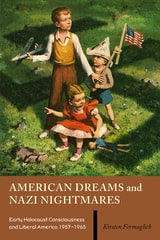
American Dreams and Nazi Nightmares
Early Holocaust Consciousness and Liberal America, 1957-1965Kirsten Fermaglich
University Press of New England, 2007
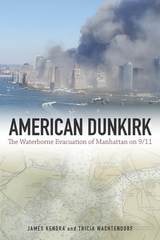
American Dunkirk
The Waterborne Evacuation of Manhattan on 9/11James M Kendra
Temple University Press, 2016
When the terrorist attacks struck New York City on September 11, 2001, boat operators and waterfront workers quickly realized that they had the skills, the equipment, and the opportunity to take definite, immediate action in responding to the most significant destructive event in the United States in decades. For many of them, they were “doing what needed to be done.”
American Dunkirk shows how people, many of whom were volunteers, mobilized rescue efforts in various improvised and spontaneous ways on that fateful date. Disaster experts James Kendra and Tricia Wachtendorf examine the efforts through fieldwork and interviews with many of the participants to understand the evacuation and its larger implications for the entire practice of disaster management.
The authors ultimately explore how people—as individuals, groups, and formal organizations—pull together to respond to and recover from startling, destructive events. American Dunkirk asks, What can these people and lessons teach us about not only surviving but thriving in the face of calamity?
American Economic Growth and Standards of Living before the Civil War
Edited by Robert E. Gallman and John Joseph Wallis
University of Chicago Press, 1992
Despite the dramatic economic growth and rise in income levels, questions remain as to the general quality of life during this era. Was the improvement in income widely shared? How did economic growth affect the nature of work? Did higher levels of income lead to improved health and longevity? The authors address these questions by analyzing new estimates of labor force participation, real wages, and productivity, as well as of the distribution of income, height, and nutrition.
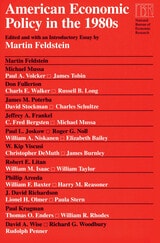
American Economic Policy in the 1980s
Edited by Martin Feldstein
University of Chicago Press, 1994
In his introduction, Martin Feldstein provides compelling analysis of policies with which he was closely involved as chairman of the Council of Economic Advisers during the Reagan administration: monetary and exchange rate policy, tax policy, and budget issues. Other leading economists and policymakers examine a variety of domestic and international issues, including monetary and exchange rate policy, regulation and antitrust, as well as trade, tax, and budget policies.
The contributors to this volume are Alberto Alesina, Phillip Areeda, Elizabeth Bailey, William F. Baxter, C. Fred Bergsten, James Burnley, Geoffrey Carliner, Christopher DeMuth, Douglas W. Elmendorf, Thomas O. Enders, Martin Feldstein, Jeffrey A. Frankel, Don Fullerton, William M. Isaac, Paul L Joskow, Paul Krugman, Robert E. Litan, Russell B. Long, Michael Mussa, William A. Niskanen, Roger G. Noll, Lionel H. Olmer, Rudolph Penner, William Poole, James M. Poterba, Harry M. Reasoner, William R. Rhodes, J. David Richardson, Charles Schultze, Paula Stern, David Stockman, William Taylor, James Tobin, W. Kip Viscusi, Paul A. Volcker, Charles E. Walker, David A. Wise, and Richard G. Woodbury.
American Educational Governance on Trial
Change and ChallengesEdited by William L. Boyd and Debra Miretzky
University of Chicago Press, 2003
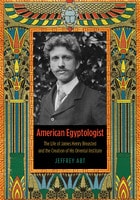
American Egyptologist
The Life of James Henry Breasted and the Creation of His Oriental InstituteJeffrey Abt
University of Chicago Press, 2011
James Henry Breasted (1865–1935) had a career that epitomizes our popular image of the archaeologist. Daring, handsome, and charismatic, he traveled on expeditions to remote and politically unstable corners of the Middle East, helped identify the tomb of King Tut, and was on the cover of Time magazine. But Breasted was more than an Indiana Jones—he was an accomplished scholar, academic entrepreneur, and talented author who brought ancient history to life not just for students but for such notables as Teddy Roosevelt and Sigmund Freud.
American Eldercide
How It Happened, How to Prevent ItMargaret Morganroth Gullette
University of Chicago Press, 2024
A bracing spotlight on the avoidable causes of the COVID-19 Eldercide in the United States.
Twenty percent of the Americans who have died of COVID since 2020 have been older and disabled adults residing in nursing homes—even though they make up fewer than 1 percent of the US population. Something about this catastrophic loss of life in government-monitored facilities has never added up.
Until now. In American Eldercide, activist and scholar Margaret Morganroth Gullette investigates this tragic public health crisis with a passionate voice and razor-sharp attention to detail, showing us that nothing about it was inevitable. By unpacking the decisions that led to discrimination against nursing home residents, revealing how governments, doctors, and media reinforced ageist or ableist biases, and collecting the previously little-heard voices of the residents who survived, Gullette helps us understand the workings of what she persuasively calls an eldercide.
Gullette argues that it was our collective indifference, fueled by the heightened ageism of the COVID-19 era, that prematurely killed this vulnerable population. Compounding that deadly indifference is our own panic about aging and a social bias in favor of youth-based decisions about lifesaving care. The compassion this country failed to muster for the residents of our nursing facilities motivated Gullette to pen an act of remembrance, issuing a call for pro-aging changes in policy and culture that would improve long-term care for everyone.
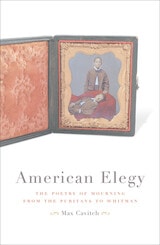
American Elegy
The Poetry of Mourning from the Puritans to WhitmanMax Cavitch
University of Minnesota Press, 2007
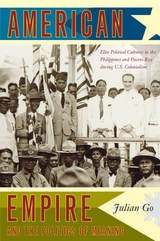
American Empire and the Politics of Meaning
Elite Political Cultures in the Philippines and Puerto Rico during U.S. ColonialismJulian Go
Duke University Press, 2007
American Empire and the Politics of Meaning is an examination of how these efforts to provide the elite of Puerto Rico and the Philippines a practical education in self-government played out on the ground in the early years of American colonial rule, from 1898 until 1912. It is the first systematic comparative analysis of these early exercises in American imperial power. The sociologist Julian Go unravels how American authorities used “culture” as both a tool and a target of rule, and how the Puerto Rican and Philippine elite received, creatively engaged, and sometimes silently subverted the Americans’ ostensibly benign intentions. Rather than finding that the attempt to transplant American-style democracy led to incommensurable “culture clashes,” Go assesses complex processes of cultural accommodation and transformation. By combining rich historical detail with broader theories of meaning, culture, and colonialism, he provides an innovative study of the hidden intersections of political power and cultural meaning-making in America’s earliest overseas empire.
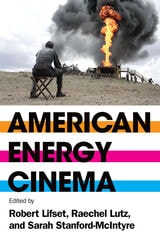
American Energy Cinema
Robert Lifset
West Virginia University Press, 2023
Historians investigate the relationships between film, culture, and energy.
American Energy Cinema explores how Hollywood movies have portrayed energy from the early film era to the present. Looking at classics like Giant, Silkwood, There Will Be Blood, and Matewan, and at quirkier fare like A Is for Atom and Convoy, it argues that films have both reflected existing beliefs and conjured new visions for Americans about the role of energy in their lives and their history.
The essays in this collection show how film provides a unique and informative lens to understand perceptions of energy production, consumption, and infrastructure networks. By placing films that prominently feature energy within historical context and analyzing them as historical objects, the contributing authors demonstrate how energy systems of all kinds are both integral to the daily life of Americans and inextricable from larger societal changes and global politics.

American Ethnic History
Themes and PerspectivesMcDonald, Jason J
Rutgers University Press, 2007
Chapters explore a range of topics, including how different ethnic groups arrived in the United States—whether through violence and coercion or willing immigration; the peculiar identification of Native Americans as “ethnic,” despite the fact that they are indigenous to the land; whether the American public’s attitudes toward and treatment of difference has been consistent with the nation’s professed egalitarian ideals; and how factors such as language, religion, class, gender, and intermarriage play in either strengthening or weakening ethnic identity and group solidarity.
An engaging and critical look at a term that remains stubbornly ambiguous in both scholarly discussion and the vernacular, this book makes an important contribution to the ongoing debates about “difference” in American society.
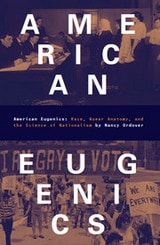
American Eugenics
Race, Queer Anatomy, and the Science of NationalismNancy Ordover
University of Minnesota Press, 2003
Traces the history of eugenics ideology in the United States and its ongoing presence in contemporary life
The Nazis may have given eugenics its negative connotations, but the practice—and the “science” that supports it—is still disturbingly alive in America in anti-immigration initiatives, the quest for a “gay gene,” and theories of collective intelligence. Tracing the historical roots and persistence of eugenics in the United States, Nancy Ordover explores the political and cultural climate that has endowed these campaigns with mass appeal and scientific legitimacy.
American Eugenics demonstrates how biological theories of race, gender, and sexuality are crucially linked through a concern with regulating the “unfit.” These links emerge in Ordover’s examination of three separate but ultimately related American eugenics campaigns: early twentieth-century anti-immigration crusades; medical models and interventions imposed on (and sometimes embraced by) lesbians, gays, transgendered people, and bisexuals; and the compulsory sterilization of poor women and women of color. Throughout, her work reveals how constructed notions of race, gender, sexuality, and nation are put to ideological uses and how “faith in science” can undermine progressive social movements, drawing liberals and conservatives alike into eugenics-based discourse and policies.
American Evangelicalism
Conservative Religion and the Quandary of ModernityHunter, James D
Rutgers University Press, 1983
American Evangelicalism
Embattled and ThrivingChristian Smith
University of Chicago Press, 1998
Based on a national telephone survey and more than three hundred personal interviews with evangelicals and other churchgoing Protestants, this study provides a detailed analysis of the commitments, beliefs, concerns, and practices of this thriving group. Examining how evangelicals interact with and attempt to influence secular society, this book argues that traditional, orthodox evangelicalism endures not despite, but precisely because of, the challenges and structures of our modern pluralistic environment. This work also looks beyond evangelicalism to explore more broadly the problems of traditional religious belief and practice in the modern world.
With its impressive empirical evidence, innovative theory, and substantive conclusions, American Evangelicalism will provoke lively debate over the state of religious practice in contemporary America.
American Evangelicals and the 1960s
Edited by Axel R. Schäfer
University of Wisconsin Press, 2013
American Examples, Vol 1
New Conversations about ReligionEdited by Michael J. Altman
University of Alabama Press, 2022
Rethinking Religion in America Through Contemporary Case and Conversation.
American Examples: New Conversations about Religion, Volume One is the first in a series of annual anthologies published in partnership with the Department of Religious Studies at The University of Alabama. The American Examples initiative gathers scholars from around the world for a series of workshops designed to generate big questions about the study of religion in America. Bypassing traditional white Protestant narratives in favor of new perspectives on belief, social formation, and identity, American Examples fellows offer dynamic perspectives on American faith that challenge our understandings of both America and religion as categories.
In the first volume of this exciting academic project, five topically and methodologically diverse scholars vividly reimagine the potential applications of religious history. The five chapters of this inaugural volume use case studies from America, broadly conceived, to ask larger theoretical questions that are of interest to scholars beyond the subfield of American religious history.
Prea Persaud’s chapter explores the place of Hinduism among the “creole religions” of the Caribbean, while Hannah Scheidt captures what atheist parents say to each other about value systems. Travis Warren Cooper explains how the modernist church architecture of Columbus, Indiana, became central to that city’s identity. Samah Choudhury dissects how Muslim American comedians navigate Western ideas of knowledge and self to make their jokes, and their own selves legible, and Emily D. Crews uses ethnographic fieldwork to read the female reproductive body among Nigerian Pentecostal congregations. Editor Michael J. Altman also provides a brief, rich introduction assessing the state of the discipline of religious history and how the American Examples project can lead the field forward.
Visit americanexamples.ua.edu for more information on the group and news about upcoming projects.
American Examples, Vol 2
New Conversations about ReligionEdited by Samah Choudhury, Prea Persaud, and Michael J. Altman
University of Alabama Press, 2022
Fresh new perspectives on the study of religion, ranging from SoulCycle to Mark Twain
American Examples: New Conversations about Religion, Volume Two, is the second in a series of annual anthologies produced by the American Examples workshop hosted by the Department of Religious Studies at The University of Alabama. In the latest volume from this dynamic academic project, nine scholars with diverse topics and methodologies vividly reimagine the meaning of all three words in the phrase “American religious history.” The essays use case studies from America, broadly conceived, to ask trenchant theoretical questions that are of interest to scholars and students beyond the subfield of American religious history.
Cody Musselman uses a Weberian analysis to explore questions of identity, authority, and authenticity in the world of SoulCycle while Zachary T. Smith finds commonality between the rhetoric and practices of scholarship and mixed martial arts. Erik Kline provides a new perspective on the psychedelic mysticism of the 1960s, and Brook Wilensky-Lanford takes stock of the cultural power of parody in Mark Twain’s last work of fiction. Christopher Cannon Jones examines the reciprocal relationship between religious texts and cultural contexts by comparing early Mormon missions to Hawai‘i and Jamaica and Lindsey Jackson explores what debates over circumcision can tell us about gender stereotypes and motherhood. Dana Lloyd uses the 1988 Supreme Court decision in Lyng v. Northwest Indian Cemetery Protective Association as a case study in order to consider how Indigenous religion and sovereignty have been understood and adjudicated in the American legal system. Matt Sheedy studies the identity categories of “atheist” and “ex-Muslim” and Brad Stoddard uses ethnographic fieldwork to evaluate the role of religious pluralism in regulating and policing correctional institutions. Editors Samah Choudhury and Prea Persaud provide an introduction that reconsiders the trajectory of the American Examples project in light of the siege on the US Capitol in January 2021 and the continuing COVID pandemic.
Visit americanexamples.ua.edu for more information on upcoming workshop dates and future projects.
CONTRIBUTORS
Michael J. Altman / Samah Choudhury / Lindsey Jackson / Christopher Cannon Jones / / Erik Kline / Dana Lloyd / Cody Musselman / Prea Persaud / Matt Sheedy / Zachary T. Smith / Brad Stoddard / Brook Wilensky-Lanford