Results by title
28167 books match the query 'History' and 2536 start with a
After the End of History
The Curious Fate of American MaterialismRobert E. Lane
University of Michigan Press, 2005
--David O. Sears, Professor of Psychology and Political Science, UCLA
"Lane's deep knowledge of the sources of human happiness enables him to develop a powerful critique of economic theory."
---Robert A. Dahl, Sterling Professor Emeritus of Political Science, Yale University
Robert E. Lane is the Eugene Meyer Professor Emeritus of Political Science at Yale University. His previous publications include The Loss of Happiness in Market Democracies (2000) and The Market Experience (1991).
After the Fall
War and Occupation in Irène Némirovsky's Suite françaiseNathan Bracher
Catholic University of America Press, 2010
After the Future
The Paradoxes of Postmodernism & Contemporary Russian CultureMikhail N. Epstein
University of Massachusetts Press, 1995
This book brings together for the first time in English the major writings of Mikhail Epstein, one of post-Soviet Russia's most prominent theoreticians of cultural studies and postmodernism. Written from a non-Western point of view yet informed by a familiarity with Western literary theory, it offers a fresh, lucid perspective on the post-communist literary scene as well as a practical and theoretical introduction to the new discipline of Russian “culturology.”
After the Imperial Turn
Thinking with and through the NationAntoinette Burton, ed.
Duke University Press, 2003
While most of the contributors discuss British imperialism and its repercussions, the volume also includes, as counterpoints, essays on the history and historiography of France, Germany, Spain, and the United States. Whether looking at the history of the passport or the teaching of history from a postnational perspective, this collection explores such vexed issues as how historians might resist the seduction of national narratives, what—if anything—might replace the nation’s hegemony, and how even history-writing that interrogates the idea of the nation remains ideologically and methodologically indebted to national narratives. Placing nation-based studies in international and interdisciplinary contexts, After the Imperial Turn points toward ways of writing history and analyzing culture attentive both to the inadequacies and endurance of the nation as an organizing rubric.
Contributors. Tony Ballantyne, Antoinette Burton, Ann Curthoys, Augusto Espiritu, Karen Fang, Ian Christopher Fletcher, Robert Gregg, Terri Hasseler, Clement Hawes, Douglas M. Haynes, Kristin Hoganson, Paula Krebs, Lara Kriegel, Radhika Viyas Mongia, Susan Pennybacker, John Plotz, Christopher Schmidt-Nowara, Heather Streets, Hsu-Ming Teo, Stuart Ward, Lora Wildenthal, Gary Wilder

After the Invasion
The Soviet Army and Czech Society 1968—1991Marie Cerná
Karolinum Press, 2024
This book addresses different aspects of the Soviet army’s twenty-year presence in Czechoslovakia between 1968 and 1991. It explores the circumstances of the Soviet settling in the country, immediately related to the invasion of the Warsaw Pact armies in August 1968; its active interference in the political developments in the early stage of the “normalization” era; and the universal support provided by the normalization era regime. It examines the darker side of this support when the constant favoring of Soviet interests—often to the detriment of the local population and the environment—went hand in hand with the resignation of the Czechoslovak state to lawfulness and the execution of effective administration on its territory.
Based on extensive local and national primary sources, the volume describes the often problematic coexistence of the Soviet garrisons and local inhabitants, who did not have sufficient protection at the central level. In this context, it points out the contradictory logic that framed the mutual coexistence: the official policy of friendship on the one hand and the counter-intelligence protection of Soviet military premises on the other. Marie Cerná records the traces that the presence of the Soviet army left in the collective memory and examines the circumstances of its departure from the country in 1990 and 1991, which began immediately after the change of the political regime. She presents the long-term presence of the Soviet army as a fundamentally political and politicized matter, which was first the subject of power controversies and later of propaganda and intentional manipulation.
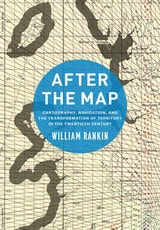
After the Map
Cartography, Navigation, and the Transformation of Territory in the Twentieth CenturyWilliam Rankin
University of Chicago Press, 2016
In After the Map, William Rankin argues that although this shift did not render traditional maps obsolete, it did radically change our experience of geographic knowledge, from the God’s-eye view of the map to the embedded subjectivity of GPS. Likewise, older concerns with geographic truth and objectivity have been upstaged by a new emphasis on simplicity, reliability, and convenience. After the Map shows how this change in geographic perspective is ultimately a transformation of the nature of territory, both social and political.
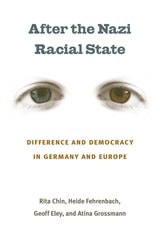
After the Nazi Racial State
Difference and Democracy in Germany and EuropeRita Chin, Heide Fehrenbach, Geoff Eley, and Atina Grossmann
University of Michigan Press, 2010
"After the Nazi Racial State offers a comprehensive, persuasive, and ambitious argument in favor of making 'race' a more central analytical category for the writing of post-1945 history. This is an extremely important project, and the volume indeed has the potential to reshape the field of post-1945 German history."
---Frank Biess, University of California, San Diego
What happened to "race," race thinking, and racial distinctions in Germany, and Europe more broadly, after the demise of the Nazi racial state? This book investigates the afterlife of "race" since 1945 and challenges the long-dominant assumption among historians that it disappeared from public discourse and policy-making with the defeat of the Third Reich and its genocidal European empire. Drawing on case studies of Afro-Germans, Jews, and Turks---arguably the three most important minority communities in postwar Germany---the authors detail continuities and change across the 1945 divide and offer the beginnings of a history of race and racialization after Hitler. A final chapter moves beyond the German context to consider the postwar engagement with "race" in France, Britain, Sweden, and the Netherlands, where waves of postwar, postcolonial, and labor migration troubled nativist notions of national and European identity.
After the Nazi Racial State poses interpretative questions for the historical understanding of postwar societies and democratic transformation, both in Germany and throughout Europe. It elucidates key analytical categories, historicizes current discourse, and demonstrates how contemporary debates about immigration and integration---and about just how much "difference" a democracy can accommodate---are implicated in a longer history of "race." This book explores why the concept of "race" became taboo as a tool for understanding German society after 1945. Most crucially, it suggests the social and epistemic consequences of this determined retreat from "race" for Germany and Europe as a whole.
Rita Chin is Associate Professor of History at the University of Michigan.
Heide Fehrenbach is Presidential Research Professor at Northern Illinois University.
Geoff Eley is Karl Pohrt Distinguished University Professor of Contemporary History at the University of Michigan.
Atina Grossmann is Professor of History at Cooper Union.
Cover illustration: Human eye, © Stockexpert.com.
After the New Criticism
Frank Lentricchia
University of Chicago Press, 1981
Lentricchia's critical intention is in evidence in his sustained attack on the more or less hidden formalist premises inherited from the New Critical fathers. Even in the name of historical consciousness, he contends, contemporary theorists have often cut literature off from social and temporal processes. By so doing he believes that they have deprived literature of its relevant values and turned the teaching of both literature and theory into a rarefied activity. All along the way, with the help of such diverse thinkers as Saussure, Barthes, Foucault, Derrida, and Bloom, Lentricchia indicates a strategy by which future critical theorists may resist the mandarin attitudes of their fathers.
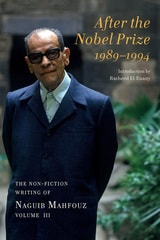
After the Nobel Prize 1989-1994
The Non-fiction Writing of Naguib Mahfouz, Volume IVNaguib Mahfouz
Gingko, 2015
In carefully crafted short texts, his social conscience is revealed as he highlights political shortcomings, economic injustice, and corruption in Egypt and the wider Arab world. His philosophical sensitivity comes to the fore as he contemplates the meaning of a historic events, contributions of an influential people, and what is required to lead a good life. The collapse of the Soviet Union, the Oslo peace accords, the spread of terrorism, the Cairo earthquake, the passing of Louis Awad, Yusuf Idris, Yahya Hakki, the third term of Hosni Mubarak, climate change, and more come under Naguib Mahfouz’s fine scrutiny. For any fan of Mahfouz’s fiction, this collection opens a window on a different side of his intellect, and it offers insights from one of the region’s greatest modern minds.
After the Post–Cold War
The Future of Chinese HistoryDai Jinhua
Duke University Press, 2018

After the Pre-Raphaelites
Art and Aestheticism in Victorian EnglandElizabeth Prettejohn
Rutgers University Press, 1999
Victorian Aestheticism has often been traded as a frivolous elevation of art above the concerns of political and social life. This book reinterprets Aestheticism as a significant exploration of what it might mean to produce works of art in the modern world. The chapters address not only "art for art's sake" but also linkages with the realms of science and morality. A major concern is the relationship between art and sexuality, from the experiments of the Rossetti circle in the 1860s to the male nude in late-Victorian sculpture. Both homosexual and heterosexual eroticism emerge as key issues in the artistic debates of the late-Victorian period.
As a complement to the existing literature on Pre-Raphaelitism, this collection is essential reading for all students of nineteenth-century art, literature, and culture.
Contributors are: Caroline Arscott, Robyn Asleson, Colin Cruise, Whitney Davis, Kate Flint, Alastair Grieve, Michael Hatt, Anne Koval, Alison Smith, and Robin Spencer
After the Strike
A Century of Labor Struggle at PullmanSusan Eleanor Hirsch
University of Illinois Press, 2003
The 1894 Pullman strike and the rise of the Brotherhood of Sleeping Car Porters played major roles in the century-long development of union organizing and labor-management relations in the Pullman Company. Susan Eleanor Hirsch connects the stories of Pullman car builders and porters to answer critical questions like: what created job segregation by race and gender? What role did such segregation play in shaping the labor movement?
Hirsch illuminates the relationship between labor organizing and the racial and sexual discrimination practiced by both employers and unions. Because the Pullman Company ran the sleeping-car service for American railroads and was a major manufacturer of railcars, its workers were involved in virtually every wave of union organizing from the 1890s to the 1940s.
In exploring the years of struggle by the men and women of the Pullman Company, After the Strike reveals the factors that determined the limited success and narrow vision of most American unions.
After the TRC
Reflections on Truth and ReconciliationWilmot James
Ohio University Press, 2001
Has South Africa dealt effectively with the past, and is the country ready to face the future? What are the challenges facing both government and civil society in the years ahead? These and other questions are explored in this collection of essays by international and local commentators on the Truth and Reconciliation Commission.
A range of perspectives on whether the TRC met its objectives of truth and reconciliation is presented. The areas of particular contention-the payment of reparation, the granting of amnesty, and memorialization-are also examined.
Finally, the major challenges facing South Africa are identified, and ways of meeting these challenges and developing the assets of the nation are explored.
Contributors: Haribert Adam, Kanya Adam, Alex Boraine, Colin Bundy, Mary Burton, John de Gruchy, Richard Goldstone, Willem Heath, Wilmot James, Jeffrey Lever, Mahmood Mamdani, Gary Minkley, Njabulo Ndebele, Dumisa Ntsebeza, Kaizer Nyatsumba, Grace Naledi Pandor, Mamphela Ramphele, Ciraj Rassool, Albie Sachs, Patricia Valdez, Linda van de Vijver, Jan van Eck, Frederik Van Zyl Slabbert, Charles Villa-Vicencio, Francis Wilson, and Leslie Witz

After the Thrill Is Gone
A Decade of Post-Apartheid South Africa, Volume 103Grant Farred and Rita Barnard, eds.
Duke University Press, 0
In a range of politically inflected essays by philosophers, community activists, political scientists, sociologists, literary scholars, and cultural and postcolonial theorists—many of whom are diasporic or resident South Africans—this special issue of SAQ provides a critical look at the realities of black majority governance, at the African National Congress, and at the costs of ANC rule to the populace. One essay draws a condemning sketch of poverty and violence in the townships and the growing communities of squatters that continue despite the emergence of democracy. A philosophical piece contemplates the practice of human rights in a South African society grappling with the memory of apartheid abuses. The fiction and poetry in the collection explore sexual identity, including issues created by the AIDS epidemic, and offer critiques of government policies. Using comic strips, another contributor demonstrates the ability of South African popular culture to satirize the nation’s political status quo. Taken together, the essays in After the Thrill Is Gone open a sobering perspective on South Africa’s recent history, its present, and its future.
Contributors. Rita Barnard, Patrick Bond, Ashwin Desai, Emmanuel Chukwudi Eze, Grant Fared, Michiel Heyns, Shaun Irlam, Neil Lazarus, Michael MacDonald, Zine Magubane, Richard Pithouse, Lesego Rampolokeng, Adam Sitze
After the USSR
Ethnicity, Nationalism, and Politics in the Commonwealth of Independent StatesAnatoly M. Khazanov
University of Wisconsin Press, 1996
A world-renowned anthropologist, Anatoly M. Khazanov offers a witty, insightful, and cautionary analysis of ethnic nationalism and its pivotal role in the collapse of the Soviet empire.
“Khazanov’s encyclopedic knowledge of the history and culture of post-Soviet societies, combined with field research there since the 1960s, informs the case studies with a singular authoritative voice. This volume is destined to be an absolutely necessary reference for the understanding of ethnic relations and the politics of minorities in the ex-USSR into the next century.”—Leonard Plotnicov, editor of Ethnology
First Paperback Edition
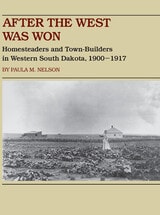
After the West Was Won
Homesteaders and Town-Builders in Western South Dakota, 1900-1917Paula M. Nelson
University of Iowa Press, 1989

After the Wildfire
Ten Years of Recovery from the Willow FireJohn Alcock
University of Arizona Press, 2017
Swallowtail butterflies frolic on the wind. Vireos and rock wrens sing their hearts out by the recovering creek. Spiders and other predators chase their next meal. Through it all, John Alcock observes, records, and delights in what he sees. In a once-burnt area, life resurges. Plants whose seeds and roots withstood an intense fire become habitat for the returning creatures of the wild. After the Wildfire describes the remarkable recovery of wildlife in the Mazatzal Mountains in central Arizona.
It is the rare observer who has the dedication to revisit the site of a wildfire, especially over many years and seasons. But naturalist John Alcock returned again and again to the Mazatzals, where the disastrous Willow fire of 2004 burned 187 square miles. Documenting the fire’s aftermath over a decade, Alcock thrills at the renewal of the once-blackened region. Walking the South Fork of Deer Creek in all seasons as the years passed, he was rewarded by the sight of exuberant plant life that in turn fostered an equally satisfying return of animals ranging from small insects to large mammals.
Alcock clearly explains the response of chaparral plants to fire and the creatures that reinhabit these plants as they come back from a ferocious blaze: the great spreadwing damselfly, the western meadowlark, the elk, and birds and bugs of rich and colorful varieties. This book is at once a journey of biological discovery and a celebration of the ability of living things to reoccupy a devastated location. Alcock encourages others to engage the natural world—even one that has burnt to the ground.
Afterall
A Journal of Art, Context and Enquiry, volume 51 number 1 (Spring 2021)The University of Chicago Press
University of Chicago Press Journals, 2021
Afterall
A Journal of Art, Context and Enquiry, volume 52 number 1 (Autumn/Winter 2021)The University of Chicago Press
University of Chicago Press Journals, 2021
Afterall
A Journal of Art, Context and Enquiry, volume 53 number 1 (Spring 2022)The University of Chicago Press
University of Chicago Press Journals, 2022
Afterall
A Journal of Art, Context and Enquiry, volume 54 number 1 (Autumn/Winter 2022)The University of Chicago Press
University of Chicago Press Journals, 2022
Afterall
A Journal of Art, Context and Enquiry, volume 55-56 number 1 (Spring 2023)The University of Chicago Press
University of Chicago Press Journals, 2023
Afterall
A Journal of Art, Context and Enquiry, volume 57 number 1 (Spring 2024)The University of Chicago Press
University of Chicago Press Journals, 2024
Afterall
A Journal of Art, Context and Enquiry, volume 58 number 1 (Autumn/Winter 2024)The University of Chicago Press
University of Chicago Press Journals, 2024
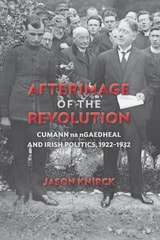
Afterimage of the Revolution
Cumann na nGaedheal and Irish Politics, 1922–1932Jason Knirck
University of Wisconsin Press, 2014
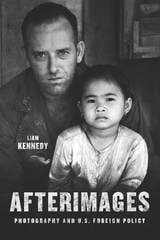
Afterimages
Photography and U.S. Foreign PolicyLiam Kennedy
University of Chicago Press, 2016
Liam Kennedy here maps the evolving relations between the American way of war and photographic coverage of it. Organized in its first section around key US military actions over the last fifty years, the book then moves on to examine how photographers engaged with these conflicts on wider ethical and political grounds, and finally on to the genre of photojournalism itself. Illustrated throughout with examples of the photographs being considered, Afterimages argues that photographs are important means for critical reflection on war, violence, and human rights. It goes on to analyze the high ethical, sociopolitical, and legalistic value we place on the still image’s ability to bear witness and stimulate action.
Afterlives of Discovery
Speculative Geographies in the Settler Colonial Imaginaryheidi andrea restrepo rhodes
Duke University Press, 2025
Afterlives of Indigenous Archives
Edited by Ivy Schweitzer and Gordon Henry
Dartmouth College Press, 2019
Afterlives of Modernism
Liberalism, Transnationalism, and Political CritiqueJohn Carlos Rowe
Dartmouth College Press, 2015
Aftermaths
Exile, Migration, and Diaspora ReconsideredBullock, Marcus
Rutgers University Press, 2008
Marcus Bullock and Peter Y. Paik, in bringing this collection together, show we have reached a moment in history when it is imperative to question prevailing intellectual models. The interconnectedness of the world's economies, the contributors argue, can exacerbate existing antagonisms or create new ones. With essays by Ihab Hassan, Paul Brodwin, and Helen Fehervary, among others, Aftermaths engages not only with important academic topics but also with the leading political issues of the day.
Aftershocks of the New
Feminism and Film HistoryPetro, Patrice
Rutgers University Press, 2001
The beginning of this century has brought with it a host of assumptions about the newness of our technologies, globalized economies, and transnational media practices. Our own time is a period marked by experiences of fragmentation, sensation, and shock. The essays here are joined by a common concern to chart another side to modernity—precisely after the shock of the new—when the new ceases to be shocking, and when the extraordinary and the sensational become linked to the boring and the everyday. Patrice Petro explores how the mechanisms of modernism, German cinema, and feminist film theory have evolved, and she discusses the directions in which they are headed.
Petro’s essays—some published here for the first time—raise such questions as: What roles do television and other media play in film studies? What is the place of feminist film theory in our conceptions of film history? How is German film theory situated within international film theory?
Rather than continue to sensationalize sensation, Aftershocks of the New aims to lower the volume of debates over the place of cinema within the culture of modernity. And it accomplishes this by locating them within a more complex matrix of contending sensibilities, voices, and impulses.
Against Academia
The History of the Popular Culture Association/American Culture Association and the Popular Culture Movement 1967-1988Ray B. Browne
University of Wisconsin Press, 1989
The history of the study of popular culture in American academia since its (re)introduction in 1967 is filled with misunderstanding and opposition. From the first, proponents of the study of this major portion of American culture made clear that they were interested in making popular culture a supplement to the usual courses in such fields as literature, sociology, history, philosophy, and the other humanities and social sciences; nobody proposed that study of popular culture replace the other disciplines, but many suggested that it was time to reexamine the accepted courses and see if they were still viable. Opposition to the status quo always causes anxiety and opposition, but when the issues are clarified, often opposition and anxiety melt away, as they now are doing.
Anxiety and opposition were generated on another level when people in academic and curricular power felt that voices were being raised that questioned their credentials and control. They flailed out with every argument at their command, generally thinking only of their self interest and not that of the students and the future of academic education. Generally this wall of opposition has also been breached.
The Popular Culture Association and its many friends and backers in academia, in the United States and abroad, has demonstrated that the study of our everyday and dominant culure should be taken seriously, understandingly and analytically, just as all other aspects of culture should be. Taken that way the study can be useful in developing better educated and responsible citizens from the cradle to the grave. The humanities and social sciences are too important for any portion—especially the majority portion—to be ignored or downplayed. The study of popular culture constitutes a significant and important element, one that can be ignored only at peril.
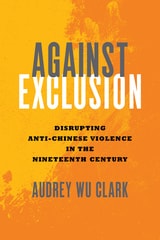
Against Exclusion
Disrupting Anti-Chinese Violence in the Nineteenth CenturyAudrey Wu Clark
The Ohio State University Press, 2024
In Against Exclusion, Audrey Wu Clark dramatically reframes Asian American resistance via the lives of five early Chinese American public figures. In contrast to later activists who sought to defy stereotypes, Ah Toy, Mary Tape, Wong Chin Foo, Yan Phou Lee, and Yung Wing deployed the model minority and yellow peril tropes to make themselves visible during a period of rampant anti-Chinese violence and legal exclusion. In making themselves visible, they sought to expose and dismantle the contradictory exceptionalism of nineteenth-century US liberalism that both required and “disavowed” the deaths of Chinese Americans. In examining these figures and the ways in which they fought their exclusion as Chinese Americans—via court cases, autobiographical writings, journalism, and other forms of activism—Clark contributes to prevailing scholarly conversations about stereotypes of Asian Americans but contextualizes them in the nineteenth century. She traces the twinned emergences of the model minority and the yellow peril, excavating the exceptionalism with which Chinese Americans were racialized and subject to death—whether by lynching, other forms of driving out, or loss of citizenship or rights—and mapping its reverberations into the present day.
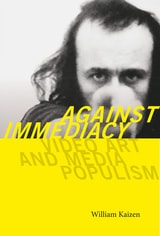
Against Immediacy
Video Art and Media PopulismWilliam Kaizen
Dartmouth College Press, 2016
Against Julian
Saint Augustine
Catholic University of America Press, 1957
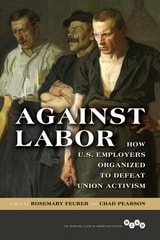
Against Labor
How U.S. Employers Organized to Defeat Union ActivismEdited by Rosemary Feurer and Chad Pearson
University of Illinois Press, 2017
Against Literature
John Beverley
University of Minnesota Press, 1993
Is there a way of thinking about literature that is “outside” or “against” literature? In Against Literature, John Beverly brilliantly responds to this question, arguing for a negation of the literary that would allow nonliterary forms of cultural practice to displace literature’s hegemony.
Reminding us that most contemporary theorist speak today of literature with historically and socially specific conditions of production and reading formations, Beverley begins with a provocative exploration of Latin American literature, which he says the legacy of Columbus (discovery, conquest, and colonization) has endowed with an ambiguous cultural function, making it both a colonial institution and a historical agent of nation formation. He moves from this consideration to an extensive discussion of the postcolonial testimonio, poised between literature and the dynamics of subaltern culture. Beverley’s demonstration of how the internal logic that has always driven the dominant conception f literature must of necessity explode int cultural politics is a significant intervention into current debates about cultural studies, the canon, and multiculturalism.
Against Marginalization
Convergences in Black and Latinx LiteraturesJose O. Fernandez
The Ohio State University Press, 2022
Against Marriage
The Correspondence of La Grande MademoiselleAnne-Marie-Louise d'Orléans, Duchesse de Montpensier
University of Chicago Press, 2002
In the daring letters presented in this bilingual edition, Montpensier condemns the alliance system of marriage, proposing instead to found a republic that she would govern, "a corner of the world in which . . . women are their own mistresses," and where marriage and even courtship would be outlawed. Her pastoral utopia would provide medical care and vocational training for the poor, and all the homes would have libraries and studies, so that each woman would have a "room of her own" in which to write books.
Joan DeJean's lively introduction and accessible translation of Montpensier's letters—four previously unpublished—allow us unprecedented access to the courageous voice of this extraordinary woman.
Against Normalization
Writing Radical Democracy in South AfricaAnthony O'Brien
Duke University Press, 2001
O’Brien brings together an unusual array of contemporary South African writing: cultural theory and debate, worker poetry, black and white feminist writing, Black Consciousness drama, the letters of exiled writers, and postapartheid fiction and film. Paying subtle attention to well-known figures like Nadine Gordimer, Bessie Head, and Njabulo Ndebele, but also foregrounding less-studied writers like Ingrid de Kok, Nise Malange, Maishe Maponya, and the Zimbabwean Dambudzo Marechera, he reveals in their work the construction of a political aesthetic more radically democratic than the current normalization of nationalism, ballot-box democracy, and liberal humanism in culture could imagine. Juxtaposing his readings of these writers with the theoretical traditions of postcolonial thinkers about race, gender, and nation like Paul Gilroy, bell hooks, and Gayatri Spivak, and with others such as Samuel Beckett and Vaclav Havel, O’Brien adopts a uniquely comparatist and internationalist approach to understanding South African writing and its relationship to the cultural settlement after apartheid.
With its appeal to specialists in South African fiction, poetry, history, and politics, to other Africanists, and to those in the fields of colonial, postcolonial, race, and gender studies, Against Normalization will make a significant intervention in the debates about cultural production in the postcolonial areas of global capitalism.
Against Preemptive War, Volume 13
Tani E. Barlow, Yukiko Hanawa, Thomas LaMarre, and Donald Lowe, eds.
Duke University Press, 0
Gathering material from politically active scholars, artists, and authors from Europe, Asia, and North America, this collection reflects on the likely fallout from the corruptive U.S. strategy of preemption. In the introduction, the editors criticize the American press for being, with few exceptions, easily if not willingly deceived by the Bush administration’s propaganda regarding weapons of mass destruction. One contributor redefines fascism as a situation in which contradictions are evident but blatantly ignored, one which creates a false sense of cohesion between events. Another argues that U.S. military bases around the world are now maintained not for military defense and quick mobilization but to create a culture of American militarism, noting that troops were sent from the U.S. for the invasion of Iraq rather than from closer bases around the world. Finally, the issue raises a formidable question: how do we end war waged against what might come to pass rather than what actually is?
Contributors. Tani Barlow, Jim Bonk, Josh Brown, Bei Dao, Carolyn Eisenberg, Lawrence Ferlinghetti, Matthew Fryslie, Sue Golding (as johnny de philo), Freda Guttman, Yukiko Hanawa, Harry Harootunian, Sharon Hayashi, Reynaldo C. Ileto, Joy Kogawa, Thomas LaMarre, The Liberal Islam Network, Sumit K. Mandal, Edoarda Masi, Brian Massumi, Anne McKnight, Carel Moiseiwitsch, Alberto Moreiras, Claudia Pozzana, Alessandro Russo, Ukai Satoshi, Laurie Sears, Kuang Xinnian, Marilyn Young
Against Racism
Unpublished Essays, Papers, Addresses, 1887–1961W.E.B. Du Bois
University of Massachusetts Press, 1985
A collection of essays, papers, and addresses which explains the author's views on racism.
Against Their Will
The History and Geography of Forced Migrations in the USSRPavel Polian
Central European University Press, 2003
Against a Sharp White Background
Infrastructures of African American PrintEdited by Brigitte Fielder and Jonathan Senchyne
University of Wisconsin Press, 2019
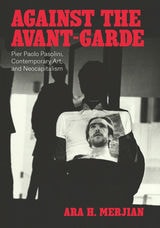
Against the Avant-Garde
Pier Paolo Pasolini, Contemporary Art, and NeocapitalismAra H. Merjian
University of Chicago Press, 2020
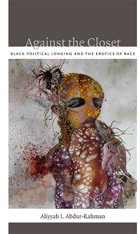
Against the Closet
Black Political Longing and the Erotics of RaceAliyyah I. Abdur-Rahman
Duke University Press, 2012
Abdur-Rahman brings black feminist, psychoanalytic, critical race, and poststructuralist theories to bear on literary genres from slave narratives to science fiction. Analyzing works by African American writers, including Frederick Douglass, Pauline Hopkins, Harriet Jacobs, James Baldwin, and Octavia Butler, she shows how literary representations of transgressive sexuality expressed the longings of African Americans for individual and collective freedom. Abdur-Rahman contends that those representations were fundamental to the development of African American forms of literary expression and modes of political intervention and cultural self-fashioning.
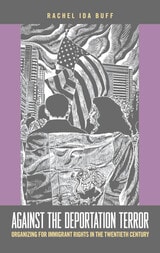
Against the Deportation Terror
Organizing for Immigrant Rights in the Twentieth CenturyRachel Ida Buff
Temple University Press, 2017
Despite being characterized as a “nation of immigrants,” the United States has seen a long history of immigrant rights struggles. In her timely book Against the Deportation Terror, Rachel Ida Buff uncovers this multiracial history. She traces the story of the American Committee for the Protection of the Foreign Born (ACPFB) from its origins in the 1930s through repression during the early Cold War, to engagement with “new” Latinx and Caribbean immigrants in the 1970s and early 1980s.
Functioning as a hub connecting diverse foreign-born communities and racial justice advocates, the ACPFB responded to various, ongoing crises of what they called “the deportation terror.” Advocates worked against repression, discrimination, detention, and expulsion in migrant communities across the nation at the same time as they supported reform of federal immigration policy. Prevailing in some cases and suffering defeats in others, the story of the ACPFB is characterized by persistence in multiracial organizing even during periods of protracted repression.
By tracing the work of the ACPFB and its allies over half a century, Against the Deportation Terror provides important historical precedent for contemporary immigrant rights organizing. Its lessons continue to resonate today.
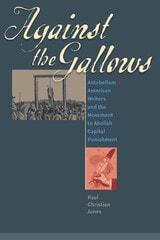
Against the Gallows
Antebellum American Writers and the Movement to Abolish Capital PunishmentPaul C. Jones
University of Iowa Press, 2011
In Against the Gallows, Paul Christian Jones explores the intriguing cooperation of America’s writers—including major figures such as Walt Whitman, John Greenleaf Whittier, E. D. E. N. Southworth, and Herman Melville—with reformers, politicians, clergymen, and periodical editors who attempted to end the practice of capital punishment in the United States during the 1840s and 1850s. In an age of passionate reform efforts, the antigallows movement enjoyed broad popularity, waging its campaign in legislatures, pulpits, newspapers, and literary journals.
Against the Grain
Colonel Henry M. Lazelle and the U.S. ArmyJames Carson
University of North Texas Press, 2015
Against the Inveterate Obduracy of the Jews
Irven M. Peter the Venerable
Catholic University of America Press, 2013