Results by title
22279 books match the query 'Social Science' and 1819 start with a

An Organ of Murder
Crime, Violence, and Phrenology in Nineteenth-Century AmericaCourtney E. Thompson
Rutgers University Press, 2021
An Organ of Murder explores the origins of both popular and elite theories of criminality in the nineteenth-century United States, focusing in particular on the influence of phrenology. In the United States, phrenology shaped the production of medico-legal knowledge around crime, the treatment of the criminal within prisons and in public discourse, and sociocultural expectations about the causes of crime. The criminal was phrenology’s ideal research and demonstration subject, and the courtroom and the prison were essential spaces for the staging of scientific expertise. In particular, phrenology constructed ways of looking as well as a language for identifying, understanding, and analyzing criminals and their actions. This work traces the long-lasting influence of phrenological visual culture and language in American culture, law, and medicine, as well as the practical uses of phrenology in courts, prisons, and daily life.
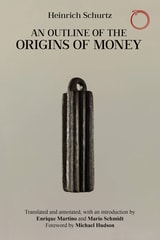
An Outline of the Origins of Money
Heinrich Schurtz
HAU, 2024
“On this subject, I only knew the excellent little book by the late Schurtz”—Marcel Mauss, 1914, Les origines de la notion de monnaie.
Heinrich Schurtz’s 1898 book has been a touchstone for economic historians, anthropologists, and philosophers interested in the nature and origins of money in various societies, including Georg Simmel, Max Weber, Marcel Mauss, and Karl Polanyi. In his brief book, Schurtz experimented with concepts about money, going beyond traditional economic paradigms. Drawing on an extensive range of archaeological and ethnographic sources, he reframed a theory of money to include its materiality, symbolic nature, relationship to forms of property, and its dual origin in “outside money” and “inside money.” While it is not well known today, it was important to the theorization of money in the first half of the 20th century and its innovative synthesis offers galvanizing questions and insights into how value relations are formed and how currency systems are interrelated.
An Ugly Word
Rethinking Race in Italy and the United StatesAnn Morning
Russell Sage Foundation, 2022
Morning and Maneri interviewed over 150 people across the two countries about differences among what they refer to as “descent-based groups.” Using this concept allowed them to sidestep the language of “race” and “ethnicity,” which can be unnecessarily narrow, poorly defined, or even offensive to some. Drawing on these interviews, the authors find that while ways of speaking about group difference vary considerably across the Atlantic, underlying beliefs about it do not. The similarity in American and Italian understandings of difference was particularly evident when discussing sports. Both groups relied heavily on traditional stereotypes of Black physicality to explain Black athletes’ overrepresentation in sports like U.S. football and their underrepresentation in sports like swimming – contradicting the claims that a biological notion of race is a distinctly American phenomenon.
While American and Italian concepts of difference may overlap extensively, they are not identical. Interviews in Italy were more likely to reveal beliefs about groups’ innate, unchangeable temperaments, such as friendly Senegalese and dishonest Roma. And where physical difference was seen by Italians as superficial and unimportant, cultural difference was perceived as deeply meaningful and consequential. In contrast, U.S. interviewees saw cultural difference as supremely malleable—and often ascribed the same fluidity to racial identity, which they believed stemmed from culture as well as biology. In light of their findings, Morning and Maneri propose a new approach to understanding cross-cultural beliefs about descent-based difference that includes identifying the traits people believe differentiate groups, how they believe those traits are acquired, and whether they believe these traits can change.
An Ugly Word is an illuminating, cross-national examination of the ways in which people around the world make sense of race and difference.
An Uncertain Age
The Politics of Manhood in KenyaPaul Ocobock
Ohio University Press, 2017
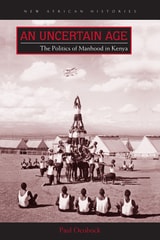
In twentieth-century Kenya, age and gender were powerful cultural and political forces that animated household and generational relationships. They also shaped East Africans’ contact with and influence on emergent colonial and global ideas about age and masculinity. Kenyan men and boys came of age achieving their manhood through changing rites of passage and access to new outlets such as town life, crime, anticolonial violence, and nationalism. And as they did, the colonial government appropriated masculinity and maturity as means of statecraft and control.
In An Uncertain Age, Paul Ocobock positions age and gender at the heart of everyday life and state building in Kenya. He excavates in unprecedented ways how the evolving concept of “youth” motivated and energized colonial power and the movements against it, exploring the masculinities boys and young men debated and performed as they crisscrossed the colony in search of wages or took the Mau Mau oath. Yet he also considers how British officials’ own ideas about masculinity shaped not only young African men’s ideas about manhood but the very nature of colonial rule.
An Uncertain Age joins a growing number of histories that have begun to break down monolithic male identities to push the historiographies of Kenya and empire into new territory.
An Uncertain Cure
Living with Leprosy in BrazilWhite, Cassandra
Rutgers University Press, 2008
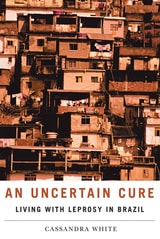
In An Uncertain Cure, Cassandra White goes deep into the shantytowns of Rio de Janeiro to give a riveting account of the contemporary leprosy experience among poor and working class Brazilians. In this ethnographic treatment of leprosy sufferers, White exposes the web of historical, socioeconomic, religious, and political forces that complicate the path to wellness and perpetuate high rates of infection. Drawing on nearly ten years of research, White shows how anthropological research can contribute to more effective treatment of chronic infectious diseases around the world.
An Unexpected Minority
White Kids in an Urban SchoolMorris, Edward
Rutgers University Press, 2005
In An Unexpected Minority, sociologist Edward Morris addresses these far-reaching questions by exploring attitudes about white identity in a Texas middle school composed predominantly of African Americans, Latinos, and Asians. Based on his ethnographic research, Morris argues that lower-income white students in urban schools do not necessarily maintain the sort of white privilege documented in other settings. Within the student body, African American students were more frequently the "cool" kids, and white students adopted elements of black culture-including dress, hairstyle, and language-to gain acceptance. Morris observes, however, that racial inequalities were not always reversed. Stereotypes that cast white students as better behaved and more academically gifted were often reinforced, even by African American teachers.
Providing a new and timely perspective to the significant role that non-whites play in the construction of attitudes about whiteness, this book takes an important step in advancing the discussion of racial inequality and its future in this country.
An Unformed Map
Geographies of Belonging between Africa and the CaribbeanPhilip Janzen
Duke University Press, 2025
An Unseen Unheard Minority
Asian American Students at the University of IllinoisSharon S. Lee
Rutgers University Press, 2022

An Utterly Dark Spot
Gaze and Body in Early Modern PhilosophyMiran Bozovic
University of Michigan Press, 2000

Anaesthetics of Existence
Essays on Experience at the EdgeCressida J. Heyes
Duke University Press, 2020
“Experience” is a thoroughly political category, a social and historical product not authored by any individual. At the same time, “the personal is political,” and one's own lived experience is an important epistemic resource. In Anaesthetics of Existence Cressida J. Heyes reconciles these two positions, drawing on examples of things that happen to us but are nonetheless excluded from experience. If for Foucault an “aesthetics of existence” was a project of making one's life a work of art, Heyes's “anaesthetics of existence” describes antiprojects that are tacitly excluded from life—but should be brought back in. Drawing on critical phenomenology, genealogy, and feminist theory, Heyes shows how and why experience has edges, and she analyzes phenomena that press against those edges. Essays on sexual violence against unconscious victims, the temporality of drug use, and childbirth as a limit-experience build a politics of experience while showcasing Heyes's much-needed new philosophical method.
Anahulu
The Anthropology of History in the Kingdom of Hawaii, Volume 1: Historical EthnographyPatrick Vinton Kirch and Marshall Sahlins
University of Chicago Press, 1992
Volume I shows the surprising effects of the encounter with the imperial forces of commerce and Christianity—the distinctive ways the Hawaiian people culturally organized the experience, from the structure of the kingdom to the daily life of ordinary people. Volume II examines the material record of changes in local social organization, economy and production, population, and domestic settlement arrangements.
Anahulu
The Anthropology of History in the Kingdom of Hawaii, Volume 2: The Archaeology of HistoryPatrick Vinton Kirch and Marshall Sahlins
University of Chicago Press, 1992
Volume 2, by Patrick V. Kirch, examines the material record of changes in local social organization, economy and production, population, and domestic settlement arrangements.

Analyzing World Fiction
New Horizons in Narrative TheoryEdited by Frederick Luis Aldama
University of Texas Press, 2011
Why are many readers drawn to stories that texture ethnic experiences and identities other than their own? How do authors such as Salman Rushdie and Maxine Hong Kingston, or filmmakers in Bollywood or Mexico City produce complex fiction that satisfies audiences worldwide? In Analyzing World Fiction, fifteen renowned luminaries use tools of narratology and insights from cognitive science and neurobiology to provide answers to these questions and more.
With essays ranging from James Phelan's "Voice, Politics, and Judgments in Their Eyes Were Watching God" and Hilary Dannenberg's "Narrating Multiculturalism in British Media: Voice and Cultural Identity in Television" to Ellen McCracken's exploration of paratextual strategies in Chicana literature, this expansive collection turns the tide on approaches to postcolonial and multicultural phenomena that tend to compress author and narrator, text and real life. Striving to celebrate the art of fiction, the voices in this anthology explore the "ingredients" that make for powerful, universally intriguing, deeply human story-weaving.
Systematically synthesizing the tools of narrative theory along with findings from the brain sciences to analyze multicultural and postcolonial film, literature, and television, the contributors pioneer new techniques for appreciating all facets of the wonder of storytelling.

Ananda
Where Yoga LivesJohn Ball
University of Wisconsin Press, 1982
Whenever the subject of communities and communal living comes uo, a variety of doubts and suspicions is usually aroused. The possible brainwashing of impressionable young people is frequently mentioned. Although the idea itself is centuries old, it has yet to be accepted as an approved method of living, even in this so-called New Age.
Of the many hundreds that have been started, very few have proven successful. The fact that Ananda has done so remarkably well against terrifying odds, and that at every time of crisis help always seems to come in some extraordinary way, invites attention. During his lifetime, which ended in 1952, Yogananda called for the founding of spiritual communities dedicated to world brotherhood and to "simple living and high thinking." Ananda is the first response to this directive. Its remarkable history, and its present expanding horizons, are the subject of this work.
Anarchism and the Black Revolution
The Definitive EditionLorenzo Kom’boa Ervin
Pluto Press, 2021
'A powerful – even startling – book that challenges the shibboleths of 'white' anarchism'. Its analysis of police violence and the threat of fascism are as important now as they were at the end of the 1970s. Perhaps more so' - Peter James Hudson, Black Agenda Report
Anarchism and the Black Revolution first connected Black radical thought to anarchist theory in 1979. Now amidst a rising tide of Black political organizing, this foundational classic written by a key figure of the Civil Rights movement is republished with a wealth of original material for a new generation.
Anarchist theory has long suffered from a whiteness problem. This book places its critique of both capitalism and racism firmly at the center of the text. Making a powerful case for the building of a Black revolutionary movement that rejects sexism, homophobia, militarism and racism, Lorenzo Kom’boa Ervin counters the lies and distortions about anarchism spread by its left- and right-wing opponents alike.
New material includes an interview with writer and activist William C. Anderson, as well as new essays, and a contextualizing biography of the author’s inspiring life.
Anarchist Immigrants in Spain and Argentina
James A. Baer
University of Illinois Press, 2015
James A. Baer follows the lives, careers, and travels of Diego Abad de Santillán, Manuel Villar, and other migrating anarchists to highlight the ideological and interpersonal relationships that defined a vital era in anarchist history. Drawing on extensive interviews with Abad de Santillán, José Grunfeld, and Jacobo Maguid, along withunusual access to anarchist records and networks, Baer uncovers the ways anarchist migrants in pursuit of jobs and political goals formed a critical nucleus of militants, binding the two countries in an ideological relationship that profoundly affected the history of both. He also considers the impact of reverse migration and discusses political decisions that had a hitherto unknown influence on the course of the Spanish Civil War.
Personal in perspective and transnational in scope, Anarchist Immigrants in Spain and Argentina offers an enlightening history of a movement and an era.
Anarchy and Culture
The Aesthetic Politics of ModernismDavid Weir
University of Massachusetts Press, 1997
Anarchism is generally understood as a failed ideology, a political philosophy that once may have had many followers but today attracts only cranks and eccentrics. This book argues that the decline of political anarchism is only half the story; the other half is a tale of widespread cultural success.
David Weir develops this thesis in several ways. He begins by considering the place of culture in the political thought of the classical anarchist thinkers William Godwin, Pierre-Joseph Proudhon, Mikhail Bakunin, and Peter Kropotkin. He then shows how the perceived “anarchy” of nineteenth-century society induced writers such as Matthew Arnold, Henry James, and Fyodor Dostoyevsky to turn away from politics and seek unity in the idea of a common culture.
Yet as other late-nineteenth-century writers and artists began to sympathize with anarchism, the prospect of a common culture became increasingly remote. In Weir's view, the affinity for anarchism that developed among members of the artistic avant-garde lies behind much of fin de siècle culture. Indeed, the emergence of modernism itself can be understood as the aesthetic realization of anarchist politics. In support of this contention, Weir shows that anarchism is the key aesthetic principle informing the work of a broad range of modernist figures, from Henrik Ibsen and James Joyce to Dadaist Hugo Ball and surrealist Luis Buñuel.
Weir concludes by reevaluating the phenomenon of postmodernism as only the most recent case of the migration of politics into aesthetics, and by suggesting that anarchism is still very much with us as a cultural condition.
Anarchy—In a Manner of Speaking
Conversations with Mehdi Belhaj Kacem, Nika Dubrovsky, and Assia Turquier-ZaubermanDavid Graeber
Diaphanes, 2020
Graeber has offered up perhaps the most credible path for exiting capitalism—as much through his writing about debt, bureaucracy, or “bullshit jobs” as through his crucial involvement in the Occupy Wall Street movement, which led to his more-or-less involuntary exile from the American academy. In short, Anarchy—In a Manner of Speaking presents a series of interviews with a first-rate intellectual, a veritable modern hero on the order of Julian Assange, Edward Snowden, Linus Torvald, Aaron Swartz, and Elon Musk.
Interviewers Mehdi Belhaj Kacem and Assia Turquier-Zauberman asked Graeber not only about the history of anarchy, but also about its contemporary relevance and future. Their conversation also explores the ties between anthropology and anarchism, and the traces of its DNA in the Occupy Wall Street and Yellow Vest movements. Finally, Graeber discussed the meaning of anarchist ethics—not only in the political realm, but also in terms of art, love, sexuality, and more. With astonishing humor, verve, and erudition, this book redefines the contours of what could be (in the words of Peter Kropotkin) “anarchist morality” today.

Anatomy Of Racism
David Goldberg
University of Minnesota Press, 1990

Anatomy of Murder
Mystery, Detective, and Crime FictionCarl D. Malmgren
University of Wisconsin Press, 2001
Anatomy of a Civil War
Sociopolitical Impacts of the Kurdish Conflict in TurkeyMehmet Gurses
University of Michigan Press, 2018
Anatomy of a Massacre
The Destruction of Gnadenhutten, 1782Eric Sterner
Westholme Publishing, 2027
On March 8, 1782, a group of western settlers killed nearly one hundred unarmed and peaceful Indians who had converted to Christianity under the tutelage of missionaries from the Church of the United Brethren. The murders were cold-blooded and heartless; roughly two-thirds of those executed were women and children. Its brutality stunned Benjamin Franklin in far-away France. He wrote: “the abominable Murders committed by some of the frontier People on the poor Moravian Indians, has given me infinite Pain and Vexation. The Dispensations of Providence in this World puzzle my weak Reason. I cannot comprehend why cruel Men should have been permitted thus to destroy their Fellow Creatures.” Since that maelstrom of violence struck the small Indian village of Gnadenhutten, history has treated the episode as a simple morality tale. While there were ample incidents of good and evil on March 8, that summation does not explain what brought murderers and victims together on the banks of the Muskingum River in today’s Ohio. It was actually the culmination of a series of events among different Indian tribes, the British, Congressional authorities at Pittsburgh, the Pennsylvania militia, and key individuals, all of which are lost in contemporary explanations of the massacre.
Anatomy of a Massacre: The Destruction of Gnadenhutten, 1782 fills that void by examining the political maneuvering among white settlers, Continental officials, British officers, western Indian tribes, missionaries, and the Indians practicing Christianity that culminated in the massacre. Uniquely, it follows the developing story from each perspective, using first-person accounts from each group to understand how they saw and experienced the changes on the American frontier. Along the way it profiles some of the key individuals responsible for the way the war unfolded. It is a fresh look at an often mentioned, but seldom understood, episode in the American Revolution.
Anay's Will to Learn
A Woman's Education in the Shadow of the MaquiladorasBy Elaine Hampton with Anay Palomeque de Carrillo
University of Texas Press, 2013
The opening of free trade agreements in the 1980s caused major economic changes in Mexico and the United States. These economic activities spawned dramatic social changes in Mexican society. One young Mexican woman, Anay Palomeque de Carrillo, rode the tumultuous wave of these economic activities from her rural home in tropical southern Mexico to the factories in the harsh desert lands of Ciudad Juárez during the early years of the city’s notorious violence.
During her years as an education professor at the University of Texas at El Paso, author Elaine Hampton researched Mexican education in border factory (maquiladora) communities. On one trip across the border into Ciudad Juárez, she met Anay, who became her guide in uncovering the complexities of a factory laborer’s experiences in these turbulent times.
Hampton here provides an exploration of education in an era of dramatic social and economic upheaval in rural and urban Mexico. This critical ethnographic case study presents Anay’s experiences in a series of narrative essays addressing the economic, social, and political context of her world. This young Mexican woman leads us through Ciudad Juárez in its most violent years, into women’s experiences in the factories, around family and religious commitments as well as personal illness, and on to her achievement of an education through perseverance and creativity.
Ancestors and Antiretrovirals
The Biopolitics of HIV/AIDS in Post-Apartheid South AfricaClaire Laurier Decoteau
University of Chicago Press, 2013
In Ancestors and Antiretrovirals, Claire Laurier Decoteau backs up Tutu’s assertion with powerful arguments about how this came to pass. Decoteau traces the historical shifts in health policy after apartheid and describes their effects, detailing, in particular, the changing relationship between biomedical and indigenous health care, both at the national and the local level. Decoteau tells this story from the perspective of those living with and dying from AIDS in Johannesburg’s squatter camps. At the same time, she exposes the complex and often contradictory ways that the South African government has failed to balance the demands of neoliberal capital with the considerable health needs of its population.
Ancestors in Borneo Societies
Death, Transformation, and Social ImmortalityEdited by Pascal Coudrec and Kenneth Sillander
National University of Singapore Press, 2012
Ancestral Hopi Migrations
Patrick D. Lyons
University of Arizona Press, 2003
Ancestral Landscapes of the Pueblo World
James E. Snead
University of Arizona Press, 2008
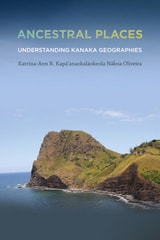
Ancestral Places
Understanding Kanaka GeographiesKatrina-Ann R. Kapa'anaokalaokeola Nakoa Oliveira
Oregon State University Press, 2014
Katrina-Ann R. Kapa‘anaokalaokeola Nakoa Oliveira elucidates a Kanaka geography and provides contemporary scholars with insights regarding traditional culture—including the ways in which Kanaka utilize cartographic performances to map our ancestral places and retain our mo‘olelo, such as reciting creation accounts, utilizing nuances embedded in language, and dancing hula.
A Kanaka by birth, a kumu ‘olelo Hawai‘i (language teacher) by profession, and a geographer by training, Oliveira’s interests intersect at the boundary where words and place-making meet her ancestral land. Thus, Ancestral Places imbues the theoretical with sensual practice. The book’s language moves fluidly between Hawaiian and English, terms are nimbly defined, and the work of the field is embodied: geographic layers are enacted within the text, new understandings created—not just among lexica, but amidst illustrations, charts, terms, and poetry.
In Ancestral Places, Oliveira reasserts both the validity of ancestral knowledge systems and their impact in modernity. Her discussion of Kanaka geographies encompasses the entire archipelago, offering a new framework in Kanaka epistemology.
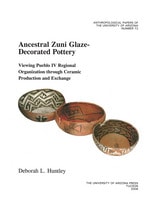
Ancestral Zuni Glaze-Decorated Pottery
Viewing Pueblo IV Regional Organization through Ceramic Production and ExchangeDeborah L. Huntley
University of Arizona Press, 2008
Ancient Andean Political Economy
By Charles Stanish
University of Texas Press, 1992
For more than two millennia prior to the Spanish conquest, the southern region of the central Andes was home to dozens of societies, ranging from modest chiefdoms to imperial states. Attempts to understand the political and economic dynamics of this complex region have included at least two major theories in Andean anthropology. In this pathfinding study, Charles Stanish shows that they are not exclusive and competing models, but rather can be understood as variations within a larger theoretical framework.
Stanish builds his arguments around a case study from the Moquequa region of Peru, augmented with data from Puno. He uses the "archaeological household" as his basic unit of analysis. This approach allows him to reconcile the now-classic model of zonal complementarity proposed by John Murra with the model of craft specialization and exchange offered by Maria Rostworowski de Diez Canseco. These models of political economy are analyzed with the concepts of economic anthropology in the tradition of Karl Polanyi.
For students of archaeology, Andean studies, anthropology, and economic history, Ancient Andean Political Economy will be important reading.
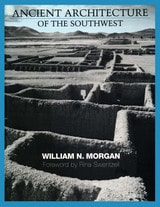
Ancient Architecture of the Southwest
By William N. Morgan
University of Texas Press, 1994
During more than a thousand years before Europeans arrived in 1540, the native peoples of what is now the southwestern United States and northern Mexico developed an architecture of rich diversity and beauty. Vestiges of thousands of these dwellings and villages still remain, in locations ranging from Colorado in the north to Chihuahua in the south and from Nevada in the west to eastern New Mexico.
This study presents the most comprehensive architectural survey of the region currently available. Organized in five chronological sections that include 132 professionally rendered site drawings, the book examines architectural evolution from humble pit houses to sophisticated, multistory pueblos. The sections explore concurrent Mogollon, Hohokam, and Anasazi developments, as well as those in the Salado, Sinagua, Virgin River, Kayenta, and other areas, and compare their architecture to contemporary developments in parts of eastern North America and Mesoamerica. The book concludes with a discussion of changes in Native American architecture in response to European influences.
Ancient Borinquen
Archaeology and Ethnohistory of Native Puerto RicoEdited by Peter E. Siegel
University of Alabama Press, 2008
Ancient Borinquen is a re-examination of the archaeology of Puerto Rico, drawing data from beyond the boundaries of the island itself because in prehistoric times the waters between islands would not have been viewed as a boundary in the contemporary sense of the term. The last few decades have witnessed a growth of intense archaeological research on the island, from material culture in the form of lithics, ceramics, and rock art; to nutritional, architecture, and environmental studies; to rituals and social patterns; to the aftermath of Conquest.
It is unlikely that prehistoric occupants recognized the same boundaries and responded to the same political forces that operated in the formation of current nations, states, or cities. Yet, archaeologists traditionally have produced such volumes and they generally represent anchors for ongoing research in a specific region, in this case the island of Puerto Rico, its immediate neighbors, and the wider Caribbean basin.
Ancient Borinquen provides a comprehensive overview of recent thinking, new data, syntheses, and insights into current Puerto Rican archaeology, and it reflects and illuminates similar concerns elsewhere in the West Indies, lowland South America, and Central America.
Ancient Burial Patterns of the Moche Valley, Peru
By Christopher B. Donnan and Carol J. Mackey
University of Texas Press, 1978
Archaeologists working in the Moche Valley of Peru have uncovered a number of tombs representing various cultures that flourished there prior to European contact. This book provides a full description of 103 such burials, spanning a period of more than 3,500 years. Each burial is documented with an accurate illustration of every artifact found, as well as details on the location, matrix, and construction of the graves, the individuals in the graves, and the placement of all the associated goods. This information constitutes an important resource for solving problems of ceramic chronology and style change. Age and sex data given for the burials will also enable scholars to establish status differences that existed in the pre-Columbian past. Finally, the authors have compared their sample with all the north coast burials previously reported, showing how their findings may be used to ascertain similarities and differences throughout the highland Andean region.
Ancient Burial Patterns of the Moche Valley, Peru is the first diachronic study of burial practices for any Andean region. It not only demonstrates changes in funerary practices in the area but also provides insight into the nature of local cultural development. It will be useful to specialists in Andean and New World archaeology as well as to collectors of pre-Columbian art.
Ancient Caves of the Great Salt Lake Region
Julian H Steward
University of Utah Press, 2009
First published in 1937 by the Bureau of American Ethnology, this edition of Ancient Caves of the Great Salt Lake Region features a new foreword by Joel Janetski.
Ancient Communities in the Mimbres Valley
Continuity and Change from AD 750 to 1350Roger Anyon and Steven A. LeBlanc
University of Arizona Press, 2024
Expanding beyond studies that focus on a single pueblo, this volume represents the final report on the excavations of the Mimbres Foundation. It brings together data from a range of pithouse and pueblo sites of different sizes and histories in diverse locations—to refine the current understandings of Mimbres region archaeology in the context of the Greater Southwest.
From the end of the Late Pithouse period through the Black Mountain phase, the book provides excellent documentation of the artifacts and data recovered from the sites, addresses models of Mimbres community, and tracks change and continuity in the valley over centuries. In addition, the authors consider the nature of the relationship between the Classic Mimbres period population of the valley and the people of the succeeding Black Mountain phase, as well as relationships among the Black Mountain phase people and those of neighboring parts of the region, including the Casas Grandes world and the Jornada Mogollon area.
In Ancient Communities in the Mimbres Valley two leading archaeologists bring together a trove of unpublished investigations, expanding understandings and setting a course for the future.
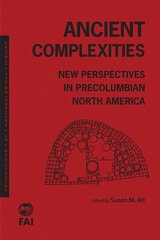
Ancient Complexities
New Perspectives in Pre-Columbian North AmericaSusan Alt
University of Utah Press, 2010
Edited by Susan M. Alt
Foundations of Archaeological Inquiry
Jim Skibo, Series Editor
Anthropology and Archaeology
Many archaeologists have long been frustrated with the traditional, reductionist representation of complexity. Yet, even after years of debate, there seem to be never ending disagreements over the complexity of places like Chaco Canyon, Cahokia, and Poverty Point. This matters, because there are political and scholarly implications to calling any place or people more or less complex. In North America especially, given historical biases and the mound-builder myth, archaeologists need to rethink complexity as they seek to explain the past.
Based on a Society of American Archaeology symposium, Ancient Complexities offers a current overview of what is meant by cultural complexity and how archaeologists study the development of complex societies in North America. Taking a critical look at how accepted definitions of complexity have bounded our thinking about ancient societies, this volume presents new theoretical perspectives and states a case for the need for different definitions in order to move this discussion ahead.
This collection by scholars of North American archaeology is a must read for anyone wishing to be abreast of the most current dialogue on complexity taking place in modern archaeology.
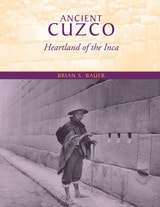
Ancient Cuzco
Heartland of the IncaBy Brian S. Bauer
University of Texas Press, 2004
The Cuzco Valley of Peru was both the sacred and the political center of the largest state in the prehistoric Americas—the Inca Empire. From the city of Cuzco, the Incas ruled at least eight million people in a realm that stretched from modern-day Colombia to Chile. Yet, despite its great importance in the cultural development of the Americas, the Cuzco Valley has only recently received the same kind of systematic archaeological survey long since conducted at other New World centers of civilization.
Drawing on the results of the Cuzco Valley Archaeological Project that Brian Bauer directed from 1994 to 2000, this landmark book undertakes the first general overview of the prehistory of the Cuzco region from the arrival of the first hunter-gatherers (ca. 7000 B.C.) to the fall of the Inca Empire in A.D. 1532. Combining archaeological survey and excavation data with historical records, the book addresses both the specific patterns of settlement in the Cuzco Valley and the larger processes of cultural development. With its wealth of new information, this book will become the baseline for research on the Inca and the Cuzco Valley for years to come.
Ancient Households of the Americas
Conceptualizing What Households DoJohn G. Douglass
University Press of Colorado, 2012
Several different cultures-Iroquois, Coosa, Anasazi, Hohokam, San Agustín, Wankarani, Formative Gulf Coast Mexico, and Formative, Classic, Colonial, and contemporary Maya-are analyzed through the lens of household archaeology in concrete, data-driven case studies. The text is divided into three sections: Section I examines the spatial and social organization and context of household production; Section II looks at the role and results of households as primary producers; and Section III investigates the role of, and interplay among, households in their greater political and socioeconomic communities.
In the past few decades, household archaeology has made substantial contributions to our understanding and explanation of the past through the documentation of the household as a social unit-whether small or large, rural or urban, commoner or elite. These case studies from a broad swath of the Americas make Ancient Households of the Americas extremely valuable for continuing the comparative interdisciplinary study of households.
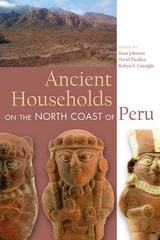
Ancient Households on the North Coast of Peru
Ilana Johnson
University Press of Colorado, 2020
Many volumes on this region are limited to one time period or civilization, often the Moche. While Ancient Households on the North Coast of Peru does examine the Moche, it offers a wider thematic approach to a broader swath of prehistory. Chapters on various time periods use a comparable scale of analysis to examine long-term continuity and change and draw on a large corpus of prior research on states, rulership, and cosmology to offer new insight into the intersection of household, community, and state. Contributors address social reproduction, construction and reinforcement of gender identities and social hierarchy, household permanence and resilience, and expression of identity through cuisine.
This volume challenges common concepts of the “household” in archaeology by demonstrating the complexity and heterogeneity of household-level dynamics as they intersect with institutions at broader social scales and takes a comparative perspective on daily life within one region of the Andes. It will be of interest to both students and scholars of South American archaeology and household archaeology.
Contributors: Brian R. Billman, David Chicoine, Guy S. Duke, Hugo Ikehara, Giles Spence-Morrow, Jessica Ortiz, Edward Swenson, Kari A. Zobler
Ancient Human Migrations
A Multidisciplinary ApproachPeter Peregrine
University of Utah Press, 2009
This collection of papers, worldwide in scope, originated from a working conference at the Santa Fe Institute. Admixture is a common outcome of migration, and human populations are all amalgams of ancestors, neighbors, and others. As a result, the volume argues, no “pure” races, cultures, or languages can exist. The very original analyses and discussions presented here return the concept of migration to its rightful place among the known processes of human evolutionary change and variation.
Ancient Identities in Britain
Exploring Heritage in the MakingRichard Hingley, Kate Sharpe, and Tom Yarrow
University College London, 2025
Ancient Identities in Britain explores the relevance of Iron Age and Roman heritage in modern-day Britain. Shedding new light on the continued social significance of these ancient histories, it discusses how they are presented in the form of ancient monuments, museums, reenactments, living history exhibits, community projects, and other heritage venues across England, Scotland, and Wales. The book is not only interested in the continued resonance of ancient myths and material culture, but also the very actions, ideas, and material conditions through which antiquity becomes heritage in the present—and how present values shape the way antiquity is displayed and consumed.
Ancient Indigenous Cuisines
Archaeological Explorations of the MidcontinentEdited by Susan M. Kooiman, Jodie A. O'Gorman, and Autumn M. Painter
University of Alabama Press, 2025
New essays from foodways archaeology related to cuisine in social, cultural, and environmental contexts.
This collection of original essays is the first to cover recent trends in foodways archaeology in the Midwest using the concept of cuisine: the selection of food ingredients and methods of food preparation, cooking, and serving/consumption in relation to their social, cultural, and environmental contexts. This work span the Early Archaic (9000 BC) to Late Precontact (up to around AD 1500) in ecological zones of present-day Michigan, Indiana, Illinois, Wisconsin, Minnesota, North Dakota, and Manitoba. Chapters trace development from hunter-gathering to horticultural practices to the more robust farming/fishing/hunting model centered on maize, squash, and other domesticates.
As Susan M. Kooiman, Jodie A. O’Gorman, and Autumn M. Painter note, identification of past cooking habits and evolving methods for foodstuffs identification can help archaeologists to reconstruct foodways and connect food behaviors with identity and associated fundamental societal beliefs. Contributors to this collection use cutting-edge methods and perspectives and consider a range of questions and outcomes that demonstrate the versatility and strength of culinary studies. To move the field forward, contributors also note areas for further analysis and improvement.
This volume targets archaeologists and students, archaeobotanists and zooarchaeologists, and those curious about Indigenous food culture. Engaging content includes chapters on the construction of earth ovens, the use-alteration of pottery and residue, a discussion of cuisine combining plant and animal data with ceramic trends, and the various contexts of plates to understand cooking methods and the social role of cuisine. Others examine faunal remains, the plant remains of feasting, the introduction of maize, the use of limestone nixtamalization, and archaeobotanical assemblages that reveal shifts in cuisine. A conclusion addresses the question, Why cuisine?
CONTRIBUTORS
Rebecca K. Albert / Alleen Betzenhauser / Jennifer R. Haas / Mary M. King / Susan M. Kooiman / Mary E. Malainey / Terrance J. Martin / Fernanda Neubauer / Kelsey Nordine / Jodie A. O’Gorman / Autumn M. Painter / Jeffrey M. Painter / Kimberly Schaefer / Mary Simon
Ancient Knowledge Networks
A Social Geography of Cuneiform Scholarship in First-Millennium Assyria and BabyloniaEleanor Robson
University College London, 2019
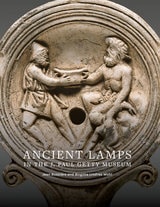
Ancient Lamps in the J. Paul Getty Museum
Jean Bussière
J. Paul Getty Trust, The, 2017
Reflecting the Getty's commitment to open content, Ancient Lamps in the J. Paul Getty Museum is available online at http://www.getty.edu/publications/ancientlamps and may be downloaded free of charge in multiple formats, including PDF, MOBI/Kindle, and EPUB, and features zoomable images and multiple views of every lamp, an interactive map drawn from the Ancient World Mapping Center, and bibliographic references.
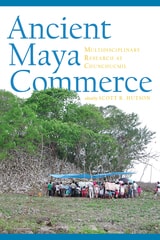
Ancient Maya Commerce
Multidisciplinary Research at ChunchucmilScott R. Hutson
University Press of Colorado, 2017
Ancient Maya Commerce presents nearly two decades of multidisciplinary research at Chunchucmil, Yucatan, Mexico—a thriving Classic period Maya center organized around commercial exchange rather than agriculture. An urban center without a king and unable to sustain agrarian independence, Chunchucmil is a rare example of a Maya city in which economics, not political rituals, served as the engine of growth. Trade was the raison d’être of the city itself.
Using a variety of evidence—archaeological, botanical, geomorphological, and soil-based—contributors show how the city was a major center for both short- and long-distance trade, integrating the Guatemalan highlands, the Gulf of Mexico, and the interior of the northern Maya lowlands. By placing Chunchucmil into the broader context of emerging research at other Maya cities, the book reorients the understanding of ancient Maya economies. The book is accompanied by a highly detailed digital map that reveals the dense population of the city and the hundreds of streets its inhabitants constructed to make the city navigable, shifting the knowledge of urbanism among the ancient Maya.
Ancient Maya Commerce is a pioneering, thoroughly documented case study of a premodern market center and makes a strong case for the importance of early market economies in the Maya region. It will be a valuable addition to the literature for Mayanists, Mesoamericanists, economic anthropologists, and environmental archaeologists.
Contributors: Anthony P. Andrews, Traci Ardren, Sheryl Luzzadder-Beach, Timothy Beach, Chelsea Blackmore, Tara Bond-Freeman, Bruce H. Dahlin, Patrice Farrell, David Hixson, Socorro Jimenez, Justin Lowry, Aline Magnoni, Eugenia Mansell, Daniel E. Mazeau, Travis Stanton, Ryan V. Sweetwood, Richard E. Terry
Ancient Maya Commoners
Edited by Jon C. Lohse and Fred Valdez, Jr.
University of Texas Press, 2004
Much of what we currently know about the ancient Maya concerns the activities of the elites who ruled the societies and left records of their deeds carved on the monumental buildings and sculptures that remain as silent testimony to their power and status. But what do we know of the common folk who labored to build the temple complexes and palaces and grew the food that fed all of Maya society?
This pathfinding book marshals a wide array of archaeological, ethnohistorical, and ethnographic evidence to offer the fullest understanding to date of the lifeways of ancient Maya commoners. Senior and emerging scholars contribute case studies that examine such aspects of commoner life as settlement patterns, household organization, and subsistence practices. Their reports cover most of the Maya area and the entire time span from Preclassic to Postclassic. This broad range of data helps resolve Maya commoners from a faceless mass into individual actors who successfully adapted to their social environment and who also held primary responsibility for producing the food and many other goods on which the whole Maya society depended.
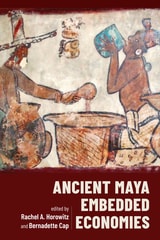
Ancient Maya Embedded Economies
Rachel A. Horowitz
University Press of Colorado, 2026
Ancient Maya Embedded Economies provides an in-depth discussion of the relationships between economic activities and other aspects of the daily lives of the ancient Maya. Through a series of casestudies spanning the Preclassic through the Late Classic periods, this volume addresses the entangled relationship of ancient Maya economies within social, political, and religious practices.
Contributors use cutting-edge data from a variety of sources to address the interrelatedness between economy and other aspects of Maya life and point to the complexity of interactions among ancient Maya peoples of all socioeconomic statuses—interactions guided by not only economies but also political-religious frameworks. Ancient Maya Embedded Economies provides a unique viewpoint into how economies functioned in the past and advances scholarly understandings of Maya economies and the ways in which archaeological data can examine such systems, as well as contribute to broader understandings of pre-modern economic organization on a global level.
Ancient Maya Life in the Far West Bajo
Social and Environmental Change in the Wetlands of BelizeJulie L. Kunen
University of Arizona Press, 2004
In this lively story of life in the wetlands on the outskirts of the major site of La Milpa, Julie Kunen documents a hitherto unrecognized form of intensive agriculture in the Maya lowlands—one that relied on the construction of terraces and berms to trap soil and moisture around the margins of low-lying depressions called bajos. She traces the intertwined histories of residential settlements on nearby hills and ridges and agricultural terraces and other farming-related features around the margins of the bajo as they developed from the Late Preclassic perios (400 BC-AD 250) until the area's abandonment in the Terminal Classic period (about AD 850).
Kunen examines the organization of three bajo communities with respect to the use and management of resources critical to agricultural production. She argues that differences in access to spatially variable natural resources resulted in highly patterned settlement remains and that community founders and their descendents who had acquired the best quality and most diverse set of resources maintained an elevated status in the society.
The thorough integration of three lines of evidence—the settlement system, the agricultural system, and the ancient environment—breaks new ground in landscape research and in the study of Maya non-elite domestic organization. Kunen reports on the history of settlement and farming in a small corner of the Maya world but demonstrates that for any study of human-environment interactions, landscape history consists equally of ecological and cultural strands of influence.
Ancient Maya Teeth
Dental Modification, Cosmology, and Social Identity in MesoamericaVera Tiesler
University of Texas Press, 2024
A study of Maya dental modification from archaeological sites spanning three millennia.
Dental modification was common across ancient societies, but perhaps none were more avid practitioners than the Maya. They filed their teeth flat or pointy, polished and drilled them, and crafted decorative inlays of jade and pyrite. Unusually, Maya of all social classes, ages, and professions engaged in dental modification. What did it mean to them?
Ancient Maya Teeth is the most comprehensive study of Maya dental modification ever published, based on thousands of teeth recovered from 130 sites spanning three millennia. Esteemed archaeologist Vera Tiesler sifts the evidence, much of it gathered with her own hands and illustrated here with more than a hundred photographs. Exploring the underlying theory and practice of dental modification, Tiesler raises key questions. How did modifications vary across the individual’s lifespan? What tools were used? How did the Maya deal with pain—and malpractice? How did they keep their dentitions healthy, functioning, and beautiful? What were the relationships among gender, social identity, and religious identifications? Addressing these and other issues, Ancient Maya Teeth reveals how dental-modification customs shifted over the centuries, indexing other significant developments in Mayan cultural history.
Ancient Maya Traders of Ambergris Caye
Thomas H. Guderjan
University of Alabama Press, 2007