Results by title
1726 books match the query 'Film' and 139 start with a
Animating Film Theory
Karen Beckman, ed.
Duke University Press, 2014
Contributors. Karen Beckman, Suzanne Buchan, Scott Bukatman, Alan Cholodenko, Yuriko Furuhata, Alexander R. Galloway, Oliver Gaycken, Bishnupriya Ghosh, Tom Gunning, Andrew R. Johnston, Hervé Joubert-Laurencin, Gertrud Koch, Thomas LaMarre, Christopher P. Lehman, Esther Leslie, John MacKay, Mihaela Mihailova, Marc Steinberg, Tess Takahashi
Animation
Curtis, Scott
Rutgers University Press, 2019
Animation and America
Wells, Paul
Rutgers University Press, 2002
In Animation and America, Paul Wells looks afresh at this unique art, discussing the distinctiveness of the cartoon form, as well as myriad other types of animation production. Insisting upon the "modernity" of the genre, Wells examines its importance as a barometer of the social conditions in which it is made and which it reflects. This book is not a standard history of animation in America, but rather uses animation as a way of discussing social and political change. Wells concentrates on the ways in which the form continues to grow, experiment, and remain subversiveand, increasingly, gaining acclaim and recognition. Now in the vanguard of visual culture, animation occupies an important position in representing both the outcomes and impacts of new technologies, and it also has laid the foundations for a new understanding of social and artistic practice.
Anime's Identity
Performativity and Form beyond JapanStevie Suan
University of Minnesota Press, 2021
A formal approach to anime rethinks globalization and transnationality under neoliberalism
Anime has become synonymous with Japanese culture, but its global reach raises a perplexing question—what happens when anime is produced outside of Japan? Who actually makes anime, and how can this help us rethink notions of cultural production? In Anime’s Identity, Stevie Suan examines how anime’s recognizable media-form—no matter where it is produced—reflects the problematics of globalization. The result is an incisive look at not only anime but also the tensions of transnationality.
Far from valorizing the individualistic “originality” so often touted in national creative industries, anime reveals an alternate type of creativity based in repetition and variation. In exploring this alternative creativity and its accompanying aesthetics, Suan examines anime from fresh angles, including considerations of how anime operates like a brand of media, the intricacies of anime production occurring across national borders, inquiries into the selfhood involved in anime’s character acting, and analyses of various anime works that present differing modes of transnationality.
Anime’s Identity deftly merges theories from media studies and performance studies, introducing innovative formal concepts that connect anime to questions of dislocation on a global scale, creating a transformative new lens for analyzing popular media.

Anime's Knowledge Cultures
Geek, Otaku, ZhaiJinying Li
University of Minnesota Press, 2024
Unlocking the technosocial implications of global geek cultures
Why has anime, a “low-tech” medium from last century, suddenly become the cultural “new cool” in the information age? Through the lens of anime and its transnational fandom, Jinying Li explores the meanings and logics of “geekdom” as one of the most significant sociocultural groups of our time. In Anime’s Knowledge Cultures, Li shifts the center of global geography in knowledge culture from the computer boys in Silicon Valley to the anime fandom in East Asia.
Drawing from film studies, animation studies, media theories, fan studies, and area studies, she provides broad cultural and theoretical explanations of anime’s appeal to a new body of tech-savvy knowledge workers and consumers commonly known as geeks, otaku, or zhai. Examining the forms, techniques, and aesthetics of anime, as well as the organization, practices, and sensibilities of its fandom, Anime’s Knowledge Cultures is at once a theorization of anime as a media environment as well as a historical and cultural study of transnational geekdom as a knowledge culture. Li analyzes anime culture beyond the national and subcultural frameworks of Japan or Japanese otaku, instead theorizing anime’s transnational, transmedial network as the epitome of the postindustrial knowledge culture of global geekdom.
By interrogating the connection between the anime boom and global geekdom, Li reshapes how we understand the meanings and significance of anime culture in relation to changing social and technological environments.
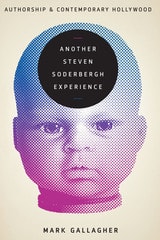
Another Steven Soderbergh Experience
Authorship and Contemporary HollywoodBy Mark Gallagher
University of Texas Press, 2013
How do we determine authorship in film, and what happens when we look in-depth at the creative activity of living filmmakers rather than approach their work through the abstract prism of auteur theory? Mark Gallagher uses Steven Soderbergh’s career as a lens through which to re-view screen authorship and offer a new model that acknowledges the fundamentally collaborative nature of authorial work and its circulation. Working in film, television, and digital video, Soderbergh is the most prolific and protean filmmaker in contemporary American cinema. At the same time, his activity typifies contemporary screen industry practice, in which production entities, distribution platforms, and creative labor increasingly cross-pollinate.
Gallagher investigates Soderbergh’s work on such films as The Limey, Erin Brockovich, Ocean’s Eleven and its sequels, Solaris, The Good German, Che, and The Informant!, as well as on the K Street television series. Dispensing with classical auteurist models, he positions Soderbergh and authorship in terms of collaborative production, location filming activity, dealmaking and distribution, textual representation, genre and adaptation work, critical reception, and other industrial and cultural phenomena. Gallagher also addresses Soderbergh’s role as standard-bearer for U.S. independent cinema following 1989’s sex, lies and videotape, as well as his cinephilic dialogues with different forms of U.S. and international cinema from the 1920s through the 1970s. Including an extensive new interview with the filmmaker, Another Steven Soderbergh Experience demonstrates how industries and institutions cultivate, recognize, and challenge creative screen artists.
Anthropology, Film Industries, Modularity
Ramyar D. Rossoukh and Steven C. Caton, editors
Duke University Press, 2021
Contributors. Steven C. Caton, Jessica Dickson, Kevin Dwyer, Tejaswini Ganti, Lotte Hoek, Amrita Ibrahim, Sylvia J. Martin, Ramyar D. Rossoukh
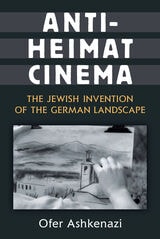
Anti-Heimat Cinema
The Jewish Invention of the German LandscapeOfer Ashkenazi
University of Michigan Press, 2020

Antonin Artaud
Man of VisionBettina L. Knapp
Ohio University Press, 1969
The extraordinary actor–director–writer who developed his talent for self-torture into art to become one of the most vital creative forces of the century.
Apocalypse Cinema
Stephen Prince
Rutgers University Press, 2021
This book provides a lively overview of apocalypse cinema, including alien invasions, nuclear annihilation, asteroid collisions, climate change, and terrifying plagues. Covering pivotal films from the silent era to the present day, including Metropolis, Invasion of the Body Snatchers, Dr. Strangelove, Contagion, and Avengers: Endgame, Stephen Prince explores how these dark visions are rooted in religious and prophetic traditions, and he considers how our love for apocalypse cinema is tied to fundamental existential questions and anxieties that never go out of fashion.

Architecture and the Urban in Spanish Film
Edited by Susan Larson
Intellect Books, 2021
Building on existing film and urban histories, this collection examines Spanish film through contemporary interdisciplinary theories of urban space, the built environment, visuality, and mass culture from the industrial age to the digital present.
Architecture and the Urban in Spanish Film brings together innovative scholarship from an international and interdisciplinary group of film, architecture, and urban studies scholars as they explore the reciprocal relationship between the seventh art and the built environment. The contributors explore a wide range of topics, including the role of film in the shifting relationship between private and public; the ways cinema as a new technology reshaped how cities and buildings are built and inhabited; the question of the mobile gaze; film and everyday life; monumentality and the construction of historical memory for a variety of viewing publics; and the effects of the digital and the virtual on filmmaking and spectatorship.
This engaging collection will interest anyone researching, teaching, and studying Spanish film, international film studies, urban, and cultural studies.
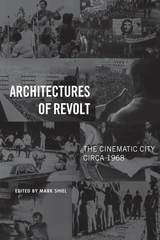
Architectures of Revolt
The Cinematic City circa 1968Mark Shiel
Temple University Press, 2018
Coinciding with the fiftieth anniversary of the worldwide mass protest movements of 1968—against war, imperialism, racism, poverty, misogyny, and homophobia—the exciting anthology Architectures of Revolt explores the degree to which the real events of political revolt in the urban landscape in 1968 drove change in the attitudes and practices of filmmakers and architects alike.
In and around 1968, as activists and filmmakers took to the streets, commandeering public space, buildings, and media attention, they sought to re-make the urban landscape as an expression of utopian longing or as a dystopian critique of the established order. In Architectures of Revolt, the editor and contributors chronicle city-specific case studies from Paris, Berlin, Milan, and Chicago to New York, Los Angeles, Mexico City, and Tokyo. The films discussed range from avant-garde and agitprop shorts to mainstream narrative feature films. All of them share a focus on the city and, often, particular streets and buildings as places of political contestation and sometimes violence, which the medium of cinema was uniquely equipped to capture.
Contributors include: Stephen Barber, Stanley Corkin, Jesse Lerner, Jon Lewis, Gaetana Marrone, Jennifer Stob, Andrew Webber, and the editor.
Archiveology
Walter Benjamin and Archival Film PracticesCatherine Russell
Duke University Press, 2018
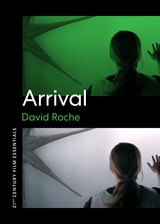
Arrival
David Roche
University of Texas Press, 2024
A study of Denis Villeneuve’s genre-transcendent film.
In Denis Villeneuve’s Arrival (2016), scientists must decipher the language of and peacefully communicate with aliens who have landed on Earth before the world’s military attacks. In this first book-length study of the film, scholar David Roche argues that it is one of the most important films of this century, and the most brilliant science fiction film since Blade Runner. Roche posits Arrival as a blockbuster with artistic ambitions—an argument supported by the film’s several Academy Award nominations—and looks closely at how the film engages with theoretical questions posed by contemporary film studies and philosophy alike. Each section explores a central aspect of the film: its status as an auteur adaptation; its relation to the science fiction genre; its themes of communication on narrative and meta-narrative levels; its aesthetics of time and space; and the political and ethical questions it raises. Ultimately, Roche declares Arrival a unique, multifaceted experience in the world of hard science fiction films, placing it in context with works like 2001: A Space Odyssey, Close Encounters of the Third Kind, and Contact while also examining how it bridges the gap between genre and art house cinema.
Art Direction and Production Design
Fischer, Lucy
Rutgers University Press, 2015
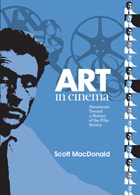
Art in Cinema
Documents Toward a History of the Film SocietyScott MacDonald
Temple University Press, 2006
Scott MacDonald's Art in Cinema presents complete programs presented by the legendary society; dozens of previously unavailable letters between Stauffacher, his collaborators, and filmmakers including Maya Deren, Hans Richter, Vincent Minelli, and Man Ray; a reprint of the society's original catalog, which features essays by Henry Miller and others; and a wide range of other remarkable historical documents.
A companion to Cinema 16 (Temple), a documentary history of the first west coast film society, Art in Cinema provides cineastes, students, teachers, and scholars with extensive and fascinating documentation of one of the most important film societies in American history. Together or separately, the books provide an indispensable reference source for the beginning of this country's love affair with independent film.
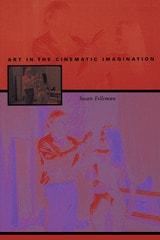
Art in the Cinematic Imagination
By Susan Felleman
University of Texas Press, 2006
Bringing an art historical perspective to the realm of American and European film, Art in the Cinematic Imagination examines the ways in which films have used works of art and artists themselves as cinematic and narrative motifs. From the use of portraits in Vertigo to the cinematic depiction of women artists in Artemisia and Camille Claudel, Susan Felleman incorporates feminist and psychoanalytic criticism to reveal individual and collective perspectives on sex, gender, identity, commerce, and class.
Probing more than twenty films from the postwar era through contemporary times, Art in the Cinematic Imagination considers a range of structurally significant art objects, artist characters, and art-world settings to explore how the medium of film can amplify, reinvent, or recontextualize the other visual arts. Fluently speaking across disciplines, Felleman's study brings a broad array of methodologies to bear on questions such as the evolution of the "Hollywood Love Goddess" and the pairing of the feminine with death on screen.
A persuasive approach to an engaging body of films, Art in the Cinematic Imagination illuminates a compelling and significant facet of the cinematic experience.
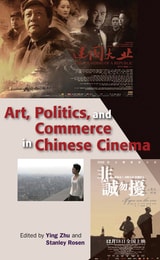
Art, Politics, and Commerce in Chinese Cinema
Edited by Ying Zhu and Stanley Rosen
Hong Kong University Press, 2010
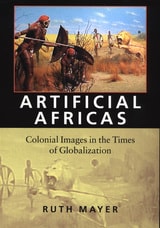
Artificial Africas
Colonial Images in the Times of GlobalizationRuth Mayer
Dartmouth College Press, 2002
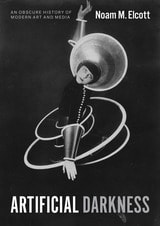
Artificial Darkness
An Obscure History of Modern Art and MediaNoam M. Elcott
University of Chicago Press, 2016
In exploring how artificial darkness shaped modern art, film, and media, Noam M. Elcott addresses seminal and obscure works alongside their sites of production—such as photography darkrooms, film studios, and laboratories—and their sites of reception, including theaters, cinemas, and exhibitions. He argues that artists, scientists, and entertainers like Étienne-Jules Marey, Richard Wagner, Georges Méliès, and Oskar Schlemmer revolutionized not only images but also everything surrounding them: the screen, the darkness, and the experience of bodies and space. At the heart of the book is “the black screen,” a technology of darkness that spawned today’s blue and green screens and has undergirded numerous advanced art and film practices to this day.
Turning familiar art and film narratives on their heads, Artificial Darkness is a revolutionary treatment of an elusive, yet fundamental, aspect of art and media history.
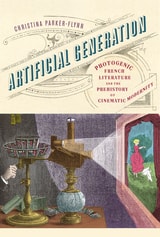
Artificial Generation
Photogenic French Literature and the Prehistory of Cinematic ModernityChristina Parker-Flynn
Rutgers University Press, 2022
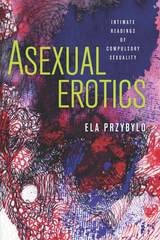
Asexual Erotics
Intimate Readings of Compulsory SexualityEla Przybylo
The Ohio State University Press, 2019
Through a wide-ranging analysis of pivotal queer, feminist, and anti-racist movements; television and film; art and photography; and fiction, nonfiction, and theoretical texts, each chapter explores asexual erotics and demonstrates how asexuality has been vital to the formulation of intimate ways of knowing and being. Asexual Erotics assembles a compendium of asexual possibilities that speaks against the centralization of sex and sexuality, asking that we consider the ways in which compulsory sexuality is detrimental not only to asexual and nonsexual people but to all.
Asia/Pacific Cinemas
A Spectral Surface, Volume 9Esther C. M. Yau and Kyung Hyun Kim, eds.
Duke University Press, 0
Contributors examine how specific films—including Haplos (1982), Chilsu and Mansu (1988), Fresh Kill (1994), and Princess Mononoke (1997)—rework folktales, literary sources, popular memory, lived experience, and history. Some of the films examined here incorporate supernatural elements and/or gay and lesbian narratives that provide an escape from the sexism, racism, homophobia, environmental destruction, and urban alienation that the filmmakers see as the defining characteristics of the postcolonial world.
Asia/Pacific Cinema posits that film, with its ability to play with memory, fate, and linear time, creates a space in which to consider alternatives to the dominant cultural, economic, and social norms.
Contributors. Jonathan Beller, Joan Kee, Kyung Hyun Kim, Helen Hok-sze Leung, Bliss Cau Lim, Gina Marchetti, Susan Napier, Esther C. M. Yau
Asian Video Cultures
In the Penumbra of the GlobalJoshua Neves and Bhaskar Sarkar, editors
Duke University Press, 2017
Contributors. Conerly Casey, Jenny Chio, Michelle Cho, Kay Dickinson, Bishnupriya Ghosh, Feng-Mei Heberer, Tzu-hui Celina Hung, Rahul Mukherjee, Joshua Neves, Bhaskar Sarkar, Nishant Shah, Abhigyan Singh, SV Srinivas, Marc Steinberg, Chia-chi Wu, Patricia Zimmerman
Asians on Demand
Mediating Race in Video Art and ActivismFeng-Mei Heberer
University of Minnesota Press, 2023
Does media representation advance racial justice?
While the past decade has witnessed a push for increased diversity in visual media, Asians on Demand grapples with the pressing question of whether representation is enough to advance racial justice. Surveying a contemporary, cutting-edge archive of video works from the Asian diaspora in North America, Europe, and East Asia, this book uncovers the ways that diasporic artists challenge the narrow—and damaging—conceptions of Asian identity pervading mainstream media.
Through an engagement with grassroots activist documentaries, experimental video diaries by undocumented and migrant workers, and works by high-profile media artists such as Hito Steyerl and Ming Wong, Feng-Mei Heberer showcases contemporary video productions that trouble the mainstream culture industry’s insistence on portraying ethnic Asians as congenial to dominant neoliberal values. Undermining the demands placed on Asian subjects to exemplify institutional diversity and individual exceptionalism, this book provides a critical and nuanced set of alternatives to the easily digestible forms generated by online streaming culture and multicultural lip service more broadly.
Employing feminist, racial, and queer critiques of the contemporary media landscape, Asians on Demand highlights how the dynamics of Asian representation play out differently in Germany, the United States, Taiwan, and Spain. Rather than accepting the notion that inclusion requires an uncomplicated set of appearances, the works explored in this volume spotlight a staunch resistance to formulating racial identity as an instantly accessible consumer product.
Assayas and Political Seriousness
Brian Price
Northwestern University Press, 2026
A cogent reconsideration of Assayas’s cinematic oeuvre and what it teaches us about the political today
The films of Olivier Assayas are widely celebrated for their complex responses to the many shifts that globalization has introduced in our time. Brian Price contends that they offer a different way of regarding the so-called problem of cultural and political enmeshment that Carl Schmitt and other conservative thinkers fear, including a contention that enmeshment is not a problem at all, in fact, but rather a different mode of social and political organization. Price puts Assayas’s films in dialogue not only with Schmitt’s theory of the political but also with the history of political philosophy after Schmitt, especially in the work of Hannah Arendt, Jacques Derrida, and Chantal Mouffe, all of whom have attempted to reckon with the friend/enemy dynamic at the core of the political.
At the heart of Assayas’s cinematic oeuvre, and of this book, is a reflection on what it means to be politically serious, which, Price shows, cannot be reduced to criteria that can simply be applied or repeated. The boundaries between the political and the varied forms of the social demand a sensitivity to change and the unknown, none of which can be accessed in the states of absolute certainty that are derived from crises that do not repeat in the same ways. The messiness and nuances of modern life are held together by moving images, which insist that we know why we value what we demand and seek to protect.
Assembly Lines
Montage in Postwar French FilmIvan Cerecina
University of Minnesota Press, 2026
A bold new understanding of montage and French cinematic history
Amid the tumult of change that swept through French society in the wake of World War II, a trio of visionary filmmakers sought to make meaning of the chaos by revitalizing a common method: montage. Revealing Nicole Védrès, Alain Resnais, and Chris Marker as more than just groundbreaking auteurs, Ivan Cerecina shows how their collective infusion of montage with avant-garde aesthetics renewed the art of cinema while helping France reckon with its past and imagine its future.
Assembly Lines challenges a dominant story of postwar French film, championed by critics at important film journals like Cahiers du cinéma, that has generally centered realist film aesthetics. Working against this tendency, Cerecina shows how Védrès, Resnais, and Marker revitalized montage as a technique in response to the crises of the times, using it to process the ravages of the recent past, expose hidden connections, and uncover signs of coming catastrophe. Wedding insightful analyses of films and French cultural history with writings from lesser-heard voices like André Malraux, Jacques Brunius, and Henri Langlois, Assembly Lines illuminates obscured networks of critics, filmmakers, and historians to reshape our conception of French film and documentary. Meanwhile, Cerecina’s in-depth archival research unearths vital documents, including correspondence and production notes on Védrès’s Paris 1900 and Resnais’s Night and Fog.
More than a cinematic retrospective, Cerecina’s investigation of montage is also a call to action today as contemporary crises prompt reevaluation of our cultural histories. Assembly Lines exemplifies a powerful, future-oriented practice of historical reflection with implications that go well beyond the study of film.
Retail e-book files for this title are screen-reader friendly with images accompanied by short alt text and/or extended descriptions.
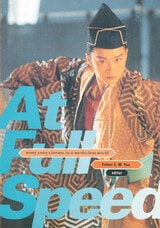
At Full Speed
Hong Kong Cinema in a Borderless WorldEsther Yau
University of Minnesota Press, 2001
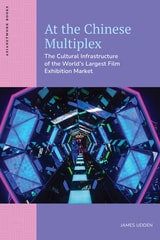
At the Chinese Multiplex
The Cultural Infrastructure of the World’s Largest Film Exhibition MarketJames Udden
Lever Press, 2027
For over a century, Hollywood controlled the largest unified film market in the developed world, making it the global leader in film production and distribution. Since 2017, however, China has surpassed the North American market in the number of screens and cutting-edge technology. At the Chinese Multiplex asserts that this change was not the result of market forces, but rather of government policies that helped engineer what is arguably the greatest cultural infrastructure project in history. In China, the state plays a central role in the development of the film exhibition market that follows the same patterns as other infrastructure projects initiated by the Chinese Communist Party. While state-directed, the growth of the Chinese film exhibition market—centered on new multiplexes housed in China’s growing number of urban shopping malls—is part of a larger project to engineer a consumer economy in China. China’s simultaneous embrace of the digital economy, particularly the QR code, has also played a crucial role in the shifting landscape of China’s media industry.
Focusing on the movie theatre as a contested site, author James Udden offers a timely study of China’s domestic film market. The picture that emerges is one complicated by conflicts between government regulation and private investment, by concerns about digitally managed pricing variables, and by questions about the future viability of a film market focused on regime-friendly blockbusters.
At the Movies, Film Reviewing, and Screenwriting
Selective Affinities and Cultural MediationSteven Maras
Intellect Books, 2025
At the Movies, Film Reviewing, and Screenwriting discusses the interplay between film criticism and screenwriting, providing a different view on how reviewers engage with story and dialogue. Steven Maras draws on Pierre Bourdieu’s theories of cultural taste to examine film reviewing as a key site of cultural production, analyzing ten years of television scripts from At the Movies (2004–2014). Hosted by Australia’s most influential film critics Margaret Pomeranz and David Stratton, this long-running program shaped public discourse on cinema and left an indelible mark on Australian screen culture.
Studying the program’s broadcast scripts, this book addresses how film reviewing operates as both critique and storytelling. Of particular interest to media scholars, screenwriting researchers, and cinephiles alike, it provides fresh insights into the evolving role of criticism in contemporary screen culture. Engaging and deeply researched, this work rightfully emphasizes the cultural significance of movie criticism in film culture in Australia and beyond.
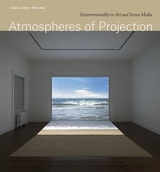
Atmospheres of Projection
Environmentality in Art and Screen MediaGiuliana Bruno
University of Chicago Press, 2022
Projection has long been transforming space, from shadow plays to camera obscuras and magic lantern shows. Our fascination with projection is alive on the walls of museums and galleries and woven into our daily lives. Giuliana Bruno explores the histories of projection and atmosphere in visual culture and their continued importance to contemporary artists who are reinventing the projective imagination with atmospheric thinking and the use of elemental media.
To explain our fascination with projection and atmosphere, Bruno traverses psychoanalysis, environmental philosophy, architecture, the history of science, visual art, and moving image culture to see how projective mechanisms and their environments have developed over time. She reveals how atmosphere is formed and mediated, how it can change, and what projection can do to modify a site. In so doing, she gives new life to the alchemic possibilities of transformative projective atmospheres. Showing how their “environmentality” produces sites of exchange and relationality, this book binds art to the ecology of atmosphere.
Atom Egoyan
Emma Wilson
University of Illinois Press, 2009
In this study, Emma Wilson closely analyzes the range of Egoyan's films and their visual textures, emotional control, and perverse beauty. Offering a full-scale chronological overview of Egoyan's work on films up to and including Where the Truth Lies, Wilson shows the persistence and development of certain structures and themes in Egoyan's cinema: questions of exile and nostalgia, trauma and healing, the family and sexuality. While drawing on ideas about intercultural cinema, Wilson also sets Egoyan's films in the context of contemporary Canadian cinema and European art-house cinema. Egoyan's own comments on his films thread throughout Wilson's analyses, and the book features a recent interview with the director.
Atomic Light (Shadow Optics)
Akira Mizuta Lippit
University of Minnesota Press, 2005
Akira Mizuta Lippit focuses on historical moments in which such modes of avisuality came into being—the arrival of cinema, which brought imagination to life; psychoanalysis, which exposed the psyche; the discovery of x-rays, which disclosed the inside of the body; and the “catastrophic light” of Hiroshima and Nagasaki, which instituted an era of atomic discourses.
With a taut, poetic style, Lippit produces speculative readings of secret and shadow archives and visual structures or phenomenologies of the inside, charting the materiality of what both can and cannot be seen in the radioactive light of the twentieth century.
Akira Mizuta Lippit is professor of cinema, comparative literature, and Japanese culture at the University of Southern California. He is the author of Electric Animal: Toward a Rhetoric of Wildlife (Minnesota, 2000).
Australian Film Theory and Criticism
Volume 3: DocumentsEdited by Deane Williams and Constantine Verevis
Intellect Books, 2017
Australian Post-War Documentary Film
An Arc of MirrorsDeane Williams
Intellect Books, 2008
Authorship in Film Adaptation
Edited with an introduction by Jack Boozer
University of Texas Press, 2008
Authoring a film adaptation of a literary source not only requires a media conversion but also a transformation as a result of the differing dramatic demands of cinema. The most critical central step in this transformation of a literary source to the screen is the writing of the screenplay. The screenplay usually serves to recruit producers, director, and actors; to attract capital investment; and to give focus to the conception and production of the film project. Often undergoing multiple revisions prior to production, the screenplay represents the crucial decisions of writer and director that will determine how and to what end the film will imitate or depart from its original source.
Authorship in Film Adaptation is an accessible, provocative text that opens up new areas of discussion on the central process of adaptation surrounding the screenplay and screenwriter-director collaboration. In contrast to narrow binary comparisons of literary source text and film, the twelve essays in this collection also give attention to the underappreciated role of the screenplay and film pre-production that can signal the primary intention for a film. Divided into four parts, this collection looks first at the role of Hollywood's activist producers and major auteurs such as Hitchcock and Kubrick as they worked with screenwriters to formulate their audio-visual goals. The second part offers case studies of Devil in a Blue Dress and The Sweet Hereafter, for which the directors wrote their own adapted screenplays. Considering the variety of writer-director working relationships that are possible, Part III focuses on adaptations that alter genre, time, and place, and Part IV investigates adaptations that alter stories of romance, sexuality, and ethnicity.
Autism in Film and Television
On the IslandEdited by Murray Pomerance and R. Barton Palmer
University of Texas Press, 2022
Global awareness of autism has skyrocketed since the 1980s, and popular culture has caught on, with film and television producers developing ever more material featuring autistic characters. Autism in Film and Television brings together more than a dozen essays on depictions of autism, exploring how autistic characters are signified in media and how the reception of these characters informs societal understandings of autism.
Editors Murray Pomerance and R. Barton Palmer have assembled a pioneering examination of autism’s portrayal in film and television. Contributors consider the various means by which autism has been expressed in films such as Phantom Thread, Mercury Rising, and Life Animated and in television and streaming programs including Atypical, The Bridge, Stranger Things, Star Trek: The Next Generation, and Community. Across media, the figure of the brilliant, accomplished, and “quirky” autist has proven especially appealing. Film and television have thus staked out a progressive position on neurodiversity by insisting on screen time for autism but have done so while frequently ignoring the true diversity of autistic experience. As a result, this volume is a welcome celebration of nonjudgmental approaches to disability, albeit one that is still freighted with stereotypes and elisions.
Awake in the Dark
The Best of Roger EbertRoger Ebert
University of Chicago Press, 2006
Roger Ebert has been writing film reviews for the Chicago Sun-Times for nearly forty years. And during those four decades, his wide knowledge, keen judgment, prodigious energy, and sharp sense of humor have made him America’s most celebrated film critic. He was the first such critic to win a Pulitzer Prize—one of just three film critics ever to receive that honor—and the only one to have a star dedicated to him on the Hollywood Walk of Fame. His groundbreaking hit TV show, At the Movies, meanwhile, has made “two thumbs up” one of the most coveted hallmarks in the entire industry.
No critic alive has reviewed more movies than Roger Ebert, and yet his essential writings have never been collected in a single volume—until now. With Awake in the Dark, both fans and film buffs can finally bask in the best of Ebert’s work. The reviews, interviews, and essays collected here present a picture of this indispensable critic’s numerous contributions to the cinema and cinephilia. From The Godfather to GoodFellas, from Cries and Whispers to Crash, the reviews in Awake in the Dark span some of the most exceptional periods in film history, from the dramatic rise of rebel Hollywood and the heyday of the auteur, to the triumph of blockbuster films such as Star Wars and Raiders of the Lost Ark, to the indie revolution that is still with us today.
The extraordinary interviews gathered in Awake in the Dark capture Ebert engaging not only some of the most influential directors of our time—Martin Scorsese, Steven Spielberg, Woody Allen, Robert Altman, Werner Herzog, and Ingmar Bergman—but also some of the silver screen’s most respected and dynamic personalities, including actors as diverse as Robert Mitchum, James Stewart, Warren Beatty, and Meryl Streep. Ebert’s remarkable essays play a significant part in Awake in the Dark as well. The book contains some of Ebert’s most admired pieces, among them a moving appreciation of John Cassavetes and a loving tribute to the virtues of black-and-white films.
If Pauline Kael and Andrew Sarris were godmother and godfather to the movie generation, then Ebert is its voice from within—a writer whose exceptional intelligence and daily bursts of insight and enthusiasm have shaped the way we think about the movies. Awake in the Dark, therefore, will be a treasure trove not just for fans of this seminal critic, but for anyone desiring a fascinating and compulsively readable chronicle of film since the late 1960s.
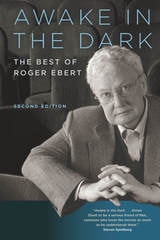
Awake in the Dark
The Best of Roger Ebert: Second EditionRoger Ebert
University of Chicago Press, 2017
Arriving fifty years after Ebert published his first film review in 1967, this second edition of Awake in the Dark collects Ebert’s essential writings into a single, irresistible volume. Featuring new Top Ten Lists and reviews of the years’ finest films through 2012, this edition allows both fans and film buffs to bask in the best of an extraordinary lifetime’s work. Including reviews from The Godfather to GoodFellas and interviews with everyone from Martin Scorsese to Meryl Streep, as well as showcasing some of Ebert’s most admired essays—among them a moving appreciation of John Cassavetes and a loving tribute to the virtues of black-and-white films—Ebert’s Awake in the Dark is a treasure trove not just for fans of this era-defining critic, but for anyone desiring a compulsively readable chronicle of the silver screen.
Stretching from the dramatic rise of rebel Hollywood and the heyday of the auteur to the triumph of blockbuster films such as Star Wars and Raiders of the Lost Ark, to the indie revolution that is still with us today, Awake in the Dark reveals a writer whose exceptional intelligence and daily bursts of insight and enthusiasm helped shape the way we think about the movies. But more than this, Awake in the Dark is a celebration of Ebert’s inimitable voice—a voice still cherished and missed.