Results by title
28164 books match the query 'History' and 2536 start with a
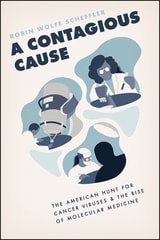
A Contagious Cause
The American Hunt for Cancer Viruses and the Rise of Molecular MedicineRobin Wolfe Scheffler
University of Chicago Press, 2019
A Contagious Cause is the first book to trace the century-long hunt for a human cancer virus in America, an effort whose scale exceeded that of the Human Genome Project. The government’s campaign merged the worlds of molecular biology, public health, and military planning in the name of translating laboratory discoveries into useful medical therapies. However, its expansion into biomedical research sparked fierce conflict. Many biologists dismissed the suggestion that research should be planned and the idea of curing cancer by a vaccine or any other means as unrealistic, if not dangerous. Although the American hunt was ultimately fruitless, this effort nonetheless profoundly shaped our understanding of life at its most fundamental levels. A Contagious Cause links laboratory and legislature as has rarely been done before, creating a new chapter in the histories of science and American politics.
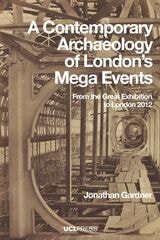
A Contemporary Archaeology of London's Mega Events
From the Great Exhibition to London 2012Jonathan Gardner
University College London, 2022
This book explores the traces of London’s most significant modern “mega events”: the Great Exhibition of 1851, the 1951 Festival of Britain’s South Bank Exhibition, and the 2012 Olympic and Paralympic Games. Though only open for a few weeks or months, mega events permanently and disruptively reshape their host cities and societies: they demolish and rebuild whole districts, they draw in materials and participants from around the globe, and their organizers self-consciously seek to leave a “legacy” that will endure for decades or more. The book argues that these spectacles must thus be seen as long-lived and persistent, rather than simply transient or short-term phenomena. It explores the long-term history of each event through contemporary archaeology, examining the contents and building materials of the Great Exhibition’s Crystal Palace and their extraordinary afterlife at Sydenham, South London; how the Festival of Britain’s South Bank Exhibition employed displays of ancient history to construct a new postwar British identity; and how London 2012 dealt with competing visions of the past as archaeology, waste, and heritage in creating a vision of the future.
A Contest of Ideas
Capital, Politics and LaborNelson Lictenstein
University of Illinois Press, 2013
These incisive writings link the fate of the labor movement to the transformations in the shape of world capitalism, to the rise of the civil rights movement, and to the activists and intellectuals who have played such important roles. Tracing broad patterns of political thought, Lichtenstein offers important perspectives on the relationship of labor and the state, the tensions that sometimes exist between a culture of rights and the idea of solidarity, and the rise of conservatism in politics, law, and intellectual life. The volume closes with portraits of five activist intellectuals whose work has been vital to the conflicts that engage the labor movement, public policy, and political culture.
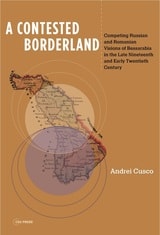
A Contested Borderland
Competing Russian and Romanian Visions of Bessarabia in the Second Half of the 19th and Early 20th CenturyAndrei Cusco
Central European University Press, 2017
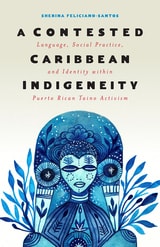
A Contested Caribbean Indigeneity
Language, Social Practice, and Identity within Puerto Rican Taíno ActivismSherina Feliciano-Santos
Rutgers University Press, 2021
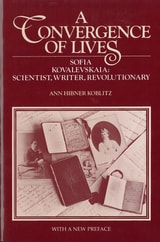
A Convergence of Lives
Sofia Kovalevskaia - Scientist, Writer, RevolutionaryKoblitz, Ann
Rutgers University Press, 1993
Sofia Kovalevskaia's interest in mathematics was roused at an early age--her attic nursery had been wallpapered with lecture notes for a course on calculus. She spent hours studying the mysterious walls, trying to figure out which page followed from the next. Kovalevskaia (1850-1891) became the only woman mathematician whose name all mathematicians recognize, thanks to her contributions to mathematical analysis. Indeed, she was the first professional woman scientist to win international eminence in any field: the first woman doctorate in mathematics, the first to hold a chair in mathematics, the first to sit on the editorial board of a major scientific journal.
She was also an accomplished writer, a proponent of women's rights and education, a wife and mother in an unconventional marriage, and a champion of radical political causes in Russia and Western Europe--a friend and correspondent of Dostoyevsky, Chekhov, George Eliot, Kropotkin, Helmholtz, and Darwin. This sympathetic portrait of a remarkable woman will appeal to any reader, non-mathematicians and mathematicians alike.

A Conversation about Ohio University and the Presidency, 1975–1994
Charles J. Ping
Ohio University Press, 2013
When Charles Ping first arrived at Ohio University in 1975, the university was experiencing a decline in student enrollment and confronting serious financial challenges. But rather than focusing on its problems, Ping instead concentrated on Ohio University’s potential.
During the nineteen years that Ping served as president, he guided Ohio University in scholarship, research, and service while substantially increasing the size of the campus through the acquisition of The Ridges. “What attracted me was, essentially, the richness of the campus in people and programs,” said Ping.
A Conversation about Ohio University and the Presidency, 1975–1994 is an edited version of the transcript of videotaped interviews recorded in May and June 2011. “It is a conversation between two old friends,” said Ping of the series of interviews conducted by Sam Crowl, Shakespearean scholar and now trustee professor emeritus.
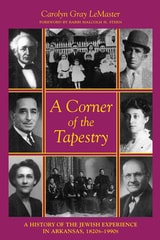
A Corner of the Tapestry
A History of the Jewish Experience in Arkansas, 1820s–1990sCarolyn LeMaster
University of Arkansas Press, 1994
A Cosmos of Desire
The Medieval Latin Erotic Lyric in English ManuscriptsThomas C Moser, Jr.
University of Michigan Press, 2004
Thomas C. Moser, Jr. explores the fascinating body of medieval Latin erotic poetry found in English manuscripts. His study describes the intellectual and social context from which the great erotic songs of the twelfth century emerged, and examines a variety of erotic poems, from school exercises to the magnificent lyrics found in Arundel 384. He also illuminates the influence of neoplatonic philosophy on this poetry, explicating key neoplatonic texts and applying that analysis in close readings of erotic lyrics from the same period and milieu.
A Cosmos of Desire will interest scholars of medieval literature as well as specialists in Latin poetry and philosophy. Students of Middle English literature will find that it fills an important gap in our understanding of English intellectual life between the twelfth and the fourteenth century. All Latin prose and poetry is translated, some works for the first time, and the book is generously illustrated with photographs of the manuscripts discussed.
Thomas C. Moser, Jr. is Associate Professor of English at the University of Maryland, College Park.
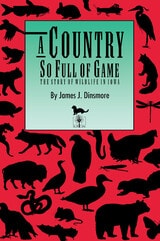
A Country So Full of Game
The Story of Wildlife in IowaJames J. Dinsmore
University of Iowa Press, 1994
Based on a thorough search of hundreds of primary sources ranging from chronicles of military expeditions to field reports by early naturalists, first-person accounts by fur traders and hunters to up-to-date county checklists, A Country So Full of Game examines the dramatic encounters of humans with elk, black bears, passenger pigeons, bobcats, prairie-chickens, otters, and many more. Each chapter discusses the animal's status and distribution when explorers first arrived in Iowa, how it was hunted or trapped, how this exploitation affected its population, and what its current status is both in Iowa and nationally. Enhanced by Mark Müller's distinctive drawings, commissioned for this book, the anecdotes evoke a sense of loss and wonder at the magic abundance of Iowa's wildlife.
Iowa has been changed more than, perhaps, any other state. We can mourn the disappearance of the bison and mountain lion while we marvel at the recent success of the wild turkey and white-tailed deer. Listening to James Dinsmore tell the story of wildlife in Iowa can open a window onto the future as other areas of our planet are increasingly altered by humans. A Country So Full of Game will allow all naturalists, both amateur and professional, hunter and biologist, to appreciate and learn from Iowa's diverse wild heritage.
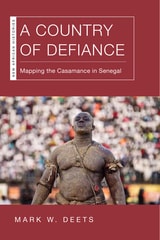
A Country of Defiance
Mapping the Casamance in SenegalMark W. Deets
Ohio University Press, 2023
A County of Culture
Twentieth-Century China Seen from the Village Schools of Zouping, ShandongStig Thogersen
University of Michigan Press, 2002
A County of Culture demonstrates how changes in educational policies have exerted considerable influence on social life in Zouping, from the macro level of nation building and state formation to the micro level of individual careers. It also shows that the rural population has been far from being a passive object of reform, and that it has been extremely difficult for educational reformers to achieve their goals as a result of the social, economic, and mental realities of China's villages. The fate of educational reforms has thus been decided in the tension between two poles: the visions of educational planners and reformers on the one hand, and the expectations of the rural population on the other.
Not only pertinent to specialists of Chinese education, this book will also be useful to anyone interested in state-society relations in modern China and to students of comparative education and rural development.
Stig Thøgersen is Associate Professor of Chinese Language and Society, University of Aarhus.
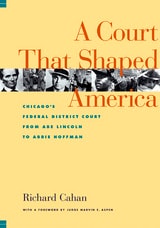
A Court That Shaped America
Chicago's Federal District Court from Abe Lincoln to Abbie HoffmanRichard Cahan
Northwestern University Press, 2002
A Court That Shaped America traces the flesh-and-blood courtroom scenes from the district's first cases in the early nineteenth century through the turn of the millennium. Historical figures—including Mormon leader Joseph Smith, inventor Thomas Edison, and author Mark Twain—as well as contemporary superstars like Michael Jackson and Oprah Winfrey have all had their day in the Northern Illinois court. Some were victorious; some came out scathed. This book examines these great trials and the people behind them to offer a unique look at Chicago and U.S. history.
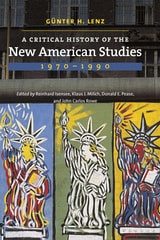
A Critical History of the New American Studies, 1970–1990
Günter H. Lenz
Dartmouth College Press, 2016
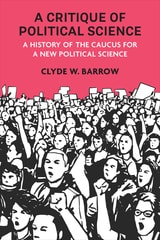
A Critique of Political Science
A History of the Caucus for a New Political ScienceClyde W. Barrow
University of Michigan Press, 2026
A Critique of Political Science distinguishes between the discipline of political science (methods and concepts) and the profession of political science (persons and institutions) to move disciplinary history beyond its current form as intellectual history toward a politics of political science. The book argues that understanding the development of a discipline requires the same type of theoretical analysis that political scientists apply to other political institutions. By examining universities and professional associations as political institutions, this approach puts political struggles and ideological conflict at the very core of disciplinary history. In reviewing 50 years of debate, controversy, and in-fighting in the political science profession, the book serves as a critique of the profession and the discipline of political science, which remains woefully disengaged from the concerns of ordinary citizens, particularly the working class and the poor throughout the world.
A Crooked Line
From Cultural History to the History of SocietyGeoff Eley
University of Michigan Press, 2005
--Lizabeth Cohen, author of A Consumers' Republic
"A Crooked Line brilliantly captures the most significant shifts in the landscape of historical scholarship that have occurred in the last four decades. Part personal history, part insightful analysis of key methodological and theoretical historiographical tendencies since the late 1960s, always thoughtful and provocative, Eley's book shows us why history matters to him and why it should also matter to us."
--Robert Moeller, University of California, Irvine
"Part genealogy, part diagnosis, part memoir, Eley's account of the histories of social and cultural history is a tour de force."
--Antoinette Burton, Professor of History and Catherine C. and Bruce A. Bastian Professor of Global and Transnational Studies, University of Illinois
"Eley's reflections on the changing landscape of academic history in the last forty years will interest and benefit all students of the discipline. Both a native informant and an analyst in this account, Eley combines the two roles superbly to produce one of most engaging and compelling narratives of the recent history of History."
--Dipesh Chakrabarty, author of Provincializing Europe
Using his own intellectual biography as a narrative device, Geoff Eley tracks the evolution of historical understanding in our time from social history through the so-called "cultural turn," and back again to a broad history of society.
A gifted writer, Eley carefully winnows unique experiences from the universal, and uses the interplay of the two to draw the reader toward an organic understanding of how historical thinking (particularly the work of European historians) has evolved under the influence of new ideas. His work situates history within History, and offers students, scholars, and general readers alike a richly detailed, readable guide to the enduring value of historical ideas.
Geoff Eley is Professor of History at the University of Michigan.
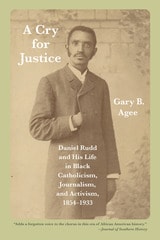
A Cry for Justice
Daniel Rudd and His Life in Black Catholicism, Journalism, and Activism, 1854-1933Gary B. Agee
University of Arkansas Press, 2017
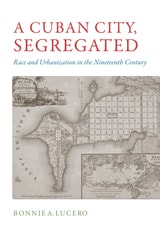
A Cuban City, Segregated
Race and Urbanization in the Nineteenth CenturyBonnie A. Lucero
University of Alabama Press, 2019
Founded as a white colony in 1819, Cienfuegos, Cuba, quickly became home to people of African descent, both free and enslaved, and later a small community of Chinese and other immigrants. Despite the racial, ethnic, and cultural diversity that defined the city’s population, the urban landscape was characterized by distinctive racial boundaries, separating the white city center from the heterogeneous peripheries. A Cuban City, Segregated: Race and Urbanization in the Nineteenth Century explores how the de facto racial segregation was constructed and perpetuated in a society devoid of explicitly racial laws.
Drawing on the insights of intersectional feminism, Bonnie A. Lucero shows that the key to understanding racial segregation in Cuba is recognizing the often unspoken ways specifically classed notions and practices of gender shaped the historical production of race and racial inequality. In the context of nineteenth-century Cienfuegos, gender, race, and class converged in the concept of urban order, a complex and historically contingent nexus of ideas about the appropriate and desired social hierarchy among urban residents, often embodied spatially in particular relationships to the urban landscape.
As Cienfuegos evolved subtly over time, the internal logic of urban order was driven by the construction and defense of a legible, developed, aesthetically pleasing, and, most importantly, white city center. Local authorities produced policies that reduced access to the city center along class and gendered lines, for example, by imposing expensive building codes on centric lands, criminalizing poor peoples’ leisure activities, regulating prostitution, and quashing organized labor. Although none of these policies mentioned race outright, this new scholarship demonstrates that the policies were instrumental in producing and perpetuating the geographic marginality and discursive erasure of people of color from the historic center of Cienfuegos during its first century of existence.
A Cubism Reader
Documents and Criticism, 1906-1914Mark Antliff and Patricia Leighten
University of Chicago Press, 2008
This definitive anthology covers the historical genesis of cubism from 1906 to 1914, with documents that range from manifestos and poetry to exhibition prefaces and reviews to articles that address the cultural, political, and philosophical issues related to the movement. Most of the texts Mark Antliff and Patricia Leighten have selected are from French sources, but their inclusion of carefully culled German, English, Czech, Italian, and Spanish documents speaks to the international reach of cubist art and ideas. Equally wide-ranging are the writers represented—a group that includes Guillaume Apollinaire, Gertrude Stein, Jean Metzinger, Albert Gleizes, Fernand Léger, Francis Picabia, André Salmon, Raymond Duchamp-Villon, Henri Le Fauconnier, and many others.
These diverse selections—unabridged and freshly translated—represent a departure from the traditional view of cubism as shaped almost exclusively by Picasso and Braque. Augmented by Antliff and Leighten’s insightful commentary on each entry, as well as many of the articles’ original illustrations, A Cubism Reader ultimately broadens the established history of the movement by examining its monumental contributions from a variety of contemporary perspectives.
A Cultural Arsenal for Democracy
The World War II Work of US MuseumsClarissa J. Ceglio
University of Massachusetts Press, 2022
Unsurprisingly, exhibitions served as the primary vehicle through which museums, large and small, engaged their publics with wartime topics with fare ranging from displays on the cultures of Allied nations to "living maps" that charted troop movements and exhibits on war preparedness. Clarissa J. Ceglio chronicles debates, experiments, and collaborations from the 1930s to the immediate postwar years, investigating how museums re-envisioned the exhibition as a narrative medium and attempted to reconcile their mission with new modes of storytelling.
A Cultural History of Heredity
Staffan Müller-Wille and Hans-Jörg Rheinberger
University of Chicago Press, 2012
It was only around 1800 that heredity began to enter debates among physicians, breeders, and naturalists. Soon thereafter it evolved into one of the most fundamental concepts of biology. Here Staffan Müller-Wille and Hans-Jörg Rheinberger offer a succinct cultural history of the scientific concept of heredity. They outline the dramatic changes the idea has undergone since the early modern period and describe the political and technological developments that brought about these changes.
Müller-Wille and Rheinberger begin with an account of premodern theories of generation, showing that these were concerned with the procreation of individuals rather than with hereditary transmission. The authors reveal that when hereditarian thinking first emerged, it did so in a variety of cultural domains, such as politics and law, medicine, natural history, breeding, and anthropology. Müller-Wille and Rheinberger then track theories of heredity from the late nineteenth century—when leading biologists considered it in light of growing societal concerns with race and eugenics—through the rise of classical and molecular genetics in the twentieth century, to today, as researchers apply sophisticated information technologies to understand heredity. What readers come to see from this exquisite history is why it took such a long time for heredity to become a prominent concept in the life sciences and why it gained such overwhelming importance in those sciences and the broader culture over the last two centuries.

A Cultural History of the Disneyland Theme Parks
Middle Class KingdomsSabrina Mittermeier
Intellect Books, 2020
When the first Disneyland opened its doors in 1955, it reinvented the American amusement park and transformed the travel, tourism, and entertainment industries forever. Now a global vacation empire, the original park in Anaheim, California, has been joined by massive complexes in Florida, Tokyo, Paris, Hong Kong, and Shanghai.
Spanning six decades, three continents, and five distinct cultures, Sabrina Mittermeier presents an interdisciplinary examination of the parks, situating them in their proper historical context and exploring the distinct cultural, social, and economic landscapes that defined each one at the time of its construction. Mittermeier then spotlights the central role of class in the subsequent success or failure of each venture. The first comparative study of the Disney theme parks, the book closes a significant gap in existing research and is an important new contribution to the field.
A Culture of Corruption?
Coping with Government in Post-communist EuropeWilliam L. Miller
Central European University Press, 2001
A Culture of Light
Cinema and Technology in 1920s GermanyFrances Guerin
University of Minnesota Press, 2005
A Culture of Stone
Inka Perspectives on RockCarolyn Dean
Duke University Press, 2010
A Culture's Catalyst
Historical Encounters with Peyote and the Native American Church in CanadaFannie Kahan
University of Manitoba Press, 2016
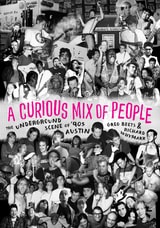
A Curious Mix of People
The Underground Scene of '90s AustinGreg Beets
University of Texas Press, 2023
A twisting path through Austin’s underground music scene in the twentieth century’s last decade, narrated by the people who were there.
It’s 1990 in Austin, Texas. The next decade will be a tipping point in the city's metamorphosis from sleepy college town to major city. Beneath the increasingly slick exterior, though, a group of like-minded contrarians were reimagining an underground music scene. Embracing a do-it-yourself ethos, record labels emerged to release local music, zines cheered and jeered acts beneath the radar of mainstream media outlets, and upstart clubs provided a home venue for new bands to build their sound.
This vibrant scene valued expression over erudition, from the razor-sharp songcraft of Spoon to the fuzzed-out poptones of Sixteen Deluxe, and blurred the boundaries between observer and participant. Evolving in tandem with the city’s emergence on the national stage via the film Slacker and the SXSW conference and festivals, Austin’s musical underground became a spiritual crucible for the uneasy balance between commercial success and cultural authenticity, a tension that still resonates today.
The first book about Austin underground music in the ’90s, A Curious Mix of People is an oral history that tells the story of this transformative decade through the eyes of the musicians, writers, DJs, club owners, record-store employees, and other key figures who were there.

A Curious and Ingenious Art
Reflections on Daguerreotypes at HarvardMelissa Banta
University of Iowa Press, 2000
Around the time Louis Jacques Mandé Daguerre perfected his method for fixing images on polished metal plates in 1839, Harvard was emerging as a modern research institution. Accordingly, the college began amassing vast collections for teaching and research. Among these collections in the university's libraries, museums, archives, and academic departments are some of the earliest photographic documents of American life: daguerreotypes.
A Curious and Ingenious Art brings together a representative sampling of Harvard's internationally significant but relatively unknown collection of daguerreotypes. Many of these images were made for, by, and of members of the university's community and have been in its holdings for more than 150 years. The collection includes the work of some of America's pioneering daguerreotypists, such as Mathew Brady, Southworth and Hawes, and John Adams Whipple. Most notably, the Harvard collection preserved for posterity such faces of the era as Oliver Wendell Holmes, Ralph Waldo Emerson, Harriet Beecher Stowe, Henry James, James McNeill Whistler, Dorothea Dix, Jenny Lind, and even Tom Thumb.
The university also seized upon photography as a tool of scientific research, stunningly exemplified in one of the first detailed daguerreotypes of the moon taken in 1851 as well as in images capturing the emergence of modern anesthesia. An unfortunate misuse of photography is recalled in the now famous slave daguerreotypes commissioned by natural historian Louis Agassiz, who believed in the theory of separate human species.
The Harvard collection represents the early history of photography and its social meaning. The accompanying essays explore the personal, telling histories behind the images, stories that unveil the reflections of individuals who searched for purpose and promise in the new medium.

A Damned Iowa Greyhound
The Civil War Letters of William Henry Harrison ClaytonDonald C. Elder, III
University of Iowa Press, 1998
William Henry Harrison Clayton was one of nearly 75,000 soldiers from Iowa to join the Union ranks during the Civil War. Possessing a high school education and superior penmanship, Clayton served as a company clerk in the 19th Infantry, witnessing battles in the Trans-Mississippi theater. His diary and his correspondence with his family in Van Buren County form a unique narrative of the day-to-day soldier life as well as an eyewitness account of critical battles and a prisoner-of-war camp.
Clayton participated in the siege of Vicksburg and took part in operations against Mobile, but his writings are unique for the descriptions he gives of lesser-known but pivotal battles of the Civil War in the West. Fighting in the Battle of Prairie Grove, the 19th Infantry sustained the highest casualties of any federal regiment on the field. Clayton survived that battle with only minor injuries, but he was later captured at the Battle of Stirling's Plantation and served a period of ten months in captivity at Camp Ford, Texas.
Clayton's writing reveals the complicated sympathies and prejudices prevalent among Union soldiers and civilians of that period in the country's history. He observes with great sadness the brutal effects of war on the South, sympathizing with the plight of refugees and lamenting the destruction of property. He excoriates draft evaders and Copperheads back home, conveying the intra-sectional acrimony wrought by civil war. Finally, his racist views toward blacks demonstrate a common but ironic attitude among Union soldiers whose efforts helped lead to the abolition of slavery in the United States.
A Dance Through Time
Images of Western Social Dancing from the Middle Ages to Modern TimesJeremy Barlow
Bodleian Library Publishing, 2012

A Dartmouth Reader
Edited by Francis Brown
Dartmouth College Press, 2002
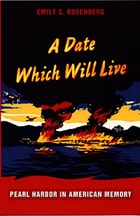
A Date Which Will Live
Pearl Harbor in American MemoryEmily S. Rosenberg
Duke University Press, 2005
Rosenberg considers the emergence of Pearl Harbor’s symbolic role within multiple contexts: as a day of infamy that highlighted the need for future U.S. military preparedness, as an attack that opened a "back door" to U.S. involvement in World War II, as an event of national commemoration, and as a central metaphor in American-Japanese relations. She explores the cultural background that contributed to Pearl Harbor’s resurgence in American memory after the fiftieth anniversary of the attack in 1991. In doing so, she discusses the recent “memory boom” in American culture; the movement to exonerate the military commanders at Pearl Harbor, Admiral Husband Kimmel and General Walter Short; the political mobilization of various groups during the culture and history "wars" of the 1990s, and the spectacle surrounding the movie Pearl Harbor. Rosenberg concludes with a look at the uses of Pearl Harbor as a historical frame for understanding the events of September 11, 2001.
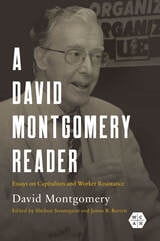
A David Montgomery Reader
Essays on Capitalism and Worker ResistanceDavid Montgomery. Edited by Shelton Stromquist and James R. Barrett
University of Illinois Press, 2024
A foundational figure in modern labor history, David Montgomery both redefined and reoriented the field. This collection of Montgomery’s most important published and unpublished articles and essays draws from the historian’s entire five-decade career.
Taken together, the writings trace the development of Montgomery’s distinct voice and approach while providing a crucial window into an era that changed the ways scholars and the public understood working people’s place in American history. Three overarching themes and methods emerge from these essays: that class provided a rich reservoir of ideas and strategies for workers to build movements aimed at claiming their democratic rights; that capital endured with the power to manage the contours of economic life and the capacities of the state but that workers repeatedly and creatively mounted challenges to the terms of life and work dictated by capital; and that Montgomery’s method grounded his gritty empiricism and the conceptual richness of his analysis in the intimate social relations of production and of community, neighborhood, and family life.
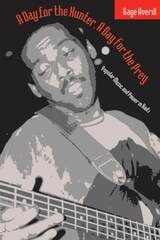
A Day for the Hunter, a Day for the Prey
Popular Music and Power in HaitiGage Averill
University of Chicago Press, 1997
Averill explores such diverse genres as Haitian jazz, troubadour traditions, Vodou-jazz, konpa, mini-djaz, new generation, and roots music. He examines the complex interaction of music with power in contexts such as honorific rituals, sponsored street celebrations, Carnival, and social movements that span the political spectrum.
With firsthand accounts by musicians, photos, song texts, and ethnographic descriptions, this book explores the profound manifestations of power and song in the day-to-day efforts of ordinary Haitians to rise above political repression.
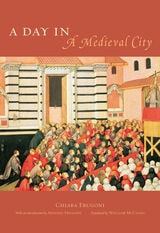
A Day in a Medieval City
Chiara Frugoni
University of Chicago Press, 2005
A Day in a Medieval City breathes life into the activities of the city streets, homes, fields, schools, and places of worship. With entertaining anecdotes and gritty details, it engages the modern reader with its discoveries of the religious, economic, and institutional practices of the day. From urban planning and education to child care, hygiene, and the more leisurely pursuits of games, food, books, and superstitions, Frugoni unearths the daily routines of the private and public lives of citizens. A Day in a Medieval City is a charming portal to the Middle Ages that you'll surely want with you on your travels to Europe—or in your armchair.
“Stunningly beautiful . . . and a good read as well. . . . It’s amazing how much wealth of detail and image Ms. Frugoni has packed into this delightful, relatively small book.”—Steve Goode, Washington Times
“Charming and insightful. . . .Written with exceptional grace and infused with a warm sense of humanity.”—Library Journal

A Deadly Wind
The 1962 Columbus Day StormJohn Dod
Oregon State University Press, 2018
The Columbus Day Storm of 1962 was a freak of nature, a weather outlier with deadly winds topping one hundred miles per hour. The storm killed dozens, injured hundreds, damaged more than fifty thousand homes, and leveled enough timber to build one million homes. To find an equally ferocious storm of its kind, fast-forward fifty years and cross the continent to Superstorm Sandy’s 2012 attack on the East Coast. While Superstorm Sandy was predicted days in advance, the Columbus Day Storm caught ill-equipped weather forecasters by surprise.
This unrivalled West Coast windstorm fueled the Asian log export market, helped give birth to the Oregon wine industry, and influenced the 1962 World Series. It remains a cautionary tale and the Pacific Northwest benchmark for severe windstorms in this era of climate change and weather uncertainty. From its genesis in the Marshall Islands to its final hours on Vancouver Island, British Columbia, the storm plowed an unparalleled path of destruction.
In A Deadly Wind, veteran journalist John Dodge tells a compelling story spiced with human drama, Cold War tension, and Pacific Northwest history. This is a must-read for the tens of thousands of storm survivors, for history buffs, and for anyone interested in the intersection of severe weather events and climate change.

A Death-Dealing Famine
The Great Hunger in IrelandChristine Kinealy
Pluto Press, 1997
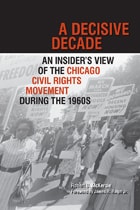
A Decisive Decade
An Insider's View of the Chicago Civil Rights Movement during the 1960sRobert B. McKersie, Foreword by James R. Ralph Jr.
Southern Illinois University Press, 2013
The deeply personal story of a historic time in Chicago, Robert B. McKersie’s A Decisive Decade follows the unfolding action of the Civil Rights Movement as it played out in the Windy City. McKersie’s participation as a white activist for black rights offers a unique, firsthand viewpoint on the debates, boycotts, marches, and negotiations that would forever change the face of race relations in Chicago and the United States at large.
Described within are McKersie’s intimate observations on events as they developed during his participation in such historic occasions as the impassioned marches for open housing in Chicago; the campaign to end school segregation under Chicago Schools Superintendent Benjamin Willis; Operation Breadbasket’s push to develop economic opportunities for black citizens; and dialogs with corporations to provide more jobs for blacks in Chicago. In addition, McKersie provides up close and personal descriptions of the iconic Civil Rights leaders who spearheaded some of the most formative battles of Chicago’s Civil Rights movement, including Dr. Martin Luther King, Jr., Reverend Jesse Jackson, Timuel Black Jr. and W. Alvin Pitcher. The author illumines the tensions experienced by two major institutions in responding to the demands of the civil rights movement: the university and the church. Packed with historical detail and personal anecdotes of these history-making years, A Decisive Decade offers a never-before-seen perspective on one of our nation’s most tumultuous eras.

A Defense of Free Will Against Luther
Assertionis Lutheranae Confutatio, Article 36Thomas P. St. John Fisher
Catholic University of America Press, 2024
A Defense of the Catholic Religion
The Necessity, Existence, and Limits of an Infallible ChurchBeda Mayr, OSB
Catholic University of America Press, 2023

A Desire for Women
Relational Psychoanalysis, Writing, and Relationships between WomenJuhasz, Suzanne
Rutgers University Press, 2003
Uniquely weaving together psychoanalytic, feminist, queer, and literary theory as well as memoir to examine the value and meaning of relationships between women, Juhasz explores the writings of adult daughters, mothers, and lovers to consider how language both traces and shapes the contours of experience. She emphasizes the initial bond between mother and infant as the bedrock of identity formation, a process involving love, recognition, desire, and language, and shows how that relationship serves as source and model for all future loves.
Juhasz's lucid prose unravels the meaningful yet overlooked intricacies of the relationships that inflect much of women's writing in the twentieth century.
A Desired Past
A Short History of Same-Sex Love in AmericaLeila J. Rupp
University of Chicago Press, 1999
"Most extraordinary about Leila J. Rupp's indeed short, two-hundred-page history of 'same-sex love and sexuality' is not that it manages to account for such a variety of individuals, races, and classes or take in such a broad chronological and thematic range, but rather that it does all this with such verve, lucidity, and analytical rigor. . . . [A]n elegant, inspiring survey." —John Howard, Journal of American History
A Dictionary of Iowa Place-Names
Tom Savage
University of Iowa Press, 2007
Savage includes information on the place-names of all 1,188 incorporated and unincorporated communities in Iowa that meet at least two of the following qualifications: twenty-five or more residents; a retail business; an annual celebration or festival; a school; church, or cemetery; a building on the National Register of Historic Places; a zip-coded post office; or an association with a public recreation site. If a town’s name has changed over the years, he provides information about each name; if a name’s provenance is unclear, he provides possible explanations. He also includes information about the state’s name and about each of its ninety-nine counties as well as a list of ghost towns. The entries range from the counties of Adair to Wright and from the towns of Abingdon to Zwingle; from Iowa’s oldest town, Dubuque, starting as a mining camp in the 1780s and incorporated in 1841, to its newest, Maharishi Vedic City, incorporated in 2001.
The imaginations and experiences of its citizens played a role in the naming of Iowa’s communities, as did the hopes of the huge influx of immigrants who settled the state in the 1800s. Tom Savage’s dictionary of place-names provides an appealing genealogical and historical background to today’s map of Iowa.
“It is one of the beauties of Iowa that travel across the state brings a person into contact with so many wonderful names, some of which a traveler may understand immediately, but others may require a bit of investigation. Like the poet Stephen Vincent Benét, we have fallen in love with American names. They are part of our soul, be they family names, town names, or artifact names. We identify with them and are identified with them, and we cannot live without them. This book will help us learn more about them and integrate them into our beings.”—from the foreword by Loren N. Horton
“Primghar, O’Brien County. Primghar was established by W. C. Green and James Roberts on November 8, 1872. The name of the town comes from the initials of the eight men who were instrumental in developing it. A short poem memorializes the men and their names:
Pumphrey, the treasurer, drives the first nail;
Roberts, the donor, is quick on his trail;
Inman dips slyly his first letter in;
McCormack adds M, which makes the full Prim;
Green, thinking of groceries, gives them the G;
Hayes drops them an H, without asking a fee;
Albright, the joker, with his jokes all at par;
Rerick brings up the rear and crowns all ‘Primghar.’
Primghar was incorporated on February 15, 1888.”
A Different Face of War
Memories of a Medical Service Corps Officer in VietnamJames G. Van Straten
University of North Texas Press, 2015

A Diminished Roar
Winnipeg in the 1920sJim Blanchard
University of Manitoba Press, 2019
A Diné History of Navajoland
Klara Kelley and Harris Francis
University of Arizona Press, 2019
The early chapters, based on ceremonial origin stories, tell about Diné forebears. Next come the histories of Diné clans from late pre-Columbian to early post-Columbian times, and the coming together of the Diné as a sovereign people. Later chapters are based on histories of families, individuals, and communities, and tell how the Diné have struggled to keep their bond with the land under settler encroachment, relocation, loss of land-based self-sufficiency through the trading-post system, energy resource extraction, and climate change.
Archaeological and documentary information supplements the oral histories, providing a comprehensive investigation of Navajo history and offering new insights into their twentieth-century relationships with Hispanic and Anglo settlers.
For Diné readers, the book offers empowering histories and stories of Diné cultural sovereignty. “In short,” the authors say, “it may help you to know how you came to be where—and who—you are.”
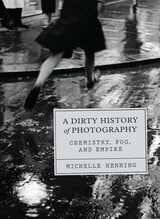
A Dirty History of Photography
Chemistry, Fog, and EmpireMichelle Henning
University of Chicago Press, 2025
Dependent on the extractive practices of fossil-fueled industrial capitalism, chemical photography’s emulsions and films were highly sensitive to polluted atmospheres, and photographic companies had to work hard to control this sensitivity. Drawing on histories of empire, coal, and chemistry and from the archives of British photographic manufacturer Ilford Limited, Michelle Henning exposes the ways photography shaped how we see and understand the atmosphere while leaving its toxic residues in the air, soil, and water.
Structured as thirty-six short chapters and with over seventy illustrations, this innovative book begins in interwar London, follows the supply of Ilford products to photographers on the West African coast, and considers photography as a military technology linked to the development of chemical warfare. Combining close readings of photographs with discussions of low-light, tropical, and aerial photography, Henning examines the extraction and development of photographic materials, their role in the current environmental crisis, and how they have shaped experiences of time and the environment.
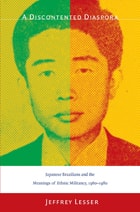
A Discontented Diaspora
Japanese Brazilians and the Meanings of Ethnic Militancy, 1960–1980Jeffrey Lesser
Duke University Press, 2007
Lesser draws on a wide range of sources, including films, oral histories, wanted posters, advertisements, newspapers, photographs, police reports, government records, and diplomatic correspondence. He focuses on two particular cultural arenas—erotic cinema and political militancy—which highlight the ways that Japanese Brazilians imagined themselves to be Brazilian. As he explains, young Nikkei were sure that their participation in these two realms would be recognized for its Brazilianness. They were mistaken. Whether joining banned political movements, training as guerrilla fighters, or acting in erotic films, the subjects of A Discontented Diaspora militantly asserted their Brazilianness only to find that doing so reinforced their minority status.
A Divided World
Hollywood Cinema and Emigré Directors in the Era of Roosevelt and Hitler, 1933-1948Nick Smedley
Intellect Books, 2011
The New Deal introduced sweeping social, political, and cultural change across the United States, which Hollywood embraced enthusiastically. Then, when the heady idealism of the 1930s was replaced by the paranoia of the postwar years, Hollywood became an easy target for the anticommunists. A Divided World examines some of the important programs of the New Deal and the subsequent response of the film community—especially in relation to social welfare, women’s rights, and international affairs. The book also provides an analysis of the major works of three European directors—Billy Wilder, Ernst Lubitsch, and Fritz Lang—compared and contrasted with the products of mainstream Hollywood. This is a new interpretation of an influential period in American film history and it is sure to generate further debate and scholarship.
A Doctor in Galilee
The Life and Struggle of a Palestinian in IsraelHatim Kanaaneh
Pluto Press, 2008
Hatim Kanaaneh is a Palestinian doctor who has struggled for over 35 years to bring medical care to Palestinians in Galilee, against a culture of anti-Arab discrimination. This is the story of how he fought for the human rights of his patients and overcame the Israeli authorities' cruel indifference to their suffering.
Kanaaneh is a native of Galilee, born before the creation of Israel. He left to study medicine at Harvard, before returning to work as a public health physician with the intention of helping his own people. He discovered a shocking level of disease and malnutrition in his community and a shameful lack of support from the Israeli authorities. After doing all he could for his patients by working from inside the system, Kanaaneh set up The Galilee Society, an NGO working for equitable health, environmental and socio-economic conditions for Palestinian Arabs in Israel.
This is a brilliant memoir that shows how grass roots organisations can loosen the Zionist grip upon Palestinian lives.