Results by title
2335 books match the query 'Modern' and 184 start with a
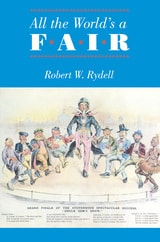
All the World's a Fair
Visions of Empire at American International Expositions, 1876-1916Robert W. Rydell
University of Chicago Press, 1985
In All the World's a Fair, Robert W. Rydell argues that America's nineteenth-century world's fairs served to legitimate racial exploitation at home and the creation of an empire abroad. He looks in particular to the "ethnological" displays of nonwhites—set up by showmen but endorsed by prominent anthropologists—which lent scientific credibility to popular racial attitudes and helped build public support for domestic and foreign policies. Rydell's lively and thought-provoking study draws on archival records, newspaper and magazine articles, guidebooks, popular novels, and oral histories to tell a new story of American history and empire.
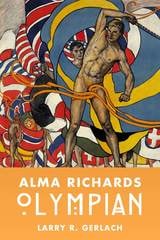
Alma Richards
OlympianLarry R. Gerlach
University of Utah Press, 2016
The book traces Richards from his boyhood in rural Parowan, Utah, to Cornell and through his service as an officer in World War I and his teaching career in Los Angeles. His story is that of a remarkable athlete, but also that of a man struggling for personal fulfillment while endeavoring to retain his Mormon heritage amid his changing religious circumstances and participation. More than a century has passed since Alma Richards won an Olympic gold medal, yet this story about man and sport—the drive to excel, victory as validation of hard work, the quest for public recognition and, ultimately, the achievement of self-identity and self-satisfaction—still resonates today.
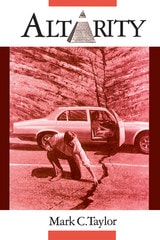
Altarity
Mark C. Taylor
University of Chicago Press, 1987
In Altarity, Taylor develops a genealogy of otherness and difference that is based on the principle of creative juxtaposition. Rather than relying on a historical or chronological survey of crucial moments in modern philosophical thinking, he explores the complex question of difference through the strategies of contrast, resonance, and design. Taylor brings together the work of thinkers as diverse as Hegel, Heidegger, Merleau-Ponty, Lacan, Bataille, Kristeva, Levinas, Blanchot, Derrida, and Kierkegaard to fashion a broad intellectual scheme.
Situated in an interdisciplinary discourse, Altarity signifies a harnessing of continental and American habits of intellectual thought and illustrates the singularity that emerges from such a configuration. As such, the book functions as a mirror of our intellectual moment and offers the academy a rigorous way of acknowledging the limitations of its own interpretive practices.
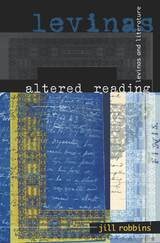
Altered Reading
Levinas and LiteratureJill Robbins
University of Chicago Press, 1999
With an attitude at once respectful and interrogative, closely attentive to Levinas's texts while in dialogue with readings by Derrida, Blanchot, and Bataille, Altered Reading shows how the thread of the literary leads directly to the internal tensions of Levinas's ethical discourse. Jill Robbins provides a comprehensive critical account of Levinas's early and mature philosophy as well as later key transitional essays. In an invaluable appendix, she includes her own translation of an important, previously untranslated essay by Bataille on Levinas.
Altered Reading will interest philosophers, literary critics, scholars of religion, and others drawn to Levinas's work.
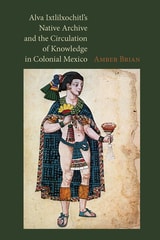
Alva Ixtlilxochitl's Native Archive and the Circulation of Knowledge in Colonial Mexico
Amber Brian
Vanderbilt University Press, 2016
Born between 1568 and 1580, Alva Ixtlilxochitl was a direct descendant of Ixtlilxochitl I and Ixtlilxochitl II, who had been rulers of Texcoco, one of the major city-states in pre-Conquest Mesoamerica. After a distinguished education and introduction into the life of the empire of New Spain in Mexico, Ixtlilxochitl was employed by the viceroy to write histories of the indigenous peoples in Mexico. Engaging with this history and delving deep into the resultant archives of this life's work, Amber Brian addresses the question of how knowledge and history came to be crafted in this era.
Brian takes the reader through not only the history of the archives itself, but explores how its inheritors played as crucial a role in shaping this indigenous history as the author. The archive helped inspire an emerging nationalism at a crucial juncture in Latin American history, as Creoles and indigenous peoples appropriated the history to give rise to a belief in Mexican exceptionalism. This belief, ultimately, shaped the modern state and impacted the course of history in the Americas. Without the work of Ixtlilxochitl, that history would look very different today.
Ambassadors of the Working Class
Argentina's International Labor Activists and Cold War Democracy in the AmericasErnesto Semán
Duke University Press, 2017

Ambient Life
Melville and the Ethereal EnlightenmentBranka Arsic
University of Minnesota Press, 2026
Rethinking the human through Melville’s encounters with oceans, ecologies, and non-Western cosmologies
Ambient Life offers a bold reimagining of Herman Melville’s writing through the lens of ecology. Renowned literary critic Branka Arsić reframes Melville not just as a novelist but as an environmental thinker—one who reoriented the terms of human identity, perception, and relation. Rather than treating Melville’s texts as separate literary objects, Arsić gathers them collectively to stage a philosophical meeting between Western Enlightenment epistemologies and the cosmologies of Polynesian and African traditions.
In Ambient Life, Melville’s thinking becomes a site where vegetal, animal, and elemental images dissolve the distinction between inner life and outer world, yielding a radically relational form of individuation. Showing how Melville envisioned the human body not as a bounded, rational mind-container but as a porous, sensing organ infused with its surroundings, Arsić presents the mind as ambient rather than internal—a “coral psyche” shaped by atmospheric, aesthetic, and affective entanglements. Drawing from rich historical archives and ethnographic narratives, Arsić’s archipelagic method mirrors this fluidity, traveling across oceans and epistemes to map a mode of thought.
Pushing the boundaries of scholarly form and content, Ambient Life is a resonant meditation on the unstable boundaries of the self that positions Melville as a witness to the ecological precarity of our time—and an unwitting ancestor of posthumanist thought.
Retail e-book files for this title are screen-reader friendly with images accompanied by short alt text and/or extended descriptions.
Amending the Past
Europe's Holocaust Commissions and the Right to HistoryAlexander Karn
University of Wisconsin Press, 2017
Alexander Karn analyzes more than a dozen Holocaust commissions—in Germany, Switzerland, France, Poland, Austria, Latvia, Lithuania, and elsewhere—in a comparative framework, situating each in the context of past and present politics, to evaluate their potential for promoting justice and their capacity for bringing the perspectives of rival groups more closely together. Karn also evaluates the media coverage these commissions received and probes their public reception from multiple angles.
Arguing that historical commissions have been underused as a tool for conflict management, Karn develops a program for historical mediation and moral reparation that can deepen democratic commitment and strengthen human rights in both transitional regimes and existing liberal states.
America
Bert Lamers
Amsterdam University Press, 2024
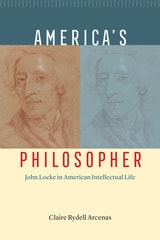
America's Philosopher
John Locke in American Intellectual LifeClaire Rydell Arcenas
University of Chicago Press, 2022
The influence of polymath philosopher John Locke (1632–1704) can still be found in a dizzying range of fields, as his writings touch on issues of identity, republicanism, and the nature of knowledge itself. Claire Rydell Arcenas’s new book tells the story of Americans’ longstanding yet ever-mutable obsession with this English thinker’s ideas, a saga whose most recent manifestations have found the so-called Father of Liberalism held up as a right-wing icon.
The first book to detail Locke’s trans-Atlantic influence from the eighteenth century until today, America’s Philosopher shows how and why interpretations of his ideas have captivated Americans in ways few other philosophers—from any nation—ever have. As Arcenas makes clear, each generation has essentially remade Locke in its own image, taking inspiration and transmuting his ideas to suit the needs of the particular historical moment. Drawing from a host of vernacular sources to illuminate Locke’s often contradictory impact on American daily and intellectual life from before the Revolutionary War to the present, Arcenas delivers a pathbreaking work in the history of ideas.
America's Philosopher
John Locke in American Intellectual LifeClaire Rydell Arcenas
University of Chicago Press, 2022
This is an auto-narrated audiobook edition of this book.
America’s Philosopher examines how John Locke has been interpreted, reinterpreted, and misinterpreted over three centuries of American history.
The influence of polymath philosopher John Locke (1632–1704) can still be found in a dizzying range of fields, as his writings touch on issues of identity, republicanism, and the nature of knowledge itself. Claire Rydell Arcenas’s new book tells the story of Americans’ longstanding yet ever-mutable obsession with this English thinker’s ideas, a saga whose most recent manifestations have found the so-called Father of Liberalism held up as a right-wing icon.
The first book to detail Locke’s trans-Atlantic influence from the eighteenth century until today, America’s Philosopher shows how and why interpretations of his ideas have captivated Americans in ways few other philosophers—from any nation—ever have. As Arcenas makes clear, each generation has essentially remade Locke in its own image, taking inspiration and transmuting his ideas to suit the needs of the particular historical moment. Drawing from a host of vernacular sources to illuminate Locke’s often contradictory impact on American daily and intellectual life from before the Revolutionary War to the present, Arcenas delivers a pathbreaking work in the history of ideas.

America's Philosophical Vision
John E. Smith
University of Chicago Press, 1992
American philosophers like Peirce, James, Royce, and
Dewey have forged a unique philosophical tradition—one
that is rich and complex enough to represent a genuine
alternative to the analytic, phenomenological, and
hermeneutical traditions which have originated in Britain
or Europe.
"In my judgment, John Smith has no equal today in
combining two scholarly qualities: the analysis of
philosophical texts with penetration and rigor, and the
discernment of what it is in these texts that matters.
These qualities are in evidence throughout the essays in
America's Philosophical Vision. Whether he is
evaluating Rorty's view of Dewey; the pragmatic theory of
experience and truth; theories of freedom, creativity,
and the self; Royce's conception of community; or
synoptic philosophic visions, Smith always succeeds in
uniting a comprehensive understanding of philosophic
writings with a sure grasp of their import for human
culture and aspiration. It is a great benefit to
students of American thought that these papers have now
been collected into one volume."—James Gouinlock, Emory
University

America's Switzerland
Estes Park and Rocky Mountain National Park, the Growth YearsJames H. Pickering
University Press of Colorado, 2005
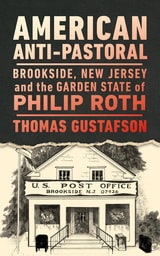
American Anti-Pastoral
Brookside, New Jersey and the Garden State of Philip RothThomas Gustafson
Rutgers University Press, 2024
American Anti-Pastoral reads the events in Roth’s novel in relation to the history of Brookside and its region. While Roth’s protagonist Seymour “Swede” Levov initially views Old Rimrock as an idyllic paradise within the Garden State, its real-world counterpart has a more complex past in its origins as a small industrial village, as well as a site for the politics of exclusionary zoning and a 1960s anti-war protest at its celebrated 4th of July parade. Literary historian and Brookside native Thomas Gustafson casts Roth’s canonical novel in a fresh light as he studies both Old Rimrock in comparison to Brookside and the novel in relationship to NJ literature, making a case for it as the Great New Jersey novel. For Roth fans and history buffs alike, American Anti-Pastoral peels back the myths about the bucolic Garden State countryside to reveal deep fissures along the fault-lines of race and religion in American democracy.

American Interests and Policies in the Middle East, 1900-1939
John A. DeNovo
University of Minnesota Press, 1963
American Interests and Policies in the Middle East, 1900-1939 was first published in
1963. Minnesota Archive Editions uses digital technology to make long-unavailable books once again accessible, and are published unaltered from the original University of Minnesota Press editions.Scholars concerned with the diplomatic history of the United States have largely neglected the subject of American relations with the Middle East during the four decades before World War I. With this study, Professor DeNovo fills the gap by describing and assessing the United States' cultural, economic, and diplomatic relations with Turkey, Persia, and the Arab East in that period. He traces, chronologically and topically, the activities of such American interest groups as Protestant missionaries, educators, philanthropists, archaeologists, businessmen, and technical advisers, as well as the official actions of their government.
The account falls roughly into three chronological periods. The first section traces the interest groups through the pre-World War I years of political and cultural stirring in the Ottoman Empire and Persia. Special attention is given to the Chester Project for railroad development in Turkey. The second part deals with the upheavals accompanying World War I and the tasks of peacemaking from the Mudros armistice through the Lausanne settlement of 1923. The latter chapters detail the rise of the Turkish national movement, the deepening Persian and Arab nationalism, and the accommodation of American cultural and economic groups to these conditions. The author points out that before World War II began, Americans had acquired a significant interest in Middle Eastern oil and had become emotionally involved in the Arab-Zionist tension. In 1939 the United States was on the verge of a new phase in its Middle Eastern relations when that region would become more intimately linked to America's national security.
American Literary Minimalism
Robert C. Clark
University of Alabama Press, 2015
Tracing the evolution of minimalist style from Hemingway to the twenty‑first century.
Although a handful of books and articles have been written about American literary Minimalism during the last forty years, the mode remains misunderstood. When in a 2011 interview in The Paris Review author Ann Beattie was asked how she felt about being “classed as a minimalist,” she began her answer: “none of us have ever known what that means.” Her response brings into focus the lack of agreement or clarity about the sources and definitions of literary Minimalism. Robert C. Clark’s American Literary Minimalism fills this significant gap.
Clark demonstrates that, despite assertions by many scholars to the contrary, the movement originated in the aesthetic programs of the Imagists and literary Impressionists active at the turn of the twentieth century. The genre reflects the philosophy that “form is thought,” and that style alone dictates whether a poem, story, or novel falls within the parameters of the tradition. The characteristics of Minimalist fiction are efficiency, frequent use of allusion, and implication through omission.
Organizing his analysis both chronologically and according to lines of influence, Clark offers a definition of the mode, describes its early stages, and then explores six works that reflect its core characteristics: Ernest Hemingway’s In Our Time; Raymond Carver’s Cathedral; Jay McInerney’s Bright Lights, Big City; Susan Minot’s Monkeys; Sandra Cisneros’s Caramelo; and Cormac McCarthy’s The Road. In his conclusion, Clark discusses the ongoing evolution of the category.
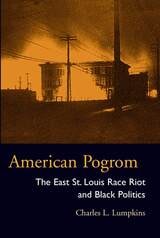
American Pogrom
The East St. Louis Race Riot and Black PoliticsCharles L. Lumpkins
Ohio University Press, 2008
Charles Lumpkins shows that black residents of East St. Louis had engaged in formal politics since the 1870s, exerting influence through the ballot and through patronage in a city dominated by powerful real estate interests even as many African Americans elsewhere experienced setbacks in exercising their political and economic rights.
While Lumpkins asserts that the race riots were a pogrom—an organized massacre of a particular ethnic group—orchestrated by certain businessmen intent on preventing black residents from attaining political power and on turning the city into a “sundown” town permanently cleared of African Americans, he also demonstrates how the African American community survived. He situates the activities of the black citizens of East St. Louis in the context of the larger story of the African American quest for freedom, citizenship, and equality.
American Policy Toward Communist Eastern Europe
The Choices AheadJohn C. Campbell
University of Minnesota Press, 1965
American Policy Toward Communist Eastern Europe was first published in 1965. Minnesota Archive Editions uses digital technology to make long-unavailable books once again accessible, and are published unaltered from the original University of Minnesota Press editions.
Perhaps no aspect of American foreign relations has been in greater need of clarification and understanding than our policy toward the Communist nations of Eastern Europe, both as to what has happened in the past and what is possible for the future. In this book a former State Department Official, now on the staff of the Council on Foreign Relations, provides objective information which will help students, professors, members of adult study groups, and others concerned with American foreign policy to understand and discuss this important subject.
Mr. Campbell reminds us that the cold war began in Eastern Europe in the aftermath of the second World War. Since that time, the question of what to do about Eastern Europe has been in the forefront of American foreign policy. For some years, he contends, we have been uncertain of our objectives and ambivalent in our policies. Meanwhile, changes since the death of Stalin have created new situations both for the Soviet Union and for the West.In analyzing what has happened, the author emphasizes the forces which have shaken the unity of the Soviet bloc to create new perspectives and possibilities. He discusses the effects of the Soviet- Chinese split, the relationship of the German question to that of Eastern Europe, and the phenomenon of national Communism as it has appeared in different forms in Yugoslavia, Poland, Rumania, and elsewhere.After presenting the historical background, the author discusses American aims and current policies and outlines the choices he sees ahead. He does not plead for any one of the alternative lines of action, presenting them, rather, as a basis for reasoned consideration and debate.
American Popular Music
New Approaches to the Twentieth CenturyRachel Rubin
University of Massachusetts Press, 2001
Designed as a broad introductory survey, and written by experts in the field, this book examines the rise of American music over the past hundred years — the period in which that music came into its own and achieved unprecedented popularity. Beginning with a look at music as a business, eleven essays explore a variety of popular musical genres, including Tin Pan Alley, blues, jazz, country, gospel, rhythm and blues, rock and roll, folk, rap, and Mexican American corridos. Reading these essays, we come to see that the forms created by one group often appeal to, and are in turn influenced by, other groups—across lines of race, ethnicity, class, gender, region, and age. The chapters speak to one another, arguing for the primacy of such concepts as minstrelsy, urbanization, hybridity, and crossover as the most powerful tools for understanding American popular music. Moving beyond outdated music-industry categories and misleading genre labels, while acknowledging the complexities of the market, the book recovers and reinforces the essential blackness of much popular music—even a presumably white form like country and western. In addition to Rachel Rubin and Jeffrey Melnick, contributors include Reebee Garofalo, Geoffrey Jacques, Kip Lornell, Mark Anthony Neal, Millie Rahn, David Sanjek, James Smethurst, Elijah Wald, and Gail Hilson Woldu.
American Romanticism and the Marketplace
Michael T. Gilmore
University of Chicago Press, 1985
"[Gilmore] demonstrates the profound, sustained, engagement with society embodied in the works of Emerson, Hawthorne, Thoreau and Melville. In effect, he relocates the American Renaissance where it properly belongs, at the centre of a broad social, economic, and ideological movement from the Jacksonian era to the Civil War. Basically, Gilmore's argument concerns the writers' participation in what Thoreau called 'the curse of trade.' He details their mixed resistance to and complicity in the burgeoning literary marketplace and, by extension, the entire ' economic revolution' which between 1830 and 1860 'transformed the United States into a market society'. . . .
"The result is a model of literary-historical revisionism. Gilmore's opening chapters on Emerson and Thoreau show that 'transcendental' thought and language can come fully alive when understood within the material processes and ideological constraints of their time. . . . The remaining five chapters, on Hawthorne and Melville, contain some of the most penetrating recent commentaries on the aesthetic strategies of American Romantic fiction, presented within and through some of the most astute, thoughtful considerations I know of commodification and the 'democratic public' in mid-nineteenth-century America. . . . Practically and methodologically, American Romanticism and the Marketplace has a significant place in the movement towards a new American literary history. It places Gilmore at the forefront of a new generation of critics who are not just reinterpreting familiar texts or discovering new texts to interpret, but reshaping our ways of thinking about literature and culture."—Sacvan Bercovitch, Times Literary Supplement
"Gilmore writes with energy, clarity, and wit. The reader is enriched by this book." William H. Shurr, American Literature
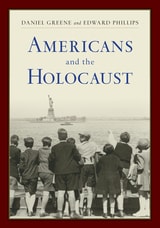
Americans and the Holocaust
A ReaderDaniel Greene
Rutgers University Press, 2021
Americans and the Holocaust explores these enduring questions by gathering together more than one hundred primary sources that reveal how Americans debated their responsibility to respond to Nazism. Drawing on groundbreaking research conducted for the United States Holocaust Memorial Museum’s Americans and the Holocaust exhibition, these carefully chosen sources help readers understand how Americans’ responses to Nazism were shaped by the challenging circumstances in the United States during the 1920s, 1930s, and 1940s, including profound economic crisis, fear of communism, pervasive antisemitism and racism, and widespread isolationism.
Collecting newspaper and magazine articles, popular culture materials, and government records, Americans and the Holocaust is a valuable resource for students and historians seeking to shed light on this dark era in world history.
To explore further, visit the United States Holocaust Memorial Museum's digital exhibit, available here: https://exhibitions.ushmm.org/americans-and-the-holocaust
Published in association with the United States Holocaust Memorial Museum.
Améfrica in Letters
Literary Interventions from Mexico to the Southern ConeJennifer Carolina Gómez Menjívar
Vanderbilt University Press, 2022
An Appeal in Favor of That Class of Americans Called Africans
Revised and Updated EditionLydia Maria Child, Edited with an introduction by Carolyn L. Karcher
University of Massachusetts Press, 2023
Published in Boston in 1833, Lydia Maria Child’s An Appeal in Favor of That Class of Americans Called Africans provided the abolitionist movement with its first full-scale analysis of race and enslavement. Controversial in its own time, the Appeal surveyed the institution of slavery from historical, political, economic, legal, racial, and moral perspectives and advocated for the immediate emancipation of the enslaved without compensation to their enslavers. By placing American slavery in historical context and demonstrating how slavery impacted—and implicated—Americans of all regions and races, the Appeal became a central text for the abolitionist movement that continues to resonate in the present day.
This revised and updated edition is enhanced by Carolyn L. Karcher’s illuminating introduction, a chronology of Child’s life, and a list of books for further reading.
An Aqueous Territory
Sailor Geographies and New Granada's Transimperial Greater Caribbean WorldErnesto Bassi
Duke University Press, 2017

An Environmental History of Knowledge and Politics
Forestry in Nineteenth- and Twentieth-Century HungaryRobert Balogh
Central European University Press, 2026
An Historical Account of the Black Empire of Hayti
Marcus Rainsford
Duke University Press, 2013
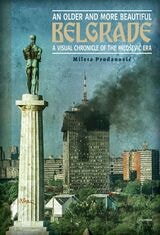
An Older and More Beautiful Belgrade
A Visual Chronicle of the Milo.evic EraMileta Prodanovic
Central European University Press, 2023
This substantial essay depicts urban collapse in an exceptionally difficult period of the Serbian capital. The author has marshalled facts, reflections, photographs and other imagesto demonstrate the transformation of Belgrade during the Milošević years. With the theoretical grounding of cultural anthropology, history studies, culture of memory, history of art, and urbanism, Mileta Prodanović considers changes to the built environment and urban landscape in the city in the 1990s. He covers many visual aspects of life with great ingenuity: shopping centers, unregulated construction and “wild” modifications of buildings, new buildings (broadcasting studios, shops, homes) that do not fit the surroundings, bad taste in home furnishings (camp, kitsch), boondoggles such as the international art center, problematic historical markers like the obelisk of the eternal flame, billboards, store displays, electoral propaganda, graffiti, grave-markers and cemetery memorials, coins and paper money, calendars, beer labels, and even religious icons (and more). All this information is provided with some critique and much implied comparison to past standards.
An Opportunity Lost
The Truman Administration and the Farm Policy DebateVirgil W. Dean
University of Missouri Press, 2006
An Ordinary Life?
The Journeys of Tonia Lechtman, 1918–1996Anna Müller
Ohio University Press, 2024
One woman’s national, political, ethnic, social, and personal identities impart an extraordinary perspective on the histories of Europe, Polish Jews, Communism, activism, and survival during the twentieth century.
Tonia Lechtman was a Jew, a loving mother and wife, a Polish patriot, a committed Communist, and a Holocaust survivor. Throughout her life these identities brought her to multiple countries—Poland, Palestine, Spain, France, Germany, Switzerland, and Israel—during some of the most pivotal and cataclysmic decades of the twentieth century. In most of those places, she lived on the margins of society while working to promote Communism and trying to create a safe space for her small children.
Born in Łódź in 1918, Lechtman became fascinated with Communism in her early youth. In 1935, to avoid the consequences of her political activism during an increasingly antisemitic and hostile political environment, the family moved to Palestine, where Tonia met her future husband, Sioma. In 1937, the couple traveled to Spain to participate in the Spanish Civil War. After discovering she was pregnant, Lechtman relocated to France while Sioma joined the International Brigades. She spent the Second World War in Europe, traveling with two small children between France, Germany, and Switzerland, at times only miraculously avoiding arrest and being transported east to Nazi camps. After the war, she returned to Poland, where she planned to (re)build Communist Poland. However, soon after her arrival she was imprisoned for six years. In 1971, under pressure from her children, Lechtman emigrated from Poland to Israel, where she died in 1996.
In writing Lechtman’s biography, Anna Müller has consulted a rich collection of primary source material, including archival documentation, private documents and photographs, interviews from different periods of Lechtman’s life, and personal correspondence. Despite this intimacy, Müller also acknowledges key historiographical questions arising from the lacunae of lost materials, the selective preservation of others, and her own interpretive work translating a life into a life story.
And Sadly Teach
Teacher Education and Professionalization in American CultureJurgen Herbst
University of Wisconsin Press, 1991
To lend weight to his charge that the public school teacher has been betrayed and gravity to his indictment of the educational establishment for that betrayal, Jurgen Herbst goes back to the beginnings of teacher education in America in the 1830s and traces its evolution up to the 1920s, by which time the essential damage had been done.
Initially, attempts were made to upgrade public school teaching to a genuine profession, but that ideal was gradually abandoned. In its stead, with the advent of newly emerging graduate schools of education in the early decades of the twentieth century, came the so-called professionalization of public education. At the expense of the training of elementary school teachers (mostly women), teacher educators shifted their attention to the turning out of educational "specialists" (mostly men)—administrators, faculty members at normal schools and teachers colleges, adult education teachers, and educational researchers.
Ultimately a history of the neglect of the American public school teacher, And Sadly Teach ends with a plea and a message that ring loud and clear. The plea: that the current reform proposals for American teacher education—the Carnegie and the Holmes reports—be heeded. The message: that the key to successful school reform lies in educating teacher’s true professionals and in acknowledging them as such in their classrooms.
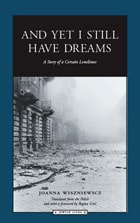
And Yet I Still Have Dreams
A Story of Certain LonelinessJoanna Wiszniewicz
Northwestern University Press, 2004
The book provides a connection to seldom discussed aspects of the Holocaust: the gulf between rich and poor Jews and how this translated into everyday survival; the refusal by Alex to see himself or Jews in general as heroes or victims; his own self-absorption as a teen in the ghetto; and his "priviliged" family's near-indifference to the suffering of those around them. Alex paints a picture of complex and diverse Jewish society in prewar Poland, revealing how, many years later and despite his determine to leave it in the past, the burdens of memory--and the dreams--linger.

And the World Stood Silent
SEPHARDIC POETRY OF THE HOLOCAUSTTranslated and with Commentaries by Isaac Jack Lévy
University of Illinois Press, 1989
And the World Stood Silent gathers the Sephardim's French, Greek, Italian, and Judeo-Spanish poems, accompanied by English translations, about their long journey to the concentration and extermination camps. Isaac Jack Lévy also surveys the 2,000-year history of the Sephardim and discusses their poetry in relation to major religious, historical, and philosophical questions.
Wrenchingly conveying the pathos and suffering of the Jewish community during World War II, And the World Stood Silent is invaluable as a historical account and as a documentary source.
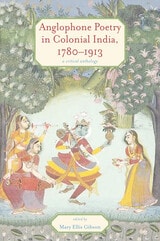
Anglophone Poetry in Colonial India, 1780–1913
A Critical AnthologyMary Ellis Gibson
Ohio University Press, 2011
Anglophone Poetry in Colonial India, 1780–1913: A Critical Anthology makes accessible for the first time the entire range of poems written in English on the subcontinent from their beginnings in 1780 to the watershed moment in 1913 when Rabindranath Tagore won the Nobel Prize in Literature.Mary Ellis Gibson establishes accurate texts for such well-known poets as Toru Dutt and the early nineteenth-century poet Kasiprasad Ghosh. The anthology brings together poets who were in fact colleagues, competitors, and influences on each other. The historical scope of the anthology, beginning with the famous Orientalist Sir William Jones and the anonymous “Anna Maria” and ending with Indian poets publishing in fin-de-siècle London, will enable teachers and students to understand what brought Kipling early fame and why at the same time Tagore’s Gitanjali became a global phenomenon. Anglophone Poetry in Colonial India, 1780–1913 puts all parties to the poetic conversation back together and makes their work accessible to American audiences.With accurate and reliable texts, detailed notes on vocabulary, historical and cultural references, and biographical introductions to more than thirty poets, this collection significantly reshapes the understanding of English language literary culture in India. It allows scholars to experience the diversity of poetic forms created in this period and to understand the complex religious, cultural, political, and gendered divides that shaped them.
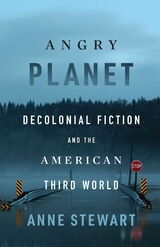
Angry Planet
Decolonial Fiction and the American Third WorldAnne Stewart
University of Minnesota Press, 2022
Before the idea of the Anthropocene, there was the angry planet
How might we understand an earthquake as a complaint, or erosion as a form of protest—in short, the Earth as an angry planet? Many novels from the end of the millennium did just that, centering around an Earth that acts, moves, shapes human affairs, and creates dramatic, nonanthropogenic change.
In Angry Planet, Anne Stewart uses this literature to develop a theoretical framework for reading with and through planetary motion. Typified by authors like Colson Whitehead, Octavia Butler, and Leslie Marmon Silko, whose work anticipates contemporary critical concepts of entanglement, withdrawal, delinking, and resurgence, angry planet fiction coalesced in the 1990s and delineated the contours of a decolonial ontology. Stewart shows how this fiction brought Black and Indigenous thought into conversation, offering a fresh account of globalization in the 1990s from the perspective of the American Third World, construing it as the era that first made connections among environmental crises and antiracist and decolonial struggles.
By synthesizing these major intersections of thought production in the final decades of the twentieth century, Stewart offers a recent history of dissent to the young movements of the twenty-first century. As she reveals, this knowledge is crucial to incipient struggles of our contemporary era, as our political imaginaries grapple with the major challenges of white nationalism and climate change denial.
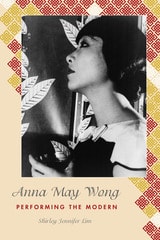
Anna May Wong
Performing the ModernShirley Jennifer Lim
Temple University Press, 2019
Finalist for the 2020 Organization of American Historians Mary Nickliss Prize
Pioneering Chinese American actress Anna May Wong made more than sixty films, headlined theater and vaudeville productions, and even starred in her own television show. Her work helped shape racial modernity as she embodied the dominant image of Chinese and, more generally, “Oriental” women between 1925 and 1940.
In Anna May Wong, Shirley Jennifer Lim re-evaluates Wong’s life and work as a consummate artist by mining an historical archive of her efforts outside of Hollywood cinema. From her pan-European films and her self-made My China Film to her encounters with artists such as Josephine Baker, Carl Van Vechten, and Walter Benjamin, Lim scrutinizes Wong’s cultural production and self-fashioning. Byconsidering the salient moments of Wong’s career and cultural output, Lim’s analysis explores the deeper meanings, and positions the actress as an historical and cultural entrepreneur who rewrote categories of representation.
Anna May Wong provides a new understanding of the actress’s career as an ingenious creative artist.
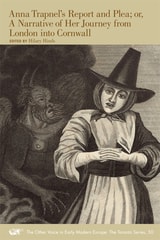
Anna Trapnel’s Report and Plea; or, A Narrative of Her Journey from London into Cornwall
Anna Trapnel
Iter Press, 2016
In 1654, Anna Trapnel — a Baptist, Fifth Monarchist, millenarian, and visionary from London — fell into a trance during which she prophesied passionately and at length against Oliver Cromwell and his government. The prophecies attracted widespread public attention, and resulted in an invitation to travel to Cornwall. Her Report and Plea, republished here for the first time, is a lively and engaging firsthand account of the visit, which concluded in her arrest, a court hearing, and imprisonment. Part memoir, part travelogue, and part impassioned defense of her beliefs and actions, the Report and Plea offers vivid and fascinating insight into the life and times of an early modern woman claiming her place at the center of the tumultuous political events of mid-seventeenth-century England.
Anna's Shtetl
Lawrence A. Coben
University of Alabama Press, 2007
Another Mother
Diotima and the Symbolic Order of Italian FeminismCesare Casarino
University of Minnesota Press, 2018
A groundbreaking volume introduces the unique feminist thought of the longstanding Italian group known as Diotima
Introducing Anglophone readers to a potent strain of Italian feminism known to French, Spanish, and German audiences but as yet unavailable in English, Another Mother argues that the question of the mother is essential to comprehend the matrix of contemporary culture and society and to pursue feminist political projects.
Focusing on Diotima, a community of women philosophers deeply involved in feminist politics since the 1960s, this volume provides a multifaceted panorama of its engagement with currents of thought including structuralism, psychoanalysis, linguistics, and Marxism. Starting from the simple insight that the mother is the one who gives us both life and language, these thinkers develop concepts of the mother and sexual difference in contemporary society that differ in crucial ways from both French and U.S. feminisms.
Arguing that Diotima anticipates many of the themes in contemporary philosophical discourses of biopolitics—exemplified by thinkers such as Giorgio Agamben, Antonio Negri, and Roberto Esposito—Another Mother opens an important space for reflections on the past history of feminism and on feminism’s future.
Contributors: Anne Emmanuelle Berger, Paris 8 U–Vincennes Saint-Denis; Ida Dominijanni; Luisa Muraro; Diana Sartori, U of Verona; Chiara Zamboni, U of Verona.
Anti-Blackness and Human Monstrosity in Black American Horror Fiction
Jerry Rafiki Jenkins
The Ohio State University Press, 2024
Anti-Oedipus
Capitalism and SchizophreniaGilles Deleuze
University of Minnesota Press, 1983
Anti-modernism
Radical Revisions of Collective IdentityAhmet Ersoy
Central European University Press, 2014
Antigone's Ghosts
The Long Legacy of War and Genocide in Five CountriesWolfgram, Mark A
Bucknell University Press, 2019
Published by Bucknell University Press. Distributed worldwide by Rutgers University Press.

Antisatire
In Defense of Women, against Francesco BuoninsegniArcangela Tarabotti
Iter Press, 2020
The Other Voice in Early Modern Women: The Toronto Series volume 70
Antisemitism and the Politics of History
Edited by Scott Ury and Guy Miron
Brandeis University Press, 2023
The book begins with a revised and updated version of David Engel’s seminal essay “Away from a Definition of Antisemitism.” Subsequent contributions by renowned specialists in ancient, medieval, and modern history, religious studies, and other fields explore the various and changing definitions and uses of the term “antisemitism” in a range of contexts, including ancient Rome and Greece, the Byzantine Empire, medieval Europe, early modern and modern Europe, North America, and the United Kingdom. The volume also includes a section that focuses on the Second World War, including the Holocaust and its memory. Engel offers a contemporary response to conclude the book.
First published in Hebrew in 2020 as a special issue of the journal Zion: A Quarterly for Research in Jewish History in cooperation with the Zalman Shazar Center in Jerusalem, this compelling collection has already had an impact on the study of antisemitism in Israel. It is certain to become a critical resource for scholars, policymakers, and journalists researching antisemitism, Holocaust studies, and related fields.
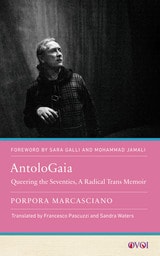
AntoloGaia
Queering the Seventies, A Radical Trans MemoirPorpora Marcasciano
Rutgers University Press, 2024
In this stirring memoir by a member of the first generation of LGBTQ+ activists in Italy, Porpora Marcasciano tells her story and shares the struggles and accomplishments of her fellow activists who achieved so much in the 1970s yet suffered devastating losses during the AIDS epidemic of the 1980s. AntoloGaia offers an insider’s look at the beginnings of the gay liberation movement in Italy and reveals how it was intimately intertwined with other forms of left-wing activism. At the same time, it powerfully conveys the queer joy of a young person from a small village first encountering the vibrant sexual minority communities of Naples, Bologna, and Rome. As Marcasciano starts to embrace her trans identity, she meets the famous anthropologist Pino Simonelli, who introduces her to Naples’s unique femminielli subculture and gives her the name Porporino, which she later shortens to Porpora. In keeping with this story of gender, sexual, and political discovery, AntoloGaia is the first piece of Italian life-writing to use gender-neutral and mixed-gender language.
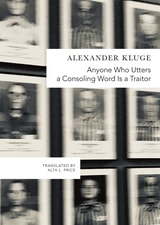
Anyone Who Utters a Consoling Word Is a Traitor
48 Stories for Fritz BauerAlexander Kluge
Seagull Books, 2020
Alexander Kluge’s work has long grappled with the Third Reich and its aftermath, and the extermination of the Jews forms its gravitational center. Kluge is forever reminding us to keep our present catastrophes in perspective—“calibrated”—against this historical monstrosity. Kluge’s newest work is a book about bitter fates, both already known and yet to unfold. Above all, it is about the many kinds of organized machinery built to destroy people. These forty-eight stories of justice and injustice are dedicated to the memory of Fritz Bauer, a determined fighter for justice and district attorney of Hesse during the Auschwitz Trials. “The moment they come into existence, monstrous crimes have a unique ability,” Bauer once said, “to ensure their own repetition.” Kluge takes heed, and in these pages reminds us of the importance of keeping our powers of observation and memory razor sharp.

Apocalypse of Truth
Heideggerian MeditationsJean Vioulac
University of Chicago Press, 2021
In his first book to be translated into English, Vioulac radicalizes Heidegger’s understanding of truth as disclosure through the notion of truth as apocalypse. This “apocalypse of truth” works as an unveiling that reveals both the finitude and mystery of truth, allowing a full confrontation with truth-as-absence. Engaging with Heidegger, Marx, and St. Paul, as well as contemporary figures including Giorgio Agamben, Alain Badiou, and Slavoj Žižek, Vioulac’s book presents a subtle, masterful exposition of his analysis before culminating in a powerful vision of “the abyss of the deity.” Here, Vioulac articulates a portrait of Christianity as a religion of mourning, waiting for a god who has already passed by, a form of ever-present eschatology whose end has always already taken place. With a preface by Jean-Luc Marion, Apocalypse of Truth presents a major contemporary French thinker to English-speaking audiences for the first time.
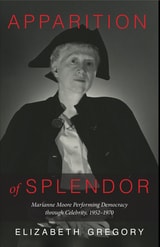
Apparition of Splendor
Marianne Moore Performing Democracy through Celebrity, 1952–1970Elizabeth Gregory
University of Delaware Press, 2021
While the later work of the great Modernist poet Marianne Moore was hugely popular during her final two decades, since her death critics have condemned it as trivial. This book challenges that assessment: with fresh readings of many of the late poems and of the iconic, cross-dressing public persona Moore developed to deliver them, Apparition of Splendor demonstrates that Moore used her late-life celebrity in daring and innovative ways to activate egalitarian principles that had long animated her poetry. Dressed as George Washington in cape and tricorn and writing about accessible topics like sports, TV shows, holidays, love, activism, mortality and celebrity itself, she reached a wide cross-section of Americans, encouraging them to consider what democracy means in their daily lives, particularly around issues of gender, sexuality, racial integration, class, age, and immigration. Moore actively sought out publication in popular venues (like Vogue, The New Yorker, and the Saturday Evening Post, etc.) and wrote on material chosen to directly appeal to the audiences there, influencing younger contemporaries, including poets like Ashbery, O’Hara, and Bishop, and artists like Warhol, Yoko Ono, and Ray Johnson.
Published by the University of Delaware Press. Distributed worldwide by Rutgers University Press.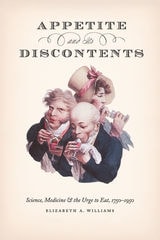
Appetite and Its Discontents
Science, Medicine, and the Urge to Eat, 1750-1950Elizabeth A. Williams
University of Chicago Press, 2020
Williams charts the history of inquiry into appetite between 1750 and 1950, as scientific and medical concepts of appetite shifted alongside developments in physiology, natural history, psychology, and ethology. She shows how, in the eighteenth century, trust in appetite was undermined when researchers who investigated ingestion and digestion began claiming that science alone could say which ways of eating were healthy and which were not. She goes on to trace nineteenth- and twentieth-century conflicts over the nature of appetite between mechanists and vitalists, experimentalists and bedside physicians, and localists and holists, illuminating struggles that have never been resolved. By exploring the core disciplines in investigations in appetite and eating, Williams reframes the way we think about food, nutrition, and the nature of health itself..
Apropos of Something
A History of Irrelevance and RelevanceElisa Tamarkin
University of Chicago Press, 2022
Before 1800 nothing was irrelevant. So argues Elisa Tamarkin’s sweeping meditation on a key shift in consciousness: the arrival of relevance as the means to grasp how something that was once disregarded, unvalued, or lost to us becomes interesting and important. When so much makes claims to our attention every day, how do we decide what is most valuable right now?
Relevance, Tamarkin shows, was an Anglo-American concept, derived from a word meaning “to raise or to lift up again,” and also “to give relief.” It engaged major intellectual figures, including Ralph Waldo Emerson and pragmatists and philosophers—William James, Alain Locke, John Dewey, and Alfred North Whitehead—as well as a range of critics, phenomenologists, linguists, and sociologists. Relevance is a struggle for recognition, especially in the worlds of literature, art, and criticism. Poems and paintings in the nineteenth century could now be seen as pragmatic works that make relevance and make interest—that reveal versions of events that feel apropos of our lives the moment we turn to them.
Vividly illustrated with paintings by Winslow Homer, Henry Ossawa Tanner, and others, Apropos of Something is a searching philosophical and poetic study of relevance—a concept calling for shifts in both attention and perceptions of importance with enormous social stakes. It remains an invitation for the humanities and for all of us who feel tasked every day with finding the point.