Results by title
4917 books match the query 'Philosophy' and 406 start with a
A Theory of Regret
Brian Price
Duke University Press, 2017
A Theory of Religion
Stark, Rodney
Rutgers University Press, 1996
A Thing of This World
A History of Continental Anti-RealismLee Braver
Northwestern University Press, 2007
Using a framework derived from prominent analytic thinkers, Lee Braver traces the roots of anti-realism to Kant's idea that the mind actively organizes experience. He then shows in depth and in detail how this idea evolves through the works of Hegel, Nietzsche, Heidegger, Foucault, and Derrida. This narrative presents an illuminating account of the
history of continental philosophy by explaining how these thinkers build on each other's attempts to develop new concepts of reality and truth in the wake of the rejection of realism. Braver demonstrates that the analytic and continental traditions have been discussing the same issues, albeit with different vocabularies, interests, and approaches.
By developing a commensurate vocabulary, his book promotes a dialogue between the two branches of philosophy in which each can begin to learn from the other.
A Third Window
Natural Life beyond Newton and DarwinRobert W. Ulanowicz
Templeton Press, 2009
Thus far, the dominant paradigms through which modern scientists have viewed nature have been structured primarily around Newtonian and Darwinian approaches. As theoretical ecologist Robert E. Ulanowicz observes in his new work, A Third Window, neither of these models is sufficient for explaining how real change—in the form of creative advance or emergence—takes place in nature.
Drawing on the writings of Walter Elsasser, Karl Popper, Gregory Bateson, Robert Rosen, and Alfred North Whitehead, as well as his own experience as a theoretical ecologist, Ulanowicz offers a new set of axioms for how nature behaves. Chance and disarray in natural processes are shown to be necessary conditions for real change. Randomness is shown to contribute richness and autonomy to the natural world.
A Thomistic Introduction to Modern Psychology
Leslie Kelley
Catholic University of America Press, 2026
A Thousand Plateaus
Capitalism and SchizophreniaGilles Deleuze
University of Minnesota Press, 1987
A Time for Wisdom
Knowledge, Detachment, Tranquility, TranscendencePaul T. McLaughlin
Templeton Press, 2022
These are volatile times. Fear, suspicion, and cynicism are chronic. A mere tweet inflames the passions of millions while click-bait “hot takes” stoke the amygdalas of everyone with an Internet connection. We treat those not in our tribe as a threat and deem anyone with a different opinion as evil. Mistaking myopia for measure, we lack all sense of proportion in our judgments. We are shortsighted, mired in the present, ignorant of history, and blind to the future. We thought that technology would save us by connecting us to each other and the world’s information. Instead, it enticed our vices, encouraged our biases, and eroded the one virtue we need now more than ever: wisdom.
A Time for Wisdom is for readers who feel beleaguered by the incivility of the modern world, dispirited by its coarse rhetoric and toxic partisanship. It is an invitation to escape the shallow cacophony and restore peace and perspective to our daily lives. Written by two psychologists, the book takes the best scientific research on wisdom and integrates it with timeless concepts that have, for ages, guided troubled souls through life’s hardships. From this foundation, the authors present four steps we can follow to practice wisdom in the 21st Century:
- Receiving knowledge.
- Practicing detachment.
- Experiencing tranquility.
- Cultivating transcendence.
These are profound and spiritual principles that can bring us immense satisfaction when we aspire to live by them.
In A Time for Wisdom, the authors show us how. They commend a course of action towards the Good, the True, and the Beautiful, towards calm and clear moral reasoning. They lead us out of the circus of contemporary life and show us a path beyond our petty self-centeredness. By journeying along that path, we can, like the great sages and scientists before us, rise above the immediacy of the moment and partake of the numinous and the infinite.
A Translation of Lao-tzu’s Tao Te Ching and Wang Pi’s Commentary
Translated by Paul J. Lin
University of Michigan Press, 1977
A Universal Theory of Pottery Production
Irving Rouse, Attributes, Modes, and EthnographyRichard A. Krause
University of Alabama Press, 2016
Krause posits that the careful study of an archaeological site’s ceramics can be used to formulate a step-and-stage theory of pottery production for the area. Krause’s work suggests that by comparing the results of inquiries conducted at different sites and for different times, archaeologists may be able to create a general ethnographic theory of pottery production.
Krause demonstrates this process through a comprehensive analysis of potsherds from the highly stratified Puerto Rican site of Paso del Indio. He first provides a comprehensive explanation of the archaeological concepts of attribute, mode, feature, association, site, analysis, and classification. Using these seven concepts, he categorizes the production and decorative techniques in the Paso del Indio site. Krause then applies the concept of “focal form vessels” to the site’s largest fragments to test his step-and-stage theory of production against the evidence they provide. Finally, he assigns the ceramics at Paso del Indio to previously discussed potting traditions.
Unlike other books on the subject that use statistical methods to frame basic archaeological concepts, Krause approaches these topics from the perspective of epistemology and the explicatory practices of empirical science. In A Universal Theory of Pottery Production Krause offers much of interest to North American, Caribbean, and South American archaeologists interested in the manufacture, decoration, and classification of prehistoric pottery, as well as for archaeologists interested in archaeological theory.
A Violent Embrace
Art and Aesthetics after Representationrenée c. hoogland
Dartmouth College Press, 2014
A Watershed Moment
The American West in the Age of LimitsEdited by Robert Frodeman, Evelyn Brister, and Luther Propst
University of Utah Press, 2024
The volume presents practical approaches to land use, land management, and community planning that are motivated by philosophical views on justice, quality of life, and sustainability in the American West. The contributors are policymakers, government employees, land and water managers, urban planners, biologists, tribal members, writers, and academics from a variety of backgrounds and perspectives. The result is a compelling vision of place-based, policy-oriented sustainability across the West.
A William Ernest Hocking Reader
with CommentaryJohn Lachs
Vanderbilt University Press, 2004
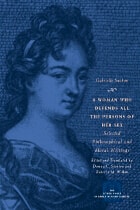
A Woman Who Defends All the Persons of Her Sex
Selected Philosophical and Moral WritingsGabrielle Suchon
University of Chicago Press, 2010
During the oppressive reign of Louis XIV, Gabrielle Suchon (1632–1703) was the most forceful female voice in France, advocating women’s freedom and self-determination, access to knowledge, and assertion of authority. This volume collects Suchon’s writing from two works—Treatise on Ethics and Politics (1693) and On the Celibate Life Freely Chosen; or, Life without Commitments (1700)—and demonstrates her to be an original philosophical and moral thinker and writer.
Suchon argues that both women and men have inherently similar intellectual, corporeal, and spiritual capacities, which entitle them equally to essentially human prerogatives, and she displays her breadth of knowledge as she harnesses evidence from biblical, classical, patristic, and contemporary secular sources to bolster her claim. Forgotten over the centuries, these writings have been gaining increasing attention from feminist historians, students of philosophy, and scholars of seventeenth-century French literature and culture. This translation, from Domna C. Stanton and Rebecca M. Wilkin, marks the first time these works will appear in English.
A World of Becoming
William E. Connolly
Duke University Press, 2010
Attunement to a world of becoming, Connolly argues, may help us address dangerous resonances between global finance capital, cross-regional religious resentments, neoconservative ideology, and the 24-hour mass media. Coming to terms with subliminal changes in the contemporary experience of time that challenge traditional images can help us grasp how these movements have arisen and perhaps even inspire creative counter-movements. The book closes with the chapter “The Theorist and the Seer,” in which Connolly draws insights from early Greek ideas of the Seer and a Jerry Lewis film, The Nutty Professor, to inform the theory enterprise today.
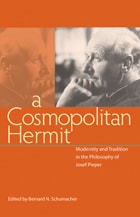
A cosmopolitan hermit
modernity and tradition in the philosophy of Josef PieperBernard N Schumacher
Catholic University of America Press, 2009
ABC of Impossibility
Simon Critchley
University of Minnesota Press, 2015
How does one write an experimental ABC, an impossible theory that would deal with a series of phenomena, concepts, places, sensations, persons, and moods? A para-philosophy? Returning to a once-abandoned project of fragmented thoughts where the author’s voice moves from the serious to the pathetic, to the absurd, to the cynical, Simon Critchley’s ABC of Impossibility finds new life in the form of this small encyclopedic and aphoristic text where the reader bears witness to the slow emergence of an attempt at a poetic ontology. ABC of Impossibility is a unique undertaking that reexamines the poetic site of the fragment as thought. Following a heritage of fragmented, aphoristic thinkers including Pascal, Nietzsche, Kierkegaard, and Pessoa, Critchley revitalizes a para-philosophical thinking that can only be uttered by way of another. As he declares in the opening pages, “In writing this, I promise to tell the truth, but not to be myself.”
AIDS
Crisis in Professional Ethicsedited by Elliot D. Cohen and Michael Davis
Temple University Press, 1994
Do patients have the right to know their physician's HIV status?
Can a dentist refuse treatment to an HIV-positive patient?
How do educators determine whether to allow an HIV-positive child to attend school, and if they do, should the parents of other children be informed?
Should a counselor break confidentiality by disclosing to a wife that her husband is infected with HIV?
This collection of original essays carefully examines the difficult moral choices the AIDS pandemic has presented for many professionals—physicians, nurses, dentists, teachers and school administrators, business managers, psychotherapists, lawyers, clergy, journalists, and politicians. In the workplace, problems posed by HIV and AIDS have led to a reexamination of traditional codes of ethics. Providing systematic and reasoned discussions, the authors explore the moral, legal, and ethical issues involved in the reconsideration of policies, standards of conduct, and the practicality of balancing personal and professional ethics.
Contributors: Albert Flores, Joan C. Callahan, Jill Powell, Kenneth Kipnis, Al Gini, Howard Cohen, Martin Gunderson, Joseph A. Edelheit, Michael Pritchard, Vincent J. Samar, Sohair ElBaz, William Pardue, and the editors.
Aazheyaadizi
Worldview, Language, and the Logics of DecolonizationMark D. Freeland
Michigan State University Press, 2020
Abductive Analysis
Theorizing Qualitative ResearchIddo Tavory and Stefan Timmermans
University of Chicago Press, 2014
Abductive Reasoning
Douglas Walton
University of Alabama Press, 2005
Examines three areas in which abductive reasoning is especially important: medicine, science, and law. The reader is introduced to abduction and shown how it has evolved historically into the framework of conventional wisdom in logic. Discussions draw upon recent techniques used in artificial intelligence, particularly in the areas of multi-agent systems and plan recognition, to develop a dialogue model of explanation. Cases of causal explanations in law are analyzed using abductive reasoning, and all the components are finally brought together to build a new account of abductive reasoning.
By clarifying the notion of abduction as a common and significant type of reasoning in everyday argumentation, Abductive Reasoning will be useful to scholars and students in many fields, including argumentation, computing and artificial intelligence, psychology and cognitive science, law, philosophy, linguistics, and speech communication and rhetoric.
Abel Ferrara
Nicole Brenez. Translated from the French by Adrian Martin
University of Illinois Press, 2006
Nicole Brenez argues for Abel Ferrara’s place in a line of grand inventors who have blurred distinctions between industry and avant-garde film, including Orson Welles, Monte Hellman, and Nicholas Ray. Rather than merely reworking genre film, Brenez understands Ferrara’s oeuvre as formulating new archetypes that depict the evil of the modern world. Focusing as much on the human figure as on elements of storytelling, she argues that films such as Bad Lieutenant express this evil through visionary characters struggling against the inadmissible (inadmissible behavior, morality, images, and narratives).
Abiding Grace
Time, Modernity, DeathMark C. Taylor
University of Chicago Press, 2018
Abiding Grace navigates the competing Hegelian and Kierkegaardian trajectories born out of the Reformation and finds Taylor arguing from spaces in between, showing how both narratives have shaped recent philosophy and culture. For Hegel, Luther’s internalization of faith anticipated the modern principle of autonomy, which reached its fullest expression in speculative philosophy. The closure of the Hegelian system still endures in the twenty-first century in consumer society, financial capitalism, and virtual culture. For Kierkegaard, by contrast, Luther’s God remains radically transcendent, while finite human beings and their world remain fully dependent. From this insight, Heidegger and Derrida developed an alternative view of time in which a radically open future breaks into the present to transform the past, demonstrating that, far from autonomous, life is a gift from an Other that can never be known.
Offering an alternative genealogy of deconstruction that traces its pedigree back to readings of Paul by way of Luther, Abiding Grace presents a thoroughgoing critique of modernity and postmodernity’s will to power and mastery. In this new philosophical and theological vision, history is not over and the future remains endlessly open.
Abiding by Sri Lanka
On Peace, Place, and PostcolonialityQadri Ismail
University of Minnesota Press, 2005
Abiding by Sri Lanka examines how the disciplines of anthropology, history, and literature treat the Sri Lankan ethnic conflict. Anthropology, Ismail contends, approaches Sri Lanka as an object from an “outside” and western point of view. History, addressing the conflict from the “inside,” abides by the place and so promotes change that is nationalist and exclusive. Neither of these fields imagines an inclusive community. Literature, Ismail argues, can.
With close readings of texts that “abide” by Sri Lanka, texts that have a commitment to it, Ismail demonstrates that the problems in Sri Lanka raise fundamental concerns for us all regarding the relationship between democracies and minorities. Recognizing the structural as well as political tendencies of representative democracies to suppress minorities, Ismail rethinks democracy by redefining the concept of the minority perspective, not as a subject-position of numerical insignificance, but as a conceptual space that opens up the possibility for distinction without domination and, ultimately, peace.
Qadri Ismail is associate professor of English at the University of Minnesota. He has also been a journalist in Sri Lanka.
Abject Animals
Discomfort in Human–Animal CompanionshipJulien Dugnoille
Michigan State University Press, 2027
Abject Animals: Discomfort in Human–Animal Companionship explores the emotional contradictions and ethical tensions at the heart of human–animal relationships through a cross-cultural, multispecies ethnography of cats and dogs in the UK, France, and South Korea. Framing cats and dogs as “abject animals,” Julien Dugnoille examines how the treatment of animals can generate discomfort—emotional, moral, and bodily—through their commodification in cafés, markets, shelters, and homes. Drawing on Kristeva’s theory of abjection alongside the ideas of Bataille, Blanchot, and Weil, the book interrogates the commodified intimacy of contemporary human–animal companionship, revealing how labor, cuteness, and care mask underlying hierarchies and exploitation. Through richly detailed fieldwork and autoethnographic reflection, it critiques normative ideas of “healthy” companionship, arguing instead for forms of interspecies attunement that embrace discomfort and resist instrumentalization. Abject Animals is both a theoretical intervention and a call for more ethical, ego-disrupting relationships with the nonhuman.
Abolition Archives, Feminist Futures
Kathi Weeks
Duke University Press, 2026
Abortion Rights as Religious Freedom
Peter S. Wenz
Temple University Press, 1992

About Religion
Economies of Faith in Virtual CultureMark C. Taylor
University of Chicago Press, 1999
Traveling from high culture to pop culture and back again, About Religion approaches cyberspace and Las Vegas through Hegel and Kant and reads Melville's The Confidence-Man through the film Wall Street. As astonishing juxtapositions and associations proliferate, formerly uncharted territories of virtual culture disclose theological vestiges, showing that faith in contemporary culture is as unavoidable as it is elusive.
The most accessible presentation of Taylor's revolutionary ideas to date, About Religion gives us a dazzling and disturbing vision of life at the end of the old and beginning of the new millennium.
About the Beginning of the Hermeneutics of the Self
Lectures at Dartmouth College, 1980Michel Foucault
University of Chicago Press, 2015
Foucault analyzes the practices of self-examination and confession in Greco-Roman antiquity and in the first centuries of Christianity in order to highlight a radical transformation from the ancient Delphic principle of “know thyself” to the monastic precept of “confess all of your thoughts to your spiritual guide.” His aim in doing so is to retrace the genealogy of the modern subject, which is inextricably tied to the emergence of the “hermeneutics of the self”—the necessity to explore one’s own thoughts and feelings and to confess them to a spiritual director—in early Christianity. According to Foucault, since some features of this Christian hermeneutics of the subject still determine our contemporary “gnoseologic” self, then the genealogy of the modern subject is both an ethical and a political enterprise, aiming to show that the “self” is nothing but the historical correlate of a series of technologies built into our history. Thus, from Foucault’s perspective, our main problem today is not to discover what “the self” is, but to try to analyze and change these technologies in order to change its form.
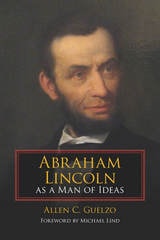
Abraham Lincoln as a Man of Ideas
Allen C. Guelzo, with a Foreword by Michael Lind
Southern Illinois University Press, 2009
Despite the most meager of formal educations, Lincoln had a tremendous intellectual curiosity that drove him into the circle of Enlightenment philosophy and democratic political ideology. And from these, Lincoln developed a set of political convictions that guided him throughout his life and his presidency. This compilation of ten essays from Lincoln scholar Allen C. Guelzo uncovers the hidden sources of Lincoln’s ideas and examines the beliefs that directed his career and brought an end to slavery and the Civil War.
Abraham Lincoln, Philosopher Statesman
Joseph R. Fornieri
Southern Illinois University Press, 2014
2015 ISHS Superior Achievement Award
What constitutes Lincoln’s political greatness as a statesman? As a great leader, he saved the Union, presided over the end of slavery, and helped to pave the way for an interracial democracy. His great speeches provide enduring wisdom about human equality, democracy, free labor, and free society. Joseph R. Fornieri contends that Lincoln’s political genius is best understood in terms of a philosophical statesmanship that united greatness of thought and action, one that combined theory and practice. This philosophical statesmanship, Fornieri argues, can best be understood in terms of six dimensions of political leadership: wisdom, prudence, duty, magnanimity, rhetoric, and patriotism. Drawing on insights from history, politics, and philosophy, Fornieri tackles the question of how Lincoln’s statesmanship displayed each of these crucial elements.
Providing an accessible framework for understanding Lincoln’s statesmanship, this thoughtful study examines the sixteenth president’s political leadership in terms of the traditional moral vision of statecraft as understood by epic political philosophers such as Aristotle and St. Thomas Aquinas. Fornieri contends that Lincoln’s character is best understood in terms of Aquinas’s understanding of magnanimity or greatness of soul, the crowning virtue of statesmanship. True political greatness, as embodied by Lincoln, involves both humility and sacrificial service for the common good. The enduring wisdom and timeless teachings of these great thinkers, Fornieri shows, can lead to a deeper appreciation of statesmanship and of its embodiment in Abraham Lincoln.
With the great philosophers and books of western civilization as his guide, Fornieri demonstrates the important contribution of normative political philosophy to an understanding of our sixteenth president. Informed by political theory that draws on the classics in revealing the timelessness of Lincoln’s example, his interdisciplinary study offers profound insights for anyone interested in the nature of leadership, statesmanship, political philosophy, political ethics, political history, and constitutional law.
Absence And Light
Meditations From The Klamath MarshesJohn R. Campbell
University of Nevada Press, 2002
Abysmal
A Critique of Cartographic ReasonGunnar Olsson
University of Chicago Press, 2007
People rely on reason to think about and navigate the abstract world of human relations in much the same way they rely on maps to study and traverse the physical world. Starting from that simple observation, renowned geographer Gunnar Olsson offers in Abysmal an astonishingly erudite critique of the way human thought and action have become deeply immersed in the rhetoric of cartography and how this cartographic reasoning allows the powerful to map out other people’s lives.
A spectacular reading of Western philosophy, religion, and mythology that draws on early maps and atlases, Plato, Kant, and Wittgenstein, Thomas Pynchon, Gilgamesh, and Marcel Duchamp, Abysmal is itself a minimalist guide to the terrain of Western culture. Olsson roams widely but always returns to the problems inherent in reason, to question the outdated assumptions and fixed ideas that thinking cartographically entails. A work of ambition, scope, and sharp wit, Abysmal will appeal to an eclectic audience—to geographers and cartographers, but also to anyone interested in the history of ideas, culture, and art.
Access to Origins
Affines, Ancestors, and AristocratsBy Mary W. Helms
University of Texas Press, 1998
In many non-industrial, non-Western societies, power and prestige are closely linked to the extent of an individual's or group's perceived connection to the supernatural realm, which also explains and validates tangible activities such as economic success, victories in war, or control over lucrative trade. Affines (in-laws), ancestors, and aristocrats, in particular, are connected to the realm of creative cosmological origins (i.e., to Genesis), which accords them distinctive, supernatural powers and gives them a natural and legitimate right to worldly authority.
This is the hypothesis that Mary W. Helms pursues in this broadly cross-cultural study of aristocracy in chiefly societies. She begins with basic ideas about the dead, ancestors, affines, and concepts of cosmological origins. This leads her to a discussion of cosmologically defined hierarchies, the qualities that characterize aristocracy, and the political and ideological roles of aristocrats as wife-givers and wife-takers (that is, as in-laws). She concludes by considering various models that explain how societies may develop or define aristocracies.
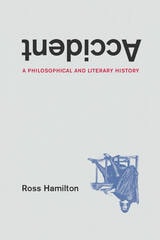
Accident
A Philosophical and Literary HistoryRoss Hamilton
University of Chicago Press, 2008
An accidental glance at a newspaper notice causes Rousseau to collapse under the force of a vision. A car accidentally hits Giacometti, and he experiences an epiphany. Darwin introduces accident to the basic process of life, and Freud looks to accident as the expression of unconscious desire. Accident, Ross Hamilton claims, is the force that makes us modern. Tracing the story of accident from Aristotle to Buster Keaton and beyond, Hamilton’s daring book revives the tradition of the grand history of ideas.
Accident tells an original history of Western thought from the perspective of Aristotle’s remarkably durable categories of accident and substance. Throughout antiquity and the Middle Ages, Aristotle’s distinction underwrote an insistence on order and subordination of the inessential. In a groundbreaking innovation, Hamilton argues that after the Reformation, the concept of accident began to change places with that of substance: accident became a life-transforming event and effectively a person’s essence. For moderns, it is the accidental, seemingly trivial moments of consciousness that, like Wordsworth’s “spots of time,” create constellations of meaning in our lives. Touching on a broad array of images and texts—Augustine, Dante, the frescoes of Raphael, Descartes, Jane Austen, the work of the surrealists, and twentieth-century cinema—Hamilton provides a new way to map the mutations of personal identity and subjectivity.
Acquaintance, Knowledge, and Logic
New Essays on Bertrand Russell's "The Problems of Philosophy"Edited and with an Introduction by Donovan Wishon and Bernard Linsky
CSLI, 2015
Acquisitions
Core Concepts and PracticesJesse Holden
American Library Association, 2016
Acres Of Diamonds
Russell Conwell
Temple University Press, 2002

Across the Great Border Fault
The Naturalist Myth in AmericaDann, Kevin
Rutgers University Press, 2000
In recent years scholars have begun to question the cultural values underlying our view of Nature. Kevin Dann contributes to this debate by juxtaposing two radically different “Arcadian” experiments founded by Manhattanites seeking cultural renewal through contact with the natural world.
Dann focuses first on initiatives carried out by the American Museum of Natural History and the Eugenics Record Office from 1910 to 1940 within Harriman State Park in the Ramapo Mountains. He argues that these diverse expressions of the early “back-to-nature” movement are united by their biological materialism, or “Naturalism,” which became integral to the popular culture of educated metropolitan Americans in the early twentieth century.
He then compares this activity to the contemporary efforts at nearby Threefold Farm, where anthroposophists--followers of Rudolf Steiner's“spiritual science”--developed a program of natural scientific research and education that directly opposed Darwinian explanations of natural history, social Darwinian views of human society, and reductionist scientific methods. By challenging scientific “fact” with spiritual scientific descriptions of supersensible phenomena, the Threefold Farm initiative offered Americans a new gospel of nature.
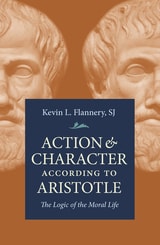
Action and Character According to Aristotle
Kevin L. Flannery, SJ
Catholic University of America Press, 2013
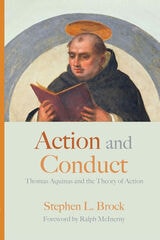
Action and Conduct
Thomas Aquinas and the Theory of ActionStephen Brock
Catholic University of America Press, 2021
"A first-rate book...Brock's lucid and illuminating analysis offers much of value to both intellectual historians and theologians, as well as philosophers."—Theological Studies"Brock's treatment of Aquinas's account of action exhibits a rare combination of rigor and learning. It is, no doubt, the best we have."—The Thomist

Action at a Distance
John Durham Peters
University of Minnesota Press, 2020
How are human actions shaped by the materiality of media?
Contemporary media leads us more than ever to an ‘acting at a distance,’ an acting entangled with the materiality of communication and the mediality of transmission. This book explores this crucial phenomenon thereby introducing urgent questions of human interaction, the binding and breaking of time and space, and the entanglement of the material and the immaterial.
Three vivid inquiries deal with histories and theories of mediality and materiality: John Durham Peters looks at episodes of simultaneity and synchronization. Christina Vagt discusses the agency of computer models against the backdrop of aesthetic theories by Henri Bergson and Hans Blumenberg, and Florian Sprenger discusses early electrical transmissions through copper wire and the temporality of instantaneity.
Action versus Contemplation
Why an Ancient Debate Still MattersJennifer Summit and Blakey Vermeule
University of Chicago Press, 2018
It is truly an ancient debate: Is it better to be active or contemplative? To do or to think? To make an impact, or to understand the world more deeply? Aristotle argued for contemplation as the highest state of human flourishing. But it was through action that his student Alexander the Great conquered the known world. Which should we aim at? Centuries later, this argument underlies a surprising number of the questions we face in contemporary life. Should students study the humanities, or train for a job? Should adults work for money or for meaning? And in tumultuous times, should any of us sit on the sidelines, pondering great books, or throw ourselves into protests and petition drives?
With Action versus Contemplation, Jennifer Summit and Blakey Vermeule address the question in a refreshingly unexpected way: by refusing to take sides. Rather, they argue for a rethinking of the very opposition. The active and the contemplative can—and should—be vibrantly alive in each of us, fused rather than sundered. Writing in a personable, accessible style, Summit and Vermeule guide readers through the long history of this debate from Plato to Pixar, drawing compelling connections to the questions and problems of today. Rather than playing one against the other, they argue, we can discover how the two can nourish, invigorate, and give meaning to each other, as they have for the many writers, artists, and thinkers, past and present, whose examples give the book its rich, lively texture of interplay and reference.
This is not a self-help book. It won’t give you instructions on how to live your life. Instead, it will do something better: it will remind you of the richness of a life that embraces action and contemplation, company and solitude, living in the moment and planning for the future. Which is better? Readers of this book will discover the answer: both.
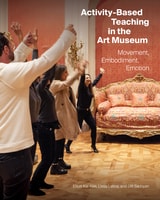
Activity-Based Teaching in the Art Museum
Movement, Embodiment, EmotionElliott Kai-Kee
J. Paul Getty Trust, The, 2020
An essential resource for museum professionals, teachers, and students, the award winning Teaching in the Art Museum (Getty Publications, 2011) set a new standard in the field of gallery education. This follow-up book blends theory and practice to help educators—from teachers and docents to curators and parents—create meaningful interpretive activities for children and adults.
Written by a team of veteran museum educators, Activity-Based Teaching in the Art Museum offers diverse perspectives on embodiment, emotions, empathy, and mindfulness to inspire imaginative, spontaneous interactions that are firmly grounded in history and theory. The authors begin by surveying the emergence of activity-based teaching in the 1960s and 1970s and move on to articulate a theory of play as the cornerstone of their innovative methodology. The volume is replete with sidebars describing activities facilitated with museum visitors of all ages.
Table of Contents
Introduction
Part I History
1 The Modern History of Presence and Meaning
A philosophical shift from a language-based understanding of the world to direct, physical interaction with it.
2 A New Age in Museum Education: The 1960s and 1970s
A brief history of some of the innovative museum education programs developed in the United States in the late 1960s and 1970s. The sudden and widespread adoption of nondiscursive gallery activities during this period, especially but not exclusively in programs designed for younger students and school groups, expressed the spirit of the times.
Part II Theory
3 Starts and Stops
Two attempts by American museum educators to articulate a theory for their new, nondiscursive programs: the first deriving from the early work of Project Zero, the Harvard Graduate School of Education program founded by the philosopher Nelson Goodman to study arts learning as a cognitive activity; the second stemming from the work of Viola Spolin, the acclaimed theater educator and coach whose teaching methods, embodied in a series of “theater games,” were detailed in her well-known book Improvisation for the Theater (1963).
4 A Theory of Play in the Museum
A theory of play that posits activities in the museum as forms of play that take place in spaces (or “playgrounds”) temporarily designated as such by educators and their adult visitors or students. Play is defined essentially as movement—both physical and imaginary (metaphorical)—toward and away from, around, and inside and outside the works of art that are foregrounded within those spaces. Gallery activities conceived in this way respond to the possibilities that the objects themselves offer for the visitor to explore and engage with them. The particular movements characterizing an activity are crucially conditioned by the object in question; they constitute a process of discovery and learning conceptually distinct from, but supportive of, traditional dialogue-based modes of museum education, which they supplement rather than supplant.
Part III Aspects of Play
5 Embodiment, Affordances
The idea of embodiment adopted here recognizes that both mind and body are joined in their interactions with things. Investigating works of art thus involves apprehending them physically as well as intellectually—in the sense of responding to the ways in which a particular work allows and even solicits the viewer’s physical grasp of it.
6 Skills
Ways in which objects present themselves to us, as viewers, and what we might do in response as they fit with the bodily skills we have developed over the course of our lives. Such skills might be as simple as getting dressed, washing, or eating; or as specialized as doing one’s hair, dancing, playing an instrument, or acting—all of which may allow us to “grasp” and even feel that we inhabit particular works of art.
7 Movement
Embodied looking is always looking from somewhere. We apprehend objects as we physically move around and in front of them; they reveal themselves differently as we approach them from different viewpoints. Viewers orient themselves spatially to both the surfaces of objects and to the things and spaces depicte4d in or suggested by representational works of art. Activity-based teaching gets visitors and students to move among the objects—away from them, close to them, and even into them.
8 The Senses
Both adult visitors and younger students come to the museum expecting to use their eyes, yet “visual” art appeals to several of the senses at once, though rarely to the same degree. Sculpture, for example, almost always appeals to touch (whether or not that is actually possible or allowed) as well as sight. A painting depicting a scene in which people appear to be talking may induce viewers to not only look but also “listen” to what the figures might be saying.
9 Drawing in the Museum
Looking at art with a pencil in hand amplifies viewers’ ability to imaginatively touch and feel their way across and around an artwork. Contour drawing by its nature requires participants to imagine that they are touching the contours of an object beneath the tips of their pencils. Other types of drawing allow viewers to feel their way around objects through observation and movement.
10 Emotion
Visitors’ emotional responses to art represent a complex process with many components, from physiological to cognitive, and a particular work of art may elicit a wide range of emotional reactions. This chapter describes specific ways in which museum educators can go well beyond merely asking visitors how a work of art makes them feel.
11 Empathy and Intersubjectivity
One aspect of viewers’ emotional responses to art that is often taken for granted, if not neglected altogether: the empathetic connections that human beings make to images of other people. This chapter advocates an approach that prompts viewers to physically engage with the representations of people they see.
12 Mindful Looking
Mindfulness involves awareness and attention, both as a conscious practice and as an attitude that gallery teachers can encourage in museum visitors. This is not solely a matter of cultivating the mind, however; it is also a matter of cultivating the body, since mindfulness is only possible when mind and body are in a state of harmonious, relaxed attentiveness. Mindfulness practice in the art museum actively directs the viewer’s focus on the object itself and insists on returning to it over and over; yet it also balances activity with conscious stillness.
Afterword
Acknowledgments
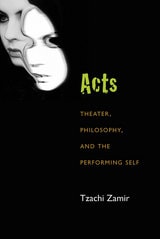
Acts
Theater, Philosophy, and the Performing SelfTzachi Zamir
University of Michigan Press, 2014
Why do people act? Why are other people drawn to watch them? How is acting as a performing art related to role-playing outside the theater? As the first philosophical study devoted to acting, Acts: Theater, Philosophy, and the Performing Selfsheds light on some of the more evasive aspects of the acting experience— such as the import of the actor's voice, the ethical unease sometimes felt while embodying particular sequences, and the meaning of inspiration. Tzachi Zamir explores acting’s relationship to everyday role-playing through a surprising range of examples of “lived acting,” including pornography, masochism, and eating disorders. By unearthing the deeper mobilizing structures that underlie dissimilar forms of staged and non-staged role-playing, Acts offers a multi-layered meditation on the percolation from acting to life.
The book engages questions of theatrical inspiration, the actor’s “energy,” the difference between acting and pretending, the special role of repetition as part of live acting, the audience and its attraction to acting, and the unique significance of the actor’s voice. It examines the embodied nature of the actor’s animation of a fiction, the breakdown of the distinction between what one acts and who one is, and the transition from what one performs into who one is, creating an interdisciplinary meditation on the relationship between life and acting.
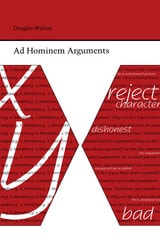
Ad Hominem Arguments
Douglas Walton
University of Alabama Press, 2009
A vital contribution to legal theory and media and civic discourse
In the 1860s, northern newspapers attacked Abraham Lincoln's policies by attacking his character, using the terms "drunk," "baboon," "too slow," "foolish," and "dishonest." Steadily on the increase in political argumentation since then, the argumentum ad hominem, or personal attack argument, has now been carefully refined as an instrument of "oppo tactics" and "going negative" by the public relations experts who craft political campaigns at the national level. In this definitive treatment of one of the most important concepts in argumentation theory and informal logic, Douglas Walton presents a normative framework for identifying and evaluating ad hominem or personal attack arguments.
Personal attack arguments have often proved to be so effective, in election campaigns, for example, that even while condemning them, politicians have not stopped using them. In the media, in the courtroom, and in everyday confrontation, ad hominem arguments are easy to put forward as accusations, are difficult to refute, and often have an extremely powerful effect on persuading an audience.
Walton gives a clear method for analyzing and evaluating cases of ad hominem arguments found in everyday argumentation. His analysis classifies the ad hominem argument into five clearly defined subtypes—abusive (direct), circumstantial, bias, "poisoning the well," and tu quoque ("you're just as bad") arguments—and gives methods for evaluating each type. Each subtype is given a well-defined form as a recognizable type of argument. The numerous case studies show in concrete terms many practical aspects of how to use textual evidence to identify and analyze fallacies and to evaluate argumentation as fallacious or not in particular cases.
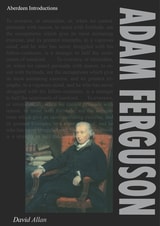
Adam Ferguson
David Allan
Aberdeen University Press, 2007
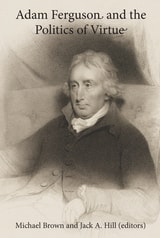
Adam Ferguson and the Politics of Virtue
Jack A. Hill and Michael Brown
Aberdeen University Press, 2023
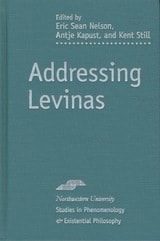
Addressing Levinas
Eric Sean Nelson
Northwestern University Press, 2005
In their radical singularity, these essays reveal the inalienable alterity at the heart of Levinas's ethics. At the same time, each essay remains open to the others, and to the perspectives and positions they advocate. Thus the volume, in its quality and diversity, enacts an authentic encounter with Levinas's thought, embodying an intellectual ethics by virtue of its style. Bringing together contributions from philosophy, theology, literary theory, gender studies, and political theory, this book offers a deeper and more thorough encounter with Levinas's ethics than any yet written.

Adorno and Ethics, Volume 33
Christina Gerhardt , ed.
Duke University Press, 0
Adorno and Ethics—the first issue of New German Critique to be published by Duke University Press—takes issue with Adorno’s critics. These essays reconsider Adorno’s unique brand of aestheticism, revealing a “politics of aestheticism” and exploring the political and ethical dimensions of his writings. One contributor links the ethical turn taken in Adorno criticism with related developments in American poetry and poetics. Another examines Adorno’s aphorism “Gold Assay” for the ways in which it anticipates one of his seminal works, The Jargon of Authenticity. Focusing on Auschwitz and the testimony of its survivors, one contributor explores the impact of the Holocaust on modern philosophy and reason, a relationship that he argues Adorno never specified. Another contributor considers the figure of the animal in the writings of Kant, Adorno, and Lévinas, exploring what it might mean to live, as Adorno suggests, as “a good animal.”
Contributors. J. M. Bernstein, Detlev Claussen, Samir Gandesha, Alexander García Düttmann, Christina Gerhardt, Martin Jay, Robert Kaufman, Michael Marder, Gerhard Richter
Adorno and Music
Critical VariationsPeter E. Gordon and Alexander Rehding, special issue editors
Duke University Press, 0
Contributors
Daniel K. L. Chua, Lydia Goehr, Peter E. Gordon, Martin Jay, Brian Kane, Max Paddison, Alexander Rehding, Fred Rush, Martin Scherzinger