Results by title
4743 books match the query 'Religion' and 371 start with a
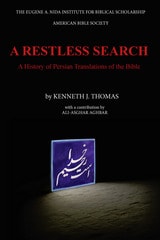
A Restless Search
A History of Persian Translations of the BibleKenneth J. Thomas
SBL Press, 2015
A literary detective story, a historical survey, and an important contribution to translation studies
This book from Kenneth J. Thomas is both a philological and linguistic analysis of Persian translations and a call for interfaith cooperation. Thomas appraises biblical translation efforts from the fifth to the twenty-first centuries of Persian history when successive translators and groups of translators, sometimes of different faiths, worked to reshape and refine versions of the Bible in the supple Persian language of their times. Restless, impelled, and wide-ranging, this is a story of translations commissioned by shahs, undertaken by Christian and Jewish communities, and produced by teams working outside the country.
Features
- Demonstration of the effects of the lack of a standard Persian vocabulary for key biblical terms on literary style and word choice
- Technical analyses and overviews of Persian biblical translations
- A careful examination of sixteen centuries' worth of Bible translations
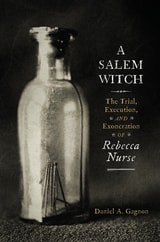
A Salem Witch
The Trial, Execution, and Exoneration of Rebecca NurseDaniel A. Gagnon
Westholme Publishing, 2023
The accusations against Nurse, a well-respected member in the community, seemed unbelievable. Unflinchingly, this ailing elderly woman insisted on her innocence and refused to falsely confess. Supported by many in Salem, Nurse’s family and neighbors challenged her accusers in court and prepared a thorough defense for her, yet nothing could surmount the fear of witchcraft, and she was sentenced to death. Nurse, seen as a martyr for the truth, later became the first person accused of witchcraft to be memorialized in North America.
In A Salem Witch: The Trial, Execution, and Exoneration of Rebecca Nurse, the first full account of Nurse’s life, Daniel A. Gagnon vividly recreates seventeenth-century Salem, and in the process challenges previous interpretations of Nurse’s life and the 1692 witch hunt in general. Through primary source research, he reveals how the Nurse family’s role in several disputes prior to the witch hunt was different than previously thought, as well as how Nurse’s case helps answer the important question of whether the accusations of witchcraft were caused by mental illness or malicious intent. A Salem Witch reveals a remarkable woman whose legacy has transformed how the witch hunt has been remembered and memorialized.
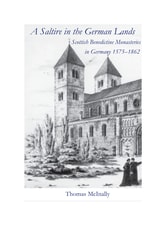
A Saltire in the German Lands
Scottish Benedictine Monasteries in Germany 1575-1862Thomas McInally
Aberdeen University Press, 2017
A Service Beyond All Recompense
Kurt Martens
Catholic University of America Press, 2018
A Service of Love
Paul McPartlan
Catholic University of America Press, 2013
A Service of Love
Paul McPartlan
Catholic University of America Press, 2016
A Shared Future
Faith-Based Organizing for Racial Equity and Ethical DemocracyRichard L. Wood and Brad R. Fulton
University of Chicago Press, 2015
In A Shared Future, Richard L. Wood and Brad R. Fulton draw on a new national study of community organizing coalitions and in-depth interviews of key leaders in this field to show how faith-based organizing is creatively navigating the competing aspirations of America’s universalist and multiculturalist democratic ideals, even as it confronts three demons bedeviling American politics: economic inequality, federal policy paralysis, and racial inequity. With a broad view of the entire field and a distinct empirical focus on the PICO National Network, Wood and Fulton’s analysis illuminates the tensions, struggles, and deep rewards that come with pursuing racial equity within a social change organization and in society. Ultimately, A Shared Future offers a vision for how we might build a future that embodies the ethical democracy of the best American dreams.
An interview of the authors on the subject of faith leaders organizing for justice (Peace Talks Radio, copyright Good Radio Shows, Inc.) can be heard at this link: https://beta.prx.org/stories/190030
A Shi'ite Pilgrimage to Mecca, 1885-1886
The Safarnâmeh of Mirzâ Mo?ammad ?osayn FarâhâniBy Mirzâ Farâhâni
University of Texas Press, 1990
Western accounts of the Hajj, the ritual Muslim pilgrimage to Mecca, are rare, since access to Mecca is forbidden to non-Muslims. In the Muslim world, however, pilgrimage literature is a well-established genre, dating back to the earliest centuries of the Islamic era. A Shiʿite Pilgrimage to Mecca is taken from the original nineteenth-century Persian manuscript of the Safarnâmeh of Mirzâ Moḥammad Ḥosayn Farâhâni, a well-educated, keenly observant, Iranian Shiʿite gentleman.
This memoir holds a wealth of social and economic information about Czarist Russia, the Ottoman Empire, Egypt, Northern Iran, and Arabia. The author is a meticulous observer, recording details of distances, currencies, accommodations, modes of travel, and so on. He records the experiences encountered by pilgrims of his day: physical hardships, disease, generosity and compassion, banditry, hospitality, comradeship, and exaltation. And, without prejudice, he discusses the tensions between the Shiʿites and the Sunnites in the holy places—tensions that still exist and have erupted in bloody clashes during recent pilgrimages.
A Shiʿite Pilgrimage to Mecca will appeal to a wide audience of general readers, Middle Eastern scholars, anthropologists, and historians.
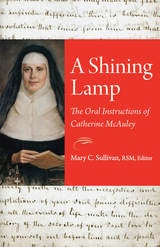
A Shining Lamp
Mary C. Sullivan
Catholic University of America Press, 2017
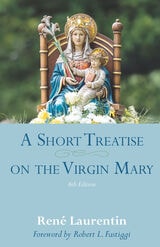
A Short Treatise on the Virgin Mary
Rene Laurentin
Catholic University of America Press, 2022
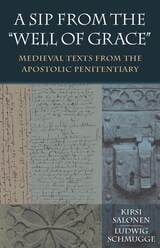
A Sip from the "Well of Grace"
Medieval Texts from the Apostolic PenitentiaryKirsi Salonen
Catholic University of America Press, 2009
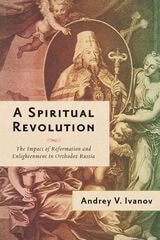
A Spiritual Revolution
The Impact of Reformation and Enlightenment in Orthodox Russia, 1700–1825Andrey V. Ivanov
University of Wisconsin Press, 2023
Embedded with lively portrayals of historical actors and vivid descriptions of political details, A Spiritual Revolution is the first large-scale effort to fully identify exactly how Western progressive thought influenced the Russian Church. These new ideas played a foundational role in the emergence of the country as a modernizing empire and the rise of the Church hierarchy as a forward-looking agency of institutional and societal change. Ivanov addresses this important debate in the scholarship on European history, firmly placing Orthodoxy within the much wider European and global continuum of religious change.
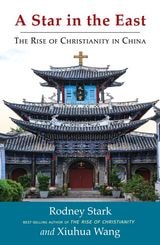
A Star in the East
The Rise of Christianity in ChinaRodney Stark
Templeton Press, 2015
What is the state of Christianity in China? Some scholars say that China is invulnerable to religion. In contrast, others say that past efforts of missionaries have failed, writing off those converted as nothing more than “rice Christians” or cynical souls who had frequented the missions for the benefits they provided. Some wonder if the Cultural Revolution extinguished any chances of Christianity in China.
Rodney Stark and Xiuhua Wang offer a different perspective, arguing that Christianity is alive, well, and on the rise. Stark approaches the topic from an extensive research background in Christianity and Chinese history, and Wang provides an inside look at Christianity and its place in her home country of China. Both authors cover the history of religion in China, disproving older theories concerning the number of Christians and the kinds of Christians that have emerged in the past 155 years. Stark and Wang claim that when just considering the visible Christians—those not part of underground churches—thousands of Chinese are still converted to Christianity daily, and forty new churches are opening each week.
A Star in the East draws on two major national surveys to sketch a close-up of religion in China. A reliable estimate is that by 2007 there were approximately 60 million Christians in China. If the current growth rate were to hold until 2030, there would be more Christians in China—about 295 million—than in any other nation. This trend has significant implications, not just for China but for the greater world order. It is probable that Chinese Christianity will splinter into denominations, likely leading to the same political, social, and economic ramifications seen in the West today.
Whether you’re new to studying Christianity in China or whether this has been your area of interest for years, A Star in the East provides a reliable, thought-provoking, and engaging account of the resilience of the Christian faith in China and the implications it has for the future.
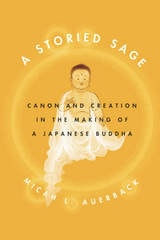
A Storied Sage
Canon and Creation in the Making of a Japanese BuddhaMicah L. Auerback
University of Chicago Press, 2016
Micah L. Auerback follows the changing fortune of the Buddha through the novel uses for the Buddha’s story in high and low culture alike, often outside of the confines of the Buddhist establishment. Auerback argues for the Buddha’s continuing relevance during Japan’s early modern period and links the later Buddhist tradition in Japan to its roots on the Asian continent. Additionally, he examines the afterlife of the Buddha in hagiographic literature, demonstrating that the late Japanese Buddha, far from fading into a ghost of his former self, instead underwent an important reincarnation. Challenging many established assumptions about Buddhism and its evolution in Japan, A Storied Sage is a vital contribution to the larger discussion of religion and secularization in modernity.
A Symphony of Distances
Patristic, Modern, and Gendered Dimensions of Balthasar's Trinitarian TheologyChristopher M. Hadley, SJ
Catholic University of America Press, 2022
A Theology of Sense
John Updike, Embodiment, and Late Twentieth-Century American LiteratureScott Dill
The Ohio State University Press, 2018
A Theology of the Christian Bible
Revelation - Inspiration - CanonDenis Farkasfalvy
Catholic University of America Press, 2018
A Theory of Religion
Stark, Rodney
Rutgers University Press, 1996
A Third Window
Natural Life beyond Newton and DarwinRobert W. Ulanowicz
Templeton Press, 2009
Thus far, the dominant paradigms through which modern scientists have viewed nature have been structured primarily around Newtonian and Darwinian approaches. As theoretical ecologist Robert E. Ulanowicz observes in his new work, A Third Window, neither of these models is sufficient for explaining how real change—in the form of creative advance or emergence—takes place in nature.
Drawing on the writings of Walter Elsasser, Karl Popper, Gregory Bateson, Robert Rosen, and Alfred North Whitehead, as well as his own experience as a theoretical ecologist, Ulanowicz offers a new set of axioms for how nature behaves. Chance and disarray in natural processes are shown to be necessary conditions for real change. Randomness is shown to contribute richness and autonomy to the natural world.
A Thomistic Christocentrism
Recovering the Carmelites of Salamanca on the Logic of the IncarnationDylan Schrader
Catholic University of America Press, 2021
A Thomistic Introduction to Modern Psychology
Leslie Kelley
Catholic University of America Press, 2026
A Torah Commentary for Our Times
Volume 2: Exodus and LeviticusRabbi Harvey J. Fields
Central Conference of American Rabbis, 1991
A helpful approach to the weekly parashah, juxtaposing the insights of ancient, medieval, and modern commentators (including the author). Perfect for both beginning Torah students and scholars seeking new angles on the text. The volumes are available individually or as a three-volume set, ideal for a bar or bat mitzvah or confirmation gift.
A Torah Commentary for Our Times
Volume 3: Numbers and DeuteronomyRabbi Harvey J. Fields
Central Conference of American Rabbis, 1993
A helpful approach to the weekly parashah, juxtaposing the insights of ancient, medieval, and modern commentators (including the author). Perfect for both beginning Torah students and scholars seeking new angles on the text. The volumes are available individually or as a three-volume set, ideal for a bar or bat mitzvah or confirmation gift.
A Torah Commentary for Our Times
Volume I: GenesisRabbi Harvey J. Fields
Central Conference of American Rabbis, 1990
A helpful approach to the weekly parashah, juxtaposing the insights of ancient, medieval, and modern commentators (including the author). Perfect for both beginning Torah students and scholars seeking new angles on the text. The volumes are available individually or as a three-volume set, ideal for a bar or bat mitzvah or confirmation gift.
A Treasure to be Shared
Understanding <i>Anglicanorum coetibus</i>Walter Oxley
Catholic University of America Press, 2022
A Trinitarian Anthropology
Adrienne von Speyr & Hans Urs von Balthasar in Dialogue with Thomas AquinasMichele M. Schumacher
Catholic University of America Press, 2014
A User's Guide to the Nestle-Aland 28 Greek New Testament
David Trobisch
SBL Press, 2013
A Very Queer Family Indeed
Sex, Religion, and the Bensons in Victorian BritainSimon Goldhill
University of Chicago Press, 2016
So begins A Very Queer Family Indeed, which introduces us to the extraordinary Benson family. Edward White Benson became Archbishop of Canterbury at the height of Queen Victoria’s reign, while his wife, Mary, was renowned for her wit and charm—the prime minister once wondered whether she was “the cleverest woman in England or in Europe.” The couple’s six precocious children included E. F. Benson, celebrated creator of the Mapp and Lucia novels, and Margaret Benson, the first published female Egyptologist.
What interests Simon Goldhill most, however, is what went on behind the scenes, which was even more unusual than anyone could imagine. Inveterate writers, the Benson family spun out novels, essays, and thousands of letters that open stunning new perspectives—including what it might mean for an adult to kiss and propose marriage to a twelve-year-old girl, how religion in a family could support or destroy relationships, or how the death of a child could be celebrated. No other family has left such detailed records about their most intimate moments, and in these remarkable accounts, we see how family life and a family’s understanding of itself took shape during a time when psychoanalysis, scientific and historical challenges to religion, and new ways of thinking about society were developing. This is the story of the Bensons, but it is also more than that—it is the story of how society transitioned from the high Victorian period into modernity.
A View from Life's Edge
Discovering What Really Matters with Older Women Across the GlobeCorinne G. Dempsey
Rutgers University Press, 2026
Speaking with nearly one hundred women over the age of eighty in four locations—northern Iceland, south India, a retirement community in California, and a convent in upstate New York—Corinne G. Dempsey finds that, as we near life’s end, we gain clarity about what really matters in life. Women’s stories and reflections, in which sorrow and loss are central to a life well lived, help to expand our sense of what it means to be human.
Drawing on the paradoxical wisdom of world religions and mystical traditions to frame late-life tendencies across cultures, Dempsey portrays these accounts as a corrective to mainstream values that defeat and diminish us. Dempsey encourages us to turn away from ageist fears rather than denying life’s inevitable end. Learning from older women’s perspectives, we might move their edge-of-life views closer to the center.
A Walking Disaster
What Surviving Katrina and Cancer Taught Me about Faith and ResilienceJamie Aten
Templeton Press, 2020
Is there a meaning to our suffering? Is hope realistic when tragedy befalls us? Is a return to normalcy possible after our life is uprooted by catastrophe? These are the questions that disaster psychologist Dr. Jamie Aten wrestled with when he was diagnosed with Stage IV colon cancer. In this gripping memoir, Aten shares the life-affirming and faith-renewing insights that he discovered during his tumultuous struggle against the disease.
Aten’s journey began in 2005 when Hurricane Katrina struck his community. After witnessing the devastation wrought by the storm, he dedicated his career to investigating how people respond to and recover from all manner of disasters. He studied disaster zones around the globe and founded the Humanitarian Disaster Institute at Wheaton College. His expertise, however, was little comfort when a fateful visit with his oncologist revealed advanced and aggressive cancer. “You’re in for your own personal disaster” was his doctor’s prognosis.
Thrust into a battle for his life, with cancer cells and chemotherapy ravaging his body, Aten found his professional interest taking on new meaning. His ordeal taught him firsthand how we can sustain ourselves when burdened with seemingly unbearable suffering. Some of his counterintuitive insights include: to find hope, be cautious of optimism; when you want help the least is when you need it most; and spiritual surrender, rather than a passive act, is instead an act of profound courage.
This last point speaks to the element of grace in Dr. Aten’s story. As he struggled to understand the significance of his suffering, he found himself examining his Christian faith down to its bedrock and learned to experience the redeeming presence of God in his life. Dr. Aten has a natural exuberance that shines through his writing. Infused with his compassionate voice and humanitarian concern,
A Walking Disaster is ultimately an inspirational story about the power of the human spirit to endure trauma with courage.

A Witness to the Silent Church
Memoirs of Ukrainian Cardinal Josyf SlipyjJosef Slipyj
Catholic University of America Press, 2025
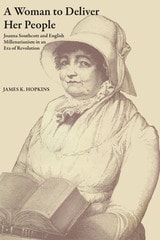
A Woman to Deliver Her People
Joanna Southcott and English Millenarianism in an Era of RevolutionBy James K. Hopkins
University of Texas Press, 1982
The Second Coming of Christ has been prophesied many times through the centuries but seldom by a figure so fascinating as Joanna Southcott (1750–1814), the domestic servant who at the age of forty-two declared that God had chosen her to announce His return. A Woman to Deliver Her People is the most comprehensive study of this remarkable woman and her movement yet written.
Dramatic social and political changes of the late eighteenth century—among them the revolutions in America and France—had a profound effect on the attitudes of English men and women at all levels of society. With events so far outside the range of ordinary experience, both the educated and the uneducated turned to the prophetic books of the Bible, seeking solace and explanation. A number of prophets and prophetesses appeared, claiming to have a special understanding of the biblical texts and offering startling new revelations which had been disclosed to them by God. The greatest and most influential of these was Joanna Southcott, who attracted tens of thousands of followers from the West Country, London, the Midlands, and the industrial North. Her "spiritual communications" filled some sixty-five books and pamphlets from 1801 until her death.
Most contemporary observers dismissed Southcott as a fanatic, and she was frequently the subject of caricature and ridicule. James Hopkins attempts to remedy this distortion by examining Southcott's life and the millenarian movement she led within the context of the social, political, and economic crises of the period. By tracing the psychological and popular roots of Southcott's piety, and casting her appeal against the backdrop of a revolutionary age, Hopkins not only vividly portrays the life of this fascinating woman but also offers a new perspective on the mentality of ordinary English men and women during the years of their transformation into a working class.
A Word in Season
Isaiah's Reception in the Book of MormonJoseph M. Spencer
University of Illinois Press, 2023
The Book of Mormon’s narrative privileges Isaiah over other sources, provocatively interpreting and at times inventively reworking the biblical text. Joseph M. Spencer sees within the Book of Mormon a programmatic investigation regarding the meaning and relevance of the Book of Isaiah in a world increasingly removed from the context of the times that produced it. Working from the crossroads of reception studies and Mormon studies, Spencer investigates and clarifies the Book of Mormon’s questions about the vitality of Isaiah’s prophetic project. Spencer’s analysis focuses on the Book of Mormon’s three interactions with the prophet: the character of Abinadi; the resurrected Jesus Christ; and the nation-founding figure of Nephi. Working from the Book of Mormon as it was dictated, Spencer details its vital and overlooked place in Isaiah’s reception while recognizing the interpretation of Isaiah as an organizing force behind the Book of Mormon.
A World On Fire
Sharing the Ignatian Spiritual Exercises with Other ReligionsErin M. Cline
Catholic University of America Press, 2018
Erin Cline examines why this ought to be done, for whom, and what the aims of such an adaptation would be, including the different theological justifications for this practice. She concludes that there are compelling reasons for sharing the Exercises with members of other religions and that doing so coheres with the central mission of the Jesuits. A World on Fire goes on to examine the question of how the Exercises can be faithfully adapted for members of other religions. In outlining adaptations for the Hindu, Buddhist, and Confucian traditions that draw upon the traditional content of the Exercises supplemented by the texts of these religious traditions, Cline shows how Ignatian spirituality can help point the way to a different kind of inter-religious dialogue – one that is not bound up in technical terminology or confined to conversations between theologians and religious leaders. Rather, in making the Spriitual Exercises accessible to members of other faith traditions, we are as Pope Francis puts it, “living on a frontier, one in which the Gospel meets the needs of the people to whom it should be proclaimed in an understandable and meaningful way.”
A World on Fire will be of interest to comparative theologians and scholars working on inter-religious dialogue, religious pluralism, contemplative studies, and spirituality, as well as Jesuit priests and other practitioners who employ the Spiritual Exercises in their ministry.
A Year in White
Cultural Newcomers to Lukumi and Santería in the United StatesCarr, C. Lynn
Rutgers University Press, 2016
In her intimate investigation of the “year in white,” Carr draws on fifty-two in-depth interviews with other participants, an online survey of nearly two hundred others, and almost a decade of her own ethnographic fieldwork, gathering stories that allow us to see how cultural newcomers and natives thought, felt, and acted with regard to their initiation. She documents how, during the iyawo year, the ritual slowly transforms the initiate’s identity. For the first three months, for instance, the iyawo may not use a mirror, even to shave, and must eat all meals while seated on a mat on the floor using only a spoon and their own set of dishes. During the entire year, the iyawo loses their name and is simply addressed as “iyawo” by family and friends.
Carr also shows that this year-long religious ritual—which is carried out even as the iyawo goes about daily life—offers new insight into religion in general, suggesting that the sacred is not separable from the profane and indeed that religion shares an ongoing dynamic relationship with the realities of everyday life. Religious expression happens at home, on the streets, at work and school.
Offering insight not only into Santería but also into religion more generally, A Year in White makes an important contribution to our understanding of complex, dynamic religious landscapes in multicultural, pluralist societies and how they inhabit our daily lives.
Abiding Grace
Time, Modernity, DeathMark C. Taylor
University of Chicago Press, 2018
Abiding Grace navigates the competing Hegelian and Kierkegaardian trajectories born out of the Reformation and finds Taylor arguing from spaces in between, showing how both narratives have shaped recent philosophy and culture. For Hegel, Luther’s internalization of faith anticipated the modern principle of autonomy, which reached its fullest expression in speculative philosophy. The closure of the Hegelian system still endures in the twenty-first century in consumer society, financial capitalism, and virtual culture. For Kierkegaard, by contrast, Luther’s God remains radically transcendent, while finite human beings and their world remain fully dependent. From this insight, Heidegger and Derrida developed an alternative view of time in which a radically open future breaks into the present to transform the past, demonstrating that, far from autonomous, life is a gift from an Other that can never be known.
Offering an alternative genealogy of deconstruction that traces its pedigree back to readings of Paul by way of Luther, Abiding Grace presents a thoroughgoing critique of modernity and postmodernity’s will to power and mastery. In this new philosophical and theological vision, history is not over and the future remains endlessly open.
Abiding Words
The Use of Scripture in the Gospel of JohnAlicia D. Myers
SBL Press, 2015
A collection of essays by experts from around the world
Like the other New Testament Gospels, the Gospel of John repeatedly appeals to Scripture (Old Testament). Preferring allusions and “echoes” alongside more explicit quotations, however, the Gospel of John weaves Scripture as an authoritative source concerning its story of Jesus. Yet, this is the same Gospel that is often regarded as antagonistic toward “the Jews,” especially the Jewish religious leaders, depicted within it.
Features:
- Introduces and updates readers on the question of John’s employment of Scripture
- Showcases useful approaches to more general studies on the New Testament’s use of Scripture, sociological and rhetorical analyses, and memory theory
- Explores the possible implications surrounding Scripture usage for the Gospel audiences both ancient and contemporary
Abortion and Unborn Human Life, Second Edition
Patrick Lee
Catholic University of America Press, 2010

About Religion
Economies of Faith in Virtual CultureMark C. Taylor
University of Chicago Press, 1999
Traveling from high culture to pop culture and back again, About Religion approaches cyberspace and Las Vegas through Hegel and Kant and reads Melville's The Confidence-Man through the film Wall Street. As astonishing juxtapositions and associations proliferate, formerly uncharted territories of virtual culture disclose theological vestiges, showing that faith in contemporary culture is as unavoidable as it is elusive.
The most accessible presentation of Taylor's revolutionary ideas to date, About Religion gives us a dazzling and disturbing vision of life at the end of the old and beginning of the new millennium.
About the Beginning of the Hermeneutics of the Self
Lectures at Dartmouth College, 1980Michel Foucault
University of Chicago Press, 2015
Foucault analyzes the practices of self-examination and confession in Greco-Roman antiquity and in the first centuries of Christianity in order to highlight a radical transformation from the ancient Delphic principle of “know thyself” to the monastic precept of “confess all of your thoughts to your spiritual guide.” His aim in doing so is to retrace the genealogy of the modern subject, which is inextricably tied to the emergence of the “hermeneutics of the self”—the necessity to explore one’s own thoughts and feelings and to confess them to a spiritual director—in early Christianity. According to Foucault, since some features of this Christian hermeneutics of the subject still determine our contemporary “gnoseologic” self, then the genealogy of the modern subject is both an ethical and a political enterprise, aiming to show that the “self” is nothing but the historical correlate of a series of technologies built into our history. Thus, from Foucault’s perspective, our main problem today is not to discover what “the self” is, but to try to analyze and change these technologies in order to change its form.
Above All, We Are Jews
A Biography of Rabbi Alexander SchindlerMichael A. Meyer
Central Conference of American Rabbis, 2025
Above the Fray
The Red Cross and the Making of the Humanitarian NGO SectorShai M. Dromi
University of Chicago Press, 2020
Drawing on archival research, Dromi traces the genesis of the Red Cross to a Calvinist movement working in mid-nineteenth-century Geneva. He shows how global humanitarian policies emerged from the Red Cross founding members’ faith that an international volunteer program not beholden to the state was the only ethical way to provide relief to victims of armed conflict. By illustrating how Calvinism shaped the humanitarian field, Dromi argues for the key role belief systems play in establishing social fields and institutions. Ultimately, Dromi shows the immeasurable social good that NGOs have achieved, but also points to their limitations and suggests that alternative models of humanitarian relief need to be considered.
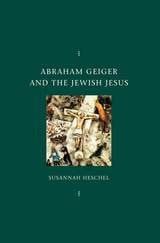
Abraham Geiger and the Jewish Jesus
Susannah Heschel
University of Chicago Press, 1998
Geiger, a pioneer of Reform Judaism and a founder of Jewish studies, developed a Jewish version of Christian origins. He contended that Jesus was a member of the Pharisees, a progressive and liberalizing group within first-century Judaism, and that he taught nothing new or original. This argument enraged German Protestant theologians, some of whom produced a tragic counterargument based on racial theory.
In this fascinating book, Susannah Heschel traces the genesis of Geiger's argument and examines the reaction to it within Christian theology. She concludes that Geiger initiated an intellectual revolt by the colonized against the colonizer, an attempt not to assimilate into Christianity by adopting Jesus as a Jew, but to overthrow Christian intellectual hegemony by claiming that Christianity—and all of Western civilization—was the product of Judaism.
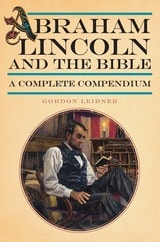
Abraham Lincoln and the Bible
A Complete CompendiumGordon Leidner
Southern Illinois University Press, 2023
How did Abraham Lincoln’s lifelong study of scripture influence him as a man and, ultimately, as president? Historian Gordon Leidner believes the impact was profound—more than previously recognized—and has investigated all the known writings of Abraham Lincoln to identify, catalog, and study every instance in which Lincoln quoted from or alluded to the Bible. Rather than dwelling on the never-ending debate about Lincoln’s religious beliefs, Leidner shows how scripture affected Lincoln personally, professionally, and politically.
Leidner offers first a short biography that focuses on Lincoln’s use of the Bible, how it shaped him as a person, how its influence changed over time, and how biblical quotations peppered his letters, speeches, and conversations. The book concludes with an unparalleled appendix that tabulates nearly 200 instances of Lincoln’s quoting from or alluding to scripture, giving locators for the Bible and Roy P. Basler’s nine volume Collected Works of Abraham Lincoln and quotations from both sources. The appendix also includes when and where Lincoln used each quote, providing valuable context, whether the use was in personal letters such as one to Queen Victoria after the death of Prince Albert, political speeches such as the Gettysburg Address, or state addresses such as the Second Inaugural Address.
By showcasing Lincoln’s specific biblical references and influences, Leidner reframes the question of Lincoln’s religious beliefs so that readers may evaluate for themselves what solace and guidance the Bible afforded the sixteenth president.
Abridgment of The Religion of the Future
Roberto Mangabeira Unger
Bridwell Press, 2014
Roberto Mangabeira Unger's The Religion of the Future is a secular project for spiritual and political revolution. It offers a comprehensive vision of humanity and a program for the refashioning of self and society that will enable each man and woman to live a greater life. Unger exhorts us to embrace the life we have now by recognizing what makes us human rather than attempt to suppress or overcome — as do existing religions — our existential and spiritual limitations. His program involves both political measures to reform the structure of society and a moral component to engage an individual's conduct of life. Unger's vision of the religion of the future offers us more life here and now so that we can become more human by becoming more godlike. This abridgment represents an edited rendition of the original that, although reduced in size, is complete in argument. It contains an extensive introduction to the argument and the author.
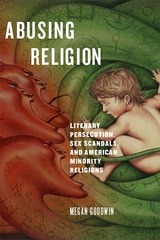
Abusing Religion
Literary Persecution, Sex Scandals, and American Minority ReligionsMegan Goodwin
Rutgers University Press, 2020
Accidental Pluralism
America and the Religious Politics of English Expansion, 1497-1662Evan Haefeli
University of Chicago Press, 2021
Account of the Fables and Rites of the Incas
By Cristóbal de Molina
University of Texas Press, 2011
Only a few decades after the Spanish conquest of Peru, the third Bishop of Cuzco, Sebastián de Lartaún, called for a report on the religious practices of the Incas. The report was prepared by Cristóbal de Molina, a priest of the Hospital for the Natives of Our Lady of Succor in Cuzco and Preacher General of the city. Molina was an outstanding Quechua speaker, and his advanced language skills allowed him to interview the older indigenous men of Cuzco who were among the last surviving eyewitnesses of the rituals conducted at the height of Inca rule. Thus, Molina's account preserves a crucial first-hand record of Inca religious beliefs and practices.
This volume is the first English translation of Molina's Relación de las fábulas y ritos de los incas since 1873 and includes the first authoritative scholarly commentary and notes. The work opens with several Inca creation myths and descriptions of the major gods and shrines (huacas). Molina then discusses the most important rituals that occurred in Cuzco during each month of the year, as well as rituals that were not tied to the ceremonial calendar, such as birth rituals, female initiation rites, and marriages. Molina also describes the Capacocha ritual, in which all the shrines of the empire were offered sacrifices, as well as the Taqui Ongoy, a millennial movement that spread across the Andes during the late 1560s in response to growing Spanish domination and accelerated violence against the so-called idolatrous religions of the Andean peoples.
Accounting for Fundamentalisms
The Dynamic Character of MovementsEdited by Martin E. Marty and R. Scott Appleby
University of Chicago Press, 1994
Acting Jewish
Negotiating Ethnicity on the American Stage and ScreenHenry Bial
University of Michigan Press, 2005
Acting Jewish documents this history, looking at the work of Jewish writers, directors, and actors in the American entertainment industry with particular attention to the ways in which these artists offer behavioral models for Jewish-American audiences. The book spans the period from 1947 to the present and takes a close look at some of America's favorite plays (Death of a Salesman, Fiddler on the Roof, Angels in America), films (Gentleman's Agreement, AnnieHall), and television shows (The Goldbergs, Seinfeld), identifying a double-coding by which performers enact, and spectators read, Jewishness in contemporary performance-and, by extension, enact and read other minority identities. The book thus explores and illuminates the ever-changing relationship between Jews and mainstream American culture.
"Fascinating and original . . . Bial's command of sources is impressive, and his concept of 'double-coding' is convincing . . . the book should have no trouble finding a large audience."
-Barbara Grossman, author of Funny Woman: The Life and Times of Fanny Brice