Results by title
1861 books match the query 'Social life and customs' and 173 start with a
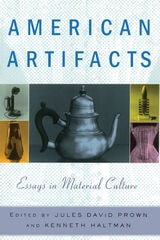
American Artifacts
Essays in Material CultureJules David Prown
Michigan State University Press, 2000
When defining culture, one must indeed take into account even the minutest of details. What of a lighter, for example, or a telephone? The essays in this new collection examine just that. The contributors pose not only a historical, pragmatic use for the items, but also delve into more imaginative aspects of what defines us as Americans. Both the lighter and the telephone are investigated, as well as how the lava lamp represents sixties counterculture and containment. The late nineteenth-century corset is discussed as an embodiment of womanhood, and an Amish quilt is used as an illustration of cultural continuity. These are just a few of the artifacts discussed. Scholars will be intrigued by the historical interpretations that contributors proposed concerning a teapot, card table, and locket; students will not only find merit in the expositions, but also by learning from the models how such interpretation can be carried out. This collection helps us understand that very thing that makes us who we are. Viewing these objects from both our past and our present, we can begin to define what it is to be American.
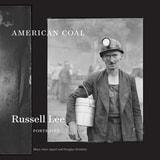
American Coal
Russell Lee PortraitsMary Jane Appel and Douglas Brinkley
University of Texas Press, 2024
More than 100 powerful images by noted photographer Russell Lee that document the working conditions and lives of coal mining communities in the postwar United States; publication coincides with an exhibition at the National Archives in Washington, DC.
In 1946 the Truman administration made a promise to striking coal miners: as part of a deal to resume work, the government would sponsor a nationwide survey of health and labor conditions in mining camps. One instrumental member of the survey team was photographer Russell Lee. Lee had made his name during the Depression, when, alongside Dorothea Lange and Walker Evans, he used his camera to document agrarian life for the Farm Security Administration (FSA). Now he trained his lens on miners and their families to show their difficult circumstances despite their essential contributions to the nation's first wave of postwar growth.
American Coal draws from the thousands of photographs that Lee made for the survey—also on view in the US National Archives and Records Administration’s exhibition Power & Light—and includes his original, detailed captions as well as an essay by biographer Mary Jane Appel and historian Douglas Brinkley. They place his work in context and illuminate how Lee helped win improved conditions for his subjects through vivid images that captured an array of miners and their communities at work and at play, at church and in school, in moments of joy and struggle, ultimately revealing to their fellow Americans the humanity and resilience of these underrecognized workers.
American Folklife
Edited by Don Yoder
University of Texas Press, 1976
Knowledge of folk custom and folk belief can help to explain ways of thought and behavior in modern America. American Folklife, a unique collection of essays dedicated to the presentation of American tradition, broadens our understanding of the regional differences and ethnic folkways that color American life.
Folklife research examines the entire context of everyday life in past and present. It includes every aspect of traditional life, from regional architecture through the full range of material culture into spiritual culture, folk religion, witchcraft, and other forms of folk belief. This collection is especially useful in its application to American society, where countless influences from European, American Indian, and African cultural backgrounds merge. American Folklife relates folklife research to history, anthropology, cultural geography, architectural history, ethnographic film, folk technology, folk belief, and ethnic tensions in American society. It documents the folk-cultural background that is the root of our society.
American Folklore
Richard M. Dorson
University of Chicago Press, 1961
Tracing the forms and content of American folklore, Mr. Dorson reveals the richness, pathos, and humor of genuine folklore, which he distinguishes from the "fakelore" of popularizers and chauvinists. At the same time, however, he shows what the creation of spurious folklore (the Paul Bunyan legends, for instance) discloses about our national character. Based upon authentic field collections and research, the examples cited include folkways, jests, boasts, tall tales, ballads, folk and legendary heroes.
"His volume enlarges our understanding of the American past and present through an empirical survey of the extant folk traditions and it also provides us with the means for appreciating what is valuable in these folk traditions."—Virginia Quarterly Review
American Indian Languages
Cultural and Social ContextsShirley Silver and Wick R. Miller
University of Arizona Press, 1997
Authors Silver and Miller demonstrate the complexity and diversity of these languages while dispelling popular misconceptions. Their text reveals the linguistic richness of languages found throughout the Americas, emphasizing those located in the western United States and Mexico, while drawing on a wide range of other examples found from Canada to the Andes. It introduces readers to such varied aspects of communicating as directionals and counting systems, storytelling, expressive speech, Mexican Kickapoo whistle speech, and Plains sign language.
The authors have included basics of grammar and historical linguistics, while emphasizing such issues as speech genres and other sociolinguistic issues and the relation between language and worldview. They have incorporated a variety of data that have rarely or never received attention in nontechnical literature in order to underscore the linguistic diversity of the Americas, and have provided more extensive language classification lists than are found in most other texts.
American Indian Languages: Cultural and Social Contexts is a comprehensive resource that will serve as a text in undergraduate and lower-level graduate courses on Native American languages and provide a useful reference for students of American Indian literature or general linguistics. It also introduces general readers interested in Native Americans to the amazing diversity and richness of indigenous American languages.
Coverage includes:
Achumawi, Acoma, Algonquin, Apache, Araucanian, Arawakan, Athapascan, Atsugewi, Ayamara, Bacairi, Bella Coola, Beothuk, Biloxi, Blackfoot, Caddoan, Cahto, Cahuilla, Cakchiquel, Carib, Cayuga, Chemehuevi, Cherokee, Chibchan, Chichimec, Chimakuan, Chimariko, Chinook, Chipewyan, Choctaw-Chickasaw, Chol, Cocopa, Coeur d'Alene, Comanche, Coos, Cora, Cree, Creek, Crow, Cubeo, Cupeño, Dakota, Delaware, Diegueño, Eskimo-Aleut, Esselen, Eyak, Fox, Gros Ventre, Guaraní, Guarijío, Haida, Havasupai, Hill Patwin, Hopi, Huastec, Huave, Hupa, Inuit-Inupiaq, Iroquois, Jaqaru, Je, Jicaque, Kalapuyan, Kamia, Karankawas, Karuk, Kashaya, Keres, Kickapoo, Kiliwa, Kiowa-Tanoan, Koasati, Konkow, Kuna, Kwakiutl, Kwalhioqua-Tlatskanai, Lakota, Lenca, Luiseño, Maidu, Mapuche, Markoosie, Mayan, Mazahua, Mazatec, Métis, Mexica, Micmac, Misumalpan, Mitchif, Miwok, Mixe-Zoquean, Mixtec, Mobilian, Mohave, Mohawk, Muskogean, Nahuatl, Natchez, Navajo, Nez Perce, Nheengatú, Nicola, Nomlaki, Nootka, Ojibwa, Oneida, O'odham, Otomí, Paiute, Palaihnihan, Panamint, Panoan, Paya, Pima, Pipil, Pomo, Poplocan, Pueblo, Puquina, Purpecha, Quechua, Quiché, Quileute, Sahaptian, Salish, Seneca, Sequoyah, Seri, Serrano, Shasta, Shoshoni, Sioux, Sirenikski, Slavey, Subtiaba-Tlapanec, Taíno, Takelma, Tanaina, Tarahumara, Tequistlatecan, Tewa, Tlingit, Toba, Toltec, Totonac, Tsimshian, Tubatulabal, Tukano, Tunica, Tupí, Ute, Uto-Aztecan, Vaupés, Venture¤o, Wakashan, Walapai, Wappo, Washo, Wintu, Wiyot, Xinca, Yahi, Yana, Yokuts, Yucatec, Yuchi, Yuki, Yuma, Yurok, Zapotec, Zoquean, and Zuni.

American Reform Judaism
An IntroductionDana Evan Kaplan
Rutgers University Press, 2003
The only comprehensive and up-to-date look at Reform Judaism, this book analyzes the forces currently challenging the Reform movement, now the largest Jewish denomination in the United States.
To distinguish itself from Orthodox and Conservative Judaism, the Reform movement tries to be an egalitarian, open, and innovative version of the faith true to the spirit of the tradition but nonetheless fully compatible with modern secular life. Promoting itself in this way, Reform Judaism has been tremendously successful in recruiting a variety of people—intermarried families, feminists, gays and lesbians, and interracial families among others—who resist more traditional forms of worship.
As an unintended result of this success, the movement now struggles with an identity crisis brought on by its liberal theology, which teaches that each Jew is free to practice Judaism more or less as he or she pleases. In the absence of the authority that comes from a theology based on a commanding, all-powerful God, can Reform Judaism continue to thrive? Can it be broadly inclusive and still be uniquely and authentically Jewish?
Taking this question as his point of departure, Dana Evan Kaplan provides a broad overview of the American Reform movement and its history, theology, and politics. He then takes a hard look at the challenges the movement faces as it attempts to reinvent itself in the new millennium. In so doing, Kaplan gives the reader a sense of where Reform Judaism has come from, where it stands on the major issues, and where it may be going.
Addressing the issues that have confronted the movement—including the ordination of women, acceptance of homosexuality, the problem of assimilation, the question of rabbinic officiation at intermarriages, the struggle for acceptance in Israel, and Jewish education and others—Kaplan sheds light on the connection between Reform ideology and cultural realities. He unflinchingly, yet optimistically, assesses the movement’s future and cautions that stormy weather may be ahead.
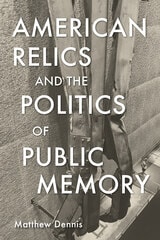
American Relics and the Politics of Public Memory
Matthew Dennis
University of Massachusetts Press, 2023
The gold epaulettes that George Washington wore into battle. A Union soldier’s bloody shirt in the wake of the Civil War. A crushed wristwatch after the 9/11 attacks. The bullet-riddled door of the Pulse nightclub. Volatile and shape-shifting, relics have long played a role in memorializing the American past, acting as physical reminders of hard-won battles, mass tragedies, and political triumphs.
Surveying the expanse of U.S. history, American Relics and the Politics of Public Memory shows how these objects have articulated glory, courage, and national greatness as well as horror, defeat, and oppression. While relics mostly signified heroism in the nation’s early years, increasingly, they have acquired a new purpose—commemorating victimhood. The atrocious artifacts of lynching and the looted remains of Native American graves were later transformed into shameful things, exposing ongoing racial violence and advancing calls for equality and civil rights. Matthew Dennis pursues this history of fraught public objects and assesses the emergence of new venues of memorialization, such as virtual and digital spaces. Through it all, relics continue to fundamentally ground and shape U.S. public memory in its uncertain present and future.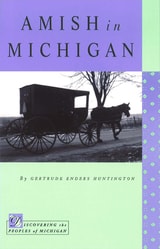
Amish in Michigan
Gertrude Enders Huntington
Michigan State University Press, 2001
Driving the rural roads of Michigan one might suddenly come upon a black buggy driven by a bonneted woman or a bearded Amish man. In 1955 there were fewer than five hundred Amish in Michigan—in 2000 there were more than seven thousand. The Amish, with their unique life-style, are found only in North America where approximately 170,000 live in twenty-four states and one Canadian province. This sensitive and fascinating volume explores the Amish historical background, immigration into Michigan, occupations, marriage patterns, cultural conflicts, community-financed schools, medical practices, and cultural survival.

Amkoullel, the Fula Boy
Amadou Hampâté Bâ
Duke University Press, 2021
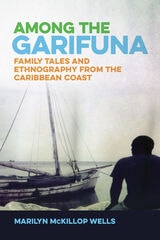
Among the Garifuna
Family Tales and Ethnography from the Caribbean CoastMarilyn McKillop Wells
University of Alabama Press, 2015
An intimate ethnographic narrative of one indigenous family in the twentieth-century Caribbean
Among the Garifuna is the first ethnographic narrative of a Garifuna family. The Garifuna are descendants of the “Black Carib,” whom the British deposited on Roatan Island in 1797 and who settled along the Caribbean coast from Belize City to Nicaragua.
In 1980, medical anthropologist Marilyn McKillop Wells found herself embarking on an “improbable journey” when she was invited to the area to do fieldwork with the added challenge of revealing the “real” Garifuna. Upon her arrival on the island, Wells was warmly embraced by a local family, the Diegos, and set to work recording life events and indigenous perspectives on polygyny, Afro-indigenous identity, ancestor-worshiping religion, and more. The result, as represented in Among the Garifuna, is a lovingly intimate, earthy human drama.
The family narrative is organized chronologically. Part I, “The Old Ways,” consists of vignettes that introduce the family backstory with dialogue as imagined by Wells based on the family history she was told. We meet the family progenitors, Margaret and Cervantes Diego, during their courtship, experience Margaret’s pain as Cervantes takes a second wife, witness the death of Cervantes and ensuing mourning rituals, follow the return of Margaret and the children to their previous home in British Honduras, and observe the emergence of the children’s personalities.
In Part II, “Living There,” Wells continues the story when she arrives in Belize and meets the Diego children, including the major protagonist, Tas. In Tas’s household Wells learns about foods and manners and watches family squabbles and reconciliations. In these mini-stories, Wells interweaves cultural information on the Garifuna people with first-person narrative and transcription of their words, assembling these into an enthralling slice of life. Part III, “The Ancestor Party,” takes the reader through a fascinating postmortem ritual that is enacted to facilitate the journey of the spirits of the honored ancestors to the supreme supernatural.
Among the Garifuna contributes to the literary genres of narrative anthropology and feminist ethnography in the tradition of Zora Neal Hurston and other women writing culture in a personal way. Wells’s portrait of this Garifuna family will be of interest to anthropologists, Caribbeanists, Latin Americanists, students, and general readers alike.
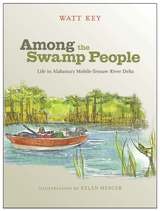
Among the Swamp People
Life in Alabama's Mobile-Tensaw River DeltaWatt Key
University of Alabama Press, 2015
Among the Swamp People is the story of author Watt Key’s discovery of the Mobile-Tensaw River Delta. “The swamp” consists of almost 260,000 acres of wetlands located just north of Mobile Bay. There he leases a habitable outcropping of land and constructs a primitive cabin from driftwood to serve as a private getaway. His story is one that chronicles the beauties of the delta’s unparalleled natural wonders, the difficulties of survival within it, and an extraordinary community of characters—by turns generous and violent, gracious and paranoid, hilarious and reckless—who live, thrive, and perish there.
There is no way into the delta except by small boat. To most it would appear a maze of rivers and creeks between stunted swamp trees and mud. Key observes that there are few places where one can step out of a boat without “sinking to the knees in muck the consistency of axle grease. It is the only place I know where gloom and beauty can coexist at such extremes. And it never occurred to me that a land seemingly so bleak could hide such beauty and adventure.”
It also chronicles Key’s maturation as a writer, from a twenty-five-year-old computer programmer with no formal training as a writer to a highly successful, award-winning writer of fiction for a young adult audience with three acclaimed novels published to date.
In learning to make a place for himself in the wild, as in learning to write, Key’s story is one of “hoping someone—even if just myself—would find value in my creations.”

Amplifications of Black Sound from Colonial Mexico
Vocality and BeyondSarah Finley
Vanderbilt University Press, 2024
Amplifications of Black Sound from Colonial Mexico is the first extensive study of Afro-descendant sonorities in New Spain or elsewhere in colonial Latin America. In this context, it attends to Black sounds through a framework that remixes Jacques Derrida’s reading of the ear’s anatomy with theories like Gilroy’s lower frequencies or Fred Moten’s phonic materiality. Sarah Finley’s aim is to unsettle the divide between self and other so the auditory archive might emerge as a polyphonic record that exceeds dichotomies of sounding object / listening subject. Through sampling the Afro-descendant sounds of this archive, this book recovers and rearticulates Black voices and auditory practices in New Spain.

An Amulet of Greek Earth
Generations of Immigrant Folk CultureHelen Papanikolas
Ohio University Press, 2002
The boys and men who left their Greek valley and mountain villages in the early 1900s for America came with amulets their mothers had made for them. Some were miniature sacks attached to a necklace; more often they were merely a square of fabric enclosing the values of their lives: a piece of a holy book or a sliver of the True Cross representing their belief in Greek Orthodoxy; a thyme leaf denoting their wild terrain; a blue bead to ward off the Evil Eye; and a pinch of Greek earth.
In her evocative and meticulously researched book An Amulet of Greek Earth, author Helen Papanikolas explains and examines the vibrant culture these immigrants brought with them to the new world. The Romiosini culture, as it was called, provided the foundation for their new lives and was oftentimes the cause of strife as they passed on their beliefs and traditions to successive generations of Greek Americans.
In the tradition of her fictional accounts of Greek immigrant life, Helen Papanikolas unearths the cultural beliefs and passions that compelled the Greek-American community to make its own way into the broader culture of America. Based on extensive study, personal interviews, and a lifetime of experience, An Amulet of Greek Earth is a revealing and informative chronicle of the immigrant’s experience in becoming an American.
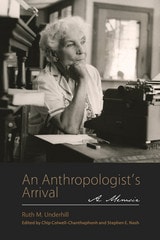
An Anthropologist's Arrival
A MemoirRuth M. Underhill, Edited by Chip Colwell-Chanthaphonh and Stephen E. Nash
University of Arizona Press, 2014
In brutally honest words, Underhill describes her uneven passage through life, beginning with a searing portrait of the Victorian restraints on women and her struggle to break free from her Quaker family’s privileged but tightly laced control. Tenderly and with humor she describes her transformation from a struggling “sweet girl” to wife and then divorcée. Professionally she became a welfare worker, a novelist, a frustrated bureaucrat at the Bureau of Indian Affairs, a professor at the University of Denver, and finally an anthropologist of distinction.
Her witty memoir reveals the creativity and tenacity that pushed the bounds of ethnography, particularly through her focus on the lives of women, for whom she served as a role model, entering a working retirement that lasted until she was nearly 101 years old.
No quotation serves to express Ruth Underhill’s adventurous view better than a line from her own poetry: “Life is not paid for. Life is lived. Now come.”
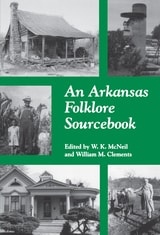
An Arkansas Folklore Sourcebook
W.K. McNeil
University of Arkansas Press, 1992
Arkansas’s rich folk tradition is shown by the variety of its manifestations: a 250-year-old ballad, an archaic method of hewing railroad crossties with a broadax, the use of poultices and toddies to treat the common cold, and swamps of evil repute are all parts of the tradition that constitutes Arkansas folklore. In fact, as the essays selected by W.K. McNeil and William M. Clements show, these few examples only begin to tell the story.
Starting with a working description of folklore as “cultural material that is traditional and unofficial” and characterized by a pattern of oral transmission, variation, formulaic structures, and usually uncertain origin, the authors survey in detail a wide array of folk objects, activities, beliefs, and customs. Among the rich offerings in this sourcebook are a discussion of the history of folklore research in Arkansas, an examination of some of the traditional songs and music still being preformed, a thoughtful exploration of the serious side of “tall tales” and “windies,” an investigation of folk architecture in Arkansas and what it reveals about our cultural origins, a study of many traditional foods and there preparation methods, an analysis of superstitions and beliefs, and a description of festivals and celebrations that are observed to this day.
Complemented by biographies of reference works and audio and video recordings of the state’s folk materials, An Arkansas Folklore Sourcebook is the first complete guide to the study of one state’s “unofficial culture.”
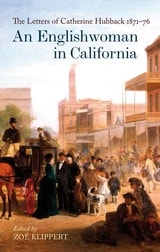
An Englishwoman in California
The Letters of Catherine Hubback, 1871-76Edited by Zoë Klippert
Bodleian Library Publishing, 2010
A niece of Jane Austen and a novelist herself, Catherine Hubback was fifty-two years old when she left England for America. She travelled to California on the Transcontinental Railroad and settled in Oakland, on the eastern shore of San Francisco Bay. Her son Edward shared her household and commuted by ferryboat to a wheat brokerage in the City.
In letters to her eldest son John and his wife Mary in Liverpool, Catherine conveys her delight – and her exasperation – at her new environment. She portrays her neighbours with a novelist's wry wit and brings her English sensibility to bear on gardening with unfamiliar plants and maintaining a proper wardrobe in a dry climate. She writes vividly of her adventures as she moves about a landscape recognizable to present-day residents, at a time when boats rather than bridges spanned the bay, and hot springs were the main attraction in the Napa Valley. In an atmosphere of financial unrest, she writes freely of her anxieties, while supplementing Edward's declining income by making lace and teaching the craft to other women. She recalls her 'prosperous days' in England, but finds pleasure in small things and assuredly takes her place in a society marked by great disparities in wealth.
In addition to transcriptions of the letters, this highly readable edition offers pertinent information on many of the people and places mentioned, explanatory notes, and striking illustrations. The introduction places the letters in context and tells the story of Catherine Hubback, whose life evolved in ways unprecedented in the Austen family.

An Invitation to Laughter
A Lebanese Anthropologist in the Arab WorldFuad I. Khuri
University of Chicago Press, 2007
For the late Fuad I. Khuri, a distinguished career as an anthropologist began not because of typical concerns like accessibility, money, or status, but because the very idea of an occupation that baffled his countrymen made them—and him—laugh. “When I tell them that ‘anthropology’ is my profession . . . they think I am either speaking a strange language or referring to a new medicine.” This profound appreciation for humor, especially in the contradictions inherent in the study of cultures, is a distinctive theme of An Invitation to Laughter, Khuri’s astute memoir of life as an anthropologist in the Middle East.
A Christian Lebanese, Khuri offers up in this unusual autobiography both an insider’s and an outsider’s perspective on life in Lebanon, elsewhere in the Middle East, and in West Africa. Khuri entertains and informs with clever insights into such issues as the mentality of Arabs toward women, eating habits of the Arab world, the impact of Islam on West Africa, and the extravagant lifestyles of wealthy Arabs, and even offers a vision for a type of democracy that could succeed in the Middle East. In his life and work, as these astonishing essays make evident, Khuri demonstrated how the discipline of anthropology continues to make a difference in bridging dangerous divides.
Anahulu
The Anthropology of History in the Kingdom of Hawaii, Volume 1: Historical EthnographyPatrick Vinton Kirch and Marshall Sahlins
University of Chicago Press, 1992
Volume I shows the surprising effects of the encounter with the imperial forces of commerce and Christianity—the distinctive ways the Hawaiian people culturally organized the experience, from the structure of the kingdom to the daily life of ordinary people. Volume II examines the material record of changes in local social organization, economy and production, population, and domestic settlement arrangements.
Anahulu
The Anthropology of History in the Kingdom of Hawaii, Volume 2: The Archaeology of HistoryPatrick Vinton Kirch and Marshall Sahlins
University of Chicago Press, 1992
Volume 2, by Patrick V. Kirch, examines the material record of changes in local social organization, economy and production, population, and domestic settlement arrangements.
Ancestral Connections
Art and an Aboriginal System of KnowledgeHoward Morphy
University of Chicago Press, 1991
The rich symbolism of Yolngu art links the Yolngu directly with the "Dreaming," the time of world-creation that continues as the spiritual dimension of the present. Morphy shows how a complex dialectic of "inside" and "outside" interpretations of painting structures the system of knowledge in Yolngu society, and how European interest in this art has caused certain changes in the conditions of its production. The "inside" significance of the art, however, has not changed; it retains its dual ability to represent and to constitute relationships between things.
Ancestral Connections is a major contribution to the anthropology of art. A subtle commentary on the colonial encounter in northern Australia, the book demonstrates how the Yolngu have used their art—against all odds—as an instrument of cultural survival and as a component of the economic and political transformation of their society.
Ancient Complexities
New Perspectives in Pre-Columbian North AmericaSusan Alt
University of Utah Press, 2010
Edited by Susan M. Alt
Foundations of Archaeological Inquiry
Jim Skibo, Series Editor
Anthropology and Archaeology
Many archaeologists have long been frustrated with the traditional, reductionist representation of complexity. Yet, even after years of debate, there seem to be never ending disagreements over the complexity of places like Chaco Canyon, Cahokia, and Poverty Point. This matters, because there are political and scholarly implications to calling any place or people more or less complex. In North America especially, given historical biases and the mound-builder myth, archaeologists need to rethink complexity as they seek to explain the past.
Based on a Society of American Archaeology symposium, Ancient Complexities offers a current overview of what is meant by cultural complexity and how archaeologists study the development of complex societies in North America. Taking a critical look at how accepted definitions of complexity have bounded our thinking about ancient societies, this volume presents new theoretical perspectives and states a case for the need for different definitions in order to move this discussion ahead.
This collection by scholars of North American archaeology is a must read for anyone wishing to be abreast of the most current dialogue on complexity taking place in modern archaeology.
Ancient Households of the Americas
Conceptualizing What Households DoJohn G. Douglass
University Press of Colorado, 2012
Several different cultures-Iroquois, Coosa, Anasazi, Hohokam, San Agustín, Wankarani, Formative Gulf Coast Mexico, and Formative, Classic, Colonial, and contemporary Maya-are analyzed through the lens of household archaeology in concrete, data-driven case studies. The text is divided into three sections: Section I examines the spatial and social organization and context of household production; Section II looks at the role and results of households as primary producers; and Section III investigates the role of, and interplay among, households in their greater political and socioeconomic communities.
In the past few decades, household archaeology has made substantial contributions to our understanding and explanation of the past through the documentation of the household as a social unit-whether small or large, rural or urban, commoner or elite. These case studies from a broad swath of the Americas make Ancient Households of the Americas extremely valuable for continuing the comparative interdisciplinary study of households.
Ancient Households on the North Coast of Peru
Ilana Johnson
University Press of Colorado, 2020
Many volumes on this region are limited to one time period or civilization, often the Moche. While Ancient Households on the North Coast of Peru does examine the Moche, it offers a wider thematic approach to a broader swath of prehistory. Chapters on various time periods use a comparable scale of analysis to examine long-term continuity and change and draw on a large corpus of prior research on states, rulership, and cosmology to offer new insight into the intersection of household, community, and state. Contributors address social reproduction, construction and reinforcement of gender identities and social hierarchy, household permanence and resilience, and expression of identity through cuisine.
This volume challenges common concepts of the “household” in archaeology by demonstrating the complexity and heterogeneity of household-level dynamics as they intersect with institutions at broader social scales and takes a comparative perspective on daily life within one region of the Andes. It will be of interest to both students and scholars of South American archaeology and household archaeology.
Contributors: Brian R. Billman, David Chicoine, Guy S. Duke, Hugo Ikehara, Giles Spence-Morrow, Jessica Ortiz, Edward Swenson, Kari A. Zobler
Ancient Maya Teeth
Dental Modification, Cosmology, and Social Identity in MesoamericaVera Tiesler
University of Texas Press, 2024
A study of Maya dental modification from archaeological sites spanning three millennia.
Dental modification was common across ancient societies, but perhaps none were more avid practitioners than the Maya. They filed their teeth flat or pointy, polished and drilled them, and crafted decorative inlays of jade and pyrite. Unusually, Maya of all social classes, ages, and professions engaged in dental modification. What did it mean to them?
Ancient Maya Teeth is the most comprehensive study of Maya dental modification ever published, based on thousands of teeth recovered from 130 sites spanning three millennia. Esteemed archaeologist Vera Tiesler sifts the evidence, much of it gathered with her own hands and illustrated here with more than a hundred photographs. Exploring the underlying theory and practice of dental modification, Tiesler raises key questions. How did modifications vary across the individual’s lifespan? What tools were used? How did the Maya deal with pain—and malpractice? How did they keep their dentitions healthy, functioning, and beautiful? What were the relationships among gender, social identity, and religious identifications? Addressing these and other issues, Ancient Maya Teeth reveals how dental-modification customs shifted over the centuries, indexing other significant developments in Mayan cultural history.

And Other Neighborly Names
Social Process and Cultural Image in Texas FolkloreEdited by Richard Bauman and Roger D. Abrahams
University of Texas Press, 1981
"And Other Neighborly Names"—the title is from a study by Americo Paredes of the names, complimentary and otherwise, exchanged across cultural boundaries by Anglos and Mexicans—is a collection of essays devoted to various aspects of folk tradition in Texas. The approach builds on the work of the folklorists who have helped give the study of folklore in Texas such high standing in the field-Mody Boatright, J. Frank Dobie, John Mason Brewer, the Lomaxes, and of course Paredes himself, to whom this book is dedicated.
Focusing on the ways in which traditions arise and are maintained where diverse peoples come together, the editors and other essayists—John Holmes McDowell, Joe Graham, Alicia María González, Beverly J. Stoeltje, Archie Green, José E. Limón, Thomas A. Green, Rosan A. Jordan, Patrick B. Mullen, and Manuel H. Peña—examine conjunto music, the corrido, Gulf fishermen's stories, rodeo traditions, dog trading and dog-trading tales, Mexican bakers' lore, Austin's "cosmic cowboy" scene, and other fascinating aspects of folklore in Texas. Their emphasis is on the creative reaction to socially and culturally pluralistic situations, and in this they represent a distinctively Texan way of studying folklore, especially as illustrated in the performance-centered approach of Paredes, Boatright, and others who taught at the University of Texas at Austin. As an overview of this approach—its past, present, and future—"And Other Neighborly Names" makes a valuable contribution both to Texas folklore and to the discipline as a whole.
Angalkut/Shamans in Yup'ik Oral Tradition
Ann Fienup-Riordan
University of Alaska Press, 2025
The book begins with an English introduction that places Yup’ik oral traditions in the context of shamanism in Alaska and other parts of the Arctic. Then first-person accounts presented in the original Yup’ik with accompanying English translations discuss the importance of shamans and shamanism in general, good and bad shamans, and shamans as healers. Narratives from Nelson Island, Canineq, Kuskokwim River, Akulmiut, and Yukon River describe shamans as healers, shaman journeys and performances, shamans and masked dances requesting abundance, shamans and the dead, malicious shamans, shaman confrontations, becoming a shaman, and those who have shaman abilities today. A detailed glossary and references are also included.
Today, not only are these angalkut gone, but so are those who witnessed and participated in their activities. Angalkut/Shamans in Yup’ik Oral Tradition is the first book devoted exclusively to Yup’ik angalkut; never before has the variety of angalkut roles been profiled in publication, including the richness of elders’ recollections of these individuals and their roles. There is great value in the stories they left behind. This fine-grained presentation of unique, bilingual first-person narratives is an essential resource for scholars and students interested in Yup’ik heritage, Yugtun language, shaman ethnography, and Alaska Native oral traditions.

Anger
The Struggle for Emotional Control in America's HistoryCarol Zisowitz Stearns and Peter N. Stearns
University of Chicago Press, 1986
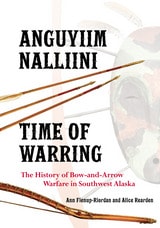
Anguyiim Nalliini/Time of Warring
The History of Bow-and-Arrow Warfare in Southwest AlaskaAnn Fienup-Riordan and Alice Rearden
University of Alaska Press, 2016
The book is presented in bilingual format, with facing-page translations, and it will be hailed as a landmark work in the study of Alaska Native history and anthropology.
Animalia
An Anti-Imperial Bestiary for Our TimesAntoinette Burton and Renisa Mawani, editors
Duke University Press, 2020
Contributors. Neel Ahuja, Tony Ballantyne, Antoinette Burton, Utathya Chattopadhyaya, Jonathan Goldberg-Hiller, Peter Hansen, Isabel Hofmeyr, Anna Jacobs, Daniel Heath Justice, Dane Kennedy, Jagjeet Lally, Krista Maglen, Amy E. Martin, Renisa Mawani, Heidi J. Nast, Michael A. Osborne, Harriet Ritvo, George Robb, Jonathan Saha, Sandra Swart, Angela Thompsell
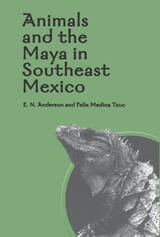
Animals and the Maya in Southeast Mexico
E. N. Anderson and Felix Medina Tzuc
University of Arizona Press, 2005
This book combines the insights of an anthropologist with the hands-on experience of a Maya campesino with the aim of improving the management of Quintana Roo’s wild lands and animal resources. E. N. Anderson and Felix Medina Tzuc pool their knowledge to document Yucatec Maya understanding and use of animals and to address practical matters related to wider conservation issues.
The book reflects a wealth of knowledge gathered from individuals regarded as experts on particular aspects of animal management, whether hunting, herding, or beekeeping. It also offers case studies of conservation successes and failures in various communities, pointing to the need for cooperation by the Mexican government and Maya people to save wildlife. Appendixes provide an extensive animal classification and a complete list of all birds identified in the area.
Even though sustainable forestry has finally come to the Yucatán, sustainable game use is practiced by only a few communities. Animals and the Maya in Southeast Mexico is a complete ethnozoology for the region, offered in the hope that it will encourage the recognition of Quintana Roo’s forests and wildlife as no less deserving of protection than ancient Maya cities.
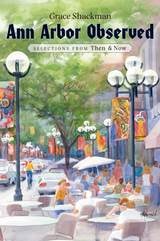
Ann Arbor Observed
Selections from Then and NowGrace Shackman
University of Michigan Press, 2010
Packed with photographs from Ann Arbor of yesteryear and the present day, Ann Arbor Observed compiles the best of Shackman’s articles in one book divided into eight sections: public buildings and institutions, the University of Michigan, transportation, industry, downtown Ann Arbor, recreation and culture, social fabric and communities, and architecture.
For long-time residents, Ann Arbor expatriates, University of Michigan alumni, and visitors alike, Ann Arbor Observed provides a rare glimpse of the bygone days of a town with a rich and varied history.
Grace Shackman is a history columnist for the Ann Arbor Observer, the Community Observer, and the Old West Side News, as well as a writer for University of Michigan publications. She is the author of two previous books: Ann Arbor in the 19th Century and Ann Arbor in the 20th Century.
Anonymous Connections
The Body and Narratives of the Social in Victorian BritainTina Young Choi
University of Michigan Press, 2016
Another Appalachia
Coming Up Queer and Indian in a Mountain PlaceNeema Avashia
West Virginia University Press, 2022
When Neema Avashia tells people where she’s from, their response is nearly always a disbelieving “There are Indian people in West Virginia?” A queer Asian American teacher and writer, Avashia fits few Appalachian stereotypes. But the lessons she learned in childhood about race and class, gender and sexuality continue to inform the way she moves through the world today: how she loves, how she teaches, how she advocates, how she struggles.
Another Appalachia examines both the roots and the resonance of Avashia’s identity as a queer desi Appalachian woman, while encouraging readers to envision more complex versions of both Appalachia and the nation as a whole. With lyric and narrative explorations of foodways, religion, sports, standards of beauty, social media, gun culture, and more, Another Appalachia mixes nostalgia and humor, sadness and sweetness, personal reflection and universal questions.
Another Way the River Has
Taut True Tales from the NorthwestRobin Cody
Oregon State University Press, 2010
Another Way the River Has collects Robin Cody’s finest nonfiction writings, many appearing for the first time in print. Cody’s prose rings with a sense of place. He is a native speaker who probes the streams and woods and salmon that run to the heart of what it means to live and love, to work and play, in Oregon.
His characters—from loggers to fishers to cowboys to the kids on his school bus—are smart and curious, often off-beat, always vivid. Cody brings the ear of a novelist and the eye of a reporter to the people and places that make the Northwest, and Northwest literature, distinctive.
“A rock, you know, will sink like a stone in water. But a flat rock, slung spinningly near the water surface and at an angel parallel to it, will go skipping across the water in defiance of gravity and common sense. How cool is that?! The first time a boy pulls this off ranks just short of first-time sex on the scale of things he will want to do over and over whenever he can and as long as he lives.”
-from “The Clackamas River”
Answered Prayers
Miracles and Milagros along the BorderEileen Oktavec
University of Arizona Press, 1995
In Answered Prayers, the Mexicans, Mexican Americans, Tohono O'odham, and Yaquis who practice this tradition share their stories of unwavering faith and divine intervention. Anthropologist and photographer Eileen Oktavec has spent more than two decades documenting this fascinating tradition in the Arizona-Mexico borderlands. Quoting extensive interviews, she explains the beliefs of the people who perform this ancient folk ritual and the many rules guiding this practice. She also describes the many places where milagros are offered—from the elaborate Mexican baroque Mission San Xavier near Tucson, Arizona, to tiny household shrines and hospitals on both sides of the border. Oktavec also explains how milagros are made, where they are bought, and how they are used in jewelry, sculpture, and art.
Antebellum Jefferson, Texas
Everyday Life in an East Texas TownJacques D. Bagur
University of North Texas Press, 2012
Anthropologies of Guayana
Cultural Spaces in Northeastern AmazoniaEdited by Neil L. Whitehead and Stephanie Alemán
University of Arizona Press, 2009
This is an important collection that brings together the work of scholars from North America, South America, and Europe to reveal the anthropological significance of Guayana, the ancient realm of El Dorado and still the scene of gold and diamond mining. Beginning with the earliest civilizations of the region, the chapters focus on the historical ecology of the rain forest and the archaeological record up to the sixteenth century, as well as ethnography, ethnology, and perceptions of space. The book features extensive discussions of the history of a range of indigenous groups, such as the Waiwai, Trio, Wajãpi, and Palikur. Contributions analyze the emergence of a postcolonial national society, the contrasts between the coastlands and upland regions, and the significance of race and violence in contemporary politics.
A noteworthy study of the prehistory and history of the region, the book also provides a useful survey of the current issues facing northeastern Amazonia. The chapters extend the anthropological agenda beyond the conventional focus on the “indigenous” even as contributors describe how Guayanese languages, mythologies, and social structures have remained resilient in the face of intense outside pressures.

Antisatire
In Defense of Women, against Francesco BuoninsegniArcangela Tarabotti
Iter Press, 2020
The Other Voice in Early Modern Women: The Toronto Series volume 70
Appalachia North
A MemoirMatthew Ferrence
West Virginia University Press, 2018
Appalachia North is the first book-length treatment of the cultural position of northern Appalachia—roughly the portion of the official Appalachian Regional Commission zone that lies above the Mason-Dixon line. For Matthew Ferrence this region fits into a tight space of not-quite: not quite “regular” America and yet not quite Appalachia.
Ferrence’s sense of geographic ambiguity is compounded when he learns that his birthplace in western Pennsylvania is technically not a mountain but, instead, a dissected plateau shaped by the slow, deep cuts of erosion. That discovery is followed by the diagnosis of a brain tumor, setting Ferrence on a journey that is part memoir, part exploration of geology and place. Appalachia North is an investigation of how the labels of Appalachia have been drawn and written, and also a reckoning with how a body always in recovery can, like a region viewed always as a site of extraction, find new territories of growth.
Appalachian Dance
Creativity and Continuity in Six CommunitiesSusan Eike Spalding
University of Illinois Press, 2014
Spalding analyzes how issues as disparate as industrialization around coal, plantation culture, race relations, and the 1970s folk revival influenced freestyle clogging and other dance forms like square dancing in profound ways. She reveals how African Americans and Native Americans, as well as European immigrants drawn to the timber mills and coal fields, brought movement styles that added to local dance vocabularies. Placing each community in its sociopolitical and economic context, Spalding analyzes how the formal and stylistic nuances found in Appalachian dance reflect the beliefs, shared understandings, and experiences of the community at large, paying particular attention to both regional and racial diversity.
Written in clear and accessible prose, Appalachian Dance is a lively addition to the literature and a bold contribution to scholarship concerned with the meaning of movement and the ever-changing nature of tradition.
Appalachian Reckoning
A Region Responds to Hillbilly ElegyAnthony Harkins
West Virginia University Press, 2019
2020 American Book Award winner, Walter & Lillian Lowenfels Criticism Award
2019 Weatherford Award winner, nonfiction
With hundreds of thousands of copies sold, a Ron Howard movie in the works, and the rise of its author as a media personality, J. D. Vance’s Hillbilly Elegy: A Memoir of a Family and Culture in Crisis has defined Appalachia for much of the nation. What about Hillbilly Elegy accounts for this explosion of interest during this period of political turmoil? Why have its ideas raised so much controversy? And how can debates about the book catalyze new, more inclusive political agendas for the region’s future?
Appalachian Reckoning is a retort, at turns rigorous, critical, angry, and hopeful, to the long shadow Hillbilly Elegy has cast over the region and its imagining. But it also moves beyond Hillbilly Elegy to allow Appalachians from varied backgrounds to tell their own diverse and complex stories through an imaginative blend of scholarship, prose, poetry, and photography. The essays and creative work collected in Appalachian Reckoning provide a deeply personal portrait of a place that is at once culturally rich and economically distressed, unique and typically American. Complicating simplistic visions that associate the region almost exclusively with death and decay, Appalachian Reckoning makes clear Appalachia’s intellectual vitality, spiritual richness, and progressive possibilities.
Apple Betty and Sloppy Joe
Stirring Up the Past with Family Recipes and StoriesSusan Sanvidge
Wisconsin Historical Society Press, 2007
Compiled by four sisters and based on their recollections of their childhood in Oshkosh, Wisconsin, Apple Betty & Sloppy Joe captures the glow of memories formed while growing up in a midwestern kitchen. From Lemon Meringue Pie to Tomato Soup Cake, from Mom's Chicken Pie to Grandma Noffke's Sliced Cucumber Pickles, this charming book features hundreds of recipes (some classic, some quirky), plus dozens of food and cooking-related anecdotes, memories, humorous asides, and period photos that transport readers back to Mom's or Grandma's kitchen, circa 1950.
The Sanvidges share a legacy of beloved dishes and food memories that resonate not just for their family, but for readers everywhere who grew up in a small midwestern town - or wish they had. Nostalgic, funny, and warmhearted, Apple Betty & Sloppy Joe celebrates the ways food and food memories link us to our past, and to each other. A delightful gift for food lovers of any generation.
Apprenticeship in Critical Ethnographic Practice
Jean Lave
University of Chicago Press, 2011
In this extended meditation, Jean Lave interweaves analysis of the process of apprenticeship among the Vai and Gola tailors of Liberia with reflections on the evolution of her research on those tailors in the late 1970s. In so doing, she provides both a detailed account of her apprenticeship in the art of sustained fieldwork and an insightful overview of thirty years of changes in the empirical and theoretical facets of ethnographic practice. Examining the issues she confronted in her own work, Lave shows how the critical questions raised by ethnographic research erode conventional assumptions, altering the direction of the work that follows.
As ethnography takes on increasing significance to an ever widening field of thinkers on topics from education to ecology, this erudite but accessible book will be essential to anyone tackling the question of what it means to undertake critical and conceptually challenging fieldwork. Apprenticeship in Critical Ethnographic Practice explains how to seriously explore what it means to be human in a complex world—and why it is so important.
Arab/American
Landscape, Culture, and Cuisine in Two Great DesertsGary Paul Nabhan
University of Arizona Press, 2008
Archaeologies of African American Life in the Upper Mid-Atlantic
Edited by Michael J. Gall and Richard F. Veit
University of Alabama Press, 2017
A 2018 CHOICE OUTSTANDING ACADEMIC TITLE
New scholarship provides insights into the archaeology and cultural history of African American life from a collection of sites in the Mid-Atlantic
This groundbreaking volume explores the archaeology of African American life and cultures in the Upper Mid-Atlantic region, using sites dating from the eighteenth through the twentieth centuries. Sites in Delaware, Pennsylvania, New Jersey, and New York are all examined, highlighting the potential for historical archaeology to illuminate the often overlooked contributions and experiences of the region’s free and enslaved African American settlers.
Archaeologies of African American Life in the Upper Mid-Atlantic brings together cutting-edge scholarship from both emerging and established scholars. Analyzing the research through sophisticated theoretical lenses and employing up-to-date methodologies, the essays reveal the diverse ways in which African Americans reacted to and resisted the challenges posed by life in a borderland between the North and South through the transition from slavery to freedom. In addition to extensive archival research, contributors synthesize the material finds of archaeological work in slave quarter sites, tenant farms, communities, and graveyards.
Editors Michael J. Gall and Richard F. Veit have gathered new and nuanced perspectives on the important role free and enslaved African Americans played in the region’s cultural history. This collection provides scholars of the Mid-Atlantic and Northeast regions, African American studies, material culture studies, religious studies, slavery, the African diaspora, and historical archaeologists with a well-balanced array of rural archaeological sites that represent cultural traditions and developments among African Americans in the region. Collectively, these sites illustrate African Americans’ formation of fluid cultural and racial identities, communities, religious traditions, and modes of navigating complex cultural landscapes in the region under harsh and disenfranchising circumstances.
Archaeology at the Site of the Museum of the American Revolution
A Tale of Two Taverns and the Growth of PhiladelphiaRebecca Yamin
Temple University Press, 2019
When the Museum of the American Revolution acquired the land at Third and Chestnut streets in Olde City, Philadelphia, it came with the condition that an archaeological investigation be conducted. The excavation that began in the summer of 2014 yielded treasures in the trash: unearthed privy pits provided remarkable finds from a mid-eighteenth-century tavern to relics from a button factory dating to the early twentieth century. These artifacts are described and analyzed by urban archaeologist Rebecca Yamin in Archaeology at the Site of the Museum of the American Revolution.
Yamin, lead archaeologist on the dig, catalogues items—including earthenware plates and jugs, wig curlers, clay pipes, and liquor bottles—to tell the stories of their owners and their roles in Philadelphia history. As she uncovers the history of the people as well as their houses, taverns, and buildings that were once on the site, she explains that by looking at these remains, we see the story of the growth of Philadelphia from its colonial beginnings to the Second World War.
Archaeology at the Site of the Museum of the American Revolution is a perfect keepsake for armchair archaeologists, introductory students, and history buffs.
Archaeology of North Pacific Fisheries
Edited by Madonna L. Moss and Aubrey Cannon
University of Alaska Press, 2011
For thousands of years, fisheries were crucial to the sustenance of the First Peoples of the Pacific Coast. Yet human impact has left us with a woefully incomplete understanding of their histories prior to the industrial era. Covering Alaska, British Columbia, and Puget Sound, The Archaeology of North Pacific Fisheries illustrates how the archaeological record reveals new information about ancient ways of life and the histories of key species. Individual chapters cover salmon, as well as a number of lesser-known species abundant in archaeological sites, including pacific cod, herring, rockfish, eulachon, and hake. In turn, this ecological history informs suggestions for sustainable fishing in today’s rapidly changing environment.
Archaeology of Southern Urban Landscapes
Amy L Young
University of Alabama Press, 2000
Groundbreaking essays in urban archaeology highlight the impact of towns and cities on the southern landscape.
The rapid growth and development of urban areas in the South have resulted in an increase in the number of urban archaeology projects required by federal and state agencies. These projects provide opportunities not only to investigate marginal areas between the town and countryside but also to recover information long buried beneath the earliest urban structures. Such projects have also created a need for a one-volume update on archaeology as it is practiced in the urban areas of the southeastern United States.
Archaeology of Southern Urban Landscapes will assist practitioners and scholars in the burgeoning fields of urban and landscape archaeology by treating the South as a distinctive social, geographic, and material entity and by focusing on the urban South rather than the stereotypical South of rural plantations. The case studies in this volume span the entire southeastern United States, from Annapolis to New Orleans and from colonial times to the 19th century. The authors address questions involving the function of cities, interregional diversity, the evolution of the urban landscape, and the impact of the urban landscape on southern culture. By identifying the relationship between southern culture and the South's urban landscapes, this book will help us understand the built landscape of the past and predict future growth in the region.

Archie Green
The Making of a Working-Class HeroSean Burns
University of Illinois Press, 2011
Arctic Adaptations
Native Whalers and Reindeer Herders of Northern EurasiaIgor Krupnik
Dartmouth College Press, 2002