Results by title
1927 books match the query 'Technology & Engineering' and 176 start with a

Algorithmic and Knowledge-based CAD for VLSI
Gaynor Taylor
The Institution of Engineering and Technology, 1992
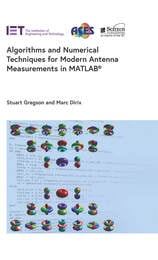
Algorithms and Numerical Techniques for Modern Antenna Measurements in MATLAB®
Stuart Gregson
The Institution of Engineering and Technology, 2026

All Flesh Is Grass
The Pleasures and Promises of Pasture FarmingGene Logsdon
Ohio University Press, 2004
Amidst Mad Cow scares and consumer concerns about how farm animals are bred, fed, and raised, many farmers and homesteaders are rediscovering the traditional practice of pastoral farming. Grasses, clovers, and forbs are the natural diet of cattle, horses, and sheep, and are vital supplements for hogs, chickens, and turkeys. Consumers increasingly seek the health benefits of meat from animals raised in green paddocks instead of in muddy feedlots.
In All Flesh Is Grass: The Pleasures and Promises of Pasture Farming, Gene Logsdon explains that well-managed pastures are nutritious and palatable—virtual salads for livestock. Leafy pastures also hold the soil, foster biodiversity, and create lovely landscapes. Grass farming might be the solution for a stressed agricultural system based on an industrial model and propped up by federal subsidies.
In his clear and conversational style, Logsdon explains historically effective practices and new techniques. His warm, informative profiles of successful grass farmers offer inspiration and ideas. His narrative is enriched by his own experience as a “contrary farmer” on his artisan-scale farm near Upper Sandusky, Ohio.
All Flesh Is Grass will have broad appeal to the sustainable commercial farmer, the home-food producer, and all consumers who care about their food.
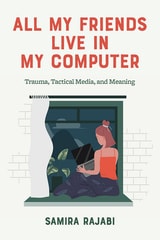
All My Friends Live in My Computer
Trauma, Tactical Media, and MeaningSamira Rajabi
Rutgers University Press, 2021
Ambient Intelligence for 6G
Muhammad Ali Jamshed
The Institution of Engineering and Technology, 2026

America
Bert Lamers
Amsterdam University Press, 2024

America's Pursuit of Precision Bombing, 1910-1945
Stephen L. McFarland
University of Alabama Press, 2008
Carl Norden, its brilliant and eccentric inventor, was a Dutch national who never became an American citizen. He took little interest in the day-to-day operations of the firm that bore his name, doing the bulk of his design work at his mother's home in Switzerland, even in 1939-40. His designs were sent back to the United States via sealed diplomatic pouch. Complications arose in World War II when the U.S. Navy retained three-quarters of the instruments despite having little need for them. Also, as production shifted from hand-crafting to mass production, the accuracy of the bombsights fell.
McFarland's exhaustive account remains a definitive and authoritative history of this fascinating piece of technology.

American Boundaries
The Nation, the States, the Rectangular SurveyBill Hubbard Jr.
University of Chicago Press, 2009

American Cosmos
Globes and the Global Imagination in Early AmericaTamara Plakins Thornton
University of Chicago Press, 2027
The first book to explore the forgotten terrestrial and celestial globes of early America—and the global imagination they shaped.
Ranging from early modern Europe to the modern United States, American Cosmos introduces the objects, people, practices, and ideas that constituted the long-forgotten world of globes. As Tamara Plakins Thornton shows, paired terrestrial and celestial globes were important components of early American social, cultural, and intellectual life. They served as markers of learnedness and social status, provided a material vision of a human-centered cosmos, and as 3-D problem-solving devices, offered distinctive imaginative perspectives on global connections and human difference. Only some had access to these globes—including genteel families, men of science, navigators, and students in colleges, academies, and missionary schools—but in the nineteenth century, many more encountered mass-produced, stripped-down globes in common school classrooms and parlors. Yet with new cultural concerns taking root, these modern globes assumed a much-diminished role in American life and thought, and an older world of globes, rich with meaning and possibility, disappeared.
As we increasingly encounter global-scale experience—climate change, pandemics, human migrations, the economy—and as American historians strive to look beyond national borders, we can learn about the origins of American global thinking by looking at globes themselves and the people who used them.

American Genesis
A Century of Invention and Technological Enthusiasm, 1870-1970Thomas P. Hughes
University of Chicago Press, 2004
A sweeping history of the inventors, inventions, and innovations that together created modern America.
A stunning, wide-ranging history from one of the foremost historians of technology of our age American Genesis tells the sweeping story of the technological revolution that made modern America. Unlike other histories of technology, which focus on particular inventions like the light bulb or the automobile, American Genesis makes these inventions characters in a broad chronicle, both shaped by and shaping a culture. By weaving scientific and technological advancement into other cultural trends, and bringing in fascinating characters like Edison, Ford, and Frederick Taylor, Hughes demonstrates here the myriad ways in which the two are inexorably linked, and in a new preface, he recounts his earlier missteps in predicting the future of technology and follows its move into the information age.

American Genesis
A Century of Invention and Technological Enthusiasm, 1870-1970Thomas P. Hughes
University of Chicago Press, 2004
*PULITZER PRIZE FINALIST*
A sweeping history of the inventors, inventions, and innovations that together created modern America.
A stunning, wide-ranging history from one of the foremost historians of technology of our age American Genesis tells the sweeping story of the technological revolution that made modern America. Unlike other histories of technology, which focus on particular inventions like the light bulb or the automobile, American Genesis makes these inventions characters in a broad chronicle, both shaped by and shaping a culture. By weaving scientific and technological advancement into other cultural trends, and bringing in fascinating characters like Edison, Ford, and Frederick Taylor, Hughes demonstrates here the myriad ways in which the two are inexorably linked, and in a new preface, he recounts his earlier missteps in predicting the future of technology and follows its move into the information age.

American Plastic
A Cultural HistoryMeikle, Jeffrey L
Rutgers University Press, 1995
Winner of the 1996 Dexter Prize from the Society for the History of Technology and a 1996 Choice Outstanding Academic Book
“A splendid history of plastic. The book is authoritative, thorough, interdisciplinary, and intriguing. . . [Meikle] traces the course of plastics from 19th–century celluloid and the fist wholly synthetic bakelite, in 1907, through the proliferation of compounds (vinyls, acrylics, polystyrene, nylon, etc.) and recent ecological concerns. . . .Interested readers of whatever predisposition will likely enjoy this comprehensive and thoughtful treatise.”—Publishers Weekly
“A landmark account. . . . He combines a first–rate technological history with a most impressive cultural analysis of how plastics evolved from a material surrounded by utopian expectations to a material epitomizing inferiority and eventually to a part of everyday life. . . . One of the most significant works ever written in the history of American technology and culture.”
—Nature
“[A] truly outstanding work . . . here is a work of intellectual strength written with great literary style. . . . This significant work is likely to be widely cited in academic circles, defining the field for a generation of readers. Don’t let it pass you by! An extraordinary contribution, for all levels of readers.”—Choice
“This is real interdisciplinary work, roaming in focus, adaptive in method.”—Journal of American History
“This scholarly and comprehensive work . . . is nontechnical and emphasizes the social and cultural impact of plastics. . . . Highly recommended for anyone with an interest in understanding contemporary society.”—Library Journal

American Sunshine
Diseases of Darkness and the Quest for Natural LightDaniel Freund
University of Chicago Press, 2012
In the second half of the nineteenth century, American cities began to go dark. Hulking new buildings overspread blocks, pollution obscured the skies, and glass and smog screened out the health-giving rays of the sun. Doctors fed anxities about these new conditions with claims about a rising tide of the "diseases of darkness," especially rickets and tuberculosis.
In American Sunshine, Daniel Freund tracks the obsession with sunlight from those bleak days into the twentieth century. Before long, social reformers, medical professionals, scientists, and a growing nudist movement proffered remedies for America’s new dark age. Architects, city planners, and politicians made access to sunlight central to public housing and public health. and entrepreneurs, dairymen, and tourism boosters transformed the pursuit of sunlight and its effects into a commodity. Within this historical context, Freund sheds light on important questions about the commodification of health and nature and makes an original contribution to the histories of cities, consumerism, the environment, and medicine.

Ammonia Combustion Applications for Energy Systems
Agustin Valera-Medina
The Institution of Engineering and Technology, 2025

Amplifying Power
The Shaping of the Jamaican Sound SystemJulian Henriques
Duke University Press, 2027
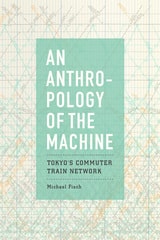
An Anthropology of the Machine
Tokyo's Commuter Train NetworkMichael Fisch
University of Chicago Press, 2018
An Anthropology of the Machine is a creative ethnographic study of the culture, history, and experience of commuting in Tokyo. At the same time, it is a theoretically ambitious attempt to think through our very relationship with technology and our possible ecological futures. Fisch provides an unblinking glimpse into what it might be like to inhabit a future in which more and more of our infrastructure—and the planet itself—will have to operate beyond capacity to accommodate our ever-growing population.
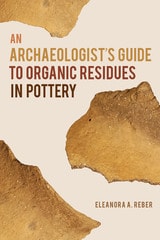
An Archaeologist's Guide to Organic Residues in Pottery
Eleanora A. Reber
University of Alabama Press, 2022
Unlock the chemical secrets of ancient pottery in this guide for mastering organic residue pottery analysis.
Pottery analysis is a crucial component of excavating an archaeological site. Organic residues in pottery are made up of chemicals that absorb into pots over their lifetime. These residues can reveal what people ate, whether different types of vessels were used for different cooking or foodstuffs preparation, and whether “elite” vessels were in use.
Organic residue analysis is a technical specialty that blends an unusual type of instrumental organic chemistry and archaeology. Because it is considered an obscure technique, archaeologists of all degrees of experience tend to struggle with how to apply the technology to archaeological questions and how to sample effectively in the field to answer these questions.
Eleanora A. Reber’s An Archaeologist’s Guide to Organic Residues in Pottery is a user-friendly resource for all archaeologists. Composed of case studies gleaned from Reber’s more than twenty years of archaeological research, this guide covers the range of residues encountered in the field and explains the methods and application of organic residue analysis.
Reber illustrates the useful aspects of residue analysis, such as compound-specific isotope analysis for the identification of traces of maize and marine resources, conifer resins, and the psychoactive alkaloid biomarkers caffeine and nicotine. Special attention is paid to sampling and construction of meaning as well as research questions to help field archaeologists integrate residue analysis seamlessly into their projects

An Errant Eye
Poetry and Topography in Early Modern FranceTom Conley
University of Minnesota Press, 2010
This tension, Conley demonstrates, cuts through literature and graphic matter of various shapes and forms-hybrid genres that include the comic novel, the emblem-book, the eclogue, sonnets, and the personal essay. An Errant Eye differs from historical treatments of spatial invention through Conley's argument that the topographic sensibility is one in which the ocular faculty, vital to the description of locale, is endowed with tact and touch.
Detailed close readings of Apian, Rabelais, Montaigne, and others empower the reader with a lively sense of the topographical impulse, deriving from Conley's own "errant eye," which is singularly discerning in attentiveness to the ambiguities of charted territory, the contours of woodcut images, and the complex combinations of word and figure in French Renaissance poetry, emblem, and politics.

An Introduction to Fractional Control
Duarte Valério
The Institution of Engineering and Technology, 2012

An Introduction to RF Stealth
David Lynch Jr.
The Institution of Engineering and Technology, 2021
An Introduction to Satellite Communications
D.I. Dalgleish
The Institution of Engineering and Technology, 1989
An Orderly Mess
Helga Nowotny
Central European University Press, 2017

Analog Circuit Design
Designing Amplifier Circuits, Volume 1D. Feucht
The Institution of Engineering and Technology, 2010
Analog Circuit Design
Designing Dynamic Circuit Response, Volume 2D. Feucht
The Institution of Engineering and Technology, 2010
Analog Circuit Design
Designing High-Performance Amplifiers, Volume 3D. Feucht
The Institution of Engineering and Technology, 2010
Analog Circuit Design
Designing Waveform-Processing Circuits, Volume 4D. Feucht
The Institution of Engineering and Technology, 2010
Analogue IC Design
The current-mode approachC. Toumazou
The Institution of Engineering and Technology, 1993
Analogue Optical Fibre Communications
B. Wilson
The Institution of Engineering and Technology, 1995
Analogue-digital ASICs
Circuit techniques, design tools and applicationsR.S. Soin
The Institution of Engineering and Technology, 1991
Analysis and Design of CMOS Clocking Circuits For Low Phase Noise
Woorham Bae
The Institution of Engineering and Technology, 2020

Analysis and Design of Reset Control Systems
Yuqian Guo
The Institution of Engineering and Technology, 2016
Analysis of Metallic Antennas and Scatterers
B.D. Popović
The Institution of Engineering and Technology, 1994
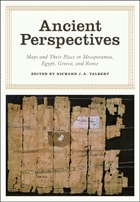
Ancient Perspectives
Maps and Their Place in Mesopotamia, Egypt, Greece, and RomeEdited by Richard J. A. Talbert
University of Chicago Press, 2012
Ancient Perspectives encompasses a vast arc of space and time—Western Asia to North Africa and Europe from the third millennium BCE to the fifth century CE—to explore mapmaking and worldviews in the ancient civilizations of Mesopotamia, Egypt, Greece, and Rome. In each society, maps served as critical economic, political, and personal tools, but there was little consistency in how and why they were made. Much like today, maps in antiquity meant very different things to different people.
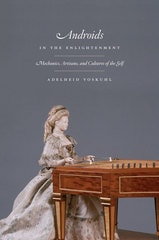
Androids in the Enlightenment
Mechanics, Artisans, and Cultures of the SelfAdelheid Voskuhl
University of Chicago Press, 2013

Angle-of-Arrival Estimation Using Radar Interferometry
Methods and applicationsJeff Holder
The Institution of Engineering and Technology, 2014

Animal Crossing
New Horizons: Can a Game Take Care of Us?Noah Wardrip-Fruin
University of Chicago Press, 2025
A moving, personal exploration of what we looked for, and found, in the gaming sensation Animal Crossing during and after the pandemi
Animal Crossing: New Horizons was released on March 20, 2020—just as a pandemic kept many from family, work, restaurants, and the rest of their regularly scheduled lives. At its height, the game averaged one million copies sold per day, as players sought comfort, escape, and a virtual means of connection. In this book, game scholar Noah Wardrip-Fruin, isolated with his family by both lockdown and disability, explores the power of this game and the mixed emotions of a player and a parent trying to make it from one day to the next—while his kids’ obsession with Animal Crossing creates conflicts between them and pushback against family rules.
Wardrip-Fruin helps both Animal Crossing fans and newcomers understand the unexpected beneath the game’s surface: like the story of the first Animal Crossing, codesigned by an absent father seeking connection; like the hallmarks of video game manipulation, from “streak” bonuses to game-determined playtimes; like the appeal of endless shopping, in a kind of “safe” capitalism; and, of course, like the character quirks of a raccoon dog, Tom Nook, who provides a world of both safety and strange paternalism.
For many, this blockbuster game offered a comforting world compared to a reality of danger. In this first entry in the Replay series, Wardrip-Fruin offers an absorbing investigation of a game’s role in contemporary social life and a book that belongs on the shelf of anyone who loves or is puzzled by this Nintendo sensation.

Animals as Food
(Re)connecting Production, Processing, Consumption, and ImpactsAmy J. Fitzgerald
Michigan State University Press, 2015

Animals under the Swastika
J. W. Mohnhaupt, translated by John R. J. Eyck
University of Wisconsin Press, 2022
Drawing from diaries, journals, school textbooks, and printed propaganda, J.W. Mohnhaupt tells these animals’ stories vividly and with an eye for everyday detail, focusing each chapter on a different facet of Nazism by way of a specific animal species: red deer, horses, cats, and more. Animals under the Swastika illustrates the complicated, thought-provoking relationship between Nazis and animals.
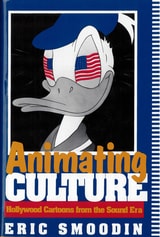
Animating Culture
Hollywood Cartoons from the Sound EraSmoodin, Eric
Rutgers University Press, 1993
Long considered "children's entertainment" by audiences and popular media, Hollywood animation has received little serious attention. Eric Smoodin's Animating Culture is the first and only book to thoroughly analyze the animated short film.
Usually running about seven or eight minutes, cartoons were made by major Hollywood studios––such as MGM, Warner Bros., and Disney––and shown at movie theaters along with a newsreel and a feature-length film. Smoodin explores animated shorta and the system that mass-produced them. How were cartoons exhibited in theaters? How did they tell their stories? Who did they tell them to? What did they say about race, class, and gender? How were cartoons related to the feature films they accompanied on the evening's bill of fare? What were the social functions of cartoon stars like Donald Duck and Minnie Mouse?
Smoodin argues that cartoons appealed to a wide audience––not just children––and did indeed contribute to public debate about political matters. He examines issues often ignored in discussions of animated film––issues such as social control in the U.S. army's "Private Snafu" cartoons, and sexuality and race in the "sites" of Betty Boop's body and the cartoon harem. Smoodin's analysis of the multiple discourses embedded in a variety of cartoons reveals the complex and sometimes contradictory ways that animation dealt with class relations, labor, imperialism, and censorship. His discussion of Disney and the Disney Studio's close ties with the U.S. government forces us to rethink the place of the cartoon in political and cultural life. Smoodin reveals the complex relationship between cartoons and the Hollywood studio system, and between cartoons and their audiences.

Antenna Analysis and Design using FEKO Electromagnetic Simulation Software
Atef Z. Elsherbeni
The Institution of Engineering and Technology, 2014

Antenna Booster Technology for Wireless Communications
Jaume Anguera
The Institution of Engineering and Technology, 2024
Antenna Solutions for Next Generation Enhanced Wireless Sensing Systems
Masood Ur-Rehman
The Institution of Engineering and Technology, 2026

Antennas and Propagation for 5G and Beyond
Qammer H. Abbasi
The Institution of Engineering and Technology, 2020
Antennas
Fundamentals, Design, Measurement, 3rd edn (Standard)Maurice Long
The Institution of Engineering and Technology, 2009
Antennas
Fundamentals, design, measurementLamont V. Blake
The Institution of Engineering and Technology, 2009
Aperture Antennas and Diffraction Theory
E.V. Jull
The Institution of Engineering and Technology, 1981
Appified
Culture in the Age of AppsJeremy Wade Morris and Sarah Murray, Editors
University of Michigan Press, 2018

Application of Dimensional Analysis in Systems Modeling and Control Design
Pedro Balaguer
The Institution of Engineering and Technology, 2013

Applications of Machine Learning and Data Analytics Models in Maritime Transportation
Ran Yan
The Institution of Engineering and Technology, 2022

Applications of Machine Learning in Digital Healthcare
Miguel Hernandez Silveira
The Institution of Engineering and Technology, 2022