Results by title
2194 books match the query 'Women's Studies' and 141 start with a
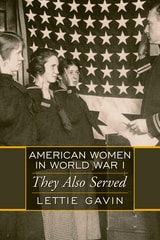
American Women in World War I
They Also ServedLettie Gavin
University Press of Colorado, 1997
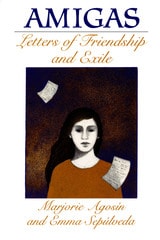
Amigas
Letters of Friendship and ExileBy Marjorie Agosín and Emma Sepúlveda
University of Texas Press, 2001
This collection of letters chronicles a remarkable, long-term friendship between two women who, despite differences of religion and ethnicity, have followed remarkably parallel paths from their first adolescent meeting in their native Chile to their current lives in exile as writers, academics, and political activists in the United States. Spanning more than thirty years (1966-2000), Agosín's and Sepúlveda's letters speak eloquently on themes that are at once personal and political—family life and patriarchy, women's roles, the loneliness of being a religious or cultural outsider, political turmoil in Chile, and the experience of exile.
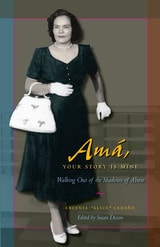
Amá, Your Story Is Mine
Walking Out of the Shadows of AbuseBy Ercenia "Alice" Cedeño
University of Texas Press, 2007
In the preface to her memoir, Ercenia "Alice" Cedeño recalls the secrecy and turmoil that marked her youth: "I spent most of my growing years mad at my mother and wanting her to change to fit in with the rest of the world," she writes. "When my sisters and I wanted her to visit our friends' mothers, she would say, 'Why do people need to know other peoples' lives?' Looking back, I wonder if she was really saying, 'I don't want them to know our business.' There was so much to hide."
Now bringing those hidden memories to light, Amá, Your Story Is Mine traces the hardship, violence, deceit, and defiance that shaped the identity of two generations of women in Alice's family. Born in the mountains of northern Mexico, Alice's mother married at age 14 into a family rife with passion that often turned to anger. After losing several infant children to disease, the young couple crossed into the United States seeking a better life.
Unfolding in a series of powerful vignettes, Amá, Your Story Is Mine describes in captivating detail a daring matriarch who found herself having to protect her children from their own father while facing the challenges of cultural discrimination. By turns wry and tender, Alice's recollections offer a rare memoir that fully encompasses the Latina experience in the United States.
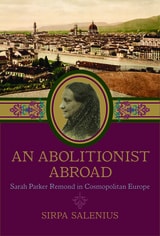
An Abolitionist Abroad
Sarah Parker Remond in Cosmopolitan EuropeSirpa Salenius
University of Massachusetts Press, 2016
Remond's extensive travels and diverse acquaintances demonstrate that the nineteenth-century grand tour of Europe was not exclusively the privilege of white intellectuals but included African American travelers, among them women. This biography, based on international archival research, tells the fascinating story of how Remond forged a radical path, establishing relationships with fellow activists, artists, and intellectuals across Europe.

An Alliance Of Women
Immigration And The Politics Of RaceHeather Merrill
University of Minnesota Press, 2006
Taking as a starting point the Italian crisis over immigration in the early 1990s, Merrill examines grassroots interethnic spatial politics among female migrants and Turin feminists in Northern Italy. Using rich ethnographic material, she traces the emergence of Alma Mater—an anti-racist organization formed to address problems encountered by migrant women. Through this analysis, Merrill reveals the dynamics of an alliance consisting of women from many countries of origin and religious and class backgrounds.
Highlighting an interdisciplinary approach to migration and the instability of group identities in contemporary Italy, An Alliance of Women presents migrants grappling with spatialized boundaries amid growing nativist and anti-immigrant sentiment in Western Europe.
Heather Merrill is assistant professor of geography and anthropology at Dickinson College.

An Efficient Womanhood
Women and the Making of the Universal Negro Improvement AssociationNatanya Duncan
University of Illinois Press, 2023
Founded in 1914 by Amy Ashwood and Marcus Garvey, the Universal Negro Improvement Association and African Communities League (commonly called the UNIA) grew into one of the largest social justice organizations of the twentieth century. Natanya Duncan’s collective biography explores women’s role in building the UNIA and how Ashwood’s strategy of efficient womanhood equipped them to confront political and social issues--even when it meant defying gender norms. Efficient womanhood took a three-tiered approach that asked UNIA women to seek equitable partners, take on roles as mentors, and connect resources and people to their communities and Black people at large. Strong believers in the necessity of their presence and voices, UNIA women developed leadership skills within and beyond the organization and used these skills in service to their communities.
Enlightening and in-depth, An Efficient Womanhood tells the story of the women who shaped a framework for leadership and engagement that remains a blueprint for activists today.
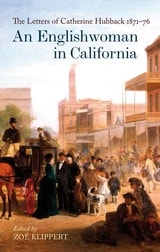
An Englishwoman in California
The Letters of Catherine Hubback, 1871-76Edited by Zoë Klippert
Bodleian Library Publishing, 2010
A niece of Jane Austen and a novelist herself, Catherine Hubback was fifty-two years old when she left England for America. She travelled to California on the Transcontinental Railroad and settled in Oakland, on the eastern shore of San Francisco Bay. Her son Edward shared her household and commuted by ferryboat to a wheat brokerage in the City.
In letters to her eldest son John and his wife Mary in Liverpool, Catherine conveys her delight – and her exasperation – at her new environment. She portrays her neighbours with a novelist's wry wit and brings her English sensibility to bear on gardening with unfamiliar plants and maintaining a proper wardrobe in a dry climate. She writes vividly of her adventures as she moves about a landscape recognizable to present-day residents, at a time when boats rather than bridges spanned the bay, and hot springs were the main attraction in the Napa Valley. In an atmosphere of financial unrest, she writes freely of her anxieties, while supplementing Edward's declining income by making lace and teaching the craft to other women. She recalls her 'prosperous days' in England, but finds pleasure in small things and assuredly takes her place in a society marked by great disparities in wealth.
In addition to transcriptions of the letters, this highly readable edition offers pertinent information on many of the people and places mentioned, explanatory notes, and striking illustrations. The introduction places the letters in context and tells the story of Catherine Hubback, whose life evolved in ways unprecedented in the Austen family.
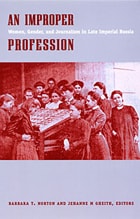
An Improper Profession
Women, Gender, and Journalism in Late Imperial RussiaBarbara T. Norton and Jehanne M Gheith, eds.
Duke University Press, 2001
In this collection, contributors explore how early women journalists contributed to changing cultural understandings of women’s roles, as well as how class and gender politics meshed in the work of particular individuals. They also examine how female journalists adapted to—or challenged—censorship as political structures in Russia shifted. Over the course of this volume, contributors discuss the attitudes of female Russian journalists toward socialism, Russian nationalism, anti-Semitism, women’s rights, and suffrage. Covering the period from the early 1800s to 1917, this collection includes essays that draw from archival as well as published materials and that range from biography to literary and historical analysis of journalistic diaries.
By disrupting conventional ideas about journalism and gender in late Imperial Russia, An Improper Profession should be of vital interest to scholars of women’s history, journalism, and Russian history.
Contributors. Linda Harriet Edmondson, June Pachuta Farris, Jehanne M Gheith, Adele Lindenmeyr, Carolyn Marks, Barbara T. Norton, Miranda Beaven Remnek, Christine Ruane, Rochelle Ruthchild, Mary Zirin

An Independent Woman
The Autobiography of Edith GuerrierEdith Guerrier
University of Massachusetts Press, 0
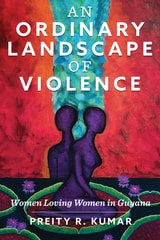
An Ordinary Landscape of Violence
Women Loving Women in GuyanaPreity R. Kumar
Rutgers University Press, 2024
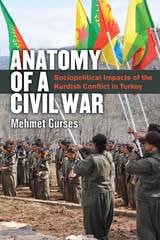
Anatomy of a Civil War
Sociopolitical Impacts of the Kurdish Conflict in TurkeyMehmet Gurses
University of Michigan Press, 2018

Ancient Sisterhood
The Lost Traditions of Hagar and SarahSavina J. Teubal
Ohio University Press, 1997
Ancient Sisterhood cites evidence that Hebrew women actually enjoyed the privileges and sanctity of their own religious practices. These practices, however, were gradually eroded and usurped by the establishment of patriarchal monarchies that were based on militaristic conquest and power. Teubal examines the figures of Hagar and Sarah from a feminist perspective that combines thorough scholarship with an informed and detailed understanding of the cultural and religious influences from which the mysterious biblical figure of Hagar emerged. She looks at Hagar's important role in the genesis of Hebrew culture, her role as mother of the Islamic nations, and her power as a matriarch as opposed to her apparent status as a concubine.
Teubal posits two distinct sources for the Hagar episodes: Hagar as companion to Sarah and an unknown woman whom she refers to as the desert matriarch. She explores whether Hagar was a slave to Abraham or Sarah, the differences between Hagar and the desert matriarch, and the obscurantism of these important elements in biblical texts. Teubal sheds considerable light on two central figures of these world religions and “the disassociation of woman from her own female religious experience.”
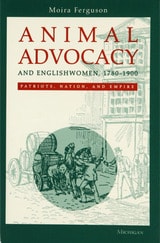
Animal Advocacy and Englishwomen, 1780-1900
Patriots, Nation, and EmpireMoira Ferguson
University of Michigan Press, 1998
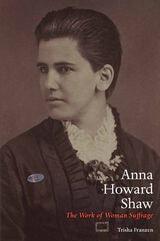
Anna Howard Shaw
The Work of Woman SuffrageTrisha Franzen
University of Illinois Press, 2014
With this first scholarly biography of Anna Howard Shaw (1847-1919), Trisha Franzen sheds new light on an important woman suffrage leader who has too often been overlooked and misunderstood.
An immigrant from a poor family, Shaw grew up in an economic reality that encouraged the adoption of non-traditional gender roles. Challenging traditional gender boundaries throughout her life, she put herself through college, worked as an ordained minister and a doctor, and built a tightly-knit family with her secretary and longtime companion Lucy E. Anthony.
Drawing on unprecedented research, Franzen shows how these circumstances and choices both impacted Shaw's role in the woman suffrage movement and set her apart from her native-born, middle- and upper-class colleagues. Franzen also rehabilitates Shaw's years as president of the National American Woman Suffrage Association, arguing that Shaw's much-belittled tenure actually marked a renaissance of both NAWSA and the suffrage movement as a whole.
Anna Howard Shaw: The Work of Woman Suffrage presents a clear and compelling portrait of a woman whose significance has too long been misinterpreted and misunderstood.
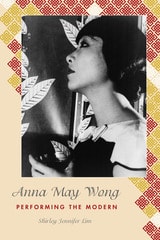
Anna May Wong
Performing the ModernShirley Jennifer Lim
Temple University Press, 2019
Finalist for the 2020 Organization of American Historians Mary Nickliss Prize
Pioneering Chinese American actress Anna May Wong made more than sixty films, headlined theater and vaudeville productions, and even starred in her own television show. Her work helped shape racial modernity as she embodied the dominant image of Chinese and, more generally, “Oriental” women between 1925 and 1940.
In Anna May Wong, Shirley Jennifer Lim re-evaluates Wong’s life and work as a consummate artist by mining an historical archive of her efforts outside of Hollywood cinema. From her pan-European films and her self-made My China Film to her encounters with artists such as Josephine Baker, Carl Van Vechten, and Walter Benjamin, Lim scrutinizes Wong’s cultural production and self-fashioning. Byconsidering the salient moments of Wong’s career and cultural output, Lim’s analysis explores the deeper meanings, and positions the actress as an historical and cultural entrepreneur who rewrote categories of representation.
Anna May Wong provides a new understanding of the actress’s career as an ingenious creative artist.

Anne Sexton
Telling the TaleSteven E. Colburn, Editor
University of Michigan Press, 1988
Annie Adams Fields
Woman of LettersRita Gollin
University of Massachusetts Press, 0
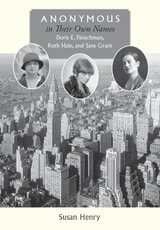
Anonymous in Their Own Names
Doris E. Fleischman, Ruth Hale, and Jane GrantSusan Henry
Vanderbilt University Press, 2012
Yet these women's achievements have been invisible to countless authors who have written about their husbands. This invisibility is especially ironic given that all three were feminists who kept their birth names when they married as a sign of their equality with their husbands, then battled the government and societal norms to retain their names. Hale and Grant so believed in this cause that in 1921 they founded the Lucy Stone League to help other women keep their names, and Grant and Fleischman revived the league in 1950. This was the same year Grant and her second husband, William Harris, founded White Flower Farm, pioneering at that time and today one of the country's most celebrated commercial nurseries.
Despite strikingly different personalities, the three women were friends and lived in overlapping, immensely stimulating New York City circles. Susan Henry explores their pivotal roles in their husbands' extraordinary success and much more, including their problematic marriages and their strategies for overcoming barriers that thwarted many of their contemporaries.
Anthropological Lives
An Introduction to the Profession of AnthropologyVirginia R Dominguez
Rutgers University Press, 2020
Anthropologists profiled: Leslie Aiello, Lee Baker, João Biehl, Tom Boellstorff, Jacqueline Comito, Shannon Dawdy, Virginia R. Dominguez, T.J. Ferguson, Brigittine French, Agustín Fuentes, Amy Goldenberg, Mary Gray, Sarah Green, Monica Heller, Douglas Hertzler, Ed Liebow, Mariano Perelman, Jeremy Sabloff, Carolyn Sargent, Marilyn Strathern, Nandini Sundar, Alaka Wali.
Anthropology at the Front Lines of Gender-Based Violence
Jennifer R. Wies
Vanderbilt University Press, 2011

Anti-fascism in European History
From the 1920s to TodayJože Pirjevec
Central European University Press, 2023
The increasing radicalization of political life in most countries in Europe lends special relevance to studies of the antifascist legacies on the continent. This insightful collection of essays is an in-depth review of antifascism in Slovenia, setting it in the context of related movements elsewhere in Europe. The period treated by the 19 essays comprises the interwar period, World War Two, and the post-war decades. The comparative and transnational perspectives advanced by the volume change our understanding of antifascism.
The essays deal with the right-wing but also left-wing instrumentalization of antifascism, with a particular focus on the communist and post-communist periods. The authors point out that antifascism comes in various strains, whether inspired by liberalism, social democracy, communism, monarchism, anarchism, or even Christian conservatism. The contributors bring to light several overlooked antifascist actors, campaigns, and organisations, mostly in Slovenia and the Adriatic area.
Aphrodite's Daughters
Three Modernist Poets of the Harlem RenaissanceHoney, Maureen
Rutgers University Press, 2016
Approaching the Millennium
Essays on Angels in AmericaDeborah R. Geis and Steven F. Kruger, Editors
University of Michigan Press, 1997
Appropriate[Ing] Dress
Women's Rhetorical Style in Nineteenth-Century AmericaCarol Mattingly
Southern Illinois University Press, 2002
Carol Mattingly examines the importance of dress and appearance for nineteenth-century women speakers and explores how women appropriated gendered conceptions of dress and appearance to define the struggle for representation and power that is rhetoric. Although crucial to women’s effectiveness as speakers, Mattingly notes, appearance has been ignored because it was taken for granted by men.
Because women rarely spoke in public before the nineteenth century, no guidelines existed regarding appropriate dress when they began to speak to audiences. Dress evoked immediate images of gender, an essential consideration for women speakers because of its strong association with place, locating women in the domestic sphere and creating a primary image that women speakers would work with—and against—throughout the century. Opposition to conspicuous change for women often necessitated the subtle transfer of comforting images when women sought to inhabit traditionally masculine spaces. The most successful women speakers carefully negotiated expectations by highlighting some conventions even as they broke others.
Appropriately Indian
Gender and Culture in a New Transnational ClassSmitha Radhakrishnan
Duke University Press, 2011
Radhakrishnan explains how this transnational class creates an Indian culture that is self-consciously distinct from Western culture, yet compatible with Western cosmopolitan lifestyles. She describes the material and symbolic privileges that accrue to India’s high-tech workers, who often claim ordinary middle-class backgrounds, but are overwhelmingly urban and upper caste. They are also distinctly apolitical and individualistic. Members of this elite class practice a decontextualized version of Hinduism, and they absorb the ideas and values that circulate through both Indian and non-Indian multinational corporations. Ultimately, though, global Indianness is rooted and configured in the gendered sphere of home and family.

Are You Two Sisters?
The Journey of a Lesbian CoupleSusan Krieger
Temple University Press, 2022
Authored by one of the most respected figures in the field of personal ethnographic narrative, this book serves as both a memoir and a sociological study, telling the story of one lesbian couple’s lifelong journey together.
Are You Two Sisters? is Susan Krieger’s candid, revealing, and engrossing memoir about the intimacies of a lesbian couple. Krieger explores how she and her partner confront both the inner challenges of their relationship and the invisibility of lesbian identity in the larger world.
Using a lively novelistic and autoethnographic approach that toggles back and forth in time, Krieger reflects on the evolution of her forty-year relationship. She describes building a life together, from sharing pets and travels to getting married. Are You Two Sisters? addresses not only questions of gender and sexuality, but also of disability, as Krieger explores how the couple adapts to her increasing blindness.
Krieger’s title comes from a question asked by a stranger outside a remote desert bar as she and her partner traveled in the Southwest. Her apprehension about answering that question suggests how, even after the legalization of gay marriage, lesbianism often remains hidden—an observation that makes Krieger’s poignant narrative all the more moving.
Arguments with Silence
Writing the History of Roman WomenAmy Richlin
University of Michigan Press, 2014
Women in ancient Rome challenge the historian. Widely represented in literature and art, they rarely speak for themselves. Amy Richlin, among the foremost pioneers in ancient studies, gives voice to these women through scholarship that scours sources from high art to gutter invective.
In Arguments with Silence, Richlin presents a linked selection of her essays on Roman women’s history, originally published between 1981 and 2001 as the field of “women in antiquity” took shape, and here substantially rewritten and updated. The new introduction to the volume lays out the historical methodologies these essays developed, places this process in its own historical setting, and reviews work on Roman women since 2001, along with persistent silences. Individual chapter introductions locate each piece in the social context of Second Wave feminism in Classics and the academy, explaining why each mattered as an intervention then and still does now.
Inhabiting these pages are the women whose lives were shaped by great art, dirty jokes, slavery, and the definition of adultery as a wife’s crime; Julia, Augustus’ daughter, who died, as her daughter would, exiled to a desert island; women wearing makeup, safeguarding babies with amulets, practicing their religion at home and in public ceremonies; the satirist Sulpicia, flaunting her sexuality; and the praefica, leading the lament for the dead.
Amy Richlin is one of a small handful of modern thinkers in a position to consider these questions, and this guided journey with her brings surprise, delight, and entertainment, as well as a fresh look at important questions.
Arms And The Enlisted Woman
Judith Hicks Stiehm
Temple University Press, 1989
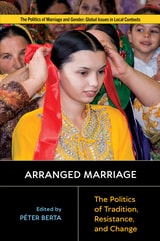
Arranged Marriage
The Politics of Tradition, Resistance, and ChangePéter Berta
Rutgers University Press, 2023

Artificial Paradise
Science Fiction and American RealitySharona Ben-Tov
University of Michigan Press, 1995
As If!
Queer Criticism Across DifferenceChase Gregory
Duke University Press, 2025
Asexual Erotics
Intimate Readings of Compulsory SexualityEla Przybylo
The Ohio State University Press, 2019
Through a wide-ranging analysis of pivotal queer, feminist, and anti-racist movements; television and film; art and photography; and fiction, nonfiction, and theoretical texts, each chapter explores asexual erotics and demonstrates how asexuality has been vital to the formulation of intimate ways of knowing and being. Asexual Erotics assembles a compendium of asexual possibilities that speaks against the centralization of sex and sexuality, asking that we consider the ways in which compulsory sexuality is detrimental not only to asexual and nonsexual people but to all.
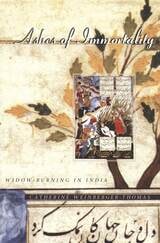
Ashes of Immortality
Widow-Burning in IndiaCatherine Weinberger-Thomas
University of Chicago Press, 1999
Ashes of Immortality attempts to see the satis through Hindu eyes, providing an extensive experiential and psychoanalytic account of ritual self-sacrifice and self-mutilation in South Asia. Based on fifteen years of fieldwork in northern India, where the state-banned practice of sati reemerged in the 1970s, as well as extensive textual analysis, Weinberger-Thomas constructs a radically new interpretation of satis. She shows that their self-immolation transcends gender, caste and class, region and history, representing for the Hindus a path to immortality.
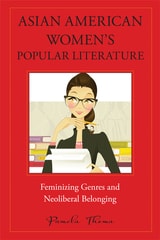
Asian American Women's Popular Literature
Feminizing Genres and Neoliberal BelongingPamela Thoma
Temple University Press, 2013
A volume in the American Literatures Initiative.
At Last She Said It
Honest Conversations About Faith, Church, and Everything in BetweenSusan Hinckley and Cynthia Winward
Signature Books, 2025
“Women of faith, discussing complicated things.” That’s how authors Susan Hinckley and Cynthia Winward describe At Last She Said It, and they don’t expect the knots to untangle themselves. Even with two very different personalities and a decade or so between them, as their friendship developed they kept stumbling onto what felt like an uncanny amount of common ground in their church experiences. Often their conversations ended with, “Why isn’t anyone talking about this? Someone should do a podcast!” So they did. They had a hunch they weren’t the only women wishing they had a place to discuss the things they were thinking about, a lot of which they’d never said—or heard—out loud. That hunch was right. Their 200-and-counting recorded conversations have been downloaded some two million times. Hinckley and Winward have learned, right along with their listeners, that there’s no power quite like finding out you’re not alone.
Their book now asks Latter-day Saints to think about old ideas in new ways. Stretching can be uncomfortable, but the willingness to consider diverse perspectives—even on the things we hold most dear—feels essential in an evolving world. So does being open to changing our minds, including how we think about ourselves. Faith is alive when it’s growing, and growing means change. Hopefully, these conversations will be the beginning of thousands more.
At Last She Said It
Honest Conversations About Faith, Church, and Everything in BetweenSusan Hinckley and Cynthia Winward
Signature Books, 2025
“Women of faith, discussing complicated things.” That’s how authors Susan Hinckley and Cynthia Winward describe At Last She Said It, and they don’t expect the knots to untangle themselves. Even with two very different personalities and a decade or so between them, as their friendship developed they kept stumbling onto what felt like an uncanny amount of common ground in their church experiences. Often their conversations ended with, “Why isn’t anyone talking about this? Someone should do a podcast!” So they did. They had a hunch they weren’t the only women wishing they had a place to discuss the things they were thinking about, a lot of which they’d never said—or heard—out loud. That hunch was right. Their 200-and-counting recorded conversations have been downloaded some two million times. Hinckley and Winward have learned, right along with their listeners, that there’s no power quite like finding out you’re not alone.
Their book now asks Latter-day Saints to think about old ideas in new ways. Stretching can be uncomfortable, but the willingness to consider diverse perspectives—even on the things we hold most dear—feels essential in an evolving world. So does being open to changing our minds, including how we think about ourselves. Faith is alive when it’s growing, and growing means change. Hopefully, these conversations will be the beginning of thousands more.
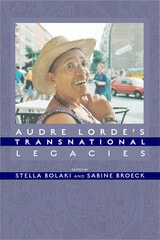
Audre Lorde’s Transnational Legacies
Stella Bolaki
University of Massachusetts Press, 2015
Audre Lorde's Transnational Legacies is the first book to systematically document and thoroughly investigate Lorde's influence beyond the United States. Arranged in three thematically interrelated sections—Archives, Connections, and Work—the volume brings together scholarly essays, interviews, Lorde's unpublished speech about Europe, and personal reflections and testimonials from key figures throughout the world. Using a range of interdisciplinary approaches, contributors assess the reception, translation, and circulation of Lorde's writing and activism within different communities, audiences, and circles. They also shed new light on the work Lorde inspired across disciplinary borders.
In addition the volume editors, contributors include Sarah Cefai, Cassandra Ellerbe-Dueck, Paul M. Farber, Tiffany N. Florvil, Katharina Gerund, Alexis Pauline Gumbs, Gloria Joseph, Jackie Kay, Marion Kraft, Christiana Lambrinidis, Zeedah Meierhofer-Mangeli, Rina Nissim, Chantal Oakes, Lester C. Olson, Pratibha Parmar, Peggy Piesche, Dagmar Schultz, Tamara Lea Spira, and Gloria Wekker.

Authenticity Guaranteed
Masculinity and the Rhetoric of Anti-Consumerism in American CultureSally Robinson
University of Massachusetts Press, 2018
Americans love to hate consumerism. Scholars, intellectuals, musicians, and writers of all kinds take pleasure in complaining that consumer culture endangers the “real” things in life, including self-determination and individualism. In Authenticity Guaranteed, Sally Robinson brings to light the unacknowledged gender and class assumptions of anti-consumerist critique in the second half of the twentieth century. American anti-consumerism, despite its apparent complexity, takes a remarkably consistent and predictable narrative form. From the mid-century Organization Man to the millennial No Logo, anti-consumerist critique reinforces the gender order by insisting that authenticity is threatened, and masculine agency curtailed, by the feminizing forces of consumer culture.
Robinson identifies a tradition of masculine protest and rebellion against feminization in iconic texts such as The Catcher in the Rye and Fight Club, as well as in critiques of postmodernism, academic denunciations of shopping, and a variety of other discourses that aim to diagnose what ails American consumer culture. This fresh and timely argument enters into conversation with a wide range of existing scholarship and opens up new questions for scholarly and political discussion.
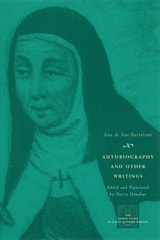
Autobiography and Other Writings
Ana de San Bartolomé
University of Chicago Press, 2008
Her autobiography, clearly inseparable from her religious vocation, expresses the tensions and conflicts that often accompanied the lives of women whose relationship to the divine endowed them with an authority at odds with the temporary powers of church and state. Last translated into English in 1916, Ana’s writings give modern readers fascinating insights into the nature of monastic life during the highly charged religious and political climate of late-sixteenth- and early-seventeenth-century Spain.
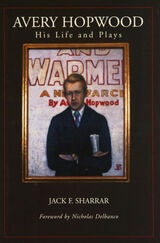
Avery Hopwood
His Life and PlaysJack F. Sharrar
University of Michigan Press, 1998
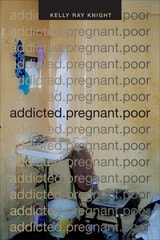
addicted.pregnant.poor
Kelly Ray Knight
Duke University Press, 2015