Results by title
22279 books match the query 'Social Science' and 1819 start with a

Avala Is Falling
Biljana Jovanovic
Central European University Press, 2020
In Avala Is Falling, Jovanović’s breakout success in 1978, a young woman challenges the expectations that teachers, parents, bus drivers, and doctors have for her. The “Avala” of the title refers to a mountain south of Belgrade which is home to some of Serbia’s most important nationalist monuments and shrines; it is also the site of the main mental hospital for the region, and its “falling” is the unexpected fulfillment of a prophecy from a traditional Serbian folk song. Jovanović’s use of stream of consciousness in her characters’ thinking and speaking, as well as of intertextuality in description and plot advancement heralded the arrival of an innovative new writer who was determined to break with the of traditional concerns of earlier women writers.
This book is now recognized as much more than “jeans prose,” although the fame the book achieved under that characterization eventually pushed it to cult status. Jovanović is now considered a major avant-garde writer, whose stylistic innovations were as challenging as her women-centered themes.
Averting the Apocalypse
Social Movements in India TodayArthur Bonner
Duke University Press, 1990
Bonner finds that India’s inability or refusal to address its debilitating social structure may be the precursor to an apocalyptic social upheaval unless heed is paid to the social movements that his first-hand investigation reveals.

Avery Hopwood
His Life and PlaysJack F. Sharrar
University of Michigan Press, 1998
Avian Reservoirs
Virus Hunters and Birdwatchers in Chinese Sentinel PostsFrédéric Keck
Duke University Press, 2020
Avocado Dreams
Remaking Salvadoran Life and Art in the Washington, D.C. Metro AreaAna Patricia Rodríguez
University of Arizona Press, 2025
In Avocado Dreams, Ana Patricia Rodríguez draws from her own positionality as a Salvadoran transplant to examine the construction of the unique Salvadoran cultural imaginary made in the greater D.C. area. Through a careful reading of the creative works of local writers, performers, artists, and artivists, Rodríguez demonstrates how the people have remade themselves in relation to the cultural, ethnoracial, and sociolinguistic diversity of the area. She discusses how Salvadoran people have developed unique, intergenerational Salvadoreñidades, manifested in particular speech and symbolic acts, ethnoracial embodiments, and local identity formations in relation to the diverse communities, most notably Black Washingtonians, who co-inhabit the region.
This timely and relevant work not only enriches our understanding of Salvadoran diasporic experiences but also contributes significantly to broader discussions on migration, identity, and cultural production in the United States.

Awakening to Equality
A Young White Pastor at the Dawn of Civil RightsKarl E. Lutze
University of Missouri Press, 2006
Awakening to Race
Individualism and Social Consciousness in AmericaJack Turner
University of Chicago Press, 2012

Awesome Families
The Promise of Healing Relationships in the International Churches of ChristKathleen Jenkins
Rutgers University Press, 2005
Denounced by some as a dangerous cult and lauded by others as a miraculous faith community, the International Churches of Christ was a conservative evangelical Christian movement that grew rapidly in the 1980s and 1990s.
Among its followers, promises to heal family relationships were central to the group's appeal. Members credit the church for helping them develop so-called "awesome families"-successful marriages and satisfying relationships with children, family of origin, and new church "brothers and sisters." The church engaged an elaborate array of services, including round-the-clock counseling, childcare, and Christian dating networks-all of which were said to lead to fulfilling relationships and exciting sex lives. Before the unified movement's demise in 2003-2004, the lure of blissful family-life led more than 100,000 individuals worldwide to be baptized into the church.
In Awesome Families, Kathleen Jenkins draws on four years of ethnographic research to explain how and why so many individuals-primarily from middle- to upper-middle-class backgrounds-were attracted to this religious group that was founded on principles of enforced community, explicit authoritative relationships, and therapeutic ideals. Weaving classical and contemporary social theory, she argues that members were commonly attracted to the structure and practice of family relationships advocated by the church, especially in the context of contemporary society where gender roles and family responsibilities are often ambiguous.
Tracing the rise and fall of this fast-growing religious movement, this timely study adds to our understanding of modern society and offers insight to the difficulties that revivalist movements have in sustaining growth.

Awful Archives
Conspiracy Theory, Rhetoric, and Acts of EvidenceJenny Rice
The Ohio State University Press, 2020
After sketching a broader framework for understanding what evidence is, Awful Archives then asks how we can practice more ethical and productive forms of debate, especially when we’re faced with arguments that feel like a dead end. Thorough, engaging, and deeply insightful, Awful Archives:Conspiracy Theory, Rhetoric, and Acts of Evidence introduces an entirely new perspective on evidence—one that will impact the field for years to come.
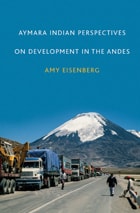
Aymara Indian Perspectives on Development in the Andes
Amy Eisenberg
University of Alabama Press, 2013
Aymara Indians are a geographically isolated, indigenous people living in the Andes Mountains near Chile’s Atacama Desert, one of the most arid regions of the world. As rapid economic growth in the area has begun to divert scarce water to hydroelectric and agricultural projects, the Aymara struggle to maintain their sustainable and traditional systems of water use, agriculture, and pastoralism.
In Aymara Indian Perspectives on Development in the Andes, Amy Eisenberg provides a detailed exploration of the ethnoecological dimensions of the tension between the Aymara, whose economic, spiritual, and social life are inextricably tied to land and water, and three major challenges: the paving of Chile Highway 11, the diversion of the Altiplano waters of the Río Lauca for irrigation and power-generation, and Chilean national park policies regarding Aymara communities, their natural resources, and cultural properties within Parque Nacional Lauca, the International Biosphere Reserve.
Pursuing collaborative research, Eisenberg performed ethnographic interviews with Aymara people in more than sixteen Andean villages, some at altitudes of 4,600 meters. Drawing upon botany, agriculture, natural history, physical and cultural geography, history, archaeology, and social and environmental impact assessment, she presents deep, multifaceted insights from the Aymara’s point of view.
Illustrated with maps and dramatic photographs by John Amato, Aymara Indian Perspectives on Development in the Andes provides an account of indigenous perspectives and concerns related to economic development that will be invaluable to scholars and policy-makers in the fields of natural and cultural resource preservation in and beyond Chile.
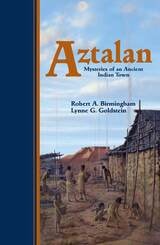
Aztalan
Mysteries of an Ancient Indian TownRobert A. Birmingham and Lynne Goldstein
Wisconsin Historical Society Press, 2006
Birmingham and Goldstein attempt to unlock some of the mysteries, providing insights and information about the group of people who first settled here in 1100 AD. Filled with maps, drawings, and photographs of artifacts, this small volume examines a time before modern Native American people settled in this area.
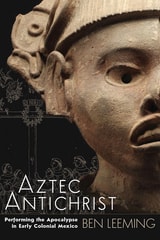
Aztec Antichrist
Performing the Apocalypse in Early Colonial MexicoBen Leeming
University Press of Colorado, 2022
Discovered in the archives of the Hispanic Society of America in New York inside a notebook of miscellaneous Nahuatl-Christian texts written almost entirely by an Indigenous writer named Fabían de Aquino, the plays are filled with references to human sacrifice, bloodletting, ritual divination, and other religious practices declared “idolatrous” at a time when ecclesiastical authorities actively sought to suppress writing about Indigenous religion. These are Indigenous plays for an Indigenous audience that reveal how Nahuas made sense of Christianity and helped form its colonial image—the title figure is a powerful Indigenous being, an “Aztec Antichrist,” who violently opposes the evangelizing efforts of the church and seeks to draw converted Nahuas back to the religious practices of their ancestors. These practices include devotion to Nahua deities such as Tlaloc, Quetzalcoatl, and Tezcatlipoca who, in one of the most striking moves made by Aquino, are cast as characters in the plays.
Along with the translations, Leeming provides context and analysis highlighting these rare and fascinating examples of early Indigenous American literature that offer a window into the complexity of Nahua interactions with Christianity in the early colonial period. The work is extremely valuable to all students and scholars of Latin American religion, colonialism, Indigenous history, and early modern history and theater.
Aztec Ceremonial Landscapes
Davíd Carrasco
University Press of Colorado, 1999
Aztec City-States
Mary G. Hodge
University of Michigan Press, 1984
Aztec Music and Dance in California
Kristina F. Nielsen
University of Illinois Press, 2026
Aztecs, Moors, and Christians
Festivals of Reconquest in Mexico and SpainBy Max Harris
University of Texas Press, 2000
In villages and towns across Spain and its former New World colonies, local performers stage mock battles between Spanish Christians and Moors or Aztecs that range from brief sword dances to massive street theatre lasting several days. The festival tradition officially celebrates the triumph of Spanish Catholicism over its enemies, yet this does not explain its persistence for more than five hundred years nor its widespread diffusion.
In this insightful book, Max Harris seeks to understand Mexicans' "puzzling and enduring passion" for festivals of moros y cristianos. He begins by tracing the performances' roots in medieval Spain and showing how they came to be superimposed on the mock battles that had been a part of pre-contact Aztec calendar rituals. Then using James Scott's distinction between "public" and "hidden transcripts," he reveals how, in the hands of folk and indigenous performers, these spectacles of conquest became prophecies of the eventual reconquest of Mexico by the defeated Aztec peoples. Even today, as lively descriptions of current festivals make plain, they remain a remarkably sophisticated vehicle for the communal expression of dissent.
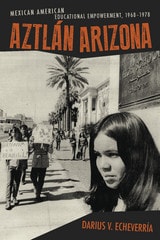
Aztlán Arizona
Mexican American Educational Empowerment, 1968–1978Darius V. Echeverría
University of Arizona Press, 2014
The word Aztlán, originally meaning the legendary ancestral home of the Nahua peoples of Mesoamerica, was adopted as a symbol of independence by Chicano/a activists during the movement of the 1960s and 1970s. In an era when poverty, prejudice, and considerable oppositional forces blighted the lives of roughly one-fifth of Arizonans, the author argues that understanding those societal realities is essential to defining the rise and power of the Chicano Movement.
The book illustrates how Mexican American communities fostered a togetherness that ultimately modified larger Arizona society by revamping the educational history of the region. The concluding chapter outlines key Mexican American individuals and organizations that became politically active in order to address Chicano educational concerns. This Chicano unity, reflected in student, parent, and community leadership organizations, helped break barriers, dispel the Mexican American inferiority concept, and create educational change that benefited all Arizonans.
No other scholar has examined the emergence of Chicano Movement politics and its related school reform efforts in Arizona. Echeverría’s thorough research, rich in scope and interpretation, is coupled with detailed and exact endnotes. The book helps readers understand the issues surrounding the Chicano Movement educational reform and ethnic identity. Equally important, the author shows how residual effects of these dynamics are still pertinent today in places such as Tucson.
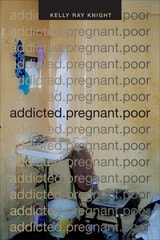
addicted.pregnant.poor
Kelly Ray Knight
Duke University Press, 2015

an other
a black feminist consideration of animal lifeSharon Patricia Holland
Duke University Press, 2023