Results by title
4413 books match the query 'Anthropology' and 363 start with a
Alcohol in Ancient Mexico
Henry Bruman
University of Utah Press, 2000
Alcohol in Ancient Mexico reconstructs the variety and extent of distillation traditions in the ancient cultures of Mexico, describing in detail the various plants and processes used to make such beverages, their prevalence, and their significance for local culture.
The art of distillation arrived in Mexico with the Spaniards in the sixteenth century. However, well before that time, native skills and available resources had contributed to a well-developed tradition of intoxicating beverages, many of which are still produced and consumed.
In the 1930’s Henry Bruman visited various Mexican and Central American Indian tribes to reconstruct the variety and extent of these ancient traditions. He discerned five distinct areas defined by the culturally most significant beverages, all superimposed over the great mescal wine region. Within these five areas he noted wine made from cactus, cactus fruit, cornstalks, and mesquite pods; beer from sprouted maize; and fermented sap from pulque agaves.
Outside the mescal region he observed widespread consumption in the Yucatan of a wine made from fermented honey and balché bark, plus lesser-known beverages in other regions. He also observed the frequent inclusion in the fermentation process of alkaloid-bearing ingredients such as peyote and tobacco, plants whose roots or bark contain saponins—which act as cardiac poisons—and even poisons from certain toads.
Alcohol in Ancient Mexico also considers the relative absence of alcoholic drink in the southwestern United States, the introduction of sills following the Spanish conquest, and possible sources for the introduction of coconut wine.
Previously unpublished, the research presented here retains its relevance today, and the photographs offer a fascinating glimpse at a traditional world that has now almost vanished.
Aleutian Ethnography
Lucien Turner
University of Alaska Press, 2008

Alex and the Hobo
A Chicano Life and StoryBy José Inez Taylor and James M. Taggart
University of Texas Press, 2003
When a ten-year-old boy befriends a mysterious hobo in his southern Colorado hometown in the early 1940s, he learns about evil in his community and takes his first steps toward manhood by attempting to protect his new friend from corrupt officials. Though a fictional story, Alex and the Hobo is written out of the life experiences of its author, José Inez (Joe) Taylor, and it realistically portrays a boy's coming-of-age as a Spanish-speaking man who must carve out an honorable place for himself in a class-stratified and Anglo-dominated society.
In this innovative ethnography, anthropologist James Taggart collaborates with Joe Taylor to explore how Alex and the Hobo sprang from Taylor's life experiences and how it presents an insider's view of Mexicano culture and its constructions of manhood. They frame the story (included in its entirety) with chapters that discuss how it encapsulates notions that Taylor learned from the Chicano movement, the farmworkers' union, his community, his father, his mother, and his religion. Taggart gives the ethnography a solid theoretical underpinning by discussing how the story and Taylor's account of how he created it represent an act of resistance to the class system that Taylor perceives as destroying his native culture.
Alien Encounters
Popular Culture in Asian AmericaMimi Thi Nguyen and Thuy Linh Nguyen Tu, eds.
Duke University Press, 2007
This interdisciplinary collection brings together contributors working in Asian American studies, English, anthropology, sociology, and art history. They consider issues of cultural authenticity raised by Asian American participation in hip hop and jazz, the emergence of an orientalist “Indo-chic” in U.S. youth culture, and the circulation of Vietnamese music variety shows. They examine the relationship between Chinese restaurants and American culture, issues of sexuality and race brought to the fore in the video performance art of a Bruce Lee–channeling drag king, and immigrant television viewers’ dismayed reactions to a Chinese American chef who is “not Chinese enough.” The essays in Alien Encounters demonstrate the importance of scholarly engagement with popular culture. Taking popular culture seriously reveals how people imagine and express their affective relationships to history, identity, and belonging.
Contributors. Wendy Hui Kyong Chun, Kevin Fellezs, Vernadette Vicuña Gonzalez, Joan Kee, Nhi T. Lieu, Sunaina Maira, Martin F. Manalansan IV, Mimi Thi Nguyen, Robyn Magalit Rodriguez, Sukhdev Sandhu, Christopher A. Shinn, Indigo Som, Thuy Linh Nguyen Tu, Oliver Wang

Alien Identities
Exploring Differences in Film and FictionEdited by Deborah Cartmell, Heidi Kaye, I. Q. Hunter, and Imelda Whelehan
Pluto Press, 1999
Aliens R Us
The Other in Science Fiction CinemaEdited by Ziauddin Sardar and Sean Cubitt
Pluto Press, 2002

Aliens
An Anthropology of Science FictionEdited by George E. Slusser and Eric S. Rabkin
Southern Illinois University Press, 1987
How and when does there come to be an “anthropology of the alien?” This set of essays, written for the eighth J. Lloyd Eaton Conference on Fantasy and Science Fiction, is concerned with the significance of that question. “[Anthropology] is the science that must designate the alien ifit is to redefine a place for itself in the universe,” according to the Introduction.
The idea of the alien is not new. In the Renaissance, Montaigne’s purpose in describing an alien encounter was excorporation—mankind was the “savage” because the artificial devices of nature controlled him. Shakespeare’s version of the alien encounter was incorporation; his character of Caliban is brought to the artificial, political world of man and incorporated into the body politic
“The essays in this volume . . . show, in their general orientation, that the tribe of
This book is divided into three parts: “Searchings: The Quest for the Alien” includes “The Aliens in Our Mind,” by Larry Niven; “Effing the Ineffable,” by Gregory Benford; “Border Patrols,” by Michael Beehler; “Alien Aliens,” by Pascal Ducommun; and “Metamorphoses of the Dragon,” by George E. Slusser.
“Sightings: The Aliens among Us” includes “Discriminating among Friends,” by John Huntington; “Sex, Superman, Sociobiology,” by Joseph D. Miller; “Cowboys and Telepaths,” by Eric S. Rabkin; “Robots,” by Noel Perrin; “Aliens in the Supermarket,” by George R. Guffey; and “Aliens ‘R’ U.S.,” by Zoe Sofia.
Alive in the Writing
Crafting Ethnography in the Company of ChekhovKirin Narayan
University of Chicago Press, 2012
Anton Chekhov is revered as a boldly innovative playwright and short story writer—but he wrote more than just plays and stories. In Alive in the Writing—an intriguing hybrid of writing guide, biography, and literary analysis—anthropologist and novelist Kirin Narayan introduces readers to some other sides of Chekhov: his pithy, witty observations on the writing process, his life as a writer through accounts by his friends, family, and lovers, and his venture into nonfiction through his book Sakhalin Island. By closely attending to the people who lived under the appalling conditions of the Russian penal colony on Sakhalin, Chekhov showed how empirical details combined with a literary flair can bring readers face to face with distant, different lives, enlarging a sense of human responsibility.
Highlighting this balance of the empirical and the literary, Narayan calls on Chekhov to bring new energy to the writing of ethnography and creative nonfiction alike. Weaving together selections from writing by and about him with examples from other talented ethnographers and memoirists, she offers practical exercises and advice on topics such as story, theory, place, person, voice, and self. A new and lively exploration of ethnography, Alive in the Writing shows how the genre’s attentive, sustained connection with the lives of others can become a powerful tool for any writer.
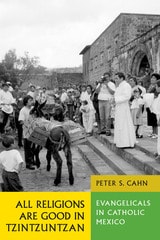
All Religions Are Good in Tzintzuntzan
Evangelicals in Catholic MexicoBy Peter S. Cahn
University of Texas Press, 2003
Since the 1960s, evangelical Christian denominations have made converts throughout much of Roman Catholic Latin America, causing clashes of faith that sometimes escalate to violence. Yet in one Mexican town, Tzintzuntzan, the appearance of new churches has provoked only harmony. Catholics and evangelicals alike profess that "all religions are good," a sentiment not far removed from "here we are all equal," which was commonly spoken in the community before evangelicals arrived.
In this paradigm-challenging study, Peter Cahn investigates why the coming of evangelical churches to Tzintzuntzan has produced neither the interfaith clashes nor the economic prosperity that evangelical conversion has brought to other communities in Mexico and Latin America. Drawing on extensive ethnographic fieldwork, he demonstrates that the evangelicals' energetic brand of faith has not erupted into violence because converts continue to participate in communal life, while Catholics, in turn, participate in evangelical practices. He also underscores how Tzintzuntzan's integration into global economic networks strongly motivates the preservation of community identity and encourages this mutual borrowing. At the same time, however, Cahn concludes that the suppression of religious difference undermines the revolutionary potential of religion.

All That Was Not Her
Todd Meyers
Duke University Press, 2022

All Things Common
The Hutterian Way of LifeVictor Peters
University of Minnesota Press, 1966
All Things Common was first published in 1966. Minnesota Archive Editions uses digital technology to make long-unavailable books once again accessible, and are published unaltered from the original University of Minnesota Press editions.
In Dr. Peters' study of the Hutterian Brethren (commonly called Hutterites), a group of devoutly religious farmers who have established many communal colonies in the midlands of the United States and Canada, he first traces the historical development of the group and then describes in detail their way of life by focusing on the Manitoba colonies.
After their church was founded in Central Europe at the time of the Reformation, the Hutterians moved slowly east until they settled in Russia, where they lived for over one hundred years. Then, in the 1870's, they immigrated to America and settled in the Dakota Territory. During World War I they fled to Canada under pressure of wartime hysteria. Since they moved to Canada, the Hutterians have encountered more problems but have successfully spread their colonies across the prairie provinces and back into the United States.
At present, the Hutterians are the oldest and most successful community group in the history of western civilization. They believe that their practice of Christian communism is in true harmony with the spirit and teachings of early Christianity. Other aspects of their behavior such as the refusal to do military service and their disapproval of radio, television, dancing, movies, and cosmetics have made them a source of interest and concern to their neighbors.
The book is a thorough introduction to the Hutterians for the general reader and will be of special interest to historians, theologians, sociologists, and economists.
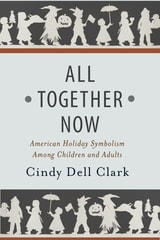
All Together Now
American Holiday Symbolism Among Children and AdultsCindy Dell Clark
Rutgers University Press, 2019
The decorations, songs, special ways of dressing, and rituals carry deep significance that is viscerally felt by even young tots. Ritual has the capacity to condense a plethora of meaning into a unified metaphor such as a Christmas tree, a menorah, or the American flag. These symbols allow children and adults to co-opt the meaning of symbols in flexible and age-relevant ways, all while the symbols are still treasured and shared in common.
All in the Family
Childhood and Fictive Kinship in Roman SocietyGaia Gianni
University of Michigan Press, 2025

All-Out for Victory!
Magazine Advertising and the World War II Home FrontJohn Bush Jones
Brandeis University Press, 2009
Alliance and Landscape on Perry Mesa in the Fourteenth Century
David R. Abbott
University of Utah Press, 2014
Contributors to this volume examine the migration process under two explanatory frameworks: alliance and landscape. These frameworks are used to explore competing hypotheses, positing either a rapid colonization associated with an alliance organized for warfare at a regional scale, or a more protracted migration as this landscape became comparatively more attractive for migrating farmers in the late thirteenth century.
As the first major publication on the archaeology of Perry Mesa, this volume contributes to theoretical perspectives on migration and ethnogenesis, the study of warfare in the prehistoric Southwest, the study of intensive agricultural practices in a marginal environment, and the cultural history of a little studied and largely unknown portion of the ancient Southwest. It not only documents the migration but also the ensuing birth of a new ethnic identity that arose from the coalescence of diverse groups atop Perry Mesa.
Alterhumanism
Becoming Human on a Conservation FrontierPiergiorgio Di Giminiani
University of Arizona Press, 2025
Altering States
Ethnographies of Transition in Eastern Europe and the Former Soviet UnionDaphne Berdahl, Matti Bunzl, and Martha Lampland, Editors
University of Michigan Press, 2000

Altruistically Inclined?
The Behavioral Sciences, Evolutionary Theory, and the Origins of ReciprocityAlexander J. Field
University of Michigan Press, 2004
Altruistically Inclined? examines the implications of recent research in the natural sciences for two important social scientific approaches to individual behavior: the economic/rational choice approach and the sociological/anthropological. It considers jointly two controversial and related ideas: the operation of group selection within early human evolutionary processes and the likelihood of modularity—domain-specific adaptations in our cognitive mechanisms and behavioral predispositions.
Experimental research shows that people will often cooperate in one-shot prisoner's dilemma (PD) games and reject positive offers in ultimatum games, contradicting commonly accepted notions of rationality. Upon first appearance, predispositions to behave in this fashion could not have been favored by natural selection operating only at the level of the individual organism.
Emphasizing universal and variable features of human culture, developing research on how the brain functions, and refinements of thinking about levels of selection in evolutionary processes, Alexander J. Field argues that humans are born with the rudiments of a PD solution module—and differentially prepared to learn norms supportive of it. His emphasis on failure to harm, as opposed to the provision of affirmative assistance, as the empirically dominant form of altruistic behavior is also novel.
The point of departure and principal point of reference is economics. But Altruistically Inclined? will interest a broad range of scholars in the social and behavioral sciences, natural scientists concerned with the implications of research and debates within their fields for the conduct of work elsewhere, and educated lay readers curious about essential features of human nature.
Amakomiti
Grassroots Democracy in South African Shack SettlementsTrevor Ngwane
Pluto Press, 2021
Amalgamation Schemes
Antiblackness and the Critique of MultiracialismJared Sexton
University of Minnesota Press, 2008
Despite being heralded as the answer to racial conflict in the post–civil rights United States, the principal political effect of multiracialism is neither a challenge to the ideology of white supremacy nor a defiance of sexual racism. More accurately, Jared Sexton argues in Amalgamation Schemes, multiculturalism displaces both by evoking long-standing tenets of antiblackness and prescriptions for normative sexuality.
In this timely and penetrating analysis, Sexton pursues a critique of contemporary multiracialism, from the splintered political initiatives of the multiracial movement to the academic field of multiracial studies, to the melodramatic media declarations about “the browning of America.” He contests the rationales of colorblindness and multiracial exceptionalism and the promotion of a repackaged family values platform in order to demonstrate that the true target of multiracialism is the singularity of blackness as a social identity, a political organizing principle, and an object of desire. From this vantage, Sexton interrogates the trivialization of sexual violence under chattel slavery and the convoluted relationship between racial and sexual politics in the new multiracial consciousness.
An original and challenging intervention, Amalgamation Schemes posits that multiracialism stems from the conservative and reactionary forces determined to undo the gains of the modern civil rights movement and dismantle radical black and feminist politics.
Jared Sexton is assistant professor of African American studies and film and media studies at the University of California, Irvine.
Amazon Town TV
An Audience Ethnography in Gurupá, BrazilBy Richard Pace and Brian P. Hinote
University of Texas Press, 2013
In 1983, anthropologist Richard Pace began his fieldwork in the Amazonian community of Gurupá one year after the first few television sets arrived. On a nightly basis, as the community’s electricity was turned on, he observed crowds of people lining up outside open windows or doors of the few homes possessing TV sets, intent on catching a glimpse of this fascinating novelty. Stoic, mute, and completely absorbed, they stood for hours contemplating every message and image presented. So begins the cultural turning point that is the basis of Amazon Town TV, a rich analysis of Gurupá in the decades during and following the spread of television.
Pace worked with sociologist Brian Hinote to explore the sociocultural implications of television’s introduction in this community long isolated by geographic and communication barriers. They explore how viewers change their daily routines to watch the medium; how viewers accept, miss, ignore, negotiate, and resist media messages; and how television’s influence works within the local cultural context to modify social identities, consumption patterns, and worldviews.
Amazonia in the Anthropocene
People, Soils, Plants, ForestsBy Nicholas C. Kawa
University of Texas Press, 2016
Widespread human alteration of the planet has led many scholars to claim that we have entered a new epoch in geological time: the Anthropocene, an age dominated by humanity. This ethnography is the first to directly engage the Anthropocene, tackling its problems and paradoxes from the vantage point of the world’s largest tropical rainforest.
Drawing from extensive ethnographic research, Nicholas Kawa examines how pre-Columbian Amerindians and contemporary rural Amazonians have shaped their environment, describing in vivid detail their use and management of the region’s soils, plants, and forests. At the same time, he highlights the ways in which the Amazonian environment resists human manipulation and control—a vital reminder in this time of perceived human dominance. Written in engaging, accessible prose, Amazonia in the Anthropocene offers an innovative contribution to debates about humanity’s place on the planet, encouraging deeper ecocentric thinking and a more inclusive vision of ecology for the future.
Amazonian Indians from Prehistory to the Present
Anthropological PerspectivesAnna Roosevelt
University of Arizona Press, 1994
CONTENTS
Amazonian Anthropology: Strategy for a New Synthesis, Anna C. Roosevelt
The Ancient Amerindian Polities of the Amazon, Orinoco and Atlantic Coast: A Preliminary Analysis of Their Passage from Antiquity to Extinction, Neil Lancelot Whitehead
The Impact of Conquest on Contemporary Indigenous Peoples of the Guiana Shield: The System of Orinoco Regional Interdependence, Nelly Arvelo-Jiménez and Horacio Biord
Social Organization and Political Power in the Amazon Floodplain: The Ethnohistorical Sources, Antonio Porro
The Evidence for the Nature of the Process of Indigenous Deculturation and Destabilization in the Amazon Region in the Last 300 Years: Preliminary Data, Adélia Engrácia de Oliveira
Health and Demography of Native Amazonians: Historical Perspective and Current Status, Warren M. Hern
Diet and Nutritional Status of Amazonian Peoples, Darna L. Dufour
Hunting and Fishing in Amazonia: Hold the Answers, What are the Questions?, Stephen Beckerman
Homeostasis as a Cultural System: The Jivaro Case, Philippe Descola
Farming, Feuding, and Female Status: The Achuara Case, Pita Kelekna
Subsistence Strategy, Social Organization, and Warfare in Central Brazil in the Context of European Penetration, Nancy M. Flowers
Environmental and Social Implications of Pre- and Post-Contact Situations on Brazilian Indians: The Kayapo and a New Amazonian Synthesis, Darrell Addison Posey
Beyond Resistance: A Comparative Study of Utopian Renewal in Amazonia, Michael F. Brown
The Eastern Bororo Seen from an Archaeological Perspective, Irmhilde Wüst
Genetic Relatedness and Language Distributions in Amazonia, Harriet E. Manelis Klein
Language, Culture, and Environment: Tup¡-Guaran¡ Plant Names Over Time, William Balée and Denny Moore
Becoming Indian: The Politics of Tukanoan Ethnicity, Jean E. Jackson

Amazons of the Huk Rebellion
Gender, Sex, and Revolution in the PhilippinesVina A. Lanzona
University of Wisconsin Press, 2009
Drawing on interviews with over one hundred veterans of the movement, Vina A. Lanzona explores the Huk rebellion from the intimate and collective experiences of its female participants, demonstrating how their presence, and the complex questions of gender, family, and sexuality they provoked, ultimately shaped the nature of the revolutionary struggle.

Ambient Media
Japanese Atmospheres of SelfPaul Roquet
University of Minnesota Press, 2016
Ambient Media examines music, video art, film, and literature as tools of atmospheric design in contemporary Japan, and what it means to use media as a resource for personal mood regulation. Paul Roquet traces the emergence of ambient styles from the environmental music and Erik Satie boom of the 1960s and 1970s to the more recent therapeutic emphasis on healing and relaxation.
Focusing on how an atmosphere works to reshape those dwelling within it, Roquet shows how ambient aesthetics can provide affordances for reflective drift, rhythmic attunement, embodied security, and urban coexistence. Musicians, video artists, filmmakers, and novelists in Japan have expanded on Brian Eno’s notion of the ambient as a style generating “calm, and a space to think,” exploring what it means to cultivate an ambivalent tranquility set against the uncertain horizons of an ever-shifting social landscape. Offering a new way of understanding the emphasis on “reading the air” in Japanese culture, Ambient Media documents both the adaptive and the alarming sides of the increasing deployment of mediated moods.
Arguing against critiques of mood regulation that see it primarily as a form of social pacification, Roquet makes a case for understanding ambient media as a neoliberal response to older modes of collective attunement—one that enables the indirect shaping of social behavior while also allowing individuals to feel like they are the ones ultimately in control.
Ambiguities of Domination
Politics, Rhetoric, and Symbols in Contemporary SyriaLisa Wedeen
University of Chicago Press, 1999
Wedeen concludes that Asad's cult acts as a disciplinary device, generating a politics of public dissimulation in which citizens act as if they revered their leader. By inundating daily life with tired symbolism, the regime exercises a subtle, yet effective form of power. The cult works to enforce obedience, induce complicity, isolate Syrians from one another, and set guidelines for public speech and behavior. Wedeen's ethnographic research demonstrates how Syrians recognize the disciplinary aspects of the cult and seek to undermine them. Provocative and original, Ambiguities of Domination is a significant contribution to comparative politics, political theory, and cultural studies.
Ambivalent Encounters
Childhood, Tourism, and Social Change in Banaras, IndiaHuberman, Jenny
Rutgers University Press, 2012
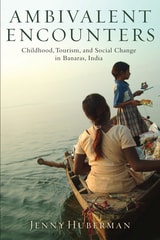
Jenny Huberman provides an ethnographic study of encounters between western tourists and the children who work as unlicensed peddlers and guides along the riverfront city of Banaras, India. She examines how and why these children elicit such powerful reactions from western tourists and locals in their community as well as how the children themselves experience their work and render it meaningful.
Ambivalent Encounters brings together scholarship on the anthropology of childhood, tourism, consumption, and exchange to ask why children emerge as objects of the international tourist gaze; what role they play in representing socio-economic change; how children are valued and devalued; why they elicit anxieties, fantasies, and debates; and what these tourist encounters teach us more generally about the nature of human interaction. It examines the role of gender in mediating experiences of social change—girls are praised by locals for participating constructively in the informal tourist economy while boys are accused of deviant behavior. Huberman is interested equally in the children’s and adults’ perspectives; her own experiences as a western visitor and researcher provide an intriguing entry into her interpretations.
Download the open access ebook here.
America's Early Whalemen
Indian Shore Whalers on Long Island, 1650–1750John A. Strong
University of Arizona Press, 2018
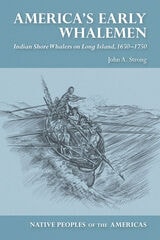
America’s Early Whalemen examines this early chapter of an iconic American historical experience. John A. Strong’s research draws on exhaustive sources, domestic and international, including little-known documents such as the whaling contracts of 340 Native American whalers, personal accounting books of whaling company owners, London customs records, estate inventories, and court records. Strong addresses labor relations, the role of alcohol and debt, the patterns of cultural accommodations by Native Americans, and the emergence of corporate capitalism in colonial America.
When Strong began teaching at Long Island University in 1964, he found little mention of the local Indigenous people in history books. The Shinnecocks and the neighboring tribes of Unkechaugs and Montauketts were treated as background figures for the celebratory narrative of the “heroic” English settlers. America’s Early Whalemen highlights the important contributions of Native peoples to colonial America.
America's First Cuisines
By Sophie D. Coe
University of Texas Press, 1994
After long weeks of boring, perhaps spoiled sea rations, one of the first things Spaniards sought in the New World was undoubtedly fresh food. Probably they found the local cuisine strange at first, but soon they were sending American plants and animals around the world, eventually enriching the cuisine of many cultures.
Drawing on original accounts by Europeans and native Americans, this pioneering work offers the first detailed description of the cuisines of the Aztecs, the Maya, and the Inca. Sophie Coe begins with the basic foodstuffs, including maize, potatoes, beans, peanuts, squash, avocados, tomatoes, chocolate, and chiles, and explores their early history and domestication. She then describes how these foods were prepared, served, and preserved, giving many insights into the cultural and ritual practices that surrounded eating in these cultures. Coe also points out the similarities and differences among the three cuisines and compares them to Spanish cooking of the period, which, as she usefully reminds us, would seem as foreign to our tastes as the American foods seemed to theirs. Written in easily digested prose, America's First Cuisines will appeal to food enthusiasts as well as scholars.

American Allegory
Lindy Hop and the Racial ImaginationBlack Hawk Hancock
University of Chicago Press, 2013
In American Allegory, Black Hawk Hancock offers an embedded and embodied ethnography that situates dance within a larger Chicago landscape of segregated social practices. Delving into two Chicago dance worlds, the Lindy and Steppin’, Hancock uses a combination of participant-observation and interviews to bring to the surface the racial tension that surrounds white use of black cultural forms. Focusing on new forms of appropriation in an era of multiculturalism, Hancock underscores the institutionalization of racial disparities and offers wonderful insights into the intersection of race and culture in America.

American Anatomies
Theorizing Race and GenderRobyn Wiegman
Duke University Press, 1995
American Anatomies takes the long view: What epistemological frameworks allowed the West, from the Renaissance forward, to schematize racial and gender differences and to create social hierarchies based on these differences? How have those epistemological regimes changed—and not changed—over time? Where are we now? With painstaking care, political passion, and intellectual daring, Wiegman analyzes the biological and cultural bases of racial and gender bias in order to reinvigorate the discussion of identity politics. She concludes that, for very different reasons, identity proves to be dangerous to minority and majority alike.

American Disgust
Racism, Microbial Medicine, and the Colony WithinMatthew J. Wolf-Meyer
University of Minnesota Press, 2024
Examining the racial underpinnings of food, microbial medicine, and disgust in America
American Disgust shows how perceptions of disgust and fears of contamination are rooted in the country’s history of colonialism and racism. Drawing on colonial, corporate, and medical archives, Matthew J. Wolf-Meyer argues that microbial medicine is closely entwined with changing cultural experiences of digestion, excrement, and disgust that are inextricably tied to the creation of whiteness.
Ranging from nineteenth-century colonial encounters with Native people to John Harvey Kellogg’s ideas around civilization and bowel movements to mid-twentieth-century diet and parenting advice books, Wolf-Meyer analyzes how embedded racist histories of digestion and disgust permeate contemporary debates around fecal microbial transplants and other bacteriotherapeutic treatments for gastrointestinal disease.
At its core, American Disgust wrestles with how changing cultural notions of digestion—what goes into the body and what comes out of it—create and impose racial categories motivated by feelings of disgust rooted in American settler-colonial racism. It shows how disgust is a changing, yet fundamental, aspect of American subjectivity and that engaging with it—personally, politically, and theoretically—opens up possibilities for conceptualizing health at the individual, societal, and planetary levels.
American Flintknappers
Stone Age Art in the Age of ComputersBy John C. Whittaker
University of Texas Press, 2004
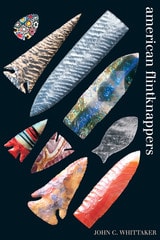
Making arrowheads, blades, and other stone tools was once a survival skill and is still a craft practiced by thousands of flintknappers around the world. In the United States, knappers gather at regional "knap-ins" to socialize, exchange ideas and material, buy and sell both equipment and knapped art, and make stone tools in the company of others. In between these gatherings, the knapping community stays connected through newsletters and the Internet.
In this book, avid knapper and professional anthropologist John Whittaker offers an insider's view of the knapping community. He explores why stone tools attract modern people and what making them means to those who pursue this art. He describes how new members are incorporated into the knapping community, how novices learn the techniques of knapping and find their roles within the group, how the community is structured, and how ethics, rules, and beliefs about knapping are developed and transmitted. He also explains how the practice of knapping relates to professional archaeology, the trade in modern replicas of stone tools, and the forgery of artifacts. Whittaker's book thus documents a fascinating subculture of American life and introduces the wider public to an ancient and still rewarding craft.
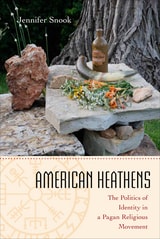
American Heathens
The Politics of Identity in a Pagan Religious MovementJennifer Snook
Temple University Press, 2015
Snook explores the complexities of pagan reconstruction and racial, ethnic and gender identity in today’s divisive political climate. She considers the impact of social media on Heathen collectivities, and offers a glimpse of the world of Heathen meanings, rituals, and philosophy.
In American Heathens, Snook presents the stories and perspectives of modern practitioners in engaging detail. She treats Heathens as members of a religious movement, rather than simply a subculture reenacting myths and stories of enchantment. Her book shrewdly addresses how people construct ethnicity in a reconstructionist (historically-minded) faith system with no central authority.
American Indian English
William L Leap
University of Utah Press, 1993
A distillation of over twenty years’ experience, William Leap’s pioneering work on the varieties of American Indian English explores the linguistic and sociolinguistic characteristics of language use among Navajo, Hopi, Mojave, Ute, Tsimshian, Kotzebue, Ponca, Chilcotin, Seminole, Cherokee, and other American Indian tribes.
Unlike contemporary studies on schooling, ethnicity, empowerment, and educational failure, American Indian English avoids postmodernist jargon and discourse strategies in favor of direct description and commentary. Data are derived from real-life conditions faced by speakers of Indian English in various English-speaking settings. This practical focus enhances the book’s accessibility to Indian educators and community-based teachers, as well as non-Indian academics.
American Indian Languages
Cultural and Social ContextsShirley Silver and Wick R. Miller
University of Arizona Press, 1997
Authors Silver and Miller demonstrate the complexity and diversity of these languages while dispelling popular misconceptions. Their text reveals the linguistic richness of languages found throughout the Americas, emphasizing those located in the western United States and Mexico, while drawing on a wide range of other examples found from Canada to the Andes. It introduces readers to such varied aspects of communicating as directionals and counting systems, storytelling, expressive speech, Mexican Kickapoo whistle speech, and Plains sign language.
The authors have included basics of grammar and historical linguistics, while emphasizing such issues as speech genres and other sociolinguistic issues and the relation between language and worldview. They have incorporated a variety of data that have rarely or never received attention in nontechnical literature in order to underscore the linguistic diversity of the Americas, and have provided more extensive language classification lists than are found in most other texts.
American Indian Languages: Cultural and Social Contexts is a comprehensive resource that will serve as a text in undergraduate and lower-level graduate courses on Native American languages and provide a useful reference for students of American Indian literature or general linguistics. It also introduces general readers interested in Native Americans to the amazing diversity and richness of indigenous American languages.
Coverage includes:
Achumawi, Acoma, Algonquin, Apache, Araucanian, Arawakan, Athapascan, Atsugewi, Ayamara, Bacairi, Bella Coola, Beothuk, Biloxi, Blackfoot, Caddoan, Cahto, Cahuilla, Cakchiquel, Carib, Cayuga, Chemehuevi, Cherokee, Chibchan, Chichimec, Chimakuan, Chimariko, Chinook, Chipewyan, Choctaw-Chickasaw, Chol, Cocopa, Coeur d'Alene, Comanche, Coos, Cora, Cree, Creek, Crow, Cubeo, Cupeño, Dakota, Delaware, Diegueño, Eskimo-Aleut, Esselen, Eyak, Fox, Gros Ventre, Guaraní, Guarijío, Haida, Havasupai, Hill Patwin, Hopi, Huastec, Huave, Hupa, Inuit-Inupiaq, Iroquois, Jaqaru, Je, Jicaque, Kalapuyan, Kamia, Karankawas, Karuk, Kashaya, Keres, Kickapoo, Kiliwa, Kiowa-Tanoan, Koasati, Konkow, Kuna, Kwakiutl, Kwalhioqua-Tlatskanai, Lakota, Lenca, Luiseño, Maidu, Mapuche, Markoosie, Mayan, Mazahua, Mazatec, Métis, Mexica, Micmac, Misumalpan, Mitchif, Miwok, Mixe-Zoquean, Mixtec, Mobilian, Mohave, Mohawk, Muskogean, Nahuatl, Natchez, Navajo, Nez Perce, Nheengatú, Nicola, Nomlaki, Nootka, Ojibwa, Oneida, O'odham, Otomí, Paiute, Palaihnihan, Panamint, Panoan, Paya, Pima, Pipil, Pomo, Poplocan, Pueblo, Puquina, Purpecha, Quechua, Quiché, Quileute, Sahaptian, Salish, Seneca, Sequoyah, Seri, Serrano, Shasta, Shoshoni, Sioux, Sirenikski, Slavey, Subtiaba-Tlapanec, Taíno, Takelma, Tanaina, Tarahumara, Tequistlatecan, Tewa, Tlingit, Toba, Toltec, Totonac, Tsimshian, Tubatulabal, Tukano, Tunica, Tupí, Ute, Uto-Aztecan, Vaupés, Venture¤o, Wakashan, Walapai, Wappo, Washo, Wintu, Wiyot, Xinca, Yahi, Yana, Yokuts, Yucatec, Yuchi, Yuki, Yuma, Yurok, Zapotec, Zoquean, and Zuni.
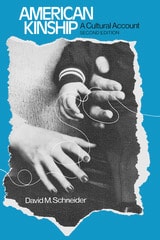
American Kinship
A Cultural AccountDavid M. Schneider
University of Chicago Press, 1980

American Value
Migrants, Money, and Meaning in El Salvador and the United StatesDavid Pedersen
University of Chicago Press, 2012

American by Paper
How Documents Matter in Immigrant LiteracyKate Vieira
University of Minnesota Press, 2016
American by Paper reveals how two groups of immigrants who share a primary language nevertheless have very different experiences of literacy in the United States. It describes the social realities facing documented and undocumented immigrants who use everyday acts of writing to negotiate papers—the visas, green cards, and passports that promise access to the American Dream. It is both an ethnography, filled with illuminating details about contemporary immigrant lives, and a critical intervention into two leading—and conflicting—scholarly ideas of literacy and its social role.
Although popular thinking and scholarship have viewed literacy as a method of culturally assimilating immigrants into the nation, Kate Vieira finds that upward mobility and social inclusion in the United States are tied to literacy in complex ways. She draws from extensive interviews with Portuguese-speaking migrants who live and work together in a former mill town in Massachusetts that she calls South Mills: one group from the Azores, who are usually documented, and another from Brazil, who are usually undocumented. She explains how these migrants experience literacy not as a vehicle for assimilation (as educational policy makers often assert) nor as a means of resisting oppression (as literacy scholars often hope) but instead as tied up in papers, particularly in the papers that confer legal status. Papers and literacy are inextricably bound together, both promoting and constraining opportunities, and they shape why and how migrants read and write.
Vieira builds on insights from literacy theories that have long been in opposition to each other in order to develop a new sociomaterial theory of literacy, one that takes into account its inseparable link to paper, forms, and documentation. This point of view leads to a deeper understanding of how literacy actually accrues meaning by circulating, and recirculating, through institutions and the lives of individuals.
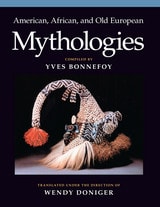
American, African, and Old European Mythologies
Edited by Yves Bonnefoy
University of Chicago Press, 1993
Almost all of Mythologies, originally published as a two-volume cloth set, is now available in four paperback volumes. These volumes reproduce the articles, introductory essays, and illustrations as they appeared in the full Mythologies set, and each includes a new Preface by Wendy Doniger.
This volume gathers eighty articles on mythologies from around the world. A section on the Americas and the South Pacific covers myths of native Americans, from the Inuit to the Mesoamericans, about such topics as the cosmos, fire, and the creation of the world. Essays on African mythology range from the 266 basic signs of West Africa to themes such as twins, the placenta, and masks. The final section, covering Celtic, Norse, and Slavic traditions opens with an overview of the Indo-Europeans and concludes with an essay on the religion and myths of Armenia.
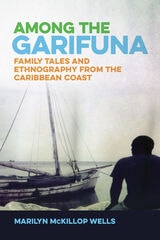
Among the Garifuna
Family Tales and Ethnography from the Caribbean CoastMarilyn McKillop Wells
University of Alabama Press, 2015
An intimate ethnographic narrative of one indigenous family in the twentieth-century Caribbean
Among the Garifuna is the first ethnographic narrative of a Garifuna family. The Garifuna are descendants of the “Black Carib,” whom the British deposited on Roatan Island in 1797 and who settled along the Caribbean coast from Belize City to Nicaragua.
In 1980, medical anthropologist Marilyn McKillop Wells found herself embarking on an “improbable journey” when she was invited to the area to do fieldwork with the added challenge of revealing the “real” Garifuna. Upon her arrival on the island, Wells was warmly embraced by a local family, the Diegos, and set to work recording life events and indigenous perspectives on polygyny, Afro-indigenous identity, ancestor-worshiping religion, and more. The result, as represented in Among the Garifuna, is a lovingly intimate, earthy human drama.
The family narrative is organized chronologically. Part I, “The Old Ways,” consists of vignettes that introduce the family backstory with dialogue as imagined by Wells based on the family history she was told. We meet the family progenitors, Margaret and Cervantes Diego, during their courtship, experience Margaret’s pain as Cervantes takes a second wife, witness the death of Cervantes and ensuing mourning rituals, follow the return of Margaret and the children to their previous home in British Honduras, and observe the emergence of the children’s personalities.
In Part II, “Living There,” Wells continues the story when she arrives in Belize and meets the Diego children, including the major protagonist, Tas. In Tas’s household Wells learns about foods and manners and watches family squabbles and reconciliations. In these mini-stories, Wells interweaves cultural information on the Garifuna people with first-person narrative and transcription of their words, assembling these into an enthralling slice of life. Part III, “The Ancestor Party,” takes the reader through a fascinating postmortem ritual that is enacted to facilitate the journey of the spirits of the honored ancestors to the supreme supernatural.
Among the Garifuna contributes to the literary genres of narrative anthropology and feminist ethnography in the tradition of Zora Neal Hurston and other women writing culture in a personal way. Wells’s portrait of this Garifuna family will be of interest to anthropologists, Caribbeanists, Latin Americanists, students, and general readers alike.
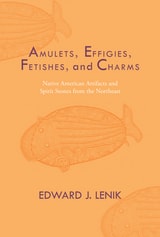
Amulets, Effigies, Fetishes, and Charms
Native American Artifacts and Spirit Stones from the NortheastEdward J. Lenik
University of Alabama Press, 2016
Interpreting Sacred Objects: Indigenous Material Culture and Spiritual Meaning in the Northeast.
Decorated stone artifacts are a significant part of archaeological studies of Native Americans in the Northeast. The artifacts illuminated in Amulets, Effigies, Fetishes, and Charms: Native American Artifacts and Spirit Stones from the Northeast include pecked, sculpted, or incised figures, images, or symbols. These are rendered on pebbles, plaques, pendants, axes, pestles, and atlatl weights, and are of varying sizes, shapes, and designs. Lenik draws from Indian myths and legends and incorporates data from ethnohistoric and archaeological sources together with local environmental settings in an attempt to interpret the iconography of these fascinating relics. For the Algonquian and Iroquois peoples, they reflect identity, status, and social relationships with other Indians as well as beings in the spirit world.
Lenik begins with background on the Indian cultures of the Northeast and includes a discussion of the dating system developed by anthropologists to describe prehistory. The heart of the content comprises more than eighty examples of portable rock art, grouped by recurring design motifs. This organization allows for in-depth analysis of each motif. The motifs examined range from people, animals, fish, and insects to geometric and abstract designs. Information for each object is presented in succinct prose, with a description, illustration, possible interpretation, the story of its discovery, and the location where it is now housed. Lenik also offers insight into the culture and lifestyle of the Native American groups represented. An appendix listing places to see and learn more about the artifacts and a glossary are included.
The material in this book, used in conjunction with Lenik’s previous research, offers a reference for virtually every known example of northeastern rock art. Archaeologists, students, and connoisseurs of Indian artistic expression will find this an invaluable work.
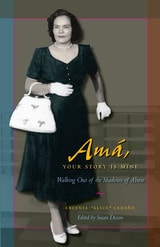
Amá, Your Story Is Mine
Walking Out of the Shadows of AbuseBy Ercenia "Alice" Cedeño
University of Texas Press, 2007
In the preface to her memoir, Ercenia "Alice" Cedeño recalls the secrecy and turmoil that marked her youth: "I spent most of my growing years mad at my mother and wanting her to change to fit in with the rest of the world," she writes. "When my sisters and I wanted her to visit our friends' mothers, she would say, 'Why do people need to know other peoples' lives?' Looking back, I wonder if she was really saying, 'I don't want them to know our business.' There was so much to hide."
Now bringing those hidden memories to light, Amá, Your Story Is Mine traces the hardship, violence, deceit, and defiance that shaped the identity of two generations of women in Alice's family. Born in the mountains of northern Mexico, Alice's mother married at age 14 into a family rife with passion that often turned to anger. After losing several infant children to disease, the young couple crossed into the United States seeking a better life.
Unfolding in a series of powerful vignettes, Amá, Your Story Is Mine describes in captivating detail a daring matriarch who found herself having to protect her children from their own father while facing the challenges of cultural discrimination. By turns wry and tender, Alice's recollections offer a rare memoir that fully encompasses the Latina experience in the United States.

An Absent Presence
Japanese Americans in Postwar American Culture, 1945-1960Caroline Chung Simpson
Duke University Press, 2001
Simpson argues that when popular journals or social theorists engaged the topic of Japanese American history or identity in the Cold War era they did so in a manner that tended to efface or diminish the complexity of their political and historical experience. As a result, the shadowy figuration of Japanese American identity often took on the semblance of an “absent presence.” Individual chapters feature such topics as the case of the alleged Tokyo Rose, the Hiroshima Maidens Project, and Japanese war brides. Drawing on issues of race, gender, and nation, Simpson connects the internment episode to broader themes of postwar American culture, including the atomic bomb, McCarthyism, the crises of racial integration, and the anxiety over middle-class gender roles.
By recapturing and reexamining these vital flashpoints in the projection of Japanese American identity, Simpson fills a critical and historical void in a number of fields including Asian American studies, American studies, and Cold War history.
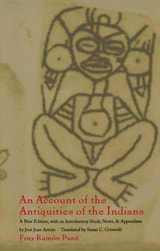
An Account of the Antiquities of the Indians
A New Edition, with an Introductory Study, Notes, and Appendices by José Juan ArromFray Ramon Pané
Duke University Press, 1999
Edited by the noted Hispanist José Juan Arrom, Pané’s report is the only surviving direct source of information about the myths, ceremonies, and lives of the New World inhabitants whom Columbus first encountered. The friar’s text contains many linguistic and cultural observations, including descriptions of the Taíno people’s healing rituals and their beliefs about their souls after death. Pané provides the first known description of the use of the hallucinogen cohoba, and he recounts the use of idols in ritual ceremonies. The names, functions, and attributes of native gods; the mythological origin of the aboriginal people’s attitudes toward sex and gender; and their rich stories of creation are described as well.
An Alliance Of Women
Immigration And The Politics Of RaceHeather Merrill
University of Minnesota Press, 2006
Taking as a starting point the Italian crisis over immigration in the early 1990s, Merrill examines grassroots interethnic spatial politics among female migrants and Turin feminists in Northern Italy. Using rich ethnographic material, she traces the emergence of Alma Mater—an anti-racist organization formed to address problems encountered by migrant women. Through this analysis, Merrill reveals the dynamics of an alliance consisting of women from many countries of origin and religious and class backgrounds.
Highlighting an interdisciplinary approach to migration and the instability of group identities in contemporary Italy, An Alliance of Women presents migrants grappling with spatialized boundaries amid growing nativist and anti-immigrant sentiment in Western Europe.
Heather Merrill is assistant professor of geography and anthropology at Dickinson College.
An American Body | Politic
A Deleuzian ApproachBernd Herzogenrath
Dartmouth College Press, 2010

An Amulet of Greek Earth
Generations of Immigrant Folk CultureHelen Papanikolas
Ohio University Press, 2002
The boys and men who left their Greek valley and mountain villages in the early 1900s for America came with amulets their mothers had made for them. Some were miniature sacks attached to a necklace; more often they were merely a square of fabric enclosing the values of their lives: a piece of a holy book or a sliver of the True Cross representing their belief in Greek Orthodoxy; a thyme leaf denoting their wild terrain; a blue bead to ward off the Evil Eye; and a pinch of Greek earth.
In her evocative and meticulously researched book An Amulet of Greek Earth, author Helen Papanikolas explains and examines the vibrant culture these immigrants brought with them to the new world. The Romiosini culture, as it was called, provided the foundation for their new lives and was oftentimes the cause of strife as they passed on their beliefs and traditions to successive generations of Greek Americans.
In the tradition of her fictional accounts of Greek immigrant life, Helen Papanikolas unearths the cultural beliefs and passions that compelled the Greek-American community to make its own way into the broader culture of America. Based on extensive study, personal interviews, and a lifetime of experience, An Amulet of Greek Earth is a revealing and informative chronicle of the immigrant’s experience in becoming an American.
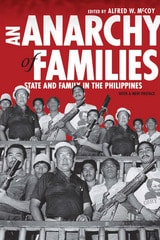
An Anarchy of Families
State and Family in the PhilippinesAlfred W. McCoy
University of Wisconsin Press, 2009
Edited by Alfred W. McCoy, An Anarchy of Families explores the pervasive influence of the modern dynasties that have led the Philippines during the past century. Exemplified by the Osmeñas and Lopezes, elite Filipino families have formed a powerful oligarchy—controlling capital, dominating national politics, and often owning the media. Beyond Manila, strong men such as Ramon Durano, Ali Dimaporo, and Justiniano Montano have used “guns, goons, and gold” to accumulate wealth and power in far-flung islands and provinces. In a new preface for this revised edition, the editor shows how this pattern of oligarchic control has continued into the twenty-first century, despite dramatic socio-economic change that has supplanted the classic “three g’s” of Philippine politics with the contemporary “four c’s”—continuity, Chinese, criminality, and celebrity.
An Anthropological Approach to mHealth
Edited by Charlotte Hawkins, Patrick Awondo, and Daniel Miller
University College London, 2024
An Anthropological Approach to mHealth underlines ten sixteen-month ethnographies, set across Asia, Africa, Europe, and Latin America, that revealed people’s use of communicative apps, including as LINE, WeChat, and WhatsApp’s alternative primary health apps, highlighting the irrelevance of dedicated health apps. Using a “smart-from-below” approach, this book studies these surprising practices and proposes a radically different anthropological method to the development and dissemination of mobile health (mHealth), a rapidly growing sector in healthcare.