Results by title
2916 books match the query 'Politics and government' and 222 start with a
American Labor and the Cold War
Grassroots Politics and Postwar Political CultureCherny, Robert
Rutgers University Press, 2004
The American labor movement seemed poised on the threshold of unparalleled success at the beginning of the post-World War II era. Fourteen million strong in 1946, unions represented thirty five percent of non-agricultural workers. Why then did the gains made between the 1930s and the end of the war produce so few results by the 1960s?
This collection addresses the history of labor in the postwar years by exploring the impact of the global contest between the United States and the Soviet Union on American workers and labor unions. The essays focus on the actual behavior of Americans in their diverse workplaces and communities during the Cold War. Where previous scholarship on labor and the Cold War has overemphasized the importance of the Communist Party, the automobile industry, and Hollywood, this book focuses on politically moderate, conservative workers and union leaders, the medium-sized cities that housed the majority of the population, and the Roman Catholic Church. These are all original essays that draw upon extensive archival research and some upon oral history sources.
American Oligarchy
The Permanent Political ClassRon Formisano
University of Illinois Press, 2017
American Public Philosophy and the Mystery of Lincolnism
Eric C. Sands
University of Missouri Press, 2009
American Relief Aid and the Spanish Civil War
Eric R. Smith
University of Missouri Press, 2013
The Spanish Civil War created a conflict for Americans who preferred that the United States remain uninvolved in foreign affairs. Despite the country's isolationist tendencies, opposition to the rise of fascism across Europe convinced many Americans that they had to act in support of the Spanish Republic. While much has been written about the war itself and its international volunteers, little attention has been paid to those who coordinated these relief efforts at home.
American Relief Aid and the Spanish Civil War tells the story of the political campaigns to raise aid for the Spanish Republic as activists pushed the limits of isolationist thinking. Those concerned with Spain’s fate held a range of political convictions (including anarchists, socialists, liberals, and communists) with very different understandings of what fascism was. Yet they all agreed that fascism’s advance must be halted. With labor strikes, fund-raising parties, and ambulance tours, defenders of Spain in the United States sought to shift the political discussion away from isolation of Spain’s elected government and toward active assistance for the faltering Republic.
Examining the American political organizations affiliated with this relief effort and the political repression that resulted as many of Spain’s supporters faced the early incarnations of McCarthyism’s trials, Smith provides new understanding of American politics during the crucial years leading up to World War II. By also focusing on the impact the Spanish Civil War had on those of Spanish ethnicity in the United States, Smith shows how close to home the seemingly distant war really hit.
American Rhetoric in the New Deal Era, 1932-1945
A Rhetorical History of the United States, Volume VIIThomas Benson
Michigan State University Press, 2006
The New Deal era is hard to define with precision—in time or in ideology. Some historians use New Deal to designate the intense period of domestic reform legislation of the first Franklin Delano Roosevelt administration, 1933–37. Others confine discussion of the era to the legislation of 1933, and identify another wave of legislation in 1935 as a Second New Deal. Most of the essays in this book focus on the prewar period, with glimpses that look forward to the rhetoric of the approach to and engagement in World War II.
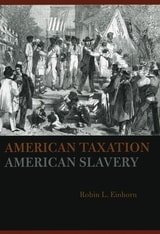
American Taxation, American Slavery
Robin L. Einhorn
University of Chicago Press, 2006
For all the recent attention to the slaveholding of the founding fathers, we still know remarkably little about the influence of slavery on American politics. American Taxation, American Slavery tackles this problem in a new way. Rather than parsing the ideological pronouncements of charismatic slaveholders, it examines the concrete policy decisions that slaveholders and non-slaveholders made in the critical realm of taxation. The result is surprising—that the enduring power of antigovernment rhetoric in the United States stems from the nation’s history of slavery rather than its history of liberty.
We are all familiar with the states’ rights arguments of proslavery politicians who wanted to keep the federal government weak and decentralized. But here Robin Einhorn shows the deep, broad, and continuous influence of slavery on this idea in American politics. From the earliest colonial times right up to the Civil War, slaveholding elites feared strong democratic government as a threat to the institution of slavery. American Taxation, American Slavery shows how their heated battles over taxation, the power to tax, and the distribution of tax burdens were rooted not in debates over personal liberty but rather in the rights of slaveholders to hold human beings as property. Along the way, Einhorn exposes the antidemocratic origins of the popular Jeffersonian rhetoric about weak government by showing that governments were actually more democratic—and stronger—where most people were free.
A strikingly original look at the role of slavery in the making of the United States, American Taxation, American Slavery will prove essential to anyone interested in the history of American government and politics.

American Values, Religious Voices
100 Days. 100 LettersAndrea L. Weiss and Lisa M. Weinberger
University of Minnesota Press, 2018
American Values, Religious Voices: 100 Days, 100 Letters is a collection of letters written by some of America’s most accomplished and thoughtful scholars of religion during the first 100 days of the Trump presidency. While the letters are addressed to the president, vice president, and members of the 115th Congress and Trump administration, they speak to a broad audience of Americans looking for wisdom and encouragement at this tumultuous time in our nation’s history.
This unique volume assembles the 100 letters, plus four new supplemental essays and many of the graphic illustrations that enhanced the campaign.
Published near the midway point of the Trump presidency, this book showcases a wide range of ancient sacred texts that pertain to our most pressing contemporary issues. At a time of great division in our country, this post-election project models how people of different backgrounds can listen to and learn from one another. The letters offer insight and inspiration, reminding us of the enduring values that make our nation great.

Amy Biehl’s Last Home
A Bright Life, a Tragic Death, and a Journey of Reconciliation in South AfricaSteven D. Gish
Ohio University Press, 2018
In 1993, white American Fulbright scholar Amy Biehl was killed in a racially motivated attack near Cape Town, after spending months working to promote democracy and women’s rights in South Africa. The ironic circumstances of her death generated enormous international publicity and yielded one of South Africa’s most heralded stories of postapartheid reconciliation. Amy’s parents not only established a humanitarian foundation to serve the black township where she was killed, but supported amnesty for her killers and hired two of the young men to work for the Amy Biehl Foundation. The Biehls were hailed as heroes by Nelson Mandela, Desmond Tutu, and many others in South Africa and the United States—but their path toward healing was neither quick nor easy.
Granted unrestricted access to the Biehl family’s papers, Steven Gish brings Amy and the Foundation to life in ways that have eluded previous authors. He is the first to place Biehl’s story in its full historical context, while also presenting a gripping portrait of this remarkable young woman and the aftermath of her death across two continents.
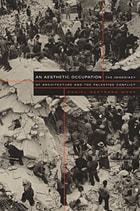
An Aesthetic Occupation
The Immediacy of Architecture and the Palestine ConflictDaniel Bertrand Monk
Duke University Press, 2002
In An Aesthetic Occupation Daniel Bertrand Monk unearths the history of the unquestioned political immediacy of “sacred” architecture in the conflict between Palestinians and Israelis. Monk combines groundbreaking archival research with theoretical insights to examine in particular the Mandate era—the period in the first half of the twentieth century when Britain held sovereignty over Palestine. While examining the relation between monuments and mass violence in this context, he documents Palestinian, Zionist, and British attempts to advance competing arguments concerning architecture’s utility to politics.
Succumbing neither to the view that monuments are autonomous figures onto which political meaning has been projected, nor to the obverse claim that in Jerusalem shrines are immediate manifestations of the political, Monk traces the reciprocal history of both these positions as well as describes how opponents in the conflict debated and theorized their own participation in its self-representation. Analyzing controversies over the authenticity of holy sites, the restorations of the Dome of the Rock, and the discourse of accusation following the Buraq, or Wailing Wall, riots of 1929, Monk discloses for the first time that, as combatants looked to architecture and invoked the transparency of their own historical situation, they simultaneously advanced—and normalized—the conflict’s inability to account for itself.
This balanced and unique study will appeal to anyone interested in Israel or Zionism, the Palestinians, the Middle East conflict, Jerusalem, or its monuments. Scholars of architecture, political theory, and religion, as well as cultural and critical studies will also be informed by its arguments.
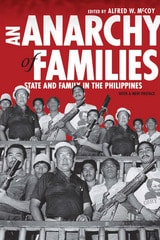
An Anarchy of Families
State and Family in the PhilippinesAlfred W. McCoy
University of Wisconsin Press, 2009
Edited by Alfred W. McCoy, An Anarchy of Families explores the pervasive influence of the modern dynasties that have led the Philippines during the past century. Exemplified by the Osmeñas and Lopezes, elite Filipino families have formed a powerful oligarchy—controlling capital, dominating national politics, and often owning the media. Beyond Manila, strong men such as Ramon Durano, Ali Dimaporo, and Justiniano Montano have used “guns, goons, and gold” to accumulate wealth and power in far-flung islands and provinces. In a new preface for this revised edition, the editor shows how this pattern of oligarchic control has continued into the twenty-first century, despite dramatic socio-economic change that has supplanted the classic “three g’s” of Philippine politics with the contemporary “four c’s”—continuity, Chinese, criminality, and celebrity.
An Anti-Bolshevik Alternative
The White Movement and the Civil War in the Russian NorthLiudmila Novikova, Translated by Seth Bernstein
University of Wisconsin Press, 2018
Novikova draws on declassified archives and sources in both Russia and the West to reveal the White movement in the north as a complex social and political phenomenon with a distinct regional context. She documents the politics of the Northern Government and its relations with the British and American forces who had occupied the ports of Murmansk and Arkhangelsk at the end of World War I. As the civil war continued, the increasing involvement of the local population transformed the conflict into a ferocious "people's war" until remaining White forces under General Yevgeny Miller evacuated the region in February 1920.

An Appalachian New Deal
West Virginia in the Great DepressionJerry Bruce Thomas
West Virginia University Press, 2011
In this paperback edition of An Appalachian New Deal: West Virginia in the Great Depression, Jerry Bruce Thomas examines the economic and social conditions of the state of West Virginia before, during, and after the Great Depression. Thomas’s exploration of personal papers by leading political and social figures, newspapers, and the published and unpublished records of federal, state, local, and private agencies, traces a region’s response to an economic depression and a presidential stimulus program. This dissection of federal and state policies implemented under Franklin D. Roosevelt’s New Deal program reveals the impact of poverty upon political, gender, race, and familial relations within the Mountain State—and the entire country. Through An Appalachian New Deal, Thomas documents the stories of ordinary citizens who survived a period of economic crisis and echoes a message from our nation’s past to a new generation enduring financial hardship and uncertainty.

An Appalachian Reawakening
West Virginia and the Perils of the New Machine Age, 1945-1972JERRY B. THOMAS
West Virginia University Press, 2010
As the long boom of post-World War II economic expansion spread across the globe, dreams of white picket fences, democratic ideals, and endless opportunities flourished within the United States. Middle America experienced a period of affluent stability built upon a modern age of industrialization. Yet for the people of Appalachia, this new era brought economic, social, and environmental devastation, preventing many from realizing the American Dream. Some families suffered in silence; some joined a mass exodus from the mountains; while others, trapped by unemployment, poverty, illness, and injury became dependent upon welfare. As the one state most completely Appalachian, West Virginia symbolized the region's dilemma, even as it provided much of the labor and natural resources that fueled the nation's prosperity.
An Appalachian Reawakening: West Virginia and the Perils of the New Machine Age, 1945-1972 recounts the difficulties the state of West Virginia faced during the post-World War II period. While documenting this turmoil, this valuable analysis also traces the efforts of the New Frontier and Great Society programs, which stimulated maximum feasible participation and lead to the ultimate rise of grass roots activities and organizations that improved life and labor in the region and undermined the notion of Appalachian fatalism.
An Aqueous Territory
Sailor Geographies and New Granada's Transimperial Greater Caribbean WorldErnesto Bassi
Duke University Press, 2017
An Emotional State
The Politics of Emotion in Postwar West German CultureAnna M. Parkinson
University of Michigan Press, 2015
One of the book’s major contributions is that it offers an analytical distinction between emotion and affect, finding a compelling way to talk about affect and emotion that is informed by affect theory but that integrates psychoanalysis. The study draws on the psychoanalytic writings of Freud, Margarete and Alexander Mitscherlich, and André Green, while engaging with interdisciplinary theorists of affect including Barbara Rosenwein, Lauren Berlant, Ann Cvetkovich, and Eve Kosofsky Sedgwick among many others.
An Equal Share of Freedom
American Jews, Zionism, and World War IEdited by Mark Raider, Zohar Segev, and Gary Phillip Zola
University of Minnesota Press, 2024
An Equal Share of Freedom sheds new light on several important and interrelated dimensions of American, Jewish, and world history in the World War I era. Paying close attention to the Balfour Declaration as a hub around which to explore the period’s unfolding and turbulent social, cultural, and political developments, this collection of essays covers a diverse range of topics including Jewish doughboys, Zionist women authors, and political elites such as Golda Meir and Woodrow Wilson. The volume demonstrates the complex nature of Jewish ethnonational consciousness in the American setting and the impact of Zionism on US wartime and postwar activity.
The essays in this volume overturn timeworn assumptions that have long shaped the fields of American history and modern Jewish history. Taken as a whole, they demonstrate the war’s profound impact on American Jewish life and the transformation of American Jewry’s relationship with wider American society. These essays also illustrate the centrality of Zionism to the American Jewish experience and the extent to which American Jewry’s national consciousness and the future direction of the Zionist project were forged in the crucible of the Great War. An Equal Share of Freedom is the first volume in the Jacob Rader Marcus Series on the American Jewish Experience. In this series, Raider, Segev, and Zola highlight the myriad possibilities for expanding and deepening scholarly understanding of American Jews and the shared history of American society and the Jewish people in the twentieth century, starting with a look at World War I.
An Imaginative Whig
Reassessing the Life and Thought of Edmund BurkeEdited & Intro by Ian Crowe
University of Missouri Press, 2005
An Intellectual History of Turkish Nationalism
Between Turkish Ethnicity and Islamic IdentityUmut Uzer
University of Utah Press, 2016
While predominantly a textual analysis of the primary sources written by the nationalists, this volume takes into account how political developments influenced Turkish nationalism and also tackles the question of how an ideology that began as a revolutionary, progressive, forward-looking ideal eventually transformed into one that is conservative, patriarchal, and nostalgic to the Ottoman and Islamic past. Between Islamic and Turkish Identity is the first book in any language to comprehensively analyze Turkish nationalism with such scope and engagement with primary sources; it aims to dissect the phenomenon in all its manifestations.
An Intellectual in Public
Alan Wolfe
University of Michigan Press, 2004
". . . proof that the spirit of the free-ranging public intellectual is still very much alive."
-Newsday
"Alan Wolfe is one of liberalism's last and most loyal sons. His mind is naturally decent and diversified; large enough and fair enough to contain both conviction and doubt. His profound respect for real people does not interfere with his profound respect for real thought. The criticism that he practices is, I fear, a dying art, but it is also one of the glories of American democracy."
-Leon Wieseltier, New Republic
"Alan Wolfe is one of America's indispensable essayists. On a broad range of topics-race, religion, politics, the marketplace, the university, and more-he combines a scholar's erudition with a historian's feel for the past and a journalist's keen attunement to the shifting patterns of the current scene. Above all he is a true writer, graceful but fearless, who ponders the deep questions so often ignored in the clamor of our ongoing civic conversation. Anyone who wonders what the term 'public intellectual' really means will find the answer-in fact many answers-in this scintillating collection."
-Sam Tanenhaus, Vanity Fair
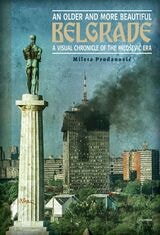
An Older and More Beautiful Belgrade
A Visual Chronicle of the Milo.evic EraMileta Prodanovic
Central European University Press, 2023
This substantial essay depicts urban collapse in an exceptionally difficult period of the Serbian capital. The author has marshalled facts, reflections, photographs and other imagesto demonstrate the transformation of Belgrade during the Milošević years. With the theoretical grounding of cultural anthropology, history studies, culture of memory, history of art, and urbanism, Mileta Prodanović considers changes to the built environment and urban landscape in the city in the 1990s. He covers many visual aspects of life with great ingenuity: shopping centers, unregulated construction and “wild” modifications of buildings, new buildings (broadcasting studios, shops, homes) that do not fit the surroundings, bad taste in home furnishings (camp, kitsch), boondoggles such as the international art center, problematic historical markers like the obelisk of the eternal flame, billboards, store displays, electoral propaganda, graffiti, grave-markers and cemetery memorials, coins and paper money, calendars, beer labels, and even religious icons (and more). All this information is provided with some critique and much implied comparison to past standards.
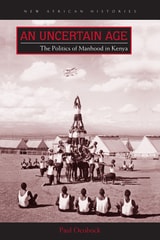
An Uncertain Age
The Politics of Manhood in KenyaPaul Ocobock
Ohio University Press, 2017
In twentieth-century Kenya, age and gender were powerful cultural and political forces that animated household and generational relationships. They also shaped East Africans’ contact with and influence on emergent colonial and global ideas about age and masculinity. Kenyan men and boys came of age achieving their manhood through changing rites of passage and access to new outlets such as town life, crime, anticolonial violence, and nationalism. And as they did, the colonial government appropriated masculinity and maturity as means of statecraft and control.
In An Uncertain Age, Paul Ocobock positions age and gender at the heart of everyday life and state building in Kenya. He excavates in unprecedented ways how the evolving concept of “youth” motivated and energized colonial power and the movements against it, exploring the masculinities boys and young men debated and performed as they crisscrossed the colony in search of wages or took the Mau Mau oath. Yet he also considers how British officials’ own ideas about masculinity shaped not only young African men’s ideas about manhood but the very nature of colonial rule.
An Uncertain Age joins a growing number of histories that have begun to break down monolithic male identities to push the historiographies of Kenya and empire into new territory.
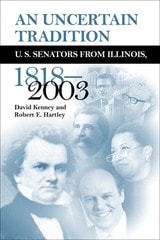
An Uncertain Tradition
David Kenney and Robert E. Hartley
Southern Illinois University Press, 2003
This sweeping survey constitutes the first comprehensive treatment of the forty-seven individuals—forty-six white males and one African American female—who have been chosen to represent Illinois in the United States Senate from 1818 to 2003. David Kenney and Robert E. Hartley underscore nearly two centuries of Illinois history with these biographical and political portraits, compiling an incomparably rich resource for students, scholars, teachers, journalists, historians, politicians, and any Illinoisan interested in the state’s heritage.
An Uncertain Tradition:U. S. Senators from Illinois, 1818–2003 is a fresh and careful study of the shifting set of political issues occurring over time and illuminated by the lives of participants in the politics of choice and service in the Senate. Kenney and Hartley plot the course of the state’s varied senatorial leadership, from the state’s founding and the appearance of political parties, through the Civil War and its aftermath, and into the diverse political climate of the twenty-first century. From the notorious to the heroic, the popular to the pioneering, the senatorial roster includes such luminaries as “The Little Giant” Stephen A. Douglas; Lyman Trumbull, who served three terms in the Civil War era; “Uncle Dick” and “Black Jack,” also known as Richard Oglesby and John A. Logan; the “Wizard of Ooze” Everett Dirksen; and modern leaders such as Adlai Stevenson III, Paul Simon, and Carol Moseley-Braun.
Kenney and Hartley offer incisive commentary on the quality of senate service in each case, as well as timeline graphs relating to the succession of individuals in each of the two sequences of service, the geographical distribution of senators within the state, and the variations in party voting for senate candidates. Rigorously documented and supremely readable, this convenient reference volume is enhanced by portraits of many of the senators.
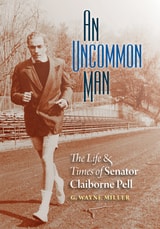
An Uncommon Man
The Life and Times of Senator Claiborne PellG. Wayne Miller
University Press of New England, 2011
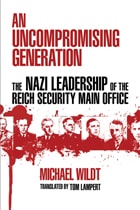
An Uncompromising Generation
The Nazi Leadership of the Reich Security Main OfficeMichael Wildt
University of Wisconsin Press, 2009
Wildt’s study traces the intellectual evolution of key members of the Reich Security Main Office (RSHA) from their days as students until the end of World War II. Established in 1939, this office fused together the Gestapo, the Criminal Police, and the Sicherheitsdienst (Security Service) of the SS. Far from being small cogs in a big bureaucratic machine, Wildt finds that the people who made up the RSHA constructed the concepts and operated the apparatus that carried out the Holocaust.
At the center of both theory and practice of persecution and genocide in Nazi-occupied Europe, these young men of the RSHA—none of whom envisioned the systematic annihilation of the European Jews—became radicalized. How this occurred is the central question of Wildt’s book. Wildt also discusses the postwar careers of the members of the RSHA. Strikingly, he shows how the leaders of the RSHA evaded the consequences of their actions under the Nazi regime and went on to have important careers in the rebuilt West Germany.
An alternate selection of the History Book Club and Military Book Club
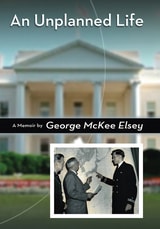
An Unplanned Life
A MemoirGeorge McKee Elsey
University of Missouri Press, 2005
Elsey’s duties continued with Harry Truman’s succession to the presidency. He decoded the famous message from Secretary of War Henry Stimson reporting the dropping of the atomic bomb on Hiroshima and carried it to President Truman. In 1947, he shed his Naval Reserve uniform and joined the White House’s civilian staff as assistant to the special counsel to the president. In 1949, he became administrative assistant to the president, and, in 1952, he became a member of the Mutual Security Agency staff. During those years, he grew very close to Harry Truman, and thus, a major portion of An Unplanned Life relates to his experiences then.
In the first postwar winter, Elsey was frequently the only staff member who accompanied President Truman on the USS Williamsburg. In September 1946, Elsey submitted a report to Truman on U.S.-Soviet relations, which came to be well known as the “Clifford-Elsey Report.” Providing Truman with notes for some two hundred of his “back-of-the-train” informal talks, Elsey played a part in the best remembered feature of the “Whistle-Stop Campaign” that resulted in “the political upset of the century.” In addition to his years at the White House, Elsey also touches on his post–White House years—his time in private industry, his months with Clark Clifford when Clifford was trying unsuccessfully to extricate America from Vietnam, and his long association with the American Red Cross.
An Unplanned Life is a fascinating look at the life of an extraordinary individual who played an important and unprecedented part in two different presidents’ decisions and affected the course of our nation. Anyone with an interest in history will find this memoir fascinating and invaluable.
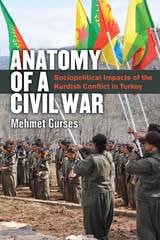
Anatomy of a Civil War
Sociopolitical Impacts of the Kurdish Conflict in TurkeyMehmet Gurses
University of Michigan Press, 2018

Anatomy of a Miracle
The End of Apartheid and the Birth of the New South AfricaPatti Waldmeir
Rutgers University Press, 1998
Ancient Andean Political Economy
By Charles Stanish
University of Texas Press, 1992
For more than two millennia prior to the Spanish conquest, the southern region of the central Andes was home to dozens of societies, ranging from modest chiefdoms to imperial states. Attempts to understand the political and economic dynamics of this complex region have included at least two major theories in Andean anthropology. In this pathfinding study, Charles Stanish shows that they are not exclusive and competing models, but rather can be understood as variations within a larger theoretical framework.
Stanish builds his arguments around a case study from the Moquequa region of Peru, augmented with data from Puno. He uses the "archaeological household" as his basic unit of analysis. This approach allows him to reconcile the now-classic model of zonal complementarity proposed by John Murra with the model of craft specialization and exchange offered by Maria Rostworowski de Diez Canseco. These models of political economy are analyzed with the concepts of economic anthropology in the tradition of Karl Polanyi.
For students of archaeology, Andean studies, anthropology, and economic history, Ancient Andean Political Economy will be important reading.
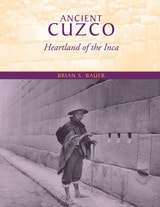
Ancient Cuzco
Heartland of the IncaBy Brian S. Bauer
University of Texas Press, 2004
The Cuzco Valley of Peru was both the sacred and the political center of the largest state in the prehistoric Americas—the Inca Empire. From the city of Cuzco, the Incas ruled at least eight million people in a realm that stretched from modern-day Colombia to Chile. Yet, despite its great importance in the cultural development of the Americas, the Cuzco Valley has only recently received the same kind of systematic archaeological survey long since conducted at other New World centers of civilization.
Drawing on the results of the Cuzco Valley Archaeological Project that Brian Bauer directed from 1994 to 2000, this landmark book undertakes the first general overview of the prehistory of the Cuzco region from the arrival of the first hunter-gatherers (ca. 7000 B.C.) to the fall of the Inca Empire in A.D. 1532. Combining archaeological survey and excavation data with historical records, the book addresses both the specific patterns of settlement in the Cuzco Valley and the larger processes of cultural development. With its wealth of new information, this book will become the baseline for research on the Inca and the Cuzco Valley for years to come.
Andrew Jackson Donelson
Jacksonian and UnionistRichard Douglas Spence
Vanderbilt University Press, 2017
As his uncle's secretary, he weathered Old Hickory's tumultuous presidency, including the notorious "Petticoat War." Building his own political career, he served as US chargé d'affaires to the Republic of Texas, where he struggled against an enigmatic President Sam Houston, British and French intrigues, and the threat of war by Mexico, to achieve annexation. As minister to Prussia, Donelson enjoyed a ringside seat to the revolutions of 1848 and the first attempts at German unification. A firm Unionist in the mold of his uncle, Donelson denounced the secessionists at the Nashville Convention of 1850. He attempted as editor of the Washington Union to reunite the Democratic party, and, when he failed, he was nominated as Millard Fillmore's vice-presidential running mate on the Know-Nothing party ticket in 1856. He lived to see the Civil War wreck the Union he loved, devastate his farms, and take the lives of two of his sons.
Animal Labor and Colonial Warfare
James L. Hevia
University of Chicago Press, 2018
In Animal Labor and Colonial Warfare, James Hevia examines the use of camels, mules, and donkeys in colonial campaigns of conquest and pacification, starting with the Second Afghan War—during which an astonishing 50,000 to 60,000 camels perished—and ending in the early twentieth century. Hevia explains how during the nineteenth and twentieth centuries a new set of human-animal relations were created as European powers and the United States expanded their colonial possessions and attempted to put both local economies and ecologies in the service of resource extraction. The results were devastating to animals and human communities alike, disrupting centuries-old ecological and economic relationships. And those effects were lasting: Hevia shows how a number of the key issues faced by the postcolonial nation-state of Pakistan—such as shortages of clean water for agriculture, humans, and animals, and limited resources for dealing with infectious diseases—can be directly traced to decisions made in the colonial past. An innovative study of an underexplored historical moment, Animal Labor and Colonial Warfare opens up the animal studies to non-Western contexts and provides an empirically rich contribution to the emerging field of multispecies historical ecology.
Animality and Colonial Subjecthood in Africa
The Human and Nonhuman Creatures of NigeriaSaheed Aderinto
Ohio University Press, 2022
Animated by Uncertainty
Rugby and the Performance of History in South AfricaJoshua D. Rubin
University of Michigan Press, 2021
In Animated by Uncertainty, Joshua D. Rubin analyzes South African rugby through the lens of aesthetic politics. Building on 17 months of ethnographic research with rugby coaches, players, and administrators, the author argues that rugby is a form of performance and further that the qualities that define rugby shape the political ends to which the sport can be put. In this respect, Animated by Uncertainty demonstrates that theories of sporting politics cannot afford to overlook the qualities of the sports themselves, and it provides a theoretical approach to illustrate how these qualities can be studied. The book also analyzes the ways that apartheid and colonialism inhere in South African institutions and practices.Drawing inspiration from the observation that South Africans could always abandon rugby if they chose to do so, Rubin highlights how the continuing significance of rugby as a form of performance brings traces of South Africa's apartheid and colonial past into the country's contemporary political moment.
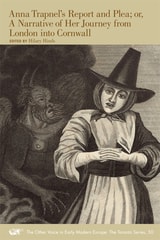
Anna Trapnel’s Report and Plea; or, A Narrative of Her Journey from London into Cornwall
Anna Trapnel
Iter Press, 2016
In 1654, Anna Trapnel — a Baptist, Fifth Monarchist, millenarian, and visionary from London — fell into a trance during which she prophesied passionately and at length against Oliver Cromwell and his government. The prophecies attracted widespread public attention, and resulted in an invitation to travel to Cornwall. Her Report and Plea, republished here for the first time, is a lively and engaging firsthand account of the visit, which concluded in her arrest, a court hearing, and imprisonment. Part memoir, part travelogue, and part impassioned defense of her beliefs and actions, the Report and Plea offers vivid and fascinating insight into the life and times of an early modern woman claiming her place at the center of the tumultuous political events of mid-seventeenth-century England.

Anti-Arab Racism in the USA
Where It Comes From and What It Means For Politics TodaySteven Salaita
Pluto Press, 2006
Miriam Cooke, Professor, Duke University
"An impassioned and deeply compelling look at the origins, evolution, manifestations and implications of anti-Arab racism today. ... A tour-de-force."
Lisa Suhair Majaj, co-editor, Etel Adnan: Critical Reflections on the Arab-American Writer and Artist and Intersections: Gender, Nation, and Community in Arab Women¹s Novels
"Salaita dives head-first into the heart of racism in America and uses his personal experiences to help readers understand the mechanics of racism as it applies to Arabs, Muslims and people who look Middle Eastern in the post-Sept. 11 world."
Ray Hanania, journalist and filmmaker, author of I¹m Glad I Look Like a Terrorist: Growing up Arab in America and Arabs of Chicagoland
"A highly recommended read, not only for students of Middle East history, but for the average American who wants to know how we have become so intimately and yet so bitterly entwined with the people of the Middle East. ... Salaita has thoughtfully articulated a very regretful era of unabashed racism in American history."
Ramzy Baroud, editor, Palestine Chronicle and author of Searching Jenin
Today is a difficult time to be both Arab and American. Since 9/11 there has been a lot of criticism of America¹s involvement in the middle east. Yet there has been little analysis of how America treats citizens of Arab or middle eastern origin within its own borders.
Steven Salaita explores the reality of Anti-Arab racism in America. He blends personal narrative, theory and polemics to show how this deep-rooted racism affects everything from legislation to cultural life, shining a light on the consequences of Anti-Arab racism both at home and abroad.
Uniquely, the book shows how ingrained racist attitudes can be found within the progressive movements on the political left, as well as the right. Salaita argues that, under the guise of patriotism, Anti-Arab racism fuels support for policies such as the Patriot Act.
Salaita breaks down the façade of Anti-Arab racism with an insightful analysis, arguing for the urgency of a commitment to openness and inclusion in today¹s political climate.
Steven Salaita is Assistant Professor of English at the University of Wisconsin -Whitewater. He writes frequently about Arab America and the Arab World.

Anti-Communism in Britain During the Early Cold War
A Very British Witch-HuntMatthew Gerth
University of London Press, 2022
The Cold War produced in many countries a form of political repression and societal paranoia which often infected governmental and civic institutions. In the West, the driving catalyst for the phenomenon was anti-communism. While much has been written on the post-war American red scare commonly known as McCarthyism, the domestic British response to the “red menace” during the early Cold War has until now received little attention. Anti-communism in Britain During the Early Cold War is the first book to examine how British Cold War anti-communism transpired and manifested as McCarthyism raged across the Atlantic.
Drawing from a wealth of archival material, this book demonstrates that while policymakers and politicians in Britain sought to differentiate their anti-communist initiatives from the “witch hunt hysteria” occurring in the United States, they were often keen to conduct—albeit less publicly—their own hunts as well. Through analyzing how domestic anti-communism exhibited itself in state policies, political rhetoric, party politics, and the trade union movement, Matthew Gerth argues that an overreaction to the communist threat occurred. In striking detail, this book describes a nation at war with a specific political ideology and its willingness to use a variety of measures to either disrupt or eradicate its influence.
Anti-Imperialist Modernism
Race and Transnational Radical Culture from the Great Depression to the Cold WarBenjamin Balthaser
University of Michigan Press, 2015

Anti-Politics Machine
Development, Depoliticization, and Bureaucratic Power in LesothoJames Ferguson
University of Minnesota Press, 1994

AntoloGaia
Queering the Seventies, A Radical Trans MemoirPorpora Marcasciano
Rutgers University Press, 2024
In this stirring memoir by a member of the first generation of LGBTQ+ activists in Italy, Porpora Marcasciano tells her story and shares the struggles and accomplishments of her fellow activists who achieved so much in the 1970s yet suffered devastating losses during the AIDS epidemic of the 1980s. AntoloGaia offers an insider’s look at the beginnings of the gay liberation movement in Italy and reveals how it was intimately intertwined with other forms of left-wing activism. At the same time, it powerfully conveys the queer joy of a young person from a small village first encountering the vibrant sexual minority communities of Naples, Bologna, and Rome. As Marcasciano starts to embrace her trans identity, she meets the famous anthropologist Pino Simonelli, who introduces her to Naples’s unique femminielli subculture and gives her the name Porporino, which she later shortens to Porpora. In keeping with this story of gender, sexual, and political discovery, AntoloGaia is the first piece of Italian life-writing to use gender-neutral and mixed-gender language.
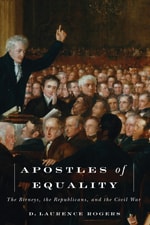
Apostles of Equality
The Birneys, the Republicans, and the Civil WarD. Laurence Rogers
Michigan State University Press, 2011
The first biographical account of the life of James Gillespie Birney in more than fifty years, this fabulously insightful history illuminates and elevates an all-but-forgotten figure whose political career contributed mightily to the American political fabric. Birney was a southern-born politician at the heart of the antislavery movement, with two southern-born sons who were major generals involved in key Union Army activities, including the leadership of the black troops. The interaction of the Birneys with historical figures (Abraham Lincoln, Harriet Beecher Stowe, and Henry Clay) highlights the significance of the family’s activities in politics and war. D. Laurence Rogers offers a unique historiography of the abolition movement, the Civil War, and Reconstruction through the experiences of one family navigating momentous developments from the founding of the Republic until the late 19th century.
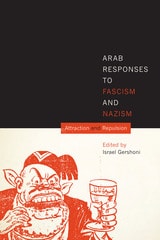
Arab Responses to Fascism and Nazism
Attraction and RepulsionBy Israel Gershoni
University of Texas Press, 2014
The first book to present an analysis of Arab response to fascism and Nazism from the perspectives of both individual countries and the Arab world at large, this collection problematizes and ultimately deconstructs the established narratives that assume most Arabs supported fascism and Nazism leading up to and during World War II. Using new source materials taken largely from Arab memoirs, archives, and print media, the articles reexamine Egyptian, Syrian, Lebanese, Palestinian, and Iraqi responses in the 1930s and throughout the war.
While acknowledging the individuals, forces, and organizations that did support and collaborate with Nazi Germany and fascist Italy, Arab Responses to Fascism and Nazism focuses on the many other Arab voices that identified with Britain and France and with the Allied cause during the war. The authors argue that many groups within Arab societies—elites and non-elites, governing forces, and civilians—rejected Nazism and fascism as totalitarian, racist, and, most important, as new, more oppressive forms of European imperialism. The essays in this volume argue that, in contrast to prevailing beliefs that Arabs were de facto supporters of Italy and Germany—since “the enemy of my enemy is my friend”—mainstream Arab forces and currents opposed the Axis powers and supported the Allies during the war. They played a significant role in the battles for control over the Middle East.
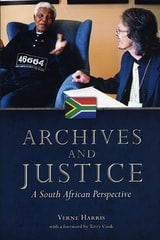
Archives and Justice
Verne Harris
Society of American Archivists, 2007
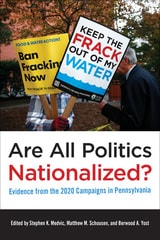
Are All Politics Nationalized?
Evidence from the 2020 Campaigns in PennsylvaniaEdited by Stephen K. Medvic, Matthew M. Schousen, and Berwood A. Yost
Temple University Press, 2023
Given the news media’s focus on national issues and debates, voters might be expected to make decisions about state and local candidates based on their views of the national parties and presidential candidates. However, nationalization as a concept, and the process by which politics becomes nationalized, are not fully understood. Are All Politics Nationalized? addresses this knowledge gap by looking at the behavior of candidates and the factors that influence voters’ electoral choices.
The editors and contributors examine the 2020 elections in six Pennsylvania districts to explore the level of nationalization in campaigns for Congress and state legislature. They also question if politicians are encouraging nationalized behavior and straight ticket voting—especially with down-ballot races.
Are All Politics Nationalized? concludes that issues specific to particular districts—such as fracking and local union politics—still matter, and candidates are eager to connect with voters by highlighting their ties to the local community. National politics do trickle down to local races, but races up and down the ballot are still heavily localized.
Area and Administration
James W. Fesler
University of Alabama Press, 2008
A foundational classic on the organization and coordination of modern government.
This fresh publication of James W. Fesler’s classic, Area and Administration is a powerful work of intellectual history. Richly illustrating how the Great Depression and World War II shaped the thinking of scholars who helped build modern American government.
It is also an authoritative work of powerful insight. The challenges of linking the center with the front lines, or securing vertical and horizonal coordination, and of connecting area and function, have only become more important in twenty-first century government. Fesler’s path-breaking book provides an extraordinarily useful foundation for grappling with issues that have become even more important for governance.
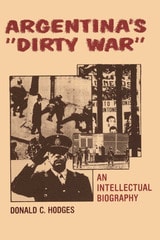
Argentina's "Dirty War"
An Intellectual BiographyBy Donald C. Hodges
University of Texas Press, 1991
Argentines ask how their ultracivilized country, reputedly the most European in Latin America, could have relapsed into near-barbarism in the 1970s. This enlightening study seeks to answer that question by reviewing the underlying political events and intellectual foundations of the "dirty war" (1975–1978) and overlapping Military Process (1976–1982). It examines the ideologies and actions of the main protagonists—the armed forces, guerrillas, and organized labor—over time and traces them to their roots.
In the most comprehensive treatment of the subject to date, Hodges examines primary materials never seen by other researchers, including clandestinely published guerrilla documents, and interviews important actors in Argentina's political drama. His wide-ranging scholarship traces the origins of the national security and national salvation doctrines to the Spanish Inquisition, sixteenth-century witch hunts, and nineteenth-century reactions to the modernizing ideologies of liberalism, democracy, socialism, and communism.
Hodges posits that the "dirty war," Military Process, and revolutionary war to which they responded represented the culmination of social tensions that arose in 1930 with the launching of the Military Era by Argentina's first successful twentieth-century coup. He offers the disquieting hypothesis that as long as the "Argentine Question" remains unsettled the military may intervene again, the resistance movement will remain strong, and violence may continue even under a democratic government.
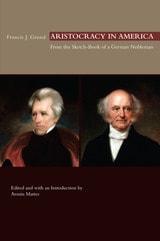
Aristocracy in America
From the Sketch-Book of a German NoblemanFrancis J. Grund, edited with an introduction by Armin Mattes
University of Missouri Press, 2018
Francis J. Grund, a German emigrant, was one of the most influential journalists in America in the three decades preceding the Civil War. He also wrote several books, including this fictional, satiric travel memoir in response to Alexis de Tocqueville’s famous Democracy in America. Armin Mattes provides a thorough account of Grund’s dynamic engagement in American political life, and brings to light many of Grund’s reflections on American social and political life previously published only in German. Mattes shows how Grund’s work can expand our understanding of the emerging democratic political culture and society in the antebellum United States.
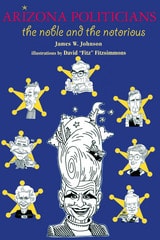
Arizona Politicians
The Noble and the NotoriousJames W. Johnson; Illustrations by David "Fitz" Fitzsimmons
University of Arizona Press, 2002
—A car dealer who propelled himself to the governor's mansion with the help of public recognition of his TV commercials
—An Arizonan who served not only as governor and chief justice of the Arizona Supreme Court, but also as the Majority Leader of the U.S. Senate and chief sponsor of the GI Bill
—A cowboy who delivered speeches to ranchhands and went on to become a U.S. senator known as one of the great orators of the twentieth century
—One of four Arizonans who lost a bid for the presidency yet made the Gallup Poll as one of the ten most admired men in the world
—A secretary who became the first woman in the nation to sit on a state supreme court
Journalist James Johnson has written profiles of 21 men and women from Arizona who have made their mark in the political arena. Chosen for their contributions to the state, their national prominence, their colorful personalities, and in some cases their notoriety, these prominent public servants—from first governor George W. P. Hunt to current senior senator McCain—all have been major participants in state or national affairs. Congressman Mo Udall once commented on Arizona's "civilized brand of politics," in which Republicans and Democrats, conservatives and liberals, treated one another with mutual respect. Johnson conveys both the spirit and spiritedness of Arizona politics and reveals how in many cases these politicians and their family members found their lives and careers overlapping. He tells their stories with humor and objectivity, while political cartoonist David Fitzsimmons captures their trademark styles in original drawings.
Although the individuals may speak from different platforms, all have been proud to call themselves Arizonans and proud to serve their state. This book shares their accomplishments and shows how, for better or worse, they've helped put Arizona in the spotlight.
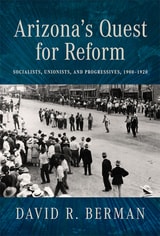
Arizona’s Quest for Reform
Socialists, Unionists, and Progressives, 1900–1920David R. Berman
University of Arizona Press, 2026
In Arizona’s Quest for Reform, David R. Berman traces the rise and fall of a dynamic coalition of socialists, labor activists, and progressive Democrats led by the influential Governor George Hunt as they pursued sweeping reforms in a rapidly changing state. From the fight for workers’ rights and women’s suffrage to the use of the initiative process and the role of radical newspapers, Berman brings to life the people and movements that shaped Arizona’s early political identity.
Drawing on extensive primary sources and organized in a clear chronological structure, Berman’s study reveals the tensions, alliances, and dramatic events that defined Arizona’s reform efforts between 1900 and 1920. The book explores the impact of powerful mining interests, railroad companies, and labor unions, while also examining the racialization of Mexican miners and their evolving role in the labor movement. Through vivid storytelling and rigorous scholarship, Berman uncovers the complexities of political change in a state straddling the transition from territory to statehood.
This landmark work will appeal to scholars of western history, labor studies, and political science, as well as general readers interested in Arizona’s unique place in the national Progressive movement. Arizona’s Quest for Reform not only deepens our understanding of the past but also offers timely insights into the enduring challenges of coalition building, grassroots activism, and political reform. It is a vital contribution to the study of Arizona and the American West.
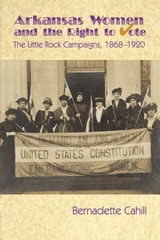
Arkansas Women and the Right to Vote
The Little Rock Campaigns: 1868-1920Bernadette Cahill
Butler Center for Arkansas Studies, 2015
Arkansas, 1800-1860
Remote and RestlessS. Charles Bolton
University of Arkansas Press, 1998
Often thought of as a primitive backwoods peopled by rough hunters and unsavory characters, early Arkansas was actually productive and dynamic in the same manner as other American territories and states. In this, the second volume in the Histories of Arkansas, S. Charles Bolton describes the emigration, mostly from other southern states, that carried Americans into Arkansas; the growth of an agricultural economy based on cotton, corn, and pork; the dominance of evangelical religion; and the way in which women coped with the frontier and made their own contributions toward its improvement. He closely compares the actual lifestyles of the settlers with the popularly held, uncomplimentary image.
Separate chapters deal with slavery and the lives of the slaves and with Indian affairs, particularly the dispossession of the native Quapaws and the later-arriving Cherokees. Political chapters explore opportunism in Arkansas Territory, the rise of the Democratic Party under the control of the Sevier-Johnson group known as the Dynasty, and the forces that led Arkansas to secede from the Union. In addition, Arkansas’s role in the Mexican War and the California gold rush is treated in detail.
In truth, geographic isolation and a rugged terrain did keep Arkansas underpopulated, and political violence and a disastrous experience in state banking tarnished its reputation, but the state still developed rapidly and successfully in this period, playing an important role on the southwestern frontier.
Winner of the 1999 Booker Worthen Literary Prize