Results by title
1927 books match the query 'Technology & Engineering' and 176 start with a
Applications of Machine Learning in Wireless Communications
Ruisi He
The Institution of Engineering and Technology, 2019

Applications of Space-Time Adaptive Processing
Richard Klemm
The Institution of Engineering and Technology, 2004
Applied Building Performance Simulation
Joe Clarke
The Institution of Engineering and Technology, 2024

Applied Control Theory
J.R. Leigh
The Institution of Engineering and Technology, 1987
Appropriating Technology
Vernacular Science And Social PowerRon Eglash
University of Minnesota Press, 2004
Approximate Boundary Conditions in Electromagnetics
T.B.A. Senior
The Institution of Engineering and Technology, 1995
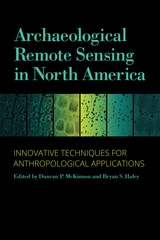
Archaeological Remote Sensing in North America
Innovative Techniques for Anthropological ApplicationsEdited by Duncan P. McKinnon and Bryan S. Haley
University of Alabama Press, 2017
Updating the highly praised 2006 publication Remote Sensing in Archaeology, edited by Jay K. Johnson, Archaeological Remote Sensing in North America: Innovative Techniques for Anthropological Applications is a must-have volume for today’s archaeologist. Targeted to practitioners of archaeological remote sensing as well as students, this suite of current and exemplary applications adheres to high standards for methodology, processing, presentation, and interpretation.
The use of remote sensing technologies to address academic and applied archaeological and anthropological research problems is growing at a tremendous rate in North America. Fueling this growth are new research paradigms using innovative instrumentation technologies and broader-area data collection methods. Increasingly, investigators pursuing these new approaches are integrating remote sensing data collection with theory-based interpretations to address anthropological questions within larger research programs.
In this indispensable volume, case studies from around the country demonstrate the technically diverse and major remote sensing methods and their integration with relevant technologies, such as geographic information systems (GIS) and global positioning systems (GPS), and include various uses of the “big four”: magnetometry, resistivity, ground-penetrating radar (GPR), and electromagnetic induction.
The study explores four major anthropological themes: site structure and community organization; technological transformation and economic change; archaeological landscapes; and earthen mound construction and composition. Concluding commentary from renowned expert Kenneth L. Kvamme overviews the practices, advances, and trends of geophysics and remote sensing in the past decade.
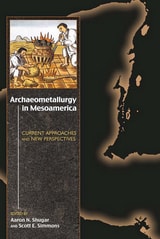
Archaeometallurgy in Mesoamerica
Current Approaches and New PerspectivesAaron N. Shugar
University Press of Colorado, 2013
The chapters are organized following the cyclical nature of metals--beginning with extracting and mining ore, moving to smelting and casting of finished objects, and ending with recycling and deterioration back to the original state once the object is no longer in use. Data obtained from archaeological investigations, ethnohistoric sources, ethnographic studies, along with materials science analyses, are brought to bear on questions related to the integration of metallurgy into local and regional economies, the sacred connotations of copper objects, metallurgy as specialized crafting, and the nature of mining, alloy technology, and metal fabrication.

Art and Cartography
Six Historical EssaysEdited by David Woodward
University of Chicago Press, 1987

Artificial Darkness
An Obscure History of Modern Art and MediaNoam M. Elcott
University of Chicago Press, 2016
In exploring how artificial darkness shaped modern art, film, and media, Noam M. Elcott addresses seminal and obscure works alongside their sites of production—such as photography darkrooms, film studios, and laboratories—and their sites of reception, including theaters, cinemas, and exhibitions. He argues that artists, scientists, and entertainers like Étienne-Jules Marey, Richard Wagner, Georges Méliès, and Oskar Schlemmer revolutionized not only images but also everything surrounding them: the screen, the darkness, and the experience of bodies and space. At the heart of the book is “the black screen,” a technology of darkness that spawned today’s blue and green screens and has undergirded numerous advanced art and film practices to this day.
Turning familiar art and film narratives on their heads, Artificial Darkness is a revolutionary treatment of an elusive, yet fundamental, aspect of art and media history.
Artificial Intelligence Applied to Satellite-based Remote Sensing Data for Earth Observation
Maria Pia Del Rosso
The Institution of Engineering and Technology, 2021
Artificial Intelligence In Libraries And Publishing
Ruth Pickering
Against the Grain, LLC, 2022
This Charleston Briefing seeks to provide some answers to these very important questions, offering both general essays on AI and more specific essays on AI in scholarly publishing, academic libraries, and AI in information discovery and knowledge building. The essays will help publishers, librarians, and researchers better understand the actual impact of AI on libraries and publishing so that they can respond to the potentially transformative impact of AI in a measured and knowledgeable manner.
Charleston Briefings: Trending Topics for Information Professionals is a thought-provoking series of brief books concerning innovation in the sphere of libraries, publishing, and technology in scholarly communication. The briefings, growing out of the vital conversations characteristic of the Charleston Conference and Against the Grain, will offer valuable insights into the trends shaping our professional lives and the institutions in which we work.
Artificial Intelligence Techniques in Power Systems
Kevin Warwick
The Institution of Engineering and Technology, 1997
Artificial Intelligence and Blockchain Technology in Modern Telehealth Systems
Agbotiname Lucky Imoize
The Institution of Engineering and Technology, 2024
Artificial Intelligence for Smarter Power Systems
Fuzzy logic and neural networksMarcelo Godoy Simões
The Institution of Engineering and Technology, 2021
Asbestos and Fire
Technological Tradeoffs and the Body at RiskMaines, Rachel
Rutgers University Press, 2013
For much of the industrial era, asbestos was a widely acclaimed benchmark material. During its heyday, it was manufactured into nearly three thousand different products, most of which protected life and property from heat, flame, and electricity. It was used in virtually every industry from hotel keeping to military technology to chemical manufacturing, and was integral to building construction from shacks to skyscrapers in every community across the United States. Beginning in the mid-1960s, however, this once popular mineral began a rapid fall from grace as growing attention to the serious health risks associated with it began to overshadow the protections and benefits it provided.
In this thought-provoking and controversial book, Rachel Maines challenges the recent vilification of asbestos by providing a historical perspective on Americans’ changing perceptions about risk. She suggests that the very success of asbestos and other fire-prevention technologies in containing deadly blazes has led to a sort of historical amnesia about the very risks they were supposed to reduce.
Asbestos and Fire is not only the most thoroughly researched and balanced look at the history of asbestos, it is also an important contribution to a larger debate that considers how the risks of technological solutions should be evaluated. As technology offers us ever-increasing opportunities to protect and prevent, Maines urges that learning to accept and effectively address the unintended consequences of technological innovations is a growing part of our collective responsibility.
Asbestos and Fire
Technological Tradeoffs and the Body at RiskMaines, Rachel
Rutgers University Press, 2005
For much of the industrial era, asbestos was a widely acclaimed benchmark material. During its heyday, it was manufactured into nearly three thousand different products, most of which protected life and property from heat, flame, and electricity. It was used in virtually every industry from hotel keeping to military technology to chemical manufacturing, and was integral to building construction from shacks to skyscrapers in every community across the United States. Beginning in the mid-1960s, however, this once popular mineral began a rapid fall from grace as growing attention to the serious health risks associated with it began to overshadow the protections and benefits it provided.
In this thought-provoking and controversial book, Rachel Maines challenges the recent vilification of asbestos by providing a historical perspective on Americans’ changing perceptions about risk. She suggests that the very success of asbestos and other fire-prevention technologies in containing deadly blazes has led to a sort of historical amnesia about the very risks they were supposed to reduce.
Asbestos and Fire is not only the most thoroughly researched and balanced look at the history of asbestos, it is also an important contribution to a larger debate that considers how the risks of technological solutions should be evaluated. As technology offers us ever-increasing opportunities to protect and prevent, Maines urges that learning to accept and effectively address the unintended consequences of technological innovations is a growing part of our collective responsibility.

Asymptotic and Hybrid Methods in Electromagnetics
F. Molinet
The Institution of Engineering and Technology, 2005
Asynchronous Circuit Applications
Jia Di
The Institution of Engineering and Technology, 2020
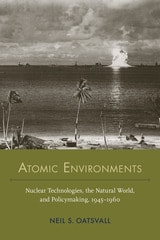
Atomic Environments
Nuclear Technologies, the Natural World, and Policymaking, 1945–1960Neil S. Oatsvall
University of Alabama Press, 2023
Demonstrates how policymakers influenced environmental science during the early nuclear age
In Atomic Environments: Nuclear Technologies, the Natural World, and Policymaking, 1945–1960, Neil S. Oatsvall examines how top officials in the Truman and Eisenhower administrations used environmental science to develop nuclear strategy at the beginning of the Cold War. While many people were involved in research and analysis during the period in question, it was at highest levels of executive decision-making where environmental science and nuclear science most clearly combined to shape the nation’s policies.
Oatsvall clearly demonstrates how the natural world and the scientific disciplines that study it became integral parts of nuclear science rather than adversarial fields of knowledge. But while nuclear technologies heavily depended on environmental science to develop, those same technologies frequently caused great harm to the natural world. Moreover, while some individuals expressed real anxieties about the damage wrought by nuclear technologies, policymakers as a class consistently made choices that privileged nuclear boosterism and secrecy, prioritizing institutional values over the lives and living systems that they were ostensibly charged to protect.
By scrutinizing institutional policymaking practices and agendas at the birth of the nuclear age, a constant set of values becomes clear. Oatsvall reveals an emerging technocratic class that routinely valued knowledge about the environment to help create and maintain a nuclear arsenal, despite its existential threat to life on earth and the negative effects many nuclear technologies had on ecosystems and the American people alike. Although policymakers took their charge to protect and advance the welfare of the United States and its people seriously, Atomic Environments demonstrates how they often failed to do so because their allegiance to the US nuclear hierarchy blinded them to the real risks and dangers of the nuclear age.

Autoaffection
Unconscious Thought in the Age of TechnologyPatricia Ticineto Clough
University of Minnesota Press, 2000
Explores the connection between new theories, new technologies, and new ways of thinking.
In this book, Patricia Ticineto Clough reenergizes critical theory by viewing poststructuralist thought through the lens of "teletechnology," using television as a recurring case study to illuminate the changing relationships between subjectivity, technology, and mass media.
Autoaffection links diverse forms of cultural criticism-feminist theory, queer theory, film theory, postcolonial theory, Marxist cultural studies and literary criticism, the cultural studies of science and the criticism of ethnographic writing—to the transformation and expansion of teletechnology in the late twentieth century. These theoretical approaches, Clough suggests, have become the vehicles of unconscious thought in our time.In individual chapters, Clough juxtaposes the likes of Derridean deconstruction, Deleuzian philosophy, and Lacanian psychoanalysis. She works through the writings of Fredric Jameson, Donna Haraway, Judith Butler, Bruno Latour, Nancy Fraser, Elizabeth Grosz—to name only a few—placing all in dialogue with a teletechnological framework. Clough shows how these cultural criticisms have raised questions about the foundation of thought, allowing us to reenvision the relationship of nature and technology, the human and the machine, the virtual and the real, the living and the inert.
Autonomous Decentralized Systems and their Applications in Transport and Infrastructure
Kinji Mori
The Institution of Engineering and Technology, 2019

Autonomous Underwater Vehicles
Design and practiceFrank Ehlers
The Institution of Engineering and Technology, 2020
Aviation Cybersecurity
Foundations, principles, and applicationsHoubing Song
The Institution of Engineering and Technology, 2022
Aviation Weather Surveillance Systems
Advanced radar and surface sensors for flight safety and air traffic managementPravas Mahapatra
The Institution of Engineering and Technology, 1999
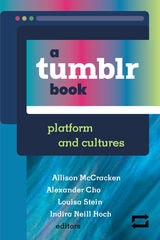
a tumblr book
platform and culturesAllison McCracken, Alexander Cho, Louisa Stein, and Indira Neill Hoch, editors
University of Michigan Press, 2020
Perfect for those unfamiliar with the platform as well as those who grew up on it, this volume contains essays and artwork that span many different topics: fandom; platform structure and design; race, gender and sexuality, including queer and trans identities; aesthetics; disability and mental health; and social media privacy and ethics. An entire generation of young people that is now beginning to influence mass culture and politics came of age on Tumblr, and this volume is an indispensable guide to the many ways this platform works.