Results by title
28167 books match the query 'History' and 2536 start with a
Archaeological Perspectives on the Transmission and Transformation of Culture in the Eastern Mediterranean
J. Clarke
Council for British Research in the Levant, 2005
Archaeological Researches at Teotihuacan, Mexico
Sigvald Linne, with a foreword by Staffan Brunius and introduction by George L.
University of Alabama Press, 2003
In 1932, the Ethnographical Museum of Sweden sent an archaeological expedition to Mexico under the direction of Sigvald Linné to determine the full extent of this ancient Teotihuacan occupation and to collect exhibit-quality artifacts. Of an estimated 2,000-plus residential compounds at Teotihuacan, only 20 apartment-like structures were excavated at the time. Yet Linné’s work revealed residential patterns that have been confirmed later in other locations.
Some of the curated objects from the Valley of Mexico and the adjacent state of Puebla are among the most rare and unique artifacts yet found. Another important aspect of this research was that, with the aid of the Museum of Natural History in Washington, Linné’s team conducted ethnographic interviews with remnant native Mexican peoples whose culture had not been entirely destroyed by the Conquest, thereby collecting and preserving valuable information for later research.
Archaeological Settlement Pattern Data from the Chalco, Xochimilco, Ixtapalapa, Texcoco and Zumpango Regions, Mexico
Jeffrey R. Parsons, Keith W. Kintigh, and Susan A. Gregg
University of Michigan Press, 1983

Archaeological Survey at Notion / Colophon-by-the-Sea
Edited by Christopher Ratté, Felipe Rojas, and Angela Commito
University of Michigan Press, 2027
Notion, also known as Colophon-by-the-Sea, was an ancient Greek city on the western coast of Anatolia. A comprehensive archaeological survey carried out by the University of Michigan and Brown University (2014–21) yielded rich ceramic evidence for the chronology and commercial connections of the settlement, clarified essential aspects of the city plan, provided opportunities for detailed study of major buildings and public works, and shed new light on both the local geology and the modification of the landscape through terracing and stone extraction. These investigations documented a major program of urban development featuring new fortifications and a new city plan in the early to mid-third century BC, three centuries of prosperous habitation, and the substantial abandonment of the city in the early first century AD. The archaeology of Notion provides vivid evidence for the turbulent history of Ionia in Hellenistic times, and for the different responses of local communities to Roman rule.
Archaeological Survey in the Lower Mississippi Alluvial Valley, 1940–1947
Philip Phillips, James A. Ford, and James B. Griffin; edited and with a new introduction by Stephen Williams
University of Alabama Press, 2003
A Dan Josselyn Memorial Publication
The Lower Mississippi Survey was initiated in 1939 as a joint undertaking of three institutions: the School of Geology at Louisiana State University, the Museum of Anthropology at the University of Michigan, and the Peabody Museum at Harvard. Fieldwork began in 1940 but was halted during the war years. When fieldwork resumed in 1946, James Ford had joined the American Museum of Natural History, which assumed co-sponsorship from LSU. The purpose of the Lower Mississippi Survey (LMS)—a term used to identify both the fieldwork and the resultant volume—was to investigate the northern two-thirds of the alluvial valley of the lower Mississippi River, roughly from the mouth of the Ohio River to Vicksburg. This area covers about 350 miles and had been long regarded as one of the principal hot spots in eastern North American archaeology.
Phillips, Ford, and Griffin surveyed over 12,000 square miles, identified 382 archaeological sites, and analyzed over 350,000 potsherds in order to define ceramic typologies and establish a number of cultural periods. The commitment of these scholars to developing a coherent understanding of the archaeology of the area, as well as their mutual respect for one another, enabled the publication of what is now commonly considered the bible of southeastern archaeology. Originally published in 1951 as volume 25 of the Papers of the Peabody Museum of American Archaeology and Ethnology, this work has been long out of print.
Because Stephen Williams served for 35 years as director of the LMS at Harvard, succeeding Phillips, and was closely associated with the authors during their lifetimes, his new introduction offers a broad overview of the work’s influence and value, placing it in a contemporary context.
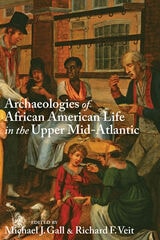
Archaeologies of African American Life in the Upper Mid-Atlantic
Edited by Michael J. Gall and Richard F. Veit
University of Alabama Press, 2017
A 2018 CHOICE OUTSTANDING ACADEMIC TITLE
New scholarship provides insights into the archaeology and cultural history of African American life from a collection of sites in the Mid-Atlantic
This groundbreaking volume explores the archaeology of African American life and cultures in the Upper Mid-Atlantic region, using sites dating from the eighteenth through the twentieth centuries. Sites in Delaware, Pennsylvania, New Jersey, and New York are all examined, highlighting the potential for historical archaeology to illuminate the often overlooked contributions and experiences of the region’s free and enslaved African American settlers.
Archaeologies of African American Life in the Upper Mid-Atlantic brings together cutting-edge scholarship from both emerging and established scholars. Analyzing the research through sophisticated theoretical lenses and employing up-to-date methodologies, the essays reveal the diverse ways in which African Americans reacted to and resisted the challenges posed by life in a borderland between the North and South through the transition from slavery to freedom. In addition to extensive archival research, contributors synthesize the material finds of archaeological work in slave quarter sites, tenant farms, communities, and graveyards.
Editors Michael J. Gall and Richard F. Veit have gathered new and nuanced perspectives on the important role free and enslaved African Americans played in the region’s cultural history. This collection provides scholars of the Mid-Atlantic and Northeast regions, African American studies, material culture studies, religious studies, slavery, the African diaspora, and historical archaeologists with a well-balanced array of rural archaeological sites that represent cultural traditions and developments among African Americans in the region. Collectively, these sites illustrate African Americans’ formation of fluid cultural and racial identities, communities, religious traditions, and modes of navigating complex cultural landscapes in the region under harsh and disenfranchising circumstances.
Archaeologies of Modernity
Avant-Garde BildungRainer Rumold
Northwestern University Press, 2015
Archaeologies of Modernity explores the shift from the powerful tradition of literary forms of Bildung—the education of the individual as the self—to the visual forms of “Bildung” (from Bild) that characterize German modernism and the European avant-garde. Interrelated chapters examine the work of Franz Kafka, Jean/Hans Arp, Walter Benjamin, and Carl Einstein, and of artists such as Oskar Kokoschka or Kurt Schwitters, in the light of the surge of an autoformation (Bildung) of verbal and visual images at the core of expressionist and surrealist aesthetics and the art that followed. In this first scholarly focus on modernist avant-garde Bildung in its entwinement of conceptual modernity with forms of the archaic, Rumold resituates the significance of the poet and art theorist Einstein and his work on the language of primitivism and the visual imagination. Archaeologies of Modernity is a major reconsideration of the conception of the modernist project and will be of interest to scholars across the disciplines.
Archaeologies of Touch
Interfacing with Haptics from Electricity to ComputingDavid Parisi
University of Minnesota Press, 2018
A material history of haptics technology that raises new questions about the relationship between touch and media
Since the rise of radio and television, we have lived in an era defined increasingly by the electronic circulation of images and sounds. But the flood of new computing technologies known as haptic interfaces—which use electricity, vibration, and force feedback to stimulate the sense of touch—offering an alternative way of mediating and experiencing reality.
In Archaeologies of Touch, David Parisi offers the first full history of these increasingly vital technologies, showing how the efforts of scientists and engineers over the past three hundred years have gradually remade and redefined our sense of touch. Through lively analyses of electrical machines, videogames, sex toys, sensory substitution systems, robotics, and human–computer interfaces, Parisi shows how the materiality of touch technologies has been shaped by attempts to transform humans into more efficient processors of information.
With haptics becoming ever more central to emerging virtual-reality platforms (immersive bodysuits loaded with touch-stimulating actuators), wearable computers (haptic messaging systems like the Apple Watch’s Taptic Engine), and smartphones (vibrations that emulate the feel of buttons and onscreen objects), Archaeologies of Touch offers a timely and provocative engagement with the long history of touch technology that helps us confront and question the power relations underpinning the project of giving touch its own set of technical media.
Archaeology and Ceramics at the Marksville Site
Alan Toth
University of Michigan Press, 1974
Archaeology and Desertification
The Wadi Faynan Landscape Survey, Southern JordanG. Barker
Council for British Research in the Levant, 2007
Archaeology and Identity on the Pacific Coast and Southern Highlands of Mesoamerica
Edited by Claudia García-Des Lauriers and Michael W. Love
University of Utah Press, 2016
The Pacific coast and southern highlands of Chiapas and Guatemala is a region significant to debates about the origins of social complexity, interaction, and colonialism. The area, however, has received uneven attention and much of what we know is largely restricted to the Preclassic period. This theoretically eclectic volume presents greater temporal coverage, is geographically unified, and engages some of the most important questions of each period through a discussion of the archaeology of identity.
Chapters range from traditional assessments of identity to discussion of practice and relational personhood; all share a concern for how archaeology and ethnohistory provide opportunities and challenges in the reconstruction of identities. The region is one with a multifaceted history of interactions between local populations and those from other parts of Mesoamerica. Linguistic diversity, landscape, and artistic representations have added to the complexities of understanding identity formation here. Rather than providing a unified voice on the issues, Archaeology and Identity on the Pacific Coast and Southern Highlands of Mesoamerica is a dialogue presented through case studies, one that will hopefully encourage future research in this complex and little understood region of Mesoamerica.
Archaeology at El Perú-Waka'
Ancient Maya Performances of Ritual, Memory, and PowerEdited by Olivia C. Navarro-Farr and Michelle Rich
University of Arizona Press, 2014
El Perú-Waka’ is an ancient Maya city located in present-day northwestern Petén, Guatemala. Rediscovered by petroleum exploration workers in the mid-1960s, it is the largest known archaeological site in the Laguna del Tigre National Park in Guatemala’s Maya Biosphere Reserve. The El Perú-Waka’ Regional Archaeological Project initiated scientific investigations in 2003, and through excavation and survey, researchers established that Waka’ was a key political and economic center well integrated into Classic-period lowland Maya civilization, and reconstructed many aspects of Maya life and ritual activity in this ancient community. The research detailed in this volume provides a wealth of new, substantive, and scientifically excavated data, which contributors approach with fresh theoretical insights. In the process, they lay out sound strategies for understanding the ritual manipulation of monuments, landscapes, buildings, objects, and memories, as well as related topics encompassing the performance and negotiation of power throughout the city’s extensive sociopolitical history.
Archaeology at Shiloh Indian Mounds, 1899-1999
Paul D. Welch
University of Alabama Press, 2006
The Shiloh Indian Mounds archaeological site, a National Historic Landmark, is a late prehistoric community within the boundaries of the Shiloh National Military Park on the banks of the Tennessee River, where one of the bloodiest battles of the Civil War was fought in April 1862. Dating between AD 1000 and 1450, the archaeological site includes at least eight mounds and more than 100 houses. It is unique in that the land has never been plowed, so visitors can walk around the area and find the collapsed remains of 800-year-old houses and the 900-meter-long palisade with bastions that protected the village in prehistoric times. Although its location within a National Park boundary has protected the area from the recent ravages of man, riverbank erosion began to undermine the site in the 1970s. In the mid-1990s, Paul Welch began a four-year investigation culminating in a comprehensive report to the National Park Service on the Shiloh Indian Mounds.
These published findings confirm that the Shiloh site was one of at least fourteen Mississippian mound sites located within a 50 km area and that Shiloh was abandoned in approximately AD 1450. It also establishes other parameters for the Shiloh archaeological phase. This current volume is intended to make information about the first 100 years of excavations at the Shiloh site available to the archaeological community.
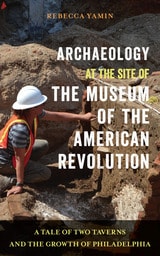
Archaeology at the Site of the Museum of the American Revolution
A Tale of Two Taverns and the Growth of PhiladelphiaRebecca Yamin
Temple University Press, 2019
When the Museum of the American Revolution acquired the land at Third and Chestnut streets in Olde City, Philadelphia, it came with the condition that an archaeological investigation be conducted. The excavation that began in the summer of 2014 yielded treasures in the trash: unearthed privy pits provided remarkable finds from a mid-eighteenth-century tavern to relics from a button factory dating to the early twentieth century. These artifacts are described and analyzed by urban archaeologist Rebecca Yamin in Archaeology at the Site of the Museum of the American Revolution.
Yamin, lead archaeologist on the dig, catalogues items—including earthenware plates and jugs, wig curlers, clay pipes, and liquor bottles—to tell the stories of their owners and their roles in Philadelphia history. As she uncovers the history of the people as well as their houses, taverns, and buildings that were once on the site, she explains that by looking at these remains, we see the story of the growth of Philadelphia from its colonial beginnings to the Second World War.
Archaeology at the Site of the Museum of the American Revolution is a perfect keepsake for armchair archaeologists, introductory students, and history buffs.
Archaeology below the Cliff
Race, Class, and Redlegs in Barbadian Sugar SocietyMatthew C. Reilly
University of Alabama Press, 2019
Archaeology below the Cliff: Race, Class, and Redlegs in Barbadian Sugar Society is the first archaeological study of the poor whites of Barbados, the descendants of seventeenth-century European indentured servants and small farmers. “Redlegs” is a pejorative to describe the marginalized group who remained after the island transitioned to a sugar monoculture economy dependent on the labor of enslaved Africans. A sizable portion of the “white” minority, the Redlegs largely existed on the peripheries of the plantation landscape in an area called “Below Cliff,” which was deemed unsuitable for profitable agricultural production. Just as the land on which they resided was cast as marginal, so too have the poor whites historically and contemporarily been derided as peripheral and isolated as well as idle, alcoholic, degenerate, inbred, and irrelevant to a functional island society and economy.
Using archaeological, historical, and oral sources, Matthew C. Reilly shows how the precarious existence of the Barbadian Redlegs challenged elite hypercapitalistic notions of economics, race, and class as they were developing in colonial society. Experiencing pronounced economic hardship, similar to that of the enslaved, albeit under very different circumstances, Barbadian Redlegs developed strategies to live in a harsh environment. Reilly’s investigations reveal that what developed in Below Cliff was a moral economy, based on community needs rather than free-market prices.
Reilly extensively excavated households from the tenantry area on the boundaries of the Clifton Hall Plantation, which was abandoned in the 1960s, to explore the daily lives of poor white tenants and investigate their relationships with island economic processes and networks. Despite misconceptions of strict racial isolation, evidence also highlights the importance of poor white encounters and relationships with Afro-Barbadians. Historical data are also incorporated to address how an underrepresented demographic experienced the plantation landscape. Ultimately, Reilly’s narrative situates the Redlegs within island history, privileging inclusion and embeddedness over exclusion and isolation.
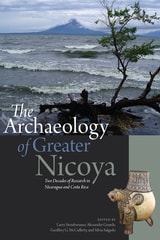
Archaeology of Greater Nicoya
Two Decades of Research in Nicaragua and Costa RicaLarry Steinbrenner
University Press of Colorado, 2021
Drawing on approaches ranging from ethnohistory to bioarchaeology to scientific and culture-historical archaeology, the book is organized into sections on redefining Greater Nicoya, projects and surveys, material culture, and mortuary practices. Individual chapters explore Indigenous groups and their origins, extensive summaries of the three largest scholarly archaeological projects completed in Pacific Nicaragua in the last quarter century, clear evidence of Mesoamerican connections from Costa Rica’s Bay of Culebra, detailed histories of lithic analysis and rock art studies in Nicaragua, new insights into mortuary and cultural practices based on osteological evidence, and reinterpretations of diagnostic ceramic types as products of related potting communities and the first definitive identification of production centers for these types. Drawing upon new 14C dates, this volume also provides the most substantial revision of the late pre-colonial chronology since the 1960s, a correction that has critical implications for understanding the prehistory of Greater Nicoya.
Archaeology of Minnesota
The Prehistory of the Upper Mississippi River RegionGuy Gibbon
University of Minnesota Press, 2012
Histories of Minnesota typically begin with seventeenth-century French fur traders exploring the western shores of Lake Superior. And yet, archaeology reveals that Native Americans lived in the region at least 13,000 years before such European incursions. Archaeology of Minnesota tells their story—or as much as the region’s wealth of artifacts, evidence of human activity, and animal and plant remains can convey.
From archaeological materials, Guy Gibbon reconstructs the social, economic, and political systems—the lifeways—of those who inhabited what we now call Minnesota for thousands of years before the first contact between native peoples and Europeans. From the boreal coniferous forests to the north, to the tall grass prairie to the west and southwest, to the deciduous forest to the east and southeast, the richly diverse land of the upper Mississippi River region, crossed and bordered by all manner of waterways, was a virtual melting pot of prehistoric cultures.
Demonstrating how native cultures adapted and evolved over time, Gibbon provides an explanation that is firmly rooted in the nature of local environments. In doing so, he shows how the study of Minnesota archaeology is relevant to a broader understanding of long-term patterns of change in human development throughout the world.
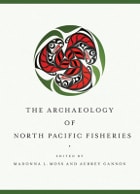
Archaeology of North Pacific Fisheries
Edited by Madonna L. Moss and Aubrey Cannon
University of Alaska Press, 2011
For thousands of years, fisheries were crucial to the sustenance of the First Peoples of the Pacific Coast. Yet human impact has left us with a woefully incomplete understanding of their histories prior to the industrial era. Covering Alaska, British Columbia, and Puget Sound, The Archaeology of North Pacific Fisheries illustrates how the archaeological record reveals new information about ancient ways of life and the histories of key species. Individual chapters cover salmon, as well as a number of lesser-known species abundant in archaeological sites, including pacific cod, herring, rockfish, eulachon, and hake. In turn, this ecological history informs suggestions for sustainable fishing in today’s rapidly changing environment.
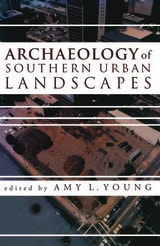
Archaeology of Southern Urban Landscapes
Amy L Young
University of Alabama Press, 2000
Groundbreaking essays in urban archaeology highlight the impact of towns and cities on the southern landscape.
The rapid growth and development of urban areas in the South have resulted in an increase in the number of urban archaeology projects required by federal and state agencies. These projects provide opportunities not only to investigate marginal areas between the town and countryside but also to recover information long buried beneath the earliest urban structures. Such projects have also created a need for a one-volume update on archaeology as it is practiced in the urban areas of the southeastern United States.
Archaeology of Southern Urban Landscapes will assist practitioners and scholars in the burgeoning fields of urban and landscape archaeology by treating the South as a distinctive social, geographic, and material entity and by focusing on the urban South rather than the stereotypical South of rural plantations. The case studies in this volume span the entire southeastern United States, from Annapolis to New Orleans and from colonial times to the 19th century. The authors address questions involving the function of cities, interregional diversity, the evolution of the urban landscape, and the impact of the urban landscape on southern culture. By identifying the relationship between southern culture and the South's urban landscapes, this book will help us understand the built landscape of the past and predict future growth in the region.
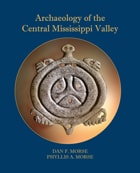
Archaeology of the Central Mississippi Valley
Dan F. Morse
University of Alabama Press, 2009
The earliest recorded description of the Central Mississippi Valley and its inhabitants is contained within the DeSoto chronicles written after the conquistadors passed through the area between 1539 and 1543. In 1882 a field agent for the Bureau of American Ethnology conducted the first systematic archaeological survey of the region, an area that extends from near the mouth of the Ohio River to the mouth of the Arkansas River, bounded on the east by the Mississippi River and on the west by the Ozark Highlands and Grand Prairie. One hundred years later, the authors produced this first comprehensive overview of all of the archaeological research conducted in the valley during the interim. It is a well-organized compendium, written with both the professional archaeologist and the layperson in mind, and is profusely illustrated with maps, charts, artifact photographs, and drawings. This volume was the first published history of the archaeology of the region and stands as the basic resource for that work today.

Archaeology of the Olympics
The Olympics and Other Festivals in AntiquityWendy J. Raschke
University of Wisconsin Press, 1988
The Archaeology of the Olympics presents a stirring reevaluation of the Olympic Games (and related festivals) as they actually were, not as the ancient Greeks wished—and we still wish—they might have been. Historians, archaeologists, and classicists examine the evidence to ask such questions as, How did the athletes train? What did they eat? Can we trace the roots of the games as far back as the Bronze Age of Crete and Mycenae? Or even to Anatolia, where similar athletic activities occurred? Were the ancient games really so free of political overtones as modern Olympic rhetoric urges us to believe?
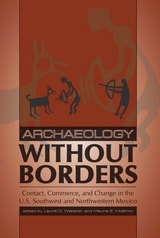
Archaeology without Borders
Contact, Commerce, and Change in the U.S. Southwest and Northwestern MexicoMaxine E. McBrinn
University Press of Colorado, 2008
Contributors examining early agriculture offer models for understanding the transition to agriculture, explore relationships between the spread of agriculture and Uto-Aztecan migrations, and present data from Arizona, New Mexico, and Chihuahua. Contributors focusing on social identity discuss migration, enculturation, social boundaries, and ethnic identities. They draw on case studies that include diverse artifact classes - rock art, lithics, architecture, murals, ceramics, cordage, sandals, baskets, faunal remains, and oral histories. Mexican scholars present data from Chihuahua, Durango, Zacatecas, Michoacan, Coahuila, and Nuevo Leon. They address topics including Spanish-indigenous conflicts, archaeological history, cultural landscapes, and interactions among Mesoamerica, northern Mexico, and the U.S. Southwest.
Laurie D. Webster is a visiting scholar in the Department of Anthropology at the University of Arizona. Maxine E. McBrinn is a postdoctoral research scientist at the Field Museum in Chicago. Proceedings of the 2004 Southwest Symposium. Contributors include Karen R. Adams, M. Nicolás Caretta, Patricia Carot, John Carpenter, Jeffery Clark, Linda S. Cordell, William E. Doolittle, Suzanne L. Eckert, Gayle J. Fritz, Eduardo Gamboa Carrera, Leticia González Arratia, Arturo Guevara Sánchez, Robert J. Hard, Kelly Hays-Gilpin, Marie-Areti Hers, Amber L. Johnson, Steven A. LeBlanc, Patrick Lyons, Jonathan B. Mabry, A. C. MacWilliams, Federico Mancera, Maxine E. McBrinn, Francisco Mendiola Galván, William L. Merrill, Martha Monzón Flores, Scott G. Ortman, John R. Roney, Guadalupe Sanchez de Carpenter, Moisés Valadez Moreno, Bradley J. Vierra, Laurie D. Webster, and Phil C. Weigand.
Archaeology's Footprints in the Modern World
Michael Brian Schiffer
University of Utah Press, 2017
What is the social value of archaeological research to present-day society? Michael Schiffer answers this question with forty-two case studies from a global perspective to demonstrate archaeology’s diverse scientific and humanistic contributions. Drawing on nearly five decades of research, he delivers fascinating yet nontechnical discussions that provide a deeper understanding of what archaeologists do and why they do it.
From reconstructing human evolution and behavior in prehistoric times to providing evidence that complements recorded history or debunks common legends, archaeologists help us understand our human past. They have also played crucial roles in developing techniques essential for the investigation of climate change along with tools for environmental reconstruction. Working for cities, tribes, and federal agencies, archaeologists manage cultural resources and testify in court. In forensic contexts, archaeological expertise enables the gathering of critical evidence. With engaging and lively prose, Archaeology’s Footprints brings to life a full panorama of contributions that have had an impact on modern society.
Archaeology, History, and Formation of Identity in Ancient Israel
Filip Capek
Karolinum Press, 2023
When did Israel begin? The origins of ancient Israel are shrouded in mystery, and those hoping to explore the issue must utilize resources from three different fields—archaeology, epigraphy, and biblical texts—and then examine their interrelations while keeping in mind that the name Israel was not used to describe just one state but referred to numerous entities at different times.
Archaeology, History, and Formation of Identity in Ancient Israel provides a critical reading of Israel’s history. It is neither a harmonizing reading, which takes the picture painted by texts as a given fact, nor a reading supporting biblical texts with archaeological and epigraphic data; instead, it offers the reader multiple options to understand biblical narratives on a historical and theological level. In addition to presenting the main currents in the field, the book draws upon the latest discoveries from Czech-Israeli excavations to offer new hypotheses and reconstructions based on the interdisciplinary dialogue between biblical studies, archaeology, and history.
Archaeology, History, and Predictive Modeling
Research at Fort Polk, 1972-2002David G. Anderson and Steven D. Smith
University of Alabama Press, 2003
Fort Polk Military Reservation encompasses approximately 139,000 acres in western Louisiana 40 miles southwest of Alexandria. As a result of federal mandates for cultural resource investigation, more archaeological work has been undertaken there, beginning in the 1970s, than has occurred at any other comparably sized area in Louisiana or at most other localities in the southeastern United States. The extensive program of survey, excavation, testing, and large-scale data and artifact recovery, as well as historic and archival research, has yielded a massive amount of information. While superbly curated by the U.S. Army, the material has been difficult to examine and comprehend in its totality.
With this volume, Anderson and Smith collate and synthesize all the information into a comprehensive whole. Included are previous investigations, an overview of local environmental conditions, base military history and architecture, and the prehistoric and historic cultural sequence. An analysis of location, environmental, and assemblage data employing a sample of more than 2,800 sites and isolated finds was used to develop a predictive model that identifies areas where significant cultural resources are likely to occur. Developed in 1995, this model has already proven to be highly accurate and easy to use.
Archaeology, History, and Predictive Modeling will allow scholars to more easily examine the record of human activity over the past 13,000 or more years in this part of western Louisiana and adjacent portions of east Texas. It will be useful to southeastern archaeologists and anthropologists, both professional and amateur.
Archaeometallurgy in Mesoamerica
Current Approaches and New PerspectivesAaron N. Shugar
University Press of Colorado, 2013
The chapters are organized following the cyclical nature of metals--beginning with extracting and mining ore, moving to smelting and casting of finished objects, and ending with recycling and deterioration back to the original state once the object is no longer in use. Data obtained from archaeological investigations, ethnohistoric sources, ethnographic studies, along with materials science analyses, are brought to bear on questions related to the integration of metallurgy into local and regional economies, the sacred connotations of copper objects, metallurgy as specialized crafting, and the nature of mining, alloy technology, and metal fabrication.
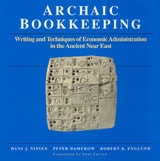
Archaic Bookkeeping
Early Writing and Techniques of Economic Administration in the Ancient Near EastHans J. Nissen, Peter Damerow, and Robert K. Englund
University of Chicago Press, 1993
scholarship on the earliest true writing system in human
history. Invented by the Babylonians at the end of the
fourth millennium B.C., this script, called proto-cuneiform,
survives in the form of clay tablets that have until now
posed formidable barriers to interpretation. Many tablets,
excavated in fragments from ancient dump sites, lack a clear
context. In addition, the purpose of the earliest tablets
was not to record language but to monitor the administration
of local economies by means of a numerical system.
Using the latest philological research and new methods
of computer analysis, the authors have for the first time
deciphered much of the numerical information. In
reconstructing both the social context and the function of
the notation, they consider how the development of our
earliest written records affected patterns of thought, the
concept of number, and the administration of household
economies. Complete with computer-generated graphics keyed
to the discussion and reproductions of all documents referred
to in the text, Archaic Bookkeeping will interest
specialists in Near Eastern civilizations, ancient history,
the history of science and mathematics, and cognitive
psychology.

Archaism and Actuality
Japan and the Global Fascist ImaginaryHarry Harootunian
Duke University Press, 2023
Archeology and Volcanism in Central America
The Zapotitán Valley of El SalvadorEdited by Payson D. Sheets
University of Texas Press, 1983
Scientists have long speculated on the impact of extreme natural catastrophes on human societies. Archeology and Volcanism in Central America provides dramatic evidence of the effects of several volcanic disasters on a major civilization of the Western Hemisphere, that of the Maya.
During the past 2,000 years, four volcanic eruptions have taken place in the Zapotitán Valley of southern El Salvador. One, the devastating eruption of Ilopango around A.D. 300, forced a major migration, pushing the Mayan people north to the Yucatán Peninsula. Although later eruptions did not have long-range implications for cultural change, one of the subsequent eruptions preserved the Cerén site—a Mesoamerican Pompeii where the bodies of the villagers, the palm-thatched roofs of their houses, the pots of food in their pantries, even the corn plants in their fields were preserved with remarkable fidelity.
Throughout 1978, a multidisciplinary team of anthropologists, archeologists, geologists, biologists, and others sponsored by the University of Colorado's Protoclassic Project researched and excavated the results of volcanism in the Zapotitan Valley—a key Mesoamerican site that contemporary political strife has since rendered inaccessible.
The result is an outstanding contribution to our understanding of the impact of volcanic eruptions on early Mayan civilization. These investigations clearly demonstrate that the Maya inhabited this volcanically hazardous valley in order to reap the short-term benefits that the volcanic ash produced—fertile soil, fine clays, and obsidian deposits.
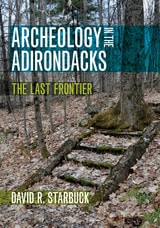
Archeology in the Adirondacks
The Last FrontierDavid R. Starbuck
University Press of New England, 2018
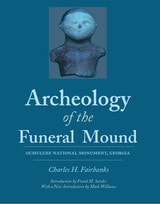
Archeology of the Funeral Mound
Ocmulgee National Monument, GeorgiaCharles H. Fairbanks, with a new introduction by Mark Williams
University of Alabama Press, 2003
The largest prehistoric mound site in Georgia is located in modern-day Macon and is known as Ocmulgee. It was first recorded in August 1739 by General James Oglethorpe’s rangers during an expedition to the territory of the Lower Creeks. The botanist William Bartram wrote extensively of the ecology of the area during his visit in 1773, but the 1873 volume by Charles C. Jones, Antiquities of the Southern Indians, Particularly of the Georgia Tribes, was the first to treat the archaeological significance of the site.
Professional excavations began at Ocmulgee in 1933 under the auspices of the Smithsonian Institution, using Civil Works Administration labor. Investigations continued under a variety of sponsorships until December 1936, when the locality was formally named a national monument. Excavation of the mounds, village sites, earth lodge, and funeral mound revealed an occupation of the Macon Plateau spanning more than 7,000 years. The funeral mound was found to contain log tombs, bundles of disarticulated bones, flexed burials, and cremations. Grave goods included uniquely patterned copper sun disks that were found at only one other site in the Southeast—the Bessemer site in Alabama—so the two ceremonial centers were established as contemporaries.
In this classic work of archaeological research and analysis, Charles Fairbanks has not only offered a full treatment of the cultural development and lifeways of the builders of Ocmulgee but has also related them effectively to other known cultures of the prehistoric Southeast.
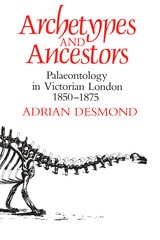
Archetypes and Ancestors
Palaeontology in Victorian London, 1850-1875Adrian Desmond
University of Chicago Press, 1982
"A sophisticated study of the colonization of scientific territory—specifically of rival attempts to design the dinosaur—and of the constructive (not just obstructive) role of social pressures in the making of 'lasting contributions' to science. Not least it is a joy to read, perkily irreverent at times and full of nice vignettes and memorable turns of phrase."—Roy Porter, Times Higher Education Supplement
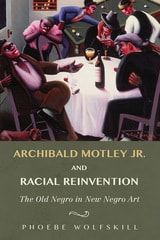
Archibald Motley Jr. and Racial Reinvention
The Old Negro in New Negro ArtPhoebe Wolfskill
University of Illinois Press, 2017
Phoebe Wolfskill demonstrates how Motley's art embodied the tenuous nature of the Black Renaissance and the wide range of ideas that structured it. Focusing on key works in Motley's oeuvre, Wolfskill reveals the artist's complexity and the variety of influences that informed his work. Motley’s paintings suggest that the racist, problematic image of the Old Negro was not a relic of the past but an influence that pervaded the Black Renaissance. Exploring Motley in relation to works by notable black and non-black contemporaries, Wolfskill reinterprets Motley's oeuvre as part of a broad effort to define American cultural identity through race, class, gender, religion, and regional affiliation.

Archie Bunker's America
TV in an Era of Change 1968-1978Josh Ozersky. Foreword by Mark Crispin Miller
Southern Illinois University Press, 2003
Around 1968, advertisers who were anxious to break into the lucrative baby-boomer demographic convinced television networks to begin to abandon prime-time programming that catered to universal audiences. With the market splintering, networks ventured into more issue-based and controversial territories. While early network attempts at more “relevant” programming failed, Ozersky examines how CBS struck gold with the political comedy All in the Family in 1971 and how other successful, conflict-based comedies turned away from typical show business conventions. As the 1970s wore on, the innovations of the previous years began to lose their public appeal. After Vietnam and Watergate, Ozersky argues, Americans were exhausted from the political turbulence of the preceding decade and were ready for a televisual “return to normalcy.”
Straightforward, engaging, and liberally illustrated, Archie Bunker’s America is peppered with the stories of outsider cops and failed variety shows, of a young Bill Murray and an old Ed Sullivan, of Mary Tyler Moore, Fonzie, and the Skipper, too. Drawing on interviews with television insiders, trade publications, and the programs themselves, Ozersky chronicles the ongoing attempts of prime-time television to program for a fragmented audience—an audience whose greatest common denominator, by 1978, may well have been the act of watching television itself. The book also includes a foreword by renowned media critic Mark Crispin Miller and an epilogue of related commentary on the following decades.
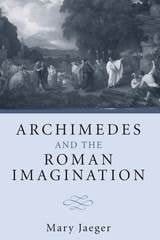
Archimedes and the Roman Imagination
Mary Jaeger
University of Michigan Press, 2013
The great mathematician Archimedes, a Sicilian Greek whose machines defended Syracuse against the Romans during the Second Punic War, was killed by a Roman after the city fell, yet it is largely Roman sources, and Greek texts aimed at Roman audiences, that preserve the stories about him. Archimedes' story, Mary Jaeger argues, thus becomes a locus where writers explore the intersection of Greek and Roman culture, and as such it plays an important role in Roman self-definition. Jaeger uses the biography of Archimedes as a hermeneutic tool, providing insight into the construction of the traditional historical narrative about the Roman conquest of the Greek world and the Greek cultural invasion of Rome.
By breaking down the narrative of Archimedes' life and examining how the various anecdotes that comprise it are embedded in their contexts, the book offers fresh readings of passages from both well-known and less-studied authors, including Polybius, Cicero, Livy, Vitruvius, Plutarch, Silius Italicus, Valerius Maximus, Johannes Tzetzes, and Petrarch.
---Helen King, Times Literary Supplement
"An absolutely wonderful book on a truly original and important topic. As Jaeger explores neglected texts that together tell an important story about the Romans' views of empire and their relationship to Greek cultural accomplishments, so she has written an important new chapter in the history of science. A genuine pleasure to read, from first page to last."
---Andrew Feldherr, Associate Professor of Classics, Princeton University
"This elegantly written and convincingly argued project analyzes Archimedes as a vehicle for reception of the Classics, as a figure for loss and recovery of cultural memory, and as a metaphorical representation of the development of Roman identity. Jaeger's fastening on the still relatively obscure figure of the greatest ancient mathematician as a way of understanding cultural liminality in the ancient world is nothing short of a stroke of genius."
---Christina S. Kraus, Professor and Chair of Classics, Yale University
"Archimedes and the Roman Imagination forms a useful addition to our understanding of Roman culture as well as of the reception of science in antiquity. It will make a genuine contribution to the discipline, not only in terms of its original interpretative claims but also as a fascinating example of how we may follow the cultural reception of historical figures."
---Reviel Netz, Professor of Classics, Stanford University
Cover art: Benjamin West. Cicero Discovering the Tomb of Archimedes. Yale University Art Gallery. John Hill Morgan, B.A. 1893, LL.B. 1898, M.A. (Hon.) 1929, Fund.
Archipelagic American Studies
Brian Russell Roberts and Michelle Ann Stephens, editors
Duke University Press, 2017
Birte Blascheck, J. Michael Dash, Paul Giles, Susan Gillman, Matthew Pratt Guterl, Hsinya Huang, Allan Punzalan Isaac, Joseph Keith, Yolanda Martínez-San Miguel, Brandy Nālani McDougall, Ifeoma Kiddoe Nwankwo, Craig Santos Perez, Brian Russell Roberts, John Carlos Rowe, Cherene Sherrard-Johnson, Ramón E. Soto-Crespo, Michelle Ann Stephens, Elaine Stratford, Etsuko Taketani, Alice Te Punga Somerville, Teresia Teaiwa, Lanny Thompson, Nicole A. Waligora-Davis
Archipelagoes of My South
Episodes in the Shaping of a Region, 1830–1965J. Mills Thornton III
University of Alabama Press, 2016
A collection of essays representing forty-five years of reflection on the central problems of southern history bound together by a common concern with defining the crucial interaction of race and class in the formation of southern politics and life
“The tourist archipelagoes of my South / are prisons, too, corruptible” writes the poet Derek Walcott. While Walcott refers to the islands of the Caribbean, the analogous idea of a land made into solitary islands by an imprisoned and inherited corruption is historian J. Mills Thornton III’s American South. The captivating essays in Archipelagoes of My South: Episodes in the Shaping of a Region, 1830–1965 address this overarching and underlying narrative of Alabama politics and the history of the South.
Highlighting events as significant as the role of social and economic conflict in the southern secession movement, various aspects of Reconstruction, and the role of the Ku Klux Klan in the politics of the 1920s, Thornton draws from various points in the southern past in an effort to identify and understand the sources of the region’s power. Moreover, each essay investigates its subject matter and peels back layers with an aim to clarify why the enormous diversity of the southern experience makes that power so great, all the while allowing the reader to see connections that would not otherwise be apparent.
Archipelagoes of My South gathers previously uncollected essays into a single volume covering the entire length and breadth of Thornton’s career. The author’s principal concerns have always been the arc of regional evolution and the significance of the local. Thus, the mechanisms of political and social change and the interrelationships across eras and generations are recurring themes in many of these essays.
Even those who have spent their entire lives in the South may be unaware of the fractured layers of history that lie beneath the landscape they inhabit. For those southern residents who seek to comprehend more of their own past, this landmark compilation of essays on Alabama and southern history endeavors to provide illumination and enlightenment.
Architects of Globalism
Building a New World Order during WWIIPatrick J. Hearden
University of Arkansas Press, 2002

Architects of Little Rock
1833-1950Charles Witsell
University of Arkansas Press, 2014
Published in collaboration with the Fay Jones School of Architecture.
Architects of Long Change
The Expert Roots of Post-Socialism in Czechoslovakia (1980–1995)Edited by Michal Kopecek
Karolinum Press, 2026
Architects of Long Change examines expert forms of governance and their legitimization before 1989, as well as the transfer of expert knowledge and practices of political and social management during the democratic transition. The contributors argue that so-called neoliberal governance was not solely the result of imported Western political and cultural models, but was also shaped by intellectual, mental, and sociocultural continuities from the period of late socialism. These continuities—and the broader hypothesis of a “long systemic change” spanning from 1980 to 1995—are explored through case studies in legal science, sociology, urban planning, environmental studies, psychotherapy, and business management.
Architects of Long Change offers a novel perspective on the late communist dictatorship, the democratic revolution of 1989, and the early development of liberal democracy and capitalism in Czechoslovakia and later the Czech Republic.
Architects of Memory
Information and Rhetoric in a Networked Archival AgeNathan R. Johnson
University of Alabama Press, 2020
Understanding the systems that shape what societies remember, archive, and forget.
We are now living in the richest age of public memory. From museums and memorials to the vast digital infrastructure of the internet, access to the past is only a click away. Even so, the methods and technologies created by scientists, espionage agencies, and information management coders and programmers have drastically delimited the ways that communities across the globe remember and forget our wealth of retrievable knowledge.
In Architects of Memory: Information and Rhetoric in a Networked Archival Age, Nathan R. Johnson charts turning points where concepts of memory became durable in new computational technologies and modern memory infrastructures took hold. He works through both familiar and esoteric memory technologies—from the card catalog to the book cart to Zatocoding and keyword indexing—as he delineates histories of librarianship and information science and provides a working vocabulary for understanding rhetoric’s role in contemporary memory practices.
This volume draws upon the twin concepts of memory infrastructure and mnemonic technê to illuminate the seemingly opaque wall of mundane algorithmic techniques that determine what is worth remembering and what should be forgotten. Each chapter highlights a conflict in the development of twentieth-century librarianship and its rapidly evolving competitor, the discipline of information science. As these two disciplines progressed, they contributed practical techniques and technologies for making sense of explosive scientific advancement in the wake of World War II. Taming postwar science became part and parcel of practices and information technologies that undergird uncountable modern communication systems, including search engines, algorithms, and databases for nearly every national clearinghouse of the twenty-first century.
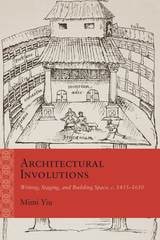
Architectural Involutions
Writing, Staging, and Building Space, c. 1435-1650Mimi Yiu
Northwestern University Press, 2014
Winner of the MLA Prize for Independent Scholars
Taking the reader on an inward journey from façades to closets, from physical to psychic space, Architectural Involutions offers an alternative genealogy of theater by revealing how innovations in architectural writing and practice transformed an early modern sense of interiority. The book launches from a matrix of related “platforms”—a term that in early modern usage denoted scaffolds, stages, and draftsmen’s sketches—to situate Alberti, Shakespeare, Jonson, and others within a landscape of spatial and visual change.
As the English house underwent a process of inward folding, replacing a logic of central assembly with one of dissemination, the subject who negotiated this new scenography became a flashpoint of conflict in both domestic and theatrical arenas. Combining theory with archival findings, Mimi Yiu reveals an emergent desire to perform subjectivity, to unfold an interior face to an admiring public. Highly praised for its lucid writing, comprehensive supplementary material, and engaging tone, Architectural Involutions was the winner of the 2016 MLA Prize for Independent Scholars.
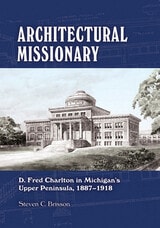
Architectural Missionary
D. Fred Charlton in Michigan's Upper Peninsula, 1887–1918Steven C. Brisson
Michigan State University Press, 2021
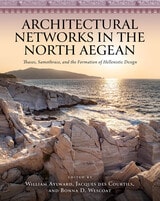
Architectural Networks in the North Aegean
Thasos, Samothrace, and the Formation of Hellenistic DesignEdited by William Aylward, Jacques des Courtils, and Bonna D. Wescoat
University of Wisconsin Press, 2025
Employing the idea of networks to effectively describe the interconnectedness of design, materials, technology, religion, and politics, the contributors to this volume establish the need to understand this important region holistically and on its own terms. Taking a close look at major buildings and monuments—while considering technique, design, and decoration as elements of a vigorous web—this volume offers important insights about the area’s significance in the history of Hellenistic architecture, including lasting innovations in architectural illusion, Ionic entablature, and groundbreaking uses of marble and plaster. From the North Aegean, such principles and tactics were transmitted to the rest of the Hellenistic world, influencing Roman architecture and, from there, Western architectural history.
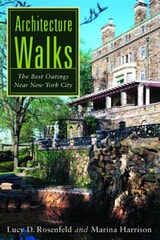
Architecture Walks
The Best Outings Near New York CityRosenfeld, Lucy D
Rutgers University Press, 2010
Early colonial saltboxes, as-yet-unfinished contemporary structures on college campuses, nineteenth-century follies, Gilded Age palaces, lighthouses, windmills, romantic ruins-- the pages of this delightful book, filled with adventures, treat readers to sites within approximately two hours' driving time from New York City. With book in hand readers will marvel at college campuses, small villages, planned and utopian communities, National Historic Sites, castles and forts, churches and temples of architectural interest, and even a Buddhist monastery, all in Connecticut, New York, New Jersey, the eastern edge of Pennsylvania, and Delaware.
By including descriptions of architectural styles, suggestions for special adventures, and lists of jaunts arranged by architect or designer, architectural style, and particular types of sites, Rosenfeld and Harrison help make day trips even more enjoyable. Whether explorers or armchair adventurers, readers of all ages will find something that captures their interest in the nearly one hundred sites and forty photos included in Architecture Walks.
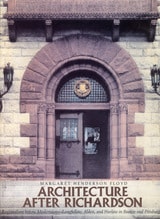
Architecture after Richardson
Regionalism before Modernism--Longfellow, Alden, and Harlow in Boston and PittsburghMargaret Henderson Floyd
University of Chicago Press, 1994
Floyd critically' assesses the careers, works, and patronage of Alexander Wadsworth Longfellow, Frank Ellis Alden, and Alfred Branch Harlow. Longfellow and Alden were senior draftsmen in H. H. Richardson's office, and Harlow worked with McKim, Mead & White in New York, Newport, and Boston. After Richardson's death, the three set up their own practice with offices in Boston and Pittsburgh, and these offices eventually became two separate practices. Over the years, their commissions included scores of city and country residences for the elite of both regions as well as major institutional and business buildings such as those at Harvard and Radcliffe, the Cambridge City Hall, and Pittsburgh's Duquesne Club and Carnegie Institute.
Placing these architects in a broader context of American architectural and landscape history, Floyd uncovers a strong cultural affinity between turn-of-the-century Boston and Pittsburgh. She also reveals an unsuspected link between the path of modernism from Richardson to Wright and the evolution of anti-modern imagery manifested in regionalism. Floyd thus combines her analysis of the work of Longfellow, Alden, and Harlow with a critique of mid-twentieth-century historiography to expose connections between New England regionalism, the arts and crafts movement, and such innovators as Frank Lloyd Wright and Buckminster Fuller.
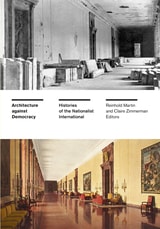
Architecture against Democracy
Histories of the Nationalist InternationalReinhold Martin
University of Minnesota Press, 2024
Examining architecture’s foundational role in the repression of democracy
Reinhold Martin and Claire Zimmerman bring together essays from an array of scholars exploring the troubled relationship between architecture and antidemocratic politics. Comprising detailed case studies throughout the world spanning from the early nineteenth century to the present, Architecture against Democracy analyzes crucial occasions when the built environment has been harnessed as an instrument of authoritarian power.
Alongside chapters focusing on paradigmatic episodes from twentieth-century German and Italian fascism, the contributors examine historic and contemporary events and subjects that are organized thematically, including the founding of the Smithsonian Institution, Ellis Island infrastructure, the aftermath of the Paris Commune, Cold War West Germany and Iraq, Frank Lloyd Wright’s domestic architecture, and Istanbul’s Taksim Square. Through the range and depth of these accounts, Architecture against Democracy presents a selective overview of antidemocratic processes as they unfold in the built environment throughout Western modernity, offering an architectural history of the recent “nationalist international.”
As new forms of nationalism and authoritarian rule proliferate across the globe, this timely collection offers fresh understandings of the role of architecture in the opposition to democracy.
Contributors: Esra Akcan, Cornell U; Can Bilsel, U of San Diego; José H. Bortoluci, Getulio Vargas Foundation; Charles L. Davis II, U of Texas at Austin; Laura diZerega; Eve Duffy, Duke U; María González Pendás, Cornell U; Paul B. Jaskot, Duke U; Ana María León, Harvard U; Ruth W. Lo, Hamilton College; Peter Minosh, Northeastern U; Itohan Osayimwese, Brown U; Kishwar Rizvi, Yale U; Naomi Vaughan; Nader Vossoughian, New York Institute of Technology and Columbia U; Mabel O. Wilson, Columbia U.
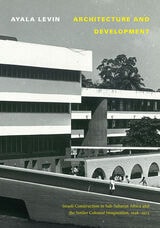
Architecture and Development
Israeli Construction in Sub-Saharan Africa and the Settler Colonial Imagination, 1958-1973Ayala Levin
Duke University Press, 2022
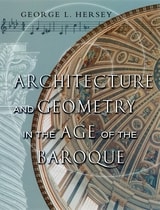
Architecture and Geometry in the Age of the Baroque
George L. Hersey
University of Chicago Press, 2001
Hersey first concentrates on specific problems in geometry and architectural design. He then explores the affinities between musical chords and several types of architectural form. He turns to advances in optics, such as artificial lenses and magic lanterns, to show how architects incorporated light, a heavenly emanation, into their impressive domes. With ample illustrations and lucid, witty language, Hersey shows how abstract ideas were transformed into visual, tactile form—the epicycles of the cosmos, the sexual mystique surrounding the cube, and the imperfections of heavenly bodies. Some two centuries later, he finds that the geometric principles of the Baroque resonate, often unexpectedly, in the work of architects such as Frank Lloyd Wright and Le Corbusier. A discussion of these surprising links to the past rounds out this brilliant reexamination of some of the long-forgotten beliefs and practices that helped produce some of Europe's greatest masterpieces.
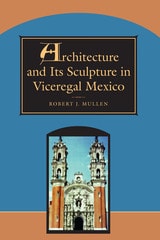
Architecture and Its Sculpture in Viceregal Mexico
By Robert J. Mullen
University of Texas Press, 1997
From monumental cathedrals to simple parish churches, perhaps as many as 100,000 churches and civic buildings were constructed in Mexico during the viceregal or colonial period (1535-1821). Many of these structures remain today as witnesses to the fruitful blending of Old and New World forms and styles that created an architecture of enduring vitality.
In this profusely illustrated book, Robert J. Mullen provides a much-needed overview of Mexican colonial architecture and its attendant sculpture. Writing with just the right level of detail for students and general readers, he places the architecture in its social and economic context. He shows how buildings in the larger cities remained closer to European designs, while buildings in the pueblos often included prehispanic indigenous elements.
This book grew out of the author's twenty-five-year exploration of Mexico's architectural and sculptural heritage. Combining an enthusiast's love for the subject with a scholar's care for accuracy, it is the perfect introduction to the full range of Mexico's colonial architecture.