Results by title
22277 books match the query 'Social Science' and 1819 start with a
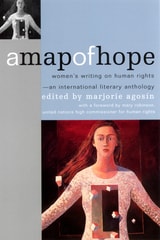
A Map of Hope
Women's Writing on Human Rights—An International Literary AnthologyAgosín, Marjorie
Rutgers University Press, 1999
The first international anthology to explore women’s human rights from a literary perspective.
More than half a century after the United Nations Declaration of Human Rights, women throughout the world still struggle for social and political justice. Many fight back with the only tools of resistance they possess—words. A Map of Hope presents a collection of 77 extraordinary literary works documenting the ways women writers have spoken out about human rights issues.
Writers young and old, known and unknown, explore the dimensions of terror, the unspeakable atrocities of war, and the possibilities of resistance and refusal against all odds. Their poems, essays, memoirs, and brief histories examine issues that affect the condition of women in war, prison camps, exile, and as victims of domestic and political violence.
A Map of Hope presents diverse women writers who have created a literature of global consciousness and justice. Their works give a face, an image, and a human dimension to the dehumanization of human rights violations. The collection allows readers to hear voices that have decided to make a difference. It goes beyond geography and ethnic groups; writers from around the globe are united by the universal dimensions of horror and deprivation, as well as the unique common struggle for justice and solidarity.
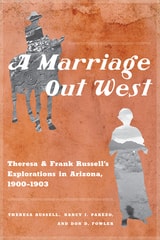
A Marriage Out West
Theresa and Frank Russell’s Explorations in Arizona, 1900–1903Theresa Russell, Nancy J. Parezo, and Don D. Fowler
University of Arizona Press, 2020
During their brief marriage, the Russells surveyed almost all of Arizona Territory, traveling by horse over rugged terrain and camping in the back of a Conestoga wagon in harsh environmental conditions. Nancy J. Parezo and Don D. Fowler detail the grit and determination of the Russells’ unique collaboration over the course of three field seasons. Delivering the first biographical account of Frank Russell’s life, this book brings detail to his life and work from childhood until his death in 1903. Parezo and Fowler analyze the important contributions Theresa and Frank made to the bourgeoning field of archaeology and Akimel O’odham (Pima) ethnography. They also offer never-before-published information on Theresa’s life after Frank’s death and her subsequent career as a professor of English literature and philosophy at Stanford University.
In 1906 Theresa Russell published In Pursuit of a Graveyard: Being the Trail of an Archaeological Wedding Journey, a twelve-part serial in Out West magazine. Theresa’s articles constituted an experiential narrative based on field journals and remembrances of life in the northern Southwest. The work offers both a biography and a seasonal field narrative that emphasized personal experiences rather than traditional scientific field notes. Included in A Marriage Out West, Theresa’s writing provides an invaluable participant’s perspective of early 1900s American archaeology and ethnography and life out West.
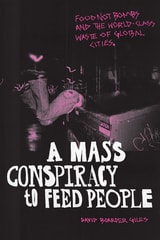
A Mass Conspiracy to Feed People
Food Not Bombs and the World-Class Waste of Global CitiesDavid Boarder Giles
Duke University Press, 2021

A Match Made in Hell
The Jewish Boy and the Polish Outlaw Who Defied the NazisLarry Stillman, from the testimony of Morris Goldner
University of Wisconsin Press, 2003
When Moniek (Morris) Goldner and his family were uprooted from their Polish farming village during a German action, the child-sized sixteen-year-old fled into the forests. He eventually met up with his father, who had also escaped, and together they managed to survive until a former friend betrayed the pair. Wounded and left for dead beneath his father’s murdered body, Goldner was rescued by the enigmatic outlaw Jan Kopec, who was also in hiding, looking for ways to profit from his criminal expertise.
For eighteen months Kopec hid the boy with him, moving from one area to another, often staying in hideouts he had fashioned years earlier. At first Kopec trained Goldner simply to serve as his accomplice in robberies and black market activities. But before long he pushed the training to a whole new level, making it possible for him to sell Goldner’s services to a shadowy resistance group which was becoming interested in the daring young saboteur.
And through it all, these two disparate personalities—the quiet, small-framed boy and the stocky, callous mercenary—forged an remarkable friendship and co-dependency born of need and desperation in a hellish time and place.

A Matter of Life and Death
Hunting in Contemporary VermontMarc Boglioli
University of Massachusetts Press, 2009
In A Matter of Life and Death, anthropologist Marc Boglioli puts a human face on a group widely regarded as morally suspect, one that currently stands in the crossfire of America's so-called culture wars. Drawing on extensive ethnographic fieldwork in Addison County, Vermont, which took him from hunting camps and sporting goods stores to local bars and kitchen tables, Boglioli focuses on how contemporary hunters, women as well as men, understand their relationship to their prey. He shows how hunters' attitudes toward animals flow directly from the rural lifeways they have continued to maintain in the face of encroaching urban sensibilities. The result is a rare glimpse into a culture that experiences wild animals in a way that is at once violent, consumptive, and respectful, and that regards hunting as an enduring link to a vanishing past. It is a book that will challenge readers—hunters, non-hunters, and anti-hunters alike—to reconsider what constitutes a morally appropriate relationship with the non-human residents of this planet.
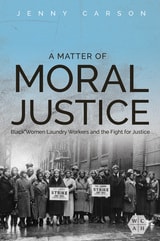
A Matter of Moral Justice
Black Women Laundry Workers and the Fight for JusticeJenny Carson
University of Illinois Press, 2021
Like thousands of African American women, Charlotte Adelmond and Dollie Robinson worked in New York’s power laundry industry in the 1930s. Jenny Carson tells the story of how substandard working conditions, racial and gender discrimination, and poor pay drove them to help unionize the city’s laundry workers. Laundry work opened a door for African American women to enter industry, and their numbers allowed women like Adelmond and Robinson to join the vanguard of a successful unionization effort. But an affiliation with the powerful Congress of Industrial Organizations (CIO) transformed the union from a radical, community-based institution into a bureaucratic organization led by men. It also launched a difficult battle to secure economic and social justice for the mostly women and people of color in the plants. As Carson shows, this local struggle highlighted how race and gender shaped worker conditions, labor organizing, and union politics across the country in the twentieth century.
Meticulous and engaging, A Matter of Moral Justice examines the role of African American and radical women activists and their collisions with labor organizing and union politics.
A Matter of Trust
Building Integrity into Data, Statistics and Records to Support the Sustainable Development GoalsEdited by Anne Thurston
University of London Press, 2020
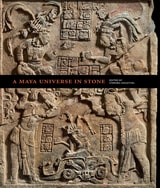
A Maya Universe in Stone
Stephen Houston
J. Paul Getty Trust, The, 2021
In 1950, Dana Lamb, an explorer of some notoriety, stumbled on a Maya ruin in the tropical forests of northern Guatemala. Lamb failed to record the location of the site he called Laxtunich, turning his find into the mystery at the center of this book. The lintels he discovered there, long since looted, are probably of a set with two others that are among the masterworks of Maya sculpture from the Classic period. Using fieldwork, physical evidence, and Lamb’s expedition notes, the authors identify a small area with archaeological sites where the carvings were likely produced.
Remarkably, the vividly colored lintels, replete with dynastic and cosmic information, can be assigned to a carver, Mayuy, who sculpted his name on two of them. To an extent nearly unique in ancient America, Mayuy can be studied over time as his style developed and his artistic ambition grew. An in-depth analysis of Laxtunich Lintel 1 examines how Mayuy grafted celestial, seasonal, and divine identities onto a local magnate and his overlord from the kingdom of Yaxchilan, Mexico. This volume contextualizes the lintels and points the way to their reprovenancing and, as an ultimate aim, repatriation to Guatemala.
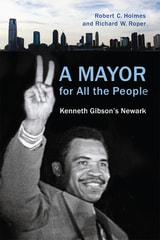
A Mayor for All the People
Kenneth Gibson's NewarkRobert C. Holmes
Rutgers University Press, 2020
In 1970, Kenneth Gibson was elected as Newark, New Jersey’s first African-American mayor, a position he held for an impressive sixteen years. Yet even as Gibson served as a trailblazer for black politicians, he presided over a troubled time in the city’s history, as Newark’s industries declined and its crime and unemployment rates soared.
This book offers a balanced assessment of Gibson’s leadership and his legacy, from the perspectives of the people most deeply immersed in 1970s and 1980s Newark politics: city employees, politicians, activists, journalists, educators, and even fellow big-city mayors like David Dinkins. The contributors include many of Gibson’s harshest critics, as well as some of his closest supporters, friends, and family members—culminating in an exclusive interview with Gibson himself, reflecting on his time in office.
Together, these accounts provide readers with a compelling inside look at a city in crisis, a city that had been rocked by riots three years before Gibson took office and one that Harper’s magazine named “America’s worst city” at the start of his second term. At its heart, it raises a question that is still relevant today: how should we evaluate a leader who faced major structural and economic challenges, but never delivered all the hope and change he promised voters?
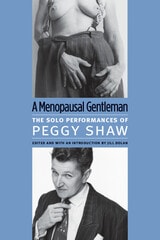
A Menopausal Gentleman
The Solo Performances of Peggy ShawPeggy Shaw
University of Michigan Press, 2011
"With classic butch finesse---that handsome combination of vulnerability and toughness---Peggy Shaw pieces together the challenges of growing up butch in the 1950s. Shaw is an engaging performer and inspired writer."
---Gay Community News
Obie-award-winning performer and writer Peggy Shaw has been playing her gender-bending performances on Off Broadway, regional, and international stages for three decades. Co-founder of the renowned troupe Split Britches, Shaw has gone on to create memorable solo performances that mix achingly honest introspection with campy humor, reflecting on everything from her Irish-American working-class roots to her aging butch body.
This collection of Shaw's solo performance scripts evokes a 54-year-old grandmother who looks like a 35-year-old man (in her classic Menopausal Gentleman); a mother's ambivalent ministrations to a daughter she treated like a son (in the raw You're Just Like My Father); Shaw's love for her biracial grandson, for whom she models masculinity (in the musically punctuated To My Chagrin); and a mapping of her body's long, bittersweet history (in the lyrical Must: The Inside Story, a collaboration with the UK's Clod Ensemble). The book also includes a selection of Shaw's other classic monologues and an extensive introduction by Jill Dolan, Professor of English and Theater and Dance at Princeton University and the blogger behind The Feminist Spectator website.
A volume in the series Triangulations: Lesbian/Gay/Queer Theater/Drama/Performance
Cover photos by Eva Weiss (top) and Robin Holland/robinholland.com (bottom).
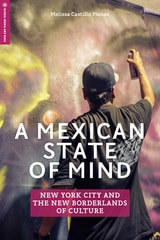
A Mexican State of Mind
New York City and the New Borderlands of CultureMelissa Castillo-Garsow
Rutgers University Press, 2020
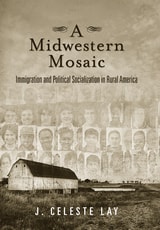
A Midwestern Mosaic
Immigration and Political Socialization in Rural AmericaJ. Celeste Lay
Temple University Press, 2012
Drawn by low-skilled work and the safety and security of rural life, increasing numbers of families from Latin America and Southeast Asia have migrated to the American heartland. In the path-breaking book A Midwestern Mosaic, J. Celeste Lay examines the effects of political socialization on native white youth growing up in small towns.
Lay studies five Iowa towns to investigate how the political attitudes and inclinations of native adolescents change as a result of rapid ethnic diversification. Using surveys and interviews, she discovers that native adolescents adapt very well to foreign-born citizens, and that over time, gaps diminish between diverse populations and youth in all-white/Anglo towns in regard to tolerance, political knowledge, efficacy, and school participation.
A Midwestern Mosaic looks at the next generation to show how exposure to ethnic and cultural diversity during formative years can shape political behavior and will influence politics in the future.
A Mighty Change
An Anthology of Deaf American Writing, 1816 - 1864Christopher Krentz
Gallaudet University Press, 2000
“I need not tell you that a mighty change has taken place within the last half century, a change for the better,” Alphonso Johnson, the president of the Empire State Association of Deaf-Mutes, signed to hundreds of assembled deaf people in 1869. Johnson pointed to an important truth: the first half of the 19th century was a period of transformation for deaf Americans, a time that saw the rise of deaf education and the coalescence of the nation’s deaf community.
This volume contains original writing by deaf people that both directed and reflected this remarkable period of change. It begins with works by Laurent Clerc, the deaf Frenchman who came to the United Sates in 1816 to help found the first permanent school for deaf students in the nation. Partially through is writing, Clerc impressed hearing Americans–most of whom had never met an educated deaf person before–with his intelligence and humanity.
Other deaf writers shared their views with society through the democratic power of print. Included here are selections by James Nack, a deaf poet who surprised readers with his mellifluous verse; John Burnet, who published a book of original essays, fiction, and poetry; Edmund Booth, a frontiersman and journalist; John Carlin, who galvanized the drive for a national college for deaf people; Laura Redden, a high-achieving student who would go on to become an accomplished reporter; and Adele Jewel, a homeless deaf woman living in Michigan.
The final sections contain documents related to deaf events and issues at mid-century: the grand reunion of alumni of the American Asylum for the Deaf in 1850; the dedication of the Thomas Hopkins Gallaudet monument in Hartford; the debate over the viability of a deaf state; and the triumphant inauguration of the National Deaf-Mute College (now Gallaudet University) in 1864, which in many ways culminated this period of change. Taken together, the individual texts in this remarkable collection provide a valuable historical record and a direct glimpse of the experiences, attitudes, and rhetoric of deaf Americans during this time of change.
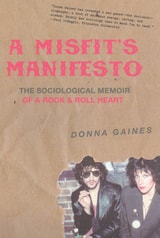
A Misfit's Manifesto
The Sociological Memoir of a Rock & Roll HeartGaines, Donna
Rutgers University Press, 2007
Dubbed the Margaret Mead of heavy metal, Donna Gaines is a walking, talking oxymoron, a turnpike intellectual. A Misfit's Manifesto is the story of her wild-in-the-burbs odyssey-from overweight yeshiva girl to savvy street-punk sociologist. Isolated, angry, and depressed through most of her adolescence and early adulthood, she found truth and beauty in the least likely places. Wandering the craggy terrain of Rockaway Beach, Queens, Gaines embarked upon a path to enlightenment involving sex, drugs, rock & roll, sociology, cosmetology, True Love, the occult, tattoos, science fiction, pizza, guns, comic books, and surfing-by Web and by sea.
For Gaines, dignity, joy, and communion came not from family, organized religion, or mandatory schooling, but in the sound of doo-wop, surf music, acid rock, then punk, trash metal, and hardcore. "For most of my life," she writes, "music was the only way to connect that wouldn't eventually kill me."
Through all the ripped nights of binge-drinking, pill-popping, and nightclubbing, Gaines became an acclaimed author, scholar, and expert on teen suicide. In an age of conformity and censorship, she defends popular culture as a powerful spiritual force-a vibrant, valid connection to God. A meditation on alienation and engagement, this memoir is an outcast's journey into the black-hole sun, where Divine love and light are found-even in Ramones songs.
This edition includes a scholarly introduction that considers memoir as a sociological as well as literary genre, as a reflexive means of understanding the self in social context while nurturing a sociological imagination. Social memoir, Gaines argues, illuminates problems like alienation, marginality, addiction, and suicide, while making sociology more user-friendly and public. Now this work of dazzling originality and iconoclasm that has inspired misfits everywhere is an ideal text for classroom use, making complex social theory exciting, timely, and relevant for students.
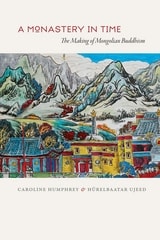
A Monastery in Time
The Making of Mongolian BuddhismCaroline Humphrey and Hurelbaatar Ujeed
University of Chicago Press, 2013
A Moral Military
Sidney Axinn
Temple University Press, 2008
In this new edition of the classic book on the moral conduct of war, Sidney Axinn provides a full-length treatment of the military conventions from a philosophical point of view. Axinn considers these basic ethical questions within the context of the laws of warfare: Should a good soldier ever disobey a direct military order? Are there restrictions on how we fight a war? What is meant by “military honor,” and does it really affect the contemporary soldier? Is human dignity possible under battlefield conditions?
Axinn answers “yes” to these questions. His objective in A Moral Military is to establish a basic framework for moral military action and to assist in analyzing military professional ethics. He argues for the seriousness of the concept of military honor but limits honorable military activity by a strict interpretation of the notion of war crime.
With revisions and expansions throughout, including a new chapter on torture, A Moral Military is an essential guide on the nature of war during a time when the limits of acceptable behavior are being stretched in new directions.
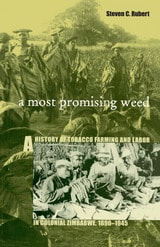
A Most Promising Weed
A History of Tobacco Farming and Labor in Colonial Zimbabwe, 1890–1945Steven C. Rubert
Ohio University Press, 1998
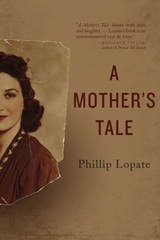
A Mother's Tale
Phillip Lopate
The Ohio State University Press, 2017
In 1984, Phillip Lopate sat down with his mother, Frances, to listen to her life story. A strong, resilient, indomitable woman who lived through the major events of the twentieth century, she was orphaned in childhood, ran away and married young, and then reinvented herself as a mother, war factory worker, candy store owner, community organizer, clerk, actress, and singer. But paired with exciting anecdotes are the criticisms of the husband who couldn’t satisfy her, the details of numerous affairs and sexual encounters, and, though she succeeded at many of her roles, accounts of how she always felt mistreated, taken advantage of. After the interviews, at a loss for what to do with the tapes, Lopate put them away. But thirty years later, after his mother had passed away, Lopate found himself drawn back to the recordings of this conversation. Thus begins a three-way conversation between a mother, his younger self, and the person he is today.
Trying to break open the family myths, rationalizations, and self-deceptions, A Mother’s Tale is about family members who love each other but who can’t seem to overcome their mutual mistrust. Though Phillip is sympathizing to a point, he cannot join her in her operatic displays of self-pity and how she blames his father for everything that went wrong. His detached, ironic character has been formed partly in response to her melodramatic one. The climax is an argument in which he tries to persuade her—using logic, of all things—that he really does love her, but is only partially successful, of course.
A Mother’s Tale is about something primal and universal: the relationship between a mother and her child, the parent disappointed with the payback, the child, now fully grown, judgmental. The humor is in the details.
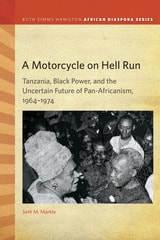
A Motorcycle on Hell Run
Tanzania, Black Power, and the Uncertain Future of Pan-Africanism, 1964–1974Seth M. Markle
Michigan State University Press, 2017
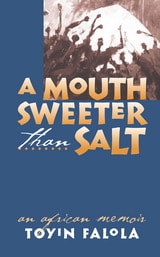
A Mouth Sweeter Than Salt
An African MemoirToyin Falola
University of Michigan Press, 2005
-Ama Ata Aidoo
"A splendid coming-of-age story so full of vivid color and emotion, the words seem to dance off the page. But this is not only Falola's memoir; it is an account of a new nation coming into being and the tensions and negotiations that invariably occur between city and country, tradition and modernity, men and women, rich and poor. A truly beautiful book."
-Robin D. G. Kelley
"More than a personal memoir, this book is a rich minihistory of contemporary Nigeria recorded in delicious detail by a perceptive eyewitness who grew up at the crossroads of many cultures."
-Bernth Lindfors
"The reader is irresistibly drawn into Falola's world. The prose is lucid. There is humor. This work is sweet. Period."
-Ngugi wa Thiongo'o
A Mouth Sweeter Than Salt gathers the stories and reflections of the early years of Toyin Falola, the grand historian of Africa and one of the greatest sons of Ibadan, the notable Yoruba city-state in Nigeria.
Redefining the autobiographical genre altogether, Falola miraculously weaves together personal, historical, and communal stories, along with political and cultural developments in the period immediately preceding and following Nigeria's independence, to give us a unique and enduring picture of the Yoruba in the mid-twentieth century. This is truly a literary memoir, told in language rich with proverbs, poetry, song, and humor.
Falola's memoir is far more than the story of one man's childhood experiences; rather, he presents us with the riches of an entire culture and community-its history, traditions, pleasures, mysteries, household arrangements, forms of power, struggles, and transformations.

A Moveable Shore
The Fate of the Connecticut CoastPeter C. Patton and James M. Kent
Duke University Press, 1992
Beginning with the hurricane of 1938, the biggest natural disaster to strike Connecticut since its settlement by Europeans, the authors demonstrate the continuing pattern of development of coastal land prone to flooding and high winds. Although the Connecticut coast faces Long Island and Block Island sounds, it is subject to the same natural hazards, land-use risks, and regulations as opean ocean shorelines. Global climatic events--glaciation, global warming, and rising sea levels--influence the shape and composition of the Connecticut shoreline, as do small-scale forces such as wind, waves, and tides.
Patton and Kent seek to instill a respect for the force of natural events and provide a guide for lessening the dangers of construction and development. A practical question-and-answer chapter explains what homeowners need to know to meet land-use regulations along the coast. In a state where the entire population lives within 100 miles of the coast, this important book will serve as a citizens’ guide to living with the Connecticut shore and will be of interest to coastal residents, developers, geologists, policymakers, and vacationers.
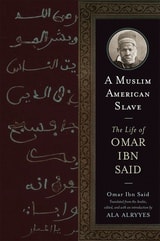
A Muslim American Slave
The Life of Omar Ibn SaidOmar Ibn Said; translated from the Arabic, edited, and with an introduction by Ala Alryyes
University of Wisconsin Press, 2011
Born to a wealthy family in West Africa around 1770, Omar Ibn Said was abducted and sold into slavery in the United States, where he came to the attention of a prominent North Carolina family after filling “the walls of his room with piteous petitions to be released, all written in the Arabic language,” as one local newspaper reported. Ibn Said soon became a local celebrity, and in 1831 he was asked to write his life story, producing the only known surviving American slave narrative written in Arabic.
In A Muslim American Slave, scholar and translator Ala Alryyes offers both a definitive translation and an authoritative edition of this singularly important work, lending new insights into the early history of Islam in America and exploring the multiple, shifting interpretations of Ibn Said’s narrative by the nineteenth-century missionaries, ethnographers, and intellectuals who championed it.
This edition presents the English translation on pages facing facsimile pages of Ibn Said’s Arabic narrative, augmented by Alryyes’s comprehensive introduction, contextual essays and historical commentary by leading literary critics and scholars of Islam and the African diaspora, photographs, maps, and other writings by Omar Ibn Said. The result is an invaluable addition to our understanding of writings by enslaved Americans and a timely reminder that “Islam” and “America” are not mutually exclusive terms.
This edition presents the English translation on pages facing facsimile pages of Ibn Said’s Arabic narrative, augmented by Alryyes’s comprehensive introduction and by photographs, maps, and other writings by Omar Ibn Said. The volume also includes contextual essays and historical commentary by literary critics and scholars of Islam and the African diaspora: Michael A. Gomez, Allan D. Austin, Robert J. Allison, Sylviane A. Diouf, Ghada Osman, and Camille F. Forbes. The result is an invaluable addition to our understanding of writings by enslaved Americans and a timely reminder that “Islam” and “America” are not mutually exclusive terms.
Best Books for General Audiences, selected by the American Association of School Librarians
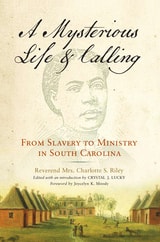
A Mysterious Life and Calling
From Slavery to Ministry in South CarolinaReverend Mrs. Charlotte S. Riley, Edited with an introduction by Crystal J. Lucky, Foreword by Joycelyn K. Moody
University of Wisconsin Press, 2016
Born in 1839 in Charleston, South Carolina, Riley was taught to read, write, and sew despite laws forbidding black literacy. Raised a Presbyterian, she writes of her conversion at age fourteen to the African Methodist Episcopal (AME) church, embracing its ecstatic worship and led by her own spiritual visions. Her memoir is revelatory on many counts, including life in urban Charleston before and after emancipation, her work as a preacher at multiracial revivals, the rise of African American civil servants in the Reconstruction era, and her education and development as a licensed female minister in a patriarchal church.
Crystal J. Lucky, who discovered Riley’s forgotten book in the library archives at Wilberforce University in Ohio, provides an introduction and notes on events, society, and religious practice in the antebellum era and during the Civil War and Reconstruction, and places A Mysterious Life and Calling in the context of other spiritual autobiographies and slave narratives.
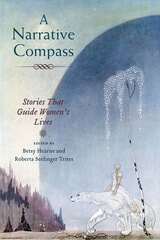
A Narrative Compass
Stories that Guide Women's LivesEdited by Betsy Hearne and Roberta Seelinger Trites
University of Illinois Press, 2008
Each of us has a narrative compass, a story that has guided our lifework. In this extraordinary collection, women scholars from a variety of disciplines identify and examine the stories that have inspired them, haunted them, and shaped their research, from Little House on the Prairie to Little Women, from the fairy tales of Hans Christian Andersen and Alice's Adventures in Wonderland to Nancy Drew, Mary Jane, and even the Chinese memoir Jottings from the Transcendant's Abode at Mt. Youtai. Telling the "story of her story" leads each of the essayists to insights about her own approach to studying narratives and to a deeper, often surprising, understanding of the power of imagination.
Contributors are Deyonne Bryant, Minjie Chen, Cindy L. Christiansen, Beverly Lyon Clark, Karen Coats, Wendy Doniger, Bonnie Glass-Coffin, Betsy Hearne, Joanna Hearne, Ann Hendricks, Rania Huntington, Christine Jenkins, Kimberly Lau, Pamela Riney-Kehrberg, Maria Tatar, Ebony Elizabeth Thomas, Roberta Seelinger Trites, Claudia Quintero Ulloa, and Ofelia Zepeda.
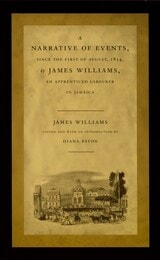
A Narrative of Events, since the First of August, 1834, by James Williams, an Apprenticed Labourer in Jamaica
James Williams
Duke University Press, 2001
Describing the hard working conditions on plantations and the harsh treatment of apprentices unjustly incarcerated, Williams argues that apprenticeship actually worsened the conditions of Jamaican ex-slaves: former owners, no longer legally permitted to directly punish their workers, used the Jamaican legal system as a punitive lever against them. Williams’s story documents the collaboration of local magistrates in this practice, wherein apprentices were routinely jailed and beaten for both real and imaginary infractions of the apprenticeship regulations.
In addition to the complete text of Williams’s original Narrative, this fully annotated edition includes nineteenth-century responses to the controversy from the British and Jamaican press, as well as extensive testimony from the Commission of Enquiry that heard evidence regarding the Narrative’s claims. These fascinating and revealing documents constitute the largest extant body of direct testimony by Caribbean slaves or apprentices.
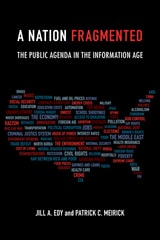
A Nation Fragmented
The Public Agenda in the Information AgeJill Edy
Temple University Press, 2019
The transformation from an undifferentiated public to a surfeit of interest groups has become yet another distinguishing feature of the increasing polarization of American politics. Jill Edy and Patrick Meirick contend that the media has played a key role in this splintering. A Nation Fragmented reveals how the content and character of the public agenda has transformed as the media environment evolved from network television and daily newspapers in the late 1960s to today’s saturated social media world with 200 cable channels.
The authors seek to understand what happened as the public’s sense of shared priorities deteriorated. They consider to what extent our public agenda has “fallen apart” as attention to news has declined, and to what extent we have been “driven apart” by changes in the issue agendas of news. Edy and Meirick also show how public attention is limited and spread too thin except in cases where a highly consistent news agenda can provoke a more focused public agenda.
A Nation Fragmented explores the media’s influence and political power and, ultimately, how contemporary democracy works.
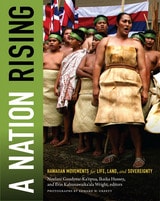
A Nation Rising
Hawaiian Movements for Life, Land, and SovereigntyNoelani Goodyear-Ka'opua, Ikaika Hussey, and Erin Kahunawaika'ala Wright, eds.
Duke University Press, 2014
Contributors. Noa Emmett Aluli, Ibrahim G. Aoudé, Kekuni Blaisdell, Joan Conrow, Noelani Goodyear-Ka'opua, Edward W. Greevy, Ulla Hasager, Pauahi Ho'okano, Micky Huihui, Ikaika Hussey, Manu Ka‘iama, Le‘a Malia Kanehe, J. Kehaulani Kauanui, Anne Keala Kelly, Jacqueline Lasky, Davianna Pomaika'i McGregor, Nalani Minton, Kalamaoka'aina Niheu, Katrina-Ann R. Kapa'anaokalaokeola Nakoa Oliveira, Jonathan Kamakawiwo'ole Osorio, Leon No'eau Peralto, Kekailoa Perry, Puhipau, Noenoe K. Silva, D. Kapua‘ala Sproat, Ty P. Kawika Tengan, Mehana Blaich Vaughan, Kuhio Vogeler, Erin Kahunawaika’ala Wright
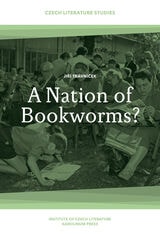
A Nation of Bookworms?
Czechs as ReadersJirí Trávnícek
Karolinum Press, 2021
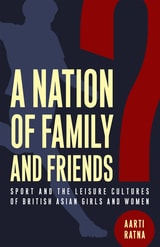
A Nation of Family and Friends?
Sport and the Leisure Cultures of British Asian Girls and WomenAarti Ratna
Rutgers University Press, 2024
Ratna also examines two key cultural objects - the popular films "Bend it Like Beckham" and “Dhan Dhana Dhan Goal” - to examine in detail the gendered representation of South Asian soccer players’ engagement in amateur and elite levels of the sport. She critiques studies of women’s football fandom and sport that fail to acknowledge social differences relating to race, class, age, disability, and sexuality. By linking the social forces (across time and space) that differentially affect their sporting choices and leisure lifestyles, Ratna portrays the women of the South Asian diaspora as active agents in the shaping of their life courses and as skilled navigators of the complexities affecting their own identities. Ultimately Ratna examines the intersections of class, caste, age, generation, gender, and sexuality, to provide a rich and critical exploration of British Asian women's sport and leisure choices, pleasures, and lived realities.
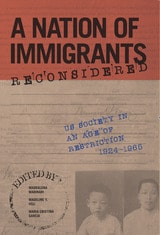
A Nation of Immigrants Reconsidered
US Society in an Age of Restriction, 1924-1965Maddalena Marinari, Madeline Hsu, Maria Garcia
University of Illinois Press, 2019
Contributors: Eiichiro Azuma, David Cook-Martín, David FitzGerald, Monique Laney, Heather Lee, Kathleen López, Laura Madokoro, Ronald L. Mize, Arissa H. Oh, Ana Elizabeth Rosas, Lorrin Thomas, Ruth Ellen Wasem, and Elliott Young
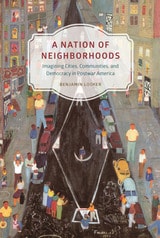
A Nation of Neighborhoods
Imagining Cities, Communities, and Democracy in Postwar AmericaBenjamin Looker
University of Chicago Press, 2015
Looker investigates the cultural, social, and political complexities of the idea of “neighborhood” in postwar America and how Americans grappled with vast changes in their urban spaces from World War II to the Reagan era. In the face of urban decline, competing visions of the city neighborhood’s significance and purpose became proxies for broader debates over the meaning and limits of American democracy. By studying the way these contests unfolded across a startling variety of genres—Broadway shows, radio plays, urban ethnographies, real estate documents, and even children’s programming—Looker shows that the neighborhood ideal has functioned as a central symbolic site for advancing and debating theories about American national identity and democratic practice.
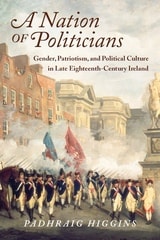
A Nation of Politicians
Gender, Patriotism, and Political Culture in Late Eighteenth-Century IrelandPadhraig Higgins
University of Wisconsin Press, 2009
In A Nation of Politicians, Padhraig Higgins argues that the development of Volunteer-initiated activities—associating, petitioning, subscribing, shopping, and attending celebrations—expanded the scope of political participation. Using a wide range of literary, archival, and visual sources, Higgins examines how ubiquitous forms of communication—sermons, songs and ballads, handbills, toasts, graffiti, theater, rumors, and gossip—encouraged ordinary Irish citizens to engage in the politics of a more inclusive society and consider the broader questions of civil liberties and the British Empire. A Nation of Politicians presents a fascinating tale of the beginnings of Ireland’s richly vocal political tradition at this important intersection of cultural, intellectual, social, and public history.
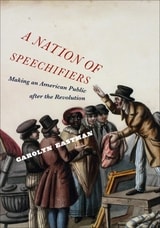
A Nation of Speechifiers
Making an American Public after the RevolutionCarolyn Eastman
University of Chicago Press, 2009
In the decades after the American Revolution, inhabitants of the United States began to shape a new national identity. Telling the story of this messy yet formative process, Carolyn Eastman argues that ordinary men and women gave meaning to American nationhood and national belonging by first learning to imagine themselves as members of a shared public.
She reveals that the creation of this American public—which only gradually developed nationalistic qualities—took place as men and women engaged with oratory and print media not only as readers and listeners but also as writers and speakers. Eastman paints vibrant portraits of the arenas where this engagement played out, from the schools that instructed children in elocution to the debating societies, newspapers, and presses through which different groups jostled to define themselves—sometimes against each other. Demonstrating the previously unrecognized extent to which nonelites participated in the formation of our ideas about politics, manners, and gender and race relations, A Nation of Speechifiers provides an unparalleled genealogy of early American identity.

A Nation of Takers
America’s Entitlement EpidemicNicholas Eberstadt
Templeton Press, 2012
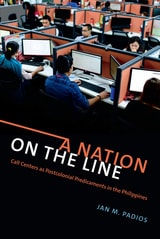
A Nation on the Line
Call Centers as Postcolonial Predicaments in the PhilippinesJan M. Padios
Duke University Press, 2018
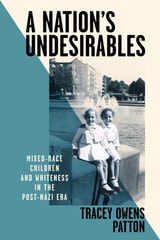
A Nation’s Undesirables
Mixed-Race Children and Whiteness in the Post-Nazi EraTracey Owens Patton
The Ohio State University Press, 2024
An innovative investigation of the entangled histories of race, transnational adoption, and post-Nazi Germany.
In a moving blend of family history and cutting-edge scholarship, Tracey Owens Patton’s A Nation’s Undesirables synthesizes work in rhetorical postmemory studies, critical adoption studies, Afrofuturism, and more to tell the story of her mother and aunt, Lore and Lilli. Two of thousands of children born to white German women and Black American men after World War II, the twins moved to the United States at age seven, where their mother renounced her parental rights and put them into the adoption system. They did not see her again for fifty-two years.Patton takes up the twins’ story and their reckoning with their mixed-race, Black German identity to disrupt standard narratives around World War II, Black experiences in Germany, and race and adoption. Combining family interviews, historical artifacts, and autoethnographic reflection, Patton composes a new narrative of women and Black German children in the postwar era. In examining the systemic racism of Germany’s efforts to move children like Lore and Lilli out of the country—and the suppression of German women’s bodily autonomy—Patton amplifies the once unacknowledged identities of these Black German children to broaden our understanding of citizenship, racism, and sexism after World War II.
A Necessary Luxury
Tea in Victorian EnglandJulie E. Fromer
Ohio University Press, 2008
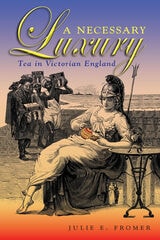
In A Necessary Luxury: Tea in Victorian England, Julie E. Fromer analyzes tea histories, advertisements, and nine Victorian novels, including Alice’s Adventures in Wonderland, Wuthering Heights, and Portrait of a Lady. Fromer demonstrates how tea functions within the literature as an arbiter of taste and middle-class respectability, aiding in the determination of class status and moral position. She reveals the way in which social identity and character are inextricably connected in Victorian ideology as seen through the ritual of tea.
Drawing from the fields of literary studies, cultural studies, history, and anthropology, A Necessary Luxury offers in-depth analysis of both visual and textual representations of the commodity and the ritual that was tea in nineteenth-century England.
A Neighborhood That Never Changes
Gentrification, Social Preservation, and the Search for AuthenticityJaponica Brown-Saracino
University of Chicago Press, 2009
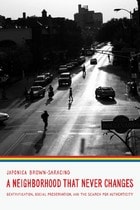
Newcomers to older neighborhoods are usually perceived as destructive, tearing down everything that made the place special and attractive. But as A Neighborhood That Never Changes demonstrates, many gentrifiers seek to preserve the authentic local flavor of their new homes, rather than ruthlessly remake them. Drawing on ethnographic research in four distinct communities—the Chicago neighborhoods of Andersonville and Argyle and the New England towns of Provincetown and Dresden—Japonica Brown-Saracino paints a colorful portrait of how residents new and old, from wealthy gay homeowners to Portuguese fishermen, think about gentrification.
The new breed of gentrifiers, Brown-Saracino finds, exhibits an acute self-consciousness about their role in the process and works to minimize gentrification’s risks for certain longtime residents. In an era of rapid change, they cherish the unique and fragile, whether a dilapidated house, a two-hundred-year-old landscape, or the presence of people deeply rooted in the place they live. Contesting many long-standing assumptions about gentrification, Brown-Saracino’s absorbing study reveals the unexpected ways beliefs about authenticity, place, and change play out in the social, political, and economic lives of very different neighborhoods.
A Nervous State
Violence, Remedies, and Reverie in Colonial CongoNancy Rose Hunt
Duke University Press, 2016
A New Conscience and an Ancient Evil
Jane Addams
University of Illinois Press, 2002
Addams offers lurid accounts–-drawn from the records of Chicago's Juvenile Protection Association–-of young women coerced into lives of prostitution by men who lurked outside hotels and sweatshops. Because they lacked funds for proper recreation, Addams argues, poor and socially marginalized women were susceptible to sexual slavery, and without radical social change they would perhaps be "almost as free" as young men. In addition to promoting higher wages and better living conditions, Addams suggests that a longer period of public education for young women would deter them from the dangers of city life.
Despite its appeal to middle–class readers eager for tales of sexual excess and the rape of innocence, the press and prominent intellectuals criticized A New Conscience and an Ancient Evil for being disproportionately hysterical to its philosophical weight. Katherine Joslin's introduction considers the controversial reactions to the book and the circumstances of its publication. Behind the sensationalism of the narratives, Joslin locates themes including the commodification of sex and the importance of marriage for young women.
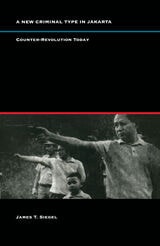
A New Criminal Type in Jakarta
Counter-Revolution TodayJames T. Siegel
Duke University Press, 1998
Examining the links between the concept of criminality and scandal, rumor, fear, and the state, Siegel analyzes daily life in Jakarta through the seemingly disparate but strongly connected elements of family life, gossip, and sensationalist journalism. He offers close analysis of the preoccupation with crime in Pos Kota (a newspaper directed toward the lower classes) and the middle-class magazine Tempo. Because criminal activity has been a sensationalized preoccupation in Jakarta’s news venues and among its people, criminality, according to Siegel, has pervaded the identities of its ordinary citizens. Siegel examines how and why the government, fearing revolution and in an attempt to assert power, has made criminality itself a disturbing rationalization for the spectacular massacre of the people it calls criminals—many of whom were never accused of particular crimes. A New Criminal Type in Jakarta reveals that Indonesians—once united by Sukarno’s revolutionary proclamations in the name of “the people”—are now, lacking any other unifying element, united through their identification with the criminal and through a “nationalization of death” that has emerged with Suharto’s strong counter-revolutionary measures.
A provocative introduction to contemporary Indonesia, this book will engage those interested in Southeast Asian studies, anthropology, history, political science, postcolonial studies, public culture, and cultural studies generally.
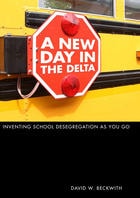
A New Day in the Delta
Inventing School Desegregation As You GoDavid W. Beckwith
University of Alabama Press, 2009
Explores Mississippi’s school desegregation from the viewpoint of a white teacher
A New Day in the Delta is a fresh and appealing memoir of the experience of a young white college graduate in need of a job as the Vietnam War reached its zenith. David Beckwith applied and was accepted for a teaching position in the Mississippi Delta in the summer of 1969. Although it seemed to him a bit strange that he was accepted so quickly for this job while his other applications went nowhere, he was grateful for the opportunity. Beckwith reported for work to learn that he was to be assigned to an all-black school as the first step in Mississippi’s long-deferred school desegregation.
The nation and Mississippi alike were being transformed by war and evolving racial relations, and Beckwith found himself on the cutting edge of the transformation of American education and society in one of the most resistant (and poor) corners of the country. Beckwith’s revealing and often amusing story of the year of mutual incomprehension between an inexperienced white teacher and a classroom full of black children who had had minimal contact with any whites. This is history as it was experienced by those who were thrust into another sort of “front line.”
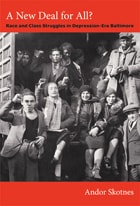
A New Deal for All?
Race and Class Struggles in Depression-Era BaltimoreAndor Skotnes
Duke University Press, 2012
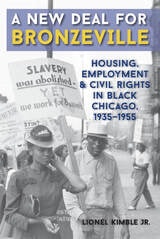
A New Deal for Bronzeville
Housing, Employment, and Civil Rights in Black Chicago, 1935-1955Lionel Kimble Jr.
Southern Illinois University Press, 2015
During the Great Migration of the 1920s and 1930s, southern African Americans flocked to the South Side Chicago community of Bronzeville, the cultural, political, social, and economic hub of African American life in the city, if not the Midwest. The area soon became the epicenter of community activism as working-class African Americans struggled for equality in housing and employment. In this study, Lionel Kimble Jr. demonstrates how these struggles led to much of the civil rights activism that occurred from 1935 to 1955 in Chicago and shows how this working-class activism and culture helped to ground the early civil rights movement. Despite the obstacles posed by the Depression, blue-collar African Americans worked with leftist organizations to counter job discrimination and made strong appeals to New Deal allies for access to public housing. Kimble details how growing federal intervention in local issues during World War II helped African Americans make significant inroads into Chicago’s war economy and how returning African American World War II veterans helped to continue the fight against discrimination in housing and employment after the war. The activism that appeared in Bronzeville was not simply motivated by the “class consciousness” rhetoric of the organized labor movement but instead grew out of everyday struggles for racial justice, citizenship rights, and improved economic and material conditions. With its focus on the role of working-class African Americans—as opposed to the middle-class leaders who have received the most attention from civil rights historians in the past—A New Deal for Bronzeville makes a significant contribution to the study of civil rights work in the Windy City and enriches our understanding of African American life in mid-twentieth-century Chicago.
This publication is partially funded by a grant from Furthermore: a program of the J.M. Kaplan fund.
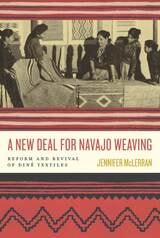
A New Deal for Navajo Weaving
Reform and Revival of Diné TextilesJennifer McLerran
University of Arizona Press, 2022
By the 1920s the durability and market value of Diné weavings had declined dramatically. Indian welfare advocates established projects aimed at improving the materials and techniques. Private efforts served as models for federal programs instituted by New Deal administrators. Historian Jennifer McLerran details how federal officials developed programs such as the Southwest Range and Sheep Breeding Laboratory at Fort Wingate in New Mexico and the Navajo Arts and Crafts Guild. Other federal efforts included the publication of Native natural dye recipes; the publication of portfolios of weaving designs to guide artisans; and the education of consumers through the exhibition of weavings, aiding them in their purchases and cultivating an upscale market. McLerran details how government officials sought to use these programs to bring the Diné into the national economy; instead, these federal tactics were ineffective because they marginalized Navajo women and ignored the important role weaving plays in the resilience and endurance of wider Diné culture.
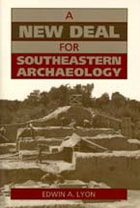
A New Deal for Southeastern Archaeology
Edwin A. Lyon
University of Alabama Press, 1996
Recipient of the 1994 Anne B. and James B. McMillan Prize
This comprehensive study provides a history of New Deal archaeology in the Southeast in the 1930s and early 1940s and focuses on the projects of the Federal Emergency Relief Administration, the Civil Works Administration, the Works Progress Administration, the Tennessee Valley Authority, the National Park Service, and the Smithsonian Institution.
Utilizing primary sources including correspondence and unpublished reports, Lyon demonstrates the great importance of the New Deal projects in the history of southeastern and North American archaeology. New Deal archaeology transformed the practice of archaeology in the Southeast and created the basis for the discipline that exists today. With the current emphasis on curation and repatriation, archaeologists and historians will find this volume invaluable in reconstructing the history of the projects that generated the many collections that now fill our museums.

A New History of Black Pittsburgh
Advancing the Case for Reparatory JusticeJoe William Trotter, Jr., Esther Bush, Laurence Glasco, Benjamin Houston, Patricia Pugh Mitchell, Tony Norman, Rob Ruck, and Carla Young
University of Michigan Press, 2027
A rising chorus of voices have called for redress and compensation to level the playing field for African Americans across all walks of life. A New History of Black Pittsburgh brings together humanities scholars, social service and social justice activists, and community residents to document multigenerational patterns of class and racial inequality and forge a comprehensive case for reparatory justice.
Focusing on industry’s “first city,” the authors draw on oral histories, archival research, and scholarship to examine more than two centuries of Pittsburgh’s history. By featuring a city home to professional Negro League baseball teams, jazz artists, the Pittsburgh Courier, and acclaimed writers and playwrights, the authors show that recognizing ongoing creativity and community-building activities is just as vital for the case for reparations as documenting persistent forms of inequality. A New History of Black Pittsburgh offers insights and policy recommendations to inspire activists, educators, historians, and policymakers working to repair the damage of racial inequality around the globe.
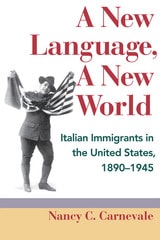
A New Language, A New World
Italian Immigrants in the United States, 1890-1945Nancy C. Carnevale
University of Illinois Press, 2012

A New Species
GENDER AND SCIENCE IN SCIENCE FICTIONRobin Roberts
University of Illinois Press, 1993
A New Type of Womanhood
Discursive Politics and Social Change in Antebellum AmericaNatasha Kirsten Kraus
Duke University Press, 2008
Enabling Kraus’s retelling of the 1850s woman’s rights movement is her theory of “structural aporias,” which takes the institutional structures of any particular society as fully imbricated with the force of language. Kraus reads the antebellum relations of womanhood, contract, property, the economy, and the nation as a fruitful site for analysis of the interconnected power of language, culture, and the law. She combines poststructural theory, particularly deconstructive approaches to discourse analysis; the political economic history of the antebellum era; and the interpretation of archival documents, including woman’s rights speeches, petitions, pamphlets, and convention proceedings, as well as state legislative debates, reports, and constitutional convention proceedings. Arguing that her method provides critical insight not only into social movements and cultural changes of the past but also of the present and future, Kraus concludes A New Type of Womanhood by considering the implications of her theory for contemporary feminist and queer politics.