Results by title
3576 books match the query 'American' and 350 start with a
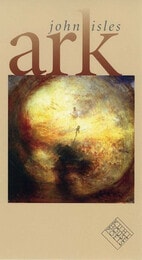
Ark
John Isles
University of Iowa Press, 2003
With its deft maneuvers through both a historical and an emotional landscape, Ark speaks to us with a truly contemporary voice of authoritative vulnerability while never faltering into sentimental digressions. This uncanny authority at the helm of our ark continually surprises us, unfolding its lyrical gems and treasures culled along the journey, letting us in on the inscrutable facts of this life.
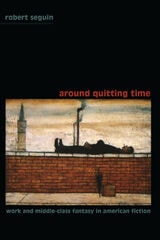
Around Quitting Time
Work and Middle-Class Fantasy in American FictionRobert Seguin
Duke University Press, 2001
Tracing connections between the reconstruction of the labor process and the aesthetic dilemmas of modernism, between the emergence of the modern state and the structure of narrative, Seguin analyzes the work of Nathanael West, Ernest Hemingway, Willa Cather, John Barth, and others. These fictional narratives serve to demonstrate for Seguin the pattern of social sites and cultural phenomenon that have emerged where work and leisure, production and consumption, and activity and passivity coincide. He reveals how, by creating pathways between these seemingly opposed domains, the middle-class imaginary at once captures and suspends the dynamics of social class and opens out onto a political and cultural terrain where class is both omnipresent and invisible.
Around Quitting Time will interest critics and historians of modern U.S. culture, literary scholars, and those who explore the interaction between economic and cultural forms.
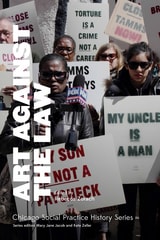
Art Against the Law
Edited by Rebecca Zorach
School of the Art Institute of Chicago, 2014
Despite the city's sometimes notorious political and social history, art practices that challenge authority have thrived in Chicago. Art Against the Law examines the creative tactics of the city’s activist artists and their ways of addressing the broad definitions of the law—from responses to excessive policing to inequities in public policy. These include creative forms of protest, rebellion against the law through illegal art practices, and using the political system itself as an art medium to alter existing laws. The essays and conversations in this volume also address the boundaries between art and creative activism and question whether lines should be drawn at all. Through these texts and interviews, Art Against the Law proves that creative imagination can be formidable in challenging the status quo.
Art Against the Law is part of the new Chicago Social Practice History series, edited by Mary Jane Jacob and Kate Zeller in the Department of Exhibitions and Exhibition Studies at the School of the Art Institute of Chicago (SAIC).
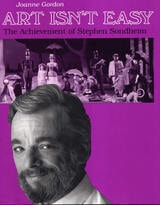
Art Isn't Easy
The Achievement of Stephen SondheimJoanne Gordon
Southern Illinois University Press, 1990
The new musical theatre of Stephen Sondheim shuns the traditional story of love triumphant, probing instead the more disturbing issues of contemporary life.
Confident that the musical is America’s greatest original contribution to theatre, Joanne Gordon explicates the works of Sondheim to repudiate the common perception of the genre as mere escapist entertainment.
Gordon notes that Sondheim tackles real themes, that he has no fear of introducing pain, trauma, and complex ideas onto the Broadway stage. Tracing Sondheim’s career from his initial success as lyricist for West Side Story and Gypsy to the opening of Into the Woods, Gordon demonstrates that the value of Sondheim’s work obviously lies in its seriousness of theme coupled with its disturbing content; less obvious, but equally important, is Sondheim’s innovative use of form.
From A Funny Thing Happened on the Way to the Forum through Anyone Can Whistle, Company, Follies, A Little Night Music, Pacific Overtures, Sweeney Todd, Merrily We Roll Along, Sunday in the Park with George, and Into the Woods, Sondheim’s music and lyrics prove to be inextricably woven into the fabric of the entire work. Both music and lyrics, Gordon stresses, "grow out of the dramatic idea inherent in the show’s concept and themselves become part of the drama that previous theatre songs would only reflect."
Sondheim, Gordon notes, asks much of an audience that may not want to be challenged. In short, to enjoy a Sondheim play, the audience must participate intellectually. The audience willing to expend the effort will not be cheated, Gordon insists, because Sondheim, throughout his career, has demonstrated that "musical theatre can be serious, poignant, and still exhilarating."
Art and Life of Merritt Dana Houghton in the Northern Rockies, 1878-1919
by Michael A. Amundson
University of Wyoming Press, 2022
This lavishly illustrated biography details Houghton’s life and work from his birth in Michigan in 1846 to his death in 1919 in Spokane through extensive genealogical records, newspaper accounts, and his illustrations—including historic ranches and bird’s-eye views of Fort Collins, Colorado; Dillon, Montana; and Spokane, Washington and the only known illustrations of long-lost places like Pearl, Colorado, and Rambler, Wyoming. Also included is reproduction of a four-foot-by-eight-foot view of Sheridan, Wyoming and a sixty-image sample portfolio of his best-preserved illustrations organized by type.
Houghton’s work depicts the infrastructure of the new settler society that was remaking the West in the late nineteenth century and early twentieth century, and Amundson demonstrates how Houghton’s vision of the American West remains active today.
Art and the Higher Life
Painting and Evolutionary Thought in Late Nineteenth-Century AmericaBy Kathleen Pyne
University of Texas Press, 1996
Art and the Subway
New York UndergroundFitzpatrick, Tracy
Rutgers University Press, 2009
Fitzpatrick captures the emotions of artists and riders alike, as she explores paintings, photographs, performance art, graffiti, and public art by artists such as Walker Evans, Bruce Davidson, DONDI, Keith Haring, Yayoi Kusama, Jacob Lawrence, Reginald Marsh, Elizabeth Murray, and many others. She also considers representations of the subway in film, on song sheet covers, and in illustration. By examining the cultural, technological, and social contexts for these creative interpretations, Fitzpatrick illuminates in fresh ways the contradictions and harmonies between public and private space.
Featuring 17 color plates and 80 black-and-white images, Art and the Subway takes readers on a fascinating ride through the visual history of one of the twentieth century's greatest urban planning endeavors as it grew, changed form, and reinvented itself with passion and vitality.
Art during Wartime
Painting Everyday Life in the Civil War NorthVanessa Meikle Schulman
University of Massachusetts Press, 2024
While the Civil War raged on, many northern artists depicted everyday life rather than grand battles or landscapes of noble sacrifice. Amidst a conflict that was upending antebellum social norms, these artists created realistic scenes of mundane events, known as genre paintings. While many of the paintings seem merely to show everyday incidents, Vanessa Meikle Schulman argues that artists connected the visuals to larger concerns.
With attention to how the war shaped new definitions of gender, race, and disability, Art during Wartime uncovers the complexity of these genre paintings. Schulman uses seven case studies of prominent and lesser-known artists who explored how the war instigated social change and shaped northern opinions about current events, including George Cochran Lambdin, Vincent Colyer, and Eastman Johnson. Utilizing detailed visual analysis and extensive historical research, Art during Wartime reframes our narrative of Civil War visual culture, placing genre painting in a central ideological role.
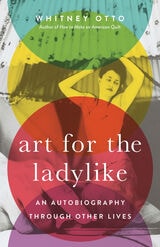
Art for the Ladylike
An Autobiography through Other LivesWhitney Otto
The Ohio State University Press, 2021
In Art for the Ladylike, Whitney Otto limns the lives of eight pioneering women photographers—Sally Mann, Imogen Cunningham, Judy Dater, Ruth Orkin, Tina Modotti, Lee Miller, Madame Yvonne, and Grete Stern—to in turn excavate her own writer’s life. The result is an affecting exploration of what it means to be a woman, what it means to be an artist, and the perils and rewards of being both at once. In considering how feminism, career, and motherhood were entangled throughout her subjects’ lives as they tirelessly sought to render their visions and paved the way for others creating within the bounds of domesticity, Otto assesses her own struggles with balancing writing and the pulls of home life. Ultimately, she ponders the persistent question that artistic women face in a world that devalues women’s ambition: If what we love is what we are, how do those of us with multiple loves forge lives with room for everything?
Art in Chicago
A History from the Fire to NowEdited by Maggie Taft and Robert Cozzolino
University of Chicago Press, 2018
Now that art is getting its due. Art in Chicago is a magisterial account of the long history of Chicago art, from the rupture of the Great Fire in 1871 to the present, Manierre Dawson, László Moholy-Nagy, and Ivan Albright to Chris Ware, Anne Wilson, and Theaster Gates. The first single-volume history of art and artists in Chicago, the book—in recognition of the complexity of the story it tells—doesn’t follow a single continuous trajectory. Rather, it presents an overlapping sequence of interrelated narratives that together tell a full and nuanced, yet wholly accessible history of visual art in the city. From the temptingly blank canvas left by the Fire, we loop back to the 1830s and on up through the 1860s, tracing the beginnings of the city’s institutional and professional art world and community. From there, we travel in chronological order through the decades to the present. Familiar developments—such as the founding of the Art Institute, the Armory Show, and the arrival of the Bauhaus—are given a fresh look, while less well-known aspects of the story, like the contributions of African American artists dating back to the 1860s or the long history of activist art, finally get suitable recognition. The six chapters, each written by an expert in the period, brilliantly mix narrative and image, weaving in oral histories from artists and critics reflecting on their work in the city, and setting new movements and key works in historical context. The final chapter, comprised of interviews and conversations with contemporary artists, brings the story up to the present, offering a look at the vibrant art being created in the city now and addressing ongoing debates about what it means to identify as—or resist identifying as—a Chicago artist today. The result is an unprecedentedly inclusive and rich tapestry, one that reveals Chicago art in all its variety and vigor—and one that will surprise and enlighten even the most dedicated fan of the city’s artistic heritage.
Part of the Terra Foundation for American Art’s year-long Art Design Chicago initiative, which will bring major arts events to venues throughout Chicago in 2018, Art in Chicago is a landmark publication, a book that will be the standard account of Chicago art for decades to come. No art fan—regardless of their city—will want to miss it.
Art of the United States, 1750–2000
John Davis and Michael Leja
Terra Foundation for American Art, 2020
A sourcebook of unprecedented breadth and depth, Art of the United States brings together multiple voices throughout the ages to provide a framework for learning and critical thinking on US art.
Art, Activism, and Oppositionality
Essays from AfterimageGrant Kester, ed.
Duke University Press, 1998
Forging a style of criticism where aesthetic, critical, theoretical, and activist concerns converge, Afterimage has shaped American debates around the politics of visual production and arts education while offering a voice to politically involved artists and scholars. Art, Activism, and Oppositionality insists not only on the continuing relevance of an activist stance to contemporary art practice and criticism, but also on the significance of an engaged art practice that is aligned with social or political activism. With essays that span fifteen years—roughly from Ronald Reagan’s 1980 presidential win to the 1994 Republican victories in Congress, a period marked by waning public support for the arts and growing antagonism toward activist art—Art, Activism, and Oppositionality confronts issues ranging from arts patronage, pedagogy, and the very definitions of art and activism to struggles involving AIDS, reproductive rights, sexuality, and racial identity.
Contributors. Maurice Berger, Richard Bolton, Ann Cvetkovich, Coco Fusco, Brian Goldfarb, Mable Haddock, Grant H. Kester, Ioannis Mookas, Chiquita Mullins Lee, Darrell Moore, Lorraine O’Grady, Michael Renov, Martha Rosler, Patricia Thomson, David Trend, Charles A. Wright Jr., Patricia R. Zimmerman
Art, Music, and Literature, 1897-1902
Theodore Dreiser. Edited by Yoshinobu Hakutani
University of Illinois Press, 2007
In this volume, liberally seasoned with period illustrations, Yoshinobu Hakutani has collected and annotated a rich selection of Theodore Dreiser's pre-fame writings on the cultural milieu of his day.
In these brief essays, Dreiser sallies into the vibrant world of creative work in turn-of-the-century America. He inspects the eccentric and revealing paraphernalia of artists' studios, probes the work habits of writers, and goes behind the scenes in the popular song-writing business, where this week's celebrity is next week's has-been. He profiles famous figures and introduces numerous women artists, novelists, and musicians, including the prolific and tireless Amelia Barr (mother of fourteen children and author of thirty-two novels), the illustrator Alice B. Stephens, and the opera singer Lillian Nordica. Hakutani's notes provide biographical detail on dozens of now-obscure individuals mentioned by Dreiser.
Art, Theory, Revolution
The Turn to Generality in Contemporary LiteratureMitchum Huehls
The Ohio State University Press, 2022
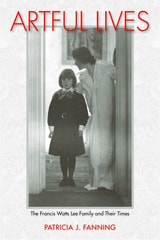
Artful Lives
The Francis Watts Lee Family and Their TimesPatricia J. Fanning
University of Massachusetts Press, 2016
Francis Watts Lee and his family hold a special place in the history of American photography. F. Holland Day completed a series of remarkable photographs of Lee's daughter Peggy, and the striking portrait of the child and her mother titled Blessed Art Thou among Women is one of Gertrude Käsebier's most iconic compositions. In Artful Lives, Patricia J. Fanning uses these and other significant images as guideposts to explore the Lee family and the art and culture of their age.
A social reform advocate, Francis Watts Lee was an artistic photographer and a talented printer, part of the circle of avant-garde artists and intellectuals who formed Boston's bohemia. He married twice, first Agnes Rand, an award-winning poet and children's book author, and later, after their divorce, Marion Lewis Chamberlain, a librarian and MIT-trained architect. Francis and Agnes's eldest daughter, Peggy, who was so integral to the work of pioneer Pictorialists, died at age seven of juvenile diabetes. Her sister, Alice, who lost her hearing in infancy, became a wood carver and sculptor.
Utilizing previously unknown family archives and institutional sources, Fanning traces the Lee family's story in the context of major artistic, political, social, and religious trends, including the Arts and Crafts movement, Christian Socialism, and Aestheticism, while also showing how their experiences reflected the national culture's evolving conceptions of family, gender, childhood, medicine, deaf education, and mourning. This richly drawn and gracefully written account of one family informs our understanding of this vibrant era, in Boston and well beyond.
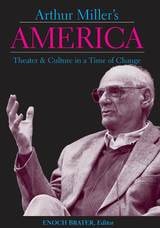
Arthur Miller's America
Theater and Culture in a Time of ChangeEnoch Brater, Editor
University of Michigan Press, 2005
Arthur Miller's America collects new writing by leading international critics and scholars that considers the dramatic world of icon, activist, and playwright Arthur Miller's theater as it reflects the changing moral equations of his time. Written on the occasion of Miller's 85th year, the original essays and interviews in Arthur Miller's America treat the breadth of Miller's work, including his early political writings for the campus newspaper at the University of Michigan, his famous work with John Huston, Clark Gable and Marilyn Monroe on The Misfits, and his signature plays like Death of a Salesman and All My Sons.
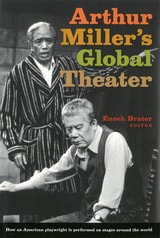
Arthur Miller's Global Theater
Enoch Brater, Editor
University of Michigan Press, 2010
No American playwright is more revered on the international stage than Arthur Miller. In Arthur Miller’s Global Theater—a fascinating collection of new essays by leading international critics and scholars—readers learn how and why audiences around the world have responded to the work of the late theatrical icon. With perspectives from diverse corners of the globe, from Israel to Japan to South Africa, this groundbreaking volume explores the challenges of translating one of the most American of American playwrights and details how disparate nations have adapted meaning in Miller’s most celebrated dramas.
An original and engaging collection that will appeal to theater aficionados, scholars, students, and all those interested in Miller and his remarkable oeuvre, Arthur Miller’s Global Theater illustrates how dramas such as Death of a Salesman,The Crucible, and A View from the Bridge developed a vigorous dialogue with new audiences when they crossed linguistic and national borders. In these times when problems of censorship, repressive regimes, and international discord are increasingly in the news, Arthur Miller’s voice has never been more necessary as it continues to be heard and celebrated around the world.
Enoch Brater is the Kenneth T. Rowe Collegiate Professor of Dramatic Literature at the University of Michigan. His other books include Arthur Miller: A Playwright’s Life and Works and Arthur Miller’s America.
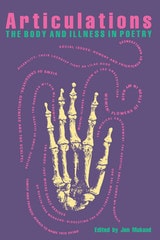
Articulations
The Body and Illness in PoetryJon Mukand
University of Iowa Press, 1994
In 1987 poet and physician Jon Mukand published Sutured Words, a volume of contemporary poems to help patients, their families and friends, and all health care professionals embrace the complexity of healing, illness, and death. Robert Coles called the collection “a wonderful source of inspiration and instruction for any of us who are trying to figure out what our work means”; Norman Cousins was impressed by the “discernment and high quality of the selections.” Now, in Articulations, Mukand adds more than a hundred new poems to the strongest poems from Sutured Words to give us a lyrical, enlightened understanding of the human dimensions of suffering and illness
Artificial Paradise
Science Fiction and American RealitySharona Ben-Tov
University of Michigan Press, 1995
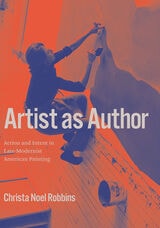
Artist as Author
Action and Intent in Late-Modernist American PaintingChrista Noel Robbins
University of Chicago Press, 2021
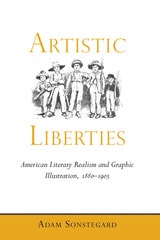
Artistic Liberties
American Literary Realism and Graphic Illustration, 1880-1905Adam Sonstegard
University of Alabama Press, 2013
Though today we commonly read major works of nineteenth-century American literature in unillustrated paperbacks or anthologies, many of them first appeared as magazine serials, accompanied by ample illustrations that sometimes made their way into the serials’ first printings as books. The graphic artists creating these illustrations often visually addressed questions that the authors had left for the reader to interpret, such as the complexions of racially ambiguous characters in Uncle Tom’s Cabin. The artists created illustrations that depicted what outsiders saw in Huck and Jim in Adventures of Huckleberry Finn, rather than what Huck and Jim learned to see in one another. These artists even worked against the texts on occasion—for instance, when the illustrators reinforced the same racial stereotypes that writers such as Paul Laurence Dunbar had intended to subvert in their works.
Authors of American realism commonly submitted their writing to editors who allowed them little control over the aesthetic appearance of their work. In his groundbreaking Artistic Liberties, Adam Sonstegard studies the illustrations from these works in detail and finds that the editors employed illustrators who were often unfamiliar with the authors’ intentions and who themselves selected the literary material they wished to illustrate, thereby taking artistic liberties through the tableaux they created.
Sonstegard examines the key role that the appointed artists played in visually shaping narratives—among them Mark Twain’s Pudd’nhead Wilson, Stephen Crane’s The Monster, and Edith Wharton’s The House of Mirth—as audiences tended to accept their illustrations as guidelines for understanding the texts. In viewing these works as originally published, received, and interpreted, Sonstegard offers a deeper knowledge not only of the works, but also of the realities surrounding publication during this formative period in American literature.
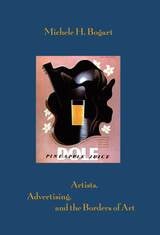
Artists, Advertising, and the Borders of Art
Michele H. Bogart
University of Chicago Press, 1995
From the turn of the century through the 1950s, the explosive growth of popular magazines and national advertising offered artists new sources of income and new opportunities for reaching huge audiences. Bogart shows how, at the same time, this change in the marketplace also forced a rethinking of the purpose of the artistic enterprise itself. She examines how illustrators such as Howard Pyle, Charles Dana Gibson, and Norman Rockwell claimed their identities as artists within a market-oriented framework. She looks at billboard production and the growing schism between "art" posters and billboard advertisements; at the new roles of the art director; at the emergence of photography as the dominant advertising medium; and at the success of painters in producing "fine art" for advertising during the 1930s and 1940s.
Arts of a Cold Sun
POEMSG. E. Murray
University of Illinois Press, 2003
Viewing his subjects sometimes from airplane altitude, sometimes from the intimacy of a shared restaurant table, Murray crafts “true stories about color,” narratives of dislocation and belonging that invite readers to question their own relationship to art.
Included in this volume is a long sequential poem titled “The Seconds,” which Murray composed across the second days of thirteen months. The rhythms of this diary-as-poem seize the tensions of shifting times and locales, capturing the essences of moments that are at once chosen and arbitrary.
“Codes toward an Incidental City,” the sequence that closes the book, is a confederacy of forty poems that delve into the concrete familiarities and mythologies of urban landscapes, illuminating the ecstasies of city life.

As American as Mom, Baseball, and Apple Pie
Constructing Community in Contemporary American Horror FictionLinda J. Holland-Toll
University of Wisconsin Press, 2001
As If a Song Could Save You
Betsy Sholl
University of Wisconsin Press, 2022
As the volume carefully and slowly immerses us in the poet’s world, we gradually begin to understand that this is our journey of exploration as much as hers. Where does one find joy in the face of loss? Why does music exist in a world of grief? How long does it take love to overwhelm pain?
Through these powerful poems we learn to see past the unreliability of memory and into the depth of the present.
The child makes you a blue inch at the top of the page,
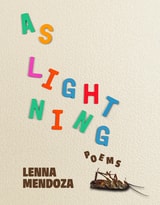
As Lightning
Lenna Mendoza
University of Wisconsin Press, 2026
Highlighting the prominent and contradictory place children occupy in Western culture, where they are at once cherished and reviled, As Lightning interrogates the nature of childhood itself. Offering multiple pathways through her own past via unexpected means—tests, riddles, word searches, rhyme, and a tour-de-force grouping of choose-your-own-adventure poems—Lenna Mendoza reveals the inherent pitfalls of imposing a narrative on a life.
In a paean to “the stuffed puppy I won’t leave,” she deftly observes, “we can hold more than we think.” This collection traces one multiracial queer girl’s experiences of identity, sexuality, trauma, race, gender, and the body itself, in vibrations and resonances that reconfigure these lenses of self-awareness and the limits of our understanding.
As Long as We're Here
Joel Brouwer
Four Way Books, 2026
As Long as We’re Here is an off-key anthem, a funhouse mirror held up to our dumpster fire era. Chronically online, distracted and distracting, with too many browser tabs open at once, attentive to everything and focused on nothing, Brouwer delights in the late capitalist absurdities of sleeping apps and internet dance crazes, and riffs on the argot of the group chat and the team meeting. These slippery poems both suffer from and revel in their ADD. Their shifts are as fleet as our news feeds, their serpentine sentences leap from barroom jests to high modernist splendor and back. But the book is not all fun and games. Dreamy tales of edgelords and loyalty oaths often arrive at places of surprising pathos and beauty. Mortality gnaws at the narrators of these poems, and political unrest lurks in the background. Still, a sense of solidarity—that we of the title, a recurring pronoun throughout—keeps despair at bay. Indeed, As Long as We’re Here is a book of intimacy, of the coterie. Friends and lovers people its lyrics, which often feel like late-night hang sessions with eccentric, wise-cracking pals. Full of wry wisdom and lush music, As Long as We’re Here knows what to do with a diminished thing: make it sing.
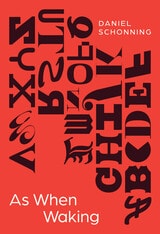
As When Waking
Daniel Schonning
University of Chicago Press, 2025
The poems of Daniel Schonning’s debut collection range from personal examinations of childhood suffering and loss of faith to deep observations of images and objects to the foreclosure of a family home, a father estranged by addiction, mallards on a frozen pond, flowering bindweed, and a door to the underworld. With all its component pieces, As When Waking aims to apprentice itself to the medium of letters, inviting readers to listen and learn from the systems and symmetries of alphabets.
Schonning employs structural paradigms to explore themes of poetic lineage. Twenty-six of the poems in this collection are abecedarians, a form where the opening letter of each line advances through the alphabet, with the lines of the first poem proceeding alphabetically from A–Z, while those of the second poem move from B–A, and then C–B, all the way to Z–A. This structure is tied to Jewish mystic texts such as the Sefer Yetzirah, which probes the relationship between the letters of the Hebrew alphabet and the world they inhabit.
Ascension Theory
Christopher Bolin
University of Iowa Press, 2013
Bolin’s eye and mind are acutely tuned to the edges of broken objects and vistas, to the mysterious remnants out of which meaningful speech might be reconstituted. These poems unfold in a world of beautiful, crystalline absence, one that is nearly depopulated, as though encountered in the aftermath of an unnamed violence to the land and to the soul.
In poems of prodigious elegance and anxious control, Bolin evokes influences as various as Robert Frost, James Wright, Robert Hass, George Oppen, and Robert Creeley, while fashioning his own original and urgent idiom, one that both theorizes and tests the prospects of imaginative ascension, and finds “new locutions for referencing / sky.”
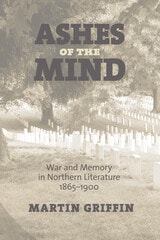
Ashes of the Mind
War and Memory in Northern Literature, 1865-1900Martin Griffin
University of Massachusetts Press, 2009
The memory of the American Civil War took many forms over the decades after the conflict ended: personal, social, religious, and political. It was also remembered and commemorated by poets and fiction writers who understood that the war had bequeathed both historical and symbolic meanings to American culture. Although the defeated Confederacy became best known for producing a literature of nostalgia and an ideological defensiveness intended to protect the South's own version of history, authors loyal to the Union also confronted the question of what the memory of the war signified, and how to shape the literary response to that individual and collective experience.
In Ashes of the Mind, Martin Griffin examines the work of five Northerners—three poets and two fiction writers—who over a period of four decades tried to understand and articulate the landscape of memory in postwar America, and in particular in that part of the nation that could, with most justification, claim the victory of its beliefs and values. The book begins with an examination of the rhetorical grandeur of James Russell Lowell's Harvard Commemoration Ode, ranges across Herman Melville's ironic war poetry, Henry James's novel of North-South reconciliation, The Bostonians, and Ambrose Bierce's short stories, and ends with the bitter meditation on race and nation presented by Paul Laurence Dunbar's elegy “Robert Gould Shaw.” Together these texts reveal how a group of representative Northern writers were haunted in different ways by the memory of the
conflict and its fraught legacy.
Griffin traces a concern with individual and community loss, ambivalence toward victory, and a changing politics of commemoration in the writings of Lowell, Melville, James, Bierce, and Dunbar. What links these very different authors is a Northern memory of the war that became more complex and more compromised as the century went on, often replacing a sense of justification and achievement with a perception of irony and failed promise.
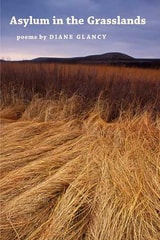
Asylum in the Grasslands
Diane Glancy
University of Arizona Press, 2007
In her new collection of poems, Glancy explores the history of loss that has marked the Cherokee community. In a voice that is as economical as it is eloquent and as sophisticated as it is exhilarating, she describes the loss of family, the loss of cultural heritage, and the loss of old worlds as new ones encroach. In one poem, a farm auction becomes an auction of culture, of heritage, of the past. In others, ancestors meet in a twenty-four-hour café, lunch is shared with a great-grandmother who has been traveling the universe, Christ appears as a cowboy in an apocalyptic vision, and Clytemnestra is discovered in a snakeskin. Some of the poems are as campy as a duck-decoy Custer in a shooting gallery. Some glitter with dime-store glue. Others speak with the reflection of sunlight off a stream. Sometimes the verse produces a shortstop language on the baseline of experience. In whatever form they take, Glancy’s poems stimulate and challenge the reader with their unfettered, unadorned, and unpretty purity. This collection is not only a spirited ride across the Great Plains, it is also an important addition to the literature of white–Native American cultural relationships.

At Every Wedding Someone Stays Home
PoemsDannye Romine Powell
University of Arkansas Press, 1994
The poems of Dannye Romine Powell take ordinary moments and transform them into rare and luminous epiphanies. These poems have the air of real places and real people who go about the perilous business of living in this world.
Powell is a poet of candor and clarity, and she has a wit that moves in surprising ways. These are poems not only to admire, but to relish and share; the pleasure they bring is closer to that of an old leather jacket than of a new pair of shoes. Powell writes like no one else, and she’s a joy to read.
At Some Point
David O’Connell
University of Wisconsin Press, 2025
At the Barriers
On the Poetry of Thom GunnEdited by Joshua Weiner
University of Chicago Press, 2009
Maverick gay poetic icon Thom Gunn (1929–2004) and his body of work have long dared the British and American poetry establishments either to claim or disavow him. To critics in the UK and US alike, Gunn demonstrated that formal poetry could successfully include new speech rhythms and open forms and that experimental styles could still maintain technical and intellectual rigor. Along the way, Gunn’s verse captured the social upheavals of the 1960s, the existential possibilities of the late twentieth century, and the tumult of post-Stonewall gay culture.
The first book-length study of this major poet, At the Barriers surveys Gunn’s career from his youth in 1930s Britain to his final years in California, from his earliest publications to his later unpublished notebooks, bringing together some of the most important poet-critics from both sides of the Atlantic to assess his oeuvre. This landmark volume traces how Gunn, in both his life and his writings, pushed at boundaries of different kinds, be they geographic, sexual, or poetic. At the Barriers will solidify Gunn’s rightful place in the pantheon of Anglo-American letters.
At the Brink of Infinity
Poetic Humility in Boundless American SpaceJames E. von der Heydt
University of Iowa Press, 2008
From popular culture to politics to classic novels, quintessentially American texts take their inspiration from the idea of infinity. In the extraordinary literary century inaugurated by Ralph Waldo Emerson, the lyric too seemed to encounter possibilities as limitless as the U.S. imagination. This raises the question: What happens when boundlessness is more than just a figure of speech? Exploring new horizons is one thing, but actually looking at the horizon itself is something altogether different. In this carefully crafted analysis, James von der Heydt shines a new light on the lyric craft of Emily Dickinson, Robert Frost, Elizabeth Bishop, and James Merrill and considers how their seascape-vision redefines poetry's purpose.
Emerson famously freed U.S. literature from its past and opened it up to vastness; in the following century, a succession of brilliant, rigorous poets took the philosophical challenges of such freedom all too seriously. Facing the unmarked horizon, Emersonian poets capture—and are captured by—a stark, astringent version of human beauty. Their uncompromising visions of limitlessness reclaim infinity's proper legacy—and give American poetry its edge. Von der Heydt's book recovers the mystery of their world.
At the Park on the Edge of the Country
PoemsAustin Araujo
The Ohio State University Press, 2025
Atlantic Double-Cross
American Literature and British Influence in the Age of EmersonRobert Weisbuch
University of Chicago Press, 1987
Describing the transatlantic "double-cross" of literary influence, Weisbuch documents both the American desire to create a literature distinctly different from English models and the English insistence that any such attempt could only fail. The American response, as he demonstrates, was to make strengths out of national disadvantages by rethinking history, time, and traditional concepts of the self, and by reinterpreting and ridiculing major British texts in mocking allusions and scornful parodies.
Weisbuch approaches a precise characterization of this "double-cross" by focusing on paired sets of English and American texts. Investigations of the causes, motives, and literary results of the struggle alternate with detailed analyses of several test cases. Weisbuch considers Melville's challenge to Dickens, Thoreau's response to Coleridge and Wordsworth, Hawthorne's adaptation of Keats and influence on Eliot, Whitman's competition with Arnold, and Poe's reshaping of Shelley. Adding a new dimension to the exploration of an emerging aesthetic consciousness, Atlantic Double-Cross provides important insights into the creation of the American literary canon.
Atmospheric Embroidery
PoemsMeena Alexander
Northwestern University Press, 2018
In this haunting collection of poems we travel through zones of violence to reach the crystalline depths of words: Meena Alexander writes, "So landscape becomes us, / Also an interior space bristling with light." At the heart of this book is the poem cycle "Indian Ocean Blues," a sustained meditation on the journey of the poet as a young child from India to Sudan. There are poems inspired by the drawings of children from war-torn Darfur and others set in present-day New York City. These sensual lyrics of body, memory, and place evoke the fragile, shifting nature of dwelling in our times.
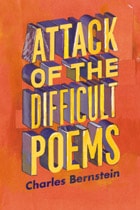
Attack of the Difficult Poems
Essays and InventionsCharles Bernstein
University of Chicago Press, 2011
Charles Bernstein is our postmodern jester of American poesy, equal part surveyor of democratic vistas and scholar of avant-garde sensibilities. In a career spanning thirty-five years and forty books, he has challenged and provoked us with writing that is decidedly unafraid of the tensions between ordinary and poetic language, and between everyday life and its adversaries. Attack of the Difficult Poems, his latest collection of essays, gathers some of his most memorably irreverent work while addressing seriously and comprehensively the state of contemporary humanities, the teaching of unconventional forms, fresh approaches to translation, the history of language media, and the connections between poetry and visual art.
Applying an array of essayistic styles, Attack of the Difficult Poems ardently engages with the promise of its title. Bernstein introduces his key theme of the difficulty of poems and defends, often in comedic ways, not just difficult poetry but poetry itself. Bernstein never loses his ingenious ability to argue or his consummate attention to detail. Along the way, he offers a wide-ranging critique of literature’s place in the academy, taking on the vexed role of innovation and approaching it from the perspective of both teacher and practitioner.
From blues artists to Tin Pan Alley song lyricists to Second Wave modernist poets, The Attack of the Difficult Poems sounds both a battle cry and a lament for the task of the language maker and the fate of invention.
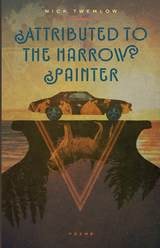
Attributed to the Harrow Painter
Nick Twemlow
University of Iowa Press, 2017
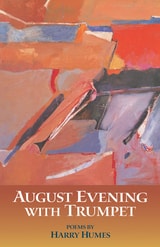
August Evening with Trumpet
PoemsHarry Humes
University of Arkansas Press, 2004
From its first poem, “String,” with its mythic overtones to the final “The Movement of Ice,” August Evening with Trumpet deals with the varieties of surprise and mystery, pain and wonder in the human experience. In constant motion, this collection ranges across a broad landscape, one in which trout swim through a house, where a coal miner father on vacation digs clams, where an old mother refuses help as she walks a narrow plank across a brook, and where in the quietly moving “Late November,” the speaker releases a raccoon from a leg-hold steel trap.
Uncluttered, clear, and direct, the poems move effortlessly and seamlessly into one another, gathering an overall pleasing unity and narrative energy. And if there is a vein of quiet sorrow and darkness running through the collection, it is balanced against courage, grace, and good humor. At the book’s center is a deep reverence for childhood, for parents, for children, for language, and for landscape, all of which Humes admirably holds up for us. Harry Humes’s work brings to mind William Blake’s “To see a World in a Grain of Sand / And a Heaven in a Wild Flower.”
Augusta Evans Wilson, 1835-1909
William Perry Fidler
University of Alabama Press, 1951
A comprehensive biography of Augusta Jane Evans Wilson, one of the nineteenth-century America’s best-selling authors
A fascinating biography about Augusta Jane Evans, a nearly forgotten writer who was nevertheless one of the most popular writers of her era. She wrote nine novels about southern women, including St. Elmo, which sold a staggering one million copies within four months of its release in 1866. William Fidler traces the life of Augusta Jane Evans from her birth in 1835 in Columbus, Georgia till her death in Alabama in 1909.
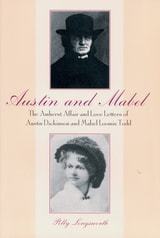
Austin and Mabel
The Amherst Affair and Love Letters of Austin Dickinson and Mabel Loomis ToddPolly Longsworth
University of Massachusetts Press, 1999
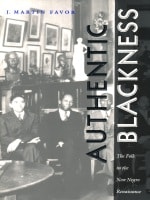
Authentic Blackness
The Folk in the New Negro RenaissanceJ. Martin Favor
Duke University Press, 1999
Authentic Blackness looks at the place of the “folk”—those African Americans “furthest down,” in the words of Alain Locke—and how the representation of the folk and the black middle class both spurred the New Negro Movement and became one of its most serious points of contention. Drawing on vernacular theories of African American literature from such figures as Henry Louis Gates Jr. and Houston Baker as well as theorists Judith Butler and Stuart Hall, Favor looks closely at the work of four Harlem Renaissance fiction writers: James Weldon Johnson, Nella Larsen, George Schuyler, and Jean Toomer. Arguing that each of these writers had, at best, an ambiguous relationship to African American folk culture, Favor demonstrates how they each sought to redress the notion of a fixed black identity. Authentic Blackness illustrates how “race” has functioned as a type of performative discourse, a subjectivity that simultaneously builds and conceals its connections with such factors as class, gender, sexuality, and geography.
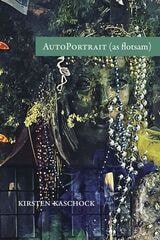
AutoPortrait (as flotsam)
Kirsten Kaschock
Tupelo Press, 2026
An investigation of identity as prompted by art and artists.
In AutoPortrait (as flotsam), Kirsten Kaschock uses the words, lives, and images of other artists as springboards into the self. Arranged almost as a gallery walk, AutoPortrait alternates between masque-like encounters with art and reflective passages engaging memory and desire. Influenced by photographers Francesca Woodman and Cindy Sherman, Kaschock walks a tightrope between vulnerability and artifice—using lines and shapes provided by the many artists referenced here (painters, musicians, and poets) to sketch an impression of a woman artist.
The struggle she chronicles is familiar to any storyteller: an effort to piece together minor episodes to create some semblance of a whole. The question is whether such a project can ever be accomplished. Can the fragments gathered on the shore of memory be tied together, brought to life? Other artists, perhaps especially the abstract expressionists, serve her as both guide and glue. The result is an intimate travelogue—the poet’s own narrow road to an interior where she finds a meditative balance between rage and regret, sorrow and joy.
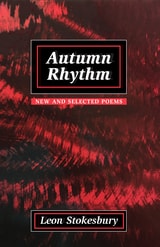
Autumn Rhythm
New and Selected PoemsLeon Stokesbury
University of Arkansas Press, 1996
Avenue of Vanishing
William Olsen
Northwestern University Press, 2007
That’s what infinity did, contain and threaten,
until friends complied by going one by one
to resurface obligingly in memories, and it sometimes still feels
we left them at our leisure, that such choice was good
so long as a larger choice seemed to succeed it,
nor could gazing bereave us of common sense,
nor would all plenty and foison fall into penury,
nor would shame forever drop its heavy head.
Infinity felt like life, and it said so, and waited.
It even spelled our autumnal names in solid gold
leaves that an inexhaustible supply of wind
tossed for such pleasure as we had said and said
until it transformed into the profound conviction
that the right track was lost—imagine—forever,
it turned our tears into pebbles that can’t seep away,
that can’t fly away, that we don’t dare to pronounce,
yet it seemed concocted out of a clear beautiful sky,
yet it peeped out the woodshed and drank from the gutter spout,
yet it wrestled with itself and sank in eager mud
that presently it might be outwardly known
along with all the other creatures that perish,
heartbreaking idea among many heartbreaking ideas.
--from Infinity
Avery Hopwood
His Life and PlaysJack F. Sharrar
University of Michigan Press, 1998

Azores
PoemsDavid Yezzi
Ohio University Press, 2008
A Slate Best Book of 2008
Included in Pushcart Prize XXXIV: Best of the Small Presses
Like a voyage to the Portuguese islands of the title, the poems in Azores arrive at their striking and hard-won destinations over the often-treacherous waters of experience—a man mourns the fact that he cannot not mourn, a father warns his daughter about harsh contingency, an unnamed visitor violently disrupts a quiet domestic scene. The ever-present and uncomfortable realities of envy, lust, and mortality haunt the book from poem to poem. Yezzi does not shy away from frank assessments of desire and human failing, the persistent difficulties of which are relieved periodically by a cautious optimism and even joy. Whether the poem’s backdrop is volcanic islands in the Mid-Atlantic or Manhattan Island at sunset, Yezzi examines the forces of change in the natural world, as w hether mundane or startlingly intimate. By turns plainspoken, caustic, evocative, and wry, these poems are, in matters of form, well-wrought and musical and, in matters of the heart, clear-eyed and always richly human.
a dirty hand
The Literary Notebooks of Winfield Townley ScottBy Winfield Townley Scott
University of Texas Press, 1969
From "a dirty hand":
Words are very powerful. You aren't sure of that? Think of all the things you won't say.
- Wonderful remark in a note I had this week from William Carlos Williams. He spoke of the "disease" of wanting to write poetry; said he had been "off" poetry for many months and—he said—"I feel clean and unhappy."
- One reason for keeping this kind of notebook: you can put on record the retort you couldn't think of at last night's party.
- Photographs of Henry James in his middle years should be commented upon. Gone is the shy aesthete of the youthful portrait (by LaFarge?) . This bearded man has a fierce look, even a bestial one. Here is perhaps-I don't know-James at his most generative. Again this man disappears in the shaven, bald, final James, the famous James—the Grand Lama.
- I noticed when Lindsay (thirteen) read aloud a passage from a hunting book the other day he pronounced "genital" as "genteel." I'd love to see a literary history titled "The Genital Tradition."
- Contrast "business ethics" and the ethics of art. Nobody writes a poem hoping it will wear out in four or five years.
Between 1951 and 1966 the distinguished American poet Winfield Townley Scott kept a series of notebooks in which he set down his thoughts on poetry, literature, the literary scene, and life in general. Shortly before his untimely death in 1968 he made a selection of the entries he thought were best and gave it the title "a dirty hand." These perceptive notes, some tart, some gentle, some boisterous, some wistful, give us a remarkable insight into the workings of his creative mind. George P. Elliott has said of Scott: "In a very solid way, I think he was as rock-bottom American a poet as we have had since Frost." The introduction is by Scott's good friend Merle Armitage, who also designed the original edition of this book.