Results by title
5159 books match the query 'Biography' and 527 start with a
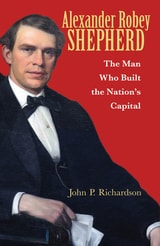
Alexander Robey Shepherd
The Man Who Built the Nation’s CapitalJohn P. Richardson
Ohio University Press, 2016
With Alexander Robey Shepherd, John P. Richardson gives us the first full-length biography of his subject, who as Washington, D.C.’s, public works czar (1871–74) built the infrastructure of the nation’s capital in a few frenetic years after the Civil War. The story of Shepherd is also the story of his hometown after that cataclysm, which left the city with churned-up streets, stripped of its trees, and exhausted.
An intrepid businessman, Shepherd became president of Washington’s lower house of delegates at twenty-seven. Garrulous and politically astute, he used every lever to persuade Congress to realize Peter L’Enfant’s vision for the capital. His tenure produced paved and graded streets, sewer systems, trees, and gaslights, and transformed the fetid Washington Canal into one of the city’s most stately avenues. After bankrupting the city, a chastened Shepherd left in 1880 to develop silver mines in western Mexico, where he lived out his remaining twenty-two years.
In Washington, Shepherd worked at the confluence of race, party, region, and urban development, in a microcosm of the United States. Determined to succeed at all costs, he helped force Congress to accept its responsibility for maintenance of its stepchild, the nation’s capital city.
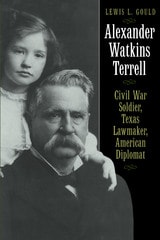
Alexander Watkins Terrell
Civil War Soldier, Texas Lawmaker, American DiplomatBy Lewis L. Gould
University of Texas Press, 2004
Alexander Terrell's career placed him at the center of some of the most pivotal events in nineteenth- and early twentieth-century history, ranging from the Civil War to Emperor Maximilian's reign over Mexico and an Armenian genocide under the Ottoman Empire. Alexander Watkins Terrell at last provides the first complete biographical portrait of this complex figure.
Born in Virginia in 1827, Terrell moved to Texas in 1852, rising to the rank of Confederate brigadier general when the Civil War erupted. Afterwards, he briefly served in Maximilian's army before returning to Texas, where he was elected to four terms in the state Senate and three terms in the House. President Grover Cleveland appointed him minister to the Ottoman Empire, dispatching him to Turkey and the Middle East for four years while the issues surrounding the existence of Christians in a Muslim empire stoked violent confrontations there. His other accomplishments included writing legislation that created the Texas Railroad Commission and what became the Permanent University Fund (the cornerstone of the University of Texas's multibillion-dollar endowment).
In this balanced exploration of Terrell's life, Gould also examines Terrell's views on race, the impact of the charges of cowardice in the Civil War that dogged him, and his spiritual searching beyond the established religions of his time. In his rich and varied life, Alexander Watkins Terrell experienced aspects of nineteenth-century Texas and American history whose effects have continued down to the present day.
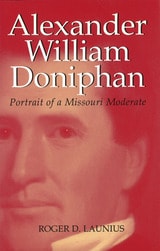
Alexander William Doniphan
Portrait of a Missouri ModerateRoger D. Launius
University of Missouri Press, 1997
Alexander William Doniphan (1808-1887)--Missouri attorney, military figure, politician, and businessman--is one of the most significant figures in antebellum Missouri. From the 1830s to the 1880s, Doniphan was active in a variety of affairs in Missouri and held firm to several underlying principles, including loyalty, hard work, the sanctity of the republic, and commitment to Christian charity. However, the key to Doniphan's importance was his persistent moderation on the critical issues of his day.
Doniphan became a household name when he served as the commanding officer of the famed First Missouri Mounted Volunteers during the Mexican-American War. It was during this time that he won two battles, established an Anglo-American-based democracy in New Mexico, and paved the way for the annexation of the territory that became New Mexico and Arizona. He is also recognized by the Mormons for his assistance to their beleaguered church during Missouri's "Mormon War" and for his refusal to execute Joseph Smith when ordered to do so by his commanding officer.
Although Doniphan was a slaveholding unionist, he sought a middle ground to stave off war in the 1850s and early 1860s and served as a delegate to the Washington Peace Conference in 1861. When conflict escalated along the western border of Missouri in 1862, Doniphan moved to St. Louis, where he worked as a lawyer with the Missouri Claims Commission, seeking pensions for refugees.
Doniphan early adopted the Whig ideal of the "positive liberal state" and sought to use the power of government to remake society into something better. Once he saw the heavy-handed use of state power during Reconstruction, however, Doniphan reversed his views on the role of the government in society. For the rest of his life, he resisted government incursions into the lives of the people and sought to restore a healthy Union.
Alexander William Doniphan will be of interest to academic specialists and general readers alike, especially those interested in Mormon studies, Missouri history, military history, and Western history.
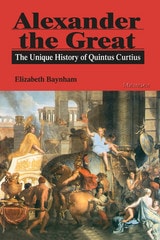
Alexander the Great
The Unique History of Quintus CurtiusElizabeth Baynham
University of Michigan Press, 2004
The reign and personality of Alexander the Great---one of the most romantic and powerful kings in history---have remained a source of fascination from antiquity to the present. But because the ancient information surrounding the conqueror is rich, contradictory, and complex, every historian of this near-mythical ruler-whether ancient or modern-invariably creates his or her own Alexander.
The unique work of one such ancient historian, Quintus Curtius, is the subject of Elizabeth Baynham's book. She mines Curtius' study of power for his contemporary perspective, historical methodology, and his portrait of the famous king and presents us with a brilliant, multifaceted study of this unique account regarding one of the most fascinating rulers in history.
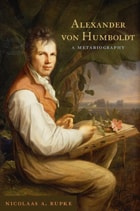
Alexander von Humboldt
A MetabiographyNicolaas A. Rupke
University of Chicago Press, 2008
This volume, the first metabiography of the great scientist, traces Humboldt’s biographical identities through Germany’s collective past to shed light on the historical instability of our scientific heroes.
“Rupke’s study . . . will doubtless become a standard reference for the Humboldt industry and for writers of scientific metabiographies to come.”—Isis
“Engaging. . . . Rupke’s meticulous analysis is fascinating on many scores.”—Times Higher Education Supplement (UK)
“A study borne of considerable scholarship and one with important methodological implications for historians of geography.”—Charles W. J. Withers, Progress in Human Geography

Alfred Bester
Jad Smith
University of Illinois Press, 2016
Jad Smith traces the career of the unlikeliest of SF icons. Winner of the first Hugo Award for The Demolished Man, Bester also worked in comics, radio, and TV, and his intermittent SF writing led some critics to brand him a dabbler. In the 1960s, however, New Wave writers championed his work, and his reputation grew. Smith follows Bester's journey from consummate outsider to an artist venerated for foundational works that influenced the New Wave and cyberpunk revolutions. He also explores the little-known roots of a wayward journey fueled by curiosity, disappointment with the SF mainstream, and an artist's determination to go his own way.

Alfred the Great
The King and His EnglandEleanor Shipley Duckett
University of Chicago Press, 1958

Algerian Diary
Frank Kearns and the "Impossible Assignment" for CBS NewsGerald Davis
West Virginia University Press, 2016
Frank Kearns was the go-to guy at CBS News for danger- ous stories in Africa and the Middle East in the 1950s, ‘60s, and early ‘70s. By his own account, he was nearly killed 114 times. He took stories that nobody else wanted to cover and was challenged to get them on the air when nobody cared about this part of the world. But his stories were warning shots for conflicts that play out in the headlines today.
In 1957, Senator John Kennedy described America’s view of the Algerian war for independence as the Eisenhower Administration’s “head in the sand policy.” So CBS News decided to find out what was really happening there and to determine where Algeria’s war for independence fit into the game plan for the Cold War. They sent Frank Kearns to find out.
Kearns took with him cameraman Yousef (“Joe”) Masraff and 400 pounds of gear, some of which they shed, and they hiked with FLN escorts from Tunisia, across a wide “no-man’s land,” and into the Aures Mountains of eastern Algeria, where the war was bloodiest. They carried no passports or visas. They dressed as Algerians. They refused to bear weapons. And they knew that if captured, they would be executed and left in unmarked graves. But their job as journalists was to seek the truth whatever it might turn out to be.
This is Frank Kearns’s diary.
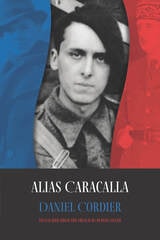
Alias Caracalla
Daniel Cordier
Swan Isle Press, 2024
Daniel Cordier’s fascinating, intimate memoir is a major contribution to our understanding of the fraught and historic relations between General Charles de Gaulle’s Free French and the fractious resistance movements under the Occupation during World War II. As the first young secretary to legendary Jean Moulin, one of the leaders of Conseil National de la Résistance, Cordier recounts Moulin’s tense negotiations to bring together the resistance movements and persuade them to join forces under de Gaulle’s banner between 1942 and ‘43. Cordier was a lookout on the fateful day the National Resistance Council was created, confirming de Gaulle’s legitimacy in the eyes of the French people and, crucially, in the eyes of Roosevelt and the Allied leadership. Later in life, Cordier penned his first-hand account of his role in the creation of Jean Moulin’s secretariat in Lyon and then Paris. Alias Caracalla is a brave and passionate story of action and self-discovery in times of war, with a sensitive and nuanced translation by Rupert Swyer.
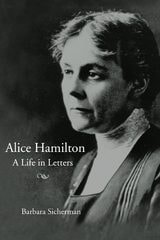
Alice Hamilton
A LIFE IN LETTERSBarbara Sicherman
University of Illinois Press, 2003
This legendary figure now comes to life in an integrated work of biography and letters that reveals the personal as well as the professional woman. In documenting Hamilton's evolution from a childhood of privilege to a life of social advocacy, the volume opens a window on women reformers and their role in Progressive Era politics and reform. Because Hamilton was a keen observer and vivid writer, her letters--more than 100 are included here--bring an unmatched freshness and immediacy to a range of subjects, such as medical education; personal relationships and daily life at Hull House; the women's peace movement; struggles for the protection of workers' health; academic life at Harvard; politics and civil liberties during the cold war; and the process of growing old. Her story takes the reader from the Gilded Age to the Vietnam War.

Alice Morse Earle and the Domestic History of Early America
Susan Reynolds Williams
University of Massachusetts Press, 2013
Author, collector, and historian Alice Morse Earle (1851–1911) was among the most important and prolific writers of her day. Between 1890 and 1904, she produced seventeen books as well as numerous articles, pamphlets, and speeches about the life, manners, customs, and material culture of colonial New England. Earle's work coincided with a surge of interest in early American history, genealogy, and antique collecting, and more than a century after the publication of her first book, her contributions still resonate with readers interested in the nation's colonial past.
An intensely private woman, Earle lived in Brooklyn, New York, with her husband and four children and conducted much of her research either by mail or at the newly established Long Island Historical Society. She began writing on the eve of her fortieth birthday, and the impressive body of scholarship she generated over the next fifteen years stimulated new interest in early American social customs, domestic routines, foodways, clothing, and childrearing patterns.
Written in a style calculated to appeal to a wide readership, Earle's richly illustrated books recorded the intimate details of what she described as colonial “home life.” These works reflected her belief that women had played a key historical role, helping to nurture communities by constructing households that both served and shaped their families. It was a vision that spoke eloquently to her contemporaries, who were busily creating exhibitions of early American life in museums, staging historical pageants and other forms of patriotic celebration, and furnishing their own domestic interiors.
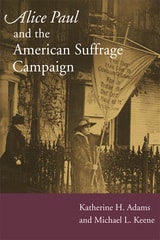
Alice Paul and the American Suffrage Campaign
Katharine H. Adams and Michael L. Keene
University of Illinois Press, 2007
Past biographies, histories, and government documents have ignored Alice Paul's contribution to the women's suffrage movement, but this groundbreaking study scrupulously fills the gap in the historical record. Masterfully framed by an analysis of Paul's nonviolent and visual rhetorical strategies, Alice Paul and the American Suffrage Campaign narrates the remarkable story of the first person to picket the White House, the first to attempt a national political boycott, the first to burn the president in effigy, and the first to lead a successful campaign of nonviolence.
Katherine H. Adams and Michael L. Keene also chronicle other dramatic techniques that Paul deftly used to gain publicity for the suffrage movement. Stunningly woven into the narrative are accounts of many instances in which women were in physical danger. Rather than avoid discussion of Paul's imprisonment, hunger strikes, and forced feeding, the authors divulge the strategies she employed in her campaign. Paul's controversial approach, the authors assert, was essential in changing American attitudes toward suffrage.
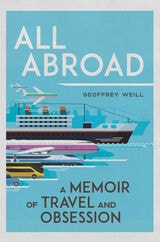
All Abroad
A Memoir of Travel and ObsessionGeoffrey Weill
University of Wisconsin Press, 2021
All Abroad is the memoir of a man hungry for the logistics of travel: getting there, staying there, and feeling at home on any continent. Woven into his entertaining anecdotes is an informative account of a lost era in travel. As a witness to compelling and monumental changes in the industry, Weill offers a unique view into how our vacations have been shaped deeply by human trends, tragedies, and technologies. While some long for the grandeur of tourism from decades ago, Weill insists that travel—the conveyances and hotels that await journey’s end—remains as glamorous as ever.
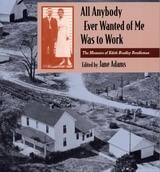
All Anybody Ever Wanted of Me Was to Work
The Memoirs of Edith Bradley RendlemanEdith Bradley Rendleman. Edited by Jane Adams
Southern Illinois University Press, 1996
From All Anybody Ever Wanted of Me Was to Work...
"Starting around 1950, people stopped raising chickens, milking cows, and raising hogs. They just buy it at the store, ready to eat. A lot buy a steer and have it processed in Dongola and put it in their freezer. What a difference! Girls have got it so easy now. They don't even know what it was like to start out. And I guess my mother's life, when she started out, was as hard again as mine, because they had to make everything by hand. I don't know if it could get any easier for these girls. But they don't know what it was like, and they never will. Everything is packaged. All you do is go to the store and buy you a package and cook it. Automatic washers and dryers. I'm glad they don't have to work like I did. Very glad."
Edith Bradley Rendleman's story of her life in southern Illinois is remarkable in many ways. Recalling the first half of the twentieth century in great detail, she vividly cites vignettes from her childhood as her family moved from farm to farm until settling in 1909 in the Mississippi bottoms of Wolf Lake. She recounts the lives and times of her family and neighbors during an era gone forever.
Remarkable for the vivid details that evoke the past, Rendleman's account is rare in another respect: memoirs of the time—usually written by people from elite or urban families—often reek of nostalgia. But Rendleman's memoir differs from the norm. Born poor in rural southern Illinois, she tells an unvarnished tale of what it was really like growing up on a tenant farm early this century.
All God's Dangers
The Life of Nate ShawTheodore Rosengarten
University of Chicago Press, 2000
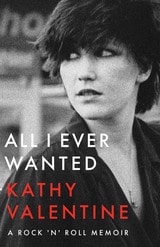
All I Ever Wanted
A Rock 'n' Roll MemoirBy Kathy Valentine
University of Texas Press, 2021
Runner-up, Carr P. Collins Award for Best Book of Non-Fiction, 2021
Go-Go’s bassist Kathy Valentine’s story is a roller coaster of sex, drugs, and of course, music; it’s also a story of what it takes to find success and find yourself, even when it all comes crashing down.
At twenty-one, Kathy Valentine was at the Whisky in Los Angeles when she met a guitarist from a fledgling band called the Go-Go’s—and the band needed a bassist. The Go-Go’s became the first multi-platinum-selling, all-female band to play instruments themselves, write their own songs, and have a number one album. Their debut, Beauty and the Beat, spent six weeks at the top of the Billboard 200 and featured the hit songs “We Got the Beat” and “Our Lips Are Sealed.” The record's success brought the pressures of a relentless workload and schedule culminating in a wild, hazy, substance-fueled tour that took the band from the club circuit to arenas, where fans, promoters, and crew were more than ready to keep the party going.
For Valentine, the band's success was the fulfillment of a lifelong dream—but it’s only part of her story. All I Ever Wanted traces the path that took her from her childhood in Texas—where she all but raised herself—to the height of rock n’ roll stardom, devastation after the collapse of the band that had come to define her, and the quest to regain her sense of self after its end. Valentine also speaks candidly about the lasting effects of parental betrayal, abortion, rape, and her struggles with drugs and alcohol—and the music that saved her every step of the way. Populated with vivid portraits of Valentine’s interactions during the 1980s with musicians and actors from the Police and Rod Stewart to John Belushi and Rob Lowe, All I Ever Wanted is a deeply personal reflection on a life spent in music.
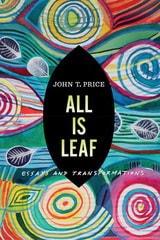
All Is Leaf
Essays and TransformationsJohn T Price
University of Iowa Press, 2022
He employs an array of forms and voices, whether penning a break-up letter to America or a literary rock-n-roll road song dedicated to prairie scientists, or giving pregame pep talks to his son’s losing football team. Here, too, are moving portrayals of his father’s last effort as a small-town lawyer to defend the rights of abused women, and his own efforts as a writing teacher to honor the personal stories of his students.
From his Iowa backyard to the edge of the Arctic Circle, from the forgotten recesses of the body to the far reaches of the solar system, this book demonstrates the ways imagination and informed compassion can, as Price describes it, expand thousandfold the boundaries of what we might “have naïvely considered an individual self.”
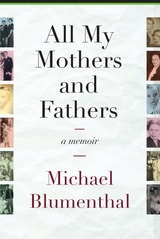
All My Mothers and Fathers
A MemoirMichael Blumenthal
West Virginia University Press, 2016
As fate would have it, his adoptive father, a German-Jewish refugee raised by a loveless and embittered stepmother after his own mother died in childbirth, has inflicted on his stepson a fate uncannily—and terrifyingly—similar to his own: Having first adopted Michael, in part, to help his dying wife, he then imposes on him the same sort of penurious and loveless stepmother whom he himself had had to survive. With these revelations, the "mysteries" that seem to have permeated Michael's childhood are laid bare, triggering a quest for belonging that will infiltrate the author's entire adult life.
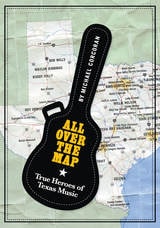
All Over the Map
True Heroes of Texas MusicMichael Corcoran
University of North Texas Press, 2017

All Over the Map
True Heroes of Texas MusicBy Michael Corcoran
University of Texas Press, 2005
From country and blues to rap and punk, Texas music is all over the map, figuratively and literally. Texas musicians have pioneered new musical genres, instruments, and playing styles, proving themselves to be daring innovators who often call the tune for musicians around the country and even abroad. To introduce some of these trailblazing Texas musicians to a wider audience and pay tribute to their accomplishments, Michael Corcoran profiles thirty-two of them in All Over the Map: True Heroes of Texas Music.
Corcoran covers musicians who work in a wide range of musical genres, including blues, gospel, country, rap, indie rock, pop, Cajun, Tejano, conjunto, funk, honky-tonk, rockabilly, rhythm and blues, and Western swing. His focus is on underappreciated artists, pioneers who haven't fully received their due. He also includes well-known musicians who've been underrated, such as Stevie Ray Vaughan and Selena, and invites us to take a closer look at the unique talents of these artists. Corcoran's profiles come from articles he wrote for the Dallas Morning News, Austin American-Statesman, Houston Press, and other publications, which have been expanded and updated for this volume. His musical detective work even uncovers a case of mistaken identity (Washington Phillips) and corrects much misinformation on Blind Willie Johnson and Arizona Dranes. Corcoran closes the book with lively pieces on the Austin music scene and its most famous, if no longer extant, clubs, as well as his personal lists of the forty greatest Texas songs of all time and the twenty-five essential CDs for Texas music fans.
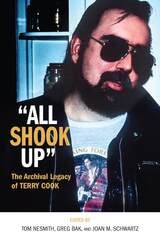
All Shook Up
The Archival Legacy of Terry CookTom Nesmith
Society of American Archivists, 2020
All Will Yet Be Well
The Diary of Sarah Gillespie Huftalen, 1873-1952Suzanne L. Bunkers
University of Iowa Press, 1993
Sarah Gillespie Huftalen led an unconventional life for a rural midwestern woman of her time. Born in 1865 near Manchester, Iowa, she was a farm girl who became a highly regarded country school and college teacher; she married a man older than either of her parents, received a college degree later in life, and was committed to both family and career. A gifted writer, she crafted essays, teacher-training guides, and poetry while continuing to write lengthy, introspective entries in her diary, which spans the years from 1873 to 1952. In addition, she gathered extensive information about the quietly tragic life of her mother, Emily, and worked to preserve Emily's own detailed diary.
In more than 3,500 pages, Sarah writes about her multiple roles as daughter, sister, wife, teacher, family historian, and public figure. Her diary reflects the process by which she was socialized into these roles and her growing consciousness of the ways in which these roles intersected. Not only does her diary embody the diverse strategies used by one woman to chart her life's course and to preserve her life's story for future generations, it also offers ample evidence of the diary as a primary form of private autobiography for individuals whose lives do not lend themselves to traditional definitions of autobiography.
Taken together, Emily's and Sarah's extraordinary diaries span nearly a century and thus form a unique mother/daughter chronicle of daily work and thoughts, interactions with neighbors and friends and colleagues, and the destructive family dynamics that dominated the Gillespies. Sarah's consciousness of the abusive relationship between her mother and father haunts her diary, and this dramatic relationship is duplicated in Sarah's relationship with her brother, Henry, Suzanne Bunkers' skillful editing and analysis of Sarah's diary reveal the legacy of a caring, loving mother reflected in her daughter's work as family member, teacher, and citizen.
The rich entries in Sarah Gillespie Huftalen's diary offer us brilliant insights into the importance of female kinship networks in American life, the valued status of many women as family chroniclers, and the fine art of selecting, piecing, stitching, and quilting that characterizes the many shapes of women's autobiographies. Read Sarah's dairy to discover why "all will yet be well."
All for Beauty
Makeup and Hairdressing in Hollywood's Studio EraAdrienne L. McLean
Rutgers University Press, 2022
All in the Day's Work
AN AUTOBIOGRAPHYIda M. Tarbell
University of Illinois Press, 2003
Tarbell was the only woman in her class of forty students at Allegheny College, and upon graduation she began an internship at The Chautauquan, which was the start of a lifelong immersion in the world of journalism. She further honed her skills during a three-year stint in Paris, but the breakthrough came in 1894 when she was hired as a full-time writer for McClure's Magazine.
It was at McClure's--where, again, she was the only woman on staff--that Tarbell made her name as a determined journalist, one of the fearless brigade of truth-seekers famously chastised by Theodore Roosevelt, who coined the term ‘muckraker' in order to discredit those who attacked senators in print. Tarbell wrote serialized biographies of Napoleon and Abraham Lincoln, as well as a landmark series of articles on Standard Oil and John D. Rockefeller.
In All in the Day's Work, Tarbell turns her keen eye on herself, recalling the events of her fascinating life with the same honesty, verve, and scrupulous accuracy she brought to her journalistic work, offering insight along the way into the people, places, and issues of her time.
All the Hometown Boys
Wisconsin's 150th Machine Gun Battalion in World War IBrad Larson
University of Wisconsin Press, 2019
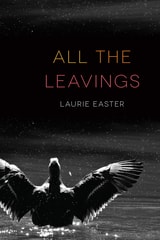
All the Leavings
Laurie Easter
Oregon State University Press, 2021
Whether recounting the home birth of her second child, encounters with cougars, the fraught dynamics of mother-daughter relationships, the destructive power of wildfires, or the community bonds challenged by a tragic suicide, Easter’s writing is firmly grounded in place. She takes readers deep into the heart of a still-wild Oregon, perilous yet rich with natural beauty.
Written from one woman’s perspective as a mother, wife, and friend, All the Leavings is ultimately a book about love—for the child who faces a health crisis, for the friend dying of AIDS, for the one entangled by addiction who then disappears. Long after the final page is turned, it will resonate with readers interested in essays, memoir, alternative lifestyles, and the literature of the West.
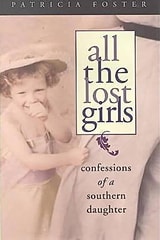
All the Lost Girls
Confessions of a Southern DaughterPatricia Foster
University of Alabama Press, 2002
Patricia Foster’s lyrical yet often painful memoir explores the life of a white middle-class girl who grew up in rural south Alabama in the 1950s and 1960s, a time and place that did not tolerate deviation from traditional gender roles. Her mother raised Foster and her sister as “honorary boys,” girls with the ambition of men but the temperament of women.
An unhappy, intelligent woman who kept a heartbreaking secret from everyone close to her, Foster's mother was driven by a repressed rage that fed her obsession for middle-class respectability. By the time Foster reached age fifteen, her efforts to reconcile the contradictory expectations that she be at once ambitious and restrained had left her nervous and needy inside even while she tried to cultivate the appearance of the model student, sister, and daughter. It was only a psychological and physical breakdown that helped her to realize that she couldn't save her driven, complicated mother and must struggle instead for both understanding and autonomy.
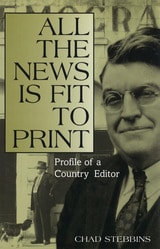
All the News Is Fit to Print
Profile of a Country EditorChad Stebbins
University of Missouri Press, 1998
For nearly half a century, Arthur Aull captivated a rural Missouri town and a national audience with his sensationalistic, all-the- news-is-fit-to-print approach to journalism. As editor and publisher of the Lamar Democrat from 1900 to 1948, he disregarded most of the traditional rules of news coverage. Every scandal and piece of gossip he could turn up helped fill the pages of his newspaper, an afternoon daily in a town of about 2,300. His tales of grisly accidents, murders, rapes, juvenile crime, suicides, and sensational divorces reminded skeptics of the earlier yellow journalism era.
Aull embellished nearly all of his stories with a personal, homespun flavor, and that's what caught the attention of syndicated columnists O. O. McIntyre and Ted Cook in the late 1920s. They started sprinkling their columns with curious items from the Democrat, and soon after unusual stories from the paper began showing up in the New York Times, the New York World-Telegram, the New Yorker, and even the Journal of the American Medical Association. Feature stories about Aull appeared in Publishers' Auxiliary, the Chicago Daily News, Life, Time, Newsweek, American Magazine, and Harper's. Aull became known coast to coast as one of the most colorful figures in country journalism, and the Democrat attracted subscribers in all forty-eight states plus Canada and England. Even President Truman, who was born in Lamar, noted Aull's death on May 7, 1948, declaring that an "able and picturesque figure in American journalism has passed on."
Despite the national acclaim, Aull remained an unpretentious small- town editor. He had his own code of ethics, which he refused to modify to reflect the changing times. He was sued for libel three times, assaulted with a club, threatened with other kinds of bodily harm, and cursed by many. Yet, he persisted in scouring the town of Lamar for any news that would help him sell a few more copies of the Democrat.
Although the influence of country journalism on American society cannot be disputed, relatively little has been written on the vital role country journalists play. All the News Is Fit to Print, which traces Aull's transformation from a struggling schoolteacher to one of the best-known small-town newspapermen in America, will help remedy that oversight. Anyone with an interest in the history of journalism or small-town life will find this work fascinating.
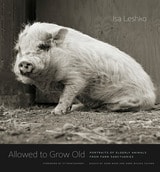
Allowed to Grow Old
Portraits of Elderly Animals from Farm SanctuariesIsa Leshko
University of Chicago Press, 2019
Isa Leshko shows us, brilliantly, with this collection of portraits. To create these portraits, she spent hours with her subjects, gaining their trust and putting them at ease. The resulting images reveal the unique personality of each animal. It’s impossible to look away from the animals in these images as they unforgettably meet our gaze, simultaneously calm and challenging. In these photographs we see the cumulative effects of the hardships of industrialized farm life, but also the healing that time can bring, and the dignity that can emerge when farm animals are allowed to age on their own terms.
Each portrait is accompanied by a brief biographical note about its subject, and the book is rounded out with essays that explore the history of animal photography, the place of beauty in activist art, and much more. Open this book to any page. Meet Teresa, a thirteen-year-old Yorkshire Pig, or Melvin, an eleven-year-old Angora Goat, or Tom, a seven-year-old Broad Breasted White Turkey. You’ll never forget them.
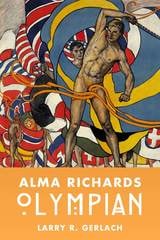
Alma Richards
OlympianLarry R. Gerlach
University of Utah Press, 2016
The book traces Richards from his boyhood in rural Parowan, Utah, to Cornell and through his service as an officer in World War I and his teaching career in Los Angeles. His story is that of a remarkable athlete, but also that of a man struggling for personal fulfillment while endeavoring to retain his Mormon heritage amid his changing religious circumstances and participation. More than a century has passed since Alma Richards won an Olympic gold medal, yet this story about man and sport—the drive to excel, victory as validation of hard work, the quest for public recognition and, ultimately, the achievement of self-identity and self-satisfaction—still resonates today.
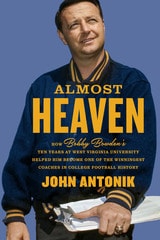
Almost Heaven
How Bobby Bowden's Ten Years at West Virginia University Helped Him Become One of the Winningest Coaches in College Football HistoryJohn Antonik
West Virginia University Press, 2025
Sports journalist John Antonik covers Bowden’s entire WVU tenure from 1966–75 and the circumstances, issues, difficulties, and obstacles that he had to overcome that were unique to this period in Mountaineer sports history. Additionally, Almost Heaven examines what transpired on WVU’s campus and in its athletic programs as well as nationally during the Vietnam War, campus protests, desegregation, and the complexities of the shifting NCAA landscape. Antonik paints a vivid picture of how Bowden’s time at WVU enriched him personally and professionally while putting athletics on a path toward the much greater successes that it enjoyed in the 1980s when Don Nehlen arrived. By the time he left Morgantown in the winter of 1976, following the Mountaineers’ 13–10 Peach Bowl victory over North Carolina State, which culminated in an outstanding 9–3 season, he was a far wiser and much better-prepared football coach. Those difficult lessons that Bowden learned at West Virginia led him down a path to greatness at Florida State.
Almost Heaven draws from an impressive array of primary sources, including newspaper articles; football team rosters; internal documents on recruiting; and interviews with former players, assistants, staffers, sports reporters, Bowden’s sons Tommy and Terry, and Bowden himself, prior to his passing in 2021. The year 2025 represents the 50th anniversary of his final season coaching the Mountaineers, and many of his players are now entering their golden years, making this the optimal time to tell this story.
Almost Home
A Brazilian American's Reflections on Faith, Culture, and ImmigrationH. B. Cavalcanti
University of Wisconsin Press, 2012
Due to both his family background and the prevalence of U.S. media in Latin America, Cavalcanti already felt immersed in U.S. culture before arriving in Kentucky in 1981 to complete graduate studies. At that time, opportunities for advancement in the United States exceeded those in Brazil, and in an era of military dictatorships throughout much of Latin America, Cavalcanti sought in the United States a nation of laws. In this memoir, he reflects on the dynamics of acculturation, immigrant parenting, interactions with native-born U.S. citizens, and the costs involved in rejecting his country of birth for an adopted nation. He also touches on many of the factors that contribute to migration in both the “sending” and “receiving” countries and explores the contemporary phenomenon of accelerated immigration.
With its blend of personal anecdotes and scholarly information, Almost Home addresses both individual and policy-related issues to provide a moving portrait of the impact of migration on those who, like Cavalcanti, confront both the wonder and the disorientation inherent in the immigrant experience.
Alone in the Mainstream
A Deaf Woman Remembers Public SchoolGina A. Oliva
Gallaudet University Press, 2004
When Gina Oliva first went to school in 1955, she didn’t know that she was “different.” If the kindergarten teacher played a tune on the piano to signal the next exercise, Oliva didn’t react because she couldn’t hear the music. So began her journey as a “solitary,” her term for being the only deaf child in the entire school. Gina felt alone because she couldn’t communicate easily with her classmates, but also because none of them had a hearing loss like hers. It wasn’t until years later at Gallaudet University that she discovered that she wasn’t alone and that her experience was common among mainstreamed deaf students. Alone in the Mainstream recounts Oliva’s story, as well as those of many other solitaries.
In writing this important book, Oliva combined her personal experiences with responses from the Solitary Mainstream Project, a survey that she conducted of deaf and hard of hearing adults who attended public school. Oliva matched her findings with current research on deaf students in public schools and confirmed that hearing teachers are ill-prepared to teach deaf pupils, they don’t know much about hearing loss, and they frequently underestimate deaf children. The collected memories in Alone in the Mainstream add emotional weight to the conviction that students need to be able to communicate freely, and they also need peers to know they are not alone.
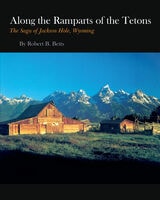
Along the Ramparts of the Tetons
The Saga of Jackson Hole, WyomingRobert B. Betts
University Press of Colorado, 1991
In these pages, the reader will witness the dramatic creation of the Tetons; the arrival of the first humans, bands of fur-clad Early Hunters who ventured into the valley some 10,000 years ago; the coming and going of the later Indian tribes; and the nearly incredible journey of John Colter, who back in 1807 is said to have been the first white man to have found his way through the wilderness and into Jackson Hole.
Here, too, the reader will meet the boisterous mountain men, trappers such as Jim Bridger and the former slave, Jim Beckwourth, who roamed the Rockies when St. Louis was still a frontier village; a little Mormon boy who ran away from home and lived with the Indians before becoming a Pony Express rider; a most unusual Englishman who describes a terrible tragedy that befell his Indian wife and half-breed children; a glory-seeking lieutenant who led six cavalrymen on a foolhardy expedition that almost cost them their lives; and a nineteenth-century president of the United States who took a pack trip through Jackson Hole, allegedly leaving a trail of empty bottles behind.
And there is more, much more--the story of the pioneers, those hardy few who dared to settle in this high and inhospitable land; the story of outlaws, a shoot-out, vigilance committees and an Indian "massacre" that embarrassed the New York Times; the story of the deliverance of the world's largest elk herd from the many perils that threatened it with extinction; and, finally, the story of the long and angry controversy over the preservation of the Tetons and Jackson Hole as a national park, a struggle called "one of the most remarkable conservation fights of the twentieth century."
All these and still other episodes in the long and colorful cavalcade of Jackson Hole are woven together to form a work of Western Americana rich in anecdotes and portraits of delightfully eccentric characters.
Always an Academic Immigrant
A Collective MemoirDafna Lemish
Rutgers University Press, 2025
Always an Academic Immigrant is a collective memoir that gives voice to eighty-one academics who immigrated from thirty-seven countries for a career in an institution of higher education, in either the United States or one of ten other countries. Through in-depth interviews and observations from her own experiences as an immigrant scholar, Dafna Lemish shares the highs and the lows that academic immigrants feel as they search for both a country and an institution they can call home. She discovers the formative events that led these scholars to pursue careers outside their native lands and details the challenges they faced adapting to unspoken expectations in their new countries and workplaces. Ultimately, this book reveals the strategies that immigrant professors use to bridge their native and adoptive cultures while highlighting the vital contributions they have made to academia as scholars, teachers, and leaders.
Always for the Underdog
Leather Britches Smith and the Grabow WarKeagan LeJeune
University of North Texas Press, 2010
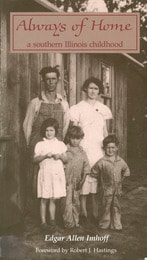
Always of Home
A Southern Illinois ChildhoodEdgar Allen Imhoff. Foreword by Robert J. Hastings
Southern Illinois University Press, 1992
Edgar Allen Imhoff renders a series of touching, colorful vignettes about growing up in southern Illinois during the Great Depression. He writes poignantly of his family and their struggles (including his father’s exhausting but successful effort at self-education) as he revisits his early childhood years in the country and his eventual move to the town of Murphysboro, where he encountered school bullies, outstanding teachers, first love, World War II, and adolescence.
Imhoff contrasts these memories of his youth with events, incidents, and thoughts from his more recent past. While writing a government check with six figures to the left of the decimal, he remembers how his mother once scrounged together thirty cents so Imhoff and his brother and sister could go to the circus with their classmates. Listening to President Carter give a speech in the Rose Garden reminds him of the contrasting elocutionary style of the Reverend William Boatman, the pastor at his country church, which was built by Imhoff’s great-great-grandfather and others.
Through such contrasts, Imhoff not only paints a loving picture of his past, he also comments on the alienation and emptiness that mark many lives in the United States, especially those of modern nomads. Imhoff has himself become a nomad, living far from the land of his birth, enjoying a successful and rewarding career. Yet he is drawn repeatedly to his past, his family, his childhood home, and the intricate combination of events, attitudes, values, and loyalties that influenced and molded him.
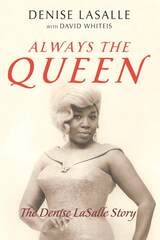
Always the Queen
The Denise LaSalle StoryDenise LaSalle, with David Whiteis
University of Illinois Press, 2020
As honest and no-nonsense as the artist herself, Always the Queen is LaSalle's in-her-own-words story of a lifetime in music. Moving to Chicago as a teen, LaSalle launched a career in gospel and blues that eventually led to the chart-topping 1971 smash ”Trapped by a Thing Called Love” and a string of R&B hits. She reinvented herself as a soul-blues artist as tastes changed and became a headliner on the revitalized southern soul circuit and at festivals nationwide and overseas. Revered for a tireless dedication to her music and fans, LaSalle continued to tour and record until shortly before her death.
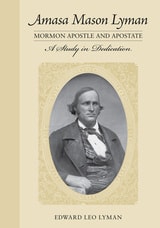
Amasa Mason Lyman, Mormon Apostle and Apostate
A Study in DedicationEdward Leo Lyman
University of Utah Press, 2009
Having spent more than thirty years in the service of his church, Lyman began to move away from its teachings after a series of conflicts with its second leader, Brigham Young. Lyman was one of the first Mormons to criticize the Mountain Meadows Massacre, which led to his dismissal as an apostle. He was excommunicated in 1870 and became one of the foremost spokesmen of the Godbeite Church of Zion movement before his death in 1877. Author Edward Leo Lyman chronicles Amasa Lyman’s life and interactions with Mormon history with an honesty true to his ancestor’s freethinking spirit.
Winner of the Francis Armstrong Madsen Best Utah History Book Award from the Utah Division of State History.
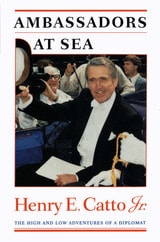
Ambassadors at Sea
The High and Low Adventures of a DiplomatBy Henry E. Catto, Jr.
University of Texas Press, 1998
In 1969, Henry Catto was selling insurance in San Antonio, Texas. Just twenty years later, he presented his credentials as ambassador to the Court of St. James's to Her Majesty, Queen Elizabeth II, at Buckingham Palace. In this engaging memoir, he retraces his journey from Texas outsider to Washington insider, providing a fascinating look at the glamour, day-to-day work, and even occasional danger that come with being a high-level representative of the United States government.
Catto's posts brought him into contact with the world's most powerful leaders and left him with a wealth of stories, which he recounts amusingly in these pages. He was the official host for Queen Elizabeth's visit to America during the Bicentennial year—and one of José Napoleon Duarte's protectors after his failed 1972 coup attempt in El Salvador. Catto accompanied Richard Nixon on his historic trip to Russia, sparred with Bill Moyers and the producers of "60 Minutes" as Caspar Weinberger's spokesman at the Pentagon, and hosted George Bush's planning meeting with Margaret Thatcher at the beginning of the Persian Gulf War. In telling these and other stories, he offers behind-the-scenes glimpses into how political power really works in Washington, London, and other world capitals.
Amelia Gayle Gorgas
A BiographyMary Tabb Johnston
University of Alabama Press, 1978
The definitive biography Amelia Gayle Gorgas, one of the most influential people in the history of the University of Alabama
Amelia Gayle Gorgas: A Biography is a richly documented and deeply compelling portrait of one of Alabama’s most influential nineteenth‑century women. Drawing on the unparalleled depth of the Gayle‑Gorgas Collection—letters, journals, family papers, and contemporary accounts—this biography argues that Amelia’s life offers enduring insight into the resilience, intellect, and quiet leadership that shaped Southern society before, during, and after the Civil War.
Far more than the daughter of a governor, wife of Confederate ordnance chief Josiah Gorgas, or mother of famed physician William Crawford Gorgas, Amelia emerges here as a figure of remarkable adaptability and personal strength. The book traces her journey from a lively Greensboro childhood through the upheavals of war‑torn Richmond, the hardships of Reconstruction‑era Alabama, and her transformative service as librarian at The University of Alabama. Its chapters illuminate the themes that define her legacy: intellectual curiosity without formal schooling, deft management of family and community crises, a gift for nurturing students and soldiers alike, and an ability to thrive in environments as varied as Maine, Charleston, Sewanee, and Tuscaloosa.
Vivid storytelling blends seamlessly with meticulous scholarship, giving readers both an intimate family narrative and a sweeping social history of the nineteenth‑century South. This biography will appeal especially to readers of Southern history, women’s history, university and library heritage, Civil War studies, and anyone drawn to strong, quietly trailblazing figures whose lives illuminate broader cultural change. Amelia’s story endures because it speaks to the universal work of holding families, institutions, and communities together in times of profound upheaval.

America Lost and Found
An English Boy's Wartime Adventure in the New WorldAnthony Bailey
University of Chicago Press, 2000
"An original, sensitively told story in which the perspectives of the child are carefully remembered. . . . Bailey's book speaks, with gentle eloquence, not only to those who remember being boys, but to everyone who would seek to protect children from the hurts and ravagings that ordinary life can inflict, to say nothing of war." —Richard Montague, Newsday
"No doubt Tony Bailey owed America something for its hospitality during those anxious years, and with this book he has amply repaid the debt." —Joseph McLellan, Washington Post
"An exquisitely controlled, quietly amusing and moving story." —Publishers Weekly
"As tender as it is truthful, and as amusing as it is unpretentious." —John Russell, New York Times Book Review
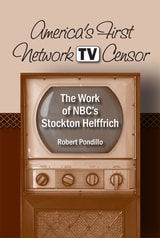
America's First Network TV Censor
The Work of NBC's Stockton HelffrichRobert Pondillo
Southern Illinois University Press, 2010
While other books have cited Helffrich’s reports, none have considered them as a body of work, complemented by the details of Helffrich’s life and the era in which he lived. America’s First Network TV Censor explores the ways in which Helffrich’s personal history and social class influenced his perception of his role as NBC-TV censor and his tendency to ignore certain political and cultural taboos while embracing others.
Author Robert Pondillo considers Helffrich’s life in broadcasting before and after the Second World War, and his censorial work in the context of 1950s American culture and emerging network television. Pondillo discusses the ways that cultural phenomena, including the arrival of the mid-twentieth-century religious boom, McCarthyism, the dawn of the Civil Rights era, and the social upheaval over sex, music, and youth, contributed to a general sense that the country was morally adrift and ripe for communist takeover.
Five often-censored subjects—advertising, language, and depictions of sex, violence, and race—are explored in detail, exposing the surprising complexity and nuance of early media censorship. Questions of whether too many sadistic westerns would coarsen America’s children, how to talk about homosexuality without using the word “homosexuality,” and how best to advertise toilet paper without offending people were on Helffrich’s mind; his answers to these questions helped shape the broadcast media we know today.

America, the Dream of My Life
Selections from the Federal Writers' Project's New Jersey Ethnic SurveyCohen, David Steven
Rutgers University Press, 1990
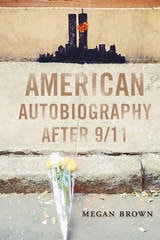
American Autobiography after 9/11
Megan Brown
University of Wisconsin Press, 2017
This lively and theoretically grounded book analyzes twenty-first-century memoirs from Three Cups of Tea to Fun Home, emphasizing the ways in which they reinforce and circulate ideologies, becoming guides or models for living. Brown expands her inquiry beyond books to the autobiographical narratives in reality television and political speeches. She offers a persuasive explanation for the memoir boom: the genre as a response to an era of uncertainty and struggle.

American Birkebeiner
The Nation's Greatest Ski MarathonJerome P. Poling
Wisconsin Historical Society Press, 2025
An exhilarating behind-the-scenes journey into the history of America’s largest cross-country ski race
Each February, cross-country skiers from across the nation and around the world descend upon the sleepy northern Wisconsin town of Hayward to compete in the American Birkebeiner—the largest cross-country ski race in North America. In American Birkebeiner: The Nation’s Greatest Ski Marathon, author and skier Jerome P. Poling traces the remarkable history of the famed “Birkie,” from its modest origins in the early 1970s to its modern incarnation as an international Nordic-themed festival and multi-day racing event drawing more than 30,000 skiers and spectators.
American Birkebeiner offers an up-close, behind-the-scenes tour of all things Birkie—from pre-race preparations and skier profiles to race-day highlights and history-making finishes. It also tells the story of visionary race founder Tony Wise and his efforts to popularize the sport of cross-country skiing in the Upper Midwest. The book delves into the origin and evolution of the world-class Birkebeiner Trail and the communities that support it, as well as the ways the American Birkebeiner Ski Foundation is adapting to climate change to help ensure the event thrives for years to come.
American Birkebeiner sparks with lively, narrative-driven prose and is based on extensive archival research, reporting, and personal interviews. The lavishly illustrated book also features 150 photographs, including intimate portraits of athletes pushed to the limits of their endurance, sweeping aerial shots of skiers and cheering crowds, and awe-inspiring winter vistas. An exquisitely crafted ode to an extraordinary race, American Birkebeiner will inspire winter sports fans and outdoor enthusiasts alike.
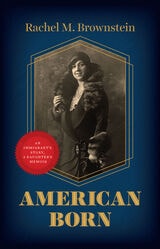
American Born
An Immigrant's Story, a Daughter's MemoirRachel M. Brownstein
University of Chicago Press, 2023
When she arrived alone in New York in 1924, eighteen-year-old Reisel Thaler resembled the other Yiddish-speaking immigrants from Eastern Europe who accompanied her. Yet she already had an American passport tucked in her scant luggage. Reisel had drawn her first breath on the Lower East Side of Manhattan in 1905, then was taken back to Galicia (in what is now Poland) by her father before she turned two. She was, as she would boast to the end of her days, “American born.”
The distinguished biographer and critic Rachel M. Brownstein began writing about her mother Reisel during the Trump years, dwelling on the tales she told about her life and the questions they raised about nationalism, immigration, and storytelling. For most of the twentieth century, Brownstein’s mother gracefully balanced her identities as an American and a Jew. Her values, her language, and her sense of timing inform the imagination of the daughter who recalls her in her own old age. The memorializing daughter interrupts, interprets, and glosses, sifting through alternate versions of the same stories using scenes, songs, and books from their time together.
But the central character of this book is Reisel, who eventually becomes Grandma Rose—always watching and judging, singing, baking, and bustling. Living life as the heroine of her own story, she reminds us how to laugh despite tragedy, find our courage, and be our most unapologetically authentic selves.
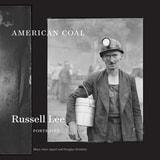
American Coal
Russell Lee PortraitsMary Jane Appel and Douglas Brinkley
University of Texas Press, 2024
More than 100 powerful images by noted photographer Russell Lee that document the working conditions and lives of coal mining communities in the postwar United States; publication coincides with an exhibition at the National Archives in Washington, DC.
In 1946 the Truman administration made a promise to striking coal miners: as part of a deal to resume work, the government would sponsor a nationwide survey of health and labor conditions in mining camps. One instrumental member of the survey team was photographer Russell Lee. Lee had made his name during the Depression, when, alongside Dorothea Lange and Walker Evans, he used his camera to document agrarian life for the Farm Security Administration (FSA). Now he trained his lens on miners and their families to show their difficult circumstances despite their essential contributions to the nation's first wave of postwar growth.
American Coal draws from the thousands of photographs that Lee made for the survey—also on view in the US National Archives and Records Administration’s exhibition Power & Light—and includes his original, detailed captions as well as an essay by biographer Mary Jane Appel and historian Douglas Brinkley. They place his work in context and illuminate how Lee helped win improved conditions for his subjects through vivid images that captured an array of miners and their communities at work and at play, at church and in school, in moments of joy and struggle, ultimately revealing to their fellow Americans the humanity and resilience of these underrecognized workers.
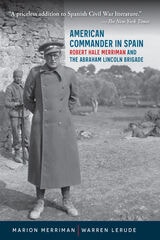
American Commander in Spain
Robert Hale Merriman and the Abraham Lincoln BrigadeMarion Merriman
University of Nevada Press, 1986
Among the Americans was Robert Hale Merriman, a scholar who had been studying international economics in Europe. He and his wife, Marion, joined volunteers from fifty-four countries in International Brigades. Merriman became the first commander of the Americans; Abraham Lincoln Battalion and a leader among the International Brigades. Now available in a new paperback edition, American Commander in Spain is based on Merriman and Marion's diaries and personal correspondence, Marion's own service at his side in Spain, as well as Warren Lerude's extensive research and interviews with people who knew Merriman and Marion, government records, and contemporary news reports. This critically acclaimed work is both the biography of a remarkable man who combined his idealism with life-risking action to fight fascism threatening Europe and Marion's vivid first-hand account of life in Spain during the civil war that became a prologue to the Second World War.
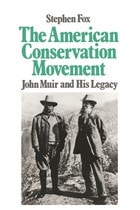
American Conservation Movement
John Muir And His LegacyStephen Fox
University of Wisconsin Press, 1986
John Muir and His Legacy is at once a biography of this remarkable man—the first work to make unrestricted use of all of Muir’s manuscripts and personal papers—and a history of the century-old fight to save the natural environment. Stephen Fox traces the conservation movement's diverse, colorful, and tumultuous history, from the successful campaign to establish Yosemite National Park in 1890 to the movement's present day concerns of nuclear waste and acid rain.
Conservation has run a cyclical course, Fox contends, from its origins in the 1890s when it was the province of amateurs, to its takeover by professionals with quasi-scientific notions, and back, in the 1960s to its original impetus. Since then man’s view of himself as “the last endangered species” has sparked an explosion of public interest in environmentalism.
First published in 1981 by Little, Brown, this book was warmly received as both a biography of Muir and a history of the American conservation movement. It is now available in this new Wisconsin paperback edition.