Results by title
5550 books match the query 'Biography & Autobiography' and 577 start with a
All the Roads Are Open
The Afghan JourneyAnnemarie Schwarzenbach
Seagull Books, 2011

Allen Tate - American Writers 39
University of Minnesota Pamphlets on American WritersGeorge Hemphill
University of Minnesota Press, 1964
Allen Tate - American Writers 39 was first published in 1964. Minnesota Archive Editions uses digital technology to make long-unavailable books once again accessible, and are published unaltered from the original University of Minnesota Press editions.
Almost Heaven
How Bobby Bowden's Ten Years at West Virginia University Helped Him Become One of the Winningest Coaches in College Football HistoryJohn Antonik
West Virginia University Press, 2025
Sports journalist John Antonik covers Bowden’s entire WVU tenure from 1966–75 and the circumstances, issues, difficulties, and obstacles that he had to overcome that were unique to this period in Mountaineer sports history. Additionally, Almost Heaven examines what transpired on WVU’s campus and in its athletic programs as well as nationally during the Vietnam War, campus protests, desegregation, and the complexities of the shifting NCAA landscape. Antonik paints a vivid picture of how Bowden’s time at WVU enriched him personally and professionally while putting athletics on a path toward the much greater successes that it enjoyed in the 1980s when Don Nehlen arrived. By the time he left Morgantown in the winter of 1976, following the Mountaineers’ 13–10 Peach Bowl victory over North Carolina State, which culminated in an outstanding 9–3 season, he was a far wiser and much better-prepared football coach. Those difficult lessons that Bowden learned at West Virginia led him down a path to greatness at Florida State.
Almost Heaven draws from an impressive array of primary sources, including newspaper articles; football team rosters; internal documents on recruiting; and interviews with former players, assistants, staffers, sports reporters, Bowden’s sons Tommy and Terry, and Bowden himself, prior to his passing in 2021. The year 2025 represents the 50th anniversary of his final season coaching the Mountaineers, and many of his players are now entering their golden years, making this the optimal time to tell this story.
Almost Home
A Brazilian American's Reflections on Faith, Culture, and ImmigrationH. B. Cavalcanti
University of Wisconsin Press, 2012
Due to both his family background and the prevalence of U.S. media in Latin America, Cavalcanti already felt immersed in U.S. culture before arriving in Kentucky in 1981 to complete graduate studies. At that time, opportunities for advancement in the United States exceeded those in Brazil, and in an era of military dictatorships throughout much of Latin America, Cavalcanti sought in the United States a nation of laws. In this memoir, he reflects on the dynamics of acculturation, immigrant parenting, interactions with native-born U.S. citizens, and the costs involved in rejecting his country of birth for an adopted nation. He also touches on many of the factors that contribute to migration in both the “sending” and “receiving” countries and explores the contemporary phenomenon of accelerated immigration.
With its blend of personal anecdotes and scholarly information, Almost Home addresses both individual and policy-related issues to provide a moving portrait of the impact of migration on those who, like Cavalcanti, confront both the wonder and the disorientation inherent in the immigrant experience.
Almost Nothing
Reclaiming Edith FarnsworthNora Wendl
University of Illinois Press, 2025
Nora Wendl’s audacious work of creative nonfiction explodes the sex-and-real-estate myth surrounding the Edith Farnsworth House and its two central figures. An eminent physician and woman of letters, Farnsworth left a rich trove of correspondence, memoirs, and photographs that Wendl uses to reconstruct her voice. Farnsworth’s memories and experiences alternate with Wendl’s thoughts on topics like misogyny and professional ambition to fashion a lyrical examination of love, loneliness, beauty, and the search for the divine.
Eloquent and confessional, Almost Nothing restores Edith Farnsworth to her place in architectural history and the masterpiece that bears her name.
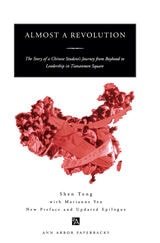
Almost a Revolution
The Story of a Chinese Student's Journey from Boyhood to Leadership in Tiananmen SquareShen Tong
University of Michigan Press, 1998
Now nearly ten years later as our fascination with post-Deng China continues to develop, Shen's story and the updated material he provides are weighted with increasing significance. Coupled with much of the recent analysis, Shen's firsthand account vividly contextualizes the Chinese government's opposition to democracy and offers meaningful insight into a country that promises to occupy an increasingly prominent position in the world.
"A cause for celebration . . . an important contribution to China's newly discovered historical memory." --New York Times Book Review
Shen Tong is a doctoral student in political sociology at Boston University and the founder of the Democracy for China Fund, which aims to support and publicize dissent networks in China. Marianne Yen is a former New York correspondent for the Washington Post.
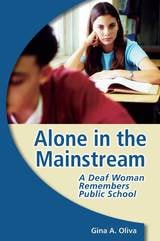
Alone in the Mainstream
A Deaf Woman Remembers Public SchoolGina A. Oliva
Gallaudet University Press, 2004
When Gina Oliva first went to school in 1955, she didn’t know that she was “different.” If the kindergarten teacher played a tune on the piano to signal the next exercise, Oliva didn’t react because she couldn’t hear the music. So began her journey as a “solitary,” her term for being the only deaf child in the entire school. Gina felt alone because she couldn’t communicate easily with her classmates, but also because none of them had a hearing loss like hers. It wasn’t until years later at Gallaudet University that she discovered that she wasn’t alone and that her experience was common among mainstreamed deaf students. Alone in the Mainstream recounts Oliva’s story, as well as those of many other solitaries.
In writing this important book, Oliva combined her personal experiences with responses from the Solitary Mainstream Project, a survey that she conducted of deaf and hard of hearing adults who attended public school. Oliva matched her findings with current research on deaf students in public schools and confirmed that hearing teachers are ill-prepared to teach deaf pupils, they don’t know much about hearing loss, and they frequently underestimate deaf children. The collected memories in Alone in the Mainstream add emotional weight to the conviction that students need to be able to communicate freely, and they also need peers to know they are not alone.
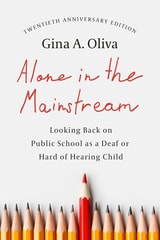
Alone in the Mainstream
Looking Back on Public School as a Deaf or Hard of Hearing ChildGina A. Oliva
Gallaudet University Press, 2024
In Alone in the Mainstream, author Gina A. Oliva documents her experience as a “solitaire,” the only deaf or hard of hearing student in her school. Oliva felt alone because she couldn’t communicate easily with her classmates and because she had no peers who shared a similar experience. As an adult, when she began her career at Gallaudet University, she realized that she wasn’t alone and that her experience was widely shared with other mainstreamed students. She decided to write about this commonality and invited other solitaires to reflect on their own experiences in emails and essays. Collective themes of isolation, low expectations, and low self-esteem emerged. Alone in the Mainstream blends Oliva’s personal narrative with the reflections of sixty other solitaires and makes the case that deaf and hard of hearing children need each other.
This twentieth anniversary edition is a reminder that little has changed for deaf and hard of hearing students in public school settings. Oliva brings this new edition up to date with observations, resources, and discussion questions that accompany her appeal for all deaf and hard of hearing children and their families to have access to sign language, to develop a deaf identity, and to be part of a deaf community.
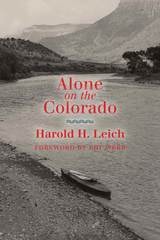
Alone on the Colorado
Harold H. Leich
University of Utah Press, 2019
Alone on the Colorado takes readers on the adventure of running rivers and riding the rails, while painting a unique and optimistic portrait of Depression-era America.
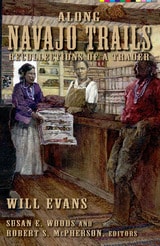
Along Navajo Trails
Recollections of a Trader 1898-1948Will Evans edited by Susan E. Woods and Robert McPherson
Utah State University Press, 2005
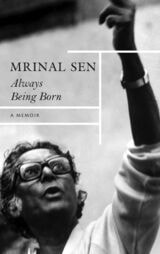
Always Being Born
A MemoirMrinal Sen
Seagull Books, 2004
“I am a filmmaker by accident and an author by compulsion,” claims Mrinal Sen, who became part of the great triumvirate of Bengali cinema—along with Satyajit Ray and Ritwik Ghatak—in the 1950s and ’60s when he founded the rebellious Indian New Wave. Throughout his career, he kept that fire of protest burning, his acute political awareness and left-wing orientation spurring his creativity. Over decades, the themes that pervaded his cinema mirrored the spectrum of human suffering and experience, and in turn crystallized the anger of a restive mind against social injustice, economic deprivation, and communal divide. In this memoir, a celebrated ambassador of Indian cinema on the global stage, for whom cinema became a lexicon that gave voice to the times, reflects on encounters with the legends of the world of images as well as his inspirations and obsessions—not least among them, the city of Calcutta. Always Being Born is a fascinating memoir of a great artist and a buoyant social commentator who continued to confront, fight, and survive on the very challenges that propelled him to look beyond and dream.
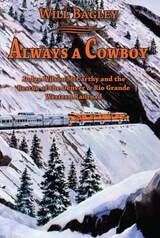
Always a Cowboy
Judge Wilson McCarthy and the Rescue of the Denver & Rio Grande Western RailroadWill Bagley
Utah State University Press, 2008
Cowboy, judge, federal official, then business executive, Wilson McCarthy mirrored change and growth in the twentieth-century West. Leading the Denver & Rio Grande back from the brink saved a vital link in the national transportation system. The D&RGW ran over and through the scenic Rockies, developing mineral resources, fighting corporate wars, and helping build communities. The Depression brought it to its knees. Accepting federal assignment to save the line, McCarthy turned it into a paragon of mid-century railroading, represented by the streamlined, Vista-Domed California Zephyr, although success hauling freight was of more economic importance. Prior to that, McCarthy’s life had taken him from driving livestock in Canada to trying to drive the national economy as a director of the Reconstruction Finance Corporation, the first line of federal attack on the Depression. Always a Cowboy positions McCarthy’s story in a rich historical panorama..
Will Bagley is the author of Blood of the Prophets: Brigham Young and the Massacre at Mountain Meadows
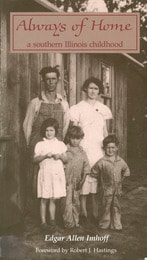
Always of Home
A Southern Illinois ChildhoodEdgar Allen Imhoff. Foreword by Robert J. Hastings
Southern Illinois University Press, 1992
Edgar Allen Imhoff renders a series of touching, colorful vignettes about growing up in southern Illinois during the Great Depression. He writes poignantly of his family and their struggles (including his father’s exhausting but successful effort at self-education) as he revisits his early childhood years in the country and his eventual move to the town of Murphysboro, where he encountered school bullies, outstanding teachers, first love, World War II, and adolescence.
Imhoff contrasts these memories of his youth with events, incidents, and thoughts from his more recent past. While writing a government check with six figures to the left of the decimal, he remembers how his mother once scrounged together thirty cents so Imhoff and his brother and sister could go to the circus with their classmates. Listening to President Carter give a speech in the Rose Garden reminds him of the contrasting elocutionary style of the Reverend William Boatman, the pastor at his country church, which was built by Imhoff’s great-great-grandfather and others.
Through such contrasts, Imhoff not only paints a loving picture of his past, he also comments on the alienation and emptiness that mark many lives in the United States, especially those of modern nomads. Imhoff has himself become a nomad, living far from the land of his birth, enjoying a successful and rewarding career. Yet he is drawn repeatedly to his past, his family, his childhood home, and the intricate combination of events, attitudes, values, and loyalties that influenced and molded him.
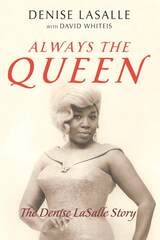
Always the Queen
The Denise LaSalle StoryDenise LaSalle, with David Whiteis
University of Illinois Press, 2020
As honest and no-nonsense as the artist herself, Always the Queen is LaSalle's in-her-own-words story of a lifetime in music. Moving to Chicago as a teen, LaSalle launched a career in gospel and blues that eventually led to the chart-topping 1971 smash ”Trapped by a Thing Called Love” and a string of R&B hits. She reinvented herself as a soul-blues artist as tastes changed and became a headliner on the revitalized southern soul circuit and at festivals nationwide and overseas. Revered for a tireless dedication to her music and fans, LaSalle continued to tour and record until shortly before her death.
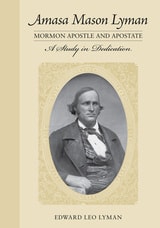
Amasa Mason Lyman, Mormon Apostle and Apostate
A Study in DedicationEdward Leo Lyman
University of Utah Press, 2009
Having spent more than thirty years in the service of his church, Lyman began to move away from its teachings after a series of conflicts with its second leader, Brigham Young. Lyman was one of the first Mormons to criticize the Mountain Meadows Massacre, which led to his dismissal as an apostle. He was excommunicated in 1870 and became one of the foremost spokesmen of the Godbeite Church of Zion movement before his death in 1877. Author Edward Leo Lyman chronicles Amasa Lyman’s life and interactions with Mormon history with an honesty true to his ancestor’s freethinking spirit.
Winner of the Francis Armstrong Madsen Best Utah History Book Award from the Utah Division of State History.
Amazons
A Love StoryE. J. Levy
University of Missouri Press, 2012
When E.J. Levy arrived in northern Brazil on a fellowship from Yale at the age of 21, she was hoping to help save the Amazon rain forest; she didn’t realize she would soon have to save herself.
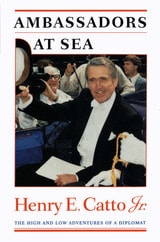
Ambassadors at Sea
The High and Low Adventures of a DiplomatBy Henry E. Catto, Jr.
University of Texas Press, 1998
In 1969, Henry Catto was selling insurance in San Antonio, Texas. Just twenty years later, he presented his credentials as ambassador to the Court of St. James's to Her Majesty, Queen Elizabeth II, at Buckingham Palace. In this engaging memoir, he retraces his journey from Texas outsider to Washington insider, providing a fascinating look at the glamour, day-to-day work, and even occasional danger that come with being a high-level representative of the United States government.
Catto's posts brought him into contact with the world's most powerful leaders and left him with a wealth of stories, which he recounts amusingly in these pages. He was the official host for Queen Elizabeth's visit to America during the Bicentennial year—and one of José Napoleon Duarte's protectors after his failed 1972 coup attempt in El Salvador. Catto accompanied Richard Nixon on his historic trip to Russia, sparred with Bill Moyers and the producers of "60 Minutes" as Caspar Weinberger's spokesman at the Pentagon, and hosted George Bush's planning meeting with Margaret Thatcher at the beginning of the Persian Gulf War. In telling these and other stories, he offers behind-the-scenes glimpses into how political power really works in Washington, London, and other world capitals.
Ambiguous Lives
Free Women of Color in Rural Georgia, 1789–1879Adele Logan Alexander
University of Arkansas Press, 1992
1992 Myers Center Outstanding Book on Human Rights
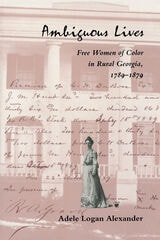
Historians have produced scores of studies on white men, extraordinary white women, and even the often anonymous mass of enslaved Black people in the United States. But in this innovative work, Adele Logan Alexander chronicles there heretofore undocumented dilemmas of one of nineteenth-century America’s most marginalized groups—free women of color in the rural South.
Ambiguous Lives focuses on the women of Alexander’s own family as representative of this subcaste of the African-American community. Their forbears, in fact, included Africans, Native Americans, and whites. Neither black nor white, affluent nor impoverished, enslaved nor truly free, these women of color lived and died in a shadowy realm situated somewhere between the legal, social, and economic extremes of empowered whites and subjugated blacks. Yet, as Alexander persuasively argues, these lives are worthy of attention precisely because of these ambiguities—because the intricacies, gradations, and subtleties of their anomalous experience became part of the tangled skein of American history and exemplify our country’s endless diversity, complexity, and self-contradictions.
Written as a “reclamation” of a long-ignored substratum of our society, Ambiguous Lives is more than the story of one family—it is a well-researched and fascinating profile of America, its race and gender relations, and its complex cultural weave.
Ambrose Bierce - American Writers 37
University of Minnesota Pamphlets on American WritersRobert A. Wiggins
University of Minnesota Press, 1964
Ambrose Bierce - American Writers 37 was first published in 1964. Minnesota Archive Editions uses digital technology to make long-unavailable books once again accessible, and are published unaltered from the original University of Minnesota Press editions.
Amelia Gayle Gorgas
A BiographyMary Tabb Johnston
University of Alabama Press, 1978
The definitive biography Amelia Gayle Gorgas, one of the most influential people in the history of the University of Alabama
Amelia Gayle Gorgas: A Biography is a richly documented and deeply compelling portrait of one of Alabama’s most influential nineteenth‑century women. Drawing on the unparalleled depth of the Gayle‑Gorgas Collection—letters, journals, family papers, and contemporary accounts—this biography argues that Amelia’s life offers enduring insight into the resilience, intellect, and quiet leadership that shaped Southern society before, during, and after the Civil War.
Far more than the daughter of a governor, wife of Confederate ordnance chief Josiah Gorgas, or mother of famed physician William Crawford Gorgas, Amelia emerges here as a figure of remarkable adaptability and personal strength. The book traces her journey from a lively Greensboro childhood through the upheavals of war‑torn Richmond, the hardships of Reconstruction‑era Alabama, and her transformative service as librarian at The University of Alabama. Its chapters illuminate the themes that define her legacy: intellectual curiosity without formal schooling, deft management of family and community crises, a gift for nurturing students and soldiers alike, and an ability to thrive in environments as varied as Maine, Charleston, Sewanee, and Tuscaloosa.
Vivid storytelling blends seamlessly with meticulous scholarship, giving readers both an intimate family narrative and a sweeping social history of the nineteenth‑century South. This biography will appeal especially to readers of Southern history, women’s history, university and library heritage, Civil War studies, and anyone drawn to strong, quietly trailblazing figures whose lives illuminate broader cultural change. Amelia’s story endures because it speaks to the universal work of holding families, institutions, and communities together in times of profound upheaval.
America's Most Alarming Writer
Essays on the Life and Work of Charles BowdenEdited by Bill Broyles and Bruce J. Dinges
University of Texas Press, 2019
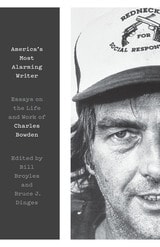
The author of more than twenty books and a revered contributor to numerous national publications, Charles Bowden (1945–2014) used his keen storyteller’s eye to reveal both the dark underbelly and the glorious determination of humanity, particularly in the borderlands between the United States and Mexico. In America’s Most Alarming Writer, key figures in his life—including his editors, collaborators, and other writers—deliver a literary wake for the man who inspired them throughout his forty-year career.
Part revelation, part critical assessment, the fifty essays in this collection span the decades from Bowden’s rise as an investigative journalist through his years as a singular voice of unflinching honesty about natural history, climate change, globalization, drugs, and violence. As the Chicago Tribune noted, “Bowden wrote with the intensity of Joan Didion, the voracious hunger of Henry Miller, the feral intelligence and irony of Hunter Thompson, and the wit and outrage of Edward Abbey.” An evocative complement to The Charles Bowden Reader, the essays and photographs in this homage brilliantly capture the spirit of a great writer with a quintessentially American vision. Bowden is the best writer you’ve (n)ever read.
American Autobiography after 9/11
Megan Brown
University of Wisconsin Press, 2017
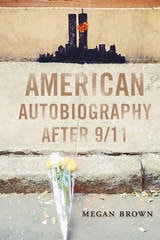
This lively and theoretically grounded book analyzes twenty-first-century memoirs from Three Cups of Tea to Fun Home, emphasizing the ways in which they reinforce and circulate ideologies, becoming guides or models for living. Brown expands her inquiry beyond books to the autobiographical narratives in reality television and political speeches. She offers a persuasive explanation for the memoir boom: the genre as a response to an era of uncertainty and struggle.
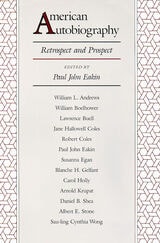
American Autobiography
Retrospect And ProspectPaul John Eakin
University of Wisconsin Press, 1991
The first four essays review the major historical periods of American autobiography, placing the classic texts of American autobiographical literature from Captain John Smith to Malcolm X in the illuminating context of lesser-known contemporary narratives. Daniel B. Shea writes on colonial America, Lawrence Buell on the American Renaissance, Susanna Egan on the years after the Civil War, and Albert E. Stone on the twentieth century.
The second part of American Autobiography shows the diversity of voices, forms, audiences, and modes of identity in the literature of American autobiography. Provocative essays by William Boelhower and Sau-Ling Cynthia Wong on immigrant autobiography discuss the changes in the sense of self that occur when strangers come to a strange land. Arnold Krupat writes about how American Indians conceptualize the self and about the relationship between oral and written discourse. William L. Andrews evaluates the strong body of critical theory that has grown up around African-American autobiography, showing how both the genre and its criticism have responded to contemporary historical pressures. Carol Holly explores the model of personal identity that underlies nineteenth-century women’s autobiographies, and Blanche Gelfant examines the narrative and political strategies of Emma Goldman’s autobiography, especially her use of popular romance and melodrama.
The last essay offers a more personal perspective on contemporary autobiography: a “dialogue” between Robert and Jane Coles about how they developed their method of eliciting first-person oral narratives for their famous Children of Crisis and Women of Crisis series.
These essays raise theoretical issues that are examined in Paul John Eakin’s incisive introduction: How do we define a literary genre of protean shape and perplexing cultural multiplicity? How do we approach the special problems created by documents that are both historical and literary texts, ones that pose difficult questions about truth and representation? Most important, how is the canon of American autobiography to be constructed, and how is its history to be written? Tracing that critical history, Eakin explains how changing ideas about “the mainstream” and “the marginal” have revitalized our retrospective view of American autobiography and opened up new and exciting prospects for today’s reader.
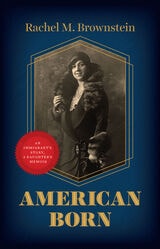
American Born
An Immigrant's Story, a Daughter's MemoirRachel M. Brownstein
University of Chicago Press, 2023
When she arrived alone in New York in 1924, eighteen-year-old Reisel Thaler resembled the other Yiddish-speaking immigrants from Eastern Europe who accompanied her. Yet she already had an American passport tucked in her scant luggage. Reisel had drawn her first breath on the Lower East Side of Manhattan in 1905, then was taken back to Galicia (in what is now Poland) by her father before she turned two. She was, as she would boast to the end of her days, “American born.”
The distinguished biographer and critic Rachel M. Brownstein began writing about her mother Reisel during the Trump years, dwelling on the tales she told about her life and the questions they raised about nationalism, immigration, and storytelling. For most of the twentieth century, Brownstein’s mother gracefully balanced her identities as an American and a Jew. Her values, her language, and her sense of timing inform the imagination of the daughter who recalls her in her own old age. The memorializing daughter interrupts, interprets, and glosses, sifting through alternate versions of the same stories using scenes, songs, and books from their time together.
But the central character of this book is Reisel, who eventually becomes Grandma Rose—always watching and judging, singing, baking, and bustling. Living life as the heroine of her own story, she reminds us how to laugh despite tragedy, find our courage, and be our most unapologetically authentic selves.
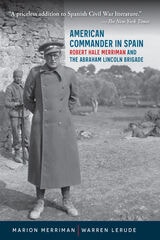
American Commander in Spain
Robert Hale Merriman and the Abraham Lincoln BrigadeMarion Merriman
University of Nevada Press, 1986
Among the Americans was Robert Hale Merriman, a scholar who had been studying international economics in Europe. He and his wife, Marion, joined volunteers from fifty-four countries in International Brigades. Merriman became the first commander of the Americans; Abraham Lincoln Battalion and a leader among the International Brigades. Now available in a new paperback edition, American Commander in Spain is based on Merriman and Marion's diaries and personal correspondence, Marion's own service at his side in Spain, as well as Warren Lerude's extensive research and interviews with people who knew Merriman and Marion, government records, and contemporary news reports. This critically acclaimed work is both the biography of a remarkable man who combined his idealism with life-risking action to fight fascism threatening Europe and Marion's vivid first-hand account of life in Spain during the civil war that became a prologue to the Second World War.
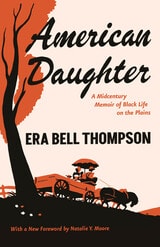
American Daughter
A Midcentury Memoir of Black Life on the PlainsEra Bell Thompson
University of Chicago Press, 2026
A portrait of Black life in the Great Plains, written by a key figure in the Chicago Renaissance and decades-long editor of Ebony.
Era Bell Thompson grew up on the plains of North Dakota, where she and her family were some of the only Black people amid an overwhelmingly white population. American Daughter, originally published in 1946, recounts her childhood in the rural West, her college years in Iowa, and the social and racial revelations she experienced upon arriving in Chicago, where she first encountered a large Black community.
Her memories defy contemporary assumptions. She was a popular high school student, even if she was forced to disarm ignorant questions from her peers. She describes her father’s work for the governor, her family’s interactions with diverse Midwestern immigrant communities, the natural beauty of the landscape, and the collaborative spirit necessary to survive the harsh weather conditions in North Dakota. As an adult in Chicago, she discovered lifestyles and attitudes that were entirely unfamiliar after her childhood in predominantly white spaces. While Thompson endured discrimination in rural and urban settings alike, she relied on her trademark humor to defuse tensions and bridge differences. Her memoir similarly radiates optimism, curiosity, and wit.
Long out of print, this new edition includes a foreword by the Chicago-based journalist Natalie Y. Moore, who not only contextualizes the memoir for contemporary readers but also explores Thompson’s life after American Daughter, including her trailblazing career as an editor for Ebony magazine.
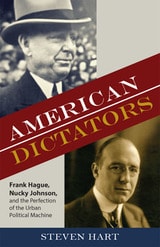
American Dictators
Frank Hague, Nucky Johnson, and the Perfection of the Urban Political MachineHart, Steven
Rutgers University Press, 2013
One man was tongue-tied and awkward around women, in many ways a mama's boy at heart, although his reputation for thuggery was well earned. The other was a playboy, full of easy charm and ready jokes, his appetite for high living a matter of public record. One man tolerated gangsters and bootleggers as long as they paid their dues to his organization. The other was effectively a gangster himself, so crooked that he hosted a national gathering of America's most ruthless killers. One man never drank alcohol. The other, from all evidence, seldom drank anything else.
American Dictators is the dual biography of two of America’s greatest political bosses: Frank Hagueand Enoch “Nucky” Johnson. Packed with compelling information and written in an informal, sometimes humorous style, the book shows Hague and Johnson at the peak of their power and the strength of their political machines during the years of Prohibition and the Great Depression. Steven Hart compares how both men used their influence to benefit and punish the local citizenry, amass huge personal fortunes, and sometimes collaborate to trounce their enemies.
Similar in their ruthlessness, both men were very different in appearance and temperament. Hague, the mayor of Jersey City, intimidated presidents and wielded unchallenged power for three decades. He never drank and was happily married to his wife for decades. He also allowed gangsters to run bootlegging and illegal gambling operations as long as they paid protection money. Johnson, the political boss of Atlantic City, and the inspiration for the hit HBO series Boardwalk Empire, presided over corruption as well, but for a shorter period of time. He was notorious for his decadent lifestyle. Essentially a gangster himself, Johnson hosted the infamous Atlantic City conference that fostered the growth of organized crime.
Both Hague and Johnson shrewdly integrated otherwise disenfranchised groups into their machines and gave them a stake in political power. Yet each failed to adapt to changing demographics and circumstances. In American Dictators, Hart paints a balanced portrait of their accomplishments and their failures.
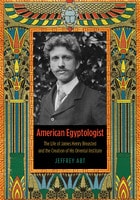
American Egyptologist
The Life of James Henry Breasted and the Creation of His Oriental InstituteJeffrey Abt
University of Chicago Press, 2011
James Henry Breasted (1865–1935) had a career that epitomizes our popular image of the archaeologist. Daring, handsome, and charismatic, he traveled on expeditions to remote and politically unstable corners of the Middle East, helped identify the tomb of King Tut, and was on the cover of Time magazine. But Breasted was more than an Indiana Jones—he was an accomplished scholar, academic entrepreneur, and talented author who brought ancient history to life not just for students but for such notables as Teddy Roosevelt and Sigmund Freud.
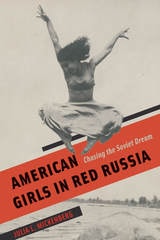
American Girls in Red Russia
Chasing the Soviet DreamJulia L. Mickenberg
University of Chicago Press, 2017
Mickenberg reveals the complex motives that drew American women to Russia as they sought models for a revolutionary new era in which women would be not merely independent of men, but also equal builders of a new society. Soviet women, after all, earned the right to vote in 1917, and they also had abortion rights, property rights, the right to divorce, maternity benefits, and state-supported childcare. Even women from Soviet national minorities—many recently unveiled—became public figures, as African American and Jewish women noted. Yet as Mickenberg’s collective biography shows, Russia turned out to be as much a grim commune as a utopia of freedom, replete with economic, social, and sexual inequities.
American Girls in Red Russia recounts the experiences of women who saved starving children from the Russian famine, worked on rural communes in Siberia, wrote for Moscow or New York newspapers, or performed on Soviet stages. Mickenberg finally tells these forgotten stories, full of hope and grave disappointments.

American Girls in Red Russia
Chasing the Soviet DreamJulia L. Mickenberg
University of Chicago Press, 2017
If you were an independent, adventurous, liberated American woman in the 1920s or 1930s where might you have sought escape from the constraints and compromises of bourgeois living? Paris and the Left Bank quickly come to mind. But would you have ever thought of Russia and the wilds of Siberia? This choice was not as unusual as it seems now. As Julia L. Mickenberg uncovers in American Girls in Red Russia, there is a forgotten counterpoint to the story of the Lost Generation: beginning in the late nineteenth century, Russian revolutionary ideology attracted many women, including suffragists, reformers, educators, journalists, and artists, as well as curious travelers. Some were famous, like Isadora Duncan or Lillian Hellman; some were committed radicals, though more were just intrigued by the “Soviet experiment.” But all came to Russia in search of social arrangements that would be more equitable, just, and satisfying. And most in the end were disillusioned, some by the mundane realities, others by horrifying truths.
Mickenberg reveals the complex motives that drew American women to Russia as they sought models for a revolutionary new era in which women would be not merely independent of men, but also equal builders of a new society. Soviet women, after all, earned the right to vote in 1917, and they also had abortion rights, property rights, the right to divorce, maternity benefits, and state-supported childcare. Even women from Soviet national minorities—many recently unveiled—became public figures, as African American and Jewish women noted. Yet as Mickenberg’s collective biography shows, Russia turned out to be as much a grim commune as a utopia of freedom, replete with economic, social, and sexual inequities.
American Girls in Red Russia recounts the experiences of women who saved starving children from the Russian famine, worked on rural communes in Siberia, wrote for Moscow or New York newspapers, or performed on Soviet stages. Mickenberg finally tells these forgotten stories, full of hope and grave disappointments.
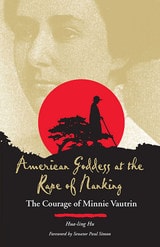
American Goddess at the Rape of Nanking
The Courage of Minnie VautrinHua-ling Hu
Southern Illinois University Press, 2001
The Japanese army’s brutal four-month occupation of the city of Nanking during the 1937 Sino-Japanese War is known, for good reason, as “the rape of Nanking.” As they slaughtered an estimated three hundred thousand people, the invading soldiers raped more than twenty thousand women—some estimates run as high as eighty thousand. Hua-ling Hu presents here the amazing untold story of the American missionary Minnie Vautrin, whose unswerving defiance of the Japanese protected ten thousand Chinese women and children and made her a legend among the Chinese people she served.
Vautrin, who came to be known in China as the “Living Goddess” or the “Goddess of Mercy,” joined the Foreign Christian Missionary Society and went to China during the Chinese Nationalist Revolution in 1912. As dean of studies at Ginling College in Nanking, she devoted her life to promoting Chinese women’s education and to helping the poor.
At the outbreak of the war in July 1937, Vautrin defied the American embassy’s order to evacuate the city. After the fall of Nanking in December, Japanese soldiers went on a rampage of killing, burning, looting, rape, and torture, rapidly reducing the city to a hell on earth. On the fourth day of the occupation, Minnie Vautrin wrote in her diary: “There probably is no crime that has not been committed in this city today. . . . Oh, God, control the cruel beastliness of the soldiers in Nanking.”
When the Japanese soldiers ordered Vautrin to leave the campus, she replied: “This is my home. I cannot leave.” Facing down the blood-stained bayonets constantly waved in her face, Vautrin shielded the desperate Chinese who sought asylum behind the gates of the college. Vautrin exhausted herself defying the Japanese army and caring for the refugees after the siege ended in March 1938. She even helped the women locate husbands and sons who had been taken away by the Japanese soldiers. She taught destitute widows the skills required to make a meager living and provided the best education her limited sources would allow to the children in desecrated Nanking.
Finally suffering a nervous breakdown in 1940, Vautrin returned to the United States for medical treatment. One year later, she ended her own life. She considered herself a failure.
Hu bases her biography on Vautrin’s correspondence between 1919 and 1941 and on her diary, maintained during the entire siege, as well as on Chinese, Japanese, and American eyewitness accounts, government documents, and interviews with Vautrin’s family.
American Humorists - American Writers 42
University of Minnesota Pamphlets on American WritersWillard Thorp
University of Minnesota Press, 1964
American Humorists - American Writers 42 was first published in 1964. Minnesota Archive Editions uses digital technology to make long-unavailable books once again accessible, and are published unaltered from the original University of Minnesota Press editions.
American Imperialism in the Image of Peer Gynt
Memoirs of a Professor-BureaucratE.A.J. Johnson
University of Minnesota Press, 1971
American Imperialism in the Image of Peer Gynt was first published in 1971. Minnesota Archive Editions uses digital technology to make long-unavailable books once again accessible, and are published unaltered from the original University of Minnesota Press editions.
This is the life story of an economic historian whose distinguished career has included nine years of service as a United States government official in various capacities, both military and civilian, around the world. It is a revealing and often disturbing account, evoking in the author's mind, as he reflects on his own experiences and those of other American emissaries abroad, the image of Ibsen's Peer Gynt, who wandered over the earth thinking he was doing good, only to find when he returned home that both his virtues and his sins were so insignificant that his soul was scheduled by the buttonmolder to be cast into limbo in the form of a little lead button.
Professor Johnson's book is much more than an autobiography. From the vantage point of his experiences and observations he provides a critical evaluation of American efforts abroad. He discusses cultural factors that have shaped American preconceptions and attitudes over the last half century and attempts to explain why a generation of presumably well-equipped Americans has been singularly incapable of materializing the hopes and aspirations of both the American people and the world community.
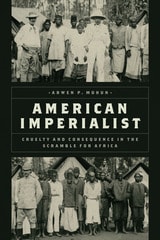
American Imperialist
Cruelty and Consequence in the Scramble for AfricaArwen P. Mohun
University of Chicago Press, 2023
Richard Dorsey Mohun spent his career circulating among the eastern United States, the cities and courts of Europe, and the African continent, as he served the US State Department at some points and King Leopold of Belgium at others. A freelance imperialist, he implemented the schemes of American investors and the Congo Free State alike. Without men like him, Africa’s history might have unfolded very differently. How did an ordinary son of a Washington bookseller become the agent of American corporate greed and European imperial ambition? Why did he choose to act in ways that ranged from thoughtless and amoral to criminal and unforgivable?
With unblinking clarity and precision, historian Arwen P. Mohun interrogates the life and actions of her great-grandfather in American Imperialist. She seeks not to excuse the man known as Dorsey but to understand how individual ambition and imperial lust fueled each other, to catastrophic ends. Ultimately, she offers a nuanced portrait of how her great-grandfather’s pursuit of career success and financial security for his family came at a tragic cost to countless Africans.
American Lives
An Anthology of Autobiographical WritingRobert F. Sayre
University of Wisconsin Press, 1994
American Lives is a groundbreaking book, the first historically organized anthology of American autobiographical writing, bringing us fifty-five voices from throughout the nation's history, from Abigail Adams, Abraham Lincoln, Jonathan Edwards, and Richard Wright to Quaker preacher Elizabeth Ashbridge, con man Stephen Burroughs, and circus impresario P.T. Barnum. Representing canonical and non-canonical writers, slaves and slave-owners, generals and conscientious objectors, scientists, immigrants, and Native Americans, the pieces in this collection make up a rich gathering of American “songs of ourselves.”
Robert F. Sayre frames the selections with an overview of theory and criticism of autobiography and with commentary on the relation between history and many kinds of autobiographical texts—travel narratives, stories of captivity, diaries of sexual liberation, religious conversions, accounts of political disillusionment, and discoveries of ethnic identity. With each selection Sayre also includes an extensive headnote providing valuable critical and biographical information.
A scholarly and popular landmark, American Lives is a book for general readers and for teachers, students, and every American scholar.
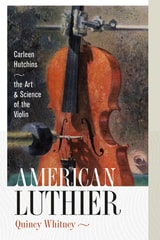
American Luthier
Carleen Hutchins—the Art and Science of the ViolinQuincy Whitney
University Press of New England, 2016
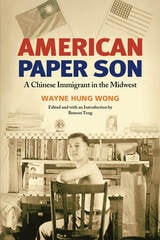
American Paper Son
A Chinese Immigrant in the MidwestWayne Hung Wong
University of Illinois Press, 2005
In the early and mid-twentieth century, Chinese migrants evaded draconian anti-immigrant laws by entering the US under false papers that identified them as the sons of people who had returned to China to marry. Wayne Hung Wong tells the story of his life after emigrating to Wichita, Kansas, as a thirteen-year-old paper son. After working in his father’s restaurant as a teen, Wong served in an all-Chinese Air Force unit stationed in China during World War II. His account traces the impact of race and segregation on his service experience and follows his postwar life from finding a wife in Taishan through his involvement in the government’s amnesty program for Chinese immigrants and career in real estate. Throughout, Wong describes the realities of life as part of a small Chinese American community in a midwestern town.
Vivid and rich with poignant insights, American Paper Son explores twentieth-century Asian American history through one person’s experiences.
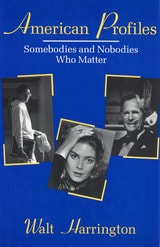
American Profiles
Somebodies and Nobodies Who MatterWalt Harrington
University of Missouri Press, 1992
Author Walt Harrington, award-winning writer for the Washington Post Magazine, lifts the masks of celebrity and obscurity to reveal the lives of some singular men and women--from actress Kelly McGillis to nocturnal satanist Anton LaVey.
American Progressive History
An Experiment in ModernizationErnst Breisach
University of Chicago Press, 1993
Focusing his account on the work of the movement's most important representatives—including Charles Beard, James Harvey Robinson, and Carl Becker—Ernst Breisach demonstrates that Progressive history is distinguished by its unique combination of beliefs in the objective reality of historical facts and its faith in the inevitability of the progress of the human race. And though he discusses at length Frederick Jackson Turner's contributions to the creation of a modern American historiography, Breisach sets him apart from the scholars who shaped Progressive history.
While Progressive history is usually treated in isolation from simultanieous movements in European historiography, Breisach shows how it was formulated in the face of the same cultural pressures confronting European historians. Indeed, it becomes clear that until the 1930s the Progressive historians' confidence in the validity of historical investigation and the progress of civilization shielded American historians from the skepticism and cultural pessimism which characterized many of their European contempories.
Breisach's exceptionally broad and subtle analysis reveals American Progressive history to be an important and innovative experiment in the international quest for a New History, as well as a coherent school of thought in its own right.
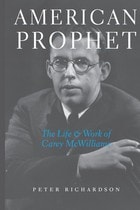
American Prophet
The Life and Work of Carey McWilliamsPeter Richardson
University of Michigan Press, 2005
Peter Richardson's absorbing and elegantly paced book reveals a figure thoroughly engaged with the issues of his time. Deftly interweaving correspondence, diary notes, published writings, and McWilliams's own and others' observations on a colorful and influential cast of characters from Hollywood, New York, Washington, DC, and the American West, Richardson maps the evolution of McWilliams's personal and professional life. Among those making an appearance are H. L. Mencken (McWilliams's mentor and role model), Louis Adamic, John Fante, Robert Towne, Richard Nixon, Studs Terkel, J. Edgar Hoover, Arthur Schlesinger, Jr., and Joseph McCarthy.
American Prophet illustrates the arc of McWilliams's life and career from his early literary journalism through his legal and political activism, his stint in state government, and his two decades as editor of the Nation. This book makes the case for McWilliams's place in the Olympian realm of our most influential and prescient political writers.
Peter Richardson is the editorial director at PoliPointPress in Sausalito, California. He is the author or editor of numerous works on language, literature, and California public policy. He holds a Ph.D. in English from the University of California Berkeley.
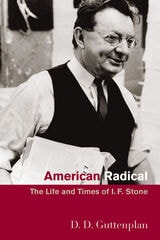
American Radical
The Life and Times of I. F. StoneD. D. Guttenplan
Northwestern University Press, 2012
In an era when the old radical questions—about war, the economy, health care, and the right to dissent—are suddenly new again, Guttenplan’s lively, provocative book makes clear why so many of Stone’s pronouncements have acquired the force of prophecy.
American Theater in the Culture of the Cold War
Producing and Contesting Containment, 1947-1962Judith M. Melton
University of Iowa Press, 1998
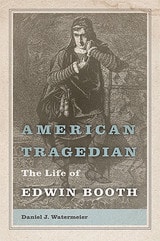
American Tragedian
The Life of Edwin BoothDaniel J. Watermeier
University of Missouri Press, 2015
Daniel J. Watermeier has, through decades of tireless research paired with his own sharp insight, put together the most complete Edwin Booth biography to date. Drawing on a wealth of archival materials and contemporary theatrical scholarship, American Tragedian: The Life of Edwin Booth gives more attention than previous biographies to Booth’s apprentice and journeyman years; his rise in antebellum America to stardom with a new, acclaimed style of acting; his work as an innovative theater builder and theatrical producer; his several foreign tours; and his nationwide tours in the late 1880s. It also addresses Booth’s critical reception in dozens of cities in America and abroad and situates his professional activities within the events and trends of the time.
As interesting as it is informative, Watermeier’s book offers an in-depth look at the triumphal career and tumultuous life of one of the American stage’s most celebrated figures.
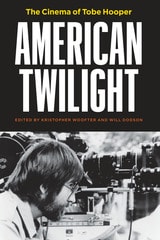
American Twilight
The Cinema of Tobe HooperBy Kristopher Woofter and Will Dodson
University of Texas Press, 2021
A master of gritty horror, Tobe Hooper captured on-screen an America in constant crisis and upended myths of prosperity to reveal the country’s internal decay.
Tobe Hooper's productions, which often trespassed upon the safety of the family unit, cast a critical eye toward an America in crisis. Often dismissed by scholars and critics as a one-hit wonder thanks to his 1974 horror classic The Texas Chain Saw Massacre, Hooper nevertheless was instrumental in the development of a robust and deeply political horror genre from the 1960s until his death in 2017. In American Twilight, the authors assert that the director was an auteur whose works featured complex monsters and disrupted America’s sacrosanct perceptions of prosperity and domestic security.
American Twilight focuses on the skepticism toward American institutions and media and the articulation of uncanny spaces so integral to Hooper’s vast array of feature and documentary films, made-for-television movies, television episodes, and music videos. From Egg Shells (1969) to Poltergeist (1982), Djinn (2013), and even Billy Idol’s music video for “Dancing with Myself” (1985), Tobe Hooper provided a singular directorial vision that investigated masculine anxiety and subverted the idea of American exceptionalism.
American War Stories
Brenda M. Boyle
Rutgers University Press, 2021
American Worlds Since Emerson
David Marr
University of Massachusetts Press, 2009
Marr shows that the decline of the political, the elusiveness of democracy, and the monumental influence of "idealized privatism" on its historiographers and critics are major themes of American literary thought and constitute a tradition that spans literature, criticism, history, philosophy, and political theory. He illustrates this through readings of Emerson's ideas of nature, culture, and politics; Walt Whitman's fantasy of the autocrat of letters; William James's critique of "vicious intellectualism;" the contrasting formulations of radical interiority in the poetry of Robinson Jeffers and the criticism of R. P. Blackmur; and two contemporary pictures of public discourse as revealed in Joseph Heller's Catch-22 and the essays of Ralph Ellison.
Discussing not only the works of classic American thinkers, but also the recent writings of such new-pragmatists as Stanley Cavell, Richard Rorty, and Nelson Goodman, Marr calls for a reassessment of the American intellectual past and of contemporary assumptions about the relations of literature to political life.
America’s Hardscrabble General
Ulysses S. Grant, from Farm Boy to ShilohJack Hurst
Southern Illinois University Press, 2022
Renowned for his skill, courage, and indomitability during the Civil War, Ulysses S. Grant is considered a model for outstanding American generalship. However, unlike most of his fellow officers, Grant came from humble Midwestern beginnings and experienced a number of professional failures before rising to military prominence.
Grant grew up on a farm on the Ohio frontier and reluctantly attended West Point, where he finished in the middle of his class. In his early army career, he was often underestimated by his peers despite valiant service. After the Mexican War Grant’s “Hardscrabble” farm outside St. Louis failed, and when he decided to rejoin the U.S. army, he was given the unenviable command of a rowdy volunteer regiment, the 21st Illinois.
How did Grant—an average student, failed farmer, and common man—turn the 21st Illinois into a showcase regiment and become a successful general? In this engaging analysis, Jack Hurst argues that Grant’s military brilliance stemmed not from his West Point education but rather from his roots in America’s lower middle class and its commonsense values. His upbringing in the antebellum rural Midwest undergirded his military skill and helped him develop an innate humility, sense of justice, and ability to focus, leading him to form close relationships with his men.
Through a detailed account of Grant’s early years, from boyhood through the Battle of Shiloh, Hurst explores how Grant’s modest start and experiences in the Mexican War prefigured his greatest military triumphs. Ultimately Grant abandoned the traditional military practice of his time, which relied upon maneuver, and instead focused on fighting. His strategy to always move forward, win or lose, turned even his losses into essential elements of victory and characterized the aggressive, relentless approach that would ultimately win the Civil War and save the Union.
America’s Lawyer-Presidents
From Law Office to Oval OfficeNorman Gross
Northwestern University Press, 2009
The historic election of Barack Obama was rife with references to Abraham Lincoln, perhaps the greatest lawyer-president, whose legal career spanned 25 years and 5,100 cases. President Obama’s ties to Lincoln are part of a great tradition begun by John Adams, the first lawyer-president, who combined a twenty-year law practice with major contributions to our nation’s founding charters. His son, John Quincy Adams, argued landmark U.S. Supreme Court cases both before and after his presidency, one of eight lawyer-presidents to appear as counsel before the highest court in the land. And Rutherford B. Hayes and Benjamin Harrison were among those lawyer-presidents who handled notable high-profile cases, including sensational murder trials.
These are but a few of the fascinating—yet still largely unknown—stories about America’s lawyer-presidents. Now available in an updated, expanded paperback edition, America’s Lawyer-Presidents sheds light on the legal backgrounds of each of these chief executives and how their experiences as lawyers impacted and shaped their presidencies. Written by historians and presidential scholars and featuring an engaging and image-rich presentation, America’s Lawyer-Presidents provides unique insights into our national leaders and their lives and times, from colonial days to the present.
Aminata
Abbey Lincoln’s Song of FaithAda C.M. Thomas
Rutgers University Press, 2026
Abbey Lincoln (1930–2010), one of the greatest jazz vocalists of the twentieth century, was also an acclaimed composer, poet, playwright, actress, and activist and a towering figure within the African American intellectual tradition. Through constant reinvention, she resisted easy stereotyping and helped open a space for Black women artists to invoke their whole selves. Here, with meticulous research and insightful analysis, Ada C. M. Thomas contemplates Lincoln’s music alongside her poetry, plays, and reflections, revealing a multifaceted artist whose philosophical inquiries resonate deeply with the Black experience.
Thomas places Lincoln's albums in the context of both the female jazz and blues singers who influenced her and the male composers she collaborated with, including John Coltrane, Thelonious Monk, and Max Roach. Highlighting Lincoln’s central position within a vibrant global community of Black artists, activists, and writers, it also puts her work into conversation with that of contemporaries and close friends like Maya Angelou, Miriam Makeba, and Toni Morrison. Above all, it traces Lincoln’s extraordinary spiritual and intellectual journey, from her early life in Michigan to her rebirth in the 1970s as Aminata Moseka, meaning “faithful goddess of love,” and her ultimate resurgence in the 1990s as a critically acclaimed jazz artist and composer. With reverence and rigor, Thomas invites readers to rediscover Abbey Lincoln and embrace the transformative power of her words.
Amkoullel, the Fula Boy
Amadou Hampâté Bâ
Duke University Press, 2021