Results by title
22277 books match the query 'Social Science' and 1819 start with a

A Rumor of Revolt
The "Great Negro Plot" in Colonial New YorkT. J. Davis
University of Massachusetts Press, 1990
This groundbreaking historical examination analyzes the 1741 New York Conspiracy trials: a pivotal moment in colonial American history when the city's legal system prosecuted an alleged slave conspiracy with severe and controversial consequences. Thomas J. Davis meticulously reconstructs the trials and executions that resulted from this supposed uprising, providing crucial insights into the intersection of race, ethnicity, legal practice, and social control in colonial New York.
During the spring and summer of 1741, New York authorities conducted dramatic trials in response to fears of a coordinated slave rebellion. Between May 11 and August 29, 1741, the city executed 35 individuals: thirteen Black men were burned at the stake, seventeen Black men were hanged, and two white men and two white women were also executed. These brutal punishments reflected the city's intense fear and the racialized nature of colonial justice.
Davis's analysis examines the primary source material to investigate what this historical episode reveals about colonial New York's racial hierarchies, ethnic tensions, and legal systems. The work scrutinizes the trials themselves, asking critical questions: Was there truly a conspiracy, or was the event primarily a product of hysteria and rumor? How did racial prejudices, economic anxieties, and the structure of colonial authority shape legal proceedings?
Beyond the courtroom drama, Davis explores the broader implications of these trials for understanding slavery in northern colonies, where enslaved people were not as visible but equally integral to colonial society. The book demonstrates how fear, whether grounded in reality or stoked by rumor, could mobilize entire communities and transform legal systems into instruments of racialized control. This work has become essential reading for understanding how colonial societies constructed narratives of racial threat and employed legal mechanisms to enforce racial subordination.
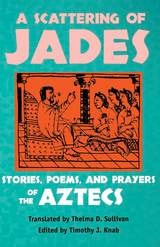
A Scattering of Jades
Stories, Poems, and Prayers of the AztecsThelma D. Sullivan
University of Arizona Press, 2003
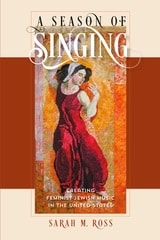
A Season of Singing
Creating Feminist Jewish Music in the United StatesSarah M. Ross
Brandeis University Press, 2016
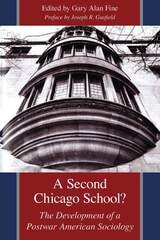
A Second Chicago School?
The Development of a Postwar American SociologyEdited by Gary Alan Fine
University of Chicago Press, 1995
Like its predecessor earlier in the century, the postwar department was again the center for qualitative social research—on everything from mapping the nuances of human behavior in small groups to seeking solutions to problems of race, crime, and poverty. Howard Becker, Joseph Gusfield, Herbert Blumer, David Riesman, Erving Goffman, and others created a large, enduring body of work.
In this book, leading sociologists critically confront this legacy. The eight original chapters survey the issues that defined the department's agenda: the focus on deviance, race and ethnic relations, urban life, and collective behavior; the renewal of participant observation as a method and the refinement of symbolic interaction as a guiding theory; and the professional and institutional factors that shaped this generation, including the leadership of Louis Wirth and Everett C. Hughes; the role of women; and the competition for national influence Chicago sociology faced from survey research at Columbia and grand theory at Harvard. The contributors also discuss the internal conflicts that call into question the very idea of a unified "school."
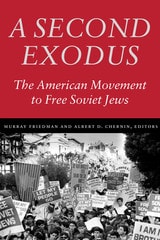
A Second Exodus
The American Movement to Free Soviet JewsEdited by Murray Friedman and Albert D. Chernin
Brandeis University Press, 1999
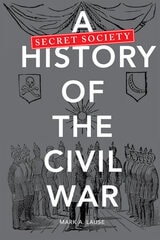
A Secret Society History of the Civil War
Mark A. Lause
University of Illinois Press, 2014
Antebellum secret societies ranged politically from those with progressive or even revolutionary agendas to those that pursued conservative or oppressive goals. This book shows how, in the years leading up to the Civil War, these clandestine organizations exacerbated existing sectional tensions in the United States. Lause's research indicates that the pervasive influence of secret societies may have played a part in key events such as the Freesoil movement, the beginning of the Republican party, John Brown's raid on Harpers Ferry, Lincoln's election, and the Southern secession process of 1860-1861.
This exceptional study encompasses both white and African American secret society involvement, revealing the black fraternal experience in antebellum America as well as the clandestine operations that provided assistance to escaped slaves via the Underground Railroad. Unraveling these pervasive and extensive networks of power and influence, A Secret Society History of the Civil War demonstrates that antebellum secret societies played a greater role in affecting Civil War-era politics than has been previously acknowledged.
A Sense of Arrival
Kevin Adonis Browne
Duke University Press, 2024

A Sense of Space
A Local’s Guide to a Flat Earth, the Edge of the Cosmos, and Other Curious PlacesJohn Edward Huth
University of Chicago Press, 2025
When you give directions, do you tell someone to go straight ahead and turn left? Or do you suggest that they head north before moving west? Your answer reveals more than you might think.
In A Sense of Space, writer and physicist John Edward Huth uses these two kinds of navigation—either centered on or independent of people—to help readers chart a path through evolving spatial models. In doing so, he offers an astonishing exploration of how changing scientific models of space alter our social perceptions, and vice versa. New visions of space can emanate from human considerations, he argues, and those new visions can in turn spawn new cultural phenomena. With accessible introductions to topics including mental maps, astrology, astronomy, particle physics, and Einstein’s relativity, Huth makes clear that, although our minds have evolved to comprehend space in terrestrial distances, we routinely extend this understanding to realms far removed from our everyday experiences, from cosmological to subatomic scales.
Taking us across the eons from the myth of a flat earth to the mysteries of the multiverse, A Sense of Space is an energetic, thoughtful guide to how we orient ourselves in our world—and beyond.
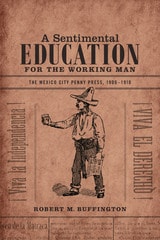
A Sentimental Education for the Working Man
The Mexico City Penny Press, 1900-1910Robert M. Buffington
Duke University Press, 2015
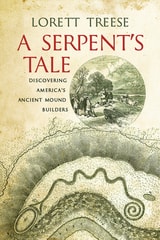
A Serpent's Tale
Discovering America's Ancient Mound BuildersLorett Treese
Westholme Publishing, 2016
When American settlers first crossed the Appalachian Mountains they were amazed to discover that the wilderness beyond contained ancient ruins—large man-made mounds and enclosures, and impressive earthen sculptures, such as a gigantic serpent. Reports trickled back to the eager ears of President Thomas Jefferson and others. However, most did not believe these earthworks had anything to do with Native Americans; rather, given the intense interest in the history of Western Civilization at the time, it became popular to speculate that the ruins had been built by refugees from Greece, Rome, Egypt—or even the lost continent of Atlantis. Since their discovery, the mounds have attracted both scholars and quacks, from the early investigations sponsored by the then new Smithsonian Institution to the visions of the American psychic Edgar Cayce.
As Lorett Treese explains in her fascinating history A Serpent’s Tale: Discovering America’s Ancient Mound Builders, the enigmatic nature of these antiquities fueled both fanciful claims and scientific inquiry. Early on, the earthworks began to fall to agricultural and urban development. Realizing that only careful on-site investigation could reveal the mysteries of the mounds, scholars hastened to document and classify them, giving rise to American archaeology as a discipline. Research made it possible to separate the Mound Builders into three distinct pre-contact Native American cultures. More recently, Mound Builder remains have attracted the practitioners of new disciplines like archaeoastronomy who suggest they may have functioned as calendars. There is no doubt that the abandoned monuments that made the Midwest’s Ohio Valley the birthplace of American archaeology have yet to reveal all the knowledge they contain on the daily lives and world views of persons of North American prehistory.
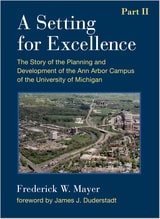
A Setting For Excellence, Part II
The Story of the Planning and Development of the Ann Arbor Campus of the University of MichiganFrederick W. Mayer
University of Michigan Press, 2017
By tracing the development of the Ann Arbor campus from its early days to the present, within the context of the evolution of higher education in America, Mayer provides a strong argument for the importance of rigorous and enlightened campus planning as a critical element of the learning environment of the university. His comprehensive history of campus planning, illustrated with photos, maps, and diagrams from Michigan’s history, is an outstanding contribution to the university’s history as it approaches its bicentennial.

A Shared Future
Faith-Based Organizing for Racial Equity and Ethical DemocracyRichard L. Wood and Brad R. Fulton
University of Chicago Press, 2015
In A Shared Future, Richard L. Wood and Brad R. Fulton draw on a new national study of community organizing coalitions and in-depth interviews of key leaders in this field to show how faith-based organizing is creatively navigating the competing aspirations of America’s universalist and multiculturalist democratic ideals, even as it confronts three demons bedeviling American politics: economic inequality, federal policy paralysis, and racial inequity. With a broad view of the entire field and a distinct empirical focus on the PICO National Network, Wood and Fulton’s analysis illuminates the tensions, struggles, and deep rewards that come with pursuing racial equity within a social change organization and in society. Ultimately, A Shared Future offers a vision for how we might build a future that embodies the ethical democracy of the best American dreams.
An interview of the authors on the subject of faith leaders organizing for justice (Peace Talks Radio, copyright Good Radio Shows, Inc.) can be heard at this link: https://beta.prx.org/stories/190030
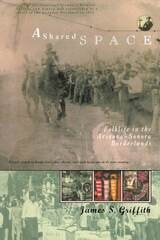
A Shared Space
James S. Griffith
Utah State University Press, 1995
Where it divides Arizona and Sonora, the international boundary between Mexico and the United States is both a political reality, literally expressed by a fence, and, to a considerable degree, a cultural illusion. Mexican, Anglo, and Native American cultures straddle the fence; people of various ethnic backgrounds move back and forth across the artificial divide, despite increasing obstacles to free movement. On either side is found a complex cultural mix of ethnic, religious, and occupational groups. In A Shared Space James Griffith examines many of the distinctive folk expressions of this varied cultural region.
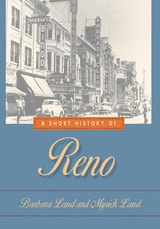
A Short History Of Reno
Barbara Land
University of Nevada Press, 1995
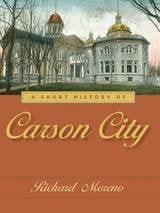
A Short History of Carson City
Richard Moreno
University of Nevada Press, 2011

A Short History of Denver
Stephen J. Leonard
University of Nevada Press, 2016
A Short History of Denver portrays the city’s twentieth-century ups and downs, including the City Beautiful movement, political corruption, the rise of the Ku Klux Klan in the 1920s, and the Great Depression of the 1930s. Here readers will find the meat and potatoes of economic and political history and much more, including sports history, social history, and the history of metropolitan-wide efforts to preserve the past.

A Short History of Film
Dixon, Wheeler Winston
Rutgers University Press, 2013
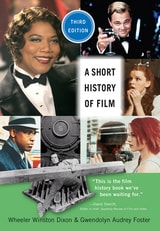
Wheeler Winston Dixon and Gwendolyn Audrey Foster present new and amended coverage of the industry in addition to updating the birth and death dates and final works of notable directors. Their expanded focus on key films brings the book firmly into the digital era and chronicles the death of film as a production medium.
The book takes readers through the invention of the kinetoscope, the introduction of sound and color between the two world wars, and ultimately the computer-generated imagery of the present day. It details significant periods in world cinema, including the early major industries in Europe, the dominance of the Hollywood studio system in the 1930s and 1940s, and the French New Wave of the 1960s. Attention is given to small independent efforts in developing nations and the more personal independent film movement that briefly flourished in the United States, the significant filmmakers of all nations, and the effects of censorship and regulation on production everywhere. In addition, the authors incorporate the stories of women and other minority filmmakers who have often been overlooked in other texts.
Engaging and accessible, this is the best one-stop source for the history of world film available for students, teachers, and general audiences alike.
A Short History of Film, Third Edition
Dixon, Wheeler Winston
Rutgers University Press, 2018
A Short History of Indians in Canada
StoriesThomas King
University of Minnesota Press, 2013
A Short History of Las Vegas
Barbara Land
University of Nevada Press, 2004
A Short History of Reno, Second Edition
Richard Moreno
University of Nevada Press, 2015
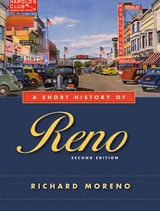
Moreno brings the city’s history up-to-date with coverage of the businesspeople and civic leaders who helped make Reno an attraction that still lures millions of visitors each year. Today’s travelers and residents explore Reno’s flamboyant heart and scenic wonders, topics the author examines in an accessible and lively fashion.

A Short History of San Francisco
Robert W. Cherny
University of Nevada Press, 2026
A Short History of Sonoma
Lynn Downey
University of Nevada Press, 2013
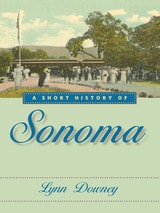
The book also addresses such topics as the development of local ranching and businesses and of transportation links to San Francisco that helped to make Sonoma and the surrounding Valley of the Moon a popular location for summer homes and resorts. It discusses the role of the nearby hot springs in attracting visitors and permanent residents, including people seeking cures for various ailments. There are also accounts of some of the famous people who lived in or near Sonoma and helped establish its mystique, including Mexican general Mariano Vallejo, the town’s first leader; Hungarian winemaker Agoston Haraszthy, who first saw the region’s potential for producing superior wines; and writers Jack London and M. F. K. Fisher, who made their homes in the Valley of the Moon, drawn by its beauty and bucolic lifestyle.
A Short History of Sonoma is generously illustrated with vintage photographs. It is a delightful account of one of America’s most charming towns and its evolution from rowdy frontier settlement to the paragon of sophisticated living that it is today.
A Short History of Virginia City
Ronald M. James
University of Nevada Press, 2014
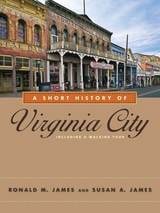
The city’s story did not end when the Comstock Lode played out. Beginning in the 1930s, bohemian artists, literati, and tourists were intrigued by this remnant of the Old West. The leader of Manhattan’s café society, Lucius Beebe, moved here and relaunched the Territorial Enterprise in 1950. Television’s most popular western from 1959 to 1973, Bonanza, located its fictional Ponderosa Ranch nearby. In the summer of 1965, a handful of Bay Area musicians, including Big Brother and the Holding Company, performed at the Red Dog Saloon and launched psychedelic rock, part of the inspiration for a defining decade of youth culture. Today it is both a National Historic Landmark District and a living community. Visitors come to enjoy its saloons and restaurants, admire its architecture, and learn from its museums and exhibits. A Short History of Virginia City will enhance their experience and will also be enjoyed by anyone interested in the history of Nevada, mining, and the Old West.
• Includes an illustrated walking tour describing more than thirty buildings and sites

A Short History of the Future
W. Warren Wagar
University of Chicago Press, 1992

A Short History of the Future
W. Warren Wagar
University of Chicago Press, 1999
"Thanks to Wagar's magisterial command of futurist information and theory, his extrapolated near-term future is an incisive, dynamic vision of where we may indeed be heading."—H. Bruce Franklin, Washington Post
"A comprehensive, massively detailed script of a possible near future. . . . Intriguing."—San Francisco Chronicle
"A Short History of the Future reads with ease, raises provocative possibilities and presents challenging occasions for thought and argument."—Chicago Tribune
"A breathtaking future history in the manner of Wells and Stapledon, unnerving in its mixture of fact, fiction, and personal perspectives."—George Zebrowski, New York Review of Science Fiction
A Short History of the Future
W. Warren Wagar
University of Chicago Press, 1989
Jensen's tale traces the flow of the future from the early twenty-first-century reign of a megacorporate global economy, to its sudden collapse in 2044, when nuclear catastrophe envelops the world. In the traumatic aftermath, a socialist world commonwealth comes into being in the year 2062, followed by a lengthy transition to a decentralized order of technologically mature autonomous societies, many located in outer space. The riveting literary interludes that follow each chapter take the form of letters and documents from the history of Jensen's family, evoking the everyday lives of people in the midst of these global-historical events. Here we meet a woman in Brazil whose son is dying from a new immuno-deficiency disease, two brothers comparing life on earth with life in a space colony, and many more.
Neither fiction nor nonfiction, Wagar's brilliantly creative work is not meant to forecast the future, but rather to draw attention to possibilities and alternatives for humankind and planet Earth. In doing so, it also serves as an unforgettable reminder that the future is being made now.

A Short History of the Nigerian Civil War
Douglas A. Anthony
Ohio University Press, 2027
A Short History of the Nigerian Civil War is an accessible and balanced scholarly account of the 1967–70 conflict (also remembered as the Nigeria-Biafra War or simply the Biafran War). More than a seminal event in the history of Africa’s most populous country, the war marked a tragic milestone in the narrative of African decolonization. It also helped shape both international humanitarianism and media coverage of conflicts in developing countries, and offers an interesting, counterintuitive footnote to Cold War history. Interest in the war remains high, though recent book-length treatments have gravitated to memoir and specialized accounts. This book offers readers a concise, evenhanded introduction to the war’s causes, major events, and consequences, presented with a balance of narrative and analysis.
Author Douglas A. Anthony begins by explaining the influence of British imperialism on the country’s historical trajectory. Colonial geography and governance presented the leaders of newly independent Nigeria a template for ongoing polarization and suspicion, and when a military coup toppled the country’s short-lived First Republic (1960–66), existing geopolitical, economic, and ethnic tensions reached unprecedented levels. A second coup, accompanied by lethal coordinated attacks by civilians and soldiers on members of the Igbo ethnic group, triggered the return of most Igbos to their home region in southeastern Nigeria. Here, in May 1967, they declared independence as the Republic of Biafra, led by Chukwuemeka Odumegwu Ojukwu.
The war that followed, which Nigerian military leader Yakubu Gowon had promised would be a brief police action, lasted thirty months. During that time, Biafra, blockaded and diplomatically isolated, confronted larger and better-supplied Nigerian forces, an economic embargo, and escalating starvation. What the Nigerian government described as a war of unification was for most Biafrans a defensive war against a genocidal threat. By most accounts one million people died, the vast majority Biafran civilians.
With the war’s end in 1970, Biafra’s people and greatly diminished territory rejoined Nigeria. But behind formal declarations of “No victor, no vanquished” lingered the war’s enormous human, economic, and political consequences, felt most acutely by Igbos, many of whom continue to contend with a legacy of marginalization.

A Short Treatise on the Metaphysics of Tsunamis
Jean-Pierre Dupuy
Michigan State University Press, 2015
Jean-Pierre Dupuy asks whether, from Lisbon to Sumatra, mankind has really learned nothing about evil. When moral crimes are unbearably great, he argues, our ability to judge evil is gravely impaired, and the temptation to regard human atrocity as an attack on the natural order of the world becomes irresistible. This impulse also suggests a kind of metaphysical ruse that makes it possible to convert evil into fate, only a fate that human beings may choose to avoid. Postponing an apocalyptic future will depend on embracing this paradox and regarding the future itself in a radically new way.
The American edition of Dupuy’s classic essay, first published in 2005, also includes a postscript on the 2011 nuclear accident that occurred in Japan, again as the result of a tsunami.
A Silvan Tomkins Handbook
Foundations for Affect TheoryAdam J. Frank
University of Minnesota Press, 2020
An accessible guide to the work of American psychologist and affect theorist Silvan Tomkins
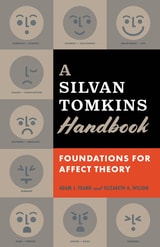
The brilliant and complex theories of psychologist Silvan Tomkins (1911–1991) have inspired the turn to affect in the humanities, social sciences, and elsewhere. Nevertheless, these theories are not well understood. A Silvan Tomkins Handbook makes his theories portable across a range of interdisciplinary contexts and accessible to a wide variety of contemporary scholars and students of affect.
A Silvan Tomkins Handbook provides readers with a clear outline of Tomkins’s affect theory as he developed it in his four-volume masterwork Affect Imagery Consciousness. It shows how his key terms and conceptual innovations can be used to build robust frameworks for theorizing affect and emotion. In addition to clarifying his affect theory, the Handbook emphasizes Tomkins’s other significant contributions, from his broad theories of imagery and consciousness to more focused concepts of scenes and scripts. With their extensive experience engaging and teaching Tomkins’s work, Adam J. Frank and Elizabeth A. Wilson provide a user-friendly guide for readers who want to know more about the foundations of affect studies.
A Sister's Memories
The Life and Work of Grace Abbott from the Writings of Her Sister, Edith AbbottEdited by John Sorensen
University of Chicago Press, 2015
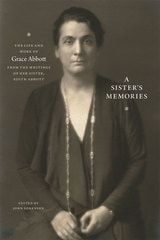
A Sister’s Memories is the inspiring story of Grace Abbott (1878–1939), as told by her sister and social justice comrade, Edith Abbott (1876–1957). Edith recalls in vivid detail the Nebraska childhood, impressive achievements, and struggles of her sister who, as head of the Immigrants’ Protective League and the U.S. Children’s Bureau, championed children’s rights from the slums of Chicago to the villages of Appalachia. Grace’s crusade can perhaps be best summed up in her well-known credo: “Justice for all children is the high ideal in a democracy.” Her efforts saved the lives of thousands of children and immigrants and improved those of millions more. These trailblazing social service works led the way to the creation of the Social Security Act and UNICEF and caused the press to nickname her “The Mother of America’s 43 Million Children.” She was the first woman in American history to be nominated to the presidential cabinet and the first person to represent the United States at a committee of the League of Nations.
Edited by Abbott scholar John Sorensen, A Sister’s Memories is destined to become a classic. It shapes the diverse writings of Edith Abbott into a cohesive narrative for the first time and fills in the gaps of our understanding of Progressive Era reforms. Readers of all backgrounds will find themselves engrossed by this history of the unstoppable, pioneer feminist Abbott sisters.
A Small Boy and Others
Imitation and Initiation in American Culture from Henry James to Andy WarholMichael Moon
Duke University Press, 1998
Moon illuminates the careers of James, Warhol, and others by examining the imaginative investments of their protogay childhoods in their work in ways that enable new, more complex cultural readings. He deftly engages notions of initiation and desire not within the traditional framework of “sexual orientation” but through the disorienting effects of imitation. Whether invoking the artist Joseph Cornell’s early fascination with the Great Houdini or turning his attention to James’s self-described “initiation into style” at the age of twelve—when he first encountered the homoerotic imagery in paintings by David, Géricault, and Girodet—Moon reveals how the works of these artists emerge from an engagement that is obsessive to the point of “queerness.”
Rich in historical detail and insistent in its melding of the recent with the remote, the literary with the visual, the popular with the elite, A Small Boy and Others presents a hitherto unimagined tradition of brave and outrageous queer invention. This long-awaited contribution from Moon will be welcomed by all those engaged in literary, cultural, and queer studies.

A Small World
Smart Houses and the Dream of the Perfect DayDavin Heckman
Duke University Press, 2007
Heckman’s narrative stretches from the early-twentieth-century introduction into the home of electric appliances and industrial time-management techniques, through the postwar advent of television and the space-age “house of tomorrow,” to the contemporary automated, networked “smart home.” He considers all these developments in relation to lifestyle and consumer narratives. Building on the tension between agency and control within the walls of homes designed to anticipate and fulfill desires, Heckman engages debates about lifestyle, posthumanism, and rights under the destabilizing influences of consumer technologies, and he considers the utopian and dystopian potential of new media forms. Heckman argues that the achievement of an environment completely attuned to its inhabitants’ specific wants and needs—what he calls the “Perfect Day”—institutionalizes everyday life as the ultimate consumer practice.

A Small-Town Marriage
La Marchesa Colombi, translated from the Italian by Paula Spurlin Paige
Northwestern University Press, 2002
Denza Dellara is a clumsy Cinderella too big for her hand-me-downs, saddled with a family that frustrates her hopes, and in love with a gargantuan Prince Charming who woos and then betrays her. An engaging Frog Prince appears, and though he has an enormous wart on his forehead, he can end her daydreaming and save her from impending spinsterhood . . . if she lets him.
A Social Gospel for Millions
The Religious Bestsellers of Charles Sheldon, Charles Gordon, and Harold Bell WrightJohn Ferre
University of Wisconsin Press, 1988
In the twentieth century Marxism challenged laissez-faire economics, psychoanalysis reinterpreted the processes of thought, and evolution discredited the idea of creation. These changes profoundly affected American Protestantism. Ferré examines the belief system that underlies what middle-class Protestants chose to read.
A Social History of Truth
Civility and Science in Seventeenth-Century EnglandSteven Shapin
University of Chicago Press, 1994
In A Social History of Truth, Shapin engages these universal questions through an elegant recreation of a crucial period in the history of early modern science: the social world of gentlemen-philosophers in seventeenth-century England. Steven Shapin paints a vivid picture of the relations between gentlemanly culture and scientific practice. He argues that problems of credibility in science were practically solved through the codes and conventions of genteel conduct: trust, civility, honor, and integrity. These codes formed, and arguably still form, an important basis for securing reliable knowledge about the natural world.
Shapin uses detailed historical narrative to argue about the establishment of factual knowledge both in science and in everyday practice. Accounts of the mores and manners of gentlemen-philosophers are used to illustrate Shapin's broad claim that trust is imperative for constituting every kind of knowledge. Knowledge-making is always a collective enterprise: people have to know whom to trust in order to know something about the natural world.
A Socialist Peace?
Explaining the Absence of War in an African CountryMike McGovern
University of Chicago Press, 2017
Guinea is rich in resources, but its people are some of the poorest in the world. Its political situation is polarized by fiercely competitive ethnic groups. Weapons flow freely through its lands and across its borders. And, finally, it is still recovering from the oppressive regime of Sékou Touré. McGovern argues that while Touré’s reign was hardly peaceful, it was successful—often through highly coercive and violent measures—at establishing a set of durable national dispositions, which have kept the nation at peace. Exploring the ambivalences of contemporary Guineans toward the afterlife of Touré’s reign as well as their abiding sense of socialist solidarity, McGovern sketches the paradoxes that undergird political stability.
A Society Transformed
Hungary in Time-Space PerspectiveRichard Rose
Central European University Press, 1999
A Song for the Horses
Musical Heritage for More-than-Human Futures in MongoliaK. G. Hutchins
University of Arizona Press, 2025
Hutchins’s ethnographic research, spanning more than a decade, provides a vivid and intimate portrayal of Mongolian life. Musicians use the morin khuur, or ‘horse fiddle,’ to engage with the subjectivities and agencies of nonhuman animals and other beings. This work is a significant contribution to the posthuman turn in social sciences, engaging with theories from prominent scholars such as Donna Haraway and Anna Tsing .
As climate change continues to impact communities worldwide, this book offers a unique perspective on how cultural heritage can be mobilized to address environmental challenges, providing valuable lessons for global efforts to build sustainable and resilient futures. At the intersection of music, environment, and posthumanism, A Song for the Horses shows how Mongolian musicians use cultural traditions to imagine and build toward alternative futures beyond climate change and neoliberalism.
A Sound History
Lawrence Gellert, Black Musical Protest, and White DenialSteven P. Garabedian
University of Massachusetts Press, 2020
Lawrence Gellert has long been a mysterious figure in American folk and blues studies, gaining prominence in the left-wing folk revival of the 1930s for his fieldwork in the U.S. South. A “lean, straggly-haired New Yorker,” as Time magazine called him, Gellert was an independent music collector, without formal training, credentials, or affiliation. At a time of institutionalized suppression, he worked to introduce white audiences to a tradition of black musical protest that had been denied and overlooked by prior white collectors.
By the folk and blues revival of the 1960s, however, when his work would again seem apt in the context of the civil rights movement, Gellert and his collection of Negro Songs of Protest were a conspicuous absence. A few leading figures in the revival defamed Gellert as a fraud, dismissing his archive of black vernacular protest as a fabrication—an example of left-wing propaganda and white interference. A Sound History is the story of an individual life, an excavation of African American musical resistance and dominant white historiography, and a cultural history of radical possibility and reversal in the defining middle decades of the U.S. twentieth century.
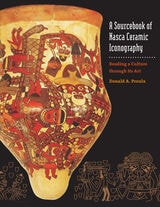
A Sourcebook of Nasca Ceramic Iconography
Reading a Culture through Its ArtProulx, Donald A.
University of Iowa Press, 2006
A Spectacular Leap
Black Women Athletes in Twentieth-Century AmericaJennifer H. Lansbury
University of Arkansas Press, 2014
A Spectacular Secret
Lynching in American Life and LiteratureJacqueline Goldsby
University of Chicago Press, 2006
To pursue this argument, Goldsby traces lynching's history by taking up select mob murders and studying them together with key literary works. She focuses on three prominent authors—Ida B. Wells-Barnett, Stephen Crane, and James Weldon Johnson—and shows how their own encounters with lynching influenced their analyses of it. She also examines a recently assembled archive of evidence—lynching photographs—to show how photography structured the nation's perception of lynching violence before World War I. Finally, Goldsby considers the way lynching persisted into the twentieth century, discussing the lynching of Emmett Till in 1955 and the ballad-elegies of Gwendolyn Brooks to which his murder gave rise.
An empathic and perceptive work, A Spectacular Secret will make an important contribution to the study of American history and literature.
A Spectrum of Unfreedom
Captives and Slaves in the Ottoman EmpireLeslie Peirce
Central European University Press, 2021
Without the labor of the captives and slaves, the Ottoman empire could not have attained and maintained its strength in early modern times. With Anatolia as the geographic focus, Leslie Peirce searches for the voices of the unfree, drawing on archives, histories written at the time, and legal texts.
Unfree persons comprised two general populations: slaves and captives. Mostly household workers, slaves lived in a variety of circumstances, from squalor to luxury. Their duties varied with the status of their owner. Slave status might not last a lifetime, as Islamic law and Ottoman practice endorsed freeing one’s slave.
Captives were typically seized in raids, generally to disappear, their fates unknown. Victims rarely returned home, despite efforts of their families and neighbors to recover them. The reader learns what it was about the Ottoman environment of the sixteenth and seventeenth centuries that offered some captives the opportunity to improve the conditions of their bondage. The book describes imperial efforts to fight against the menace of captive-taking despite the widespread corruption among the state’s own officials, who had their own interest in captive labor.
From the fortunes of captives and slaves the book moves to their representation in legend, historical literature, and law, where, fortunately, both captors and their prey are present.
A Stage of Their Own
Feminist Playwrights of the Suffrage EraSheila Stowell
University of Michigan Press, 1994
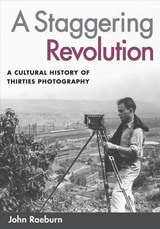
A Staggering Revolution
A Cultural History of Thirties PhotographyJohn Raeburn
University of Illinois Press, 2006
While other studies of thirties photography have concentrated on the documentary work of the Farm Security Administration (FSA), no previous book has considered it alongside so many of the decade's other important photographic projects. A Staggering Revolution includes individual chapters on Edward Steichen's celebrity portraiture; Berenice Abbott's Changing New York project; the Photo League's ethnography of Harlem; and Edward Weston's western landscapes, made under the auspices of the first Guggenheim Fellowship awarded to a photographer. It also examines Margaret Bourke-White's industrial and documentary pictures, the collective undertakings by California's Group f.64, and the fashion magazine specialists, as well as the activities of the FSA and the Photo League.
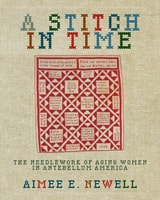
A Stitch in Time
The Needlework of Aging Women in Antebellum AmericaAimee E. Newell
Ohio University Press, 2014
Drawing from 167 examples of decorative needlework—primarily samplers and quilts from 114 collections across the United States—made by individual women aged forty years and over between 1820 and 1860, this exquisitely illustrated book explores how women experienced social and cultural change in antebellum America.
The book is filled with individual examples, stories, and over eighty fine color photographs that illuminate the role that samplers and needlework played in the culture of the time. For example, in October 1852, Amy Fiske (1785–1859) of Sturbridge, Massachusetts, stitched a sampler. But she was not a schoolgirl making a sampler to learn her letters. Instead, as she explained, “The above is what I have taken from my sampler that I wrought when I was nine years old. It was w[rough]t on fine cloth [and] it tattered to pieces. My age at this time is 66 years.”
Situated at the intersection of women’s history, material culture study, and the history of aging, this book brings together objects, diaries, letters, portraits, and prescriptive literature to consider how middle-class American women experienced the aging process. Chapters explore the physical and mental effects of “old age” on antebellum women and their needlework, technological developments related to needlework during the antebellum period and the tensions that arose from the increased mechanization of textile production, and how gift needlework functioned among friends and family members. Far from being solely decorative ornaments or functional household textiles, these samplers and quilts served their own ends. They offered aging women a means of coping, of sharing and of expressing themselves. These “threads of time” provide a valuable and revealing source for the lives of mature antebellum women.
Publication of this book was made possible in part through generous funding from the Coby Foundation, Ltd and from the Quilters Guild of Dallas, Helena Hibbs Endowment Fund.

A Story Larger than My Own
Women Writers Look Back on Their Lives and CareersEdited by Janet Burroway
University of Chicago Press, 2014
Kumin, who went on to win the Pulitzer Prize for poetry, was part of a groundbreaking generation of women writers who came of age during the midcentury feminist movement. By challenging the status quo and ultimately finding success for themselves, they paved the way for future generations of writers. In A Story Larger than My Own, Janet Burroway brings together Kumin, Julia Alvarez, Jane Smiley, Erica Jong, and fifteen other accomplished women of this generation to reflect on their writing lives.
The essays and poems featured in this collection illustrate that even writers who achieve critical and commercial success experience a familiar pattern of highs and lows over the course of their careers. Along with success comes the pressure to sustain it, as well as a constant search for subject matter, all too frequent crises of confidence, the challenges of a changing publishing scene, and the difficulty of combining writing with the ordinary stuff of life—family, marriage, jobs. The contributors, all now over the age of sixty, also confront the effects of aging, with its paradoxical duality of new limitations and newfound freedom.
Taken together, these stories offer advice from experience to writers at all stages of their careers and serve as a collective memoir of a truly remarkable generation of women.
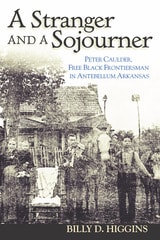
A Stranger and a Sojourner
Peter Caulder, Free Black Frontiersman in Antebellum ArkansasBilly D. Higgins
University of Arkansas Press, 2004
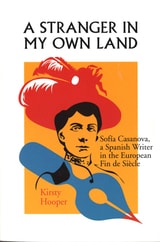
A Stranger in My Own Land
Sofia Casanova, a Spanish Writer in the European Fin de SiecleKirsty Hooper
Vanderbilt University Press, 2008
This study addresses the scandalous disappearance of Casanova and her female contemporaries from accounts of the emergence of the modern Spanish nation. Arguing that women's perceived silence during this critical period in the formation of modern Iberian identities has significant repercussions even today, it takes her works as a case study for modeling a radical rethinking of the way we teach and research the crucial years around the turn of the twentieth century. The first study of Casanova's radical and compelling, but now forgotten, early narrative, it explores the Galician, Polish and Spanish context of her work, arguing that her transnational career demonstrates the inadequacies of existing models of national literary history. At the same time, recognizing Casanova's innovative and strategic use of literary genres and techniques traditionally denominated as "feminine" (and therefore excluded from discussions of "serious" national literature), it provides a model for re-evaluating the vast cultural store of popular and sentimental literature as a key part of the debates about the transition to modernity, in Spain and beyond.