Results by title
490 books match the query 'Asian' and 15 start with b
Barricade
Utpal Dutt
Seagull Books, 2022
Although Utpal Dutt is acknowledged as a trailblazer of post-Independence Indian theater, English readers have not had access to the range and wealth of his drama. Barricade is a political play that stages the Nazi takeover of Germany in 1933 with an eye on India. Today, the surge to power of far-right parties and fundamentalist fanaticism across the world means that the co-option of democracy and civil society that led to Nazi fascism can happen again—or indeed has already happened—granting Barricade its immediate urgency. Equipped with an introduction analyzing its historical context, this translation of Barricade is also a very rare product in dramatic literature, collating both the printed original as well as a documented performance of the production directed by Dutt.
Be Water
Collective Improvisation in Hong Kong's Anti-Extradition ProtestsMing-sho Ho
Temple University Press, 2025
In Be Water, Ming-sho Ho examines the dynamics of the city-wide uprising from the perspective of agency power. He seeks to understand how numerous and anonymous Hongkongers contributed to this epoch-making campaign as well as how they responded to the full-scale state repression that enveloped them. Ho praises and questions the durability of the inventive Be Water Revolution and how the activists encouraged protests spontaneously, through interpersonal networks and by voluntarily collaborating with strangers at great personal risk.
Ho posits a new concept of “collective improvisation” to make sense of such a decentralized yet creative way of protesting. Be Water seeks to understand the rise and long afterlife of this movement and illustrate its efficacy. As Ho shows, these dynamics of collective improvisation have implications for contemporary protest movements around the world.

Beachlight
PoemsCyril Wong
Seagull Books, 2023
Beachlight is a sustained poem divided into smaller parts that take on the anonymous voices of those lost and forgotten. A walk along a Singaporean beach transforms into a meditation that bridges an ecological consciousness to the sexual and the homoerotic. The poems in Beachlight expose revelations about the nature of desire, inviting readers to walk beside—and inside—them, reminding us of what we gain when we abandon ourselves to nature and exhorting us to reclaim our primordial connections to the world and to one another.
Before the Nation
Kokugaku and the Imagining of Community in Early Modern JapanSusan L. Burns
Duke University Press, 2003
Central to Burns's analysis is Motoori Norinaga’s Kojikiden, arguably the most important intellectual work of Japan's early modern period. Burns situates the Kojikiden as one in a series of attempts to analyze and interpret the mythohistories dating from the early eighth century, the Kojiki and Nihon shoki. Norinaga saw these texts as keys to an original, authentic, and idyllic Japan that existed before being tainted by "flawed" foreign influences, notably Confucianism and Buddhism. Hailed in the nineteenth century as the begetter of a new national consciousness, Norinaga's Kojikiden was later condemned by some as a source of Japan's twentieth-century descent into militarism, war, and defeat. Burns looks in depth at three kokugaku writers—Ueda Akinari, Fujitani Mitsue, and Tachibana Moribe—who contested Norinaga's interpretations and produced competing readings of the mythohistories that offered new theories of community as the basis for Japanese social and cultural identity. Though relegated to the footnotes by a later generation of scholars, these writers were quite influential in their day, and by recovering their arguments, Burns reveals kokugaku as a complex debate—involving history, language, and subjectivity—with repercussions extending well into the modern era.
Behind the Red Mist
Short Fiction by Ho Anh ThaiHo Anh Thai
Northwestern University Press, 1998
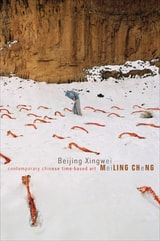
Beijing Xingwei
Contemporary Chinese Time-based ArtMeiling Cheng
Seagull Books, 2013
From cannibalism to light-calligraphy, from self-harming to animal sacrifice, from meat entwined with sex toys to a commodity-embedded ice wall, the idiosyncratic output of Chinese time-based art over the past twenty-five years has invigorated contemporary global art movements and conversation. In Beijing Xingwei, Meiling Cheng engages with such artworks created to mark China's rapid social, economical, cultural, intellectual, and environmental transformations in its post-Deng era.
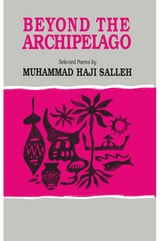
Beyond the Archipelago
Selected PoemsMuhammad Haji Salleh
Ohio University Press, 1994
A collections of 70 poems from one of Malaya’s leading poets, that depict longing, loneliness, modernization, and insights in Malaysian culture.
Beyond the Gender Gap in Japan
Gill Steel, Editor
University of Michigan Press, 2019
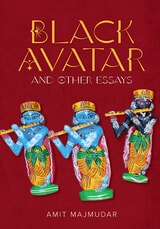
Black Avatar
and Other EssaysAmit Majmudar
Acre Books, 2023
The eight pieces in this deeply engaging volume reflect author Amit Majmudar’s comprehensive studies of American, European, and Indian traditions, as well as his experiences in both suburban Ohio and the western Indian state of Gujarat. The volume begins with the title piece, a fifteen-part examination of “How Colorism Came to India.” Tracing the evolution of India’s bias in favor of light skin, Majmudar reflects on the effects of colonialism, drawing upon sources ranging from early Sanskrit texts to contemporary film and television.
Other essays illuminate subjects both timely and timeless. “The Ramayana and the Birth of Poetry” discusses how suffering is portrayed in art and literature (“The spectrum of suffering: slapstick on one end, scripture on the other, with fiction and poetry . . . in the vastness between them”), while in “Five Famous Asian War Photographs”—a 2018 Best American Essays selection—Majmudar analyzes why these iconic images of atrocity have such emotional resonance. In “Nature/Worship,” another multi-part piece, the author turns his attention to climate change, linking notions of environmentalism to his ancestral tradition of finding divinity within the natural world, connections that form the basis of religious belief.
Perhaps the greatest achievement of these wide-ranging essays is the prose itself—learned yet lively, erudite yet accessible—nimbly revealing the workings of a wonderfully original mind.
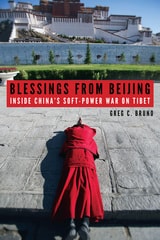
Blessings from Beijing
Inside China's Soft-Power War on TibetGreg C. Bruno
University Press of New England, 2018

Blue Selvage
Preeti Parikh
Tupelo Press, 2026
Blue Selvage reminds us that a revolutionary message often requires new forms of discourse.
The poems in Blue Selvage weave lyric, essay, documentary fragments, and historical reckoning into an exploration of skin, cloth, color, and form as living archives—where the gendered, racialized, and colonial histories inscribed on the body are continually exposed, resisted, and re-stitched through memory, touch, and language itself.
Preeti Parikh’s debut poetry collection is a mapping of boundaries, a (re)framing of fractured interiority, a text(ile) unfurling across shifting homelands. In this deeply embodied, formally daring meditation, the corpus is both archive and threshold, a site where “what’s felt becomes the body, what’s draped becomes form.” Here, passion for indigo, a medical-science informed perspective, fascination with the materiality of cloth and skin, and a journeying towards reclamation interlace with feminist inquiries and cultural examination to conceptualize the poems’ multivalent inhabitances.
Expansive in its rhetorical modes and landscapes, Blue Selvage is unified by a remarkable singularity of voice and vision through which Parikh skillfully invokes form as metaphor, performance, dramatization, and content. Throughout the book, recurrent vocabularies and silences—integument, selvage, gaze—operate as warp and weft, binding personal experience to collective striving, devotion, and survival. Meanwhile, on the page, multilingual textures and typographic openness resist closure, offering apertures for looking within and without. What emerges is a capacious field of attention, where intimacy and history press against one another, and where writing itself becomes an act of unstitching and re-making—an ethical, sensuous practice of staying with what the body remembers and what culture would prefer to erase.
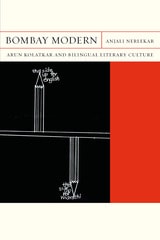
Bombay Modern
Arun Kolatkar and Bilingual Literary CultureAnjali Nerlekar
Northwestern University Press, 2016
Bombay Modern uncovers an alternative and provincial modernism through poetry, a genre that is marginal to postcolonial studies, and through bilingual scholarship across English and Marathi texts, a methodology that is currently peripheral at best to both modernist studies and postcolonial literary criticism in India. Eschewing any attempt to define an overarching or universal modernism, Bombay Modern delimits its sphere of study to "Bombay" and to the "post-1960" (the sathottari period) in an attempt to examine at close range the specific way in which this poetry redeployed the regional, the national, and the international to create a very tangible yet transient local.

Breaking the Chains
Gender, Context, and the Politics of Writing in Modern ChinaDong Limin
Seagull Books, 2025
How has literature shaped gender politics in modern China? How has the concept of “woman” evolved within the shifting sociopolitical landscape? Old Chains and New delves into these questions by examining the dynamic interplay between literature, gender, and historical change. Drawing from literary studies, history, and sociology, this book reveals how women’s writing has not only reflected but also actively shaped cultural and national transformations.
From the late Qing era, when the “woman question” emerged as part of China’s response to imperialist pressures, to the ongoing evolution of feminist literary scholarship, this study argues that gender and literature are deeply interwoven. Women’s liberation in modern China was never solely about gender equality—it became a driving force for broader social change and national identity formation. Engaging with the complexities of women’s literature through a cultural-political lens, this book challenges static definitions and calls for a reevaluation of women’s literature not just as a literary category but as a key component in shaping China’s modern intellectual and cultural history.
By adopting the framework of “China as method,” Old Chains and New reimagines the role of literature in ideological and cultural shifts. It highlights women’s writing as a unique form of aesthetic politics—one with the power to intervene in and transform reality.
Brown River, White Ocean
An Anthology of Twentieth-Century Philippine Literature in EnglishFrancia, Luis H
Rutgers University Press, 1993
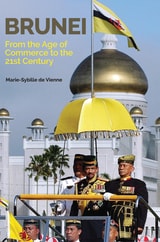
Brunei
From the Age of Commerce to the 21st CenturyMarie-Sybille de Vienne
National University of Singapore Press, 2015
Today home to some 393,000 inhabitants and comprising 5,765 square kilometers in area, Brunei first appears in the historical record at the end of the 10th century. After the Spanish attack of 1578, Brunei struggled to regain and expand its control on coastal West Borneo and to remain within the trading networks of the South China Sea. It later fell under British sway, and a residency was established in 1906, but it took the discovery of oil in Seria in 1929 before the colonial power began to establish the bases of a modern state.
Governed by an absolute monarchy, Bruneians today nonetheless enjoy a high level of social protection and rule of law. Ranking second (after Singapore) in Southeast Asia in terms of standards of living, the sultanate is implementing an Islamic penal code for the first time of its history. Focusing on Brunei’s political economy, history and geography, this book aims to understand the forces behind Brunei’s to-and-fro of tradition and modernisation.