Results by title
264 books match the query 'Asian Studies' and 21 start with b
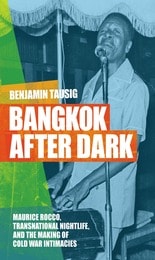
Bangkok after Dark
Maurice Rocco, Transnational Nightlife, and the Making of Cold War IntimaciesBenjamin Tausig
Duke University Press, 2025
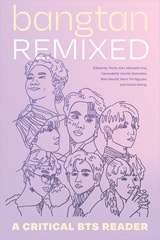
Bangtan Remixed
A Critical BTS ReaderPatty Ahn, Michelle Cho, Vernadette Vicuña Gonzalez, Rani Neutill, Mimi Thi Nguyen, and Yutian Wong, editors
Duke University Press, 2024
Contributors. Andrea Acosta, Patty Ahn, Carolina Alves, Inez Amihan Anderson, Allison Anne Gray Atis, Kaina “Kai” Bernal, Mutlu Binark, Jheanelle Brown, Sophia Cai, Michelle Cho, Mariam Elba, Ameena Fareeda, Vernadette Vicuña Gonzalez, Rosanna Hall, Dal Yong Jin, JIN Youngsun, Despina Kakoudaki, Yuni Kartika, Alptekin Keskin, Rachel Kuo, Marci Kwon, Courtney Lazore, Regina Yung Lee, S. Heijin Lee, Wonseok Lee, Amanda Lovely, Melody Lynch-Kimery, Maria Mison, Noel Sajid I. Murad, Sara Murphy, UyenThi Tran Myhre, Rani Neutill, Johnny Huy Nguyễn, Mimi Thi Nguyen, Karlina Octaviany, Nykeah Parham, Stefania Piccialli, Raymond San Diego, Hannah Ruth L. Sison, Prerna Subramanian, Havannah Tran, Andrew Ty, Gracelynne West, Yutian Wong, Jaclyn Zhou
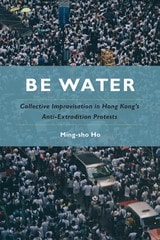
Be Water
Collective Improvisation in Hong Kong's Anti-Extradition ProtestsMing-sho Ho
Temple University Press, 2025
In Be Water, Ming-sho Ho examines the dynamics of the city-wide uprising from the perspective of agency power. He seeks to understand how numerous and anonymous Hongkongers contributed to this epoch-making campaign as well as how they responded to the full-scale state repression that enveloped them. Ho praises and questions the durability of the inventive Be Water Revolution and how the activists encouraged protests spontaneously, through interpersonal networks and by voluntarily collaborating with strangers at great personal risk.
Ho posits a new concept of “collective improvisation” to make sense of such a decentralized yet creative way of protesting. Be Water seeks to understand the rise and long afterlife of this movement and illustrate its efficacy. As Ho shows, these dynamics of collective improvisation have implications for contemporary protest movements around the world.
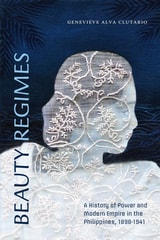
Beauty Regimes
A History of Power and Modern Empire in the Philippines, 1898–1941Genevieve Alva Clutario
Duke University Press, 2023
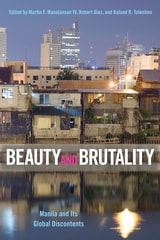
Beauty and Brutality
Manila and Its Global DiscontentsEdited by Martin F. Manalansan IV, Robert Diaz, and Roland B. Tolentino
Temple University Press, 2023
Beauty and Brutality provides an exciting, original, and critical encounter with this labyrinthine city’s imagined and material landscape. The authors and contributors investigate the “messy, fleshy, recalcitrant, mercurial, and immeasurable qualities of the city,” examining its urban space and smell: how it is represented in films, literature, music, and urban streetart; how it has endured the politics of colonialism, U.S. imperialism, neoliberalism, and globalization; as well as how its queer citizens engage with digital media platforms to communicate and connect with each other.
The first volume to offer a cultural and urban studies approach to Manila, Beauty and Brutality considers the tensions of the Filipino diaspora as they migrate and “re-turn,” as well as the citizens’ responses to the Marcos (and post-Marcos) dictatorship, President Duterte’s authoritarianism, and “Drug War.” Essays also map out of geographies of repression and resistance in the urban war of classes, genders and sexualities, ethnicities and races, and generations, along with the violence of urban life and growth. Ultimately, Beauty and Brutality frames Manila as a vibrant and ever-evolving metropolis that, even in the face of its difficulties, instills hope.
Contributors: Paul Michael Leonardo Atienza, Christine Bacareza Balance, Vanessa Banta, Rosa Cordillera A. Castillo, Roland Sintos Coloma, Gary C. Devilles, Faith R. Kares, John B. Labella, Raffy Lerma, Bliss Cua Lim, Ferdinand M. Lopez, Paul Nadal, Jema M. Pamintuan, Oscar Tantoco Serquiña, Jr., Louise Jashil R. Sonido, and the editors.
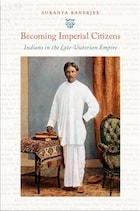
Becoming Imperial Citizens
Indians in the Late-Victorian EmpireSukanya Banerjee
Duke University Press, 2010
Interpreting autobiography, fiction, election speeches, economic analyses, parliamentary documents, and government correspondence, Banerjee foregrounds the narrative logic sustaining the unprecedented claims to citizenship advanced by racialized colonial subjects. She focuses on the writings of figures such as Dadabhai Naoroji, known as the first Asian to be elected to the British Parliament; Surendranath Banerjea, among the earliest Indians admitted into the Indian Civil Service; Cornelia Sorabji, the first woman to study law in Oxford and the first woman lawyer in India; and Mohandas K. Gandhi, who lived in South Africa for nearly twenty-one years prior to his involvement in Indian nationalist politics. In her analysis of the unexpected registers through which they carved out a language of formal equality, Banerjee draws extensively from discussions in both late-colonial India and Victorian Britain on political economy, indentured labor, female professionalism, and bureaucratic modernity. Signaling the centrality of these discussions to the formulations of citizenship, Becoming Imperial Citizens discloses a vibrant transnational space of political action and subjecthood, and it sheds new light on the complex mutations of the category of citizenship.
Being Chinese, Becoming Chinese American
Shehong Chen
University of Illinois Press, 2002
The 1911 revolution in China sparked debates that politicized and divided Chinese communities in the United States. People in these communities affirmed traditional Chinese values and expressed their visions of a modern China, while nationalist feelings emboldened them to stand up for their rights as an integral part of American society. When Japan threatened the China's young republic, the Chinese response in the United States revealed the limits of Chinese nationalism and the emergence of a Chinese American identity.
Shehong Chen investigates how Chinese immigrants to the United States transformed themselves into Chinese Americans during the crucial period between 1911 and 1927. Chen focuses on four essential elements of a distinct Chinese American identity: support for republicanism over the restoration of monarchy; a wish to preserve Confucianism and traditional Chinese culture; support for Christianity, despite a strong anti-Christian movement in China; and opposition to the Nationalist party's alliance with the Soviet Union and cooperation with the Chinese Communist Party.
Sensitive and enlightening, Being Chinese, Becoming Chinese American documents how Chinese immigrants survived exclusion and discrimination, envisioned and maintained Chineseness, and adapted to American society.
Being Dead Otherwise
Anne Allison
Duke University Press, 2023
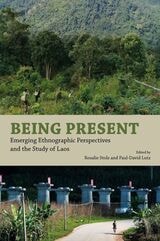
Being Present
Emerging Ethnographic Perspectives and the Study of LaosEdited by Rosalie Stolz and Paul-David Lutz
National University of Singapore Press, 2026
Ethnography has long called on researchers to immerse themselves in the worlds they study—but what does it mean to “be present” in the field today? Being Present investigates this question through innovative research on Laos, a country rapidly changing at the crossroads of Southeast Asia and China. This volume brings together a new generation of scholars to explore Chinese-built railways, shifting farmlands, urban mourning rituals, and changing aspirations in Laos.
Covering infrastructure, health, trade, and spirituality, these studies challenge assumptions about ethnography. They show how immersion and reflexivity remain essential in a connected world. Being Present offers a fresh look at contemporary Laos and a timely reflection on ethnographic practice.
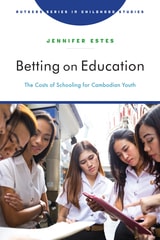
Betting on Education
The Costs of Schooling for Cambodian YouthJennifer Estes
Rutgers University Press, 2025
Educational credentials are one of the most reliable tickets to a middle-class livelihood across the globe today. But as the costs of schooling rise, young people increasingly wonder whether their investment will pay off. Betting on Education: The Costs of Schooling for Cambodian Youth follows the experiences of rural secondary school students navigating Cambodia’s semiprivatized state education system. It reveals that when students are compelled to speculate about the value of their education, the “winners” of this gamble are the ones already most securely part of the middle class. The rest are left behind. In the process, the very meaning of education is transformed, as schooling becomes less about learning and more about its potential financial returns. By situating these stories in the wider global logics of neoliberal capitalism, Betting on Education challenges readers to consider what is at stake when young people must wager so much on the promise of schooling.
Between Families and Institutions
Mental Health and Biopolitical Paternalism in Contemporary ChinaZhiying Ma
Duke University Press, 2025
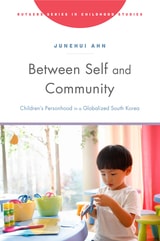
Between Self and Community
Children’s Personhood in a Globalized South KoreaJunehui Ahn
Rutgers University Press, 2023
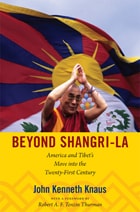
Beyond Shangri-La
America and Tibet's Move into the Twenty-First CenturyJohn Kenneth Knaus
Duke University Press, 2012
Since the late 1950s, the rugged resolve of the Dalai Lama and his people and the growing respect for their efforts to free their homeland from Chinese occupation have made Tibet's political and cultural status a pressing issue in international affairs. So has the realization by nations, including the United States, that their geopolitical interests would best be served by the defeat of the Chinese and the achievement of Tibetan self-determination. Beyond Shangri-La provides unique insight into the efforts of the U.S. government and committed U.S. citizens to support a free Tibet.
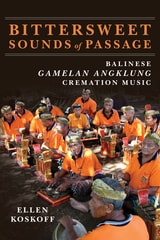
Bittersweet Sounds of Passage
Balinese Gamelan Angklung Cremation MusicEllen Koskoff
University of Illinois Press, 2025
Koskoff examines the history, cultural significance, and musical structures of contemporary gamelan angklung cremation music through the lens of three intertwined stories: existing scholarship on this music, written mostly by Western composers and scholars; the views of those performing and experiencing the music who regard it as dharma--ritual obligation, a basic concept in Balinese Hinduism; and the music itself, with a musical analysis focusing on changes in rasa--feeling, flavor and musical flow.
A journey inside a tradition, Bittersweet Sounds of Passage reveals the overlooked music of an important ritual in Balinese village life.
Bollywood’s New Woman
Liberalization, Liberation, and Contested BodiesMegha Anwer
Rutgers University Press, 2021
Bong Joon Ho
Joseph Jonghyun Jeon
University of Illinois Press, 2024
Insightful and engaging, Bong Joon Ho offers an up-to-date analysis of the genre-bending international director.
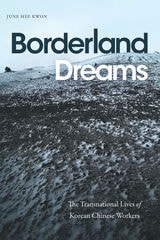
Borderland Dreams
The Transnational Lives of Korean Chinese WorkersJune Hee Kwon
Duke University Press, 2023
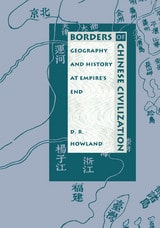
Borders of Chinese Civilization
Geography and History at Empire's EndD. R. Howland
Duke University Press, 1996
With Japan’s decision in the 1870s to modernize and westernize, China’s relationship with Japan underwent a crucial change—one that resulted in its decisive separation from Chinese civilization and, according to Howland, a destabilization of China’s worldview. His examination of the ways in which Chinese perceptions of Japan altered in the 1880s reveals the crucial choice faced by the Chinese of whether to interact with Japan as “kin,” based on geographical proximity and the existence of common cultural threads, or as a “barbarian,” an alien force molded by European influence.
By probing China’s poetic and expository modes of portraying Japan, Borders of Chinese Civilization exposes the changing world of the nineteenth century and China’s comprehension of it. This broadly appealing work will engage scholars in the fields of Asian studies, Chinese literature, history, and geography, as well as those interested in theoretical reflections on travel or modernism.
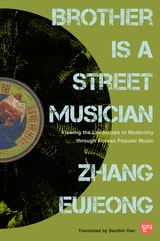
Brother Is a Street Musician
Viewing the Landscape of Modernity Through Korean Popular MusicZhang Eujeong
Rutgers University Press, 2026
The history of the Korean popular music industry dates back a century before the beginnings of K-Pop, to when the Korean peninsula was still under Japanese rule. Though Koreans didn’t have an independent country, they were still able to use recorded music to assert a distinct cultural identity.
Brother Is a Street Musician chronicles the development of Korean popular music over the first half of the twentieth century, examining both industry trends and talented composers and performers like Nam Insu and Yi Nanyǒng. Drawing from rare archives of gramophone records and lyric books, musicologist Zhang Eujeong shows how Korean musicians drew from folk traditions to create totally new genres, ranging from comic songs to Western-influenced jazz records. She also includes English translations and detailed analyses of lyrics from some of the era’s most popular songs.
A landmark study of Korean music, now available in English for the first time, Brother Is a Street Musician tells the inspiring story of how a colonized people developed their own form of popular music, planting the seeds for an industry that would grow to export Korean culture around the world.
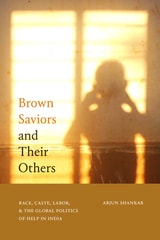
Brown Saviors and Their Others
Race, Caste, Labor, and the Global Politics of Help in IndiaArjun Shankar
Duke University Press, 2023
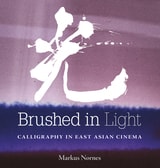
Brushed in Light
Calligraphy in East Asian CinemaMarkus Nornes
University of Michigan Press, 2021
Drawing on a millennia of calligraphy theory and history, Brushed in Light examines how the brushed word appears in films and in film cultures of Korea, Japan, Taiwan, Hong Kong, and PRC cinemas. This includes silent era intertitles, subtitles, title frames, letters, graffiti, end titles, and props. Markus Nornes also looks at the role of calligraphy in film culture at large, from gifts to correspondence to advertising. The book begins with a historical dimension, tracking how calligraphy is initially used in early cinema and how it is continually rearticulated by transforming conventions and the integration of new technologies. These chapters ask how calligraphy creates new meaning in cinema and demonstrate how calligraphy, cinematography, and acting work together in a single film. The last part of the book moves to other regions of theory. Nornes explores the cinematization of the handwritten word and explores how calligraphers understand their own work.