Results by title
5159 books match the query 'Biography' and 297 start with b

BIRTHMARK
CLINGMAN STEPHEN
University of Massachusetts Press, 0

BLACK SWAMP FARM
Howard E. Good
The Ohio State University Press, 1997
Good remembers playing shinny with clamp-on skates and a tin can that had been stomped until it could whiz across the ice given just the right combination of speed and accuracy. He tells of the boom of the steam engine as it pulled the threshing machine to a neighboring farm on a hot summer day, and of the excitement of riding high on a wagonload of hay, gazing down on the horses’ broad, shining backs. He describes the springtime task of making soap, the ritual of the shivaree, and the pleasure of the church ice-cream social. He remembers well—and chronicles for the reader—the unproclaimed achievements of men and women whose courage and grueling toil brought them rich rewards.
First published in 1967, this reprint makes available once again a faithful portrayal of Black Swamp—a place that no longer exists—and provides a treasure trove of history for Ohioans.

BUILDERS OF OHIO
A Biographical HistoryEdited by Warren Van Tine and Michael Pierce
The Ohio State University Press, 2003

Babe
The Life and Legend of Babe Didrikson ZahariasSusan E. Cayleff
University of Illinois Press, 1995
An extraordinarily gifted athlete, Babe Didrikson Zaharias starred in track and field and won three Olympic medals in 1932. She picked up golf late yet quickly dominated the women's sport. She also competed in baseball, bowling, basketball, and tennis.
Interviews with members of Babe's family, peers, and others inform Susan E. Cayleff’s story of the athlete and the difficulties she faced as a woman trying to be her own person. The American public was smitten with Babe’s wit, frankness, and "unladylike" bravado. But members of the press insinuated that her femininity, even her femaleness, were suspect. Cayleff looks at how Babe used her androgyny and athleticism to promote herself before crafting a more marketable female persona for golf. She also explores Babe’s role as a cofounder of the Ladies Professional Golf Association (LPGA); her marriage to George Zaharias and their partnership in shaping her career; her romantic relationship with fellow golfer Betty Dodd; and her courageous public fight against cancer.
Babylon Girls
Black Women Performers and the Shaping of the ModernJayna Brown
Duke University Press, 2008
Investigating both well-known performers such as Ada Overton Walker and Josephine Baker and lesser-known artists such as Belle Davis and Valaida Snow, Brown weaves the histories of specific singers and dancers together with incisive theoretical insights. She describes the strange phenomenon of blackface performances by women, both black and white, and she considers how black expressive artists navigated racial segregation. Fronting the “picaninny choruses” of African American child performers who toured Britain and the Continent in the early 1900s, and singing and dancing in The Creole Show (1890), Darktown Follies (1913), and Shuffle Along (1921), black women variety-show performers of the early twentieth century paved the way for later generations of African American performers. Brown shows not only how these artists influenced transnational ideas of the modern woman but also how their artistry was an essential element in the development of jazz.
Back Cast
Fly-Fishing and Other Such MattersJeff Metcalf
University of Utah Press, 2018
These essays are much more than fish stories; they reveal the community and communion of fishing and the bonds to place the author nurtured through it. Whether he recalls carousing and tale-swapping with friends or excellence found through the challenge of the cast, Metcalf’s words, sometimes roiling and turbulent, sometimes calm and reflective, like a western river, vividly convey the pull of the steelhead and the fight for survival. Whether or not you fish, Metcalf’s sharp-eyed, open and honest look at life will draw you in.
"These waters have been my home, and I fish them more than most. In truth, they have saved my life on more than a few occasions. I seek refuge in the quiet solitude of rivers, and in dark hours of my life—including this particular year—I need desperately to be fly-fishing." —From the book
Back Home
Journeys through MobileRoy Hoffman
University of Alabama Press, 2007
After twenty years in New York City, a prize-winning writer takes a "long look back" at his hometown of Mobile, Alabama.
In Back Home: Journeys through Mobile, Roy Hoffman tells stories—through essays, feature articles, and memoir—of one of the South's oldest and most colorful port cities. Many of the pieces here grew out of Hoffman's work as Writer-in-Residence for his hometown newspaper, the Mobile Register, a position he took after working in New York City for twenty years as a journalist, fiction writer, book critic, teacher, and speech writer. Other pieces were first published in the New York Times, Southern Living, Preservation, and other publications. Together, this collection comprises a long, second look at the Mobile of Hoffman's childhood and the city it has since become.
Like a photo album, Back Home presents close-up portraits of everyday places and ordinary people. There are meditations on downtown Mobile, where Hoffman's grandparents arrived as immigrants a century ago; the waterfront where longshoremen labor and shrimpers work their nets; the back roads leading to obscure but intriguing destinations. Hoffman records local people telling their own tales of race relations, sports, agriculture, and Mardi Gras celebrations. Fishermen, baseball players, bakers, authors, political figures--a strikingly diverse population walks across the stage of Back Home.
Throughout, Hoffman is concerned with stories and their enduring nature. As he writes, "When buildings are leveled, when land is developed, when money is spent, when our loved ones pass on, when we take our places a little farther back every year on the historical time-line, what we have still are stories."

Back Talk
Teaching Lost Selves to SpeakJoan Weimer
University of Chicago Press, 1996
In this elegant, humorous, and brutally frank memoir, Weimer's discoveries—documentative and imaginative, historical and personal—reveal much about what motivates research, and what motivates healing.

Back To Birmingham
Richard Arrington, Jr., and His TimesJimmie Lewis Franklin
University of Alabama Press, 1989
During the 1960s, Birmingham, Alabama was the central battleground in the struggle for human rights in the American South. As one of the most segregated cities in the United States, the city of Birmingham became infamous for its suppression of civil rights and for official and vigilante violence against its African American citizens, most notoriously the use of explosives in the Sixteenth Street Baptist Church bombing and the bombing of the home of Reverend Fred Shuttlesworth.
In October of 1979, Birmingham elected its first Black mayor, Richard Arrington Jr. He was born in the rural town of Livingston, Alabama. His family moved to Birmingham when he was a child. A man of quiet demeanor, he was nevertheless destined to bring to fruition many of the fundamental changes that the Civil Rights Movement had demanded. This is his story. Not a conventional political or Civil Rights history, Back to Birmingham is the story of a man who demonstrated faith in his region and people. The work illuminates Arrington's sense of place, a quality that enables a person to claim sentimentally a portion of the natural and human environment. Franklin passionately underscores the importance of the attachment of Southern Blacks to their land and place.
Back to Birmingham will appeal to both the general reader and the serious student of American society. The book endeavors to bridge the gap between popular and scholarly history. It is guided by the assumption that Americans of whatever description can find satisfaction in comprehending social change and that they are buoyed by the individual triumph of those who beat the odds.

Back to Bizkaia
A Basque-American MemoirVince J. Juaristi
University of Nevada Press, 2011
Nevada sheep rancher Joe Juaristi spoke for years about making a trip back to the Spanish Basque Country that he left sixty years earlier, but each time the subject came up the discussion evolved into a family debate about the scope and members of the journey. Finally Joe's son, Vince, secretly resolved to organize the trip that his father wanted and needed--the two of them, traveling alone, making a quiet reunion with Joe's twin sister, who suffers from Alzheimer's, visiting other aging siblings and friends, and recounting the places that formed Joe's memories of his youth.
Back to Bizkaia is part travel book, part memoir of two men exploring their mutual roots and their unique father-son bond. The narrative intertwines an engaging account of the contemporary Basque Country with Joe's experiences as an immigrant making his way in a new country and Vince's memories of growing up in a close Basque-American community in the American West. This is a book about Basques and their American families, but on another level it is every immigrant's story of return to a beloved homeland.
Backcountry Pilot
Flying Adventures with Ike RussellEdited by Thomas Bowen
University of Arizona Press, 2002
This book combines biography and oral history by offering a wide range of anecdotes and remembrances about Ike by friends and family. Many describe the great adventures and gut-wrenching close calls that have become enshrined in local folklore as classic "Ike Russell stories," in all their hair-raising and hilarious splendor.
Russell was an easterner who moved to Arizona for his health and got his pilot's license in 1948—despite suffering from a respiratory disorder that would have kept other men firmly anchored to the ground. Over the years he flew scientists and other scholars to remote field locations in Mexico's Gulf of California and Sierra Madre Occidental that otherwise might not have been investigated. He often landed on short and dangerous airstrips and never seemed to mind running out of gas, getting caught without provisions, or attempting night landings in unlighted terrain. He took along a teapot wherever he went—and wherever he stopped, his first priority was to brew a quick cup.
Backcountry Pilot is the story of a larger-than-life adventurer, with those who knew Ike sharing tales tall and true about his famous exploits, brushes with fate, and sometimes narrow escapes from the jaws of disaster. It includes reminiscences by such scientists and friends as botanist Richard Felger, whom Ike frequently flew down to Seriland; ethnohistorian Bernard Fontana, whom Ike took to Tarahumara country; and paleoecologist Paul Martin, who talked Ike into a nine-month trip through Africa over totally unfamiliar terrain. A concluding chapter by Thomas Bowen offers a brief biographical sketch of Russell.
Ike Russell was a central figure for a generation of people who studied the southwestern desert and who helped others see it as a biological treasure rather than a wasteland. More than a highly skilled bush pilot, he was an extraordinary human being who touched the lives of everyone he met. For those who never got the chance, Backcountry Pilot secures Ike Russell's legacy in the desert skies.
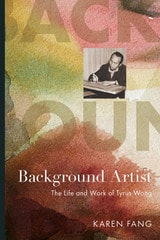
Background Artist
The Life and Work of Tyrus WongKaren Fang
Rutgers University Press, 2025
Chinese American Librarians Association Best Book Award (Honorary Mention, Adult Non-fiction category)
You might not know the name Tyrus Wong, but you probably know some of the images he created, including scenes from the beloved Disney classic Bambi. Yet when he came to this country as a child, Tyrus was an illegal immigrant locked up in an offshore detention center. How did he go on to a long and prosperous career drawing animation cels, storyboards, and greeting cards that shaped the American imagination?
Background Artist shares the inspiring story of Tyrus Wong’s remarkable 106-year life and showcases his wide array of creative work, from the paintings and fine art prints he made working for Roosevelt’s Works Progress Administration to the unique handmade kites he designed and flew on the Santa Monica beach. It tells how he came to the United States as a ten-year-old boy in 1920, at a time when the Chinese Exclusion Act barred him from legal citizenship. Yet it also shows how Wong found American communities that welcomed him and nurtured his artistic talent. Covering everything from his work as a studio sketch artist for Warner Bros. to the best-selling Christmas cards he designed for Hallmark and other greeting card companies, this book celebrates a multitalented Asian American artist and pioneer.
Larry Potash (WGN News) and "The artist who saved a Hollywood classic from never being made" (https://www.youtube.com/watch?v=P471NdY7TdE)
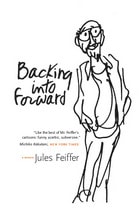
Backing into Forward
A MemoirJules Feiffer
University of Chicago Press, 2012
Subversive, funny, and effortlessly droll, Jules Feiffer’s cartoons were all over New York in the 1960s and ’70s—featured in the Village Voice, but also cut out and pinned to bulletin boards in offices and on refrigerators at home. Feiffer describes himself as “lucking into the zeitgeist,” and there’s some truth to the sentiment; Feiffer’s brand of satire reflected Americans’ ambivalence about the Vietnam War, changing social mores, and much more.
Feiffer’s memoir, Backing into Forward, like his cartoons, is sharply perceptive with a distinctive bite of mordant humor. Beginning with his childhood in Brooklyn, Feiffer paints a picture of a troubled kid with an overbearing mother and a host of crippling anxieties. From there, he discusses his apprenticeship with his hero, Will Eisner, and his time serving in the military during the Korean War, which saw him both feigning a breakdown and penning a cartoon narrative called “Munro” that solidified his distinctive aesthetic as an artist. While Feiffer’s voice grounds the book, the sheer scope of his artistic accomplishment, from his cartoons turning up in the New Yorker, Playboy, and the Nation to his plays and film scripts, is remarkable and keeps the narrative bouncing along at a speedy clip. A compelling combination of a natural sense of humor and a ruthless dedication to authenticity, Backing into Forward is full of wit and verve, often moving but never sentimental.
“Jules Feiffer’s original and neurotic voice. . . . reinvented comics in the 1950s and made possible what’s now called the ‘graphic novel.’ His engaging new memoir is told in that same witty and perceptive New York cadence, mellowed and laced with wisdom. He’s an inspiration.”—Art Spiegelman
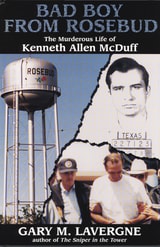
Bad Boy from Rosebud
The Murderous Life of Kenneth Allen McDuffGary M. Lavergne
University of North Texas Press, 1999

Badger Boneyards
The Eternal Rest of the StoryDennis McCann
Wisconsin Historical Society Press, 2010
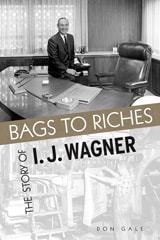
Bags to Riches
The Story of I J WagnerGale, Don
University of Utah Press, 2007
His sense of humor was legendary. His tenacity in pursuit of goals was unwavering. His grasp of past, present, and future opportunities was profound. Bags to Riches shows the personal side of an 'outsider' who became an 'insider' through congeniality, good humor, and integrity.
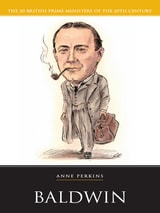
Baldwin
Anne Perkins
Haus Publishing, 2006
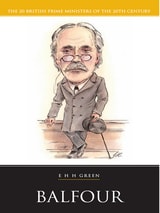
Balfour
Ewen Green
Haus Publishing, 2006
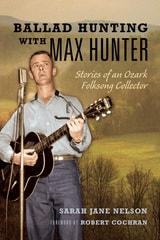
Ballad Hunting with Max Hunter
Stories of an Ozark Folksong CollectorSarah Jane Nelson; Foreword by Robert Cochran
University of Illinois Press, 2023
Sarah Jane Nelson chronicles Hunter’s song collecting adventures alongside portraits of the singers and mentors he met along the way. The guitar-strumming Hunter picked up the recording habit to expand his repertoire but almost immediately embraced the role of song preservationist. Being a local allowed Hunter to merge his native Ozark earthiness with sharp observational skills to connect--often more than once--with his singers. Hunter’s own ability to be present added to that sense of connection. Despite his painstaking approach, ballad collecting was also a source of pleasure for Hunter. Ultimately, his dedication to capturing Ozarks song culture in its natural state brought Hunter into contact with people like Vance Randolph, Mary Parler, and non-academic folklorists who shared his values.
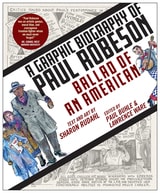
Ballad of an American
A Graphic Biography of Paul RobesonSharon Rudahl
Rutgers University Press, 2021
The first-ever graphic biography of Paul Robeson, Ballad of an American, charts Robeson’s career as a singer, actor, scholar, athlete, and activist who achieved global fame. Through his films, concerts, and records, he became a potent symbol representing the promise of a multicultural, multiracial American democracy at a time when, despite his stardom, he was denied personal access to his many audiences.
Robeson was a major figure in the rise of anti-colonialism in Africa and elsewhere, and a tireless campaigner for internationalism, peace, and human rights. Later in life, he embraced the civil rights and antiwar movements with the hope that new generations would attain his ideals of a peaceful and abundant world. Ballad of an American features beautifully drawn chapters by artist Sharon Rudahl, a compelling narrative about his life, and an afterword on the lasting impact of Robeson’s work in both the arts and politics. This graphic biography will enable all kinds of readers—especially newer generations who may be unfamiliar with him—to understand his life’s story and everlasting global significance.
Ballad of an American: A Graphic Biography of Paul Robeson is published in conjunction with Rutgers University’s centennial commemoration of Robeson’s 1919 graduation from the university.
Study guide for Ballad of an American: A Graphic Biography of Paul Robeson (https://d3tto5i5w9ogdd.cloudfront.net/wp-content/uploads/2021/05/10201015/YA_Adult-Study-Guide-for-A-Graphic-Biography-of-Paul-Robeson.pdf).
View the blad for Ballad of an American.
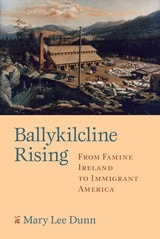
Ballykilcline Rising
From Famine Ireland to Immigrant AmericaMary Lee Dunn Maguire
University of Massachusetts Press, 2008
In 1847, in the third year of Ireland's Great Famine and the thirteenth year of their rent strike against the Crown, hundreds of tenant farmers in Ballykilcline, County Roscommon, were evicted by the Queen's agents and shipped to New York. Mary Lee Dunn tells their story in this meticulously researched book. Using numerous Irish and U.S. sources and with descendants' help, she traces dozens of the evictees to Rutland, Vermont, as railroads and marble quarries transformed the local economy. She follows the immigrants up to 1870 and learns not only what happened to them but also what light American experience and records cast on their Irish “rebellion.”
Dunn begins with Ireland's pre-Famine social and political landscape as context for the Ballykilcline strike. The tenants had rented earlier from the Mahons of Strokestown, whose former property now houses Ireland's Famine Museum. In 1847, landlord Denis Mahon evicted and sent nearly a thousand tenants to Quebec, where half died before or just after reaching the Grosse Ile quarantine station. Mahon was gunned down months later. His murder provoked an international controversy involving the Vatican. An early suspect in the case was a man from Ballykilcline.
In the United States, many of the immigrants resettled in clusters in several locations, including Vermont, Illinois, Iowa, Maryland, and New York. In Vermont they found jobs in the marble quarries, but some of them lost their homes again in quarry labor actions after 1859. Others prospered in their new lives. A number of Ballykilcline families who stopped in Rutland later moved west; one had a son kidnapped by Indians in Minnesota. Readers who have Irish Famine roots will gain a sense of their own “back story” from this account of Ireland and the native Irish, and scholars in the field of immigration studies will find it particularly useful.
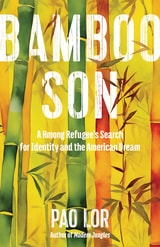
Bamboo Son
A Hmong Refugee’s Search for Identity and the American DreamPao Lor
Wisconsin Historical Society Press, 2026
“In Hmong, the word bamboo or ntsuag has two meanings. It refers to the bamboo plant, which has many significant cultural and practical uses in Hmong life. The word also means orphan. Therefore, bamboo son, in Hmong, means tub ntsuag or orphan son. To survive and succeed as a Hmong orphan, like bamboo, one must be resilient and adaptable, bend without breaking, and stand tall against enormous odds.”
In this follow-up to his acclaimed memoir, Modern Jungles, Pao Lor picks up his story as a young Hmong immigrant building a new life in a new home and shares the narrative of his ensuing journey into adulthood. Lor emerged from war and tragedies in the jungles of Laos and refugee camps of Thailand in the 1970s to pursue a vision of the American dream in Green Bay, Wisconsin, in the 1980s. The distance between his humble beginnings and that dream life was littered with challenges as well as possibilities.
Lor’s transformation from an insecure but determined high school student to a husband, father, teacher, administrator, and author is marked by triumph and defeat, trauma and joy, and always hope and optimism. As he navigates school, first loves, family relationships, and a career, Lor must contend with language barriers, discrimination, and his own inner demons stemming from feelings of inferiority. Threads of his identity—Hmong, American, and Wisconsinite—intersect and occasionally come into conflict.
Lor’s search for belonging comes full circle when he travels to Laos and Thailand with his wife, Maya, in 2022. Seeing his birthplace for the first time in forty-five years, he revisits the isolated mountain villages where he spent his early childhood; the places where his parents and sister died as the family fled the region in the violent aftermath of the Vietnam War; and the two refugee camps where Pao and his siblings lived before being relocated to the United States when he was seven. As he reexamines these memories and reconciles his past, Lor finds peace and the freedom to move forward with his soul renewed.
Lor’s story is an uplifting journey of resilience, adaptation, love, and forgiveness, inspiring readers to reflect on the meaning and accessibility of the American dream.
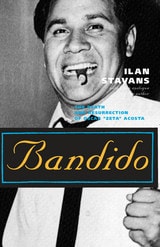
Bandido
The Death and Resurrection of Oscar "Zeta" AcostaIlan Stavans
Northwestern University Press, 2003
Hailed as "a fine, learned homage" (Kirkus), "a kaleidoscopic portrait" (Booklist), and "a game of mirrors" (The Washington Post), Bandido is a veritable tour de force. Through interviews and Acosta's writings (published and unpublished), Ilan Stavans reconstructs—even reinvents—the man behind the myth. Part biographical appraisal, part reflection on the legacy of the Civil Rights era, Bandido is an opportunity to understand the challenges and pitfalls Latinos face in finding a place of their own in America.
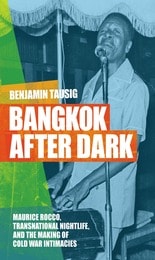
Bangkok after Dark
Maurice Rocco, Transnational Nightlife, and the Making of Cold War IntimaciesBenjamin Tausig
Duke University Press, 2025
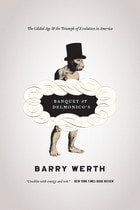
Banquet at Delmonico's
The Gilded Age and the Triumph of Evolution in AmericaBarry Werth
University of Chicago Press, 2011
In Banquet at Delmonico’s, Barry Werth draws readers inside the circle of intellectuals, scientists, politicians, businessmen, and clergymen who brought Charles Darwin’s controversial ideas to post-Civil-War America. Each chapter is dedicated to a crucial intellectual encounter, culminating with an exclusive farewell dinner held in English philosopher Herbert Spencer’s honor at the venerable New York restaurant Delmonico’s in 1882. In this thought-provoking and nuanced account, Werth firmly situates social Darwinism in the context of the Gilded Age. Banquet at Delmonico’s is social history at its finest.
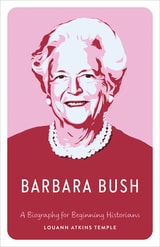
Barbara Bush
A Biography for Beginning HistoriansLouann Atkins Temple
University of Texas Press, 2025
A brief biography of Barbara Bush for young readers.
Louann Temple is a lifelong Texan with a personal passion for arts and education who believes that biography, with its emphasis on personalities, is ideal for introducing young people to history, with its focus on events. Temple is uniquely situated to write this biography for young readers, as she has been personally acquainted with many important people in presidential history, First Lady Barbara Bush included, and she has mentored countless middle and high school students, preparing them for college admission.
Barbara Bush highlights the key events in the life of the First Lady; explores the life lessons afforded by her legacy; and reflects on the broad historical issues during her time in the White House from 1989 to 1993. Married to the forty-first president, George H. W. Bush, Barbara Bush spent her time as First Lady dedicated to charity work and helping the American people, notably supporting Americans during the AIDS crisis. Enhanced with a carefully curated selection of black and white photographs from three presidential libraries, this biography for beginning historians is poised to bring the best of biography and history to a new generation of readers.
Barbara F. Vucanovich
From Nevada to Congress, and Back AgainBarbara F. Vucanovich
University of Nevada Press, 2014
Bard of Iceland
Jonas Hallgrimsson, Poet and ScientistRichard Ringler
University of Wisconsin Press, 2002
Bard of Iceland makes available for the first time in any language other than Icelandic an extensive selection of works by Jónas Hallgrímsson (1807–1845), the most important poet of modern Iceland. Jónas was also Iceland’s first professionally trained geologist and an active contributor in a number of other scientific fields: geography, botany, zoology, and archaeology. He played a key role as well in Iceland’s struggle to gain independence from Denmark. "Descriptive power and fullness of spirit were the hallmarks of his soul," wrote a contemporary admirer.
Dick Ringler, one of the premier scholars of Icelandic literature in the world, offers a substantial biography of Jónas, a representative selection of his most important poems, and some of his prose work in science and belles lettres. Ringler also provides extended commentaries and an essay on Icelandic prosody.
The poems are translated into English equivalents of their original complex meters in Icelandic and Danish. As a poet Jónas was intimately familiar with his nation’s medieval literary inheritance—the sagas and eddas—and also with the groundbreaking work of contemporary German and Danish Romanticism (Chamisso, Heine, Oehlenschläger). A master of poetic form, Jónas not only exploited and enlarged the possibilities of traditional eddic and skaldic meters, but introduced the sonnet, triolet stanza, terza and ottava rima, and blank verse into the Icelandic metrical repertory.
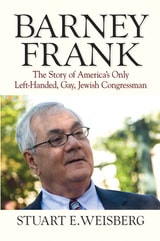
Barney Frank
The Story of America's Only Left-Handed, Gay, Jewish CongressmanStuart Weisberg
University of Massachusetts Press, 2009
Based on interviews with over 150 people, including more than thirty hours with Frank himself, this biography reconstructs for the first time his life and career, from his working-class childhood in Bayonne, New Jersey, to his years at Harvard and in Boston politics, through his rise to national prominence. Stuart Weisberg captures Frank in all his quirkiness, irreverence, and complexity. He also examines his less appealing side—his gruff exterior, his legendary impatience, his aversion to wasting time. Weisberg reveals the pressure Frank has felt as the most prominent openly gay politician in the United States, one whose career was nearly derailed by a highly publicized sex scandal involving a male prostitute.
Above all, this book shows Frank to be a superb legislator—a pragmatic politician who has dedicated his career to pursuing an unabashedly liberal agenda and whose depth of intellect and sense of humor have made him one of the most influential and colorful figures in Washington.
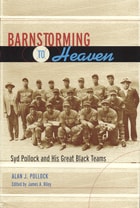
Barnstorming to Heaven
Syd Pollock and His Great Black TeamsAlan J. Pollock
University of Alabama Press, 2006
The Indianapolis Clowns were a black touring baseball team that featured an entertaining mix of comedy, showmanship, and skill. Sometimes referred to as the Harlem Globetrotters of baseball—though many of the Globetrotters’ routines were borrowed directly from the Clowns—they captured the affection of Americans of all ethnicities and classes. Author Alan Pollock was the son of the Clowns' owner Syd Pollock, who owned a series of black barnstorming teams that crisscrossed the country from the late 1920s until the mid-1960s. They played every venue imaginable, from little league fields to Yankee Stadium, and toured the South, the Northeast, the Midwest, the Canadian Rockies, the Dakotas, the Southwest, the Far West—anywhere there was a crowd willing to shell out a few dollars for an unforgettable evening.
Alan grew up around the team and describes in vivid detail the comedy routines of Richard “King Tut” King, “Spec Bebob” Bell, Reece “Goose” Tatum; the “warpaint” and outlandish costumes worn by players in the early days; and the crowd-pleasing displays of amazing skill known as pepperball and shadowball. These men were entertainers, but they were also among the most gifted athletes of their day, making a living in sports the only way a black man could. They played to win.
More than just a baseball story, these recollections tell the story of great societal changes in America from the roaring twenties, through the years of the Great Depression and World War II, and into the Civil Rights era.

Barrio Princess
Growing Up in TexasConsuelo Samarripa
Parkhurst Brothers, Inc., 2014
"Made in Mexico, born in America," Barrio Princess shares heartwarming family stories, cultural tradition stories, learning English by total immersion, socialization as a minority, education, stories of her mother as a single parent, and women’s stories from a minority point of view.
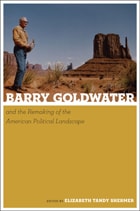
Barry Goldwater and the Remaking of the American Political Landscape
Edited by Elizabeth Tandy Shermer
University of Arizona Press, 2013
Since Goldwater’s death in 1998, politicians, pundits, and academics have been assessing his achievements and his shortcomings. The twelve essays in this volume thoroughly examine the life, times, and impact of “Mr. Conservative.” Scrutinizing the transformation of a Phoenix department store owner into a politician, de facto political philosopher, and five-time US senator, contributors highlight the importance of power, showcasing the relationship between the nascent conservative movement’s cadre of elite businessmen, newsmen, and intellectuals and their followers at the grassroots—or sagebrush—level.
Goldwater, who was born in the Arizona Territory in 1909, was deeply influenced by his Western upbringing. With his appearance on the national stage in 1964, he not only articulated a new brand of conservatism but gave a voice to many Americans who were not enamored with the social and political changes of the era. He may have lost the battle for the presidency, but he energized a coalition of journalists, publishers, women’s groups, and Southerners to band together in a movement that reshaped the nation.
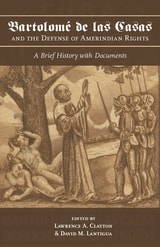
Bartolomé de las Casas and the Defense of Amerindian Rights
A Brief History with DocumentsEdited by Lawrence A. Clayton and David M. Lantigua
University of Alabama Press, 2020
The writings of a sixteenth-century advocate who challenged empire in defense of Indigenous peoples.
With the exception of Christopher Columbus, Bartolomé de las Casas is arguably the most notable figure of the Encounter Age. He is remembered principally as the creator of the Black Legend, as well as the protector of American Indians. He was one of the pioneers of the human rights movement, and a Christian activist who invoked law and Biblical scripture to challenge European colonialism in the great age of the Encounter. He was also one of the first and most thorough chroniclers of the conquest, and a biographer who saved the diary of Columbus’s first voyage for posterity by transcribing it in his History of the Indies before the diary was lost.
Bartolomé de las Casas and the Defense of Amerindian Rights: A Brief History with Documents provides the most wide-ranging and concise anthology of Las Casas’s writings, in translation, ever made available. It contains not only excerpts from his most well-known texts, but also his largely unavailable writings on political philosophy and law, and addresses the underappreciated aspects of his thought. Fifteen of the twenty-six documents are entirely new translations of Las Casas’s writings, a number of them appearing in English for the first time.
This volume focuses on his historical, political, and legal writings that address the deeply conflicted and violent sixteenth-century encounter between Europeans and indigenous peoples of the Americas. It also presents Las Casas as a more comprehensive and systematic philosophical and legal thinker than he is typically given credit for. The introduction by Lawrence A. Clayton and David M. Lantigua places these writings into a synthetic whole, tracing his advocacy for indigenous peoples throughout his career. By considering Las Casas’s ideas, actions, and even regrets in tandem, readers will understand the historical dynamics of Spanish imperialism more acutely within the social-political context of the times.

Bas Jan Ader
Death Is ElsewhereAlexander Dumbadze
University of Chicago Press, 2013

Baseball's Natural
The Story of Eddie WaitkusJohn Theodore. Foreword by Ira Berkow
Southern Illinois University Press, 2002
Baseball’s Natural: The Story of Eddie Waitkus is John Theodore’s true account of the slick-fielding first baseman who played for the Cubs and Phillies in the 1940s and became an immortalized figure in baseball lore as the inspiration for Roy Hobbs in Bernard Malamud’s The Natural.
The son of Lithuanian immigrants, Edward Stephen Waitkus (1919–1972) grew up in Boston and served in the Pacific during World War II. His army service in some of the war’s bloodiest combat earned him four Bronze Stars. Following the war, Waitkus became one of the most popular players of his era. As a rookie he led the Cubs in hitting in 1946 and quickly established himself as one of the best first basemen in the National League. To the disappointment of fans, the Cubs traded Waitkus to the Phillies in December of 1948. When he returned to Chicago in a Philadelphia uniform in June of the following year, he was hitting .306 and seemed destined for the All Star team.
On the night of June 14 at the Edgewater Beach Hotel, Waitkus’s bright career took an infamously tragic turn. He received a cryptic note summoning him to meet a young fan, Ruth Steinhagen. When Waitkus entered her hotel room, she proclaimed, “I have a surprise for you,” and then she just as quickly shot him in the chest. Steinhagen, then only nineteen, was one of the many young women—called “Baseball Annies”–who were fanatic about the game and its players, though her obsession proved more dangerous than most. A criminal court indicted Steinhagen and confined her to a state mental hospital for nearly three years.
Waitkus survived the shooting, made an inspirational return to baseball in 1950, and led the Phillies to the World Series. While Waitkus triumphed over his assault, he could not conquer his private demons. Depression stemming from the attack led to a severe problem with alcohol, a failed marriage, and a nervous breakdown. Waitkus found some happiness in his final summers working with youngsters at the Ted Williams baseball camp. Cancer claimed him in 1972, just days after his fifty-third birthday.
Through interviews with Waitkus’s family, fellow servicemen, former ballplayers, and childhood friends, and aided by fifteen photographs, Theodore chronicles Waitkus’s remarkable comeback as well as the difficult years following his eleven-year major league career.
Basel in the Age of Burckhardt
A Study in Unseasonable IdeasLionel Gossman
University of Chicago Press, 2000
"Remarkable and exceptionally readable . . . There is wit, wisdom and an immense erudition on every page."—Jonathan Steinberg, Times Literary Supplement
"Gossman's book, a product of many years of active contemplation, is a tour de force. It is at once an intellectual history, a cultural history of Basel and Europe, and an important contribution to the study of nineteenth-century historiography. Written with a grace and elegance that many aspire to, few seldom achieve, this is model scholarship."—John R. Hinde, American Historical Review
Basket Weavers for the California Curio Trade
Elizabeth and Louise HickoxMarvin Cohodas
University of Arizona Press, 1997
Marvin Cohodas now explores the various forces that influenced Elizabeth Hickox, analyzing her relationship with the curio trade, and specifically with dealer Grace Nicholson, to show how those associations affected the development and marketing of baskets. He explains the techniques and patterns that Hickox created to meet the challenge of weaving design into changig three-dimensional forms. In addition to explicating the Hickoxes' basketry, Cohodas interprets its uniqueness as a form of intersocietal art, showing how Elizabeth first designed her distinctive trinket basket to convey a particular view of the curio trade and its effect on status within her community.
Through its close examination of these superb practitioners of basketry, Basket Weavers for the California Curio Trade addresses many of today's most pressing questions in Native American art studies concerning individuality, patronage, and issues of authenticity. Graced with historic photographs and full-color plates, it reveals the challenges faced by early-twentieth-century Native weavers.
Published with the assistance of The Southwest Museum, Los Angeles.
Basque Firsts
People Who Changed the WorldVince J. Juaristi
University of Nevada Press, 2016
The profiles use primary sources to tell fresh stories and offer a wonderful variety, showing the astonishing breadth of Basque contributions. They include Juan Sebastían Elcano, the first person to circumnavigate the earth; St. Ignatius of Loyola, the first Jesuit to seed a worldwide movement in education; Santiago Ramón y Cajal, the Father of Neurology and a Nobel laureate; Cristóbal Balenciaga, the king of haute couture; Paul Laxalt, one of Ronald Reagan’s closest friends in politics; and Edurne Pasaban, the first woman to climb the world’s fourteen tallest mountains.
Basque Firsts provides a rare look at a culture’s people, revealing the significant contributions they have shared.
Basques of the American West
New and Collected Essays on History and EthnicityRichard W. Etulain
University of Nevada Press, 2026
This collection offers readers a thoughtful and engaging look at the enduring presence and influence of Basques across the cultural and historical landscape of the American West.

Bataan Survivor
A POW’s Account of Japanese Captivity in World War IIDavid L. Hardee, Edited by Frank A. Blazich, Jr.
University of Missouri Press, 2026
A forgotten account, written in the immediate aftermath of World War II, which vividly portrays the valor, sacrifice, suffering, and liberation of the defenders of Bataan and Corregidor through the eyes of one survivor.
The personal memoir of Colonel David L. Hardee, first drafted at sea from April-May 1945 following his liberation from Japanese captivity, is a thorough treatment of his time in the Philippines. A career infantry officer, Hardee fought during the Battle of Bataan as executive officer of the Provisional Air Corps Regiment. Captured in April 1942 after the American surrender on Bataan, Hardee survived the Bataan Death March and proceeded to endure a series of squalid prison camps. A debilitating hernia left Hardee too ill to travel to Japan in 1944, making him one of the few lieutenant colonels to remain in the Philippines and subsequently survive the war. As a primary account written almost immediately after his liberation, Hardee’s memoir is fresh, vivid, and devoid of decades of faded memories or contemporary influences associated with memoirs written years after an experience. This once-forgotten memoir has been carefully edited, illustrated and annotated to unlock the true depths of Hardee’s experience as a soldier, prisoner, and liberated survivor of the Pacific War.
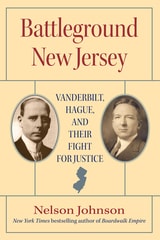
Battleground New Jersey
Vanderbilt, Hague, and Their Fight for JusticeJohnson, Nelson
Rutgers University Press, 2014
Vanderbilt’s power came through mastering the law, serving as dean of New York University Law School, preaching court reform as president of the American Bar Association, and organizing suburban voters before other politicians recognized their importance. Hague, a remarkably successful sixth-grade dropout, amassed his power by exploiting people’s foibles, crushing his rivals, accumulating a fortune through extortion, subverting the law, and taking care of business in his own backyard. They were different ethnically, culturally, and temperamentally, but they shared the goals of power.
Battles and Leaders of the Civil War, Volume 5
Edited by Peter Cozzens
University of Illinois Press, 2001
Indispensable must-reads for all Civil War buffs and historians, bringing together little-known and never before gathered first-hand accounts, articles, maps, and illustrations
The first four volumes of Battles and Leaders of the Civil War, published in the late nineteenth century, became the best-selling and most frequently cited works ever published on the Civil War. Volume 5, assembled by the acclaimed military historian Peter Cozzens, carries on the tradition of its namesake, offering a dazzling new collection of fresh material written by military and civilian leaders, North and South, on a broad array of war-related topics. Featured articles include General Grant on the second battle of Bull Run, General Beauregard on the Shiloh campaign, General Sherman on the conference at City Point, Joshua Chamberlain on the Fredericksburg campaign, and many more. Also presented are dozens of maps and more than one hundred illustrations.
Battles and Leaders of the Civil War, Volume 6
Edited by Peter Cozzens
University of Illinois Press, 2001
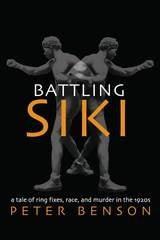
Battling Siki
A Tale of Ring Fixes, Race, and Murder in the 1920sPeter Benson
University of Arkansas Press, 2008
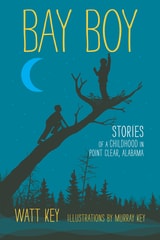
Bay Boy
Stories of a Childhood in Point Clear, AlabamaWatt Key, Illustrations by Murray Key
University of Alabama Press, 2019
Bay Boy is a collection of essays by award-winning young adult author Watt Key, chronicling his boyhood in Point Clear, Alabama. During his childhood, Point Clear was not the tony enclave of today with its spas, art galleries, and multimillion dollar waterfront properties. Rather, it was a sleepy resort community, practically deserted in the winter, with a considerable population of working-class residents.
As Key notes in his introduction, “Life in Point Clear is really about being outside. . . . I have never found a place so perfectly suited to exercise a young boy’s imagination.” Key and his brother filled their days collecting driftwood to make forts, scooting around the bay in a sturdy Stauter boat, and making art and writing stories when it rained.
In a tone that is simple and direct, punctuated by truly hilarious moments. Key writes about Gulf Coast traditions including Mardi Gras, shrimping, fishing, dove hunting, jubilees, camping out, and bracing for hurricanes. These stories are full of colorful characters— Nasty Bill Dickson, a curmudgeonly tow-truck driver; I’llNeeda, a middle-aged homeless woman encamped in a shack across the road; and the Ghost of Zundel’s Wharf, “the restless soul of a long-dead construction worker.” The stories are illustrated by charming and evocative artwork by the author’s brother Murray Key.
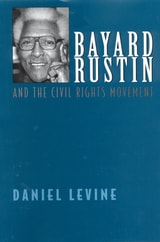
Bayard Rustin and the Civil Rights Movement
Levine, Daniel
Rutgers University Press, 1999
Rustin's long activist career began with his association with A. Phillip Randolph of the Brotherhood of Sleeping Car Porters. Then, as a member of A. J. Muste's Fellowship of Reconciliation, he participated in the "Journey of Reconciliation" (an early version of the "Freedom Rides" of 1961). He was a close associate of Martin Luther King in Montgomery and Atlanta and rose to prominence as organizer of the 1963 March on Washington. Rustin played a key role in applying nonviolent direct action to American race relations while rejecting the separatism of movements like Black Power in the 1960s, even at the risk of his being marginalized by the younger generation of civil rights activists. In his later years he tried to hold the civil rights coalition together and to fight for the economic changes he thought were necessary to decrease racism.
Daniel Levine has written the first scholarly biography that examines Rustin's public as well as private persona in light of his struggles as a gay black man and as an activist who followed his own principles and convictions. The result is a rich portrait of a complex, indomitable advocate for justice in American society.

Bazhanov and the Damnation of Stalin
Boris Bazhanov
Ohio University Press, 1990

Be Not Afraid
A Southern Journey Through Law, Liberty, and Civil RightsJack Drake
University of Alabama Press, 2026
A civil rights attorney’s unflinching memoir about the fight against segregation and systemic racism through landmark legal battles in Alabama
Be Not Afraid: A Southern Journey Through Law, Liberty, and Civil Rights is a timely and unflinching memoir from civil rights attorney Jack Drake, who has spent decades on the front lines of Alabama’s legal battles for racial justice. Raised in a segregated community in Gardendale, Alabama, Drake came of age during the civil rights movement and became a pivotal figure in cases that reshaped the state’s legal and moral landscape.
Drake helped reform Alabama’s grossly inadequate mental health system and supported voting rights efforts throughout Alabama. His career underscores the crucial role private attorneys and grassroots advocates played in enforcing civil rights laws long after their passage.
Through vivid recollections of courtroom battles, civil rights alliances, and personal transformation, Be Not Afraid offers an intimate view into the persistence and courage required to challenge systemic injustice. At a time when debates over equity and democracy remain pressing, Drake’s story is both a powerful reflection on the past and a call to action for the present. It speaks to the enduring importance of legal advocacy and community solidarity in the fight for a more just society, making it essential reading for those engaged in civil rights history, law, or social change.
Bear Man of Admiralty Island
A Biography of Allen E. HasselborgJohn Howe
University of Alaska Press, 1996
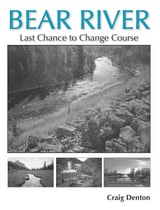
Bear River
Last Chance to Change CourseCraig Denton
Utah State University Press, 2007
Craig Denton's documentary takes on these questions. He tells the story of the river and the people, of many sorts, with diverse purposes, who live and depend on it. Bear River begins in alpine snowfields, lakes, and creeks in the Uinta Mountains, flows north through Wyoming, loops south in Idaho, and enters the inland sea by way of the an environmentally critical bird refuge. Along the way it has many uses: habitat, farms, electricity, recreation, lawns and homes. Denton researches the natural and human history of the river, photographed it, interviewed many stakeholders, and tried to capture the river perspective. His photographs, printed as crisp duotones, carry us downstream, ultimately to big questions, begging to be answered soon, about what we should and can make of the Bear River. Denton writes,
Gravity my engine,
Water my soul.
I am the teller of life and deep time.
You would measure me.
Sever me.
Own me.
In your name.
Let me flow
In your imagination
That I may speak.