Results by title
79 books match the query 'Blood' and 33 start with b
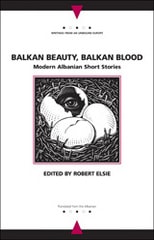
Balkan Beauty, Balkan Blood
Modern Albanian Short StoriesRobert Elsie
Northwestern University Press, 2006
Albania's more established writers (including Dritëro Agolli, Ismail Kadare, Teodor Laço, and Eqrem Basha) appear here alongside newer talents (such as Ylljet Aliçka, Mimoza Ahmeti, Elivra Dones, Lindita Arapi, and Kim Mehmeti), providing English-speaking readers with an elucidating and entertaining overview of the recent history, and the future, of the nation's literature.
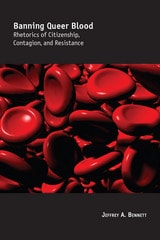
Banning Queer Blood
Rhetorics of Citizenship, Contagion, and ResistanceJeffrey A. Bennett
University of Alabama Press, 2009
In Banning Queer Blood, Jeffrey Bennett frames blood donation as a performance of civic identity closely linked to the meaning of citizenship. However, with the advent of HIV came the notion of blood donation as a potentially dangerous process. Bennett argues that the Food and Drug Administration, by employing images that specifically depict gay men as contagious, has categorized gay men as a menace to the nation. The FDA's ban on blood donation by gay men served to propagate the social misconceptions about gay men that continue to circulate within both the straight and LGBT/Queer communities.
Bennett explores the role of scientific research cited by these banned-blood policies and its disquieting relationship to government agencies, including the FDA. Bennett draws parallels between the FDA's position on homosexuality and the historical precedents of discrimination by government agencies against racial minorities. The author concludes by describing the resistance posed by queer donors, who either lie in order to donate blood or protest discrimination at donation sites, and by calling for these prejudiced policies to be abolished.

Barbs, Bullets, and Blood
The 1880s Texas barbed Wire WarsHarold D. Jobes
University of North Texas Press, 2025

Blood Of Requited Love
Manuel Puig
University of Minnesota Press, 1999
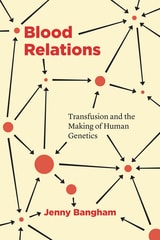
Blood Relations
Transfusion and the Making of Human GeneticsJenny Bangham
University of Chicago Press, 2020
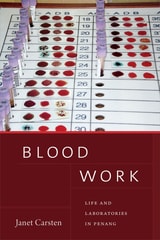
Blood Work
Life and Laboratories in PenangJanet Carsten
Duke University Press, 2019
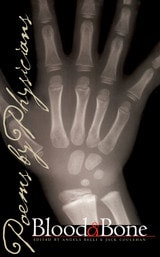
Blood and Bone
Poems by PhysiciansAngela Belli
University of Iowa Press, 1998
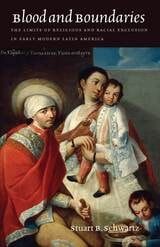
Blood and Boundaries
The Limits of Religious and Racial Exclusion in Early Modern Latin AmericaStuart B. Schwartz
Brandeis University Press, 2020
In Blood and Boundaries, Stuart B. Schwartz takes us to late medieval Latin America to show how Spain and Portugal’s policies of exclusion and discrimination based on religious origins and genealogy were transferred to their colonies in Latin America. Rather than concentrating on the three principal divisions of colonial society—Indians, Europeans, and people of African origins—as is common in studies of these colonial societies, Schwartz examines the three minority groups of moriscos, conversos, and mestizos. Muslim and Jewish converts and their descendants, he shows, posed a special problem for colonial society: they were feared and distrusted as peoples considered ethnically distinct, but at the same time their conversion to Christianity seemed to violate stable social categories and identities. This led to the creation of “cleanliness of blood” regulations that explicitly discriminated against converts. Eventually, Schwartz shows, those regulations were extended to control the subject indigenous and enslaved African populations, and over time, applied to the growing numbers of mestizos, peoples of mixed ethnic origins. Despite the efforts of civil and church and state institutions to regulate, denigrate, and exclude, members of these affected groups often found legal and practical means to ignore, circumvent, or challenge the efforts to categorize and exclude them, creating in the process the dynamic societies of Latin America that emerged in the nineteenth century.
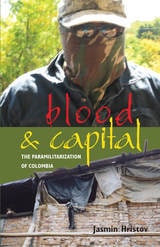
Blood and Capital
The Paramilitarization of ColombiaJasmin Hristov
Ohio University Press, 2009
WOLA-Duke Book Award Finalist
In Blood and Capital: The Paramilitarization of Colombia, Jasmin Hristov examines the complexities, dynamics, and contradictions of present-day armed conflict in Colombia. She conducts an in-depth inquiry into the restructuring of the state’s coercive apparatus and the phenomenon of paramilitarism by looking at its military, political, and legal dimensions. Hristov demonstrates how various interrelated forms of violence by state forces, paramilitary groups, and organized crime are instrumental to the process of capital accumulation by the local elite as well as the exercise of political power by foreign enterprises. She addresses, as well, issues of forced displacement, proletarianization of peasants, concentration of landownership, growth in urban and rural poverty, and human rights violations in relation to the use of legal means and extralegal armed force by local dominant groups and foreign companies.
Hristov documents the penetration of major state institutions by right-wing armed groups and the persistence of human rights violations against social movements and sectors of the low-income population. Blood and Capital raises crucial questions about the promised dismantling of paramilitarism in Colombia and the validity of the so-called demobilization of paramilitary groups, both of which have been widely considered by North American and some European governments as proof of Colombian president Álvaro Uribe’s advances in the wars on terror and drugs.
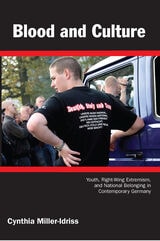
Blood and Culture
Youth, Right-Wing Extremism, and National Belonging in Contemporary GermanyCynthia Miller-Idriss
Duke University Press, 2009
Miller-Idriss describes a new understanding of national belonging emerging among young Germans—one in which cultural assimilation takes precedence over blood or ethnic heritage. Moreover, she argues that teachers’ well-intentioned, state-sanctioned efforts to counter nationalist pride often create a backlash, making radical right-wing groups more appealing to their students. Miller-Idriss argues that the state’s efforts to shape national identity are always tempered and potentially transformed as each generation reacts to the official conception of what the nation “ought” to be.
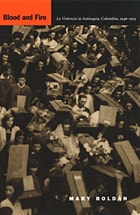
Blood and Fire
La Violencia in Antioquia, Colombia, 1946-1953Mary Roldan
Duke University Press, 2003
Through an analysis of the evolution of violence in Antioquia, which at the time was the wealthiest and most economically diverse region of Colombia, Roldán demonstrates how tensions between regional politicians and the weak central state, diverse forms of social prejudice, and processes of economic development combined to make violence a preferred mode of political action. Privatization of state violence into paramilitary units and the emergence of armed resistance movements exacted a horrible cost on Colombian civic life, and these processes continue to plague the country.
Roldan’s reading of the historical events suggests that Antioquia’s experience of la Violencia was the culmination of a brand of internal colonialism in which regional identity formation based on assumptions of cultural superiority was used to justify violence against racial or ethnic "others" and as a pretext to seize land and natural resources. Blood and Fire demonstrates that, far from being a peculiarity of the Colombians, la Violencia was a logical product of capitalist development and state formation in the modern world.
This is the first study to analyze intersections of ethnicity, geography, and class to explore the genesis of Colombian violence, and it has implications for the study of repression in many other nations.
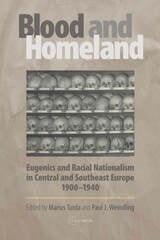
Blood and Homeland
Eugenics and Racial Nationalism in Central and Southeast Europe, 1900-1940Paul J. Weindling
Central European University Press, 2007
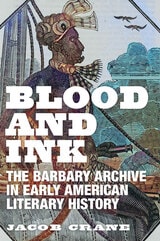
Blood and Ink
The Barbary Archive in Early American Literary HistoryJacob Crane
University of Massachusetts Press, 2023
In the late eighteenth and early nineteenth centuries, Algerian piracy in the Mediterranean loomed large in the American imagination. An estimated seven hundred American citizens, sailors, and naval officers were taken captive over the course of the Barbary Crises (1784–1815), and this overseas danger threatened to grow and irreparably harm the young republic.
Blood and Ink reconstructs the largely forgotten influence of these early American conflicts with North Africa on notions of publicity, print culture, and racial and national identity from independence to the Civil War. Exploring the extensive archive of texts inspired by the conflicts—from captivity narratives, novels, plays, and poems to broadsides, travel narratives, children’s literature, newspaper articles, and visual ephemera—Jacob Crane connects anxieties surrounding North African piracy and white slavery to both the development of American abolitionism and representations of transatlantic African and Jewish identities in the early national and antebellum periods.

Blood and Religion
The Unmasking of the Jewish and Democratic StateJonathan Cook
Pluto Press, 2006
"An original and powerful book." --Ilan Pappe, Senior Lecturer in Political Science, Haifa University, and author of A Modern History of Palestine
"Very impressive. . . . Some of his findings will astound even the knowledgeable reader." --Salim Tamari, Director, Institute of Jerusalem Studies
What is Israel hoping to achieve with its recent withdrawal from Gaza and the buildiing of a 700 km wall? Journalist Jonathan Cook presents a lucid account of the motives. The heart of the issue, he argues, is demography. Israel fears the moment when the region's Palestinians--Israel's own Palestinian citizens and those in the Occupied Territories--become a majority. Inevitable omparisons with apartheid in South Africa will be drawn. The book charts Israel's increasingly desperate responses, including military repression of Palestinian dissent; a ban on marriages between Israel's Palestinian population and Palestinians living under occupation to prevent a right of return "through the back door;" and the redrawing of the Green Line to create an expanded state. Ultimately, the author concludes, these abuses will lead to a third, far deadlier intifada.
Jonathan Cook, a former staff journalist of the Guardian newspaper, has written for the Times, Le Monde diplomatique, the International Herald Tribune, al-Ahram Weekly, and Aljazeera.net. He is based in Nazareth.
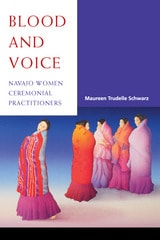
Blood and Voice
Navajo Women Ceremonial PractitionersMaureen Trudelle Schwarz
University of Arizona Press, 2003
The maintenance of the latter tradition has long been held to be the function of the Navajo singer, a role usually viewed as male. But despite this longstanding assumption, women can and do fill this role. Drawing on interviews with seventeen Navajo women practitioners and five apprentices, Maureen Trudelle Schwarz explicates women's role as ceremonial practitioners and shows that it is more complex than has previously been thought. She examines gender differences dictated by the Navajo origin story, details how women came to be practitioners, and reveals their experiences and the strategies they use to negotiate being both woman and singer.
Women who choose careers as singers face complex challenges, since some rules prohibit menstruating women from conducting ceremonies and others regarding sexual continence can strain marital relationships. Additionally, oral history places men in charge of all ceremonial matters. Schwarz focuses on how the reproductive life courses of Navajo women influence their apprenticeships and practices to demonstrate how they navigate these issues to preserve time-honored traditions. Through the words of actual practitioners, she shows how each woman brings her own unique life experience to the role. While differing among individuals, these experiences represent a commitment to shared cultural symbols and result in a consensus that sustains social cohesion.
By showing the differences and similarities between the apprenticeship, initiation, and practice of men and women singers, Blood and Voice offers a better understanding of the role of Navajo women in a profession usually viewed as a male activity—and of the symbolic construction of the self in Navajo culture. It also addresses classic questions concerning the sexual division of labor, menstrual taboos, gender stereotypes, and the tension between tradition and change that will enlighten students of other cultures.
Blood in Their Eyes
The Elaine Massacre of 1919Grif Stockley
University of Arkansas Press, 2020
The first edition of Grif Stockley’s Blood in Their Eyes, published in 2001, brought renewed attention to the Elaine Massacre and sparked valuable new studies on racial violence and exploitation in Arkansas and beyond. With contributions from fellow historians Brian K. Mitchell and Guy Lancaster, this revised edition draws from recently uncovered source material and explores in greater detail the actions of the mob, the lives of those who survived the massacre, and the regime of fear and terror that prevailed under Jim Crow.
Blood in Their Eyes
The Elaine Race Massacres of 1919Grif Stockley
University of Arkansas Press, 2016
Winner of the 2002 Booker Worthen Literary Prize
American Association of State and Local History Award 2003
Stockley takes on this silence and shows that it resulted from sustained official efforts to convince the public that only blacks who had resisted lawful authority were killed. He shows too that it is part of a larger silence in which the fear and terror that were the daily staples of the African American experience have been summed up all too easily in the term "Jim Crow" in a failure to fully confront the anguish of the period.
Blood in the Arena
The Spectacle of Roman PowerBy Alison Futrell
University of Texas Press, 1997
From the center of Imperial Rome to the farthest reaches of ancient Britain, Gaul, and Spain, amphitheaters marked the landscape of the Western Roman Empire. Built to bring Roman institutions and the spectacle of Roman power to conquered peoples, many still remain as witnesses to the extent and control of the empire.
In this book, Alison Futrell explores the arena as a key social and political institution for binding Rome and its provinces. She begins with the origins of the gladiatorial contest and shows how it came to play an important role in restructuring Roman authority in the later Republic. She then traces the spread of amphitheaters across the Western Empire as a means of transmitting and maintaining Roman culture and control in the provinces.
Futrell also examines the larger implications of the arena as a venue for the ritualized mass slaughter of human beings, showing how the gladiatorial contest took on both religious and political overtones. This wide-ranging study, which draws insights from archaeology and anthropology, as well as Classics, broadens our understanding of the gladiatorial contest and its place within the highly politicized cult practice of the Roman Empire.
Blood in the Fields
Óscar Romero, Catholic Social Teaching, and Land ReformMatthew Philipp Whelan
Catholic University of America Press, 2020
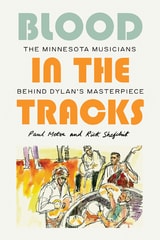
Blood in the Tracks
The Minnesota Musicians behind Dylan's MasterpiecePaul Metsa
University of Minnesota Press, 2023
The story of the Minneapolis musicians who were unexpectedly summoned to re-record half of the songs on Bob Dylan's most acclaimed album
When Bob Dylan recorded Blood on the Tracks in New York in September 1974, it was a great album. But it was not the album now ranked by Rolling Stone as one of the ten best of all time. “When something’s not right, it’s wrong,” as Dylan puts it in “You’re Gonna Make Me Lonesome When You Go”—and something about that original recording led him to a studio in his native Minnesota to re-record five songs, including “Idiot Wind” and “Tangled Up in Blue.” Six Minnesota musicians participated in that two-night recording session at Sound 80, bringing their unique sound to some of Dylan’s best-known songs—only to have their names left off the album and their contribution unacknowledged for more than forty years. This book tells the story of those two nights in Minneapolis, introduces the musicians who gave the album so much of its ultimate form and sound, and describes their decades-long fight for recognition.
Blood in the Tracks takes readers behind the scenes with these “mystery” Minnesota musicians: twenty-one-year-old mandolin virtuoso Peter Ostroushko; drummer Bill Berg and bass player Billy Peterson, the house rhythm section at Sound 80; progressive rock keyboardist Gregg Inhofer; guitarist Chris Weber, who owned The Podium guitar shop in Dinkytown; and Kevin Odegard, whose own career as a singer-songwriter had paralleled Dylan’s until he had to take a job as a railroad brakeman to make ends meet. Through in-depth interviews and assiduous research, Paul Metsa and Rick Shefchik trace the twists of fate that brought these musicians together and then set them on different paths in its wake: their musical experiences leading up to the December 1974 recording session, the divergent careers that followed, and the painstaking work required to finally obtain the official credit that they were due.
A rare look at the making—or remaking—of an all-time great album, and a long overdue recognition of the musicians who made it happen, Blood in the Tracks brings to life a transformative moment in the history of rock and roll, for the first time in its true context and with its complete cast of players.
Blood of Mugwump
A Tiresian Tale of IncestDoug Rice
University of Alabama Press, 1996
Blood of the Air
PoemsAma Codjoe
Northwestern University Press, 2020
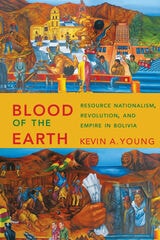
Blood of the Earth
Resource Nationalism, Revolution, and Empire in BoliviaBy Kevin A. Young
University of Texas Press, 2017
Conflicts over subterranean resources, particularly tin, oil, and natural gas, have driven Bolivian politics for nearly a century. “Resource nationalism”—the conviction that resource wealth should be used for the benefit of the “nation”—has often united otherwise disparate groups, including mineworkers, urban workers, students, war veterans, and middle-class professionals, and propelled an indigenous union leader, Evo Morales, into the presidency in 2006. Blood of the Earth reexamines the Bolivian mobilization around resource nationalism that began in the 1920s, crystallized with the 1952 revolution, and continues into the twenty-first century.
Drawing on a wide array of Bolivian and US sources, Kevin A. Young reveals that Bolivia became a key site in a global battle among economic models, with grassroots coalitions demanding nationalist and egalitarian alternatives to market capitalism. While US-supported moderates within the revolutionary regime were able to defeat more radical forces, Young shows how the political culture of resource nationalism, though often comprising contradictory elements, constrained government actions and galvanized mobilizations against neoliberalism in later decades. His transnational and multilevel approach to the 1952 revolution illuminates the struggles among Bolivian popular sectors, government officials, and foreign powers, as well as the competing currents and visions within Bolivia’s popular political cultures. Offering a fresh appraisal of the Bolivian Revolution, resource nationalism, and the Cold War in Latin America, Blood of the Earth is an ideal case study for understanding the challenges shared by countries across the Global South.
Blood of the Prodigal
An Amish Country MysteryP. L. Gaus
Ohio University Press, 1999
P. L. Gaus’s Blood of the Prodigal, a mystery in the tradition of Tony Hillerman, is back in a new edition, including an exclusive interview with the author, discussion questions for reading groups, and a detailed map and driving guide to Holmes County, Ohio, with everything one needs to visit the iconic scenes depicted in the story.
In Holmes County, Ohio—home to the largest Amish and Mennonite settlements in the world—mystery and foreboding lurk in the quiet Old Order Amish community led by Bishop Eli Miller.
The illusion of peace is shattered one early morning when a young Amish boy goes missing—abducted from his home and from Bishop Miller’s care. At first, the bishop suspects the child’s father, who was exiled from the Old Order ten years ago, but a murder soon casts doubt on the bishop’s theory. With a strong distrust of law enforcement and the modern “English” ways, the bishop must put his faith in an unlikely partnership with Professor Michael Branden before it’s too late.With the help of the peaceful pastor Cal Troyer and the reckless Sheriff Bruce Robertson, Branden plunges headlong into the closed culture to unravel the mystery of the missing child and uncover truths many would prefer to leave undisturbed.
Blood of the Prodigal
An Amish Country MysteryP. L. Gaus
Ohio University Press, 1999
P. L. Gaus’s Blood of the Prodigal, a mystery in the tradition of Tony Hillerman, is back in a new edition, including an exclusive interview with the author, discussion questions for reading groups, and a detailed map and driving guide to Holmes County, Ohio, with everything one needs to visit the iconic scenes depicted in the story.
In Holmes County, Ohio—home to the largest Amish and Mennonite settlements in the world—mystery and foreboding lurk in the quiet Old Order Amish community led by Bishop Eli Miller.
The illusion of peace is shattered one early morning when a young Amish boy goes missing—abducted from his home and from Bishop Miller’s care. At first, the bishop suspects the child’s father, who was exiled from the Old Order ten years ago, but a murder soon casts doubt on the bishop’s theory. With a strong distrust of law enforcement and the modern “English” ways, the bishop must put his faith in an unlikely partnership with Professor Michael Branden before it’s too late.With the help of the peaceful pastor Cal Troyer and the reckless Sheriff Bruce Robertson, Branden plunges headlong into the closed culture to unravel the mystery of the missing child and uncover truths many would prefer to leave undisturbed.
Blood on Their Hands
How Greedy Companies, Inept Bureaucracy, and Bad Science Killed Thousands of HemophiliacsWeinberg, Eric
Rutgers University Press, 2017
Blood on Their Hands is an inspiring, firsthand account of the legal battles fought on behalf of hemophiliacs who were unwittingly infected with tainted blood. As part of the team behind the key class action litigation filed by the infected, young New Jersey lawyer Eric Weinberg was faced with a daunting task: to prove the negligence of a powerful, well-connected global industry worth billions. Weinberg and journalist Donna Shaw tell the dramatic story of how idealistic attorneys and their heroic, mortally-ill clients fought to achieve justice and prevent further infections. A stunning exposé of one of the American medical system’s most shameful debacles, Blood on Their Hands is a rousing reminder that, through perseverance, the victims of corporate greed can sometimes achieve great victory.
Blood, Ink, and Culture
Miseries and Splendors of the Post-Mexican ConditionRoger Bartra
Duke University Press, 2002
Written with verve over a period of twenty years, these essays—most translated into English here for the first time—suggest why Bartra has become one of Latin America’s leading public intellectuals. The essays cover a broad range of topics, from the canonical forms of Mexican culture to the meaning of postnational identity in a globalizing age, from the repercussions of the 1994 Zapatista uprising to the 2000 election of Vicente Fox and the end of the PRI’s seven-decade rule. Across this range of topics, Bartra imparts astute insights into a critical period of transition in Mexican history, stressing throughout the importance of democracy, the complexity of identity, and the vibrancy of the Left. In Blood, Ink, and Culture, he provides a stimulating inside look at political and intellectual life in the southern reaches of North America.
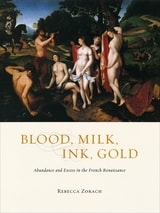
Blood, Milk, Ink, Gold
Abundance and Excess in the French RenaissanceRebecca Zorach
University of Chicago Press, 2005
Throughout the book, abundance and excess flow in liquids-blood, milk, ink, and gold-that highlight the materiality of objects and the human body, and explore the value (and values) accorded to them. The arts of the lavish royal court at Fontainebleau and in urban centers are here explored in a vibrant tableau that illuminates our own contemporary relationship to excess and desire.
From marvelous works by Francois Clouet to oversexed ornamental prints to Benvenuto Cellini's golden saltcellar fashioned for Francis I, Blood, Milk, Ink, Gold covers an astounding range of subjects with precision and panache, producing the most lucid, well-rounded portrait of the cultural politics of the French Renaissance to date.
Blood, Sparrows and Sparrows
Eugenia Leigh
Four Way Books, 2014
Blood, Sweat, and Fear
Violence at Work in the North American Auto Industry, 1960-80Jeremy Milloy
University of Illinois Press, 2017
Explosive and original, Blood, Sweat, and Fear brings historical perspective to contemporary debates about North American workplace violence.
Bloodsucking Witchcraft
An Epistemological Study of Anthropomorphic Supernaturalism in Rural TlaxcalaHugo G. Nutini
University of Arizona Press, 1993
"The most comprehensive statement on this centrally important ethnographic phenomenon in the last forty years. It bears ready comparison with the two great classics, Evans-Pritchard's Witchcraft Among the Azande and Clyde Kluckhohn's Navaho Witchcraft."—Henry H. Selby

Blossoms and Blood
Postmodern Media Culture and the Films of Paul Thomas AndersonBy Jason Sperb
University of Texas Press, 2013
From his film festival debut Hard Eight to ambitious studio epics Boogie Nights, Magnolia, and There Will Be Blood, Paul Thomas Anderson’s unique cinematic vision focuses on postmodern excess and media culture. In Blossoms and Blood, Jason Sperb studies the filmmaker’s evolving aesthetic and its historical context to argue that Anderson’s films create new, often ambivalent, narratives of American identity in a media-saturated world.
Blossoms and Blood explores Anderson’s films in relation to the aesthetic and economic shifts within the film industry and to America’s changing social and political sensibilities since the mid-1990s. Sperb provides an auteur study with important implications for film history, media studies, cultural studies, and gender studies. He charts major themes in Anderson’s work, such as stardom, self-reflexivity, and masculinity and shows how they are indicative of trends in late twentieth-century American culture. One of the first books to focus on Anderson’s work, Blossoms and Blood reveals the development of an under-studied filmmaker attuned to the contradictions of a postmodern media culture.

Blues in the Blood
Julien Delmaire
Seagull Books, 2023
Blues in the Blood is an ode to the spring of 1932 in the Mississippi delta, when stifling heat crushed the countryside and threatened the harvest, pervasive injustice ruled the day, and ghostly riders of the Ku Klux Klan spread terror. A panoramic historical and musical portrait, Blues in the Blood follows a poor young Black couple who believe their love for each other will save them from this devastation. Julien Delmaire introduces us to a gallery of figures: Blacks, Whites, Native Americans, mulattos, landowners, itinerant bluesmen, preachers, witches, corrupt politicians, prisoners, bootleggers, and Legba, the voodoo god, “master of crossroads,” who, like an otherworldly detective, watches over people’s destinies. As the story unfolds, a world is reborn: the delta, the birthplace of the blues, in which oppressed women and men rediscover the voices and rhythms of their humanity.