Results by title
92 books match the query 'Boundaries' and 18 start with b
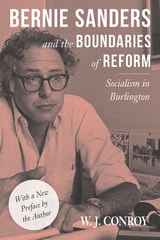
Bernie Sanders and the Boundaries of Reform
Socialism in BurlingtonW. J. Conroy
Temple University Press, 2016
In his preface to this reissue of the 1990 book, Challenging the Boundaries of Reform, W. J. Conroy reflects on the recent legacy of Sanders, his Agenda for America, and his appeal to young voters. His book then looks back to identify Sanders’ experience in Burlington by examining several case studies that unfolded amidst a conservative trend nationally, an unsympathetic state government, and a hostile city council.
Ultimately, Conroy asks what lessons can be drawn from the case of Burlington that would aid the American left in its struggle to capture both government and civil society?
Between Frontiers
Nation and Identity in a Southeast Asian BorderlandNoboru Ishikawa
Ohio University Press, 2010
Noboru Ishikawa grounds his discussion of border zones in materials gathered during two years of archival research and fieldwork relating to the boundary that separates Malaysian from Indonesian territory in western Borneo. His book considers how the state maintains its national space and how people strategically situate themselves by their community, nation, and ethnic group designated as national territory. Examining these issues in the context of concrete circumstances, where a village boundary coincides with a national border, allows him to delineate the dialectical relationship between nation-state and borderland society both as history and as process. Scholars across the humanities and social sciences will learn from this masterful linking of history and ethnography, and of macro and micro perspectives.
Beyond Lines of Control
Performance and Politics on the Disputed Borders of Ladakh, IndiaRavina Aggarwal
Duke University Press, 2004
Aggarwal brings the insights of performance studies and the growing field of the anthropology of international borders to bear on her extensive fieldwork in Ladakh. She examines how social and religious boundaries are created on the Ladakhi frontier, how they are influenced by directives of the nation-state, and how they are shaped into political struggles for regional control that are legitimized through discourses of religious purity, patriotism, and development. She demonstrates in lively detail the ways that these struggles are enacted in particular cultural performances such as national holidays, festivals, rites of passage ceremonies, films, and archery games. By placing cultural performances and political movements in Ladakh center stage, Aggarwal rewrites the standard plot of nation and border along the Line of Control.

Beyond the Body
The Boundaries of Medicine and English Renaissance DramaWilliam Kerwin
University of Massachusetts Press, 2005
Drawing on research in the social history of medicine as well as a wide-ranging collection of primary narratives of medical encounters, Kerwin pursues the stories of several medical groups. Specifically, he examines women healers in terms of the changing place of women in the public sphere; the connections between drug sellers—apothecaries and alchemists—and an emerging modern economy; the role barbers and surgeons played in early modern concerns for protecting a new sense of privacy and interiority; the ways physicians defined their professional primacy through the language of theaters and actors; and the ways individual patients employed rhetorics of diagnosis as a way of participating in sectarian religious battles. The study moves from the dynamics of medical politics to the work drama does in exposing those dynamics. In addition to offering astute readings of works by Shakespeare and Ben Jonson, the book pays substantial attention to plays by Samuel Daniel, John Fletcher, John Ford, Thomas Heywood, John Lyly, Philip Massinger, and John Webster.
Beyond the Body complements the wealth of recent critical attention given to the body. Kerwin attends to a different sort of material politics; as the book's title suggests, he asks a reader interested in the politics of medicine to look not at the practitioner treating the body but at the social forces influencing the practitioner. Beyond the Body works to erode a widespread cultural bias toward giving medicine deference as a self-defining profession.
Bible Trouble
Queer Reading at the Boundaries of Biblical ScholarshipTeresa J. Hornsby
SBL Press, 2011
The essays in Bible Trouble all engage queer theories for purposes of biblical interpretation, a rare effort to date within biblical scholarship. The title phrase “Bible Trouble” plays on Judith Butler's Gender Trouble, gesturing toward a primary text for contemporary queer theory. The essays consider, among others, the Lazarus story, the Ethiopian eunuch, “gender trouble” in Judges 4 and 5, the Song of Songs, and an unorthodox coupling of the books of Samuel and the film Paris Is Burning. This volume “troubles” not only the boundaries between biblical scholarship and queer theory but also the boundaries between different frameworks currently used in the analysis of biblical literature, including sexuality, gender, race, class, history, and literature. The contributors are Ellen T. Armour, Michael Joseph Brown, Sean D. Burke, Heidi Epstein, Deryn Guest, Jione Havea, Teresa J. Hornsby, Lynn R. Huber, S. Tamar Kamionkowski, Joseph A. Marchal, Jeremy Punt, Erin Runions, Ken Stone, Gillian Townsley, Jay Twomey, and Manuel Villalobos.

Blood and Boundaries
The Limits of Religious and Racial Exclusion in Early Modern Latin AmericaStuart B. Schwartz
Brandeis University Press, 2020
In Blood and Boundaries, Stuart B. Schwartz takes us to late medieval Latin America to show how Spain and Portugal’s policies of exclusion and discrimination based on religious origins and genealogy were transferred to their colonies in Latin America. Rather than concentrating on the three principal divisions of colonial society—Indians, Europeans, and people of African origins—as is common in studies of these colonial societies, Schwartz examines the three minority groups of moriscos, conversos, and mestizos. Muslim and Jewish converts and their descendants, he shows, posed a special problem for colonial society: they were feared and distrusted as peoples considered ethnically distinct, but at the same time their conversion to Christianity seemed to violate stable social categories and identities. This led to the creation of “cleanliness of blood” regulations that explicitly discriminated against converts. Eventually, Schwartz shows, those regulations were extended to control the subject indigenous and enslaved African populations, and over time, applied to the growing numbers of mestizos, peoples of mixed ethnic origins. Despite the efforts of civil and church and state institutions to regulate, denigrate, and exclude, members of these affected groups often found legal and practical means to ignore, circumvent, or challenge the efforts to categorize and exclude them, creating in the process the dynamic societies of Latin America that emerged in the nineteenth century.
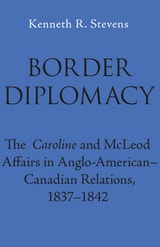
Border Diplomacy
The Caroline and McLeod Affairs in Anglo-American-Canadian Relations, 1837-1842Kenneth R. Stevens
University of Alabama Press, 1989
Long after Americans and Britons signed treaties ending the Revolutionary War and the War of 1812, ill will between the two nations simmered under the surface of their relations and periodically boiled over. In the mid-nineteenth century, Americans, the British, and British subjects in Canada continued to dispute borders, sovereign rights and responsibilities, and the American republican experiment.
Some of the antagonism arose from a fundamental difference in attitude toward democracy. Britons believed that democratic government was inadequate to control the baser elements of a population. Further, they disliked the aggressiveness and arrogance of their former colonists. Americans sensed and resented this contempt; in turn, they regarded British aristocratic pretensions with scorn and believed that country sought world domination. In view of such attitudes, even relatively minor incidents threatened to erupt into violence between the two nations. Such was the case in 1837, when British troops set fire to the American steamer Caroline in American waters, killing a United States citizen, and in 1840, when the state of New York arrested a Canadian, Alexander McLeod, for the murder.
These events, taken together, are not simply examples of diplomatic relations or political problems for particular administrations. The dash of attitudes and loyalties along the American-Canadian frontier also demonstrates the instability of the border region, socially as well as politically, and conflicting motives of patriotism and political opportunism in both the American and British governments. Thus, the Caroline and McLeod affairs, occurring as they did at a pivotal moment in American history, reveal how the republic began to mature in its relations with its long-established forebear, refined its own definitions of state and federal powers, and established itself as a nation contributing to, as well as influenced by, international law.
Border as Method, or, the Multiplication of Labor
Sandro Mezzadra and Brett Neilson
Duke University Press, 2013
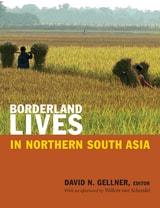
Borderland Lives in Northern South Asia
David N. Gellner, ed.
Duke University Press, 2013
Contributors. Jason Cons, Rosalind Evans, Nicholas Farrelly, David N. Gellner, Radhika Gupta, Sondra L. Hausner, Annu Jalais, Vibha Joshi, Nayanika Mathur, Deepak K. Mishra, Anastasia Piliavsky, Jeevan R. Sharma, Willem van Schendel
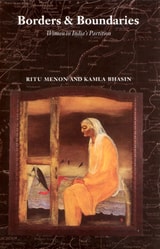
Borders and Boundaries
How Women Experienced the Partition of IndiaRitu Menon
Rutgers University Press, 1998
While there are plenty of official accounts of Partition, there are few social histories and no feminist histories. Borders and Boundaries changes that, providing first-hand accounts and memoirs, juxtaposed alongside official government accounts. The authors make women not only visible but central. They explore what country, nation, and religious identity meant for women, and they address the question of the nation-state and the gendering of citizenship.
In the largest ever peace-time mass migration of people, violence against women became the norm. Thousands of women committed suicide or were done to death by their own kinsmen. Nearly 100,000 women were "abducted" during the migration. A young woman might have been separated from her family when a convoy was ambushed, abducted by people of another religion, forced to convert, and forced into marriage or cohabitation. After bearing a child, she would be offered the opportunity to return only if she left her child behind and if she could face shame in her natal community. These stories do not paint their subjects as victims. Theirs are the stories of battles over gender, the body, sexuality, and nationalism-stories of women fighting for identity.

Borderscapes
Hidden Geographies and Politics at Territory’s EdgePrem Kumar Rajaram
University of Minnesota Press, 2007
Connecting critical issues of state sovereignty with empirical concerns, Borderscapes interrogates the limits of political space. The essays in this volume analyze everyday procedures, such as the classifying of migrants and refugees, security in European and American detention centers, and the DNA sampling of migrants in Thailand, showing the border as a moral construct rich with panic, danger, and patriotism.
Conceptualizing such places as immigration detention camps and refugee camps as areas of political contestation, this work forcefully argues that borders and migration are, ultimately, inextricable from questions of justice and its limits.
Contributors: Didier Bigo, Institut d’Études Politiques, Paris; Karin Dean; Elspeth Guild, U of Nijmegen; Emma Haddad; Alexander Horstmann, U of Münster; Alice M. Nah, National U of Singapore; Suvendrini Perera, Curtin U of Technology, Australia; James D. Sidaway, U of Plymouth, UK; Nevzat Soguk, U of Hawai‘i; Decha Tangseefa, Thammasat U, Bangkok; Mika Toyota, National U of Singapore.
Prem Kumar Rajaram is assistant professor of sociology and social anthropology at the Central European University, Budapest, Hungary.
Carl Grundy-Warr is senior lecturer of geography at the National University of Singapore.
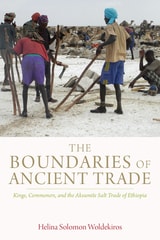
Boundaries of Ancient Trade
Kings, Commoners, and the Aksumite Salt Trade of EthiopiaHelina Solomon Woldekiros
University Press of Colorado, 2023
trade routes in the world.
For thousands of years, farmers in the Tigray, Amhara, and Afar regions of Ethiopia and Eritrea have run caravans of nearly 250,000 people and pack animals annually along an eighty-mile route through both cold, high-altitude farmlands and some of the hottest volcanic desert terrain on earth. In her fieldwork, archaeologist Helina Solomon Woldekiros followed the route with her own donkey and camel caravan, observing and interviewing over 150 Arho (caravaners), salt miners, salt cutters, warehouse owners, brokers, shop owners, and salt village residents to model the political economy of the ancient Aksumite state. The first integrated ethnoarchaeological and archaeological research on this legendary route, this volume provides evidence that informal economies and local participation have played a critical role in regional trade and, ultimately, in maintaining the considerable power of the Aksumite state. Woldekiros also contributes new insights into the logistics of pack animal–based trade and variability in the central and regional organization of global ancient trade.
Using a culturally informed framework for understanding the organization of the ancient salt route and its role in linking the Aksumite state to rural highland agricultural and lowland mobile pastoralist populations, The Boundaries of Ancient Trade makes a key contribution to theoretical discussions of hierarchy and more diffuse power structures in ancient states. This work generates new interest in the region as an area of global relevance in archaeological and anthropological debates on landscape, social interaction, and practice theories.
Boundaries of Genre
Gary Saul Morson
Northwestern University Press, 1989

Boundaries of Repair
Memory, Emotion, and Mobility across Timor-Leste and IndonesiaVictoria Sakti
National University of Singapore Press, 2026
A study of Timorese communities that offers a human perspective on post-conflict reconciliation.
Violent conflict may end in a kind of peace. But reconciliation processes do not always work, let alone bring healing. How are families and communities to rebuild their lives when old divisions, pain, and memories still linger? Centering on social repair, this beautifully crafted study explores how families and communities in Timor-Leste and exile communities in Indonesia live with the enduring consequences of political violence, forced separation, and displacement after twenty-four years of Indonesian occupation.
Following relationships across borders and between generations, Boundaries of Repair shows how ruptures in kinship and community life reverberate across time and space, and even between the living and the dead. Rather than treating repair as a state-driven undertaking, the book reveals social repair as an uneven, fragile, and ongoing process, sustained through everyday care practices, memory work, emotional labor, and creative acts of negotiation in contexts marked by impunity and unresolved loss.
By foregrounding what it means to live with damage that cannot be fully repaired, the book challenges dominant assumptions about justice, healing, and closure. It offers a powerful account of how people renegotiate relationships, boundaries, and belonging amid traces of violence, contributing new insights to debates on post-conflict recovery, memory, displacement, and the limits of reconciliation.

Boundaries of Touch
Parenting and Adult-Child IntimacyJean O'Malley Halley
University of Illinois Press, 2006
Discussing issues of parent-child contact ranging from breastfeeding to sexual abuse, Jean O'Malley Halley traces the evolution of mainstream ideas about touching between adults and children over the course of the twentieth century in the United States. Debates over when a child should be weaned and whether to allow a child to sleep in the parent's bed reveal deep differences in conceptions of appropriate adult-child contact.
Boundaries of Touch shows how arguments about adult-child touch have been politicized, simplified, and bifurcated into "naturalist" and "behaviorist" viewpoints, thereby sharpening certain binary constructions such as mind/body and male/female. Halley discusses the gendering of ideas about touch that were advanced by influential social scientists and parenting experts including Benjamin Spock, Alfred C. Kinsey, and Luther Emmett Holt. She also explores how touch ideology fared within and against the post-World War II feminist movements, especially with respect to issues of breastfeeding and sleeping with a child versus using a crib.
In addition to contemporary periodicals and self-help books on child rearing, Halley uses information gathered from interviews she conducted with mothers ranging in age from twenty-eight to seventy-three. Throughout, she reveals how the parent-child relationship, far from being a private or benign subject, continues as a highly contested, politicized affair of keen public interest.

Boundaries of the State in US History
Edited by James T. Sparrow, William J. Novak, and Stephen W. Sawyer
University of Chicago Press, 2015
Here, James T. Sparrow, William J. Novak, and Stephen W. Sawyer assemble definitional essays that search for explanations to account for the extraordinary growth of US power without resorting to exceptionalist narratives. Turning away from abstract, metaphysical questions about what the state is, or schematic models of how it must work, these essays focus instead on the more pragmatic, historical question of what it does. By historicizing the construction of the boundaries dividing America and the world, civil society and the state, they are able to explain the dynamism and flexibility of a government whose powers appear so natural as to be given, invisible, inevitable, and exceptional.
Boundaries of the Text
Epic Performances in South and Southeast AsiaJoyce Burkhalter Flueckiger and Laurie Sears, Editors
University of Michigan Press, 1991
Bridging State and Civil Society
Informal Organizations in Tajik/Afghan BadakhshanSuzanne Levi-Sanchez
University of Michigan Press, 2021
Bridging State and Civil Society provides an in-depth study of parts of Central Asia and Afghanistan that remain marginalized from the larger region. As such, the people have developed distinct ways of governing and surviving, sometimes in spite of the state and in part because of informal organizations. Suzanne Levi-Sanchez provides eight case studies, each an independent look at a particular informal organization, but each also part of a larger picture that helps the reader understand the importance and key role that informal organizations play for civil society and the state. Each case explores how informal organizations operate and investigates their structures and interactions with official state institutions, civil society, familial networks, and development organizations. As such, each chapter explores the concepts through a different lens while asking a deceptively simple question: What is the relationship between informal organizations and the state?