Results by title
71 books match the query 'Cancer' and 5 start with b
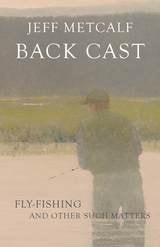
Back Cast
Fly-Fishing and Other Such MattersJeff Metcalf
University of Utah Press, 2018
These essays are much more than fish stories; they reveal the community and communion of fishing and the bonds to place the author nurtured through it. Whether he recalls carousing and tale-swapping with friends or excellence found through the challenge of the cast, Metcalf’s words, sometimes roiling and turbulent, sometimes calm and reflective, like a western river, vividly convey the pull of the steelhead and the fight for survival. Whether or not you fish, Metcalf’s sharp-eyed, open and honest look at life will draw you in.
"These waters have been my home, and I fish them more than most. In truth, they have saved my life on more than a few occasions. I seek refuge in the quiet solitude of rivers, and in dark hours of my life—including this particular year—I need desperately to be fly-fishing." —From the book
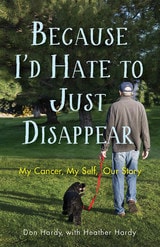
Because I'd Hate to Just Disappear
My Cancer, My Self, Our StoryDon Hardy
University of Nevada Press, 2018
Because I’d Hate to Just Disappear is a portrait of a husband and wife, Don and Heather Hardy, thrown into the physical and emotional machinery of Don being diagnosed with leukemia and going through chemotherapy and treatment over a period of close to two years.
In this thoughtful and exquisite account, Don and Heather narrate Don’s struggle in real-time. Disarmingly honest, they recount each intimate stage of a couple living through cancer together, the mental and physical struggles, the humor and visceral emotion to reveal how two very different personalities shape—and are shaped by—the experience of cancer and its treatment. Through these moments emerge a constant flow of human kindness and discovery that lifts them each day.
Beyond Slash, Burn, and Poison
Transforming Breast Cancer Stories into ActionMarcy Jane Knopf-Newman
Rutgers University Press, 2004
Depending on one’s vantage point, breast cancer can be a very different experience, and indeed, a very different concern. It is, for some, a personal struggle; for others, it is a disease posing scientific and environmental challenges; and for others it is a highly charged and politicized issue around which policy wars rage. Beyond Slash, Burn, and Poison brings a unique perspective to breast cancer by recognizing the overlapping relationship of all these realities.
Drawing on the writings of Rachel Carson, Betty Ford, Rose Kushner, and Audre Lorde, this book explores the various ways in which patient-centered texts continue to leave their mark on the political realm of breast cancer and, ultimately, the disease itself. Ordered chronologically, the selections trace the progression of discussions about breast cancer from a time when the subject was kept private and silent to when it became part of public discourse. The texts included are personal accounts, written by women struggling to play an active role in their healing process and, at the same time, hoping to help others do the same.
Knopf-Newman also shows us how these writings eventually changed public opinion and the underlying tendency to blame women for their illness. She argues that changes in medical practice and public policy are linked to textual interventions, and makes a case for the politicization of cultural studies of disease through personal and literary expression.
Passionately written and well-researched, Beyond Slash, Burn, and Poison transforms how we think about breast cancer. Rather than facilitating forums for separate discussions, this book brings conversations into dialog with each other. It is essential reading for anyone concerned with breast cancer and its history, as well as for those interested in the effect of the environment on public health and the role that literature plays in public policy and medicine.
Breast Cancer Recurrence and Advanced Disease
Comprehensive Expert GuidanceBarbara L. Gordon, Heather S. Shaw, David J. Kroll, and Brooke R. Daniel
Duke University Press, 2010
This indispensable book aids those diagnosed with recurrent or late-stage breast cancer, those wanting to reduce the chance of a recurrence, and those with other types of late-stage cancer. It is also a valuable resource for healthcare professionals, friends, and family members.
Topics covered include
• Types of recurrence, their symptoms, and ways of minimizing the chance of a recurrence
• Diagnostic tests, potential surgeries, and treatments to manage late-stage cancer
• Getting the best care, evaluating complementary therapies, and alleviating pain and depression
• Cessation of treatment and what one may experience as the disease progresses
• End-of-life issues including dealing with financial and legal matters, communicating with loved ones and hospice workers, and planning memorial services
Breast Cancer Recurrence and Advanced Disease includes a glossary of medical terms, appendices on nutrition and integrative health centers, and links to current Web sites addressing matters such as clinical trials, patients’ rights, and medical expenses.

Breast Cancer in the Academy
Solidarity in the Fight for Our LivesWendy K.Z. Anderson
Rutgers University Press, 2027
This edited collection is an interdisciplinary dialogue about how breast cancer diagnosis, treatment, and healing is experienced by academic women. The contributors fostered dialogue rooted in critical, qualitative, and autoethnographic traditions about how breast cancer diagnosis, treatment, and healing was experienced by a group with academic privileges, such as the ability to research and advocate for themselves. The book takes on a global perspective, incorporating pieces from medical doctors who became patients, BIPOC women, as well as scholars who identify as LBGTQIA, as they faced decisions about issues such as flat closures, fertility treatments, and being one-sided. These seventeen academic women navigated and resisted healthcare systems to develop a theory of coalitional survivorship.