Results by title
335 books match the query 'Caribbean & Latin American Studies' and 25 start with b

Basketball Trafficking
Stolen Black Panamanian DreamsJavier Wallace
Duke University Press, 2025
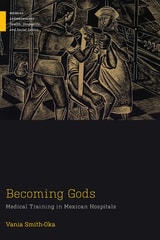
Becoming Gods
Medical Training in Mexican HospitalsVania Smith-Oka
Rutgers University Press, 2021
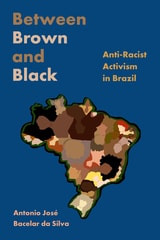
Between Brown and Black
Anti-Racist Activism in BrazilAntonio José Bacelar da Silva
Rutgers University Press, 2022

Beyond Boundaries
C.L.R. James and Postnational StudiesEdited by Christopher Gair
Pluto Press, 2006
Invaluable for students of post-colonial studies, the book examines points where James crosses with other theorists, such as Lacan and Gramsci. Racial identity and cultural politics are key themes in his work, not to mention his unique writings on cricket. Contributors including Donald E Pease, Nicole King, Christopher Gair and Anthony Bogues illuminate the key themes in James's writing, and put forward the idea that the breath of James's thinking can be identified as the beginning of 'post-national' studies.
Christopher Gair is a lecturer in the Department of American and Canadian Studies, University of Birmingham. He is the author of Complicity and Resistance in Jack London¹ s Novels (Edwin Mullen Press, 1997), of The American Counterculture (forthcoming, Edinburgh University Press, 2006), and of numerous essays on American literature and culture. He is the editor of the journal Symbiosis.
Beyond Constraint
Middle/Passages of Blackness and Indigeneity in the Radical TraditionShona N. Jackson
Duke University Press, 2024
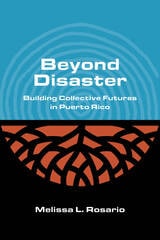
Beyond Disaster
Building Collective Futures in Puerto RicoMelissa L. Rosario
Northwestern University Press, 2025
An alternative view of Puerto Rico’s past, present, and future
How do we map the pathways to liberation where we have been taught to see only trauma, suffering, and lack? Melissa L. Rosario offers an alternative view of Puerto Rico, America’s oldest colony, removing readers from the framework of crisis to consider the deeper legacies of its current impasse. Beyond Disaster: Building Collective Futures in Puerto Rico is an intimate portrait, weaving insights from the author’s own life, research, and organizing work as a scholar in the diaspora who rematriated. Rosario bridges the genres of social history and memoir to unsettle the meaning of resistance and freedom, underscoring the deep wounds of colonialism while still uplifting the profound possibilities of embodied alternatives.
Beyond Disaster critiques the framework of debt and crisis by examining the psychological, emotional, and spiritual effects of colonialism. Rosario highlights key examples of organizing efforts to defend land and education against total enclosure, protecting life amid loss. This book offers a series of microhistories, vignettes, and prose poetry to foreground the daily practices necessary to anchor the ecological and political landscapes of our collective future.
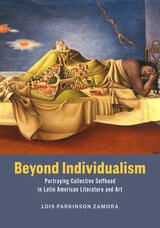
Beyond Individualism
Portraying Collective Selfhood in Latin American Literature and ArtLois Parkinson Zamora
University of Chicago Press, 2025
Beyond Individualism examines the portrayal of collective identities over two centuries in Latin American literature and visual art. Lois Parkinson Zamora shows that many authors and artists are less concerned with singular selves than with selves-in-relation: less with individual autonomy than with communal affiliation. Their works—sometimes situated under the labels Neobaroque, magical realism, Surrealism, Expressionism, and idealism—resist the kind of psychological realism typical of European and North American novels, moving instead toward a wholly new kind of fiction.
Zamora calls this new Latin American form “archetypal realism” because its characters represent entities larger than themselves. They may embody entire communities, cultures, families, religious orders, or ideal planets. Through deft readings of collective characters in fiction by Gabriel García Márquez, Isabel Allende, Jorge Luis Borges, and more alongside the art of Diego Rivera, Remedios Varo, and Xul Solar, Zamora reveals a modernity based not on Enlightenment conceptions of selfhood but on community, collectivity, and kinship.
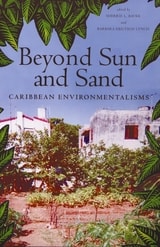
Beyond Sun and Sand
Caribbean EnvironmentalismsEdited by Sherrie L. Baver and Barbara Deutsch Lynch
Rutgers University Press, 2006
In both versions, the image of the exotic landscape overshadows the rich island cultures that are both linguistically and politically diverse, but trapped in a global economy that offers few options for development. Popular depictions also overlook the reality that the region is fraught with environmental problems, including water and air pollution, solid waste mismanagement, destruction of ecosystems, deforestation, and the transition from agriculture to ranching.
Bringing together ten essays by social scientists and activists, Beyond Sun and Sand provides the most comprehensive exploration to date of the range of environmental issues facing the region and the social movements that have developed to deal with them. The authors consider the role that global and regional political economies play in this process and provide valuable insight into Caribbean environmentalism. Many of the essays by prominent Caribbean analysts are made available for the first time in English.
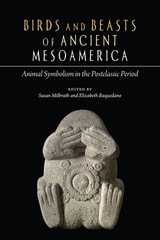
Birds and Beasts of Ancient Mesoamerica
Animal Symbolism in the Postclassic PeriodSusan Milbrath
University Press of Colorado, 2025
Representations of animal deities in Mesoamerica can be traced back at least to Middle Preclassic Olmec murals, stone carvings, and portable art such as lapidary work and ceramics. Throughout the history of Mesoamerica real animals were merged with fantastical creatures, creating zoological oddities not unlike medieval European bestiaries. According to Spanish chroniclers, the Aztec emperor was known to keep exotic animals in royal aviaries and zoos. The Postclassic period was characterized by an iconography that was shared from central Mexico to the Yucatan peninsula and south to Belize. In addition to highlighting the symbolic importance of nonhuman creatures in general, this volume focuses on the importance of the calendrical and astronomical symbolism associated with animals and birds.
Inspired by and dedicated to the work of Mesoamerican scholar Cecelia Klein and featuring imagery from painted books, monumental sculpture, portable arts, and archaeological evidence from the field of zooarchaeology, Birds and Beasts of Ancient Mesoamerica highlights the significance of the animal world in Postclassic and early colonial Mesoamerica. It will be important to students and scholars studying Mesoamerican art history, archaeology, ethnohistory, and zoology.
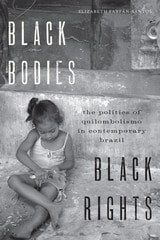
Black Bodies, Black Rights
The Politics of Quilombolismo in Contemporary BrazilBy Elizabeth Farfán-Santos
University of Texas Press, 2016
Under a provision in the Brazilian constitution, rural black communities identified as the modern descendants of quilombos—runaway slave communities—are promised land rights as a form of reparations for the historic exclusion of blacks from land ownership. The quilombo provision has been hailed as a success for black rights; however, rights for quilombolas are highly controversial and, in many cases, have led to violent land conflicts. Although thousands of rural black communities have been legally recognized, only a handful have received the rights they were promised. Conflict over quilombola rights is widespread and carries important consequences for race relations and political representations of blackness in twenty-first century Brazil.
Drawing on a year of field research in a quilombola community, Elizabeth Farfán-Santos explores how quilombo recognition has significantly affected the everyday lives of those who experience the often-complicated political process. Questions of identity, race, and entitlement play out against a community’s struggle to prove its historical authenticity—and to gain the land and rights they need to survive. This work not only demonstrates the lived experience of a new, particular form of blackness in Brazil, but also shows how blackness is being mobilized and reimagined to gain social rights and political recognition. Black Bodies, Black Rights thus represents an important contribution to the rapidly growing interdisciplinary field of Afro-Latino studies.
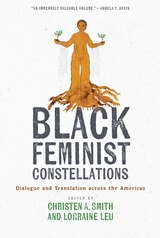
Black Feminist Constellations
Dialogue and Translation across the AmericasEdited by Christen A. Smith and Lorraine Leu
University of Texas Press, 2023
A collection of essays, interviews, and conversations by and between scholars, activists, and artists from Latin America and the Caribbean that paints a portrait of Black women's experiences across the region.
Black women in Latin America and the Caribbean suffer a triple erasure: as Black people, as women, and as non-English speakers in a global environment dominated by the Anglophone North. Black Feminist Constellations is a passionate and necessary corrective. Focused on and written by Black women of the southern Americas, the original works composing this volume make legible the epistemologies that sustain radical scholarship, art, and political organizing by Black women everywhere.
In essays, poems, and dialogues, the writers in Black Feminist Constellations reimagine liberation from the perspectives of radical South American and Caribbean Black women thinkers. The volume’s methodologically innovative approach reflects how Black women come together to theorize the world and challenges the notion that the university is the only site where knowledge can emerge. A major work of intellectual history, Black Feminist Constellations amplifies rarely heard voices, centers the uncanonized, and celebrates the overlooked work of Black women.

Black Magic City
How Gods, Money, and Healing Shaped Rio de JaneiroAna Paulina Lee
Duke University Press, 2027
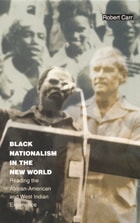
Black Nationalism in the New World
Reading the African-American and West Indian ExperienceRobert Carr
Duke University Press, 2002
Black Nationalism in the New World combines geography, political economy, and subaltern studies in readings of noncanonical literary works, which in turn illuminate debates over African-American and West Indian culture, identity, and politics. In addition to Martin Delany’s Blake, or the Huts of America, Carr focuses on Pauline Hopkins’s Contending Forces; Crown Jewel, R. A. C. de Boissière’s novel of the Trinidadian revolt against British rule; Wilson Harris’s Guyana Quartet; the writings of the Oakland Black Panthers—particularly Huey Newton, Bobby Seale, and Eldridge Cleaver; the gay novella Just Being Guys Together; and Lionheart Gal, a collection of patois testimonials assembled by Sistren, a radical Jamaican women’s theater group active in the ‘80s.
With its comparative approach, broad historical sweep, and use of texts not well known in the United States, Black Nationalism in the New World extends the work of such theorists as Homi Bhabha, Paul Gilroy, and Nell Irwin Painter. It will be necessary reading for those interested in African American studies, Caribbean studies, cultural studies, women’s studies, and American studies.
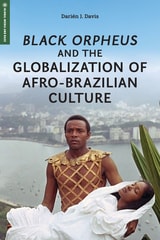
Black Orpheus and the Globalization of Afro-Brazilian Culture
Darién J. Davis
Rutgers University Press, 2026
“Black Orpheus” and the Globalization of Afro-Brazilian Culture is the first historical study in English to examine the development, production, and reception of the 1958 film Black Orpheus and its legacy in the 1960s and 1970s. It focuses on the making of the film and the trajectories of the major actors and musicians who helped construct an image of Black Brazil and provides an analysis of the globalization of Afro-Brazilian images and music in France and the United States in the wake of the movie’s success. Using archival sources, interviews, and the secondary literature from France, Brazil, and the United States, this book reveals information about the cultural histories of all three countries and gives readers new insight into the trajectories of diverse actors such as Breno Mello, Marpessa Dawn, and Léa Garcia and performers such as Agostinho dos Santos, Baden Powell, and Maria D’Apparecida.
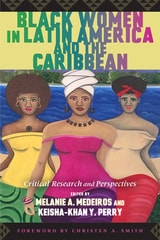
Black Women in Latin America and the Caribbean
Critical Research and PerspectivesMelanie A. Medeiros
Rutgers University Press, 2023
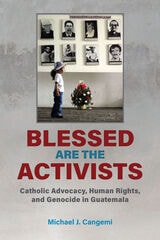
Blessed Are the Activists
Catholic Advocacy, Human Rights, and Genocide in GuatemalaMichael J. Cangemi
University of Alabama Press, 2024
Blessed Are the Activists examines US Catholic activists’ influence on US-Guatemalan relations during the Guatemalan civil war’s most violent years in the 1970s and 1980s. Cangemi argues that Catholic activists’ definition of human rights, advocacy methods, and structure caused them to act as a transnational human rights NGO that engaged Guatemalan and US government officials on human rights issues, reported on Guatemala’s human rights violations, and criticized US foreign policy decisions as a contributing factor in Guatemala’s inequality, poverty, and violence. His work foregrounds how Catholic activists emphasized dignity for Guatemala’s poorest citizens and the connections they made between justice, solidarity, and peace and brought Guatemala’s violence, poverty, and inequality to greater global attention, often at great personal risk.
Cangemi pays considerable attention to multiple facets of the strained US-Guatemala diplomatic relationship, including how and why Guatemala’s military dictatorship exposed the internal flaws within the Carter administration’s decision to link military aid to human rights and how internal foreign policy debates in the Carter and Reagan administrations helped to intensify Guatemala’s bloody civil war. He also includes interviews conducted with Guatemalan genocide survivors and refugees to provide firsthand accounts of the consequences of those policymaking decisions. Finally, he offers readers an in-depth examination of the US Catholic press’s sharp rebukes of US policies on Guatemala and all of Central America when the broader Roman Catholic Church began to move farther toward the ideological right under John Paul II.
Blessed Are the Activists offers rich, original research and a gripping narrative. With Guatemala and other countries in Latin America still experiencing human rights abuses, this book will continue to provide context. It will appeal to a broad swath of readers, from scholars to the general public and students.
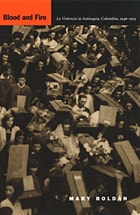
Blood and Fire
La Violencia in Antioquia, Colombia, 1946-1953Mary Roldan
Duke University Press, 2003
Through an analysis of the evolution of violence in Antioquia, which at the time was the wealthiest and most economically diverse region of Colombia, Roldán demonstrates how tensions between regional politicians and the weak central state, diverse forms of social prejudice, and processes of economic development combined to make violence a preferred mode of political action. Privatization of state violence into paramilitary units and the emergence of armed resistance movements exacted a horrible cost on Colombian civic life, and these processes continue to plague the country.
Roldan’s reading of the historical events suggests that Antioquia’s experience of la Violencia was the culmination of a brand of internal colonialism in which regional identity formation based on assumptions of cultural superiority was used to justify violence against racial or ethnic "others" and as a pretext to seize land and natural resources. Blood and Fire demonstrates that, far from being a peculiarity of the Colombians, la Violencia was a logical product of capitalist development and state formation in the modern world.
This is the first study to analyze intersections of ethnicity, geography, and class to explore the genesis of Colombian violence, and it has implications for the study of repression in many other nations.
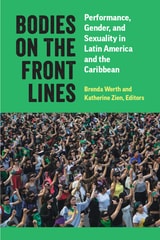
Bodies on the Front Lines
Performance, Gender, and Sexuality in Latin America and the CaribbeanBrenda Werth and Katherine Zien, Editors
University of Michigan Press, 2024
The volume’s contributors draw from rich legacies of theater, performance, and activism in the region, as well as decolonial and intersectional theorizing, to demonstrate the ways that performance practices enable activists to sustain their movements. The chapters engage diverse perspectives from Argentina, Brazil, Bolivia, Chile, Colombia, Cuba, the Dominican Republic, transnational Central America, Peru, Puerto Rico, and Mexico.
Rather than taking an approach that simplifies complexities among states, Bodies on the Front Lines takes seriously the geopolitical stakes of examining Latin America and the Caribbean as a heterogeneous site of nations and networks. In chapters covering this wide geographical area, leading scholars in the fields of theater and performance studies showcase the aesthetic, social, and political work of performance in generating and fortifying gender and sexual activism in the Americas.
Body Burdens
Toxic Endurance and Decolonial Desire in the French AtlanticVanessa Agard-Jones
Duke University Press, 2027
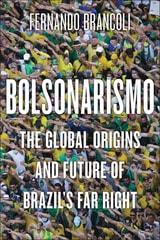
Bolsonarismo
The Global Origins and Future of Brazil’s Far RightFernando Brancoli
Rutgers University Press, 2024
Through interviews, archival research, and newly available public documents, this book presents a comprehensive and compelling portrait of the neo-evangelical pastors, military personnel, and meritocratic ideologues who are the actors behind the far-right movement. Adding to our understanding of Bolsonarismo's growth in Brazilian politics and the contributing factors behind it, the book also sheds light on the impact of Bolsonarismo on world politics. As a prominent leader of the far-right movement, Jair Bolsonaro's political views and policies have reverberated beyond Brazil's borders, influencing the discourse on issues such as climate change, democracy, and human rights around the world.
Branding Brazil
Transforming Citizenship on ScreenLeslie L. Marsh
Rutgers University Press, 2021
Bridging Sonic Borders
Popular Music in Contemporary Dominican/Dominicanyork LiteratureSharina Maíllo-Pozo
University of Texas Press, 2025
2026 Creative Research Medal, Office of Research at the University of Georgia
2026 Isis Duarte Book Prize, Haiti/Dominican Republic Section, Latin American Studies Association
How music depicted in literature shapes Dominican and Dominican New Yorkers’ identities and links the homeland to the diaspora.
Music has played a large role in recent Dominican literature, whether of the island or the diaspora. Bridging Sonic Borders explores this sonic connection linking the homeland and far-flung locales—especially New York, the center of Dominican cultural production in the United States. Sharina Maíllo-Pozo argues that literary representations of popular music delineate a shared aesthetic territory for US and Caribbean Dominicans, fostering an inclusive and transnational Dominicanidad.
Examining works written in Spanish, English, and Dominicanish, Maíllo-Pozo focuses on Dominican/Dominicanyork writings that have nurtured a borderless aesthetics through their shared investment in hip-hop, jazz, blues, pop, rock, and merengue. For Dominican writers, popular music has become a way of exploring memory and nostalgia and a means of centering people rejected from hegemonic identity formation—the working class, those of African descent, rural and queer people. For example, many works focused on the life of rocker Luis “Terror” Días have emphasized the in-between identity of being both Dominican and a New Yorker. Collectively, these writings have created a space in which boundaries of nation and diaspora are revealed for their fundamental porosity.
Building an Archaeology of Maya Urbanism
Planning and Flexibility in the American TropicsDamien B. Marken and M. Charlotte Arnauld
University Press of Colorado, 2023
Integrating recent lidar survey data with more traditional excavation and artifact-based archaeological practices, chapters in this volume offer broadened perspectives on the patterns of Maya urban design and planning by viewing bottom-up and self-organizing processes as integral to the form, development, and dissolution of Classic lowland cities alongside potentially centralized civic designs. Full of innovative examples of how to build an archaeology of urbanism that can be applied not just to the lowland Maya and across the region, Building an Archaeology of Maya Urbanism simultaneously improves interpretations of lowland Maya culture history and contributes to empirical and comparative discussions of tropical, non-Western cities worldwide.
Contributors: Divina Perla Barrera, Arianna Campiani, Cyril Castanet, Adrian S. Z. Chase, Lydie Dussol, Sara Dzul Góngora, Keith Eppich, Thomas Garrison, María Rocio González de la Mata, Timothy Hare, Julien Hiquet, Takeshi Inomata, Eva Lemonnier, José Francisco Osorio León, Marilyn Masson, Elsa Damaris Menéndez, Timothy Murtha, Philippe Nondédéo, Keith M. Prufer, Louise Purdue, Francisco Pérez Ruíz, Julien Sion, Travis Stanton, Rodrigo Liendo Stuardo, Karl A. Taube, Marc Testé, Amy E. Thompson, Daniela Triadan
Buyers Beware
Insurgency and Consumption in Caribbean Popular CulturePatricia Joan Saunders
Rutgers University Press, 2022
Bêtes Noires
Sorcery as History in the Haitian-Dominican BorderlandsLauren Derby
Duke University Press, 2025