Results by title
134 books match the query 'Chinese' and 5 start with b
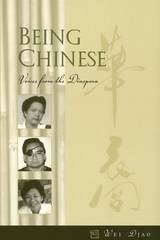
Being Chinese
Voices from the DiasporaWei (Angela) Djao
University of Arizona Press, 2003
In these pages we meet a surgeon raised in Singapore but westernized in London who still believes in the value of Chinese medicine, which "revitalizes you in ways that Western medicine cannot understand." A member of the Chinese Canadian community who bridles at the insistence that you can't be Chinese unless you speak a Chinese dialect, because "Even though I do not have the Chinese language, I think my ability to manifest many things in Chinese culture to others in English is still very important." Individuals all loyal to their countries of citizenship who continue to observe the customs of their ancestral home to varying degrees, whether performing rites in memory of ancestors, practicing fengshui, wearing jade for good luck, or giving out red packets of lucky money for New Year.
What emerges from many of these accounts is a selective adherence to Chinese values. One person cites a high regard for elders, for high achievement, and for the sense of togetherness fostered by his culture. Another, the bride in an arranged marriage to a transplanted Chinese man, speaks highly of her relationship: "It's the Chinese way to put in the effort and persevere." Several of the stories consider the difference between how Chinese women overseas actually live and the stereotypes of how they ought to live. One writes: "Coming from a traditional Chinese family, which placed value on sons and not on daughters, it was necessary for me to assert my own direction in life rather than to follow in the traditional paths of obedience." Bracketing the testimonies are an overview of the history of emigration from China and an assessment of the extent to which the Chinese overseas retain elements of Chinese culture in their lives.
In compiling these personal accounts, Wei Djao, who was born in China and now lives near Seattle, undertook a quest that took her not only to many countries but also to the inner landscapes of the heart. Being Chinese is a highly personal book that bares the aspirations, despairs, and triumphs of real people as it makes an insightful and lasting contribution to Chinese diasporic studies.
BitterSweet
The Memoir of a Chinese Indonesian Family in the Twentieth CenturyStuart Pearson
National University of Singapore Press, 2013
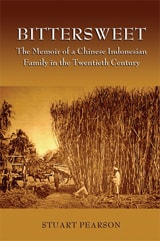
BitterSweet
The Memoir of a Chinese-Indonesian Family in the Twentieth CenturyStuart Pearson
Ohio University Press, 2008
BitterSweet is the account of one Chinese-Indonesian family whose story stretches over the generations as their fortunes waxed and waned through revolution, riots, war, depression, occupation, and finally emigration to yet another country—Australia.
BitterSweet offers a unique insight into a world rarely seen before. An Sudibjo’s memoir, written from a woman’s perspective, is a valuable resource for anyone studying Indonesian history or the Chinese Diaspora.
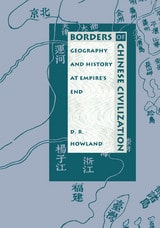
Borders of Chinese Civilization
Geography and History at Empire's EndD. R. Howland
Duke University Press, 1996
With Japan’s decision in the 1870s to modernize and westernize, China’s relationship with Japan underwent a crucial change—one that resulted in its decisive separation from Chinese civilization and, according to Howland, a destabilization of China’s worldview. His examination of the ways in which Chinese perceptions of Japan altered in the 1880s reveals the crucial choice faced by the Chinese of whether to interact with Japan as “kin,” based on geographical proximity and the existence of common cultural threads, or as a “barbarian,” an alien force molded by European influence.
By probing China’s poetic and expository modes of portraying Japan, Borders of Chinese Civilization exposes the changing world of the nineteenth century and China’s comprehension of it. This broadly appealing work will engage scholars in the fields of Asian studies, Chinese literature, history, and geography, as well as those interested in theoretical reflections on travel or modernism.

Breaking the Chains
Gender, Context, and the Politics of Writing in Modern ChinaDong Limin
Seagull Books, 2025
How has literature shaped gender politics in modern China? How has the concept of “woman” evolved within the shifting sociopolitical landscape? Old Chains and New delves into these questions by examining the dynamic interplay between literature, gender, and historical change. Drawing from literary studies, history, and sociology, this book reveals how women’s writing has not only reflected but also actively shaped cultural and national transformations.
From the late Qing era, when the “woman question” emerged as part of China’s response to imperialist pressures, to the ongoing evolution of feminist literary scholarship, this study argues that gender and literature are deeply interwoven. Women’s liberation in modern China was never solely about gender equality—it became a driving force for broader social change and national identity formation. Engaging with the complexities of women’s literature through a cultural-political lens, this book challenges static definitions and calls for a reevaluation of women’s literature not just as a literary category but as a key component in shaping China’s modern intellectual and cultural history.
By adopting the framework of “China as method,” Old Chains and New reimagines the role of literature in ideological and cultural shifts. It highlights women’s writing as a unique form of aesthetic politics—one with the power to intervene in and transform reality.