Results by title

16 books match the query 'Sexology'
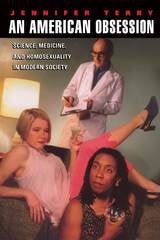
cover of An American Obsession: Science, Medicine, and Homosexuality in Modern Society

An American Obsession

Science, Medicine, and Homosexuality in Modern Society

Jennifer Terry

University of Chicago Press, 1999

Drawing on original research from medical texts, psychiatric case histories, pioneering statistical surveys, first-person accounts, legal cases, sensationalist journalism, and legislative debates, Jennifer Terry has written a nuanced and textured history of how the century-old obsession with homosexuality is deeply tied to changing American anxieties about social and sexual order in the modern age.

Terry's overarching argument is compelling: that homosexuality served as a marker of the "abnormal" against which malleable, tenuous, and often contradictory concepts of the "normal" were defined. One of the few histories to take into consideration homosexuality in both women and men, Terry's work also stands out in its refusal to erase the agency of people classified as abnormal. She documents the myriad ways that gays, lesbians, and other sexual minorities have coauthored, resisted, and transformed the most powerful and authoritative modern truths about sex. Proposing this history as a "useable past," An American Obsession is an indispensable contribution to the study of American cultural history.
[more]
cover of An Interpretation of Desire: Essays in the Study of Sexuality

An Interpretation of Desire

Essays in the Study of Sexuality

John Gagnon

University of Chicago Press, 2003

An Interpretation of Desire offers a bracing collection of major essays by John Gagnon, one of the leading and most inspiring figures in sexual research. Spanning his work from the 1970s, when he explored the idea that sexuality is mediated through social processes and categories—thus paving the way for Foucault—and then extending through his turn to issues of desire during the 1990s, these essays constitute an essential entrée to the study of sexuality in the twentieth century.

Gagnon may be best known as the coauthor of Sexual Conduct—a book that introduced the seminal concept of sexual scripting—and as one of the coauthors of The Social Organization of Sexuality, a foundational work that is widely considered to be the most important study of human sexual behavior since the Kinsey report. The essays collected here first trace the influence of scripting theory on Gagnon, outlining the radical departure he took from the dominant biological and psychiatric models of sex research. The volume then turns to more recent essays that consider such vexed issues as homosexuality, the theories of Sigmund Freud, HIV, hazardous sex, and the social aspects of sexually transmitted diseases.
[more]
cover of Disorders Of Desire

Disorders Of Desire

Janice Irvine

Temple University Press, 1991

Disorders of Desire is the only book to tell the story of the development and impact of sexology—the scientific study of sex—in the United States. In this era of sex scandals, culture wars, "Sex in the City," and new sexual enhancement technologies (like erectile dysfunction drugs), its critique of sexology is even more relevant than it was when the book was first published in 1990.

This revised and expanded edition features new chapters addressing:

  • The diagnosis of "sex addiction"in the 1970s and its social and political implications.
  • New developments within the field of sexology, including the "Viagra Revolution" that began in the 1990s.
  • The pharmaceutical industry's role in the development of sexual enhancements and the search for the female equivalent of Viagra.
[more]
cover of Disorders Of Desire Rev: Sexuality And Gender In Modern American Sexology

Disorders Of Desire Rev

Sexuality And Gender In Modern American Sexology

Janice Irvine

Temple University Press, 2005

Disorders of Desire is the only book to tell the story of the development and impact of sexology—the scientific study of sex—in the United States. In this era of sex scandals, culture wars, "Sex in the City," and new sexual enhancement technologies (like erectile dysfunction drugs), its critique of sexology is even more relevant than it was when the book was first published in 1990.

This revised and expanded edition features new chapters addressing:

•The diagnosis of "sex addiction"in the 1970s and its social and political implications.
•New developments within the field of sexology, including the "Viagra Revolution" that began in the 1990s.
•The pharmaceutical industry's role in the development of sexual enhancements and the search for the female equivalent of Viagra.

[more]
cover of Fuckology: Critical Essays on John Money's Diagnostic Concepts

Fuckology

Critical Essays on John Money's Diagnostic Concepts

Lisa Downing, Iain Morland, and Nikki Sullivan

University of Chicago Press, 2014

One of the twentieth century’s most controversial sexologists—or “fuckologists,” to use his own memorable term—John Money was considered a trailblazing scientist and sexual libertarian by some, but damned by others as a fraud and a pervert.  Money invented the concept of gender in the 1950s, yet fought its uptake by feminists. He backed surgical treatments for transsexuality, but argued that gender roles were set by reproductive capacity. He shaped the treatment of intersex, advocating experimental sex changes for children with ambiguous genitalia. He pioneered drug therapy for sex offenders, yet took an ambivalent stance towards pedophilia. In his most publicized case study, Money oversaw the reassignment of David Reimer as female following a circumcision accident in infancy. Heralded by many as proof that gender is pliable, the case was later discredited when Reimer revealed that he had lived as a male since his early teens.

In Fuckology, the authors contextualize and interrogate Money's writings and practices. The book focuses on his three key diagnostic concepts, “hermaphroditism,” “transsexualism,” and “paraphilia,” but also addresses his lesser-known work on topics ranging from animal behavior to the philosophy of science. The result is a comprehensive collection of new insights for researchers and students within cultural, historical, and gender studies, as well as for practitioners and activists in sexology, psychology, and patient rights.

[more]
cover of Samuel Steward and the Pursuit of the Erotic Sexuality, Literature, Archives: Sexuality, Literature, Archives

Samuel Steward and the Pursuit of the Erotic Sexuality, Literature, Archives

Sexuality, Literature, Archives

Edited by Debra A. Moddelmog and Martin Joseph Ponce

The Ohio State University Press, 2017

Samuel Steward and the Pursuit of the Erotic: Sexuality, Literature, Archives examines one of the most fascinating sexual renegades of the twentieth century and the social, cultural, pedagogical, and erotic projects with which he was engaged. This innovative collection, edited by Debra A. Moddelmog and Martin Joseph Ponce, examines the life and work of Samuel Steward at their most daring and controversial. Samuel Steward—writer, literature professor, visual artist, tattoo artist, sexual archivist, unofficial sexologist, and vernacular pornographer—gave voice and vision to some of the central concerns of twentieth-century U.S. gay culture and politics. These essays frame Steward not merely as an associate or a lover of more well-known luminaries but as a significant cultural figure in his own right, one whose work anticipated some of the current aims and methods of queer studies.
With work by prominent scholars in queer, transgender, and sexuality studies, and with topics such as the queer archive, hoarding, masochism, the queer mystery, race and desire, sexology, and gay pornography, Samuel Steward and the Pursuit of the Erotic will appeal to a wide range of readers across a variety of disciplines invested in queer experience. Closing on a personal recollection from one of Steward’s last close friends, the volume will also appeal to readers interested in the personal aspects of this fascinating, idiosyncratic figure’s multifaceted life.
 
[more]
cover of Sex Isn't Real: The Invention of an Incoherent Binary

Sex Isn't Real

The Invention of an Incoherent Binary

Beans Velocci

Duke University Press, 2026

In Sex Isn’t Real, Beans Velocci traces the history of current high stakes attempts to define sex and to create a world devoid of trans life. Drawing on lab notes, family genealogies, medical case studies, and more, Velocci follows scientists and clinicians from the mid-nineteenth through the mid-twentieth century and across five disciplines—zoology, eugenics, gynecology, statistical sexology, and transsexual medicine—as their ideas and practices created a definitional tangle. They demonstrate how the sorting of bodies into male and female persists not despite but because of sex’s incoherence: the defining features of these categories shift to contain various understandings of anatomy and physiology, theories of race, developments in research and medical methodologies, and bodies that cannot be accounted for in a binary framework. Exposing the endless work required to produce a world in which most people have a binary gender identity that neatly fits their binarily sexed body, Velocci demonstrates that it is not cis people who fit the categories; it’s the categories that flex to make them fit.
[more]
cover of Sex between Body and Mind: Psychoanalysis and Sexology in the German-speaking World, 1890s-1930s

Sex between Body and Mind

Psychoanalysis and Sexology in the German-speaking World, 1890s-1930s

Katie Sutton

University of Michigan Press, 2019

Ideas about human sexuality and sexual development changed dramatically across the first half of the 20th century. As scholars such as Magnus Hirschfeld, Iwan Bloch, Albert Moll, and Karen Horney in Berlin and Sigmund Freud, Wilhelm Stekel, and Helene Deutsch in Vienna were recognized as leaders in their fields, the German-speaking world quickly became the international center of medical-scientific sex research—and the birthplace of two new and distinct professional disciplines, sexology and psychoanalysis.
 
This is the first book to closely examine vital encounters among this era’s German-speaking researchers across their emerging professional and disciplinary boundaries. Although psychoanalysis was often considered part of a broader “sexual science,” sexologists increasingly distanced themselves from its mysterious concepts and clinical methods. Instead, they turned to more pragmatic, interventionist therapies—in particular, to the burgeoning field of hormone research, which they saw as crucial to establishing their own professional relevance. As sexology and psychoanalysis diverged, heated debates arose around concerns such as the sexual life of the child, the origins and treatment of homosexuality and transgender phenomena, and female frigidity. This new story of the emergence of two separate approaches to the study of sex demonstrates that the distinctions between them were always part of a dialogic and competitive process. It fundamentally revises our understanding of the production of modern sexual subjects.
 
[more]
cover of Sexology Uncensored: The Documents of Sexual Science

Sexology Uncensored

The Documents of Sexual Science

Edited by Lucy Bland and Laura Doan

University of Chicago Press, 1998

Sexology Uncensored brings together, for the first time, many of the key documents of the modern science of sexuality that emerged in the late nineteenth century. The early pioneers of the new field of sexology examined and classified sexual behaviors, identities, and relations. For years much of the material here has been "censored" in the sense that it is difficult to obtain, subject to restrictive circulation, or available only in medical archives. The extracts (which date from the 1880s to the 1940s) cover a variety of topics including gender and sexual difference; homosexuality; transsexuality and bisexuality; heterosexuality; marriage and sex manuals; reproductive control; eugenics; race; and various sexual proclivities.

Offering readers access to the primary materials on which contemporary sexology is founded, Sexology Uncensored is an invaluable record for all those interested in how we have come to think about sex and sexuality over the last hundred years.

Sexology in Culture and its companion Sexology Uncensored will interest all those concerned with understanding modern sexual discourse in its historical context.

[more]
cover of Sexology and Translation: Cultural and Scientific Encounters across the Modern World

Sexology and Translation

Cultural and Scientific Encounters across the Modern World

Heike Bauer

Temple University Press, 2015

Sexology and Translation is the first study of the contemporaneous emergence of sexology in Europe, Asia, and the Middle East. Heike Bauer and her contributors—historians, literary and cultural critics, and translation scholars—address the intersections between sexuality and modernity in a range of contexts during the period from the 1880s to the 1930s. 

From feminist sexualities in modern Japan to Magnus Hirschfeld’s affective sexology, this book offers compelling new insights into how sexual ideas were formed in different contexts via a complex process of cultural negotiation. By focusing on issues of translation—the dynamic process by which ideas are produced and transmitted—the essays in Sexology and Translation provide an important corrective to the pervasive idea that sexuality is a “Western” construct that was transmitted around the world. 

This volume deepens understanding of how the intersections between national and transnational contexts, between science and culture, and between discourse and experience, shaped modern sexuality. 
 
[more]
cover of Sexology in Culture: Labelling Bodies and Desires

Sexology in Culture

Labelling Bodies and Desires

Edited by Lucy Bland and Laura Doan

University of Chicago Press, 1998

The key founders of sexology, the "science of desire," were Havelock Ellis, Richard von Krafft-Ebing, and Magnus Hirschfeld. This volume examines the impact of their writings on English-speaking culture from the 1880s to the early 1940s. How influential a field was sexology during this period, and how much power did sexologists wield? What was the impact of their work on popular and official attitudes to sex?

Lucy Bland and Laura Doan have brought together leading historians of sex, cultural and literary critics, and scholars in gay, lesbian, and queer studies, to reassess current debates on sexology in light of its history. They address issues such as the relation of "sexual science" to the law, government policy, journalism, eugenics programs, marriage and sex manuals, and literary representation. They also map out new readings of transsexuality and bisexuality, and the centrality of race within sexology.

Sexology in Culture and its companion Sexology Uncensored will interest all those concerned with understanding modern sexual discourse in its historical context.

[more]
cover of Stepchildren of Nature: Krafft-Ebing, Psychiatry, and the Making of Sexual Identity

Stepchildren of Nature

Krafft-Ebing, Psychiatry, and the Making of Sexual Identity

Harry Oosterhuis

University of Chicago Press, 2000

Psychiatrist Richard von Krafft-Ebing (1840-1902) played a key role in the construction of the modern concept of sexuality. As the author of the famous Psychopathia sexualis, he named and classified virtually all nonprocreative sexualities, synthesizing knowledge on sadism, masochism, fetishism, homosexuality, and exhibitionism. His influence on the study of sexuality cannot be overstated, but it is often misunderstood. In the wake of Michel Foucault's influential sexual histories, Krafft-Ebing is often maligned as a contributor to the repressed Victorian construction of sexual deviancy.

But in this powerful new cultural history Harry Oosterhuis invites us to reconsider the quality and extent of Krafft-Ebing's influence. Revisiting the case studies on which Krafft-Ebing based his findings, and thus drawing on the voices of his patients and informants, Oosterhuis finds that Krafft-Ebing was not the harsh judge of perversions that we think he was. He argues that Krafft-Ebing had a deep appreciation of the psyche, and that his work reveals an attempt to separate sexual deviancies from ideas of immorality. In the tradition of Freud, then, Krafft-Ebing should stand not as a villain, but as a contributor to more modern notions of sexual identity.
[more]
cover of Studying Human Behavior: How Scientists Investigate Aggression and Sexuality

Studying Human Behavior

How Scientists Investigate Aggression and Sexuality

Helen E. Longino

University of Chicago Press, 2013

In Studying Human Behavior, Helen E. Longino enters into the complexities of human behavioral research, a domain still dominated by the age-old debate of “nature versus nurture.” Rather than supporting one side or another or attempting to replace that dichotomy with a different framework for understanding behavior, Longino focuses on how scientists study it, specifically sexual behavior and aggression, and asks what can be known about human behavior through empirical investigation.
 
She dissects five approaches to the study of behavior—quantitative behavioral genetics, molecular behavior genetics, developmental psychology, neurophysiology and anatomy, and social/environmental methods—highlighting the underlying assumptions of these disciplines, as well as the different questions and mechanisms each addresses. She also analyzes efforts to integrate different approaches. Longino concludes that there is no single “correct” approach but that each contributes to our overall understanding of human behavior. In addition, Longino reflects on the reception and transmission of this behavioral research in scientific, social, clinical, and political spheres. A highly significant and innovative study that bears on crucial scientific questions, Studying Human Behavior will be essential reading not only for scientists and philosophers but also for science journalists and anyone interested in the engrossing challenges of understanding human behavior.
[more]
cover of The Book of Minor Perverts: Sexology, Etiology, and the Emergences of Sexuality

The Book of Minor Perverts

Sexology, Etiology, and the Emergences of Sexuality

Benjamin Kahan

University of Chicago Press, 2019

Shortlisted for the Modernist Studies Assocation Book Prize

­Statue-fondlers, wanderlusters, sex magicians, and nymphomaniacs: the story of these forgotten sexualities—what Michel Foucault deemed “minor perverts”—has never before been told. In The Book of Minor Perverts, Benjamin Kahan sets out to chart the proliferation of sexual classification that arose with the advent of nineteenth-century sexology. The book narrates the shift from Foucault’s “thousand aberrant sexualities” to one: homosexuality. The focus here is less on the effects of queer identity and more on the lines of causation behind a surprising array of minor perverts who refuse to fit neatly into our familiar sexual frameworks. The result stands at the intersection of history, queer studies, and the medical humanities to offer us a new way of feeling our way into the past.
[more]
cover of The Sexual Self: The Construction of Sexual Scripts

The Sexual Self

The Construction of Sexual Scripts

Michael Kimmel

Vanderbilt University Press, 2007
In the late 1960s two sociologists, John Gagnon and William Simon, developed the concept of sexual scripts as part of a larger project of treating sexuality like any other social phenomenon. In the end, their vision of social construction turned Kinsey on his head, and their model became the dominant paradigm of social science inquiry into human sexuality, and spurred the development of an entire field of Sexuality Studies. Sexual activity, they argued, was like other social processes, yet one of increasing importance in the construction of the self. Michael Kimmel has gathered together essays from three generations of scholars influenced by this perspective on sexuality. These include many of the foremost social scientists writing and researching sexuality today. The book begins with Kimmel's reflections on the unusual careers of Gagnon and Simon, examines the construction of both sexual identity and sexual behaviors in a variety of settings, and ends with the two of them speaking in their own provocative voices about their perspective in interviews conducted originally for a German journal in 1998.
[more]
cover of Vita Sexualis: Karl Ulrichs and the Origins of Sexual Science

Vita Sexualis

Karl Ulrichs and the Origins of Sexual Science

Ralph M. Leck

University of Illinois Press, 2020

Karl Ulrichs's studies of sexual diversity galvanized the burgeoning field of sexual science in the nineteenth century. But in the years since, his groundbreaking activism has overshadowed his scholarly achievements. Ulrichs publicly defied Prussian law to agitate for gay equality and marriage, and founded the world's first organization dedicated to the legal and social emancipation of homosexuals. Ralph M. Leck returns Ulrichs to his place as the inventor of the science of sexual heterogeneity. Leck's analysis situates sexual science in a context that includes politics, aesthetics, the languages of science, and the ethics of gender. Although he was the greatest nineteenth-century scholar of sexual heterogeneity, Ulrichs retained certain traditional conjectures about gender. Leck recognizes these subtleties and employs the analytical concepts of modernist vita sexualis and traditional psychopathia sexualis to articulate philosophical and cultural differences among sexologists. Original and audacious, Vita Sexualis uses a bedrock figure's scientific and political innovations to open new insights into the history of sexual science, legal systems, and Western amatory codes.
[more]