Results by title
91 books match the query 'Citizen participation' and 9 start with b
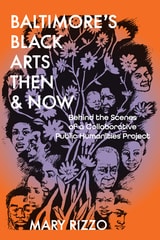
Baltimore's Black Arts Then & Now
Behind the Scenes of a Collaborative Public Humanities ProjectMary Rizzo
University of Iowa Press, 2026
Since 2017, a group of former Chicory editors, scholars, librarians, poets, teachers, and young writers have collaborated to use Chicory as a catalyst for intergenerational dialogue on social justice, race, and place. Baltimore’s Black Arts Then & Now documents this joint effort, offering valuable insights for public historians, educators, and humanists.
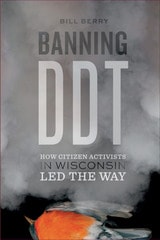
Banning DDT
How Citizen Activists in Wisconsin Led the WayBill Berry
Wisconsin Historical Society Press, 2014
On a December day in 1968, DDT went on trial in Madison, Wisconsin. In Banning DDT: How Citizen Activists in Wisconsin Led the Way, Bill Berry details how the citizens, scientists, reporters, and traditional conservationists drew attention to the harmful effects of “the miracle pesticide” DDT, which was being used to control Dutch elm disease.
Berry tells of the hunters and fishers, bird-watchers, and garden-club ladies like Lorrie Otto, who dropped off twenty-eight dead robins at the Bayside village offices. He tells of university professors and scientists like Joseph Hickey, a professor and researcher in the Department of Wildlife Management in at the University of Wisconsin–Madison, who, years after the fact, wept about the suppression of some of his early DDT research. And he tells of activists like Senator Gaylord Nelson and members of the state’s Citizens Natural Resources who rallied the cause.
The Madison trial was one of the first for the Environmental Defense Fund. The National Audubon Society helped secure the more than $52,000 in donations that offset the environmentalists’ costs associated with the hearing. Today, virtually every reference to the history of DDT mentions the impact of Wisconsin’s battles.
The six-month-long DDT hearing was one of the first chapters in citizen activism in the modern environmental era. Banning DDT is a compelling story of how citizen activism, science, and law merged in Wisconsin’s DDT battles to forge a new way to accomplish public policy. These citizen activists were motivated by the belief that we all deserve a voice on the health of the land and water that sustain us.
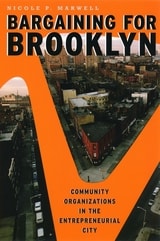
Bargaining for Brooklyn
Community Organizations in the Entrepreneurial CityNicole P. Marwell
University of Chicago Press, 2007
Through ethnographic fieldwork at eight CBOs in the Brooklyn neighborhoods of Williamsburg and Bushwick, Nicole P. Marwell discovered that the complex and contentious relationships these groups form with larger economic and political institutions outside the neighborhood have a huge and unexamined impact on the lives of the poor. Most studies of urban poverty focus on individuals or families, but Bargaining for Brooklyn widens the lens, examining the organizations whose actions and decisions collectively drive urban life.
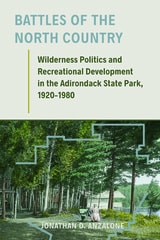
Battles of the North Country
Wilderness Politics and Recreational Development in the Adirondack State Park, 1920-1980Jonathan D. Anzalone
University of Massachusetts Press, 2018
Through a series of case studies, historian Jonathan D. Anzalone highlights the role of public and private interests in the region and shows how partnerships frayed and realigned in the course of several key developments: the rise of camping in the 1920s and 1930s; the 1932 Lake Placid Olympics; the construction of a highway to the top of Whiteface Mountain; the postwar rise of downhill skiing; the completion of I-87 and the resulting demand for second homes; and the 1980 Lake Placid Olympics. Battles of the North Country reveals how class, economic self-interest, state power, and a wide range of environmental concerns have shaped modern politics in the Adirondacks and beyond.
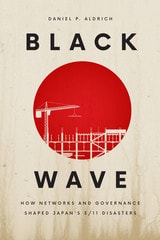
Black Wave
How Networks and Governance Shaped Japan’s 3/11 DisastersDaniel P. Aldrich
University of Chicago Press, 2019
Black Wave illuminates two critical factors that had a direct influence on why survival rates varied so much across the Tōhoku region following the 3/11 disasters and why the rebuilding process has also not moved in lockstep across the region. Individuals and communities with stronger networks and better governance, Daniel P. Aldrich shows, had higher survival rates and accelerated recoveries. Less-connected communities with fewer such ties faced harder recovery processes and lower survival rates. Beyond the individual and neighborhood levels of survival and recovery, the rebuilding process has varied greatly, as some towns and cities have sought to work independently on rebuilding plans, ignoring recommendations from the national government and moving quickly to institute their own visions, while others have followed the guidelines offered by Tokyo-based bureaucrats for economic development and rebuilding.
Building Resilience
Social Capital in Post-Disaster RecoveryDaniel P. Aldrich
University of Chicago Press, 2012
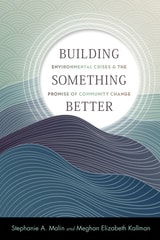
Building Something Better
Environmental Crises and the Promise of Community ChangeStephanie A. Malin
Rutgers University Press, 2022
Sociologists Stephanie A. Malin and Meghan Elizbeth Kallman offer a clear, accessible volume that demonstrates the ways that communities adapt in the face of crises and explains that sociology can help us understand how and why they do this challenging work. Tackling neoliberalism head-on, these communities are making big changes by crafting distributive and regenerative systems that depart from capitalist approaches. The vivid case studies presented range from activist water protectors to hemp farmers to renewable energy cooperatives led by Indigenous peoples and nations. Alongside these studies, Malin and Kallman present incisive critiques of colonialism, extractive capitalism, and neoliberalism, while demonstrating how sociology’s own disciplinary traditions have been complicit with those ideologies—and must expand beyond them.
Showing that it is possible to challenge social inequality and environmental degradation by refusing to continue business-as-usual, Building Something Better offers both a call to action and a dose of hope in a time of crises.

Bureaucrats, Clients, and Geography
The Bailly Nuclear Power Plant Battle in Northern IndianaNancy J. Obermeyer
University of Chicago Press, 1989
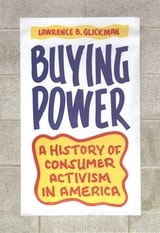
Buying Power
A History of Consumer Activism in AmericaLawrence B. Glickman
University of Chicago Press, 2009
A definitive history of consumer activism, Buying Power traces the lineage of this political tradition back to our nation’s founding, revealing that Americans used purchasing power to support causes and punish enemies long before the word boycott even entered our lexicon. Taking the Boston Tea Party as his starting point, Lawrence Glickman argues that the rejection of British imports by revolutionary patriots inaugurated a continuous series of consumer boycotts, campaigns for safe and ethical consumption, and efforts to make goods more broadly accessible. He explores abolitionist-led efforts to eschew slave-made goods, African American consumer campaigns against Jim Crow, a 1930s refusal of silk from fascist Japan, and emerging contemporary movements like slow food. Uncovering previously unknown episodes and analyzing famous events from a fresh perspective, Glickman illuminates moments when consumer activism intersected with political and civil rights movements. He also sheds new light on activists’ relationship with the consumer movement, which gave rise to lobbies like the National Consumers League and Consumers Union as well as ill-fated legislation to create a federal Consumer Protection Agency.