Results by title
436 books match the query 'Disability' and 24 start with b
Backlash Against the ADA
Reinterpreting Disability RightsLinda Hamilton Krieger, Editor
University of Michigan Press, 2003
Barriers and Belonging
Personal Narratives of DisabilityMichelle Jarman
Temple University Press, 2017
What is the direct impact that disability studies has on the lives of disabled people today? The editors and contributors to this essential anthology, Barriers and Belonging, provide thirty-seven personal narratives thatexplore what it means to be disabled and why the field of disability studies matters.
The editors frame the volume by introducing foundational themes of disability studies. They provide a context of how institutions—including the family, schools, government, and disability peer organizations—shape and transform ideas about disability. They explore how disability informs personal identity, interpersonal and community relationships, and political commitments. In addition, there are heartfelt reflections on living with mobility disabilities, blindness, deafness, pain, autism, psychological disabilities, and other issues. Other essays articulate activist and pride orientations toward disability, demonstrating the importance of reframing traditional narratives of sorrow and medicalization.
The critical, self-reflective essays in Barriers and Belonging provide unique insights into the range and complexity of disability experience.
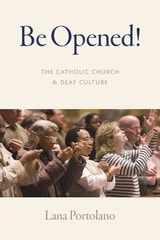
Be Opened! The Catholic Church and Deaf Culture
Lana Portolano
Catholic University of America Press, 2021

Becoming an Interpreter
Rachel E. Herring
Gallaudet University Press, 2026
How does one become an interpreter, and what knowledge and skills are developed along the way? What does developing an identity as an interpreter involve? Becoming an Interpreter bridges the gap between theory and practice, weaving together personal narratives and research insights to explore questions like these.
Becoming an Interpreter is structured around five dimensions of becoming that connect foundational concepts to lived experience: community, social aspects, acquisition of interpreting skills, ethical reasoning and decision-making, and coping with emotion and stress. Together, these varied perspectives and experiences show that there is no one single breakthrough moment for becoming an interpreter; there are many. At the end of each chapter, there are interactive prompts that invite readers to pause and reflect.
Designed for students, developing interpreters, and individuals considering interpreting as a career, Becoming an Interpreter is an introduction to the field and an essential resource for professional reflection and growth.
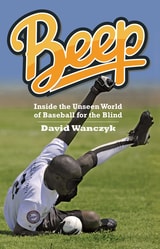
Beep
Inside the Unseen World of Baseball for the BlindDavid Wanczyk
Ohio University Press, 2018
In Beep, David Wanczyk illuminates the sport of blind baseball to show us a remarkable version of America’s pastime. With balls tricked out to squeal three times per second, and with bases that buzz, this game of baseball for the blind is both innovative and intense. And when the best beep baseball team in America, the Austin Blackhawks, takes on its international rival, Taiwan Homerun, no one’s thinking about disability. What we find are athletes playing their hearts out for a championship.
Wanczyk follows teams around the world and even joins them on the field to produce a riveting inside narrative about the game and its players. Can Ethan Johnston, kidnapped and intentionally blinded as a child in Ethiopia, find a new home in beep baseball, and a spot on the all-star team? Will Taiwan’s rookie MVP Ching-kai Chen—whose superhuman feats on the field have left some veterans suspicious—keep up his incredible play? And can Austin’s Lupe Perez harness his competitive fire and lead his team to a long-awaited victory in the beep baseball world series?
Beep is the first book about blind baseball.
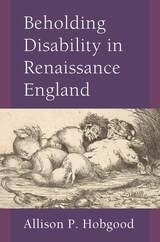
Beholding Disability in Renaissance England
Allison P. Hobgood
University of Michigan Press, 2021
Beholding Disability also uncovers crucial counterdiscourses circulating in the English Renaissance that opposed cultural fantasies of ability and had a keen sensibility toward non-normative embodiments. Hobgood reads impairments as varied as epilepsy, stuttering, disfigurement, deafness, chronic pain, blindness, and castration in order to understand not just powerful fictions of ability present during the Renaissance but also the somewhat paradoxical, surprising ways these ableist ideals provided creative fodder for many Renaissance writers and thinkers. Ultimately, Beholding Disability asks us to reconsider what we think we know about being human both in early modernity, and today.
Belonging
Virginia Tibbs-Brelje
Gallaudet University Press, 1986
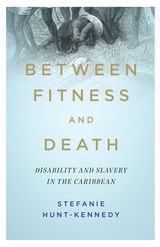
Between Fitness and Death
Disability and Slavery in the CaribbeanStefanie Hunt-Kennedy
University of Illinois Press, 2020
Stefanie Hunt-Kennedy provides a three-pronged analysis of disability in the context of Atlantic slavery. First, she examines the connections of enslavement and representations of disability and the parallel development of English anti-black racism. From there, she moves from realms of representation to reality in order to illuminate the physical, emotional, and psychological impairments inflicted by slavery and endured by the enslaved. Finally, she looks at slave law as a system of enforced disablement.
Audacious and powerful, Between Fitness and Death is a groundbreaking journey into the entwined histories of racism and ableism.
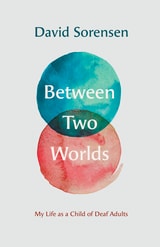
Between Two Worlds
My Life as a Child of Deaf AdultsDavid Sorensen
Gallaudet University Press, 2019
Sorensen relays the dynamics of his family life; he had a strained relationship with his father, who was an active leader and role model in the Deaf community and the Mormon Church, yet struggled to bond with his own son. Sorensen rebelled as a youth and left home as a teenager, completely detaching from the Deaf community. After struggling to establish himself as an independent adult, he discovered that he wanted to return to the Deaf world and use his ASL fluency and cultural understanding as a mental health therapist and community advocate. Now he considers himself an ambassador between the Deaf and hearing worlds, as well as between the older and younger generations of Deaf people. Between Two Worlds: My Life as a Child of Deaf Adults shares the unique experiences of a coda and passes on the rich cultural past shared by the American Deaf community.
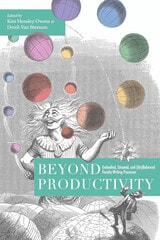
Beyond Productivity
Embodied, Situated, and (Un)Balanced Faculty Writing ProcessesKim Hensley Owens
Utah State University Press, 2023
This collection positions scholarly writers' ways of writing as a form of flexible, evolving knowledge. By exhibiting what is lost and gained through successive rounds of transformation and adaptation over time, the contributors offer a sustainable understanding and practice of process—one that looks beyond productivity as the primary measure of success. Each presents a fluid understanding of the writing process, illustrating its deeply personal nature and revealing how fragmented and disjointed methods and experiences can highlight what is precious about writing.
Beyond Productivity determines anew the use and value of scholarly writing and the processes that produce it, both within and beyond the context of the losses, constraints, and adaptations associated with the COVID-19 pandemic.

Beyond the Visual
Multisensory Modes of Beholding ArtEdited by Ken Wilder and Aaron McPeake
University College London, 2025
In what ways can visual art be enjoyed beyond sight? Bringing together leading international scholars and artists in the emerging field of “blindness arts”—including blind and partially blind artists, curators, advocates for inclusive practices and models of audio description, cognitive psychologists, and theorists of installation, performance, and sound art—Beyond the Visual seeks to broaden the discussion of multisensory ways of beholding contemporary art, with a particular emphasis on modes that transcend a dependency upon sight. Through diverse examples of multisensory engagement, it contributes to ongoing conversations around accessibility and blindness in art while also challenging and expanding our understanding of how art is experienced.
Black Disability Politics
Sami Schalk
Duke University Press, 2022
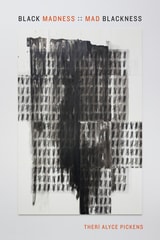
Black Madness
: Mad BlacknessTherí Alyce Pickens
Duke University Press, 2019
Blackness and Disability
Critical Examinations and Cultural InterventionsChristopher M. Bell
Michigan State University Press, 2012
Disability Studies diverge from the medical model of disability (which argues that disabled subjects can and should be “fixed”) to view disability as socially constructed, much in the same way other identities are. The work of reading black and disabled bodies is not only recovery work, but work that requires a willingness to deconstruct the systems that would keep those bodies in separate spheres. This pivotal volume uncovers the misrepresentations of black disabled bodies and demonstrates how those bodies transform systems and culture. Drawing on key themes in Disability Studies and African American Studies, these collected essays complement one another in interesting and dynamic ways, to forge connections across genres and chronotopes, an invitation to keep blackness and disability in conversation. With an analysis of disability as a result of war, studies of cognitive impairment and slavery in fiction, representations of slavery and violence in photography, deconstructions of illness (cancer and AIDS) narratives, comparative analyses of black and Latina/o and black and African subjects, analysis of treatments of disability in hip-hop, and commentary on disability, blackness, and war, this volume shows that the historical lines of demarcation in this field are permeable and should be challenged.
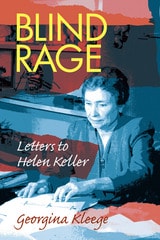
Blind Rage
Letters to Helen KellerGeorgina Kleege
Gallaudet University Press, 2006
As a young blind girl, Georgina Kleege repeatedly heard the refrain, “Why can’t you be more like Helen Keller?” Kleege’s resentment culminates in her book Blind Rage: Letters to Helen Keller, an ingenious examination of the life of this renowned international figure using 21st-century sensibilities. Kleege’s absorption with Keller originated as an angry response to the ideal of a secular saint, which no real blind or deaf person could ever emulate. However, her investigation into the genuine person revealed that a much more complex set of characters and circumstances shaped Keller’s life.
Blind Rage employs an adroit form of creative nonfiction to review the critical junctures in Keller’s life. The simple facts about Helen Keller are well-known: how Anne Sullivan taught her deaf-blind pupil to communicate and learn; her impressive career as a Radcliffe graduate and author; her countless public appearances in various venues, from cinema to vaudeville, to campaigns for the American Foundation for the Blind. But Kleege delves below the surface to question the perfection of this image. Through the device of her letters, she challenges Keller to reveal her actual emotions, the real nature of her long relationship with Sullivan, with Sullivan’s husband, and her brief engagement to Peter Fagan. Kleege’s imaginative dramatization, distinguished by her depiction of Keller’s command of abstract sensations, gradually shifts in perspective from anger to admiration. Blind Rage criticizes the Helen Keller myth for prolonging an unrealistic model for blind people, yet it appreciates the individual who found a practical way to live despite the restrictions of her myth.
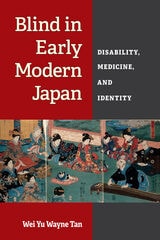
Blind in Early Modern Japan
Disability, Medicine, and IdentityWei Yu Wayne Tan
University of Michigan Press, 2022
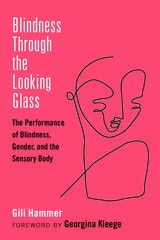
Blindness Through the Looking Glass
The Performance of Blindness, Gender, and the Sensory BodyGili Hammer
University of Michigan Press, 2019
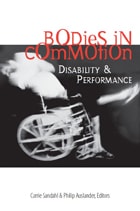
Bodies in Commotion
Disability and PerformanceEdited by Carrie Sandahl and Philip Auslander
University of Michigan Press, 2005
-Martin F. Norden, University of Massachusetts-Amherst
This groundbreaking collection imagines disabled bodies as "bodies in commotion"-bodies that dance across artistic and discursive boundaries, challenging our understanding of both disability and performance. In the book's essays, leading critics and artists explore topics that range from theater and dance to multi-media performance art, agit-prop, American Sign Language theater, and wheelchair sports. Bodies in Commotion is the first collection to consider the mutually interpretive qualities of these two emerging fields, producing a dynamic new resource for artists, activists, and scholars.
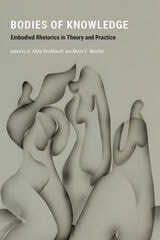
Bodies of Knowledge
Embodied Rhetorics in Theory and PracticeA. Abby Knoblauch
Utah State University Press, 2021
The pieces in Bodies of Knowledge draw explicit attention to the impact of the body on text, the impact of the body in text, the impact of the body as text, and the impact of the body upon textual production. The contributors investigate embodied rhetorics through the lenses of race and ethnicity, gender and sexuality, disability and pain, technologies and ecologies, clothing and performance, and scent, silence, and touch. In doing so, they challenge the (false) notion that academic knowledge—that is, “real” knowledge—is disembodied and therefore presumed white, middle class, cis-het, able-bodied, and male. This collection lays bare how myriad bodies invent, construct, deliver, and experience the processes of knowledge building.
Experts in the field of writing studies provide the necessary theoretical frameworks to better understand productive (and unproductive) uses of embodied rhetorics within the academy and in the larger social realm. To help meet the theoretical and pedagogical needs of the discipline, Bodies of Knowledge addresses embodied rhetorics and embodied writing more broadly though a rich, varied, and intersectional approach. These authors address larger questions around embodiment while considering the various impacts of the body on theories and practices of rhetoric and composition.
Contributors: Scot Barnett, Margaret Booker, Katherine Bridgman, Sara DiCaglio, Kristie S. Fleckenstein, Vyshali Manivannan, Temptaous Mckoy, Julie Myatt, Julie Nelson, Ruth Osorio, Kate Pantelides, Caleb Pendygraft, Nadya Pittendrigh, Kellie Sharp-Hoskins, Anthony Stagliano, Megan Strom
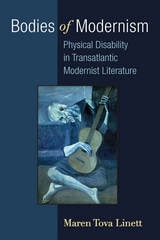
Bodies of Modernism
Physical Disability in Transatlantic Modernist LiteratureMaren Tova Linett
University of Michigan Press, 2016
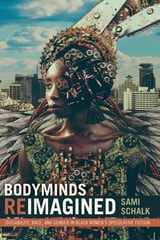
Bodyminds Reimagined
(Dis)ability, Race, and Gender in Black Women's Speculative FictionSami Schalk
Duke University Press, 2018
Brilliant Imperfection
Grappling with CureEli Clare
Duke University Press, 2017
Broken Worlds, Disabled Kin
Strategies for Collective SurvivalKelly Fritsch
University of Minnesota Press, 2026
A call to remake our world through a new politics of disabled kin-making
We live in a world broken by design: a web of systems that debilitate and kill through racist and ableist infrastructural neglect, socioeconomic abandonment, and ecological negligence. Fixes for these forms of breakage often conceal and amplify harm—but what happens if we refuse to rehabilitate this inhospitable world? In Broken Worlds, Disabled Kin, Kelly Fritsch and Anne McGuire urge an alternative response through abolition, access, care, and interdependence.
Bringing a much-needed disability studies lens to discussions of public policy, legal reform, and social change, Fritsch and McGuire show how hostile social and economic structures such as racial capitalism, neoliberalism, and settler colonialism unevenly target certain populations and environments. As they trace how everyday encounters with broken infrastructures like inaccessible transit, fragmented mental health care, and crumbling educational institutions reflect broader patterns of structural abandonment and slow violence, they pose a radical means of response: the making of disabled kin. Ranging from mundane disruptions to global crises like pandemics, wars, genocides, and climate collapse, they demonstrate how disabled kin-making nurtures connection and support between people, ecologies, infrastructures, and objects, cultivating a collective “we” that can contest systems broken by design.
Urgent and passionate, Broken Worlds, Disabled Kin asks readers to reexamine conceptions of breakage, maintenance, and repair, viewing them as tools of abolition and justice. Against relentless fragmentation and atomization, this book equips us with a politics of solidarity and collectivity with which to begin making a more life-supporting world.
Retail e-book files for this title are screen-reader friendly with images accompanied by short alt text and/or extended descriptions.
By Touch Alone
Blindness and Reading in Nineteenth-Century CultureVanessa Warne
University of Michigan Press, 2025
While By Touch Alone features the writing and ideas of an understudied community of nineteenth-century blind authors, innovators, and activists, it also engages the work of sighted authors such as George Eliot and Rudyard Kipling to explore the culture-wide effects of reading by touch. The emergence of a new category of readers who did not rely on sight to read prompted sighted people to reimagine blindness and adopt more progressive attitudes toward blind people. In our own era, one characterized by the increasing digitization of our reading lives, Vanessa Warne’s exploration positions scholars and blind readers to navigate present-day developments and shape the future of their reading lives. A carefully contextualized study of how reading by touch shaped Victorian culture, By Touch Alone adds new chapters to the history of disability and reading.