447 books match the query 'Eastern' and 22 start with b
cover of Bai Ganyo: Incredible Tales of a Modern Bulgarian

Bai Ganyo

Incredible Tales of a Modern Bulgarian

Aleko Konstantinov

University of Wisconsin Press, 2010

A comic classic of world literature, Aleko Konstantinov’s 1895 novel Bai Ganyo follows the misadventures of rose-oil salesman Ganyo Balkanski (“Bai” is a Bulgarian title of intimate respect) as he travels in Europe. Unkempt but endearing, Bai Ganyo blusters his way through refined society in Vienna, Dresden, and St. Petersburg with an eye peeled for pickpockets and a free lunch. Konstantinov’s satire turns darker when Bai Ganyo returns home—bullying, bribing, and rigging elections in Bulgaria, a new country that had recently emerged piecemeal from the Ottoman Empire with the help of Czarist Russia.
    Bai Ganyo has been translated into most European languages, but now Victor Friedman and his fellow translators have finally brought this Balkan masterpiece to English-speaking readers, accompanied by a helpful introduction, glossary, and notes.

 
 
Winner, Bulgarian Studies Association Book Prize
 
Finalist, Foreword Magazine’s Multicultural Fiction Book of the Year
 
Winner, John D. Bell Book Prize, Bulgarian Studies Association
 
Best Books for Special Interests, selected by the American Association for School Libraries
 
Best Books for High Schools, selected by the American Association for School Libraries
 
Best Books for Special Interests, selected by the Public Library Association
[more]
cover of Bait

Bait

David Albahari

Northwestern University Press, 2001
In self-exile in Canada after the collapse of Yugoslavia and his mother's death, the narrator of Bait is listening to a series of tapes he recorded of his mother years before. As her story is told, he reflects on her life and their relationship, attempting to come to terms with his Jewishness and his own new life in a foreign culture.
[more]
cover of Balkan Blues: Writing Out of Yugoslavia

Balkan Blues

Writing Out of Yugoslavia

Joanna Labon

Northwestern University Press, 1995

This collection first appeared as a special issue of Storm, the British literary journal of new eastern European writing. Joanna Labon has selected excellent, timely essays, stories, drama, and prose by exiled or silenced members of the Yugoslav intelligentsia.

Contributors: Dubravka Ugrešić, Bogdan Bogdanović, Dragan Velikić, Danilo Kiš, Drago Jančar, Mirko Kovač, Goran Stefanovski, Dževad Karahasan, and Slobodan Blagojević.
[more]
cover of Balkan Family Structure and the European Pattern: Demographic Developments in Ottoman Bulgaria

Balkan Family Structure and the European Pattern

Demographic Developments in Ottoman Bulgaria

Maria Todorova

Central European University Press, 2006
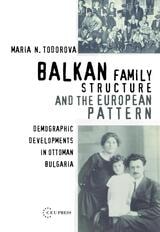
This study, which is an updated, extended, and revised version of the out-of-print 1993 edition, reassesses the traditional stereotype of the place of the Balkans in the model of the European family in the nineteenth century on the basis of new source material and by synthesizing existing research. The work first analyzes family structure and demographic variables as they appear in population registers and other sources, and the impact of these findings on theoretical syntheses of the European family pattern. On most features, such as population structure, marriage and nuptiality, birth and fertility, death and mortality rates, family and household size and structure, as well as inheritance patterns, the Balkans show an enormous deal of internal variety. This variability is put in a comparative European context by matching the quantifiable results with comparable figures and patterns in other parts of Europe. The second section of the book is a contribution to the long-standing debate over the zadruga, the complex, collective, joint or extended family in the Balkans. Finally, the book considers ideology and mythology and the ways it has adversely affected scholarship on the family, and broadly on population history.
[more]
cover of Ballad of Descent

Ballad of Descent

Martin Vopenka

Northwestern University Press, 1995
Martin and Tomas leave Prague on Christmas Day for "that other country." Although their destination is the mountains, their departure has been initiated by a search for their own identity—people in their country have become alike, losing their individuality and becoming products of a totalitarian regime. The pair become the guests of a high school teacher, but Martin falls in love with the teacher's daughter only to lose her in a police suppression, and the Other Country is revealed as a merciless machine of oppression that throws its people into despair.
[more]
cover of Battling over the Balkans: Historiographical Questions and Controversies

Battling over the Balkans

Historiographical Questions and Controversies

John R. Lampe

Central European University Press, 2020
The tumultuous history of the Balkans has been subject to a plethora of conflicting interpretations, both local and external. In an attempt to help overcome the stereotypes that still pervade Balkan history, Battling over the Balkans concentrates on a set of five principal controversies from the precommunist period with which the region’s history and historiography must contend: the pre-1914 Ottoman and Eastern Christian Orthodox legacies; the post-1918 struggles for state-building; the range of European economic and cultural influences across the interwar period, as opposed to diplomatic or political intervention; the role of violence and paramilitary forces in challenging the interwar political regimes in the region; and the fate of ethnic minorities into and after World War II, particularly Jews, Muslims and Roma. In an attempt to give a voice to eminent local authors, the chapters provide samples of new regional scholarship exploring these contested issues—most of them translated into English for the first time—and are prefaced with historiographical overviews addressing the state of the debate on these specific controversies. These translations help bridge the language barriers that often separate scholarly traditions within Southeast Europe, as well as scholars in Southeast Europe and English-speaking academia. This volume will enable readers to identify common patterns and influences that characterize the writing of history in the region, and will stimulate new transnational and comparative approaches to the history of the Balkans.
[more]
cover of Belarusian Nation-Building in Times of War and Revolution

Belarusian Nation-Building in Times of War and Revolution

Lizaveta Kasmach

Central European University Press, 2023

The proclamation of Belarusian independence on March 25, 1918, and the rival establishment of the Soviet Belarusian state on January 1, 1919, created two distinct and mutually exclusive national myths, which continue to define contemporary Belarusian society. This book examines the processes that resulted in this dual resolution in the context of World War I and the subsequent Russian Revolutions.

Based on original archival material, Lizaveta Kasmach scrutinizes the development of competing concepts of Belarusian nationhood in the context of rivaling national aspirations and imperial policies. The analysis convincingly demonstrates the divisions within the nationalist movement, both politically between the moderates and socialists, and geographically between German-occupied territory with Vilna as a center versus Russian-controlled territory around Minsk. Besides the case study of Belarusian nation-building efforts, the book is a contribution to the study of the First World War in East Central Europe, approaching the war and its aftermath as a mobilizational moment in the region.
[more]
cover of Between Exile and Asylum: An Eastern Epistolary

Between Exile and Asylum

An Eastern Epistolary

Predrag Matvejevic

Central European University Press, 2004
A collection of letters by a most extraordinary member of East European intelligentsia, sent from Moscow, Mostar; lately Paris and Rome, where the author has lived since leaving war-torn Bosnia. Matvejevic , vice president of the International PEN Club, was born in Yugoslavia, the son of a Russian emigre. His letters are about the past and the present of Russia, as welll as his hopes and fears for her future.
[more]
cover of Between Past and Future: The Revolution of 1989 and Their Aftermath

Between Past and Future

The Revolution of 1989 and Their Aftermath

Sorin Antohi

Central European University Press, 2000
The tenth anniversary of the collapse of communism in Central and Eastern Europe is the basis for this text which reflects upon the past ten years and what lies ahead for the future. An international group of academics and public intellectuals, including former dissidents and active politicians, engage in an exchange on the antecedents, causes, contexts, meanings and legacies of the 1989 revolutions. The contributors address various issues including liberal democracy and its enemies; modernity and discontent; economic reforms and their social impact; ethnicity; nationalism and religion; geopolitics; electoral systems and political power; European integration; and the demise of Yugoslavia.
[more]
cover of Beyond Mosque, Church, and State: Alternative Narratives of the Nation in the Balkans

Beyond Mosque, Church, and State

Alternative Narratives of the Nation in the Balkans

Yana Hashamova

Central European University Press, 2016
Journalists and policy-makers in the West have often assumed that the religious and ethno-national heterogeneity of the Balkans is the underlying reason for the numerous problems the area has faced throughout the twentieth century. The multiple and turbulent political transitions in the area, the dynamics of the interaction between Christianity and Islam, the contradictory and constantly shifting nationality policies, and the fluctuating identities of the diverse populations continue to be seen as major challenges to the stability of the region. By exploring the development of intricate religious, linguistic, and national dynamics in a variety of case studies throughout the Balkans, this volume demonstrates the existence of alternatives and challenges to nationalism in the area. The authors analyze a variety of national, non-national, and anti-national(ist) encounters in four areas—Bosnia, Bulgaria, Macedonia, and Albania—traditionally seen as “hot-beds” of nationalist agitation and tension resulting from their populations' religious or ethno-national diversity. In their entirety, the contributions in this volume chart a more complex picture of the national dynamics. The authors recognize the existence of national tensions both in historical perspective and in contemporary times, but also suggest the possibility of different paths to the nation that did not involve violence but allowed for national accommodation and reconciliation.
[more]
cover of Beyond Symbolism and Surrealism: Alexei Remizov's Synthetic Art

Beyond Symbolism and Surrealism

Alexei Remizov's Synthetic Art

Julia Friedman, Foreword by Avril Pyman

Northwestern University Press, 2011

The great modernist eccentric Alexei Remizov was a “writers’ writer” whose innovative poetic prose has long since entered the Russian literary canon. Gradually expanding his working methods to make drawing an integral part of the writing process, during the 1930s and 1940s, Remizov created hundreds of albums that combined texts with collages and india ink and watercolor illustrations. In Beyond Symbolism and Surrealism, Julia Friedman provides the first extensive examination of the dynamic interplay between text and image in Remizov’s albums, revealing their coequal roles in his oneiric and synaesthetic brand of storytelling. A participant in the Russian symbolist movement, an intellectual ally of many futurists, and during his émigré years, a collaborator of the surrealists, Remizov had unique insight into artistic cultures of the European avant-garde. His reinterpretation of the medieval illuminated manuscripts carries forward the traditions of symbolist mysticism and

This long-overdue examination of Remizov’s visual art addresses modernism’s key theoretical questions surrounding the relationships between image and text. Beyond Symbolism and Surrealism introduces a generous sampling of Remizov’s graphic work, much of which is currently held in private collections.
[more]
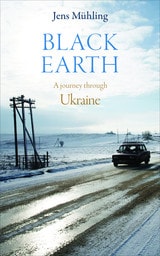
cover of Black Earth: A Journey through Ukraine

Black Earth

A Journey through Ukraine

Jens Mühling

Haus Publishing, 2018

 An in-depth exploration of Ukraine through encounters with the many different people who live there.
 
“Will someone pay for the spilled blood? No. Nobody.” Mikhail Bulgakov composed this ominous and prophetic phrase in Kiev amid the turmoil of the Russian civil war. Since then, Ukrainian borders have shifted constantly, and its people have suffered numerous military foreign interventions. Ukraine has only existed as an independent state since 1991, and what exactly it was before then is controversial among its people as well as its European neighbors.

In Black Earth: A Journey through the Ukraine, journalist and celebrated travel writer Jens Mühling takes readers across the country amid the ousting of former president Viktor Yanukovych and the Russian annexation of Crimea. Mühling delves deep into daily life in Ukraine, narrating his encounters with Ukrainian nationalists and old communists, Crimean Tatars and Cossacks, smugglers, and soldiers. Black Earth connects all these stories to convey an unconventional and unfiltered view of Ukraine, a country at the crossroads of Europe and Asia and the center of countless conflicts.
 
In this paperback edition, a new preface is included that takes into account recent developments up to the 2022 war between Russia and Ukraine.
 
[more]
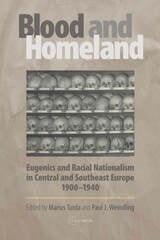
cover of Blood and Homeland: Eugenics and Racial Nationalism in Central and Southeast Europe, 1900-1940

Blood and Homeland

Eugenics and Racial Nationalism in Central and Southeast Europe, 1900-1940

Paul J. Weindling

Central European University Press, 2007
The history of eugenics and racial nationalism in Central and Southeast Europe is a neglected topic of analysis in contemporary scholarship. The 20 essays in this volume, written by distinguished scholars of eugenics and fascism alongside a new generation of scholars, excavate the hitherto unknown eugenics movements in Central and Southeast Europe, including Austria and Germany. Eugenics and racial nationalism are topics that have constantly been marginalized and rated as incompatible with local national traditions in Central and Southeast Europe. These topics receive a new treatment here. On the one hand, the historiographic perspective connects developments in the history of anthropology and eugenics with political ideologies such as racial nationalism and anti-Semitism; on the other hand, it contests the 'Sonderweg' approach adopted by scholars dealing with these issues.
[more]
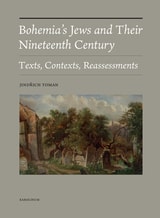
cover of Bohemia's Jews and Their Nineteenth Century: Texts, Contexts, Reassessments

Bohemia's Jews and Their Nineteenth Century

Texts, Contexts, Reassessments

Jindrich Toman

Karolinum Press, 2023

Bohemian Jewish culture and literature during the underexamined 1820s to 1880s.

This book on Jewish culture and literature focuses on the “quiet” decades of the nineteenth century, a scarcely written-about period of time in Bohemian Jewish history. Using a myriad of sources, including travelers’ accounts, poems, essays, short stories, guides, and newspaper articles, the volume explores Jewish expression, Jewish-Czech relations, and the changing attitudes toward Jews between the 1820s and 1880s. It offers close readings of writers like Karel Havlíćek Borovský, Ján Kollár, Siegfried Kapper, and Jan Neruda, as well as lesser-known authors and sources. Combining skillful sustained analysis, judicious argumentation, and elegant writing, the book is a truly enriching reading experience.
[more]
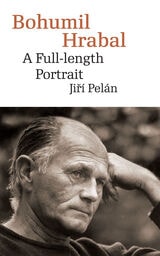
cover of Bohumil Hrabal: A Full-Length Portrait

Bohumil Hrabal

A Full-Length Portrait

Jirí Pelán

Karolinum Press, 2019

Described by Parul Sehgal in the New York Times Book Review as “one of the great prose stylists of the twentieth century; the scourge of state censors; the gregarious bar hound and lover of gossip, beer, cats, and women (in roughly that order),” Bohumil Hrabal is one of the most important, most translated, and most idiosyncratic Czech authors. In Bohumil Hrabal: A Full-Length Portrait, Jiří Pelán makes the case that this praise is far too narrow. A respected scholar of French and Italian literature, Pelán approaches Hrabal as a comparatist, expertly situating him within the context of European and world literature as he explores the entirety of Hrabal’s oeuvre and its development over sixty years. Concise, clear, and as compulsively readable as the works of Hrabal himself, Bohumil Hrabal was universally praised by critics in its original Czech edition as one of best works of Hrabal criticism. Here it is beautifully rendered into English for the first time by David Short, a celebrated translator of Hrabal’s works. Also featuring a fascinating selection of black-and-white images from Hrabal’s life, Bohumil Hrabal is essential reading for anyone interested in this crucial Czech author.
[more]
cover of Bones of Contention: The living archive of Vasil Levski and the making of Bulgaria's national hero

Bones of Contention

The living archive of Vasil Levski and the making of Bulgaria's national hero

Maria Todorova

Central European University Press, 2009
This book is about documenting and analyzing the living archive around the figure of Vasil Levski (1837–1873), arguably the major and only uncontested hero of the Bulgarian national pantheon. The processes described, although with a chronological depth of almost two centuries, are still very much in the making, and the living archive expands not only in size but constantly adding surprising new forms. The monograph is a historical study, taking as its narrative focus the life, death and posthumous fate of Levski. By exploring the vicissitudes of his heroicization, glorification, appropriations, reinterpretation, commemoration and, finally, canonization, it seeks to engage in several broad theoretical debates, and provide the basis for subsequent regional comparative research. The analysis of Levski's consecutive and simultaneous appropriations by different social platforms, political parties, secular and religious institutions, ideologies, professional groups, and individuals, demonstrates how boundaries within the framework of the nation are negotiated around accepted national symbols.
[more]
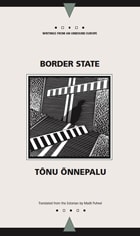
cover of Border State

Border State

Tonu Onnepalu

Northwestern University Press, 2000

Winner of the 1993 Baltic Assembly Prize

An immediate sensation upon its 1993 publication in Europe, already translated into more than a dozen languages, Border State is a brilliantly realized account of a man in the grip of Western excess, emotionally crippled by a world that is subsuming his own and inhabiting a West in which "all countries have become imaginary deserts of ruins where crowds of nomads roam from one attraction to the other." His tale, in which disillusion and murder become inextricably linked, is a compelling exploration of scarcity, longing, and madness.
[more]
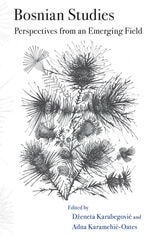
cover of Bosnian Studies: Perspectives from an Emerging Field

Bosnian Studies

Perspectives from an Emerging Field

Dzeneta Karabegovic

University of Missouri Press, 2023

It has been 27 years since the end of the war in Bosnia and Herzegovina, and the history of the conflict, its consequences, and long-term implications for the politics and lives of its citizens has remained a source of interest for scholars across the globe and across disciplines. This scholarship has included works by historians and political scientists seeking to explain the war’s origins with a view to Bosnia’s traditional multi-ethnic character and background. The country has been used as a case study in state- and peace-building, as well as to study the implications of ongoing transitional justice processes. Other scholars within the fields of human rights and genocide studies have focused on documenting the war crimes committed against the people of Bosnia and Herzegovina during the conflict and the mass-scale displacement of people, mostly Bosnian Muslims, from their homes and homelands. International law scholars have carried this work further, tracing the development of courts created in response to war crimes in Bosnia and their effectiveness in generating justice for victims.

Diaspora communities have formed in North America (especially in St. Louis), Europe, and Australia because of war and displacement, and have themselves become a considerable topic of study spanning the disciplines of anthropology, migration studies, political science, memory studies, conflict and security studies, psychology, and geography.

This volume seeks to illuminate how Bosnian migrant and diaspora scholars are contributing to the development of Bosnian Studies. The authors included in this volume are either writing from their (new) home bases in Australia, Austria, Canada, Switzerland, the United Kingdom, and the United States, among others, or they have returned to Bosnia after a period of migration. Their chapters have distinct entry points of inquiry, demonstrating how scholars have integrated Bosnia as a theme across the range of disciplines in which they are situated. The selections included in the volume range from literary analysis to personal memoirs of the conflict, from studies of heritage and identity to political science analysis of diaspora voting, to genocide studies and questions of (or lack of) ethics in the growing field of Bosnian Studies.
[more]
cover of Breaking the South Slav Dream: The Rise and Fall of Yugoslavia

Breaking the South Slav Dream

The Rise and Fall of Yugoslavia

Kate Hudson

Pluto Press, 2003

[more]
cover of Broken Masculinities: Solitude, Alienation, and Frustration in Turkish Literature after 1970

Broken Masculinities

Solitude, Alienation, and Frustration in Turkish Literature after 1970

Cimen Günay-Erkol

Central European University Press, 2016

Broken Masculinities portrays the post-dictatorial novel of the 1970s in all its complexity, and introduces the reader to a 1968-era Turkey, a period which challenges Turkey’s now reinforced Islamic image by portraying the quest for sexual liberation and critical student uprisings. Günay-Erkol argues that the literature written after the 1971 coup in Turkey constitutes a coherent sub-genre and needs to be considered together. These novels share a common ground which is rich in images of men and women craving for power: general isolation, sexual-emotional frustration, and a traumatic sense of solitude and alienation.

This book is an original and significant contribution to two major fields of study: (1) gender and sexuality with respect to formation of subjectivity through literature, and (2) modern literature and history through the study of Turkish literature. The chief concern in this book is not only literature’s response to a particular period in Turkey, but also the role of literature in bearing witness to trauma and drastic political acts of violence—and coming to terms with them.B

[more]
cover of Building for the Army in the Age of Empires: Modern Military Infrastructure and the Urban Experience

Building for the Army in the Age of Empires

Modern Military Infrastructure and the Urban Experience

Dragan Damjanovic

Central European University Press, 2027
This volume focuses on a still too little appreciated aspect of urban history of the modern period—the impact of the military on the development, perception, and functioning of European cities. It contains ten contributions from Europe—primarily Central and Eastern Europe, that is, from areas that belonged to the Russian, German, and Austro-Hungarian Empires—and centers on the nineteenth and twentieth centuries. During this period, the process of rationalizing army maintenance led soldiers of huge militaries, often operating in far-flung countries, to relocate to modern barracks concentrated in towns and cities. These mainly urban settlements had the potential to harbor new, place-consuming infrastructure. How these precise circumstances impacted and changed European cities is the driving subject of this book.
[more]
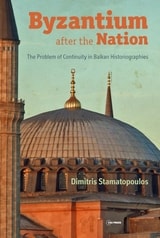
cover of Byzantium after the Nation: The Problem of Continuity in Balkan Historiographies

Byzantium after the Nation

The Problem of Continuity in Balkan Historiographies

Dimitris Stamatopoulos

Central European University Press, 2023

Stamatopoulos undertakes the first systematic comparison of the dominant ethnic historio­graphic models and divergences elaborated by Greek, Bulgarian, Serbian, Albanian, Romanian, Turkish, and Russian intellectuals with reference to the ambiguous inheritance of Byzantium. The title alludes to the seminal work of Nicolae Iorga in the 1930s, Byzantium after Byzantium, that argued for the continuity between the Byzantine and the Ottoman empires. Rival Balkan nationalisms engaged in a “war of interpretation” as to the nature of Byzantium, assuming different positions of adoption or rejection of its imperial model and leading to various schemes of continuity in each national historiographic canon.

Stamatopoulos discusses what Byzantium represented for nineteenth-, and twentieth-century scholars and how their perceptions related to their treatment of the imperial model: whether a different perception of the medieval Byzantine period prevailed in the Greek national center as opposed to Constantinople; how nineteenth-century Balkan nationalists and Russian scholars used Byzantium to invent their own medieval period (and, by extension, their own antiquity); and finally, whether there exist continuities or discontinuities in these modes of making ideological use of the past.

[more]