Results by title
542 books match the query 'Emigration and immigration' and 29 start with b
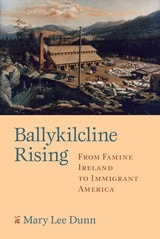
Ballykilcline Rising
From Famine Ireland to Immigrant AmericaMary Lee Dunn Maguire
University of Massachusetts Press, 2008
In 1847, in the third year of Ireland's Great Famine and the thirteenth year of their rent strike against the Crown, hundreds of tenant farmers in Ballykilcline, County Roscommon, were evicted by the Queen's agents and shipped to New York. Mary Lee Dunn tells their story in this meticulously researched book. Using numerous Irish and U.S. sources and with descendants' help, she traces dozens of the evictees to Rutland, Vermont, as railroads and marble quarries transformed the local economy. She follows the immigrants up to 1870 and learns not only what happened to them but also what light American experience and records cast on their Irish “rebellion.”
Dunn begins with Ireland's pre-Famine social and political landscape as context for the Ballykilcline strike. The tenants had rented earlier from the Mahons of Strokestown, whose former property now houses Ireland's Famine Museum. In 1847, landlord Denis Mahon evicted and sent nearly a thousand tenants to Quebec, where half died before or just after reaching the Grosse Ile quarantine station. Mahon was gunned down months later. His murder provoked an international controversy involving the Vatican. An early suspect in the case was a man from Ballykilcline.
In the United States, many of the immigrants resettled in clusters in several locations, including Vermont, Illinois, Iowa, Maryland, and New York. In Vermont they found jobs in the marble quarries, but some of them lost their homes again in quarry labor actions after 1859. Others prospered in their new lives. A number of Ballykilcline families who stopped in Rutland later moved west; one had a son kidnapped by Indians in Minnesota. Readers who have Irish Famine roots will gain a sense of their own “back story” from this account of Ireland and the native Irish, and scholars in the field of immigration studies will find it particularly useful.

Beautiful Cosmos
Performance and Belonging in the Caribbean DiasporaTina K. Ramnarine
Pluto Press, 2007
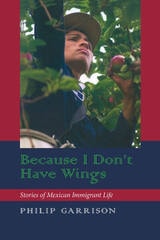
Because I Don't Have Wings
Stories of Mexican Immigrant LifePhilip Garrison
University of Arizona Press, 2006
Philip Garrison has spent most of his life in this region and shares in vivid prose tales of immigrant life, both contemporary and historical, revealing the dual lives of first-generation Mexican immigrants who move smoothly between the Yakima Valley and their homes in Mexico. And with a scholar’s eye he examines figures of speech that reflect mexicano feelings about immigrant life, offering glimpses of adaptation through offhand remarks, family spats, and town gossip.
Written with irony but bursting with compassion, Because I Don’t Have Wings features vivid characters, telling anecdotes, and poignant reflections on life, unfolding an immigrant’s world strikingly different from the one we usually read about. Adaptation, persistence, and survival, we learn, are traits that mexicano culture values. We also learn that, over time, mexicano immigrants don’t merely adapt to the culture of el norte, they transform it.
Becoming American Becoming Ethnic
edited by Thomas Dublin
Temple University Press, 1996
More than at any time since the 1920's the issues of immigration and ethnicity have become central to discussions of American society and identity. Becoming American, Becoming Ethnic addresses this contemporary debate, bringing together essays written over the past eighteen years by college students exploring their ethnic roots—from the experiences of their forbears to the place of ethnicity in their lives.
The students range from descendants of Europeans whose families immigrated several generations ago to Asian and Latin American immigrants of more recent decades to African-Americans and Hispanics—some have more than one ethnic heritage to grapple with, while others have migrated from one place to another within the United States. Together their voices create a dialogue about the interplay of ethnic traditions and values with American culture.
These are moving personal reflections on the continuities and changes in the ethnic experience in the United States and on the evolving meaning of ethnicity over time and across generations. Despite vocal concerns in recent years about ethnic divisiveness, these student writings show how much many young Americans share even in their differences.
In the series Critical Perspectives on the Past, edited by Susan Porter Benson, Stephen Brier, and Roy Rosenzweig.
Being Jewish in the New Germany
Being Jewish in the New Germany, First Paperback EditionJeffrey M. Peck
Rutgers University Press, 2007
Germany today boasts the fastest growing population of Jews in Europe. The streets of Berlin abound with signs of a revival of Jewish culture, ranging from bagel shops to the sight of worshipers leaving synagogue on Saturday. With the new energy infused by Jewish immigration from Russia and changes in immigration and naturalization laws in general, Jeffrey M. Peck argues that we must now begin considering how Jews live in Germany rather than merely asking why they would choose to do so.
In Being Jewish in the New Germany, Peck explores the diversity of contemporary Jewish life and the complex struggles within the community-and among Germans in general-over history, responsibility, culture, and identity. He provides a glimpse of an emerging, if conflicted, multicultural country and examines how the development of the European Community, globalization, and the post-9/11 political climate play out in this context. With sensitive, yet critical, insight into the nation's political and social life, chapters explore issues such as the shifting ethnic/national makeup of the population, changes in political leadership, and the renaissance of Jewish art and literature. Peck also explores new forms of anti-Semitism and relations between Jews and Turks-the country's other prominent minority population.
In this surprising description of the rebirth of a community, Peck argues that there is, indeed, a vibrant and significant future for Jews in Germany. Written in clear and compelling language, this book will be of interest to the general public and scholars alike.
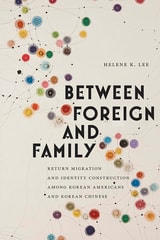
Between Foreign and Family
Return Migration and Identity Construction among Korean Americans and Korean ChineseLee, Helene K
Rutgers University Press, 2018
Between Foreign and Family explores the impact of inconsistent rules of ethnic inclusion and exclusion on the economic and social lives of Korean Americans and Korean Chinese living in Seoul. These actors are part of a growing number of return migrants, members of an ethnic diaspora who migrate “back” to the ancestral homeland from which their families emigrated. Drawing on ethnographic observations and interview data, Helene K. Lee highlights the “logics of transnationalism” that shape the relationships between these return migrants and their employers, co-workers, friends, family, and the South Korean state.
While Koreanness marks these return migrants as outsiders who never truly feel at home in the United States and China, it simultaneously traps them into a liminal space in which they are neither fully family, nor fully foreign in South Korea. Return migration reveals how ethnic identity construction is not an indisputable and universal fact defined by blood and ancestry, but a contested and uneven process informed by the interplay of ethnicity, nationality, citizenship, gender, and history.
Between Home and Homeland
Youth Aliyah from Nazi GermanyBrian Amkraut
University of Alabama Press, 2006
As Hitler consolidated power, Jews and their allies in Germany began efforts to leave the country. Among them was the organization, Youth Aliyah. Based on abundant archival sources and a thorough use of secondary literature, Brian Amkraut details the story of the organization from its origins through its alliances and antagonisms with other Jewish organizations, and the challenges that vexed its efforts from every side, perhaps the greatest being sheer human naiveté ("surely things will get better").
Amkraut also discusses the identity dilemma for Jews who grew up feeling German, and then had to alter their self-image in the face of growing discrimination. He highlights the internal disagreements of Jewish agencies who wrestled with myriad problems. The author explores how German Jews were ideologically heterogeneous, and details how different groups coped with increasing antagonism in a variety of ways.
To this day, Youth Aliyah is considered by Israelis as a major contributor to the foundation of a Jewish presence leading to the modern state of Israel. Between Home and Homeland is an essential account of an important episode in the history of the Holocaust and the founding of the Isreali state.

Between Jew and Arab
The Lost Voice of Simon RawidowiczDavid N. Myers
Brandeis University Press, 2009
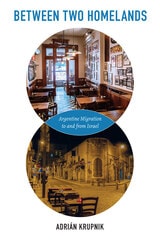
Between Two Homelands
Argentine Migration to and from IsraelAdrián Krupnik
University of Alabama Press, 2024
Emigration from Israel to other parts of the world has not yet received significant scholarly attention, as the subject is a sensitive one in Israeli society. Zionist ideology has long compelled Israelis to approach emigration from Israel through a biased lens. The Hebrew words aliyah and yerida, which mean, respectively, “ascent” and “descent,” are often used to refer to immigration and emigration. These ideological terms, which are charged with religious meaning, are heavily loaded with praise for immigrants and scorn for emigrants. Yet, thousands of Jews from all over the world have lived between two homelands, as the Israeli-Argentine case demonstrates. This study challenges the formerly dominant Zionist narrative that presents immigration to Israel as unique and emigration as a disgrace, shedding light on issues of immigrant identities, belonging, and expectations.
Covering the better part of the twentieth century and extending into the twenty-first, Adrián Krupnik bases his study both on interviews and on archival documents in English, Spanish, and Hebrew to give voice to Argentine migrants to and from Israel. The pursuit of two often irreconcilable ways of living—peace and economic prosperity—repeatedly vexed migrants moving in either direction. Many Jewish-Argentine migrants between 1980 and 2006 lost everything and became the “new poor” in both countries. Protracted recessions and incessant political crises in Argentina continued to drive migrants in one direction, only to arrive in an Israel submerged in the violence of multiple intifadas.
In our own era, one that will see unprecedented global migration patterns based on similar economic and political—and environmental—upheavals, Between Two Homelands serves as an important and informative cautionary tale of the personal, social, and economic stakes at play in an utterly unsettled globalized landscape.
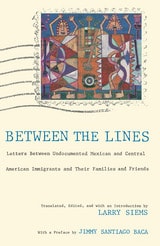
Between the Lines
Letters Between Undocumented Mexican and Latin American Immigrants and Their Families and FriendsLarry Siems
University of Arizona Press, 1992
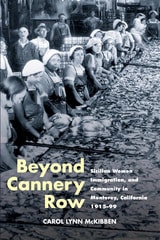
Beyond Cannery Row
Sicilian Women, Immigration, and Community in Monterey, California, 1915-99Carol Lynn McKibben
University of Illinois Press, 2005
McKibben's analysis of gender and gender roles shows that it was the women in this community who had the insight, the power, and the purpose to respond and even prosper amid changing economic conditions. Vividly evoking the immigrants' everyday experiences through first-person accounts and detailed description, McKibben demonstrates that the cannery work done by Sicilian immigrant women was crucial in terms of the identity formation and community development. These changes allowed their families to survive the challenges of political conflicts over citizenship in World War II and intermarriage with outsiders throughout the migration experience. The women formed voluntary associations and celebrated festas that effectively linked them with each other and with their home villages in Sicily. Continuous migration created a strong sense of transnationalism among Sicilians in Monterey, which has enabled them to continue as a viable ethnic community today.
Beyond Sanctuary
The Humanism of a World in MotionAnanya Roy and Veronika Zablotsky, editors
Duke University Press, 2025
Contributors. Leisy Abrego, Damon Azali-Rojas, Amy Sara Carroll, Sharad Chari, Nicholas De Genova, Ricardo Dominguez, Lorgia García-Peña, Sarah Haley, Gaye Theresa Johnson, Moon-Kie Jung, Maria Kaika, Saree Makdisi, Kyle T. Mays, Ananya Roy, Charles Sepulveda, SA Smythe, Vanessa E. Thompson, Charalampos Tsavdaroglou, João H. Costa Vargas, Rinaldo Walcott, Veronika Zablotsky, Maite Zubiaurre
Beyond Smoke and Mirrors
Mexican Immigration in an Era of Economic IntegrationDouglas S. Massey
Russell Sage Foundation, 2002
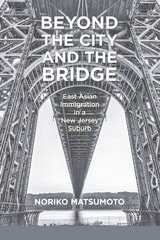
Beyond the City and the Bridge
East Asian Immigration in a New Jersey SuburbMatsumoto, Noriko
Rutgers University Press, 2018
Winner of the Richard P. McCormick Prize from the New Jersey Historical Association
Honorable Mention, 2019 American Sociological Association Book Award - Asia/Asian American Section
In recent decades, the American suburbs have become an important site for immigrant settlement. Beyond the City and the Bridge presents a case study of Fort Lee, Bergen County, on the west side of the George Washington Bridge connecting Manhattan and New Jersey. Since the 1970s, successive waves of immigrants from East Asia have transformed this formerly white community into one of the most diverse suburbs in the greater New York region. Fort Lee today has one of the largest concentrations of East Asians of any suburb on the East Coast, with Chinese, Japanese, and Koreans forming distinct communities while influencing the structure and everyday life of the borough. Noriko Matsumoto explores the rise of this multiethnic suburb—the complex processes of assimilation and reproduction of ethnicities, the changing social relationships, and the conditions under which such transformations have occurred.
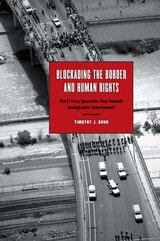
Blockading the Border and Human Rights
The El Paso Operation that Remade Immigration EnforcementBy Timothy J. Dunn
University of Texas Press, 2009
To understand border enforcement and the shape it has taken, it is imperative to examine a groundbreaking Border Patrol operation begun in 1993 in El Paso, Texas, "Operation Blockade." The El Paso Border Patrol designed and implemented this radical new strategy, posting 400 agents directly on the banks of the Rio Grande in highly visible positions to deter unauthorized border crossings into the urban areas of El Paso from neighboring Ciudad Juárez—a marked departure from the traditional strategy of apprehending unauthorized crossers after entry. This approach, of "prevention through deterrence," became the foundation of the 1994 and 2004 National Border Patrol Strategies for the Southern Border. Politically popular overall, it has rendered unauthorized border crossing far less visible in many key urban areas. However, the real effectiveness of the strategy is debatable, at best. Its implementation has also led to a sharp rise in the number of deaths of unauthorized border crossers.
Here, Dunn examines the paradigm-changing Operation Blockade and related border enforcement efforts in the El Paso region in great detail, as well as the local social and political situation that spawned the approach and has shaped it since. Dunn particularly spotlights the human rights abuses and enforcement excesses inflicted on local Mexican Americans and Mexican immigrants as well as the challenges to those abuses. Throughout the book, Dunn filters his research and fieldwork through two competing lenses, human rights versus the rights of national sovereignty and citizenship.
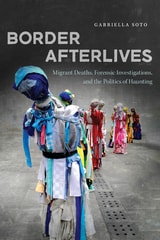
Border Afterlives
Migrant Deaths, Forensic Investigations, and the Politics of HauntingGabriella Soto
University of Arizona Press, 2026
Drawing on over a decade of ethnographic, participatory, and community-engaged research, author Gabriella Soto examines the postmortem journeys of these migrants through the fragmented infrastructure of medicolegal death investigation in the U.S. Southwest. She reveals how the state’s deterrence-based border policies not only generate death but also fail to provide adequate care for the dead. Soto argues that these deaths should be understood as structural homicides and that the forensic neglect they face is a form of ongoing violence.
Moving between the practical and the philosophical, Soto asks what it means to care for the dead and what society owes to those who die in its name. Through the lens of haunting, she explores how the dead continue to shape the living, not as objects of horror but as moral agents whose presence demands justice. Border Afterlives offers a border-scale comparative account of forensic practices, critiques the limits of “best practices” in under-resourced systems, and calls for a reimagining of forensic humanitarianism grounded in reciprocity and dignity, beyond human rights. This is a book that insists on remembering the dead.
Border Rhetorics
Citizenship and Identity on the US-Mexico FrontierEdited by D. Robert DeChaine
University of Alabama Press, 2012
Undertakes a wide-ranging examination of the US-Mexico border as it functions in the rhetorical production of civic unity in the United States
A “border” is a powerful and versatile concept, variously invoked as the delineation of geographical territories, as a judicial marker of citizenship, and as an ideological trope for defining inclusion and exclusion. It has implications for both the empowerment and subjugation of any given populace. Both real and imagined, the border separates a zone of physical and symbolic exchange whose geographical, political, economic, and cultural interactions bear profoundly on popular understandings and experiences of citizenship and identity.
The border’s rhetorical significance is nowhere more apparent, nor its effects more concentrated, than on the frontier between the United States and Mexico. Often understood as an unruly boundary in dire need of containment from the ravages of criminals, illegal aliens, and other undesirable threats to the national body, this geopolitical locus exemplifies how normative constructions of “proper”; border relations reinforce definitions of US citizenship, which in turn can lead to anxiety, unrest, and violence centered around the struggle to define what it means to be a member of a national political community.
Border Tunnels
A Media Theory of the U.S.-Mexico UndergroundJuan Llamas-Rodriguez
University of Minnesota Press, 2023
A comparative media analysis of the representation of the U.S.–Mexico border
Border tunnels at the U.S.–Mexico border are ubiquitous in news, movies, and television, yet, because they remain hidden and inaccessible, the public can encounter them only through media. Analyzing the technologies, institutional politics, narrative tropes, and aesthetic decisions that go into showing border tunnels across multiple forms of media, Juan Llamas-Rodriguez argues that we cannot properly address border issues without attending to—and fully understanding—the fraught relationship between their representation and reality.
Llamas-Rodriguez reveals that every media text about border tunnels, whether meant for entertainment, cable news, video games, or speculative design, implicitly takes a position on the politics of the border. The examples laid out in Border Tunnels will teach readers how to look differently at the border as it is commonly presented in various forms of media, from ABC’s Nightline and CNN’s Anderson Cooper 360º to reality TV, propaganda videos, and even digital effects in Hollywood action films. Llamas-Rodriguez examines how creative decisions in the production, promotion, and distribution of these media texts either emphasize or downplay issues such as border security, racial dynamics of migration, and sustainability of the borderlands.
Focusing on tunnels to show how media representations can influence all kinds of audiences—even those physically near the border—Border Tunnels helps us make sense of this pressing social issue, ultimately advancing understanding of the U.S.–Mexico border in all of its complexity and precariousness.
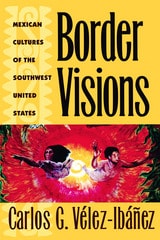
Border Visions
Mexican Cultures of the Southwest United StatesCarlos G. Vélez-Ibáñez
University of Arizona Press, 1996
Border Watch
Cultures of Immigration, Detention and ControlAlexandra Hall
Pluto Press, 2012
Questions over immigration and asylum face almost all Western countries. Should only economically useful immigrants be allowed? What should be done with unwanted or 'illegal' immigrants? In this bold and original intervention, Alexandra Hall shows that immigration detention centres offer a window onto society's broader attitudes towards immigrants.
Despite periodic media scandals, remarkably little has been written about the everyday workings of the grassroots immigration system, or about the people charged with enacting immigration policy at local levels. Detention, particularly, is a hidden side of border politics, despite its growing international importance as a tool of control and security. This book fills the gap admirably, analysing the everyday encounters between officers and immigrants in detention to explore broad social trends and theoretical concerns.
This highly topical book provides rare insights into the treatment of the 'other' and will be essential for policy makers and students studying anthropology and sociology.
Borderland Dreams
The Transnational Lives of Korean Chinese WorkersJune Hee Kwon
Duke University Press, 2023
Borders of Care
Immigrants, Migrants, and the Fight for Health Care in the United StatesBeatrix Hoffman
University of Chicago Press, 2025
For the roughly ten million undocumented immigrants living in the United States, federal health care coverage is out of reach. Barred from Medicare, Medicaid, and the Affordable Care Act, most rely on hospital emergency rooms when they get sick, or clinics that don’t inquire about immigration status. Further obstacles to health care, including discrimination and the fear of deportation, mean that immigrants, undocumented or not, seek and receive less medical attention than any other population in the country. Yet immigrants haven’t always been ostracized from health care in the United States—providers and activists have for over a century worked to make medical services available to newcomers and migrants, including, at times, the undocumented.
Drawing together stories from diverse communities from the mid-nineteenth century to the present, Borders of Care examines how health care in the United States has both included and excluded immigrants. Beatrix Hoffman analyzes both the health and immigration systems, adding to our understanding of why these structures, and the policies that support them, have resisted reform. Moreover, she shows that immigrants, often scapegoated as burdens on the health-care system, have strengthened it through their responses to systemic exclusion. By creating hospitals and clinics, serving as practitioners, fighting for safer workplaces, filing lawsuits, organizing and protesting, immigrants and migrants have improved medical access for everybody and advanced the idea of health care as a universal right. As accessible as it is authoritative, Hoffman’s survey could not be more timely.
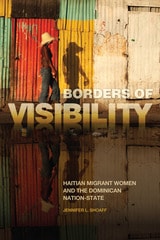
Borders of Visibility
Haitian Migrant Women and the Dominican Nation-Stateby Jennifer L. Shoaff
University of Alabama Press, 2018
An anthropological study of Haitian migrant women in the Dominican Republic.
Borders of Visibility offers extremely timely insight into the Dominican Republic’s racist treatment of Haitian descendants within its borders. Jennifer L. Shoaff employs multisited feminist research to focus on the geographies of power that intersect to inform the opportunities and constraints that migrant women must navigate to labor and live within a context that largely denies their human rights, access to citizenship, and a sense of security and belonging.
Paradoxically, these women are both hypervisible because of the blackness that they embody and invisible because they are marginalized by intersecting power inequalities. Haitian women must contend with diffuse legal, bureaucratic and discursive state-local practices across “border” sites that situate them as a specific kind of threat that must be contained. Shoaff examines this dialectic of mobility and containment across various sites in the northwest Dominican Republic, including the official border crossing, transborder and regional used-clothing markets, migrant settlements (bateyes), and other rural-urban contexts.
Shoaff combines ethnographic interviews, participant observation, institutional analyses of state structures and nongovernmental agencies, and archival documentation to bring this human rights issue to the fore. Although primarily grounded in critical ethnographic practice, this work contributes to the larger fields of transnational feminism, black studies, migration and border studies, political economy, and cultural geography. Borders of Visibility brings much needed attention to Haitian migrant women’s economic ingenuity and entrepreneurial savvy, their ability to survive and thrive, their often impossible choices whether to move or to stay, returning them to a place of visibility, while exposing the very structures that continue to render them invisible and, thus, expendable over time.

Borderscapes
Hidden Geographies and Politics at Territory’s EdgePrem Kumar Rajaram
University of Minnesota Press, 2007
Connecting critical issues of state sovereignty with empirical concerns, Borderscapes interrogates the limits of political space. The essays in this volume analyze everyday procedures, such as the classifying of migrants and refugees, security in European and American detention centers, and the DNA sampling of migrants in Thailand, showing the border as a moral construct rich with panic, danger, and patriotism.
Conceptualizing such places as immigration detention camps and refugee camps as areas of political contestation, this work forcefully argues that borders and migration are, ultimately, inextricable from questions of justice and its limits.
Contributors: Didier Bigo, Institut d’Études Politiques, Paris; Karin Dean; Elspeth Guild, U of Nijmegen; Emma Haddad; Alexander Horstmann, U of Münster; Alice M. Nah, National U of Singapore; Suvendrini Perera, Curtin U of Technology, Australia; James D. Sidaway, U of Plymouth, UK; Nevzat Soguk, U of Hawai‘i; Decha Tangseefa, Thammasat U, Bangkok; Mika Toyota, National U of Singapore.
Prem Kumar Rajaram is assistant professor of sociology and social anthropology at the Central European University, Budapest, Hungary.
Carl Grundy-Warr is senior lecturer of geography at the National University of Singapore.
Bosnian Studies
Perspectives from an Emerging FieldDzeneta Karabegovic
University of Missouri Press, 2023
Diaspora communities have formed in North America (especially in St. Louis), Europe, and Australia because of war and displacement, and have themselves become a considerable topic of study spanning the disciplines of anthropology, migration studies, political science, memory studies, conflict and security studies, psychology, and geography.
This volume seeks to illuminate how Bosnian migrant and diaspora scholars are contributing to the development of Bosnian Studies. The authors included in this volume are either writing from their (new) home bases in Australia, Austria, Canada, Switzerland, the United Kingdom, and the United States, among others, or they have returned to Bosnia after a period of migration. Their chapters have distinct entry points of inquiry, demonstrating how scholars have integrated Bosnia as a theme across the range of disciplines in which they are situated. The selections included in the volume range from literary analysis to personal memoirs of the conflict, from studies of heritage and identity to political science analysis of diaspora voting, to genocide studies and questions of (or lack of) ethics in the growing field of Bosnian Studies.
Brazilian-African Diaspora in Ghana
The Tabom, Slavery, Dissonance of Memory, Identity, and Locating HomeKwame Essien
Michigan State University Press, 2016
Breaks in the Chain
What Immigrant Workers Can Teach America about DemocracyPaul Apostolidis
University of Minnesota Press, 2010
Breaks in the Chain shows how immigrant workers-individually and sometimes collectively-both reinforce and contest a tacit but lethal form of biopolitics that differentiates the life chances of racial groups. Examining their personal narratives, Apostolidis recasts our understanding of the ways immigrants construct and transform social power.
Apostolidis uses empirical inquiry to spark new reflections in critical theory as he analyzes how immigrant workers' local practices confront structural power within and beyond America's borders. Linking stories of immigration to stories about working on the meat production line-the chain-he reveals the surprising power of activism by immigrant workers and their allies and demonstrates how it can-and should-promote social and political democracy in America.
Brilliance in Exile
The Diaspora of Hungarian Scientists from John von Neumann to Katalin KarikóIstván Hargittai
Central European University Press, 2023
By addressing the enigma of the exceptional success of Hungarian emigrant scientists and telling their life stories, Brilliance in Exile combines scholarly analysis with fascinating portrayals of uncommon personalities. István and Balazs Hargittai discuss the conditions that led to five different waves of emigration of scientists from the early twentieth century to the present. Although these exodes were driven by a broad variety of personal motivations, the attraction of an open society with inclusiveness, tolerance, and – needless to say – better circumstances for working and living, was the chief force drawing them abroad.
While emigration from East to West is a general phenomenon, this book explains why and how the emigration of Hungarian scientists is distinctive. The high number of Nobel Prizes among this group is only one indicator. Multicultural tolerance, a quickly emerging, considerably Jewish, urban middle class, and a very effective secondary school system were positive legacies of the Austro-Hungarian Monarchy. Multiple generations, shaped by these conditions, suffered from the increasingly exclusionist, intolerant, antisemitic, and economically stagnating environment, and chose to go elsewhere. “I would rather have roots than wings, but if I cannot have roots, I shall use wings," explained Leo Szilard, one of the fathers of the Atom Bomb.
Brokered Boundaries
Immigrant Identity in Anti-Immigrant TimesDouglas S. Massey
Russell Sage Foundation, 2010