Results by title
733 books match the query 'Environmental Conservation & Protection' and 27 start with b
Back to Earth
Tomorrow's EnvironmentalismAnthony Weston
Temple University Press, 1994
Back to the Land
The Enduring Dream of Self-Sufficiency in Modern AmericaDona Brown
University of Wisconsin Press, 2011
Bad Water
Nature, Pollution, and Politics in Japan, 1870-1950Robert Stolz
Duke University Press, 2014
Banning DDT
How Citizen Activists in Wisconsin Led the WayBill Berry
Wisconsin Historical Society Press, 2014
On a December day in 1968, DDT went on trial in Madison, Wisconsin. In Banning DDT: How Citizen Activists in Wisconsin Led the Way, Bill Berry details how the citizens, scientists, reporters, and traditional conservationists drew attention to the harmful effects of “the miracle pesticide” DDT, which was being used to control Dutch elm disease.
Berry tells of the hunters and fishers, bird-watchers, and garden-club ladies like Lorrie Otto, who dropped off twenty-eight dead robins at the Bayside village offices. He tells of university professors and scientists like Joseph Hickey, a professor and researcher in the Department of Wildlife Management in at the University of Wisconsin–Madison, who, years after the fact, wept about the suppression of some of his early DDT research. And he tells of activists like Senator Gaylord Nelson and members of the state’s Citizens Natural Resources who rallied the cause.
The Madison trial was one of the first for the Environmental Defense Fund. The National Audubon Society helped secure the more than $52,000 in donations that offset the environmentalists’ costs associated with the hearing. Today, virtually every reference to the history of DDT mentions the impact of Wisconsin’s battles.
The six-month-long DDT hearing was one of the first chapters in citizen activism in the modern environmental era. Banning DDT is a compelling story of how citizen activism, science, and law merged in Wisconsin’s DDT battles to forge a new way to accomplish public policy. These citizen activists were motivated by the belief that we all deserve a voice on the health of the land and water that sustain us.
Basking with Humpbacks
Tracking Threatened Marine Life in New England WatersTodd McLeish
University Press of New England, 2016
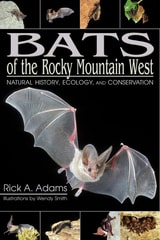
Bats of the Rocky Mountain West
Natural History, Ecology, and ConservationRick A. Adams
University Press of Colorado, 2003
Bats of the Rocky Mountain West begins with a general discussion of bat biology and evolution as well as regional physiography and zoogeography. In addition, Adams describes - based on the results of extensive research - the behavior and ecology of the 31 species of bats found in Montana, Idaho, Wyoming, Utah, Colorado, New Mexico, and Arizona. Naturalists and biologists alike will benefit from the detailed species descriptions, color photographs and illustrations, distribution maps, and echolocation sonograms. Bats of the Rocky Mountain West is a unique and valuable reference for professional bat biologists, naturalists, and wildlife enthusiasts interested in the conservation and ecology of bats in the region.
Battles of the North Country
Wilderness Politics and Recreational Development in the Adirondack State Park, 1920-1980Jonathan D. Anzalone
University of Massachusetts Press, 2018
Through a series of case studies, historian Jonathan D. Anzalone highlights the role of public and private interests in the region and shows how partnerships frayed and realigned in the course of several key developments: the rise of camping in the 1920s and 1930s; the 1932 Lake Placid Olympics; the construction of a highway to the top of Whiteface Mountain; the postwar rise of downhill skiing; the completion of I-87 and the resulting demand for second homes; and the 1980 Lake Placid Olympics. Battles of the North Country reveals how class, economic self-interest, state power, and a wide range of environmental concerns have shaped modern politics in the Adirondacks and beyond.
Bearing Witness
The Human Rights Case Against Fracking and Climate ChangeThomas A. Kerns
Oregon State University Press, 2021
On May 14, 2018, a respected international human-rights court, the Rome-based Permanent Peoples’ Tribunal, began a week-long hearing on the impacts of fracking and climate change on human and Earth rights. In its advisory opinion, the Tribunal ruled that fracking systematically violates substantive and procedural human rights; that governments are complicit in the rights violations; and that to protect human rights and the climate, the practice of fracking should be banned.
The case makes history. It revokes the social license of extreme-extraction industries by connecting environmental destruction to human-rights violations. It affirms that climate change, and the extraction techniques that fuel it, directly violate deeply and broadly accepted moral norms encoded in the Universal Declaration of Human Rights.
Bearing Witness maps a promising new direction in the ongoing struggle to protect the planet from climate chaos. It tells the story of this landmark case through carefully curated court materials, including searing eye-witness testimony, groundbreaking legal testimony, and the Tribunal’s advisory opinion. Essays by leading climate writers such as Winona LaDuke, Robin Wall Kimmerer, and Sandra Steingraber and legal experts such as John Knox, Mary Wood, and Anna Grear give context to the controversy. Framing essays by the editors, experts on climate ethics and human rights, demonstrate that a human-rights focus is a powerful, transformative new tool to address the climate crisis.
Beasts at Bedtime
Revealing the Environmental Wisdom in Children’s LiteratureLiam Heneghan
University of Chicago Press, 2018
In Beasts at Bedtime, scientist (and father) Liam Heneghan examines the environmental underpinnings of children’s stories. From Beatrix Potter to Harry Potter, Heneghan unearths the universal insights into our inextricable relationship with nature that underlie so many classic children’s stories. Some of the largest environmental challenges in coming years—from climate instability, the extinction crisis, freshwater depletion, and deforestation—are likely to become even more severe as this generation of children grows up. Though today’s young readers will bear the brunt of these environmental calamities, they will also be able to contribute to environmental solutions if prepared properly. And all it takes is an attentive eye: Heneghan shows how the nature curriculum is already embedded in bedtime stories, from the earliest board books like The Rainbow Fish to contemporary young adult classics like The Hunger Games.
Beasts at Bedtime is an awakening to the vital environmental education children’s stories can provide—from the misadventures of The Runaway Bunny to more overt tales like The Lorax. Heneghan serves as our guide, drawing richly upon his own adolescent and parental experiences, as well as his travels in landscapes both experienced and imagined. Organized into thematic sections, the work winds its way through literary forests, colorful characters, and global environments.
This book enthralls as it engages. Heneghan as a guide is as charming as he is insightful, showing how kids (and adults) can start to experience the natural world in incredible ways from the comfort of their own rooms. Beasts at Bedtime will help parents, teachers, and guardians extend those cozy times curled up together with a good book into a lifetime of caring for our planet.
Becoming a Place of Unrest
Environmental Crisis and Ecophenomenological PraxisRobert Booth
Ohio University Press, 2021

Best of Companions
Henry Ford and the Protection of Birdlife in AmericaRick Simek
University of Michigan Press, 2027
Immediately following the success of the Model T, Henry Ford turned to how he could apply his newfound wealth toward protecting birdlife on his new rural acreage in Dearborn, Michigan. Best of Companions weaves Henry Ford’s personal and very public participation in bird protection into the overall national push to save disappearing North American birdlife in the early twentieth century.
Acting on his love of birds, Ford formed acquaintances and friendships with some of the most prominent North American wildlife conservation activists of the time. Michigan Audubon Society President Jefferson Butler was recruited to plan, establish, and promote an expansive, visionary bird protection project known as Henry Ford’s Bird Farm. Highlighting the economic benefit of birds, the farm modeled how farmers could use both natural and artificial means to boost populations of native insectivorous bird species on their land, reducing crop damage from insects and increasing agricultural productivity. Best of Companions takes readers on an exciting journey through Ford’s ambitious efforts to secure passage of the first federal bird protection law in the United States, to support the Migratory Bird Treaty with Canada, and to improve the lives of farmers.
Betting the Farm on a Drought
Stories from the Front Lines of Climate ChangeBy Seamus McGraw
University of Texas Press, 2015
Climate change has become one of the most polarizing issues of our time. Extremists on the left regularly issue hyperbolic jeremiads about the impending destruction of the environment, while extremists on the right counter with crass, tortured denials. But out in the vast middle are ordinary people dealing with stronger storms and more intense droughts than they’ve ever known. This middle ground is the focus of Betting the Farm on a Drought, a lively, thought-provoking book that lays out the whole story of climate change—the science, the math, and most importantly, the human stories of people fighting both the climate and their own deeply held beliefs to find creative solutions to a host of environmental challenges.
Seamus McGraw takes us on a trip along America’s culturally fractured back roads and listens to farmers and ranchers and fishermen, many of them people who are not ideologically, politically, or in some cases even religiously inclined to believe in man-made global climate change. He shows us how they are already being affected and the risks they are already taking on a personal level to deal with extreme weather and its very real consequences for their livelihoods. McGraw also speaks to scientists and policymakers who are trying to harness that most renewable of American resources, a sense of hope and self-reliance that remains strong in the face of daunting challenges. By bringing these voices together, Betting the Farm on a Drought ultimately becomes a model for how we all might have a pragmatic, reasoned conversation about our changing climate.
Between Two Fires
A Fire History of Contemporary AmericaStephen J. Pyne
University of Arizona Press, 2015
Pyne is uniquely qualified to tell America’s fire story. The author of more than a score of books, he has told fire’s history in the United States, Australia, Canada, Europe, and the Earth overall. In his earlier life, he spent fifteen seasons with the North Rim Longshots at Grand Canyon National Park.
In Between Two Fires, Pyne recounts how, after the Great Fires of 1910, a policy of fire suppression spread from America’s founding corps of foresters into a national policy that manifested itself as a costly all-out war on fire. After fifty years of attempted fire suppression, a revolution in thinking led to a more pluralistic strategy for fire’s restoration. The revolution succeeded in displacing suppression as a sole strategy, but it has failed to fully integrate fire and land management and has fallen short of its goals.
Today, the nation’s backcountry and increasingly its exurban fringe are threatened by larger and more damaging burns, fire agencies are scrambling for funds, firefighters continue to die, and the country seems unable to come to grips with the fundamentals behind a rising tide of megafires. Pyne has once again constructed a history of record that will shape our next century of fire management. Between Two Fires is a story of ideas, institutions, and fires. It’s America’s story told through the nation’s flames.
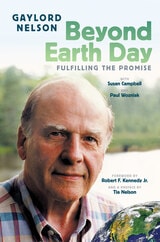
Beyond Earth Day
Fulfilling the PromiseGaylord Nelson; With Susan Campbell and Paul Wozniak; Foreword by Robert F. Kennedy Jr.; Preface by Tia Nelson
University of Wisconsin Press, 2002
Gaylord Nelson’s legacy is known and respected throughout the world. He was a founding father of the modern environmental movement and creator of one of the most influential public awareness campaigns ever undertaken on behalf of global environmental stewardship: Earth Day.
Nelson died in 2005, but his message in this book is still timely and urgent, delivered with the same eloquence with which he articulated the nation’s environmental ills throughout the decades. He details the planet’s most critical concerns—from species and habitat losses to global climate change and population growth. In outlining strategies for planetary health, Nelson inspires citizens to reassert environmentalism as a national priority. Included in this reprint is a new preface by Gaylord Nelson’s daughter, Tia Nelson.
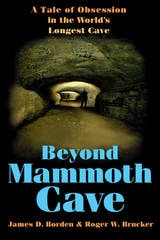
Beyond Mammoth Cave
A Tale of Obsession in the World's Longest CaveJames D. Borden and Roger W. Brucker
Southern Illinois University Press, 2000
In Beyond Mammoth Cave: A Tale of Obsession in the World’s Longest Cave, James D. Borden and Roger W. Brucker provide gripping first-person accounts of the discoveries, including Roppel Cave, that made Kentucky’s Mammoth Cave three times longer than any other cave in the world.
Borden, a relative newcomer, and Brucker, a veteran explorer, bring a personal and sometimes conflicting view of their roles as adversaries in a race that lasted from 1972 through 1983 to find “big cave.” They describe hazardous adventures, precarious climbs, and close calls from falling rocks. The perils are many and the trek arduous as they squirm through muddy tubes, wade in neck-deep cold water, and crawl over sharp rocks and gritty sand. Theirs is a tale of agonizing endurance spiced by spectacular discoveries.
But the cave was not the sole obstacle. The explorations were complicated by political intrigue and the rivalry between the Kentucky-based Cave Research Foundation and the Central Kentucky Karst Coalition, each seeking to make discoveries and hide secrets. Extreme stress, of course, evoked extreme behavior, ranging from selfishness to sacrifice, from outrageous humor to the deadly serious response.
Beyond Mammoth Cave includes maps by Patricia Kambesis that show the progression of cave discoveries in relation to the topography. Original line drawings by well-known illustrator Linda Heslop capture the dark mystery of the exploration. The book features five black and white photographs as a color gallery of photographs.
A sequel to The Longest Cave by Brucker and Richard A. Watson, this book is a comprehensive update of the speleological investigations in the Mammoth Cave region. Brucker’s involvement provides continuity to the investigation.
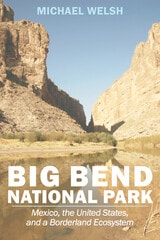
Big Bend National Park
Mexico, the United States, and a Borderland EcosystemMichael Welsh
University of Nevada Press, 2021
Big Bend National Park explores the cultural and diplomatic history of this transborder region that was designated a national park on the US side and the site of a long-hoped-for “international peace park” on the other. Michael Welsh demonstrates the challenges faced and lessons learned by both the US and Mexico as they struggled against political and environmental vicissitudes in their attempts to realize the creation of a shared frontier.
Geopolitical and environmental conflicts such as Cold War fears, immigration, the war on drugs, international water rights, and more stringent American border security measures after 9/11 all hindered relations between the two countries. But more recently, renewed cooperation and ongoing diplomatic relations have led to new developments. Mexican park personnel began assisting American officials with efforts to re-wild the American side of the river with animal species that had been eliminated, and the Obama administration relaxed some post-9/11 restrictions, allowing American visitors to cross over to the Mexican park and its nearby towns.
The ambition of developing a park for peace has yet to materialize, even as individuals and their governments continue to work toward an accord. Big Bend National Park provides a greater understanding of this complex borderland and hopes to help fulfill the aspiration of creating a shared ecosystem and the dream of a park for peace.
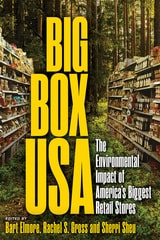
Big Box USA
The Environmental Impact of America’s Biggest Retail StoresBart Elmore
University of Wyoming Press, 2023
The rise of big box retail since the 1960s has transformed environments on both local and global scales. Almost everyone has explored the aisles of big box stores. The allure of “everyday low prices” and brightly colored products of every kind connect shoppers with a global marketplace. Contributors join a growing conversation between business and environmental history, addressing the ways American retail institutions have affected physical and cultural ecologies around the world. Essays on Walmart, Target, Cabela’s, REI, and Bass Pro Shops assess the “bigness” of these superstores from “smokestacks to coat racks” and contend that their ecological impacts are not limited to the footprints of parking lots and manufacturing but also play a didactic role in educating consumers about their relationships with the environment.
A model for historians seeking to bring business and environmental histories together in their analyses of merchant capital’s role in the landscapes of everyday life and how it has remade human relationships with nature, Big Box USA is a must-read for students and scholars of the environment, business, sustainability, retail professionals, and a general audience.
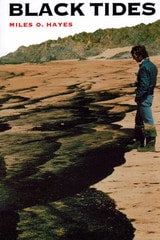
Black Tides
By Miles O. Hayes
University of Texas Press, 2000
Black tides of spilled oil pollute the world's coasts with depressing regularity, giving scientists ample opportunity to observe their environmental impacts and learn how to clean up and restore the affected shorelines. Miles O. Hayes has been a leader in this work for over twenty years. In this highly readable autobiography, he describes his evolution as a scientist, his work in coastal oil spill contingency planning and clean up, and his personal philosophy of one's relationship with nature.
A skilled raconteur, Hayes tells engrossing stories of responding to most of the recent, headline-grabbing oil spills, including the Gulf War spills, the Exxon Valdez, the Amoco Cadiz spill in France, and the Ixtoc I blowout in Mexico. Interspersed among them are personal events and adventures, such as his survival of a plane crash while mapping a remote part of Alaska. From this life story emerges a compelling statement of the ongoing conflict between environmental preservation and the exploitation of natural resources to sustain our modern society.
Blackland Prairies of the Gulf Coastal Plain
Nature, Culture, and SustainabilityEdited by Evan Peacock and Timothy Schauwecker
University of Alabama Press, 2003
Underscores the relevance of archaeological research in understanding long-term cultural change
Taking a holistic approach, this compilation gathers ecological, historical, and archaeological research written on the distinctive region of the Southeast called the Gulf coast blackland prairie. Ranging from the last glacial period to the present day, the case studies provide a broad picture of how the area has changed through time and been modified by humans, first with nomadic bands of Indians trailing the grazing animals and then by Euro-American settlers who farmed the rich agricultural area. Contemporary impacts include industrialization, aquaculture, population growth, land reclamation, and wildlife management.
It is believed that the Black Belt and the Great Plains were contiguous in the past and shared the same prairie vegetation, insects, and large fauna, such as bison. Swaths and patches of limestone-based soils still weave a biological corridor through what is now Alabama, Mississippi, Arkansas, Louisiana, and Texas. In analyzing this distinct grassland ecosystem, the essays compare both the mega and minute flora and fauna sustained by the land in the past and present; reveal what foods were harvested by early inhabitants, their gathering techniques, and diet changes over the 10,000-year period of native occupancy; survey the documents of early explorers for descriptions of the landform, its use, and the lives of inhabitants at the time of contact; and look at contemporary efforts to halt abuse and reverse damage to this unique and shrinking biome.
This book demonstrates that the blackland prairie has always been an important refuge for a teeming array of biological species, including humans. It will have wide scholarly appeal as well as general interest and will be welcomed by archaeologists, biologists, botanists, ecologists, historians, librarians, politicians, land managers, and national, state, and local administrators.
Blue Desert
Charles Bowden; Foreword by Francisco Cantú
University of Arizona Press, 2018
Bowden presents a view of the Southwest that measures how rapid growth takes its toll on the land. Writing with a reporter’s objectivity and a desert rat’s passion, Bowden offers us his trademarked craft and wit to take us into the streets as well as the desert to depict not a fragile environment but the unavoidable reality of abuse, exploitation, and human cruelty. Blue Desert shows us the darker side of development—where “the land always makes promises of aching beauty and the people always fail the land”—and defies us to ignore it.
In a thoughtful new foreword, Francisco Cantú writes, “In Blue Desert, we follow Bowden in the processes of becoming. We see the version of Bowden that he would likely most want us to remember—someone who did their best to be an honest witness, someone who was haunted by modernity and his place in it, someone who grappled with his demons by gazing deeply into the desert.” Blue Desert is a critical piece in the oeuvre of Charles Bowden, and it continues to remind readers of the cruelty and beauty of the world around us.
Branching Out
The Public History of TreesEdited by Leah S. Glaser and Philip Levy
University of Massachusetts Press, 2025
Trees are not just natural resources; they are also cultural ones that present unique challenges and opportunities for public historians. Trees can serve as important objects of memory, recalling past triumphs or tragedies. They can be the last living witness to important events or community stories. Trees can also be objects of preservation, sometimes as individuals, other times as stands or even forests, all of which can take on historical significance for people, sites, and institutions. But as living entities they defy the kind of permanent legal preservation applicable to buildings and other non-living historical objects. Furthermore, their organic fragility can actually make them significant problems for historical sites and local preservation activities. For example, communities have had to cope with extensive tree loss from storm and fire damage, and dying trees can drop limbs or topple over, creating considerable danger to people and resources. Climate-change-driven increasing storm intensity has also highlighted the ways that trees—however historical or beloved—can become considerable threats.
The fourteen new essays in this volume explore the many ways that trees are an integral part of public history practice and sites. The authors draw on a range of approaches and historiographies to look at how memories of race-based hate, patriotic stories, community identities, and changed places have all centered on trees. In addition to contributions from the volume editors, this collection features scholarship by Sonja Dümpelmann Andrew Hurley, Carolyn M. Barske Crawford, Brian Dempsey, Liz Sargent, Sasha Coles, Mariaelena DiBenigno, Evan Haefeli, Krista McCracken, Alena Pirok, Christian Kosmas Mayer Alaina Scapicchio, and David Glassberg.
Breathing Aesthetics
Jean-Thomas Tremblay
Duke University Press, 2022
Bringing Down the Mountains
The Impact of Mountainttop Removal on Southern West Virginia CommunitiesShirley Stewart Burns
West Virginia University Press, 2007
Coal is West Virginia’s bread and butter. For more than a century, West Virginia has answered the energy call of the nation—and the world—by mining and exporting its coal. In 2004, West Virginia’s coal industry provided almost forty thousand jobs directly related to coal, and it contributed $3.5 billion to the state’s gross annual product. And in the same year, West Virginia led the nation in coal exports, shipping over 50 million tons of coal to twenty-three countries. Coal has made millionaires of some and paupers of many. For generations of honest, hard-working West Virginians, coal has put food on tables, built homes, and sent students to college. But coal has also maimed, debilitated, and killed.
Bringing Down the Mountains provides insight into how mountaintop removal has affected the people and the land of southern West Virginia. It examines the mechanization of the mining industry and the power relationships between coal interests, politicians, and the average citizen. Shirley Stewart Burns holds a BS in news-editorial journalism, a master’s degree in social work, and a PhD in history with an Appalachian focus, from West Virginia University. A native of Wyoming County in the southern West Virginia coalfields and the daughter of an underground coal miner, she has a passionate interest in the communities, environment, and histories of the southern West Virginia coalfields. She lives in Charleston, West Virginia.
Bringing Home the Wild
A Riparian Garden in a Southwest CityJuliet C. Stromberg
University of Arizona Press, 2023
When living in a large sprawling city, one may feel disconnected and adrift. Finding ways to belong and have positive effects is challenging. In Bringing Home the Wild, botanist Juliet C. Stromberg demonstrates how ecologically guided gardening develops a sense of place, restores connections to nature, and brings joy and meaning to our lives.
This book follows a two-decade journey in ecologically guided gardening on a four-acre irrigated parcel in Phoenix, Arizona, from the perspective of a retired botanist and her science historian partner. Through humor and playful use of language, Bringing Home the Wild not only introduces the plants who are feeding them, buffering the climate, and elevating their moods but also acknowledges the animals and fungi who are pollinating the plants and recycling the waste. Some of the plants featured are indigenous to the American Southwest, while others are part of the biocultural heritage of the cityscape. This book makes the case for valuing inclusive biodiversity and for respectful interactions with all wild creatures, regardless of their historical origin.
As author and partner learn to cohabit with the plants who feed them, calm them, entertain them, and protect them from the increasing heat, their desire to live sustainably, ethically, and close to the land becomes even stronger, revealing the importance of observing, appreciating, and learning from the ecosystems of which we are a part.
Building Hoover Dam
An Oral History Of The Great DepressionAndrew J. Dunar
University of Nevada Press, 2001
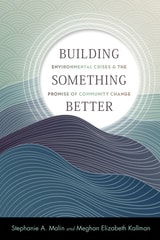
Building Something Better
Environmental Crises and the Promise of Community ChangeStephanie A. Malin
Rutgers University Press, 2022
Sociologists Stephanie A. Malin and Meghan Elizbeth Kallman offer a clear, accessible volume that demonstrates the ways that communities adapt in the face of crises and explains that sociology can help us understand how and why they do this challenging work. Tackling neoliberalism head-on, these communities are making big changes by crafting distributive and regenerative systems that depart from capitalist approaches. The vivid case studies presented range from activist water protectors to hemp farmers to renewable energy cooperatives led by Indigenous peoples and nations. Alongside these studies, Malin and Kallman present incisive critiques of colonialism, extractive capitalism, and neoliberalism, while demonstrating how sociology’s own disciplinary traditions have been complicit with those ideologies—and must expand beyond them.
Showing that it is possible to challenge social inequality and environmental degradation by refusing to continue business-as-usual, Building Something Better offers both a call to action and a dose of hope in a time of crises.
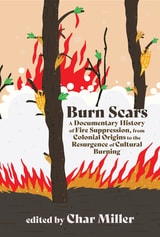
Burn Scars
A Documentary History of Fire Suppression, from Colonial Origins to the Resurgence of Cultural BurningChar Miller
Oregon State University Press, 2024
In Burn Scars, historian Char Miller assembles a collection of primary sources focused on debates over “light burning” (as prescribed or controlled burning was called). These historic documents show that not only was fire suppression controversial, but that it was also driven by explicitly racist and colonial beliefs. Yet the suppression paradigm contained within it the seeds of its destruction: Indigenous people continued to use fire as did non-Indigenous land managers. By the 1920s, scientific evidence was beginning to reveal that fire was essential for regenerating grasslands and forests; by the 1930s even the Forest Service was testing fire’s ecological benefits.
Burn Scars focuses on the burning debates of the early twentieth century, but Miller also provides evidence of a powerful counternarrative emerging from southern non-Indigenous foresters who used fire to revive longleaf pine ecosystems. The volume begins and ends with contributions from Indigenous practitioners discussing the long history and resurgent practice of cultural burning as part of traditional land management.