Results by title
314 books match the query 'Environmental aspects' and 13 start with b
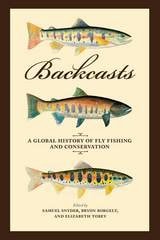
Backcasts
A Global History of Fly Fishing and ConservationEdited by Samuel Snyder, Bryon Borgelt, and Elizabeth Tobey
University of Chicago Press, 2016
Though Maclean writes of an age-old focus of all anglers—the day’s catch—he may as well be speaking to another, deeper accomplishment of the best fishermen and fisherwomen: the preservation of natural resources.
Backcasts celebrates this centuries-old confluence of fly fishing and conservation. However religious, however patiently spiritual the tying and casting of the fly may be, no angler wishes to wade into rivers of industrial runoff or cast into waters devoid of fish or full of invasive species like the Asian carp. So it comes as no surprise that those who fish have long played an active, foundational role in the preservation, management, and restoration of the world’s coldwater fisheries. With sections covering the history of fly fishing; the sport’s global evolution, from the rivers of South Africa to Japan; the journeys of both native and nonnative trout; and the work of conservation organizations such as the Federation of Fly Fishers and Trout Unlimited, Backcasts casts wide.
Highlighting the historical significance of outdoor recreation and sports to conservation in a collection important for fly anglers and scholars of fisheries ecology, conservation history, and environmental ethics, Backcasts explores both the problems anglers and their organizations face and how they might serve as models of conservation—in the individual trout streams, watersheds, and landscapes through which these waters flow.
Banana Cultures
Agriculture, Consumption, and Environmental Change in Honduras and the United StatesBy John Soluri
University of Texas Press, 2021
Bananas, the most frequently consumed fresh fruit in the United States, have been linked to Miss Chiquita and Carmen Miranda, "banana republics," and Banana Republic clothing stores—everything from exotic kitsch, to Third World dictatorships, to middle-class fashion. But how did the rise in banana consumption in the United States affect the banana-growing regions of Central America? In this lively, interdisciplinary study, John Soluri integrates agroecology, anthropology, political economy, and history to trace the symbiotic growth of the export banana industry in Honduras and the consumer mass market in the United States.
Beginning in the 1870s, when bananas first appeared in the U.S. marketplace, Soluri examines the tensions between the small-scale growers, who dominated the trade in the early years, and the shippers. He then shows how rising demand led to changes in production that resulted in the formation of major agribusinesses, spawned international migrations, and transformed great swaths of the Honduran environment into monocultures susceptible to plant disease epidemics that in turn changed Central American livelihoods. Soluri also looks at labor practices and workers' lives, changing gender roles on the banana plantations, the effects of pesticides on the Honduran environment and people, and the mass marketing of bananas to consumers in the United States. His multifaceted account of a century of banana production and consumption adds an important chapter to the history of Honduras, as well as to the larger history of globalization and its effects on rural peoples, local economies, and biodiversity.
Banning DDT
How Citizen Activists in Wisconsin Led the WayBill Berry
Wisconsin Historical Society Press, 2014
On a December day in 1968, DDT went on trial in Madison, Wisconsin. In Banning DDT: How Citizen Activists in Wisconsin Led the Way, Bill Berry details how the citizens, scientists, reporters, and traditional conservationists drew attention to the harmful effects of “the miracle pesticide” DDT, which was being used to control Dutch elm disease.
Berry tells of the hunters and fishers, bird-watchers, and garden-club ladies like Lorrie Otto, who dropped off twenty-eight dead robins at the Bayside village offices. He tells of university professors and scientists like Joseph Hickey, a professor and researcher in the Department of Wildlife Management in at the University of Wisconsin–Madison, who, years after the fact, wept about the suppression of some of his early DDT research. And he tells of activists like Senator Gaylord Nelson and members of the state’s Citizens Natural Resources who rallied the cause.
The Madison trial was one of the first for the Environmental Defense Fund. The National Audubon Society helped secure the more than $52,000 in donations that offset the environmentalists’ costs associated with the hearing. Today, virtually every reference to the history of DDT mentions the impact of Wisconsin’s battles.
The six-month-long DDT hearing was one of the first chapters in citizen activism in the modern environmental era. Banning DDT is a compelling story of how citizen activism, science, and law merged in Wisconsin’s DDT battles to forge a new way to accomplish public policy. These citizen activists were motivated by the belief that we all deserve a voice on the health of the land and water that sustain us.

Before and After an Oil Spill
The Arthur KillBurger, Joanna
Rutgers University Press, 1994
In January 1990, the New York Harbor suffered a major oil spill when an underwater pipe at an Exxon refinery leaked into the Arthur Kill, the fifteen-mile strait that runs between New Jersey and Staten Island. The waterway is home to herons and egrets, fiddler crabs and sea turtles, and a favorite place for recreational fishing, bird-watching, hiking, and boating. It is also lined with refineries and a busy corridor for oil tankers. Because this industrial activity posed such an imposing threat to the fragile ecosystem, biologists had been monitoring the region’s water, soil, vegetation, and wildlife for some time before the oil spill. Thus, we have before -and-after data about the habitat—the only oil spill anywhere for which this is true.
This unique book discusses the human consequences of the oil spill as well as providing detailed studies of its effects on the plants and animals of the Arthur Kill. Biologists, environmentalists, lawyers, and officials worldwide will find this book an essential guide to dealing with—and possibly preventing—future environmental disasters.
The contributors areJohn Brzorad, Angela Christini, Keith Cooper, Lynn Frink, Michael Gochfeld, Paul Hauge, Gordon Johnson, Alan D. Maccarone, Katherine Parsons, Carolyn Summers, Robert Tucker.
Beginner's Luck
Dispatches from the Klamath MountainsMalcolm Terence
Oregon State University Press, 2018
In the late 1960s, Malcolm Terence left his job as a reporter for the Los Angeles Times to look for adventure and may have found more than he bargained for. The era had triggered unprecedented social and political changes in America, tectonic shifts that challenged war and the social order that oppressed people along lines of class, gender, and race. One branch was a back-to-the-land movement, and Terence, who had just traveled for a year managing a rock band, strayed into Black Bear Ranch, a commune just starting in a remote corner of the Klamath Mountains near the California-Oregon border.
Black Bear Ranch still exists, but many of its early residents eventually returned to urban civilization. A few, Terence among them, stayed on in neighboring river towns. Some tried logging, others gold mining, and some tried growing marijuana, all with mixed success. The local mining and timber communities had a checkered opinion of their new hippie neighbors, as did the Native tribes, but it was the kind of place where people helped each other out, even if they didn’t always agree.
When wildfires grew large, Terence and other veterans of the commune joined the fire crews run by the US Forest Service. In between, the Black Bear expats built homesteads, planted gardens, delivered babies, and raised their children. They gradually overcame the skepticism of the locals and joined them in political battles against the use of herbicides in the forest and the Forest Service’s campaign to close all the mining claims. As in the best of organizing efforts, the organizers learned as much as they led.
Beginner’s Luck will appeal to anyone who experienced life on a commune in the 1960s–1970s or who wants to learn about this chapter in modern American history. Terence offers insight into environmental activism and the long history of conflict between resource exploitation and Native American rights without lecturing or pontificating. With wit, humor, and humility, his anecdotal essays chronicle a time and place where disparate people came together to form an unlikely community.
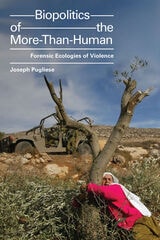
Biopolitics of the More-Than-Human
Forensic Ecologies of ViolenceJoseph Pugliese
Duke University Press, 2020
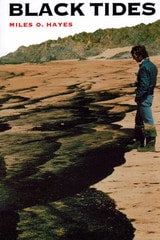
Black Tides
By Miles O. Hayes
University of Texas Press, 2000
Black tides of spilled oil pollute the world's coasts with depressing regularity, giving scientists ample opportunity to observe their environmental impacts and learn how to clean up and restore the affected shorelines. Miles O. Hayes has been a leader in this work for over twenty years. In this highly readable autobiography, he describes his evolution as a scientist, his work in coastal oil spill contingency planning and clean up, and his personal philosophy of one's relationship with nature.
A skilled raconteur, Hayes tells engrossing stories of responding to most of the recent, headline-grabbing oil spills, including the Gulf War spills, the Exxon Valdez, the Amoco Cadiz spill in France, and the Ixtoc I blowout in Mexico. Interspersed among them are personal events and adventures, such as his survival of a plane crash while mapping a remote part of Alaska. From this life story emerges a compelling statement of the ongoing conflict between environmental preservation and the exploitation of natural resources to sustain our modern society.

Blue Architecture
Water, Design, and Environmental FuturesBrook Muller
University of Texas Press, 2022
2023 Finalist, PROSE Award in Architecture and Urban Planning
A guide to water-focused and climate-resilient architectural and urban design.
Le Corbusier famously said, “A house is a machine for living in.” We now confront the litany of environmental challenges associated with the legacy of the architectural machine: a changing climate, massive species die-off, diminished air and water quality, and resource scarcities. Brook Muller offers an alternative: water-centric urban design that fosters sustainability, equity, and architectural creativity.
Inspired by the vernacular, such as the levadas of Madeira Island and both the arid and drenched places of the American West, Muller articulates a “hydro-logical” philosophy in which architects and planners begin by conceptualizing interactions between existing waterways and the spaces they intend to develop. From these interactions—and the new technologies and approaches enabling them—aesthetic, spatial, and experiential opportunities follow. Not content merely to work around sensitive ecology, Muller argues for genuinely climate-adapted urban landscapes in which buildings act as ecological infrastructure that actually improve watersheds while delivering functionality and beauty for diverse communities. Rich in images and practical examples, Blue Architecture will change the way we think about our designed world.

Bombs in the Backyard
Atomic Testing and American PoliticsA. Constandina Titus
University of Nevada Press, 2001

Borne of the Wind
Michigan Sand DunesDennis A. Albert
University of Michigan Press, 2006
Borne of the Wind describes the environmental factors necessary for dune creation in an easy-to-understand format, introducing readers to the rich ecology of Michigan's dunes. Each of the distinct types of dunes encountered along the Great Lakes shoreline is explained and illustrated with color photographs and line drawings, while color photographs of the plants and animals found in duneland areas complement the story of these fragile, ever-changing landscapes.
For scholars and enthusiasts alike, Borne of the Wind provides a comprehensive and colorful introduction to one of our finest yet least-understood natural features.
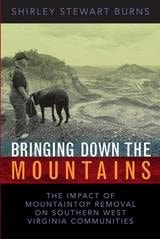
Bringing Down the Mountains
The Impact of Mountainttop Removal on Southern West Virginia CommunitiesShirley Stewart Burns
West Virginia University Press, 2007
Coal is West Virginia’s bread and butter. For more than a century, West Virginia has answered the energy call of the nation—and the world—by mining and exporting its coal. In 2004, West Virginia’s coal industry provided almost forty thousand jobs directly related to coal, and it contributed $3.5 billion to the state’s gross annual product. And in the same year, West Virginia led the nation in coal exports, shipping over 50 million tons of coal to twenty-three countries. Coal has made millionaires of some and paupers of many. For generations of honest, hard-working West Virginians, coal has put food on tables, built homes, and sent students to college. But coal has also maimed, debilitated, and killed.
Bringing Down the Mountains provides insight into how mountaintop removal has affected the people and the land of southern West Virginia. It examines the mechanization of the mining industry and the power relationships between coal interests, politicians, and the average citizen. Shirley Stewart Burns holds a BS in news-editorial journalism, a master’s degree in social work, and a PhD in history with an Appalachian focus, from West Virginia University. A native of Wyoming County in the southern West Virginia coalfields and the daughter of an underground coal miner, she has a passionate interest in the communities, environment, and histories of the southern West Virginia coalfields. She lives in Charleston, West Virginia.
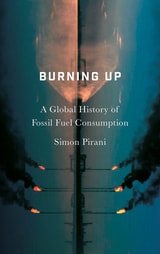
Burning Up
A Global History of Fossil Fuel ConsumptionSimon Pirani
Pluto Press, 2018
In Burning Up, Simon Pirani recounts the history of the relentless rise of fossil fuels in the past half century, and lays out the ways in which the expansion of the global capitalist economy has driven it forward. Dispelling common explanations that foreground Western consumerism, as well as arguments about unsustainable population growth, Pirani offers instead an insightful intervention in what is arguably the crisis of our time.
Buying Time
Environmental Collapse and the Future of EnergyKaz Makabe
University Press of New England, 2017