Results by title
3388 books match the query 'Fiction' and 126 start with b
BALLAD OF TRENCHMOUTHT TAGGART
M. GLENN TAYLOR
West Virginia University Press, 2008
Backflash
A Parker NovelRichard Stark
University of Chicago Press, 2011
Parker embarks on one of the most complicated heists in the whole of the classic hard-boiled series, knocking over a casino floating on the Hudson
Richard Stark’s Parker novels are the hardest of hard-boiled, classic crime novels where the heists are huge, the body counts are high, and the bad guys usually win.
The Parker novels have been a huge influence on countless writers and filmmakers, including Quentin Tarantino, Stephen King, George Pelecanos, Colson Whitehead, Lucy Sante, John Banville, and many more. Their stripped-down language and hard-as-nails amorality create an unforgettable world where the next score could be the big one, but your next mistake could also be your last. There’s nothing else like them.
Parker's got a couple of rules that have helped keep him alive throughout his long career. One of those is never to work on a boat. But with a gambling boat cruising down the Hudson, stuffed to the gunwales with cash, Parker’s got a plan, a team, and a new rule: a shot at a big enough score makes any rule worth breaking. Parker and his crew hit the boat, hard, but as always, there are a lot of complications—and a lot of bodies—before this one's in the bag.
Backwoods Tales
Paddy McGann, Sharp Snaffles, and Bill BauldyWilliam Gilmore Simms
University of Arkansas Press, 2010

Bad Sheep
Katja Lange-Müller
Seagull Books, 2024
Against the backdrop of West Berlin in 1987, meet Soja—a skilled typesetter, a refugee from East Germany, and a temporary florist with a generous heart. Her life takes an unexpected turn when she crosses paths with Harry—a tall, free-spirited individual with a quietly determined demeanor, haunted by a complex past and an uncertain future. Their encounter sets in motion a fateful connection that leaves a lasting mark on Soja’s life.
The remnants of their story are encapsulated in a school notebook, containing precisely eighty-nine undated entries where Harry chronicled his thoughts during their time together. However, conspicuous by its absence in the narrative is Soja herself. Years later, driven by the need to tell their tale and fill the void left by Harry, she embarks on a poignant journey of remembrance.
As Soja revisits the man who both impressed her with determination and disconcerted her with a mysterious gift, she finds herself captivated by his childlike essence. Despite Harry’s troubled history—ten years in prison, probation violations due to discontinued drug therapy, and the looming threat of immediate imprisonment—Soja remains resolute in her passion for him.
Katja Lange-Müller, an acclaimed storyteller, skillfully draws readers into the heart of this novel. With sensitivity, humor, and melancholy, she unfolds the narrative of an unhappy love story that transforms into the greatest happiness in life. Along the way, Lange-Müller paints an atmospherically dense portrait of the divided and stagnant Berlin of the 1980s, creating a captivating and emotionally charged reading experience.
Bad Words
Selected Short ProseIlse Aichinger
Seagull Books, 2018
Born in 1921 to a Jewish mother, Ilse Aichinger (1921–2016) survived World War II in Vienna, while her twin sister Helga escaped with one of the last Kindertransporte to England in 1938. Many of their relatives were deported and murdered. Those losses make themselves felt throughout Aichinger’s writing, which since her first and only novel, The Greater Hope, in 1948, has highlighted displacement, estrangement, and a sharp skepticism toward language. By 1976, when she published Bad Words in German, her writing had become powerfully poetic, dense, and experimental. This volume presents the whole of the original Bad Words in English for the first time, along with a selection of Aichinger’s other short stories of the period; together, they demonstrate her courageous effort to create and deploy a language unmarred by misleading certainties, preconceived rules, or implicit ideologies.
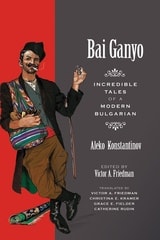
Bai Ganyo
Incredible Tales of a Modern BulgarianAleko Konstantinov
University of Wisconsin Press, 2010
Bai Ganyo has been translated into most European languages, but now Victor Friedman and his fellow translators have finally brought this Balkan masterpiece to English-speaking readers, accompanied by a helpful introduction, glossary, and notes.
Bait
David Albahari
Northwestern University Press, 2001
Balkan Beauty, Balkan Blood
Modern Albanian Short StoriesRobert Elsie
Northwestern University Press, 2006
Albania's more established writers (including Dritëro Agolli, Ismail Kadare, Teodor Laço, and Eqrem Basha) appear here alongside newer talents (such as Ylljet Aliçka, Mimoza Ahmeti, Elivra Dones, Lindita Arapi, and Kim Mehmeti), providing English-speaking readers with an elucidating and entertaining overview of the recent history, and the future, of the nation's literature.
Balkan Blues
Writing Out of YugoslaviaJoanna Labon
Northwestern University Press, 1995
Contributors: Dubravka Ugrešić, Bogdan Bogdanović, Dragan Velikić, Danilo Kiš, Drago Jančar, Mirko Kovač, Goran Stefanovski, Dževad Karahasan, and Slobodan Blagojević.
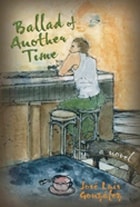
Ballad of Another Time
A NovelJose Luis Gonzalez; Translated by Asa Zatz
University of Wisconsin Press, 2004
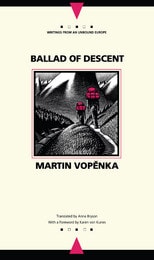
Ballad of Descent
Martin Vopenka
Northwestern University Press, 1995
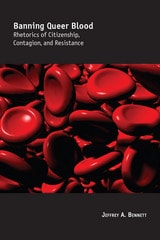
Banning Queer Blood
Rhetorics of Citizenship, Contagion, and ResistanceJeffrey A. Bennett
University of Alabama Press, 2009
In Banning Queer Blood, Jeffrey Bennett frames blood donation as a performance of civic identity closely linked to the meaning of citizenship. However, with the advent of HIV came the notion of blood donation as a potentially dangerous process. Bennett argues that the Food and Drug Administration, by employing images that specifically depict gay men as contagious, has categorized gay men as a menace to the nation. The FDA's ban on blood donation by gay men served to propagate the social misconceptions about gay men that continue to circulate within both the straight and LGBT/Queer communities.
Bennett explores the role of scientific research cited by these banned-blood policies and its disquieting relationship to government agencies, including the FDA. Bennett draws parallels between the FDA's position on homosexuality and the historical precedents of discrimination by government agencies against racial minorities. The author concludes by describing the resistance posed by queer donors, who either lie in order to donate blood or protest discrimination at donation sites, and by calling for these prejudiced policies to be abolished.
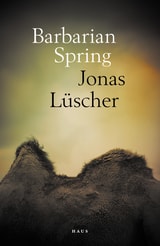
Barbarian Spring
Jonas Lüscher
Haus Publishing, 2014
So begins Barbarian Spring, the debut novel from Jonas Lüscher, a major emerging voice in European fiction. The timely and unusual novel centers on a culture clash between high finance and the value system of the Maghreb. Provocative and entertaining, Barbarian Spring is a refreshingly original and all-too-believable satire for our times.
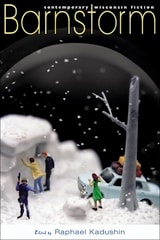
Barnstorm
Contemporary Wisconsin FictionEdited by Raphael Kadushin
University of Wisconsin Press, 2005
Not for sale in the United Kingdom.
Barren Island
Carol Zoref
New Issues Poetry and Prose, 2017
Barren Lives
By Graciliano Ramos
University of Texas Press, 1971
A peasant family, driven by the drought, walks to exhaustion through an arid land. As they shelter at a deserted ranch, the drought is broken and they linger, tending cattle for the absentee ranch owner, until the onset of another drought forces them to move on, homeless wanderers again. Yet, like the desert plants that defeat all rigors of wind and weather, the family maintains its will to survive in the harsh and solitary land. Intimately acquainted with the region of which he writes and keenly appreciative of the character of its inhabitants, into whose minds he has penetrated as few before him, Graciliano Ramos depicts them in a style whose austerity well becomes the spareness of the subject, creating a gallery of figures that rank as classic in contemporary Brazilian literature.

Be Faithful Unto Death
Zsigmond Móricz
Central European University Press, 1996
Be Faithful unto Death is the moving story of a bright and sensitive schoolboy growing up in an old-established boarding school in the city of Debrecen in eastern Hungary. Misi, a dreamer and would-be writer, is falsely accused of stealing a winning lottery ticket. The torments through which he goes – and grows – are superbly described.
The novel is brimming with vivid detail from the provincial life that Móricz knew so well and shot through with a sense of the tragic fate of a newly truncated Hungary.

Beach Umbrella
Cyrus Colter
University of Iowa Press, 1970

Bealport
A Novel of a TownJeffrey Lewis
Haus Publishing, 2018
In Bealport, Jeffrey Lewis takes us inside the town, revealing its secrets, acknowledging its problems, and honoring its ambitions. Brilliantly deploying a large cast from all walks of life, this novel reveals small town America in the early twenty-first century through the interwoven secrets and desires of its residents, and through them delivers a striking portrait of America at a moment of national uncertainty.
Bealport, called “a hugely satisfying read” by the Evening Standard and “deeply appealing” by the Times Literary Supplement, is now available in paperback.
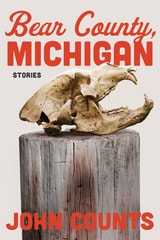
Bear County, Michigan
StoriesJohn Counts
Northwestern University Press, 2025
Following desperate characters in desperate circumstances in the rural Midwest
In these colorful, darkly comic stories, veteran journalist and crime reporter John Counts takes readers to an often-ignored part of the country: a fictional Great Lakes coastal town in northern Michigan defined by beauty and bleakness. The cast of characters in these connected stories ranges from addicts to backwoods misfits to ruined lumber families, all bound together by their desire to obtain something just out of reach. Big Frank breaks out of a rehab facility trying to outrun grief. The women in the village of Brotherhood grapple with sterility resulting from an environmental calamity. A local politician must convince her mother to leave a nudist colony. And in the final, sweeping story, a splinter group from the local tribe attempts to reclaim its ancestral land by force. The people of Bear County and their predicaments encompass the wildly original and yet totally ordinary truths about American life off the beaten track.
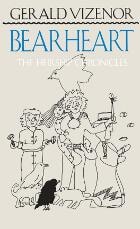
Bearheart
The Heirship ChroniclesGerald Vizenor Vizenor
University of Minnesota Press, 1990
Bearheart, Gerald Vizenors first novel, overturns “terminal creeds” and violence in a decadent material culture. American civilization has collapsed and Proude Cedarfair, his wife, Rosina, and a bizarre collection of disciples, are forced on a pilgrimage when government agents descend on the reservation to claim their sacred cedar trees for fuel. The tribal pilgrims reverse the sentiments of Manifest Destiny and travel south through the ruins of a white world that ran out of gas.

Beatrice of Bayou Têche
Alice Ilgenfritz Jones
University of Wisconsin Press, 2001
Beatrice of Bayou Têche is a work of great historical and artistic interest: a late-nineteenth-century novel by a white woman about a black woman artist-protagonist. As the introduction for this reprint edition shows, Alice Ilgenfritz Jones was the first white woman to take an extended interest in the intersection of creativity, race, and gender. In Beatrice, Jones seeks to unveil the relationships between white and African Americans during the twenty years before the Civil War by following her mixed-race protagonist from her childhood as a slave in New Orleans through her career as a free woman and inspired painter and opera singer. Beatrice renders the white author’s effort to find a place for the mixed-race woman in relation to paradigms of creativity that are not only gendered but racialized. In the process, it exposes the fault lines of ideology and literary convention that underlie attempts to negotiate issues of race, gender, and creativity in late nineteenth-century America.
Beautiful Soon Enough
Margo Berdeshevsky
University of Alabama Press, 2009
Beautiful Women
Giuseppe Antonio Borgese
Northwestern University Press, 2001
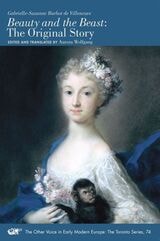
Beauty and the Beast
The Original StoryGabrielle-Suzanne Barbot de Villeneuve
Iter Press, 2020
The Other Voice in Early Modern Europe: The Toronto Series volume 74
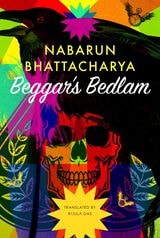
Beggar’s Bedlam
Nabarun Bhattacharya
Seagull Books, 2024
Beggar’s Bedlam is a surreal novel that unleashes the chaos of the carnival on the familiar. Part literary descendent of Bulgakov’s The Master and Margarita and part a reconstruction of lost Bengali history, Nabarun Bhattacharya’s masterpiece is a jubilant, fizzing wire of subaltern anarchy and insurrection.
Marshall Bhodi Sarkar and his lieutenant Sarkhel surreptitiously dig on the banks of the Ganges River looking for crude oil reserves. Instead, they unearth curved daggers, rusty broadswords, and a Portuguese cannon. Bhodi is an occasional military man and the lead sorcerer of the secret black-magic sect named Choktar. He joins forces with the flying Flaperoos—men with a predilection for alcohol and petty vandalism—to declare outright war against the Marxist–Leninist West Bengal government. In a bloodless revolution that is fascinating in its utter implausibility, a motley crew of yet more implausible characters come together in a magic-realist fictional remapping of Calcutta.
Behind the Lines
Bugulma and Other StoriesJaroslav Hasek
Karolinum Press, 2012
Jaroslav Hašek is a Czech writer most famous for his wickedly funny, widely read, yet incomplete novel The Good Soldier Schweik, a series of absurdist vignettes about a recalcitrant WWI soldier. Hašek—in spite of a life of buffoonery and debauchery—was remarkably prolific. He wrote hundreds of short stories that all display both his extraordinary gift for satire and his profound distrust of authority. Behind the Lines presents a series of nine short stories first published in the Prague Tribune and considered to be some of Hašek’s best. Based on his experiences as a Red Commissar in the Russian Civil War and his return to Czechoslovakia, Behind the Lines focuses on the Russian town of Bugulma, taking aim, with mordant wit, at the absurdities of a revolution.
Providing important background and insight into The Good Soldier Schweik, this collection by a writer some call the Bolshevik Mark Twain is nevertheless much more than a tool for understanding his better-known novel; it is a significant work in its own right. A hidden gem remarkable for its modern, ribald sense of humor, Behind the Lines is an enjoyable, fast-paced anthology of great literary and historical value.
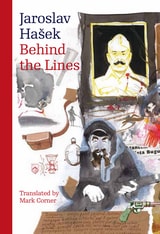
Behind the Lines
Bugulma and Other StoriesJaroslav Hasek
Karolinum Press, 2012
Jaroslav Hašek is a Czech writer most famous for his wickedly funny, widely read, yet incomplete novel The Good Soldier Schweik, a series of absurdist vignettes about a recalcitrant WWI soldier. Hašek—in spite of a life of buffoonery and debauchery—was remarkably prolific. He wrote hundreds of short stories that all display both his extraordinary gift for satire and his profound distrust of authority. Behind the Lines presents a series of nine short stories first published in the Prague Tribune and considered to be some of Hašek’s best. Based on his experiences as a Red Commissar in the Russian Civil War and his return to Czechoslovakia, Behind the Lines focuses on the Russian town of Bugulma, taking aim, with mordant wit, at the absurdities of a revolution.
Providing important background and insight into The Good Soldier Schweik, this collection by a writer some call the Bolshevik Mark Twain is nevertheless much more than a tool for understanding his better-known novel; it is a significant work in its own right. A hidden gem remarkable for its modern, ribald sense of humor, Behind the Lines is an enjoyable, fast-paced anthology of great literary and historical value.
Behind the Red Mist
Short Fiction by Ho Anh ThaiHo Anh Thai
Northwestern University Press, 1998
Beijing
A NovelPhilip Gambone
University of Wisconsin Press, 2003
Escaping his ghosts, AIDS widower David Masiello accepts a one-year position at a Western medical clinic in Beijing. Lonely but excited, he sets out to explore the city—both its bustling street life and its clandestine gay subculture.
David chronicles his adventures in China as he wrestles with cultural dislocation, loneliness, and sexual and spiritual longing. After a series of both comic and poignant encounters with gay Chinese men, he meets Bosheng, a handsome young artist. Though the attraction is strong, a difficult courtship ensues, during which Bosheng returns to his ancestral village to marry the girl his parents have chosen for him. Eventually, and quite unexpectedly, David and Bosheng reconnect and share an idyllic spring together. As the year ends, David must decide whether to say goodbye or face the uncertainties of a long-distance relationship.
Gambone’s novel is peopled with a host of wonderfully memorable characters: Owen, David’s forthright best friend back home; Auntie Chen, the clinic’s office mom, who wants to fix David up with a girlfriend; Stewart, David’s Beijing roommate, a graduate student doing research on Peking opera; Jiantao and Guoyang, two lovers who lecture David on the fleeting quality of American romance; and Tyson, the Australian doctor with a Chinese girlfriend, who hopes to teach David that love doesn’t need any explanations or justifications.

Beirut '75
Ghadah Samman
University of Arkansas Press, 1995
Ghada Samman’s first full-length novel, originally published in Arabic in 1974, is a creative and daring work prophetically depicting the social and political causes of the Lebanese civil war in 1975. The story opens in a taxi in which we meet the five central characters, each seeking something to give life meaning: security, fame, wealth, dignity, recognition, freedom from fear and from tradition-sanctioned, dehumanizing practices. Once they reach the capital city of Beirut, on which they’ve pinned their hopes, they all discover, man and woman alike, that they are victims of forces either partially or completely beyond their control, such as political corruption, class discrimination, economic and sexual exploitation, destruction of the natural environment, and blind allegiance to tradition.
Beirut ’75 addresses struggles of Arab society, particularly the Lebanese, but the message is one of the universal human condition. Thus, in addition to this superb English-language presentation, Samman’s novel has already appeared in German (two editions), French, and Italian versions.
Winner of The University of Arkansas Press Award for Arabic Literature in Translation.
Belmour
A Modern EditionAnne Damer, Edited and with an Introduction by Jonathan David Gross
Northwestern University Press, 2010
Belmour chronicles the tangled romances of a group of eighteenth-century English aristocrats. The plot centers on Lord Belmour’s pursuit of the lovely and slightly mysterious Emily Melville. The charismatic Belmour, a man of great feeling and quick perception, goes to great lengths to gain the affection of Emily, only to learn that she has recently married another man. Although crushed, Belmour tries to develop a friendship with the couple, but his heartache drives him to depart on an extensive journey through Europe. During these travels, the lives of Belmour and Emily unfold, though fate ultimately leads the two to cross paths once more.
Set among such vivid backdrops as Paris, Venice, and Rome, Belmour, like Damer herself, “conceals as much as it reveals,” yielding a rich, multifaceted story of forbidden love and erotic intrigue that will appeal to those interested in the gothic romances of Ann Radcliffe and the psychological novels of Elizabeth Inchbald. A contemporary of Jane Austen, Anne Damer casts an equally critical eye on the foibles of the aristocracy, while offering a similarly romanticized portrait of romantic love in the age of sensibility.
Belonging
Virginia Tibbs-Brelje
Gallaudet University Press, 1986

Below Grass Roots
A NovelFrank Waters
Ohio University Press, 2002
In Below Grass Roots, the second book in Frank Waters’s Pikes Peak saga, turn-of-the-century Colorado Springs is prospering with the mining boom and a growing tourist industry. Patriarch Joseph Rogier becomes ever more obsessed with the treasures of the towering mountain and tries to enlist his son-in-law Jonathan Cable in his mining schemes. Cable instead leaves for Navajo country with his young son. Rogier, convinced that new wealth lies deep within the mountain, below grass roots, sinks his mines and what remains of his fortune ever deeper into the mountain’s granite.
As in the other two novels in this semiautobiographical saga, Waters’s masterful narrative draws on his own keen perception of the human condition to bring us this compelling tale of struggle and hope in the American West.
Pike’s Peak is composed of three condensed novels: The Wild Earth’s Nobility, Below Grass Roots, and The Dust within the Rock.

Benefit Street
A NovelAdria Bernardi
University of Alabama Press, 2022
WINNER OF FC2's CATHERINE DOCTOROW INNOVATIVE FICTION PRIZE
A universal story of exile, of the refugee and emigrant, and of all those displaced who can reconstruct a sense of home only by weaving a new fabric of the imagination
For nearly two decades, Şiva has met after work on Tuesdays with four friends at a teahouse called the Kafiye. In interrupted conversations, the women explore what it is to live engaged lives inside and outside the home. Amidst joking and complaints, while drinking too much tea and eating too many sweets, they tell of their days: a son’s ninth birthday, the bruise on the arm of an aging parent, soldiers stationed outside the school, the funeral of an opposition political leader killed in a mysterious car accident.
Set in an unnamed provincial capital of an unnamed country, Benefit Street tells of a wide circle of friends—teachers, lawyers, missionaries, doctors, artisans—in a time of gathering and dispersal. It tells the story of mothers, daughters, sisters, wives, colleagues, and neighbors, as war to the East threatens and constitutional rights are daily eroded by an increasingly authoritarian regime.
The ideals of youth, freedom, and coexistence are severely tested with the shocking revelation that the charismatic leader of their group has sexually abused the women under his care. The limits of reconciliation are tested as Şiva makes an arduous journey into the mountains to meet an estranged mother with a genius for weaving complex rugs.
Bengal Nights
A NovelMircea Eliade
University of Chicago Press, 1994
Offered the hospitality of a senior Indian colleague, Alain grasps at the chance to discover the authentic India firsthand. He soon finds himself enchanted by his host's daughter, the lovely and inscrutable Maitreyi, a precocious young poet and former student of Tagore. What follows is a charming, tentative flirtation that soon, against all the proprieties and precepts of Indian society, blossoms into a love affair both impossible and ultimately tragic. This erotic passion plays itself out in Alain's thoughts long after its bitter conclusion. In hindsight he sets down the story, quoting from the diaries of his disordered days, and trying to make sense of the sad affair.
A vibrantly poetic love story, Bengal Nights is also a cruel account of the wreckage left in the wake of a young man's self discovery. At once horrifying and deeply moving, Eliade's story repeats the patterns of European engagement with India even as it exposes and condemns them. Invaluable for the insight it offers into Eliade's life and thought, it is a work of great intellectual and emotional power.
Translated into French in 1950, Bengal Nights was an immediate critical success. The film, Les Nuits Bengali, appeared in 1987.

Berlin Cantata
Jeffrey Lewis
Haus Publishing, 2013
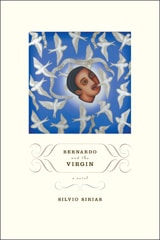
Bernardo and the Virgin
A NovelSilvio Sirias
Northwestern University Press, 2007
Silvio Sirias' sweeping novel tells many stories: that of a humble man touched by the transcendent; that same man as a devout boy denied the priesthood because of poverty; and those in his orbit, past and present. It is also the stormy epic of Nicaragua through the long Somoza years to the Sandinista revolution. Sirias' beautiful language mixes English with Spanish and details of dusty village life with wondrous images of Catholic mysticism. His portrayal of the rich recent past of Central America resonates with the experiences of both the natives and the thriving communities of Nicaraguans, Salvadorans, and others putting down roots in the United States.
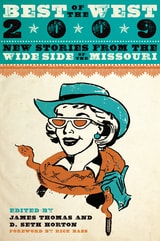
Best of the West 2009
New Stories from the Wide Side of the MissouriEdited by James Thomas and D. Seth Horton
University of Texas Press, 2009
Best of the West: New Stories from the Wide Side of the Missouri, an annual anthology of exceptional short fiction rooted in the western United States, debuted in 1988 and continued publication until 1992. Recognizing that the West remains rewarding territory for literary explorations, James Thomas and Seth Horton are now reviving the series in Best of the West 2009.
Thomas and Horton combed some 250 literary journals and magazines to gather these eighteen stories published since the fall of 2007. They come from both emerging and established writers, including Lee K. Abbott, Louise Erdrich, Dagoberto Gilb, Antonya Nelson, Joyce Carol Oates, and Annie Proulx. Like Bass, the editors believe "the Western short story" inhabits a wide territory; the subjects in this collection range from illegal immigrants tending illegal crops in California's national forests, to mismatched Mormon missionaries on the conversion trail in Nevada, to a Native American college student exploring her sexuality, to Papa Hemingway's meditations as he loads the shotgun in his Idaho cabin. As these stories make clear, the West continues to shape our literary landscape. Thomas and Horton have preserved the best of that work in this vital anthology.
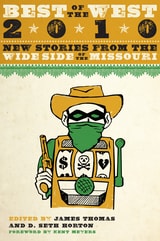
Best of the West 2010
New Stories from the Wide Side of the MissouriEdited by James Thomas and D. Seth Horton
University of Texas Press, 2010
Best of the West: New Stories from the Wide Side of the Missouri, an annual anthology of exceptional short fiction rooted in the western United States, debuted in 1988 and continued publication until 1992. Recognizing that the West remains rewarding territory for literary explorations, James Thomas and D. Seth Horton revived the series in 2009.
Best of the West 2010 brings together established and emerging writers who reinterpret this most vital of literary regions and create, as Kent Meyers puts it in his foreword, "gift[s] the nation needs right now." Editors Horton and Thomas have chosen nineteen stories by writers including Sherman Alexie, Rick Bass, Ron Carlson, Julia Glass, William Kittredge, Kent Nelson, and Deb Olin Unferth. Their subjects vary from a Greek community in Wyoming dealing with a suicide, to a re-creation of Christ's crucifixion in New Mexico, to an unlikely friendship that peaks at a burial ground in Alaska. Best of the West 2010 is the latest indication that the West has become one of the most crucial settings for contemporary American fiction.
Contributors:
- Sherman Alexie
- Rick Bass
- John Blanchard
- Elea Carey
- Ron Carlson
- Natalie Diaz
- Darren Dillman
- Ben Ehrenreich
- Julia Glass
- Dina Guidubaldi
- Ben Kostival
- William Kittredge
- Paul Mihas
- Kent Nelson
- Daniel Orozco
- Kirstin Valdez Quade
- Aurelie Sheehan
- Justin St. Germain
- Deb Olin Unferth
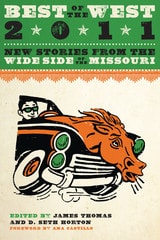
Best of the West 2011
New Stories from the Wide Side of the MissouriEdited by James Thomas and D. Seth Horton
University of Texas Press, 2011
Best of the West: New Stories from the Wide Side of the Missouri, an annual anthology of exceptional short fiction rooted in the western United States, debuted in 1988 and continued publication until 1992. Recognizing that the West remains rewarding territory for literary explorations, James Thomas and D. Seth Horton revived the series in 2009.
Best of the West 2011: New Stories from the Wide Side of the Missouri is the latest volume in what has become one of the nation's most important anthologies. Editors Horton and Thomas have chosen twenty stories by writers including Rick Bass, T. C. Boyle, Ron Carlson, Philipp Meyer, Dagoberto Gilb, Yiyun Li, Antonya Nelson, and Sam Shepard. Subjects vary from an Idaho family that breeds lions and tigers with disastrous results, to a Mormon veteran whose mind is taken over by a nineteenth-century consciousness, to a Texas boy who spends an afternoon with Bonnie and Clyde shortly before their deaths. Taken together, these stories suggest that the West has become one of the most exciting and diverse literary regions in the twenty-first century.
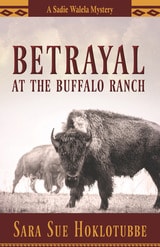
Betrayal at the Buffalo Ranch
Sara Sue Hoklotubbe
University of Arizona Press, 2018
Even though Deputy Sheriff Lance Smith, Sadie’s love interest, suspects a link to the Buffalo Ranch, he can find little evidence to make an arrest. And when a rare white buffalo calf is born on the ranch and immediately disappears, Sadie’s instincts tell her something is wrong—and she sets out to prove it. Her suspicions—and fears of more violence—escalate when a former schoolmate returns to Oklahoma to visit her ailing father and finds employment at the ranch. Will she be the next victim?
Drawn deeper and deeper into danger, Sadie uncovers an unparalleled web of greed and corruption. It will take all of her investigative skill to set things straight—assuming she and her wolfdog can stay alive long enough to succeed.
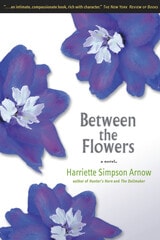
Between the Flowers
A NovelHarriette Simpson Arnow
Michigan State University Press, 1999
Between the Flowers is Harriette Simpson Arnow's second novel. Written in the late 1930s, but unpublished until 1997, this early work shows the development of social and cultural themes that would continue in Arnow's later work: the appeal of wandering and of modern life, the countervailing desire to stay within a traditional community, and the difficulties of communication between men and women in such a community.
Between the Flowers goes far beyond categories of "local color," literary regionalism, or the agrarian novel, to the heart of human relationships in a modernized world. Arnow, who went on to write Hunter's Horn (1949) and The Dollmaker (1952)—her two most famous works—has continually been overlooked by critics as a regional writer. Ironically, it is her stinging realism that is seen as evidence of her realism, evidence that she is of the Cumberland—an area somehow more "regional" than others.
Beginning with an edition of critical essays on her work in 1991 and a complete original edition of Hunter's Horn in 1997, the Michigan State University Press is pleased to continue its effort to make available the timeless insight of Arnow's work with the posthumous publication of Between the Flowers.
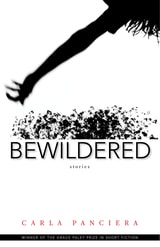
Bewildered
StoriesCarla Panciera
University of Massachusetts Press, 2014
Familiar landscapes—city streets, coastal towns emptied of tourists, suburban neighborhoods—are backdrops for unfulfilled dreams: the luckiest man alive arouses the suspicions of those he most wants to befriend, a grieving lover invites herself into another's life, a young girl discovers her tea leaves reveal nothing as life-altering as those of her friend, the straying husband pays a debt for his and his son's obsessions.
The stories ask: Can you live any way forever? What links them is what links all of us: the desire to belong, the need to heal, the fear of what happens next.
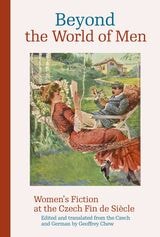
Beyond the World of Men
Women’s Fiction at the Czech Fin de SiècleEdited by Geoffrey Chew
Karolinum Press, 2024
Bringing together Czech fiction published by women between 1890 and 1910, Beyond the World of Men presents works that confront pivotal issues of the time, including the “woman question” and women’s rights, class conflict, lesbian love, and the relationship between the aristocracy and the Czech peasantry (as in two stories originally written in German by the aristocrat Marie von Ebner-Eschenbach). The collection contains stories that are of literary merit, but also hold historical value. In these works, the authors offer trenchant social commentary while injecting both comic and sentimental elements into their writing, employing humanity and subtlety.
As a whole, the collection suggests a revision of the critical understanding of Czech literary modernism; these writers represent voices that were not usually heard in the male writing of the period. They also demand evaluation in their differing (but constant) reactions to earlier women’s writing in Czech and in other European languages, but particularly that of the central figure of Božena Nemcová, to whose canonic novel Babicka they constantly return.
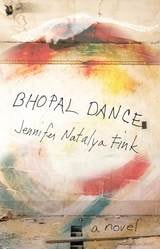
Bhopal Dance
A NovelJennifer Natalya Fink, Foreword by Mary Caponegro
University of Alabama Press, 2018
An imaginative, erotic rethinking of Bhopal’s disaster—and perhaps our own
On the night of December 2, in the midst of the Reaganomic era, an explosion at an American-owned factory in Bhopal, India, released untold amounts of toxic gas on uncounted numbers of people, creating a human and environmental disaster of insurmountable proportions. Known as the Bhopal disaster, it once dominated international headlines, and is now barely remembered.
Yet Bhopal remains emblematic of all the many quickly forgotten disasters that followed, and of the permanent state of globalized disaster in which we now dwell. What does it mean when corporations instead of states control not only the means to create environmental disasters, but also the tools to bury them? How does one revolt against these unelected entities? How do our most private desires get shaped by this stateless horror? Jennifer Natalya Fink’s Bhopal Dance is an epic and epochal tale of such a horror and its buried consequences.
At the center of the novel is Cordelia, an owlish woman with a ménage of lovers, who leads a revolutionary Canadian political movement catalyzed by the Bhopal disaster, only to end up imprisoned with just a toilet to talk to. Who she hallucinates is her father. Who is her father. Who is the State. Who may be her mother. Or her twin/lover. Cordelia is a remarkable bird in her own right, and ‘owlishness’ is a feathery conceit deployed in both the book’s form and content, a way of exploring queer possibilities for altering the terms of one’s imprisonment. For setting corporatized corporeality alight. Ablaze. Pets and punk rock, dentists and dyslexia, Shakespeare and salsa: they all dance together here.

Biblical Themes in Science Fiction
Nicole L. Tilford
SBL Press, 2023
What does a first-generation female robot have in common with the biblical figure of Eve? Or an intergenerational spaceship with Noah’s ark? If a computer compiles a deceased person’s photographs and digital activities into a virtual avatar, is that a form of resurrection? Such seemingly unlikely scenarios are common in science fiction—and science fiction writers often draw on people, places, and events from biblical texts, assuming that audiences will understand the parallels. Biblical Themes in Science Fiction is a journey from creation to apocalypse where contributors Frank Bosman, Rhonda Burnette-Bletsch, Krista N. Dalton, Tom de Bruin, James F. McGrath, Kelly J. Murphy, Steven J. Schweitzer, Jason A. Staples, Nicole L. Tilford, Christine Wenderoth, and Jackie Wyse-Rhodes trace biblical themes as they appear in contemporary science fiction, including Doctor Who, Lilith’s Brood, The Handmaid’s Tale, Battlestar Galactica, and Fallout 3. Essays are supplemented by images and key science fiction sources for diving deeper into how the Bible influenced writers and creators. An afterword considers the imaginative impulses common to both science fiction and biblical texts.

Big City
Marream Krollos
University of Alabama Press, 2018
Marream Krollos’s Big City is astructurally innovative work of prose composed of vignettes, verse, dialogues, monologues, and short stories. Alone, they are fragments, but together they offer a glimpse of the human condition and form a harmonized narrative of desire, loneliness, and beauty. Through language that builds, destroys, and violates, Krollos maps the geography of our contemporary condition, a haunting meditation on human togetherness and isolation.
Krollos plays with the tension between the voice of the lonely “I” produced by the urban experience and the polyphony of the city itself. A city is a chorus and a collection of traces; it is a way of being with others and the concretization of the social divisions that keep people apart. As a lifelong city dweller, Krollos is obsessed with the way that cities shape our experiences of the world, our ideas about inside and outside and self and other.
By mapping the emotional highs and lows of particular (though often anonymous) beings, the book creates a geography of the urban consciousness. The sensation of reading this lyric work of fiction is akin to how one experiences an attentive walk in an unknown city: one becomes attuned to the tenor of its many voices, how the languages lift and flourish, and how the micro and macro became integrally linked.
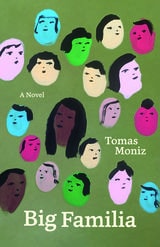
Big Familia
A NovelTomas Moniz
Acre Books, 2019
Upon the unexpected death of one of the bar’s regulars, Juan is sent reeling, and a series of upheavals follow as he both seeks and spurns intimacy, pondering the legacy of distant parents and a failed marriage and grappling with his sexuality—all the while cycling and dating, drinking at Nicks Lounge, and parenting a determined and defiant child-become-woman.
When his incarcerated father dies and Stella reveals she’s pregnant, Juan is forced to examine the emotional bonds that both hold and hinder him, to reassess his ideas of commitment, of friendship, of love. His encounters with various characters—his mother, his ex-wife, a middle-aged punker, an aspiring acupuncturist, a dapper veteran—lead Juan to the realization that he himself must change to thrive.
This is a story of making family and making mistakes, of rending and of mending. As a Latinx queer father with a mixed-race daughter, Juan exemplifies the ways identity connects and divides us. With wit, insight, and tenderness, Big Familia explores the complexities of desire, devotion, and the mysteries of the heart.
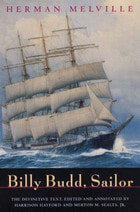
Billy Budd, Sailor
Herman Melville
University of Chicago Press, 1962