Results by title
279 books match the query 'Film & Video' and 10 start with b

Beijing Film Academy Yearbook 2018
Edited by The Journal of Beijing Film Academy
Intellect Books, 2020
The annual Beijing Film Academy Yearbook continues to showcase the best academic debates, discussions, and research published in the prestigious Journal of Beijing Film Academy from the previous year. This volume brings together specially selected articles, covering the most up-to-date topics in Chinese cinema studies appearing for the first time in English, in order to bridge the gap in cross-cultural research in cinema and media studies, as well as to encourage new conversations.
This book is the latest offering in Intellect China Library series, which publishes work by Chinese scholars that have not previously been available to English-language academia. Covering the subjects of film studies, visual arts, performing arts, media, and cultural studies, the series aims to foster intellectual debate and to promote closer cross-cultural intellectual exchanges by introducing important works of Chinese scholarship to readers.
Beijing Film Academy Yearbook 2021
Edited by the Journal of Beijing Film Academy
Intellect Books, 2024
The annual Beijing Film Academy Yearbook highlights the best academic debates, discussions, and research from the previous year, as previously published in the highly prestigious Journal of Beijing Film Academy. This volume brings together specially selected articles, appearing for the first time in English, to bridge the gap in cross-cultural research in cinema and media studies.
The book is the latest in the Intellect China Library series to produce work by Chinese scholars that have not previously been available to English-language academia. Covering the subjects of film studies, visual arts, performing arts, and media and cultural studies, the series aims to foster intellectual debate and to promote closer cross-cultural intellectual exchanges by introducing important works of Chinese scholarship to readers.
Beijing Film Academy Yearbook 2022
Edited by the Journal of Beijing Film Academy
Intellect Books, 2025
Beijing Film Academy 2022 offers an essential collection of the most thought-provoking debates, discussions, and research from China’s leading institution for film and media studies. For the first time in English, this volume presents carefully selected articles from the prestigious Journal of Beijing Film Academy, providing scholars and students with unparalleled access to a significant body of work from Chinese academics.
This book covers a wide range of topics–from film studies and visual arts to performing arts and media culture and provides critical insights into contemporary cinematic and media discourse in China. As part of the Intellect China Library series, it fosters cross-cultural intellectual exchange and bridges the gap between Chinese scholarship and global academia.
An indispensable resource for film and media scholars, this yearbook serves as a vital tool for understanding the evolving landscape of Chinese cinema and its global impact.
Beijing Film Academy Yearbook
2015Edited by the Journal of Beijing Film Academy
Intellect Books, 2016
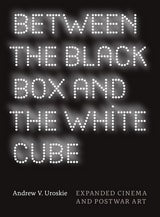
Between the Black Box and the White Cube
Expanded Cinema and Postwar ArtAndrew V. Uroskie
University of Chicago Press, 2014
Explaining that the postwar expanded cinema was a response to both developments, Andrew V. Uroskie argues that, rather than a formal or technological innovation, the key change for artists involved a displacement of the moving image from the familiarity of the cinematic theater to original spaces and contexts. He shows how newly available, inexpensive film and video technology enabled artists such as Nam June Paik, Robert Whitman, Stan VanDerBeek, Robert Breer, and especially Andy Warhol to become filmmakers. Through their efforts to explore a fresh way of experiencing the moving image, these artists sought to reimagine the nature and possibilities of art in a post-cinematic age and helped to develop a novel space between the “black box” of the movie theater and the “white cube” of the art gallery. Packed with over one hundred illustrations, Between the Black Box and the White Cube is a compelling look at a seminal moment in the cultural life of the moving image and its emergence in contemporary art.
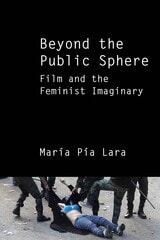
Beyond the Public Sphere
Film and the Feminist ImaginaryMaría Pía Lara
Northwestern University Press, 2021
In Beyond the Public Sphere: Film and the Feminist Imaginary, the renowned philosopher and critical theorist María Pía Lara challenges the notion that the bourgeois public sphere is the most important informal institution between social and political actors and the state.
Drawing on a wide range of films—including The Milk of Sorrow, Ixcanul, Wadja, The Stone of Patience, Marnie, A Streetcar Named Desire, and Talk to Her—Lara dissects cinematic images of women’s struggles and their oppression. She builds on this analysis, developing a concept of the feminist social imaginary as a broader and more complex space that provides a way of thinking through the possibilities for emancipatory social transformation in response to forms of domination perpetuated by patriarchal capitalism.
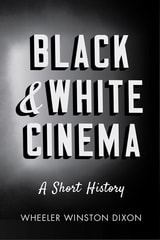
Black and White Cinema
A Short HistoryWheeler Winston Dixon
Rutgers University Press, 2015
Black and White Cinema is the first study to consider the use of black-and-white as an art form in its own right, providing a comprehensive and global overview of the era when it flourished, from the 1900s to the 1960s. Acclaimed film scholar Wheeler Winston Dixon introduces us to the masters of this art, discussing the signature styles and technical innovations of award-winning cinematographers like James Wong Howe, Gregg Toland, Freddie Francis, and Sven Nykvist. Giving us a unique glimpse behind the scenes, Dixon also reveals the creative teams—from lighting technicians to matte painters—whose work profoundly shaped the look of black-and-white cinema.
More than just a study of film history, this book is a rallying cry, meant to inspire a love for the artistry of black-and-white film, so that we might work to preserve this important part of our cinematic heritage. Lavishly illustrated with more than forty on-the-set stills, Black and White Cinema provides a vivid and illuminating look at a creatively vital era.
Britpop Cinema
From Trainspotting to This is EnglandMatt Glasby
Intellect Books, 2019
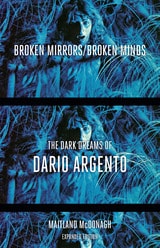
Broken Mirrors/Broken Minds
The Dark Dreams of Dario ArgentoMaitland McDonagh
University of Minnesota Press, 2010
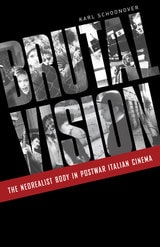
Brutal Vision
The Neorealist Body in Postwar Italian CinemaKarl Schoonover
University of Minnesota Press, 2012
Film history identifies Italian neorealism as the exemplar of national cinema, a specifically domestic response to wartime atrocities. Brutal Vision challenges this orthodoxy by arguing that neorealist films—including such classics as Rome, Open City; Paisan; Shoeshine; and Bicycle Thieves—should be understood less as national products and more as complex agents of a postwar reorganization of global politics. For these films, cinema facilitates the liberal humanist sympathy required to usher in a new era of world stability.
In his readings of crucial films and newly discovered documents from the archives of neorealism’s international distribution, Karl Schoonover reveals how these films used images of the imperiled body to reconstitute the concept of the human and to recalibrate the scale of human community. He traces how Italian neorealism emerges from and consolidates the transnational space of the North Atlantic, with scenarios of physical suffering dramatizing the geopolitical stakes of a newly global vision. Here we see how—in their views of injury, torture, and martyrdom—these films propose a new mode of spectating that answers the period’s call for extranational witnesses, makes the imposition of limited sovereignty palatable, and underwrites a new visual politics of liberal compassion that Schoonover calls brutal humanism.
These films redefine moviegoing as a form of political action and place the filmgoer at the center of a postwar geopolitics of international aid. Brutal Vision interrogates the role of neorealism’s famously heart-wrenching scenes in a new global order that requires its citizenry to invest emotionally in large-scale international aid packages, from the Marshall Plan to the liberal charity schemes of NGOs. The book fundamentally revises ideas of cinematic specificity, the human, and geopolitical scale that we inherit from neorealism and its postwar milieu—ideas that continue to set the terms for political filmmaking today.