340 books match the query 'Folklore' and 18 start with b

cover of Babimose: The Wanderer

Babimose

The Wanderer

Peter Razor

Michigan State University Press, 2025
Set against the backdrop of the French and Indian War in the 1750s, this book expands on the legend of Babimose. The legend was passed down as an oral history among Indigenous peoples until it was recorded by a traveling historian who was among the northern Wisconsin Ojibwe in the 1850s. The story recalls a gifted Anishinaabe boy who lived south of Gichigami, now known as Lake Superior, who independently traveled among Indigenous nations. The original story was recorded as a one-page description of Babimose; this book expands on this to explore the language barriers and cultural differences that Babimose would have encountered on his journey. The lessons he learned about people and their resilience in the region still offer lessons for readers today.
[more]
cover of Badger and Coyote Were Neighbors: Melville Jacobs on Northwest Indian Myths and Tales

Badger and Coyote Were Neighbors

Melville Jacobs on Northwest Indian Myths and Tales

William R. Seaburg

Oregon State University Press, 2000
[more]
cover of Bawaajimo: A Dialect of Dreams in Anishinaabe Language and Literature

Bawaajimo

A Dialect of Dreams in Anishinaabe Language and Literature

Margaret Noodin

Michigan State University Press, 2014
Bawaajimo: A Dialect of Dreams in Anishinaabe Language and Literature combines literary criticism, sociolinguistics, native studies, and poetics to introduce an Anishinaabe way of reading. Although nationally specific, the book speaks to a broad audience by demonstrating an indigenous literary methodology. Investigating the language itself, its place of origin, its sound and structure, and its current usage provides new critical connections between North American fiction, Native American literatures, and Anishinaabe narrative. The four Anishinaabe authors discussed in the book, Louise Erdrich, Jim Northrup, Basil Johnston, and Gerald Vizenor, share an ethnic heritage but are connected more clearly by a culture of tales, songs, and beliefs. Each of them has heard, studied, and written in Anishinaabemowin, making their heritage language a part of the backdrop and sometimes the medium, of their work. All of them reference the power and influence of the Great Lakes region and the Anishinaabeakiing, and they connect the landscape to the original language. As they reconstruct and deconstruct the aadizookaan, the traditional tales of Nanabozho and other mythic figures, they grapple with the legacy of cultural genocide and write toward a future that places ancient beliefs in the center of the cultural horizon.
[more]
cover of Bear With Me: A Cultural History of Famous Bears in America

Bear With Me

A Cultural History of Famous Bears in America

Daniel Horowitz

Duke University Press, 2025

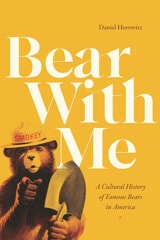
From teddy bears and Winnie-the-Pooh to Smokey Bear, Yogi Bear, and Cocaine Bear, American popular culture has been fascinated with real and fictional bears for more than two centuries. Bears are ubiquitous, appearing in advertisements, as logos for sports teams, and as central characters in children’s books, cartoons, movies, and video games. In Bear With Me, Daniel Horowitz presents a vibrant history of the pedestrian and celebrity bears who have captured our imaginations and infiltrated our everyday lives. He shows that bears’ ability to represent and evoke both terror and comfort makes them well-suited for their omnipresence. Today, cultural depictions of bears largely encompass examples of human-bear relationships, reciprocity, and emotional engagement. Reminders that climate change threatens the lives of polar bears engender feelings of empathy, while news of bear attacks drives us to fascinated fear. Whether examining the subculture of gay bears or the deadly consequences of anthropomorphizing animals, Horowitz charts the complexities and depth of American culture’s unique and enduring relationship with bears.
[more]
cover of Behind Closed Doors: Women's Oral Narratives in Tunis

Behind Closed Doors

Women's Oral Narratives in Tunis

Hejaiej, Monia

Rutgers University Press, 1996

Tunis has a long history of city life reaching back to ancient times. The Arabic language is firmly rooted among its inhabitants and most embrace the morals and culture of Islam. Behind Closed Doors presents forty-seven tales told by three Beldi women, members of a historic and highly civilized community, the city's traditional elite. Tale-telling is important to all Beldi women, and the book examines its role in their shared world and its significance in the lives of the three tellers.

Tales are told at communal gatherings to share and pass on Beldi women's secret lore of love, marriage and destiny. Ghaya Sa'diyya and Kheira tell stories which echo their life experience and have deep meanings for them. Their tales reflect accepted moral codes, and yet many depict attitudes, relationships, and practices that contradict established norms. Whereas Kheira presents a conservative and moralistic view of the role of women, Sa'diyya's heroines are alive with sexual energy, and Ghaya's stories also offer racy and rebellious comments on a woman's lot. These contradictory visions offer a kaleidoscopic view of the position of women in the rich life of a historic North African city.
[more]
cover of Between Culture and Fantasy: A New Guinea Highlands Mythology

Between Culture and Fantasy

A New Guinea Highlands Mythology

Gillian Gillison

University of Chicago Press, 1993

The myths of the Gimi, a people of the Eastern Highlands of Papua New Guinea, attribute the origin of death and misery to the incestuous desires of the first woman or man, as if one sex or the other were guilty of the very first misdeed. Working for years among the Gimi, speaking their language, anthropologist Gillian Gillison gained rare insight into these myths and their pervasive influence in the organization of social life. Hers is a fascinating account of relations between the sexes and the role of myth in the transition between unconscious fantasy and cultural forms.

Gillison shows how the themes expressed in Gimi myths—especially sexual hostility and an obsession with menstrual blood—are dramatized in the elaborate public rituals that accompany marriage, death, and other life crises. The separate myths of Gimi women and men seem to speak to one another, to protest, alter, and enlarge upon myths of the other sex. The sexes cast blame in the veiled imagery of myth and then play out their debate in joint rituals, cooperating in shows of conflict and resolution that leave men undefeated and accord women the greater blame for misfortune.

[more]
cover of Between Pulpit and Pew: The Supernatural World in Mormon History and Folklore

Between Pulpit and Pew

The Supernatural World in Mormon History and Folklore

W. Paul Reeve and Michael Scott Van Wagenen

Utah State University Press, 2011

Cain wanders the frontier as a Bigfoot-like hairy beast and confronts an early Mormon apostle. An evil band of murderers from Mormon scripture, known as the Gadianton robbers, provides an excuse for the failure of a desert town. Stories of children raised from the dead with decayed bodies and damaged minds help draw boundaries between the proper spheres of human and divine action. Mormons who observe UFOs in the nineteenth and twentieth centuries find ways to explain them in relation to the church’s cosmology. The millenarian dimension of that belief system induces church members to invest in the Dream Mine, a hidden treasure that a would-be heir to Joseph Smith wraps in prophecy of the end times. A Utah version of Nessie haunts a large mountain lake. Non-Mormons attempt to discredit Joseph Smith with tales that he had tried and failed to walk on water.

Mormons gave distinctive meanings to supernatural legends and events, but their narratives incorporated motifs found in many cultures. Many such historical legends and beliefs found adherents down to the present. This collection employs folklore to illuminate the cultural and religious history of a people.

[more]
cover of Beyond the Briar Patch: Affrilachian Folktales, Food, and Folklore

Beyond the Briar Patch

Affrilachian Folktales, Food, and Folklore

Lynette Ford

Parkhurst Brothers, Inc., 2014
Lyn Ford, an African-American storyteller honored by her peers nationally retells traditional stories and folkways from her cultural heritage. In addition, she provides readers with insights and historic perspective of these tales by including notes and references to extensive resources regarding the folktales she tells and the history that brought them to us.
[more]
cover of Birds and Beasts of Ancient Mesoamerica: Animal Symbolism in the Postclassic Period

Birds and Beasts of Ancient Mesoamerica

Animal Symbolism in the Postclassic Period

Susan Milbrath

University Press of Colorado, 2025

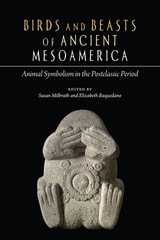
Birds and Beasts of Ancient Mesoamerica links Precolumbian animal imagery with scientific data related to animal morphology and behavior, providing in-depth studies of the symbolic importance of animals and birds in Postclassic period Mesoamerica.
 
Representations of animal deities in Mesoamerica can be traced back at least to Middle Preclassic Olmec murals, stone carvings, and portable art such as lapidary work and ceramics. Throughout the history of Mesoamerica real animals were merged with fantastical creatures, creating zoological oddities not unlike medieval European bestiaries. According to Spanish chroniclers, the Aztec emperor was known to keep exotic animals in royal aviaries and zoos. The Postclassic period was characterized by an iconography that was shared from central Mexico to the Yucatan peninsula and south to Belize. In addition to highlighting the symbolic importance of nonhuman creatures in general, this volume focuses on the importance of the calendrical and astronomical symbolism associated with animals and birds.
 
Inspired by and dedicated to the work of Mesoamerican scholar Cecelia Klein and featuring imagery from painted books, monumental sculpture, portable arts, and archaeological evidence from the field of zooarchaeology, Birds and Beasts of Ancient Mesoamerica highlights the significance of the animal world in Postclassic and early colonial Mesoamerica. It will be important to students and scholars studying Mesoamerican art history, archaeology, ethnohistory, and zoology.


[more]
cover of Birds of Algonquin Legend

Birds of Algonquin Legend

Compiled and Written by Robert E. Nichols, Jr, with illustrations by Linda Hoffman Kimball

University of Michigan Press, 1996
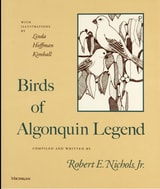
For many years before the coming of the Europeans, Algonquin peoples held the northern reaches of the New World. Some called themselves Anishinaubee -- "descendants of the first man." They arched across North America like a great bow, from Nova Scotia to the Rockies. Hunter-gatherers as far removed as Potawatomi, Penobscot, and Powhatan, shared a common culture, and their languages and dialects formed a great language family. Dwelling on the continent with the Algonquins, among teeming hosts of wildlife, were endless legions of birds. These myriad birds occupied an important place in Algonquin society. They provided food, warmth, decoration, their feathers were used to fletch arrows, and their migrations often triggered seasonal activities by the tribes. Some birds were carved on wooden sticks to be used as reminders of verses in ceremonial songs, and individuals often took the name of a bird to be their own. Because of the importance of birds in Algonquin life, legends were created around these birds; this is what Birds of Algonquin Legend is about. Birds of Algonquin Legend is a book for an adult or young adult reader whose sense of curiosity is piqued and pleased by reading natural history magazines, by visiting the zoo, or by watching Jaques Costeau or David Attenborough. It is a book for the reader who has long been fascinated by the natural and cultural history of North America, and who ponders a pristine New World that once was.
[more]
cover of Bloodstoppers and Bearwalkers: Folk Traditions of Michigan’s Upper Peninsula

Bloodstoppers and Bearwalkers

Folk Traditions of Michigan’s Upper Peninsula

Richard M. Dorson

University of Wisconsin Press, 2008

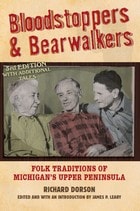
Remote and rugged, Michigan’s Upper Peninsula (fondly known as “the U.P.”) has been home to a rich variety of indigenous peoples and Old World immigrants—a heritage deeply embedded in today’s “Yooper” culture. Ojibwes, French Canadians, Finns, Cornish, Poles, Italians, Slovenians, and others have all lived here, attracted to the area by its timber, mineral ore, and fishing grounds. Mixing local happenings with supernatural tales and creatively adapting traditional stories to suit changing audiences, the diverse inhabitants of the U.P. have created a wealth of lore populated with tricksters, outlaws, cunning trappers and poachers, eccentric bosses of the mines and lumber camps, “bloodstoppers” gifted with the lifesaving power to stop the flow of blood, “bearwalkers” able to assume the shape of bears, and more.
            For folklorist Richard M. Dorson, who ventured into the region in the late 1940s, the U.P. was a living laboratory, a storyteller’s paradise. Bloodstoppers and Bearwalkers, based on his extensive fieldwork in the area, is his richest and most enduring work. This new edition, with a critical introduction and an appendix of additional tales selected by James P. Leary, restores and expands Dorson’s classic contribution to American folklore. Engaging and well informed, the book presents and ponders the folk narratives of the region’s loggers, miners, lake sailors, trappers, and townsfolk. Unfolding the variously peculiar and raucous tales of the U.P., Bloodstoppers and Bearwalkers reveals a vital component of Upper Midwest culture and a fascinating cross-section of American society.
 
[more]
cover of Blow the Candle Out: "Unprintable" Ozark Folksongs and Folklore, Volume II, Folk Rhymes and Other Lore

Blow the Candle Out

"Unprintable" Ozark Folksongs and Folklore, Volume II, Folk Rhymes and Other Lore

Vance Randolph

University of Arkansas Press, 1992

Collected in the field from 1915 through 1955, these tales and songs were considered by the publisher at the time to be too salacious for inclusion in Vance Randolph’s Ozark Folksongs. Randolph came to doubt that they would ever appear in print, and they did not in his lifetime.

<em>Roll Me in Your Arms</em>, Volume I of “Unprintable” Ozark Folksongs and Folklore, includes 180 unexpurgated songs collected by Randolph with tunes transcribed from the original singers. Volume II, <em><a href="https://wordpressua.uark.edu/uapress/product/blow-the-candle-out/">Blow the Candle Out</a></em>, contains rhymes and songs without music as well as other unexpurgated Ozark folk materials, including children’s lore, elements in speech, graffiti, riddles, dance calls, and beliefs. 

G. Legman’s painstaking and patient editing, annotating, and crossreferencing richly complement the Randolph collection. The result is a look into a previously neglected area in the study of folksong and folklore in the Ozarks and further evidence of Randolph’s preeminence in the field.

The late Vance Randolph lived in the Ozark Mountains from 1920 until his death in 1980. Although he taught folklore at the University of Arkansas in Fayetteville, he is best remembered for his many years of field research resulting in the national bestseller <em>Pissing in the Snow & Other Ozark Folktales</em> and more than a dozen other books on American folklore.
[more]
cover of Blue Men and River Monsters: Folklore of the North

Blue Men and River Monsters

Folklore of the North

John Zimm

Wisconsin Historical Society Press, 2014
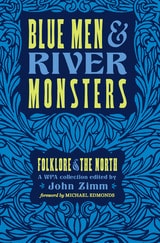
The north is a treasure trove of folklore. From magical creatures of the old country to legends of the mysterious and macabre, such lore is a fascinating record of the stories people held on to and the customs, foods, and cures that filled their lives. Collected in the 1930s as part of the Federal Writers’ Program, a Depression-era works project, these are the stories of Norwegian and Swiss immigrants, Native American medicine men and storytellers, and pioneers with memories of the earliest days of settlement in the Old Northwest. In search of stories, legends, songs, and other scraps of traditional knowledge, researchers fanned out across Wisconsin and other states. The resulting handwritten notes, thousands of pages in length, capture history as people remembered it. Blue Men and River Monsters collects the most interesting and noteworthy of these tales, placing them alongside stunning artwork collected by the Federal Art Project in Wisconsin. Peruse these pages and discover a new history of the people and places of the old north.
[more]
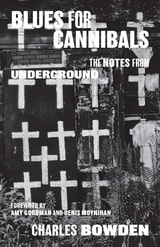
cover of Blues for Cannibals: The Notes from Underground

Blues for Cannibals

The Notes from Underground

By Charles Bowden

University of Texas Press, 2018

Cultivated from the fierce ideas seeded in Blood Orchid, Blues for Cannibals is an elegiac reflection on death, pain, and a wavering confidence in humanity’s own abilities for self-preservation. After years of reporting on border violence, sex crimes, and the devastation of the land, Bowden struggles to make sense of the many ways in which we destroy ourselves and whether there is any way to survive. Here he confronts a murderer facing execution, sex offenders of the most heinous crimes, a suicidal artist, a prisoner obsessed with painting portraits of presidents, and other people and places that constitute our worst impulses and our worst truths. Painful, heartbreaking, and forewarning, Bowden at once tears us apart and yearns for us to find ourselves back together again.

[more]
cover of Bodie’s Gold: Tall Tales and True History from a California Mining Town

Bodie’s Gold

Tall Tales and True History from a California Mining Town

Marguerite Sprague

University of Nevada Press, 2011

The Bodie Mining District was established in 1860 after the discovery of gold deposits in the area. Bodie’s largest boom ended ust over twenty years later, but the town survived into the twentieth century supported by a few small but steady mines. Mining ended with World War II. What remained of the town became a state park in 1964. In Bodie’s Gold, author Marguerite Sprague uncovers the original sources of information whenever possible, from the first mining claims to interviews with former Bodieites. Enhanced with numerous historic photographs and extracts from newspapers of that period, as well as by the reminiscences of former residents, the book offers a fascinating account of life in a Gold Rush boomtown.
[more]
cover of Branding Texas: Performing Culture in the Lone Star State

Branding Texas

Performing Culture in the Lone Star State

By Leigh Clemons

University of Texas Press, 2008

Ask anyone to name an archetypal Texan, and you're likely to get a larger-than-life character from film or television (say John Wayne's Davy Crockett or J. R. Ewing of TV's Dallas) or a politician with that certain swagger (think LBJ or George W. Bush). That all of these figures are white and male and bursting with self-confidence is no accident, asserts Leigh Clemons. In this thoughtful study of what makes a "Texan," she reveals how Texan identity grew out of the history—and, even more, the myth—of the heroic deeds performed by Anglo men during the Texas Revolution and the years of the Republic and how this identity is constructed and maintained by theatre and other representational practices.

Clemons looks at a wide range of venues in which "Texanness" is performed, including historic sites such as the Alamo, the battlefield at Goliad, and the San Jacinto Monument; museums such as the Bob Bullock Texas State History Museum; seasonal outdoor dramas such as Texas! at Palo Duro Canyon; films such as John Wayne's The Alamo and the IMAX's Alamo: The Price of Freedom; plays and TV shows such as the Tuna trilogy, Dallas, and King of the Hill; and the Cavalcade of Texas performance at the 1936 Texas Centennial. She persuasively demonstrates that these performances have created a Texan identity that has become a brand, a commodity that can be sold to the public and even manipulated for political purposes.

[more]
cover of Buried Roots and Indestructible Seeds: The Survival Of American Indian Life In Story, History, and Spirit

Buried Roots and Indestructible Seeds

The Survival Of American Indian Life In Story, History, and Spirit

Mark A. Lindquist

University of Wisconsin Press, 1995

This anthology highlights central values and traditions in Native American societies, exploring the ongoing struggles and survival power of Native American people today. The essays and stories by well-known writers provide an excellent introduction for general readers as well as high school and college students. The stories and historical events are drawn especially from the tribes of the Great Lakes region, such as the Ojibwa (Chippewa) of Wisconsin, and are part of a continuing, sustaining storytelling tradition.
    Starting with the opening selection, “The Circle of Stories,” which reaffirms the relationship of humans to all living things, the anthology emphasizes themes of connectedness and survival in essays on the environment, identity, community allegiance and treaty rights, marginalization and assimilation in American society, and conflict within the educational system. Several selections about Trickster tales introduce traditions of humor, irony, and imagination that have come to embody native survival, liberation, and continuance.
    The authors included in Buried Roots and Indestructible Seeds are Kim Blaeser, Joseph Bruchac, George Cornell, Fred Hoxie, James Oberly, Denise Sweet, Tom Vennum, and Gerald Vizenor.

[more]
cover of Bêtes Noires: Sorcery as History in the Haitian-Dominican Borderlands

Bêtes Noires

Sorcery as History in the Haitian-Dominican Borderlands

Lauren Derby

Duke University Press, 2025

In Bêtes Noires, Lauren Derby explores storytelling traditions among the people of Haiti and the Dominican Republic, focusing on shape-shifting spirit demons called baka/bacá. Drawing on interviews with and life stories of residents in a central Haitian-Dominican frontier town, Derby contends that bacás—hot spirits from the sorcery side of vodou/vodú that present as animals and generate wealth for their owners—are a manifestation of what Dominicans call fukú de Colón, the curse of Columbus. The dogs, pigs, cattle, and horses that Columbus brought with him are the only types of animals that bacás become. As instruments of Indigenous dispossession, these animals and their spirit demons convey a history of trauma and racialization in Dominican popular culture. In the context of slavery and beyond, bacás keep alive the promise of freedom, since shape-shifting has long enabled fugitivity. As Derby demonstrates, bacás represent a complex history of race, religion, repression, and resistance.
[more]