Results by title
332 books match the query 'Health & Fitness' and 21 start with b
Baby Boomers and Hearing Loss
A Guide to Prevention and CareBurkey, John M
Rutgers University Press, 2006
In Baby Boomers and Hearing Loss, audiologist John Burkey shows readers how they can continue to enjoy youthful living, regardless of whether their hearing abilities are undiminished or severely compromised. In a reassuring and straightforward style, Burkey explains the typical causes of hearing loss, from genetic factors to years of exposure to loud noises, and demystifies the sometimes confusing results of a hearing test. Fortunately, new technologies and advances in medicine have made it easier to detect signs of initial hearing loss and to prevent it from becoming a serious problem.
For those who have already sustained some damage, the author suggests ways to manage daily activities by using a range of techniques, equipment, and medical procedures. His suggestions include minor changes, such as using a vibrating alarm clock rather than one that is sound-based. More dramatic but often highly effective options, including reconstructive surgery, cochlear implants, and bone-anchored hearing aids, are also described.
In his previous award-winning book, Overcoming Hearing Aid Fears: The Road to Better Hearing, Burkey addressed common fears, concerns, and misconceptions that people have about choosing and using hearing aids. In this second indispensable volume, he offers a comprehensive guide on how to cope with and prevent hearing impairment. For a generation that refuses to slow down or quietly accept limitations, this book is essential reading.
Babylost
Racism, Survival, and the Quiet Politics of Infant Mortality, from A to ZMonica J. Casper
Rutgers University Press, 2021
Back to the Dance Itself
Phenomenologies of the Body in PerformanceEdited with Essays by Sondra Fraleigh
University of Illinois Press, 2018
Contributors: Karen Barbour, Christine Bellerose, Robert Bingham, Kara Bond, Hillel Braude, Sondra Fraleigh, Kimerer LaMothe, Joanna McNamara, Vida Midgelow, Ami Shulman, and Amanda Williamson.
Beasts of the Earth
Animals, Humans, and DiseaseTorrey, E. Fuller
Rutgers University Press, 2014
Humans have lived in close proximity to other animals for thousands of years. Recent scientific studies have even shown that the presence of animals has a positive effect on our physical and mental health. People with pets typically have lower blood pressure, show fewer symptoms of depression, and tend to get more exercise.
But there is a darker side to the relationship between animals and humans. Animals are carriers of harmful infectious agents and the source of a myriad of human diseases. In recent years, the emergence of high-profile illnesses such as AIDS, SARS, West Nile virus, and bird flu has drawn much public attention, but as E. Fuller Torrey and Robert H. Yolken reveal, the transfer of deadly microbes from animals to humans is neither a new nor an easily avoided problem.
Beginning with the domestication of farm animals nearly 10,000 years ago, Beasts of the Earth traces the ways that human-animal contact has evolved over time. Today, shared living quarters, overlapping ecosystems, and experimental surgical practices where organs or tissues are transplanted from non-humans into humans continue to open new avenues for the transmission of infectious agents. Other changes in human behavior like increased air travel, automated food processing, and threats of bioterrorism are increasing the contagion factor by transporting microbes further distances and to larger populations in virtually no time at all.
While the authors urge that a better understanding of past diseases may help us lessen the severity of some illnesses, they also warn that, given our increasingly crowded planet, it is not a question of if but when and how often animal-transmitted diseases will pose serious challenges to human health in the future.
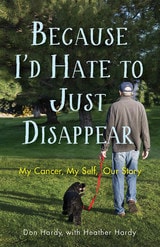
Because I'd Hate to Just Disappear
My Cancer, My Self, Our StoryDon Hardy
University of Nevada Press, 2018
Because I’d Hate to Just Disappear is a portrait of a husband and wife, Don and Heather Hardy, thrown into the physical and emotional machinery of Don being diagnosed with leukemia and going through chemotherapy and treatment over a period of close to two years.
In this thoughtful and exquisite account, Don and Heather narrate Don’s struggle in real-time. Disarmingly honest, they recount each intimate stage of a couple living through cancer together, the mental and physical struggles, the humor and visceral emotion to reveal how two very different personalities shape—and are shaped by—the experience of cancer and its treatment. Through these moments emerge a constant flow of human kindness and discovery that lifts them each day.
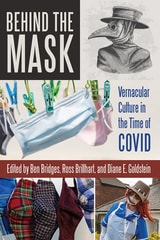
Behind the Mask
Vernacular Culture in the Time of COVIDBen Bridges
Utah State University Press, 2023
Despite vernacular’s potential nod to dominant or external culture, it is the strong connection to the local that grounds the vernacular within the experiential context that it occupies. Exploring the nature and shape of vernacular responses to the ongoing public health crisis, Behind the Mask documents processes that are otherwise likely to be forgotten. Including different ethnographic presents, contributors capture moments during the pandemic rather than upon reflection, making the work important to students and scholars of folklore and ethnology, as well as general readers interested in the COVID pandemic.
Between Families and Institutions
Mental Health and Biopolitical Paternalism in Contemporary ChinaZhiying Ma
Duke University Press, 2025
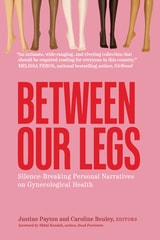
Between Our Legs
Silence-Breaking Personal Narratives on Gynecological HealthJustine Payton
University of Iowa Press, 2026
In a world where even saying the word “vagina” can feel taboo, Between Our Legs breaks the silence surrounding gynecological health. Featuring essays by award-winning authors Nina de Gramont, Nafissa Thompson-Spires, and Jessica Hendry Nelson, as well as by practicing medical experts, this collection explores topics ranging from childbirth, menopause, abortion, endometriosis, and PMOS to yeast and urinary tract infections, while contending with the shame, frustrations, and stigmas that women, nonbinary, and trans individuals navigate when searching for basic care.
Between Our Legs serves as a catalyst for difficult conversations. It illustrates the necessity of not just having access to basic gynecological care, but good, equitable, patient-centered care. Care that sees the patient as a whole person, not solely as someone capable of making a baby. As reproductive rights and maternal healthcare are stripped away in state after state, it’s urgent that our voices be heard, elevated, and addressed. The consequences for not doing so can be fatal.
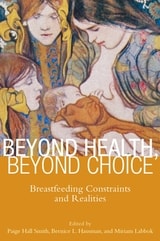
Beyond Health, Beyond Choice
Breastfeeding Constraints and RealitiesEdited by Paige Hall Smith, Bernice L Hausman, and Miriam Labbok
Rutgers University Press, 2012
Current public health promotion of breastfeeding relies heavily on health messaging and individual behavior change. Women are told that “breast is best” but too little serious attention is given to addressing the many social, economic, and political factors that combine to limit women’s real choice to breastfeed beyond a few days or weeks. The result: women’s, infants’, and public health interests are undermined. Beyond Health, Beyond Choice examines how feminist perspectives can inform public health support for breastfeeding.
Written by authors from diverse disciplines, perspectives, and countries, this collection of essays is arranged thematically and considers breastfeeding in relation to public health and health care; work and family; embodiment (specifically breastfeeding in public); economic and ethnic factors; guilt; violence; and commercialization. By examining women’s experiences and bringing feminist insights to bear on a public issue, the editors attempt to reframe the discussion to better inform public health approaches and political action. Doing so can help us recognize the value of breastfeeding for the public’s health and the important productive and reproductive contributions women make to the world.
Beyond Method
Philosophical Conversations in Healthcare Research and ScholarshipEdited by Pamela M. Ironside
University of Wisconsin Press, 2005
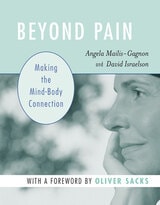
Beyond Pain
Making the Mind-Body ConnectionAngela Mailis-Gagnon and David Israelson
University of Michigan Press, 2005
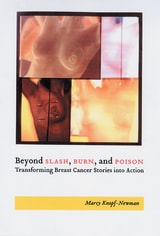
Beyond Slash, Burn, and Poison
Transforming Breast Cancer Stories into ActionMarcy Jane Knopf-Newman
Rutgers University Press, 2004
Depending on one’s vantage point, breast cancer can be a very different experience, and indeed, a very different concern. It is, for some, a personal struggle; for others, it is a disease posing scientific and environmental challenges; and for others it is a highly charged and politicized issue around which policy wars rage. Beyond Slash, Burn, and Poison brings a unique perspective to breast cancer by recognizing the overlapping relationship of all these realities.
Drawing on the writings of Rachel Carson, Betty Ford, Rose Kushner, and Audre Lorde, this book explores the various ways in which patient-centered texts continue to leave their mark on the political realm of breast cancer and, ultimately, the disease itself. Ordered chronologically, the selections trace the progression of discussions about breast cancer from a time when the subject was kept private and silent to when it became part of public discourse. The texts included are personal accounts, written by women struggling to play an active role in their healing process and, at the same time, hoping to help others do the same.
Knopf-Newman also shows us how these writings eventually changed public opinion and the underlying tendency to blame women for their illness. She argues that changes in medical practice and public policy are linked to textual interventions, and makes a case for the politicization of cultural studies of disease through personal and literary expression.
Passionately written and well-researched, Beyond Slash, Burn, and Poison transforms how we think about breast cancer. Rather than facilitating forums for separate discussions, this book brings conversations into dialog with each other. It is essential reading for anyone concerned with breast cancer and its history, as well as for those interested in the effect of the environment on public health and the role that literature plays in public policy and medicine.
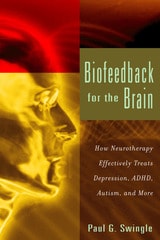
Biofeedback for the Brain
How Neurotherapy Effectively Treats Depression, ADHD, Autism, and MorePaul G. Swingle, PhD
Rutgers University Press, 2008
Neurofeedback is a cutting-edge, drug-free therapeutic technique used by over a thousand licensed therapists in North America to treat a range of conditions from attention deficit and hyperactivity disorders to epilepsy, stroke, anxiety, migraine, and depression. First popularized in the 1970s, this naturalistic method is based on the idea that we can control our brain activity and that, through training, the brain can learn to modify its own electrical patterns for more efficient processing or to overcome various states of dysfunction.
In Biofeedback for the Brain, Dr. Paul G. Swingle describes in clear and coherent language how these procedures work. With numerous actual case examples, readers follow the progress of clients from the initial “brain map” that shows the location and severity of the neurological abnormalities to the various stages of treatment. Conditions often considered untreatable by conventional health practitioners respond positively to neurotherapeutic treatment and Swingle describes many of these remarkable recoveries. Other chapters describe the use of neurotherapy for a variety of surprising purposes, including performance training for elite athletes, of which the most famous example is the Italian soccer team who considered the technique to be their “secret weapon” in attaining a World Cup victory.
Despite wide-ranging success stories and the endorsement of the American Psychological Association, many health care practitioners remain skeptical of neurofeedback and the procedures are still not well-known by the public or conventional health care providers. This book provides a thorough, definitive, and highly readable presentation of this remarkable health care alternative that offers millions of individuals a chance for healing.
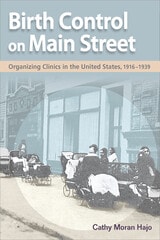
Birth Control on Main Street
Organizing Clinics in the United States, 1916-1939Cathy Moran Hajo
University of Illinois Press, 2010
Unearthing individual stories and statistical records from previously overlooked birth control clinics, Cathy Moran Hajo looks past the rhetoric of the birth control movement to show the relationships, politics, and issues that defined the movement in neighborhoods and cities across the United States. Whereas previous histories have emphasized national trends and glossed over the majority of clinics, Birth Control on Main Street contextualizes individual case studies to add powerful new layers to the existing narratives on abortion, racism, eugenics, and sterilization.
Hajo draws on an original database of more than 600 clinics run by birth control leagues, hospitals, settlement houses, and public health groups to isolate the birth control clinic from the larger narrative of the moment. By revealing how clinics tested, treated, and educated women regarding contraceptives, she shows how clinic operation differed according to the needs and concerns of the districts it served.
Moving thematically through the politicized issues of the birth control movement, Hajo infuses her analysis of the practical and medical issues of the clinics with unique stories of activists who negotiated with community groups to obey local laws and navigated the swirling debates about how birth control centers should be controlled, who should receive care, and how patients should be treated.
Black Wellness
Health Beyond OutcomesGerShun Avilez
University of Minnesota Press, 2027
Revealing how contemporary Black creatives explore personal and collective wellness within anti-Black societies
Black Wellness tracks how Black artists, writers, poets, and other cultural producers explore Black health as feeling good while attending to underlying physical and mental exhaustion resulting from racism, homophobia, and sexism. Considering depictions of and discourse about pain, HIV/AIDS, Covid-19, cancer, and diabetes, GerShun Avilez moves beyond pathologies of Black illness and the outcome-motivated medical field to delineate the nature of Black wellness as the basis for artistic experiments, envisioning manifold expressions of health.
Responding to the history and impact of racial health disparities, Avilez locates a complex interplay between pain and care, stigma and pleasure, self-management and blame, and isolation and contact. In Black Wellness, he delves into innovative literary writing and digital projects: poetry by Danez Smith, Claudia Rankine, and Bettina Judd; personal reflections by Zadie Smith, Audre Lorde, and Yohanes Godanna Gatiso; novels by Toni Cade Bambara and Masande Ntshanga; and video, theatrical, and multimedia projects by Faithe Daye, Seth E. Davis, and Robbie McCauley.
Reading and thinking across borders to analyze African diasporic artists originating from the United States, Jamaica, South Africa, Ethiopia, and the United Kingdom, Avilez highlights how interconnected histories of racialization, minoritization, and colonization contextualize the lived experiences of Black wellness and illness. By deemphasizing—but not discounting—health outcomes, Black Wellness argues that cultural acts of envisioning and communicating Black health are always double pronged, simultaneously attending to states of debility and vitality in Black bodies.
Retail e-book files for this title are screen-reader friendly.
Black Women and da ’Rona
Community, Consciousness, and Ethics of CareEdited by Julia S. Jordan-Zachery and Shamara Wyllie Alhassan
University of Arizona Press, 2023
Recognizing that Black women have been living in pandemics as far back as colonialism and enslavement, this volume acknowledges that records of the past—from the 1918 flu pandemic to the onset of the HIV/AIDS epidemic—often erase the existence and experiences of Black women as a whole. Writing against this archival erasure, this collection consciously recenters the real-time experiences and perspectives of care, policy concerns, grief, and joy of Black women throughout the COVID-19 pandemic.
Nineteen contributors from interdisciplinary fields and diverse backgrounds explore Black feminine community, consciousness, ethics of care, spirituality, and social critique. They situate Black women’s multidimensional experiences with COVID-19 and other violences that affect their lives. The stories they tell are connected and interwoven, bound together by anti-Black gendered COVID necropolitics and commitments to creating new spaces for breathing, healing, and wellness.
Ultimately, this time-warping analysis shows how Black women imagine a more just society, rapidly adapt to changing experiences, and innovate ethics of care even in the midst of physical distancing, which can be instructive for thinking of new ways of living both during and beyond the era of COVID-19.
Contributors
Shamara Wyllie Alhassan
Sharnnia Artis
Keisha L. Bentley-Edwards
Candace S. Brown
Jenny Douglas
Kaja Dunn
Onisha Etkins
Rhonda M. Gonzales
Endia Hayes
Ashley E. Hollingshead
Kendra Jason
Julia S. Jordan-Zachery
Stacie LeSure
Janaka B. Lewis
Michelle Meggs
Nitya Mehrotra
Sherine Andreine Powerful
Marjorie Shavers
Breauna Marie Spencer
Tehia Starker Glass
Amber Walker

Bleeder
A MemoirShelby Smoak
Michigan State University Press, 2013

Body Story
Julia K. De Pree
Ohio University Press, 2004
For De Pree, between being a girl and being a woman, there was starvation. Body Story is her intimate account of girlhood, virginity, anorexia, and motherhood. De Pree's prose is spare and unguarded, revealing in vivid flashbacks and poignant vignettes the sources of her inner pain.
In high school, the five-foot-ten De Pree weighed as little as 114 pounds. She was too weak to raise her arms above her head. “In a paradoxical way, I starved my body in order to understand my life,” she writes. “I had to place my body in suspension before I could move physically into sexuality. Starving allowed me to create an interim space between innocence and experience.”
De Pree renders the starkness of anorexia along with the process of recovery, relapse, and, ultimately, redemption. She also tells the story of the physical landscape, from her origins in the Midwest to the American South, Paris, and the vast New Mexican desert, as well as the psychic landscape of her body as it encounters the joys and challenges of maturation, childbirth, and motherhood.
De Pree offers readers a new way of understanding women¿s bodily experience, as she writes about the mystery and the meaning of her illness. As many as eight million Americans suffer from eating disorders. Body Story, unlike clinical reports or news accounts, illuminates the complexity of anorexia as the narrative moves toward a subjective and deeply personal truth.
This evocative and often radiant vision is a unique window into womanhood and selfhood in middle-class, contemporary America.
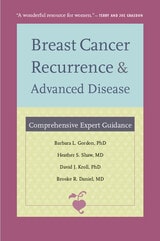
Breast Cancer Recurrence and Advanced Disease
Comprehensive Expert GuidanceBarbara L. Gordon, Heather S. Shaw, David J. Kroll, and Brooke R. Daniel
Duke University Press, 2010
This indispensable book aids those diagnosed with recurrent or late-stage breast cancer, those wanting to reduce the chance of a recurrence, and those with other types of late-stage cancer. It is also a valuable resource for healthcare professionals, friends, and family members.
Topics covered include
• Types of recurrence, their symptoms, and ways of minimizing the chance of a recurrence
• Diagnostic tests, potential surgeries, and treatments to manage late-stage cancer
• Getting the best care, evaluating complementary therapies, and alleviating pain and depression
• Cessation of treatment and what one may experience as the disease progresses
• End-of-life issues including dealing with financial and legal matters, communicating with loved ones and hospice workers, and planning memorial services
Breast Cancer Recurrence and Advanced Disease includes a glossary of medical terms, appendices on nutrition and integrative health centers, and links to current Web sites addressing matters such as clinical trials, patients’ rights, and medical expenses.

Breast Cancer in the Academy
Solidarity in the Fight for Our LivesWendy K.Z. Anderson
Rutgers University Press, 2027
This edited collection is an interdisciplinary dialogue about how breast cancer diagnosis, treatment, and healing is experienced by academic women. The contributors fostered dialogue rooted in critical, qualitative, and autoethnographic traditions about how breast cancer diagnosis, treatment, and healing was experienced by a group with academic privileges, such as the ability to research and advocate for themselves. The book takes on a global perspective, incorporating pieces from medical doctors who became patients, BIPOC women, as well as scholars who identify as LBGTQIA, as they faced decisions about issues such as flat closures, fertility treatments, and being one-sided. These seventeen academic women navigated and resisted healthcare systems to develop a theory of coalitional survivorship.
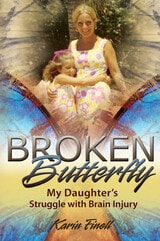
Broken Butterfly
My Daughter's Struggle with Brain InjuryKarin Finell
University of Missouri Press, 2012
“It all began with the bite of a mosquito. Yes, with a bite of this pesky, but seemingly so innocuous little insect that had been sucking her blood. Not just one, but hundreds had punctured her arms and legs with red marks which later swelled to small welts. Who would ever have thought that our family's life would become derailed, that its tightly woven fabric would eventually fray and break—all from the bite of a mosquito?”