Results by title
425 books match the query 'Human rights' and 27 start with b
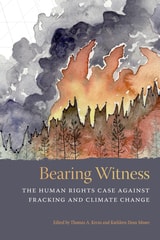
Bearing Witness
The Human Rights Case Against Fracking and Climate ChangeThomas A. Kerns
Oregon State University Press, 2021
On May 14, 2018, a respected international human-rights court, the Rome-based Permanent Peoples’ Tribunal, began a week-long hearing on the impacts of fracking and climate change on human and Earth rights. In its advisory opinion, the Tribunal ruled that fracking systematically violates substantive and procedural human rights; that governments are complicit in the rights violations; and that to protect human rights and the climate, the practice of fracking should be banned.
The case makes history. It revokes the social license of extreme-extraction industries by connecting environmental destruction to human-rights violations. It affirms that climate change, and the extraction techniques that fuel it, directly violate deeply and broadly accepted moral norms encoded in the Universal Declaration of Human Rights.
Bearing Witness maps a promising new direction in the ongoing struggle to protect the planet from climate chaos. It tells the story of this landmark case through carefully curated court materials, including searing eye-witness testimony, groundbreaking legal testimony, and the Tribunal’s advisory opinion. Essays by leading climate writers such as Winona LaDuke, Robin Wall Kimmerer, and Sandra Steingraber and legal experts such as John Knox, Mary Wood, and Anna Grear give context to the controversy. Framing essays by the editors, experts on climate ethics and human rights, demonstrate that a human-rights focus is a powerful, transformative new tool to address the climate crisis.
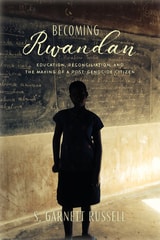
Becoming Rwandan
Education, Reconciliation, and the Making of a Post-Genocide CitizenS. Garnett Russell
Rutgers University Press, 2020
Being Human
Political Modernity and Hospitality in Kurdistan-IraqFazil Moradi
Rutgers University Press, 2024
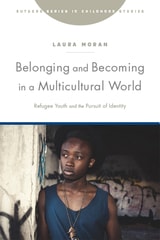
Belonging and Becoming in a Multicultural World
Refugee Youth and the Pursuit of IdentityLaura Moran
Rutgers University Press, 2020
Download open access ebook.

Between Feminism and Islam
Human Rights and Sharia Law in MoroccoZakia Salime
University of Minnesota Press, 2011
There are two major women’s movements in Morocco: the Islamists who hold shari’a as the platform for building a culture of women’s rights, and the feminists who use the United Nations’ framework to amend shari’a law. Between Feminism and Islam shows how the interactions of these movements over the past two decades have transformed the debates, the organization, and the strategies of each other.
In Between Feminism and Islam, Zakia Salime looks at three key movement moments: the 1992 feminist One Million Signature Campaign, the 2000 Islamist mass rally opposing the reform of family law, and the 2003 Casablanca attacks by a group of Islamist radicals. At the core of these moments are disputes over legitimacy, national identity, gender representations, and political negotiations for shaping state gender policies. Located at the intersection of feminism and Islam, these conflicts have led to the Islamization of feminists on the one hand and the feminization of Islamists on the other.
Documenting the synergistic relationship between these movements, Salime reveals how the boundaries of feminism and Islamism have been radically reconfigured. She offers a new conceptual framework for studying social movements, one that allows us to understand how Islamic feminism is influencing global debates on human rights.
Beyond Displacement
Campesinos, Refugees, and Collective Action in the Salvadoran Civil WarMolly Todd
University of Wisconsin Press, 2010
During the civil war that wracked El Salvador from the mid-1970s to the early 1990s, the Salvadoran military tried to stamp out dissidence and insurgency through an aggressive campaign of crop-burning, kidnapping, rape, killing, torture, and gruesome bodily mutilations. Even as human rights violations drew world attention, repression and war displaced more than a quarter of El Salvador’s population, both inside the country and beyond its borders. Beyond Displacement examines how the peasant campesinos of war-torn northern El Salvador responded to violence by taking to the hills. Molly Todd demonstrates that their flight was not hasty and chaotic, but was a deliberate strategy that grew out of a longer history of collective organization, mobilization, and self-defense.
Beyond Mosque, Church, and State
Alternative Narratives of the Nation in the BalkansYana Hashamova
Central European University Press, 2016

Beyond Occupation
Apartheid, Colonialism and International Law in the Occupied Palestinian TerritoriesEdited by Virginia Tilley
Pluto Press, 2012
Beyond Occupation looks at three contentious terms that regularly arise in contemporary arguments about Israel's practices towards Palestinians in the occupied territories – occupation, colonialism and apartheid – and considers whether their meanings in international law truly apply to Israel's policies. This analysis is timely and urgent – colonialism and apartheid are serious breaches of human rights law and apartheid is a crime against humanity under the Rome Statute of the International Criminal Court.
The contributors present conclusive evidence that Israel’s administration of the Palestinian territories is consistent with colonialism and apartheid, as these regimes are defined in human rights law. Their analysis further shows that these practices are deliberate Israeli state policies, imposed on the Palestinian civilian population under military occupation.
These findings raise serious implications for the legality and legitimacy of Israel's continuing occupation of the Palestinian territories and the responsibility of the entire international community to challenge practices considered contrary to fundamental values of the international legal order.
Beyond Prejudice
The Moral Significance of Human and Nonhuman AnimalsEvelyn B. Pluhar
Duke University Press, 1995
Exposing the traditional view—which restricts the moral realm to autonomous, fully fledged "persons"—as having horrific implications for the treatment of many humans, Pluhar goes on to argue positively that sentient individuals of any species are no less morally significant than the most automomous human. Her position provides the ultimate justification that is missing from previous defenses of the moral status of nonhuman animals. In the process of advancing her position, Pluhar discusses the implications of determining moral significance for children and "abnormal" humans as well as its relevance to population policies, the raising of animals for food or product testing, decisions on hunting and euthanasia, and the treatment of companion animals. In addition, the author scrutinizes recent assertions by environmental ethicists that all living things or that natural objects and ecosystems be considered highly morally significant. This powerful book of moral theory challenges all defenders of the moral status quo—which decrees that animals decidedly do not count—to reevaluate their convictions.
Beyond Repair?
Mayan Women’s Protagonism in the Aftermath of Genocidal HarmAlison Crosby
Rutgers University Press, 2019
Honorable Mention, 2020 CALACS Book Prize
Beyond Repair? explores Mayan women’s agency in the search for redress for harm suffered during the genocidal violence perpetrated by the Guatemalan state in the early 1980s at the height of the thirty-six-year armed conflict. The book draws on eight years of feminist participatory action research conducted with fifty-four Q’eqchi’, Kaqchikel, Chuj, and Mam women who are seeking truth, justice, and reparation for the violence they experienced during the war, and the women’s rights activists, lawyers, psychologists, Mayan rights activists, and researchers who have accompanied them as intermediaries for over a decade. Alison Crosby and M. Brinton Lykes use the concept of “protagonism” to deconstruct dominant psychological discursive constructions of women as “victims,” “survivors,” “selves,” “individuals,” and/or “subjects.” They argue that at different moments Mayan women have been actively engaged as protagonists in constructivist and discursive performances through which they have narrated new, mobile meanings of “Mayan woman,” repositioning themselves at the interstices of multiple communities and in their pursuit of redress for harm suffered.
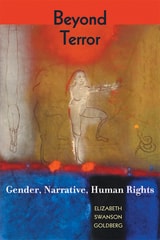
Beyond Terror
Gender, Narrative, Human RightsElizabeth Swanson Goldberg
Rutgers University Press, 2007
In traditional narrative contexts-legal, psychoanalytic, and documentary-the ethics of representing violations of human rights are widely acknowledged. But what are the principles that guide the creation and dissemination of historically based fictional narratives? Are such representations capable of shaping, changing, or even effectively depicting "real" human atrocities? How do existing ideas about gender influence the way these narratives are written and perceived?
In Beyond Terror , Elizabeth Swanson Goldberg argues that after human rights violations have occurred, the realm of representation-actual and fictional-is precisely the ground upon which struggles for justice and peace are waged in legal, emotional, and cultural terms. Moving beyond the myriad of fictional accounts that have portrayed the carnage of World War II, the Holocaust, and the Vietnam War, Goldberg focuses on emerging narratives about recent abuses, including those in South Africa, Rwanda, and Iraq.
Through the lens of literary, feminist, and human rights theory, this important book examines the meaning and influence of films such as Cry Freedom, Three Kings, and Salvador , and novels such as Gil Courtemanche's A Sunday at the Pool in Kigali , Pat Barker's Double Vision , and Edwidge Danticat's The Farming of Bones .

Biblical Judgments
New Legal Readings in the Hebrew BibleDaphne Barak-Erez
University of Michigan Press, 2024
Rather than offering a historical study, Barak-Erez draws upon famous court decisions from around the world to root her analysis in modern law. Organized by subject matter, Biblical Judgments analyzes how the themes of law and government, judging and judges, human rights and social justice, criminal law, private law, and family and inheritance law are presented through a number of different stories. In recounting the compelling narratives of the Hebrew Bible, Biblical Judgments exposes their inherent legal tensions and what we can learn about legal dilemmas today.
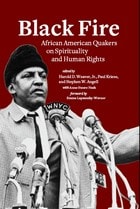
Black Fire
African American Quakers on Spirituality and Human RightsHarold D. Weaver, Jr.
QuakerPress, 2011
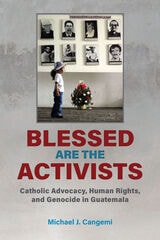
Blessed Are the Activists
Catholic Advocacy, Human Rights, and Genocide in GuatemalaMichael J. Cangemi
University of Alabama Press, 2024
Blessed Are the Activists examines US Catholic activists’ influence on US-Guatemalan relations during the Guatemalan civil war’s most violent years in the 1970s and 1980s. Cangemi argues that Catholic activists’ definition of human rights, advocacy methods, and structure caused them to act as a transnational human rights NGO that engaged Guatemalan and US government officials on human rights issues, reported on Guatemala’s human rights violations, and criticized US foreign policy decisions as a contributing factor in Guatemala’s inequality, poverty, and violence. His work foregrounds how Catholic activists emphasized dignity for Guatemala’s poorest citizens and the connections they made between justice, solidarity, and peace and brought Guatemala’s violence, poverty, and inequality to greater global attention, often at great personal risk.
Cangemi pays considerable attention to multiple facets of the strained US-Guatemala diplomatic relationship, including how and why Guatemala’s military dictatorship exposed the internal flaws within the Carter administration’s decision to link military aid to human rights and how internal foreign policy debates in the Carter and Reagan administrations helped to intensify Guatemala’s bloody civil war. He also includes interviews conducted with Guatemalan genocide survivors and refugees to provide firsthand accounts of the consequences of those policymaking decisions. Finally, he offers readers an in-depth examination of the US Catholic press’s sharp rebukes of US policies on Guatemala and all of Central America when the broader Roman Catholic Church began to move farther toward the ideological right under John Paul II.
Blessed Are the Activists offers rich, original research and a gripping narrative. With Guatemala and other countries in Latin America still experiencing human rights abuses, this book will continue to provide context. It will appeal to a broad swath of readers, from scholars to the general public and students.
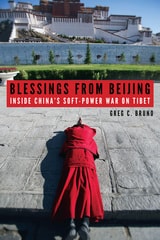
Blessings from Beijing
Inside China's Soft-Power War on TibetGreg C. Bruno
University Press of New England, 2018
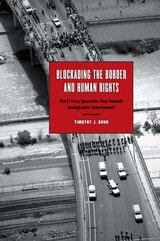
Blockading the Border and Human Rights
The El Paso Operation that Remade Immigration EnforcementBy Timothy J. Dunn
University of Texas Press, 2009
To understand border enforcement and the shape it has taken, it is imperative to examine a groundbreaking Border Patrol operation begun in 1993 in El Paso, Texas, "Operation Blockade." The El Paso Border Patrol designed and implemented this radical new strategy, posting 400 agents directly on the banks of the Rio Grande in highly visible positions to deter unauthorized border crossings into the urban areas of El Paso from neighboring Ciudad Juárez—a marked departure from the traditional strategy of apprehending unauthorized crossers after entry. This approach, of "prevention through deterrence," became the foundation of the 1994 and 2004 National Border Patrol Strategies for the Southern Border. Politically popular overall, it has rendered unauthorized border crossing far less visible in many key urban areas. However, the real effectiveness of the strategy is debatable, at best. Its implementation has also led to a sharp rise in the number of deaths of unauthorized border crossers.
Here, Dunn examines the paradigm-changing Operation Blockade and related border enforcement efforts in the El Paso region in great detail, as well as the local social and political situation that spawned the approach and has shaped it since. Dunn particularly spotlights the human rights abuses and enforcement excesses inflicted on local Mexican Americans and Mexican immigrants as well as the challenges to those abuses. Throughout the book, Dunn filters his research and fieldwork through two competing lenses, human rights versus the rights of national sovereignty and citizenship.
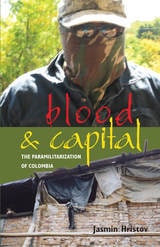
Blood and Capital
The Paramilitarization of ColombiaJasmin Hristov
Ohio University Press, 2009
WOLA-Duke Book Award Finalist
In Blood and Capital: The Paramilitarization of Colombia, Jasmin Hristov examines the complexities, dynamics, and contradictions of present-day armed conflict in Colombia. She conducts an in-depth inquiry into the restructuring of the state’s coercive apparatus and the phenomenon of paramilitarism by looking at its military, political, and legal dimensions. Hristov demonstrates how various interrelated forms of violence by state forces, paramilitary groups, and organized crime are instrumental to the process of capital accumulation by the local elite as well as the exercise of political power by foreign enterprises. She addresses, as well, issues of forced displacement, proletarianization of peasants, concentration of landownership, growth in urban and rural poverty, and human rights violations in relation to the use of legal means and extralegal armed force by local dominant groups and foreign companies.
Hristov documents the penetration of major state institutions by right-wing armed groups and the persistence of human rights violations against social movements and sectors of the low-income population. Blood and Capital raises crucial questions about the promised dismantling of paramilitarism in Colombia and the validity of the so-called demobilization of paramilitary groups, both of which have been widely considered by North American and some European governments as proof of Colombian president Álvaro Uribe’s advances in the wars on terror and drugs.

Blooming through the Ashes
An International Anthology on Violence and the Human SpiritEdited by Clifford Chanin and Aili McConnon
Rutgers University Press, 2008
The twentieth century is frequently characterized in terms of its unprecedented levels of bloodshed. More human beings were killed or allowed to die by human cause than ever before in history. The impact of the century’s carnage does not end with the lives that were taken; the atrocities continue to take their toll on those who survived, on those who bore witness, and on succeeding generations.
Blooming through the Ashes features over sixty writings about this historic violence and its aftermath in a global anthology that brings together the work of Nobel laureates Seamus Heaney, Toni Morrison, Czeslaw Milosz, Wole Soyinka, Elie Wiesel, Imre Kertesz, Alexandr Solzhenitsyn, Eugenio Montale, and Pablo Neruda. In non-fiction and fiction, these writers and others reflect on the litany of man-made violence that marred the twentieth century and that shadows the twenty-first, including the Holocaust, the Gulag, the Chinese Cultural Revolution, apartheid, repression in Latin America, genocides in Rwanda, Cambodia, and the attacks of 9/11.
The texts are arranged thematically, rather than by event, in order to highlight the shared themes of memory expressed across culture and geography. Starting with visceral reactions to a violent event, chapters proceed through recognitions of loss, and move into statements of public remembrance through which future generations attempt to understand the impact of past violence.
Book of the Disappeared
The Quest for Transnational JusticeJennifer Heath and Ashraf Zahedi, Editors
University of Michigan Press, 2023
Book of the Disappeared confronts worldwide human rights violations of enforced disappearance and genocide and explores the global quest for justice with forceful, outstanding contributions by respected scholars, expert practitioners, and provocative contemporary artists. This profoundly humane book spotlights our historic inhumanity while offering insights for survival and transformation.
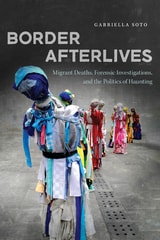
Border Afterlives
Migrant Deaths, Forensic Investigations, and the Politics of HauntingGabriella Soto
University of Arizona Press, 2026
Drawing on over a decade of ethnographic, participatory, and community-engaged research, author Gabriella Soto examines the postmortem journeys of these migrants through the fragmented infrastructure of medicolegal death investigation in the U.S. Southwest. She reveals how the state’s deterrence-based border policies not only generate death but also fail to provide adequate care for the dead. Soto argues that these deaths should be understood as structural homicides and that the forensic neglect they face is a form of ongoing violence.
Moving between the practical and the philosophical, Soto asks what it means to care for the dead and what society owes to those who die in its name. Through the lens of haunting, she explores how the dead continue to shape the living, not as objects of horror but as moral agents whose presence demands justice. Border Afterlives offers a border-scale comparative account of forensic practices, critiques the limits of “best practices” in under-resourced systems, and calls for a reimagining of forensic humanitarianism grounded in reciprocity and dignity, beyond human rights. This is a book that insists on remembering the dead.
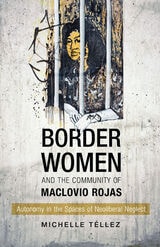
Border Women and the Community of Maclovio Rojas
Autonomy in the Spaces of Neoliberal NeglectMichelle Téllez
University of Arizona Press, 2021
Border Women and the Community of Maclovio Rojas tells the story of the community’s struggle to carve out space for survival and thriving in the shadows of the U.S.-Mexico geopolitical border. This ethnography by Michelle Téllez demonstrates the state’s neglect in providing social services and local infrastructure. This neglect exacerbates the structural violence endemic to the border region—a continuation of colonial systems of power on the urban, rural, and racialized poor. Téllez shows that in creating the community of Maclovio Rojas, residents have challenged prescriptive notions of nation and belonging. Through women’s active participation and leadership, a women’s political subjectivity has emerged—Maclovianas. These border women both contest and invoke their citizenship as they struggle to have their land rights recognized, and they transform traditional political roles into that of agency and responsibility.
This book highlights the U.S.-Mexico borderlands as a space of resistance, conviviality, agency, and creative community building where transformative politics can take place. It shows hope, struggle, and possibility in the context of gendered violences of racial capitalism on the Mexican side of the U.S.-Mexico border.
Born of War in Colombia
Reproductive Violence and Memories of AbsenceTatiana Sanchez Parra
Rutgers University Press, 2024
Born to Belonging
Writings on Spirit and JusticeMab Segrest
Rutgers University Press, 2002
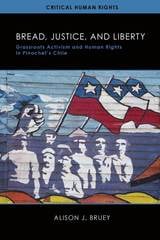
Bread, Justice, and Liberty
Grassroots Activism and Human Rights in Pinochet's ChileAlison J. Bruey
University of Wisconsin Press, 2020
As Bruey shows, crucial to the popular movement built in the 1970s were the activism of both men and women and the coalition forged by liberation-theology Catholics and Marxist-Left militants. These alliances made possible the mass protests of the 1980s that paved the way for Chile's return to democracy, but the changes fell short of many activists' hopes. Their grassroots demands for human rights encompassed not just an end to state terror but an embrace of economic opportunity and participatory democracy for all.
Deeply grounded by both extensive oral history interviews and archival research, Bread, Justice, and Liberty offers innovative contributions to scholarship on Chilean history, social movements, popular protest and democratization, neoliberal economics, and the Cold War in Latin America.
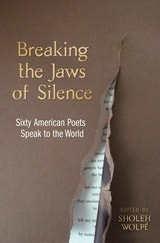
Breaking the Jaws of Silence
Sixty American Poets Speak to the WorldSholeh Wolpé
University of Arkansas Press, 2013
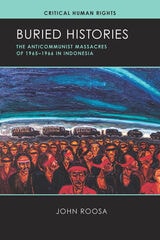
Buried Histories
The Anticommunist Massacres of 1965–1966 in IndonesiaJohn Roosa
University of Wisconsin Press, 2022
Drawing upon years of research and interviews with survivors, Buried Histories is an impressive contribution to the literature on genocide and mass atrocity, crucially addressing the topics of media, military organization, economic interests, and resistance.
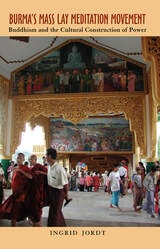
Burma’s Mass Lay Meditation Movement
Buddhism and the Cultural Construction of PowerIngrid Jordt
Ohio University Press, 2007
Burma's Mass Lay Meditation Movement: Buddhism and the Cultural Construction of Power describes a transformation in Buddhist practice in contemporary Burma. This revitalization movement has had real consequences for how the oppressive military junta, in power since the early 1960s, governs the country.
Drawing on more than ten years of extensive fieldwork in Burma, Ingrid Jordt explains how vipassanā meditation has brought about a change of worldview for millions of individuals, enabling them to think and act independently of the totalitarian regime. She addresses human rights as well as the relationship between politics and religion in a country in which neither the government nor the people clearly separates the two. Jordt explains how the movement has been successful in its challenge to the Burmese military dictatorship where democratically inspired resistance movements have failed.
Jordt's unsurpassed access to the centers of political and religious power in Burma becomes the reader's opportunity to witness the political workings of one of the world's most secretive and tyrannically ruled countries. Burma's Mass Lay Meditation Movement is a valuable contribution to Buddhist studies as well as anthropology, religious studies, and political science.