Results by title
24 books match the query 'Minneapolis'

A Police State
Politics and Public Safety in Minneapolis, 1945–2020Michael J. Lansing
University of Chicago Press, 2027
How the police in Minneapolis used electoral politics to accrue power and avoid accountability.
The 2020 murder of George Floyd made Minneapolis synonymous with unjust policing and the pain and outrage left in its wake. The city became ground zero for police reform in the United States—even though liberal politicians in Minnesota had promised, and delivered, police reforms for decades. Centered on professionalization, these changes inadvertently exacerbated injustice. Better training and higher standards broadened the influence of the police, who then claimed expertise in public safety. They deployed it to bargain for governmental support, even when they treated residents unfairly. Though Black, Indigenous, and gay residents resisted, the political power amassed by the police rendered real change almost impossible.
In A Police State, historian and fourth-generation Minneapolis resident Michael J. Lansing chronicles how the police became a political force in one of the nation’s most liberal cities. Lansing shows how, in the years after World War II, public safety policies that appealed to voters in the overwhelmingly white city protected and expanded police discretion. As union members, administrators, and citizens, officers shaped these policies to shield themselves and their violent actions from scrutiny. They campaigned for better wages, secured legal safeguards, resisted race-neutral policing, and elected one of their own to the mayor’s office. Ultimately, they used democratic institutions to cultivate and sustain a police state that protected white people and harmed people of color. Lansing uncovers this dysfunctional relationship between a city and its cops while illuminating a larger American story about reform, resistance, and democracy.
A significant exploration of policing politics, this book helps us understand the history that led to George Floyd’s murder—and insists that the future of community safety depends on reenvisioning the role of police in our society.
A Voice but No Power
Organizing for Social Justice in MinneapolisDavid Forrest
University of Minnesota Press, 2022
Examining the work of social justice groups in Minneapolis following the 2008 recession
Since the Great Recession, even as protest and rebellion have occurred with growing frequency, many social justice organizers continue to displace as much as empower popular struggles for egalitarian and emancipatory change. In A Voice but No Power, David Forrest explains why this is the case and explores how these organizers might better reach their potential as advocates for the abolition of exploitation, discrimination, and other unjust conditions.
Through an in-depth study of post-2008 Minneapolis—a center of progressive activism—Forrest argues that social justice organizers so often fall short of their potential largely because of challenges they face in building what he calls “contentious identities,” the public identities they use to represent their constituents and counteract stigmatizing images such as the “welfare queen” or “the underclass.” In the process of assembling, publicizing, and legitimating contentious identities, he shows, these organizers encounter a series of political hazards, each of which pushes them to make choices that weaken movements for equality and freedom. Forrest demonstrates that organizers can achieve better outcomes, however, by steadily working to remake their hazardous political terrain.
The book’s conclusion reflects on the 2020 uprising that followed the police killing of George Floyd, assessing what it means for the future of social justice activism. Ultimately, Forrest’s detailed analysis contributes to leading theories about organizing and social movements and charts possibilities for further emboldening grassroots struggles for a fairer society.
American City
A Rank and File History of MinneapolisCharles Rumford Walker
University of Minnesota Press, 2005

Bar Yarns and Manic-Depressive Mixtapes
Jim Walsh on Music from Minneapolis to the Outer LimitsJim Walsh
University of Minnesota Press, 2016
Bar Yarns and Manic Depressive Mix Tapes distills thirty delirious, jam-packed years of some of the best music writing ever to come out of the Twin Cities. As a writer and musician, the ever-curious Jim Walsh has lived a life immersed in music, and it all makes its way into his columns and feature articles, interviews and reviews, including personal essays on life, love, music, family, death, and, yes, the manic-depressive highs and lows that come with being an obsessive music lover and listener.
From Minneapolis’s own Prince to such far-flung acts as David Bowie, the Waterboys, Lucinda Williams, Parliament-Funkadelic, L7, the Rolling Stones, the Ramones, U2, Hank Williams, Britney Spears, Elvis Presley and Nirvana, Walsh’s work treats us to a chorus of the voices and sounds that have made the music scene over the past three decades. The big names are here, from Rosanne Cash to Bruce Springsteen to Bob Marley and Jackson Browne, but so are those a little shy of superstardom, like the Tin Star Sisters and Uncle Tupelo, Son Volt, the Gear Daddies, Semisonic, and The Belfast Cowboys.
The book is also a tour (de force) of the Twin Cities' most celebrated music venues past and present, from the Prom Ballroom to Paisley Park to Duffy's. When Walsh isn't celebrating the sheer magic of live music or dreaming to tunes blasting from the car console, he might be surveying the scene with the Hamm's Bear at Grumpy's or the Double Deuce or singing the last night at the Uptown Bar blues. Whether he's dishing dirt with Yoko Ono or digging the Replacements' roots, giving an old rocker a spin or offering a mic to the latest upstart, Jim Walsh reminds us that in the land of a thousand lakes there are a thousand dances, and the music never dies.
Capturing the pure notes and character of the sound of the Twin Cities and beyond, with a keen eye for trends and the telling detail, his book truly is a mix tape of thirty years of unforgettable music.

Deeper Blues
The Life, Songs, and Salvation of Cornbread HarrisAndrea Swensson
University of Minnesota Press, 2024
The emotional, epic story of James “Cornbread” Harris—a self-proclaimed “blessed dude” and one of Minneapolis’s most influential musicians
From the heart of the Minnesota blues comes the story of James “Cornbread” Harris Jr., the songwriter, pianist, and consummate bluesman whose seventy years making music helped to shape the Minneapolis Sound. “I am a blessed dude,” Cornbread tells Andrea Swensson, taking us along on his musical journey from a first “gig” entertaining his fellow soldiers during World War II to his subsequent years playing music for audiences across Minnesota. Following Cornbread’s extraordinary life story, Deeper Blues is a unique history of Minnesota music that evolves into a heartfelt tale of reconciliation and forgiveness, all to the tune of the legendary musician’s signature sound.
Cornbread’s career started in the 1950s, when he played with the Augie Garcia Quintet and cowrote their hit “Hi Ho Silver.” A tireless entertainer, he has been performing live ever since, influencing an entire generation of musicians credited with putting Minneapolis on the map in the 1980s—including his long-estranged son, Grammy-winning Rock and Roll Hall of Famer James “Jimmy Jam” Harris III. Going beyond the music, Deeper Blues turns toward family, atonement, and peace when Cornbread reunites with Jimmy Jam after a five-decade separation and they perform together on stage.
Through conversations with Cornbread, Jimmy Jam, and many others, Swensson reveals a story of perseverance and unfailing grace, a firsthand account of making music in the face of racism and segregation, and a hard-won acceptance of the personal sacrifices that are often required when dedicating one’s life to making music. As the man himself says, “All of my hardships ended up to be blessings.”
A rich mix of present-day anecdotes and historical vignettes, animated by voices from Cornbread’s life and the Twin Cities music scene, underscored by the bluesman’s original lyrics of heartache and hope, and featuring never-before-seen photographs of Cornbread and Jimmy Jam, Deeper Blues tells a singular story—one imprinted on the history, heart, and soul of the Minneapolis Sound.
Defending Community
The Struggle for Alternative Redevelopment in Cedar-RiversideRandy Stoecker
Temple University Press, 1994
Randy Stoecker's intimate biography of Cedar-Riverside, nationally known for a period as "the Haight-Ashbury of the Mid-West," contains important lessons about the conflicts between the needs of capitalism and the needs of community. While attending graduate school at the University of Minnesota, the author moved to Cedar-Riverside, a Minneapolis neighborhood known for its determination to enact values of peace, justice, wholeness, participation, and community in its truest sense. There he experienced first-hand the clashes between a radical community and state-backed urban developers.
His narrative tells the story of a community that overcame the odds against its own survival. Slated for total demolition, the neighborhood was saved by a powerful grass-roots movement. Citizens stopped a state-capital coalition from entombing the community in concrete and went on to create one of the largest community controlled urban redevelopment projects in the country After more than twenty years of struggle, Cedar-Riverside continues to experience citizen-controlled urban redevelopment on its own terms, setting an example for other communities, urban planners, and policymakers.
In the series Conflicts in Urban and Regional Development, edited by John R. Logan and Todd Swanstrom.

Divided Loyalties
Young Somali Americans and the Lure of ExtremismJoseph Weber
Michigan State University Press, 2020

Five Plays from the Children’s Theatre Company of Minneapolis
John Clark Donahue and Linda Walsh Jenkins, Editors
University of Minnesota Press, 1975
Five Plays from the Children's Theatre Company of Minneapolis was first published in
1975. Minnesota Archive Editions uses digital technology to make long-unavailable books once again accessible, and are published unaltered from the original University of Minnesota Press editions.Among the notable productions of the Children's Theatre Company of the Minneapolis Society of Fine Arts, a leading exponent of children's theater in this country, have been plays that are adaptations of classics in children's literature. This volume makes available the scripts of five of these adaptations, along with illuminating information about the productions and the company itself.
The plays include two adaptations by Frederick Gaines, two by Timothy Mason, and one by Richard Shaw. Mr. Gaines's plays are based on Washington Irving's The Legend of Sleepy Hollow and Charles Dickens's A Christmas Carol.One of Mr. Mason's plays, Kidnapped in London, is an adaptation of part of Master Skylark by John Bennett, and the other, Robin Hood: A Story of the Forest, is based on part of the Robin Hood legend. Mr. Shaw's play is an adaptation in Kabuki form of the Grimms' fairy tale Sleeping Beauty.
Linda Walsh Jenkins writes a general introduction and commentary. Background information about each play includes excerpts from discussions among directors, composers, designers, and playwrights about the plays themselves and about various phases of the development of the productions. Highlights of the history of the Children's Theatre Company and of the aims and accomplishments of its director, John Clark Donahue, are given, and these will be of particular interest to anyone in the children's theater field.
The photographic illustrations, which include a number in color, show various aspects of Children's Theatre Company productions. There are also musical examples from the original scores for the plays.
Majoritarian Cities
Policy Making and Inequality in Urban PoliticsNeil Kraus
University of Michigan Press, 2013
Neil Kraus evaluates both the influence of public opinion on local policy-making and the extent to which public policy addresses economic and social inequalities. Drawing on several years of fieldwork and multiple sources of data, including surveys and polls; initiatives, referenda, and election results; government documents; focus groups; interviews; and a wide assortment of secondary sources, Kraus presents case studies of two Midwestern cities, Minneapolis, Minnesota, and Gary, Indiana. Specifically, he focuses on several major policy decisions in recent decades concerning education, law enforcement, and affordable housing in Minneapolis; and education and riverboat casino development in Gary.
Kraus finds that, on these issues, local officials frequently take action that reflects public opinion, yet the resulting policies often fail to meet the needs of the disadvantaged or ameliorate the effects of concentrated poverty. In light of citizens’ current attitudes, he concludes that if patterns of inequality are to be more effectively addressed, scholars and policymakers must transform the debate about the causes and effects of inequality in urban and metropolitan settings.
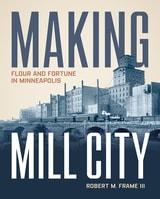
Making Mill City
Flour and Fortune in MinneapolisRobert M. Frame III
University of Minnesota Press, 2026
A richly illustrated history of the flour factories that transformed the milling industry worldwide—and forever changed the culture and architecture of Minneapolis
Among the most consequential advances of the Industrial Revolution was the invention of the modern roller mill, which sent the traditional millstone into obsolescence and fundamentally changed the production of a key ingredient to feeding the world. The culture and landscape of its hometown, Minneapolis, Minnesota, was altered as well, and Making Mill City tells the story of how revolutionary technologies originating at St. Anthony Falls on the Mississippi River put Minneapolis on the map and cemented its global status as “Mill City.”
With deep historical detail and abundant illustrations, Robert M. Frame III charts the dramatic transformation of Minneapolis milling—and urban life—between the early 1870s and 1920s. Two machines propelled this change: the middlings purifier and the modern roller mill. Enabling millers to grind hard Upper Midwestern spring wheat, these innovations gave rise to the “mammoth mills” and ever-expanding flour factories that would soon dominate the Minneapolis riverfront. Prominent entrepreneurs like those who gave their names to the Washburn and Pillsbury A Mills were significant, but Frame foregrounds the crucial roles of the millers, millwrights, and engineers who designed and equipped the massive new factories, as well as the editor of the legendary weekly trade publication Northwestern Miller, to paint a picture of the vibrant and diverse culture that grew around this industrial phenomenon.
A rich narrative describing how Minneapolis became the largest producer and exporter of wheat flour for more than fifty years, Making Mill City captures a critical chapter in the history of the city. Art and architecture inspired by mills and millers stand today as National Historic Landmarks, and the development and success of the current thriving metropolis have strong foundations in its milling history.
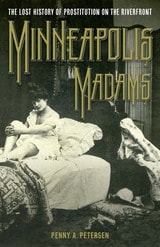
Minneapolis Madams
The Lost History of Prostitution on the RiverfrontPenny A. Petersen
University of Minnesota Press, 2013
Sex, money, and politics—no, it’s not a thriller novel. Minneapolis Madams is the surprising and riveting account of the Minneapolis red-light district and the powerful madams who ran it. Penny Petersen brings to life this nearly forgotten chapter of Minneapolis history, tracing the story of how these “houses of ill fame” rose to prominence in the late nineteenth century and then were finally shut down in the early twentieth century.
In their heyday Minneapolis brothels were not only open for business but constituted a substantial economic and political force in the city. Women of independent means, madams built custom bordellos to suit their tastes and exerted influence over leading figures and politicians. Petersen digs deep into city archives, period newspapers, and other primary sources to illuminate the Minneapolis sex trade and its opponents, bringing into focus the ideologies and economic concerns that shaped the lives of prostitutes, the men who used their services, and the social-purity reformers who sought to eradicate their trade altogether. Usually written off as deviants, madams were actually crucial components of a larger system of social control and regulation. These entrepreneurial women bought real estate, hired well-known architects and interior decorators to design their bordellos, and played an important part in the politics of the developing city.
Petersen argues that we cannot understand Minneapolis unless we can grasp the scope and significance of its sex trade. She also provides intriguing glimpses into racial interactions within the vice economy, investigating an African American madam who possibly married into one of the city’s most prestigious families. Fascinating and rigorously researched, Minneapolis Madams is a true detective story and a key resource for anyone interested in the history of women, sexuality, and urban life in Minneapolis.

Pothole Confidential
My Life as Mayor of MinneapolisR.T. Rybak
University of Minnesota Press, 2016
A pajama party at the Minneapolis–St. Paul International Airport inadvertently helped launch R.T. Rybak’s political career (imagine a rumba line one hundred protesters long chanting, “We deserve to sleep, hey!”), but his earliest lessons in leadership occurred during his childhood. Growing up in a middle-class neighborhood, attending private school with students who had much more than he did, spending evenings at his family’s store in an area where people lived with much less, he witnessed firsthand the opportunity and injustice of the city he called home.
In a memoir that is at once a political coming-of-age story and a behind-the-scenes look at the running of a great city, the three-term mayor takes readers into the highs and lows and the daily drama of a life inextricably linked with Minneapolis over the past fifty years. With refreshing candor and insight, Rybak describes his path through journalism, marketing, and community activism that led to his unlikely (to him, at least) primary election—on September 11, 2001. His personal account of the challenges and crises confronting the city over twelve years, including the tragic collapse of the I-35W bridge, the rising scourge of youth violence, and the bruising fight over a ban on gay marriage (with Rybak himself conducting the first such ceremony at City Hall on August 1, 2013), is also an illuminating, often funny depiction of learning the workings of the job, frequently on the fly, while trying to keep up with his most important constituency, his family.
As bracing as the “fresh air” campaign that swept him into office, Rybak’s memoir is that rare document from a politician: one more concerned with the people he served and the issues of his time than with burnishing his own credentials. As such, it reflects what leadership truly looks like.
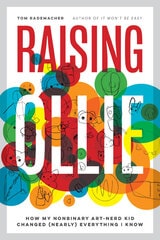
Raising Ollie
How My Nonbinary Art-Nerd Kid Changed (Nearly) Everything I KnowTom Rademacher
University of Minnesota Press, 2021
The account of one radically new school year for a Teacher of the Year and for his nonbinary, art-obsessed, brilliant child
Seven-year-old Ollie was researching local advanced school programs—because every second grader does that, right? Ollie, who used to hate weekends because they meant no school, was crying on the way to school almost every day. Sure, there were the slings and arrows of bullies and bad teachers, but, maybe worse, Ollie, a funny, anxious, smart kid with a thing for choir and an eye for graphic art, was gravely underchallenged and also struggling with identity and how to live totally as themselves. Ollie begged to switch to a new school with “kids like me,” where they wouldn’t feel so alone, or so bored, and so they made the change.
Raising Ollie is dad Tom Rademacher’s story (really, many stories) of that eventful and sometimes painful school year, parenting Ollie and relearning every day what it means to be a father and teacher. As Ollie—who is nonbinary and uses they/them pronouns, and prefers art to athletics, vegetables to cake, and animals to most humans—flourishes in their new school, Rademacher is making an eye-opening adjustment to a new school of his own, one that’s whiter and more suburban than anywhere he has previously taught, with a history of racial tension that he tries to address and navigate.
While Ollie is learning to code, 3D model, animate, speak Japanese, and finally feel comfortable at school, Rademacher increasingly sees how his own educational struggles, anxieties, and childhood upbringing are reflected in his teaching, writing, and parenting, as well as in Ollie’s experience. And with this story of one anything-but-academic year of inquiry and wonder, doubt and revelation, he shows us how raising a kid changes everything—and how much raising a kid like Ollie can teach us about who we are and what we’re doing in the world.

Sherlock Holmes and the Secret Alliance
Larry Millett
University of Minnesota Press, 2012
As the city of Minneapolis prepares for a visit from President William McKinley, someone else prepares for murder. On the day before the visit, a union activist is found hanged, naked, outside a ruined mansion. A placard around his neck reads “THE SECRET ALLIANCE HAS SPOKEN.” Who is the alliance? What does it want? How was the victim involved with the city’s corrupt mayor? And why did he possess a photograph of a prominent citizen in a compromising position? Shadwell Rafferty searches for answers, encountering bribery, corruption, union organizers, anarchists, and conspiracy, putting himself in danger. But as luck would have it, his old friends Sherlock Holmes and Dr. John H. Watson are on their way.
In this fourth installment of Larry Millett’s Minnesota Mystery series, Shadwell Rafferty commands center stage in a brand-new city. Packed with Millett’s signature historical and architectural detail, this book is deviously delightful.
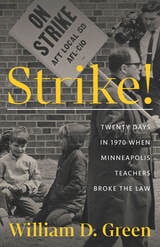
Strike!
Twenty Days in 1970 When Minneapolis Teachers Broke the LawWilliam D. Green
University of Minnesota Press, 2022
When viewed from our turbulent times, the Minneapolis of fifty years ago might seem serene, but Minneapolis schoolteachers of the day remember it quite differently. It was, author William D. Green said of their recollections, as if they’d been through war. This book recreates twenty days in April 1970 when a then-illegal strike by Minneapolis’s public school teachers marked a singular moment of cultural upheaval—and forever changed the city’s politics, labor law, educational climate, and the right to collective bargaining.
Since the inception of public education in Minnesota, teachers were expected to pursue their vocation out of civic spirit, with low wages, no benefits, and no job security. Strike! describes the history and circumstances leading to the teachers’ extraordinary action, which pitted the progressive and conservative teachers’ unions against each other—and both against the all-powerful school district, a hostile governor and state legislature, and a draconian Minnesota law. Capturing the intense emotions and heated rivalries of the strike, Green profiles the many actors involved, the personal and professional stakes, and the issues of politics, law, and the business of education.
Informed by interviews, firsthand accounts, news reports, and written records, Strike! brings to life a pivotal moment not just for Minneapolis’s teachers but for the city itself, whose government, school system, and culture would, in a complex but inexorable way, change course for good.
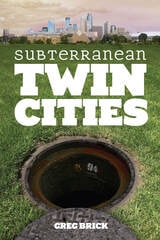
Subterranean Twin Cities
Greg Brick
University of Minnesota Press, 2009
We tend to send things underground that we are not interested in ever seeing again. Sewage. Garbage. In the past, we have used the underground to age such provisions as cheese and beer. In Subterranean Twin Cities, geologist, historian, and urban speleologist Greg Brick takes us on an adventurous, educational, and—thankfully—sanitary tour beneath the streets and into the myriad tunnels, caves, and industrial spaces that make up the Twin Cities’ fascinating and surprisingly vast underground landscape.
In this groundbreaking tour, the first of its kind of the Twin Cities, Brick mines the stories that lie below the city surface. Beginning with an accessible history on the geology of the area—including the giant cone-shaped mollusk Endoceras, whose thirteen-foot-long fossils are found in the Mississippi gorge—Brick guides us into a series of astounding firsthand expeditions. We follow him into St. Paul’s historic Carver’s Cave, with its stories of sunken treasure; through the many caves constructed for brewing, cheese ripening, and mushroom farming; and into the world of nineteenth-century show caves for tourists. We even find ourselves in the “Shangri-la” of urban caves: the extensive Schiek’s Cave seventy-five feet beneath the busy streets of downtown Minneapolis.
From spending the onset of Y2K in Carver’s Cave (just in case) to long hours wading in underground rivers, Brick proves himself a knowledgeable, wry, and daring guide. Subterranean Twin Cities shines a headlamp (with extra batteries, of course) into the captivating labyrinths beneath the Twin Cities and reminds us that what we see aboveground is really only half of the story.
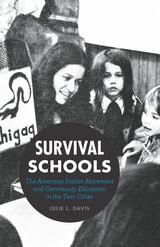
Survival Schools
The American Indian Movement and Community Education in the Twin CitiesJulie L. Davis
University of Minnesota Press, 2013
In the late 1960s, Indian families in Minneapolis and St. Paul were under siege. Clyde Bellecourt remembers, “We were losing our children during this time; juvenile courts were sweeping our children up, and they were fostering them out, and sometimes whole families were being broken up.” In 1972, motivated by prejudice in the child welfare system and hostility in the public schools, American Indian Movement (AIM) organizers and local Native parents came together to start their own community school. For Pat Bellanger, it was about cultural survival. Though established in a moment of crisis, the school fulfilled a goal that she had worked toward for years: to create an educational system that would enable Native children “never to forget who they were.”
While AIM is best known for its national protests and political demands, the survival schools foreground the movement’s local and regional engagement with issues of language, culture, spirituality, and identity. In telling of the evolution and impact of the Heart of the Earth school in Minneapolis and the Red School House in St. Paul, Julie L. Davis explains how the survival schools emerged out of AIM’s local activism in education, child welfare, and juvenile justice and its efforts to achieve self-determination over urban Indian institutions. The schools provided informal, supportive, culturally relevant learning environments for students who had struggled in the public schools. Survival school classes, for example, were often conducted with students and instructors seated together in a circle, which signified the concept of mutual human respect. Davis reveals how the survival schools contributed to the global movement for Indigenous decolonization as they helped Indian youth and their families to reclaim their cultural identities and build a distinctive Native community.
The story of these schools, unfolding here through the voices of activists, teachers, parents, and students, is also an in-depth history of AIM’s founding and early community organizing in the Twin Cities—and evidence of its long-term effect on Indian people’s lives.
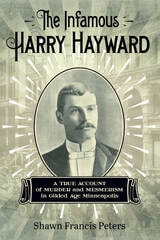
The Infamous Harry Hayward
A True Account of Murder and Mesmerism in Gilded Age MinneapolisShawn Francis Peters
University of Minnesota Press, 2018
A fascinating tale of seduction, murder, fraud, coercion—and the trial of the “Minneapolis Monster”
On a winter night in 1894, a young woman’s body was found in the middle of a road near Lake Calhoun on the outskirts of Minneapolis. She had been shot through the head. The murder of Kittie Ging, a twenty-nine-year-old dressmaker, was the final act in a melodrama of seduction and betrayal, petty crimes and monstrous deeds that would obsess reporters and their readers across the nation when the man who likely arranged her killing came to trial the following spring. Shawn Francis Peters unravels that sordid, spellbinding story in his account of the trial of Harry Hayward, a serial seducer and schemer whom some deemed a “Svengali,” others a “Machiavelli,” and others a “lunatic” and “man without a soul.”
Dubbed “one of the greatest criminals the world has ever seen” by the famed detective William Pinkerton, Harry Hayward was an inveterate and cunning plotter of crimes large and small, dabbling in arson, insurance fraud, counterfeiting, and illegal gambling. His life story, told in full for the first time here, takes us into shadowy corners of the nineteenth century, including mesmerism, psychopathy, spiritualism, yellow journalism, and capital punishment. From the horrible fate of an independent young businesswoman who challenged Victorian mores to the shocking confession of Hayward on the eve of his execution (which, if true, would have made him a serial killer), The Infamous Harry Hayward unfolds a transfixing tale of one of the most notorious criminals in America during the Gilded Age.
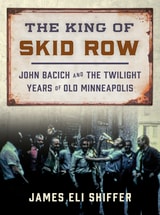
The King of Skid Row
John Bacich and the Twilight Years of Old MinneapolisJames Eli Shiffer
University of Minnesota Press, 2023
The story of a much different Minneapolis, through the words and photographs of one of its most colorful characters—now in paperback
City blue laws drove the liquor trade and its customers—hard-drinking lumberjacks, pensioners, farmhands, and railroad workers—into the oldest quarter of Minneapolis. In the fifty-cent-a-night flophouses of the city’s Gateway District, they slept in cubicles with ceilings of chicken wire. In rescue missions, preachers and nuns tried to save their souls. Sociology researchers posing as vagrants studied them. And in their midst John Bacich, aka Johnny Rex, who owned a bar, a liquor store, and a cage hotel, documented the gritty neighborhood’s last days through photographs and film of his clientele.
The King of Skid Row follows Johnny Rex into this vanished world that once thrived in the heart of Minneapolis. Drawing on hours of interviews conducted in the three years before Bacich’s death in 2012, James Eli Shiffer brings to life the eccentric characters and strange events of an American skid row. Supplemented with archival and newspaper research and his own photographs, Bacich’s stories recreate the violent, alcohol-soaked history of a city best known for its clean, progressive self-image. His life captures the seamy, richly colorful side of the city swept away by a massive urban renewal project in the early 1960s and gives us, in a glimpse of those bygone days, one of Minneapolis’s most intriguing figures—spinning some of its most enduring and enthralling tales.

The New Politics of Pornography
Donald Alexander Downs
University of Chicago Press, 1989

The Swindle of Innovative Educational Finance
Kenneth J. Saltman
University of Minnesota Press, 2018
How “innovative” finance schemes skim public wealth while hijacking public governance
Charter school expansion. Vouchers. Scholarship tax credit programs. The Swindle of Innovative Educational Finance offers a new social theory to explain why these and other privatization policies and programs win support despite being unsupported by empirical evidence. Kenneth J. Saltman details how, under the guise of innovation, cost savings, and corporate social responsibility, new and massive neoliberal educational privatization schemes have been widely adopted in the United States. From a trillion-dollar charter school bubble to the Chan Zuckerberg Initiative to celebrities branding private schools, Saltman ultimately connects such schemes to the country’s current crisis of truth and offers advice for resistance.
Forerunners is a thought-in-process series of breakthrough digital works. Written between fresh ideas and finished books, Forerunners draws on scholarly work initiated in notable blogs, social media, conference plenaries, journal articles, and the synergy of academic exchange. This is gray literature publishing: where intense thinking, change, and speculation take place in scholarship.

The Western Disease
Contesting Autism in the Somali DiasporaClaire Laurier Decoteau
University of Chicago Press, 2021
Because autism is an increasingly common diagnosis, North Americans are familiar with its symptoms and treatments. But what we know and think about autism is shaped by our social relationship to health, disease, and the medical system. In The Western Disease Claire Laurier Decoteau explores the ways that recent immigrants from Somalia to Canada and the US make sense of their children’s diagnosis of autism. Having never heard of autism before migrating to North America, they often determine that it must be a Western disease. Given its apparent absence in Somalia, they view it as Western in nature, caused by environmental and health conditions unique to life in North America.
Following Somali parents as they struggle to make sense of their children's illness and advocate for alternative care, Decoteau unfolds how complex interacting factors of immigration, race, and class affect Somalis’ relationship to the disease. Somalis’ engagement with autism challenges the prevailing presumption among Western doctors that their approach to healing is universal. Decoteau argues that centering an analysis on autism within the Somali diaspora exposes how autism has been defined and institutionalized as a white, middle-class disorder, leading to health disparities based on race, class, age, and ability. The Western Disease asks us to consider the social causes of disease and the role environmental changes and structural inequalities play in health vulnerability.
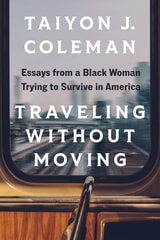
Traveling without Moving
Essays from a Black Woman Trying to Survive in AmericaTaiyon J. Coleman
University of Minnesota Press, 2024
A stunning lyrical commentary on the constructions of race, gender, and class in the fraught nexus of a Black woman’s personal experience and cultural history
The Fair Housing Act passed in 1968, and more than fifty years later, yours seems to be the only Black family on your block in Minneapolis. You and your Black African husband, both college graduates, make less money than some White people with a felony record and no high school diploma. You’re the only Black student in your graduate program. You just aren’t working hard enough. You’re too sensitive. Sandra Bland? George Floyd? Don't take everything so personally. Amid the White smiles of Minnesota Nice and the Minnesota Paradox—the insidious racism of an ostensibly inclusive place to live—what do you do? If you’re Taiyon J. Coleman, you write.
In Traveling without Moving, Coleman shares intimate essays from her life: her childhood in Chicago—growing up in poverty with four siblings and a single mother—and the empowering decision to leave her first marriage. She writes about being the only Black student in a prestigious and predominantly White creative writing program, about institutional racism and implicit bias in writing instruction, about the violent legacies of racism in the U.S. housing market, about the maternal health disparities seen across the country and their implication in her own miscarriage. She explores what it means to write her story and that of her family—an act at once a responsibility and a privilege—bringing forth the inherent contradictions between American ideals and Black reality.
Using a powerful blend of perspectives that move between a first-person lens of lived experience and a wider-ranging critique of U.S. culture, policy, and academia, Coleman’s writing evinces how a Black woman in America is always on the run, always Harriet Tubman, traveling with her babies in tow, seeking safety, desperate to survive, thrive, and finally find freedom.
Retail e-book files for this title are screen-reader friendly.
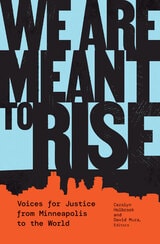
We Are Meant to Rise
Voices for Justice from Minneapolis to the WorldCarolyn Holbrook
University of Minnesota Press, 2021
A brilliant and rich gathering of voices on the American experience of this past year and beyond, from Indigenous writers and writers of color from Minnesota
In this significant collection, Indigenous writers and writers of color bear witness to one of the most unsettling years in the history of the United States. Essays and poems vividly reflect and comment on the traumas we endured in 2020, beginning with the arrival of the COVID-19 pandemic crisis, deepened by the blatant murder of George Floyd by Minneapolis police officers and the uprisings that immersed our city into the epicenter of passionate, worldwide demands for justice. In inspired and incisive writing these contributors speak unvarnished truths not only to the original and pernicious racism threaded through the American experience but also to the deeply personal, in essays about family, loss, food culture, economic security, and mental health. Their call and response is united here to rise and be heard.
We Are Meant to Rise lifts up the astonishing variety of BIPOC writers in Minnesota. From authors with international reputations to newly emerging voices, it features people from many cultures, including Indigenous Dakota and Anishinaabe, African American, Hmong, Somali, Afghani, Lebanese, Korean, Vietnamese, Japanese, Puerto Rican, Colombian, Mexican, transracial adoptees, mixed race, and LGBTQ+ perspectives. Most of the contributors have participated in More Than a Single Story, a popular and insightful conversation series in Minneapolis that features Indigenous and people of color speaking on what most concerns their communities.
We Are Meant to Rise meets the events of the day, the year, the centuries before, again and again, with powerful testament to the intrinsic and unique value of the human voice.
Contributors: Suleiman Adan, Mary Moore Easter, Louise Erdrich, Anika Fajardo, Safy-Hallan Farah, Said Farah, Sherrie Fernandez-Williams, Pamela R. Fletcher Bush, Shannon Gibney, Kathryn Haddad, Tish Jones, Ezekiel Joubert III, Douglas Kearney, Ed Bok Lee, Ricardo Levins Morales, Arleta Little, Resmaa Menakem, Tess Montgomery, Ahmad Qais Munhazim, Melissa Olson, Alexs Pate, Bao Phi, Mona Susan Power, Samantha Sencer-Mura, Said Shaiye, Erin Sharkey, Sun Yung Shin, Michael Torres, Diane Wilson, Kao Kalia Yang, and Kevin Yang.