Results by title
456 books match the query 'India' and 26 start with b
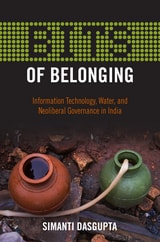
BITS of Belonging
Information Technology, Water, and Neoliberal Governance in IndiaSimanti Dasgupta
Temple University Press, 2015
India’s global success in the Information Technology industry has also prompted the growth of neoliberalism and the re-emergence of the middle class in contemporary urban areas, such as Bangalore. In her significant study, BITS of Belonging, Simanti Dasgupta shows that this economic shift produces new forms of social inequality while reinforcing older ones. She investigates this economic disparity by looking at IT and water privatization to explain how these otherwise unrelated domains correspond to our thinking about citizenship, governance, and belonging.
Dasgupta’s ethnographic study shows how work and human processes in the IT industry intertwine to meet the market stipulations of the global economy. Meanwhile, in the recasting of water from a public good to a commodity, the middle class insists on a governance and citizenship model based upon market participation. Dasgupta provides a critical analysis of the grassroots activism involved in a contested water project where different classes lay their divergent claims to the city.

Barricade
Utpal Dutt
Seagull Books, 2022
Although Utpal Dutt is acknowledged as a trailblazer of post-Independence Indian theater, English readers have not had access to the range and wealth of his drama. Barricade is a political play that stages the Nazi takeover of Germany in 1933 with an eye on India. Today, the surge to power of far-right parties and fundamentalist fanaticism across the world means that the co-option of democracy and civil society that led to Nazi fascism can happen again—or indeed has already happened—granting Barricade its immediate urgency. Equipped with an introduction analyzing its historical context, this translation of Barricade is also a very rare product in dramatic literature, collating both the printed original as well as a documented performance of the production directed by Dutt.
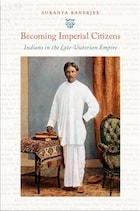
Becoming Imperial Citizens
Indians in the Late-Victorian EmpireSukanya Banerjee
Duke University Press, 2010
Interpreting autobiography, fiction, election speeches, economic analyses, parliamentary documents, and government correspondence, Banerjee foregrounds the narrative logic sustaining the unprecedented claims to citizenship advanced by racialized colonial subjects. She focuses on the writings of figures such as Dadabhai Naoroji, known as the first Asian to be elected to the British Parliament; Surendranath Banerjea, among the earliest Indians admitted into the Indian Civil Service; Cornelia Sorabji, the first woman to study law in Oxford and the first woman lawyer in India; and Mohandas K. Gandhi, who lived in South Africa for nearly twenty-one years prior to his involvement in Indian nationalist politics. In her analysis of the unexpected registers through which they carved out a language of formal equality, Banerjee draws extensively from discussions in both late-colonial India and Victorian Britain on political economy, indentured labor, female professionalism, and bureaucratic modernity. Signaling the centrality of these discussions to the formulations of citizenship, Becoming Imperial Citizens discloses a vibrant transnational space of political action and subjecthood, and it sheds new light on the complex mutations of the category of citizenship.

Beggar’s Bedlam
Nabarun Bhattacharya
Seagull Books, 2024
Beggar’s Bedlam is a surreal novel that unleashes the chaos of the carnival on the familiar. Part literary descendent of Bulgakov’s The Master and Margarita and part a reconstruction of lost Bengali history, Nabarun Bhattacharya’s masterpiece is a jubilant, fizzing wire of subaltern anarchy and insurrection.
Marshall Bhodi Sarkar and his lieutenant Sarkhel surreptitiously dig on the banks of the Ganges River looking for crude oil reserves. Instead, they unearth curved daggers, rusty broadswords, and a Portuguese cannon. Bhodi is an occasional military man and the lead sorcerer of the secret black-magic sect named Choktar. He joins forces with the flying Flaperoos—men with a predilection for alcohol and petty vandalism—to declare outright war against the Marxist–Leninist West Bengal government. In a bloodless revolution that is fascinating in its utter implausibility, a motley crew of yet more implausible characters come together in a magic-realist fictional remapping of Calcutta.
Bells of Change
Kathak Dance, Women and Modernity In IndiaPallabi Chakravorty
Seagull Books, 2008

Belonging in an Adopted World
Race, Identity, and Transnational AdoptionBarbara Yngvesson
University of Chicago Press, 2010
Since the early 1990s, transnational adoptions have increased at an astonishing rate, not only in the United States, but worldwide. In Belonging in an Adopted World, Barbara Yngvesson offers a penetrating exploration of the consequences and implications of this unprecedented movement of children, usually from poor nations to the affluent West. Yngvesson illuminates how the politics of adoption policy has profoundly affected the families, nations, and children involved in this new form of social and economic migration.
Starting from the transformation of the abandoned child into an adoptable resource for nations that give and receive children in adoption, this volume examines the ramifications of such gifts, especially for families created through adoption and later, the adopted adults themselves. Bolstered by an account of the author’s own experience as an adoptive parent, and fully attuned to the contradictions of race that shape our complex forms of family, Belonging in an Adopted World explores the fictions that sustain adoptive kinship, ultimately exposing the vulnerability and contingency behind all human identity.

Bengal Nights
A NovelMircea Eliade
University of Chicago Press, 1994
Offered the hospitality of a senior Indian colleague, Alain grasps at the chance to discover the authentic India firsthand. He soon finds himself enchanted by his host's daughter, the lovely and inscrutable Maitreyi, a precocious young poet and former student of Tagore. What follows is a charming, tentative flirtation that soon, against all the proprieties and precepts of Indian society, blossoms into a love affair both impossible and ultimately tragic. This erotic passion plays itself out in Alain's thoughts long after its bitter conclusion. In hindsight he sets down the story, quoting from the diaries of his disordered days, and trying to make sense of the sad affair.
A vibrantly poetic love story, Bengal Nights is also a cruel account of the wreckage left in the wake of a young man's self discovery. At once horrifying and deeply moving, Eliade's story repeats the patterns of European engagement with India even as it exposes and condemns them. Invaluable for the insight it offers into Eliade's life and thought, it is a work of great intellectual and emotional power.
Translated into French in 1950, Bengal Nights was an immediate critical success. The film, Les Nuits Bengali, appeared in 1987.
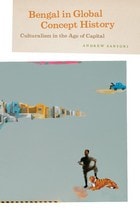
Bengal in Global Concept History
Culturalism in the Age of CapitalAndrew Sartori
University of Chicago Press, 2008
Sartori weaves the narrative of Bengal’s embrace of culturalism into a worldwide history of the concept, from its origins in eighteenth-century Germany, through its adoption in England in the early 1800s, to its appearance in distinct local guises across the non-Western world. The impetus for the concept’s dissemination was capitalism, Sartori argues, as its spread across the globe initiated the need to celebrate the local and the communal. Therefore, Sartori concludes, the use of the culture concept in non-Western sites was driven not by slavish imitation of colonizing powers, but by the same problems that repeatedly followed the advance of modern capitalism. This remarkable interdisciplinary study will be of significant interest to historians and anthropologists, as well as scholars of South Asia and colonialism.
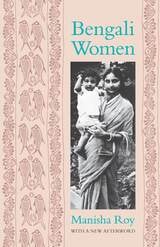
Bengali Women
Manisha Roy
University of Chicago Press, 1992
In a new Afterword, Roy discusses changes in Bengali society and culture over the last two decades which have direct bearings on women's lives: divorce and the breakup of the joint family, education, increasing Westernization via television and women's magazines, and the erosion of traditional religious practices.
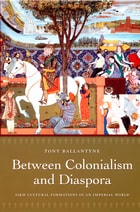
Between Colonialism and Diaspora
Sikh Cultural Formations in an Imperial WorldTony Ballantyne
Duke University Press, 2006
Constructing an expansive historical archive, Ballantyne draws on film, sculpture, fiction, and Web sites, as well as private papers, government records, journalism, and travel narratives. He proceeds from a critique of recent historiography on the development of Sikhism to an analysis of how Sikh identity changed over the course of the long nineteenth century. Ballantyne goes on to offer a reading of the contested interpretations of the life of Dalip Singh, the last Maharaja of Punjab. He concludes with an exploration of bhangra, a traditional form of Punjabi dance that diasporic artists have transformed into a globally popular music style. Much of bhangra’s recent evolution stems from encounters of the Sikh and Afro-Caribbean communities, particularly in the United Kingdom. Ballantyne contends that such cross-cultural encounters are central in defining Sikh identity both in Punjab and the diaspora.
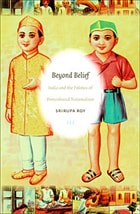
Beyond Belief
India and the Politics of Postcolonial NationalismSrirupa Roy
Duke University Press, 2007
Roy considers several different ways that identification with the Indian nation-state was produced and consolidated during the 1950s and 1960s. She looks at how the Films Division of India, a state-owned documentary and newsreel production agency, allowed national audiences to “see the state”; how the “unity in diversity” formation of nationhood was reinforced in commemorations of India’s annual Republic Day; and how the government produced a policy discourse claiming that scientific development was the ultimate national need and the most pressing priority for the state to address. She also analyzes the fate of the steel towns—industrial townships built to house the workers of nationalized steel plants—which were upheld as the exemplary national spaces of the new India. By prioritizing the role of actual manifestations of and encounters with the state, Roy moves beyond theories of nationalism and state formation based on collective belief.

Beyond Lines of Control
Performance and Politics on the Disputed Borders of Ladakh, IndiaRavina Aggarwal
Duke University Press, 2004
Aggarwal brings the insights of performance studies and the growing field of the anthropology of international borders to bear on her extensive fieldwork in Ladakh. She examines how social and religious boundaries are created on the Ladakhi frontier, how they are influenced by directives of the nation-state, and how they are shaped into political struggles for regional control that are legitimized through discourses of religious purity, patriotism, and development. She demonstrates in lively detail the ways that these struggles are enacted in particular cultural performances such as national holidays, festivals, rites of passage ceremonies, films, and archery games. By placing cultural performances and political movements in Ladakh center stage, Aggarwal rewrites the standard plot of nation and border along the Line of Control.
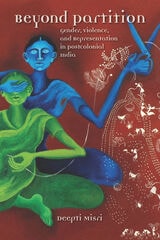
Beyond Partition
Gender, Violence and Representation in Postcolonial IndiaDeepti Misri
University of Illinois Press, 2014
Deepti Misri shows how Partition began a history of politicized animosity associated with the differing ideas of ""India"" held by communities and in regions on one hand, and by the political-military Indian state on the other. She moves beyond that formative national event, however, in order to examine other forms of gendered violence in the postcolonial life of the nation, including custodial rape, public stripping, deturbanning, and enforced disappearances. Assembling literary, historiographic, performative, and visual representations of gendered violence against women and men, Misri establishes that cultural expressions do not just follow violence but determine its very contours, and interrogates the gendered scripts underwriting the violence originating in the contested visions of what ""India"" means.
Ambitious and ranging across disciplines, Beyond Partition offers both an overview of and nuanced new perspectives on the ways caste, identity, and class complicate representations of violence, and how such representations shape our understandings of both violence and India.
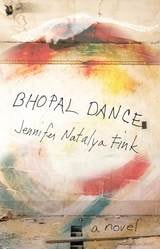
Bhopal Dance
A NovelJennifer Natalya Fink, Foreword by Mary Caponegro
University of Alabama Press, 2018
An imaginative, erotic rethinking of Bhopal’s disaster—and perhaps our own
On the night of December 2, in the midst of the Reaganomic era, an explosion at an American-owned factory in Bhopal, India, released untold amounts of toxic gas on uncounted numbers of people, creating a human and environmental disaster of insurmountable proportions. Known as the Bhopal disaster, it once dominated international headlines, and is now barely remembered.
Yet Bhopal remains emblematic of all the many quickly forgotten disasters that followed, and of the permanent state of globalized disaster in which we now dwell. What does it mean when corporations instead of states control not only the means to create environmental disasters, but also the tools to bury them? How does one revolt against these unelected entities? How do our most private desires get shaped by this stateless horror? Jennifer Natalya Fink’s Bhopal Dance is an epic and epochal tale of such a horror and its buried consequences.
At the center of the novel is Cordelia, an owlish woman with a ménage of lovers, who leads a revolutionary Canadian political movement catalyzed by the Bhopal disaster, only to end up imprisoned with just a toilet to talk to. Who she hallucinates is her father. Who is her father. Who is the State. Who may be her mother. Or her twin/lover. Cordelia is a remarkable bird in her own right, and ‘owlishness’ is a feathery conceit deployed in both the book’s form and content, a way of exploring queer possibilities for altering the terms of one’s imprisonment. For setting corporatized corporeality alight. Ablaze. Pets and punk rock, dentists and dyslexia, Shakespeare and salsa: they all dance together here.

Biting through the Skin
An Indian Kitchen in America's HeartlandNina Mukerjee Furstenau
University of Iowa Press, 2013
As a girl and a young woman, Nina traveled to her ancestral India as well as to college and to Peace Corps service in Tunisia. Through her journeys and her marriage to an American man whose grandparents hailed from Germany and Sweden, she learned that her family was not alone in being a small pocket of culture sheltered from the larger world. Biting through the Skin shows how we maintain our differences as well as how we come together through what and how we cook and eat. In mourning the partial loss of her heritage, the author finds that, ultimately, heritage always finds other ways of coming to meet us. In effect, it can be reduced to a 4 x 6-inch recipe card, something that can fit into a shirt pocket. It’s on just such tiny details of life that belonging rests.
In this book, the author shares her shirt-pocket recipes and a great deal more, inviting readers to join her on her journey toward herself and toward a vital sense of food as culture and the mortar of community.
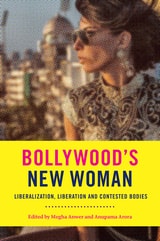
Bollywood’s New Woman
Liberalization, Liberation, and Contested BodiesMegha Anwer
Rutgers University Press, 2021
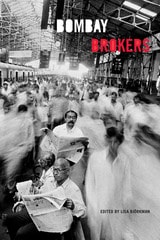
Bombay Brokers
Lisa Björkman, editor
Duke University Press, 2021
Contributors. Anjali Arondekar, Sarthak Bagchi, Tobias Baitsch, Sangeeta Banerji, Srimati Basu, Tarini Bedi, Amita Bhide, Lisa Björkman, Uday Chandra, Simon Chauchard, Ka-Kin Cheuk, Michael Collins, Daisy Deomampo, Maura Finkelstein, Ajay Gandhi, Rupali Gupte, Kathryn C. Hardy, Lalitha Kamath, Prasad Khanolkar, Bhushan Korgaonkar, Ratoola Kundu, Ken Kuroda, Annelies Kusters, Lisa Mitchell, Shailaja Paik, Gautam Pemmaraju, Lubaina Rangwala, Llerena Guiu Searle, Atreyee Sen, Prasad Shetty, Rohan Shivkumar, Edward Simpson, David Strohl, Rachel Sturman, R. Swaminathan, Aneri Taskar, Yaffa Truelove, Sahana Udupa, Lalit Vachani, Leilah Vevaina
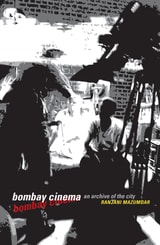
Bombay Cinema
An Archive of the CityRanjani Mazumdar
University of Minnesota Press, 2007
In this analysis of the cinematic city, Mazumdar reveals a complex postnationalist world, convulsed by the social crisis of the 1970s and transformed by the experience of globalization in the 1990s. She argues that the upheaval of postcolonial nationalism led to Bombay cinema’s articulation of urban life in entirely new terms. Specifically, the place of the village in the imaginary constitution of anticolonial nationalism gave way to a greater acknowledgment, even centrality, of urban space. Bombay Cinema takes the reader on an inventive journey through a cinematic city of mass crowds, violence, fashion, architectural fantasies, and subcultural identities. Moving through the world of gangsters and vamps, families and drifters, and heroes and villains, Bombay Cinema explores an urban landscape marked by industrial decline, civic crisis, working-class disenchantment, and diverse street life.Combining the anecdotal with the theoretical, the philosophical with the political, and the textual with the historical, Bombay Cinema leads the reader into the heart of the urban labyrinth in India, revising and deepening our understanding of both the city and the cinema.
"A landmark study—carefully researched, well organized and offering refreshingly uncondescending and strikingly insightful discussions of mainstream films—that deserves to be read by anyone interested in India's popular cinema or its contemporary urban life." —Journal of Asian Studies
"Bombay Cinema is an exciting and important contribution to a field that has, to date, been under researched and under theorized. Lively, provocative and richly suggestive, it will also serve as a surefire incentive to watch those films all over again." —Screen
"Here, at last, is a book length study on Cinema in India that does not get locked into a dance of hermetic closure between what transpires on screen and a set of stock off screen textual and cultural references, but more importantly, walks the streets where the films are set, looks at shop windows, publicity material, costumes, fashion, architecture, telecommunications and the concrete materiality that surrounds the film object." —Seminar
"Bombay Cinema is lucid, provocative, stylish and substantial. It is an illuminating scholarly study that spares no effort to bring Bombay cinema out of the academic closet." —The Book Review India
"Departing from the obsession that Film Studies in India has displayed with the idea of cinema as a national allegory, the book convincingly argues for the need to examine the city's hidden archive as one that cannot be subsumed within the sign of the national." —Biblio
"Mazumdar has a great capacity to discuss Indian cinema, with a brilliant grasp of its political, historical, and aesthetic developments, but equally she is well attuned to the interests and ruptures in the academic discourse of film and cinema studies."—Film International
"Mazumdar's experience as a filmmaker allowed her to offer significant readings of not just the narratives and character development in the films, but of the cinematography, mise-en-scene, and other technical and performance aspects of production." —Journal of Popular Culture
"At once about Hindi films, spatial practices, urban modernity and globalization . . . the strength of Bombay Cinema lies in bringing all of them together in a productive conversation.” —Economic and Political Weekly
"Bombay Cinema is methodologically challenging in its deployment of moments rather than discursiveformations of film as text. The book also refuses to read film alone, but interprets the medium alongside the detailed insights of people involved in making them, and with the recent history of Bombay, within which the film industry is located. In Mazumdar's evocative reading of the films she engages with, the cinematic city becomes the space of critique of the nation, the site of the ruin of the modern nationalist project." —Contemporary South Asia

Bombay Modern
Arun Kolatkar and Bilingual Literary CultureAnjali Nerlekar
Northwestern University Press, 2016
Bombay Modern uncovers an alternative and provincial modernism through poetry, a genre that is marginal to postcolonial studies, and through bilingual scholarship across English and Marathi texts, a methodology that is currently peripheral at best to both modernist studies and postcolonial literary criticism in India. Eschewing any attempt to define an overarching or universal modernism, Bombay Modern delimits its sphere of study to "Bombay" and to the "post-1960" (the sathottari period) in an attempt to examine at close range the specific way in which this poetry redeployed the regional, the national, and the international to create a very tangible yet transient local.
Bondhu
My Father, My FriendKunal Sen
Seagull Books, 2023
“No one remembers when and why I started calling my father Bondhu. It was a strange way to address a father, as the word means ‘friend’ in Bengali. . . . As I got older, I became very self-conscious about such an odd name . . . and yet I cannot explain why I could not switch to the more acceptable Baba or something similar.”
Just as Kunal Sen, son of actor Gita Sen and filmmaker Mrinal Sen, was approaching adolescence, his father’s cinematic celebrity was reaching new heights. In this memoir, Kunal reflects on growing up in a middle-class household in South Calcutta, where his father’s Marxist beliefs and unrelenting urge “to be challenged and contradicted” often collided with the practical challenges of making a living. Through it all, what emerges is a picture of a family’s unyielding commitment to the craft of cinema, the risks each of its members took, and their endearing sense of humor. Celebrating Mrinal Sen’s birth centenary in 2023, Bondhu takes us on an intimate journey of a son attempting to reconcile his father’s public and private selves.
Borders and Boundaries
How Women Experienced the Partition of IndiaRitu Menon
Rutgers University Press, 1998
While there are plenty of official accounts of Partition, there are few social histories and no feminist histories. Borders and Boundaries changes that, providing first-hand accounts and memoirs, juxtaposed alongside official government accounts. The authors make women not only visible but central. They explore what country, nation, and religious identity meant for women, and they address the question of the nation-state and the gendering of citizenship.
In the largest ever peace-time mass migration of people, violence against women became the norm. Thousands of women committed suicide or were done to death by their own kinsmen. Nearly 100,000 women were "abducted" during the migration. A young woman might have been separated from her family when a convoy was ambushed, abducted by people of another religion, forced to convert, and forced into marriage or cohabitation. After bearing a child, she would be offered the opportunity to return only if she left her child behind and if she could face shame in her natal community. These stories do not paint their subjects as victims. Theirs are the stories of battles over gender, the body, sexuality, and nationalism-stories of women fighting for identity.
Brown Saviors and Their Others
Race, Caste, Labor, and the Global Politics of Help in IndiaArjun Shankar
Duke University Press, 2023

Brown Skins, White Coats
Race Science in India, 1920–66Projit Bihari Mukharji
University of Chicago Press, 2022
There has been a recent explosion in studies of race science in the twentieth and twenty-first centuries, but most have focused either on Europe or on North America and Australia. In this stirring history, Projit Bihari Mukharji illustrates how India appropriated and repurposed race science to its own ends and argues that these appropriations need to be understood within the national and regional contexts of postcolonial nation-making—not merely as footnotes to a Western history of “normal science.”
The book comprises seven factual chapters operating at distinct levels—conceptual, practical, and cosmological—and eight fictive interchapters, a series of epistolary exchanges between the Bengali author Hemendrakumar Ray (1888–1963) and the protagonist of his dystopian science fiction novel about race, race science, racial improvement, and dehumanization. In this way, Mukharji fills out the historical moment in which the factual narrative unfolded, vividly revealing its moral, affective, political, and intellectual fissures.
Brutal Beauty
Aesthetics and Aspiration in Urban IndiaJisha Menon
Northwestern University Press, 2022
Jisha Menon conveys the affective life of the city through multiple aesthetic projects that express a range of urban feelings, including aspiration, panic, and obsolescence. As developers and policymakers remodel the city through tumultuous construction projects, urban beautification, privatization, and other templated features of “world‑class cities,” urban citizens are also changing—transformed by nostalgia, narcissism, shame, and the spaces where they dwell and work. Sketching out scenes of urban aspiration and its dark underbelly, Menon delineates the creative and destructive potential of India’s lurch into contemporary capitalism, uncovering the interconnectedness of local and global power structures as well as art’s capacity to absorb and critique liberalization’s discontents. She argues that neoliberalism isn’t just an economic, social, and political phenomenon; neoliberalism is also a profoundly aesthetic project.
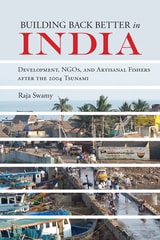
Building Back Better in India
Development, NGOs, and Artisanal Fishers after the 2004 TsunamiRaja Swamy
University of Alabama Press, 2021
Disaster, development, and the struggle for coastal livelihoods in post-tsunami India.
Building Back Better in India: Development, NGOs, and Artisanal Fishers after the 2004 Tsunami addresses the ways in which natural disasters impact the strategies and priorities of neoliberalizing states in the contemporary era. In the light of growing scholarly and public concern over “disaster capitalism” and the tendency of states and powerful international financial institutions to view disasters as “opportunities” to “build back better,” Raja Swamy offers an ethnographically rich account of post-disaster reconstruction, its contested aims, and the mixed outcomes of state policy, humanitarian aid, and local resistance. Using the 2004 Indian Ocean tsunami as a case study, Swamy investigates the planning and implementation of a reconstruction process that sought to radically transform the geography of a coastal district in the Indian state of Tamil Nadu.
Drawing on an ethnographic study conducted in Tamil Nadu’s Nagapattinam District, Swamy shows how and why the state-led, multilaterally financed, and NGO-mediated reconstruction prioritized the displacement of coastal fisher populations. Exploring the substantive differences shaping NGO action, specifically in response to core political questions affecting the well-being of their ostensible beneficiaries, this account also centers the political agency of disaster survivors and their allies among NGOs in contesting the meanings of recovery while navigating the process of reconstruction.
If humanitarian aid brought together NGOs and fishers as givers and recipients of aid, it also revealed in its workings competing and sometimes contradictory assumptions, goals, interests, and strategies driving the fraught historical relationship between artisanal fishers and the state. Importantly, this research foregrounds the ambiguous role of NGOs involved in the distribution of aid, as well as the agency and strategic actions of the primary recipients of aid—the fishers of Nagapattinam—as they struggled with a reconstruction process that made receipt of the humanitarian gift of housing conditional on the formal abandonment of all claims to the coast. Building Back Better in India thus bridges scholarly concerns with disasters, humanitarianism, and economic development with those focused on power, agency, and resistance.
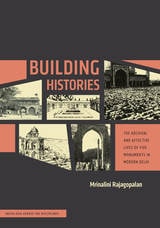
Building Histories
The Archival and Affective Lives of Five Monuments in Modern DelhiMrinalini Rajagopalan
University of Chicago Press, 2016
Mrinalini Rajagopalan argues that the modern construction of the history of these monuments entailed the careful selection, manipulation, and regulation of the past by both the colonial and later postcolonial states. Although framed as objective “archival” truths, these histories were meant to erase or marginalize the powerful and persistent affective appropriations of the monuments by groups who often existed outside the center of power. By analyzing these archival and affective histories together, Rajagopalan works to redefine the historic monument—far from a symbol of a specific past, the monument is shown in Building Histories to be a culturally mutable object with multiple stories to tell.