59 books match the query 'Indians, Treatment of' and 7 start with b

cover of Bad Medicine: Settler Colonialism and the Institutionalization of American Indians

Bad Medicine

Settler Colonialism and the Institutionalization of American Indians

Sarah A. Whitt

Duke University Press, 2025
In Bad Medicine, Sarah A. Whitt exposes how Native American boarding schools and other settler institutions like asylums, factories, and hospitals during the late nineteenth and early twentieth centuries worked together as a part of an interconnected system of settler domination. In so doing, Whitt centers the experiences of Indigenous youth and adults alike at the Carlisle Indian School, Canton Asylum for Insane Indians, Ford Motor Company Factory, House of the Good Shepherd, and other Progressive Era facilities. She demonstrates that in the administration of these institutions, which involved moving Indigenous people from one location to another, everyday white Americans became deputized as agents of the settler order. Bringing together Native American history, settler colonial studies, and the history of medicine, Whitt breaks new ground by showing how the confinement of Indigenous people across interlocking institutional sites helped concretize networks of white racial power—a regime that Native nations and communities continue to negotiate and actively resist today.
[more]
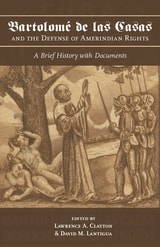
cover of Bartolomé de las Casas and the Defense of Amerindian Rights: A Brief History with Documents

Bartolomé de las Casas and the Defense of Amerindian Rights

A Brief History with Documents

Edited by Lawrence A. Clayton and David M. Lantigua

University of Alabama Press, 2020

The writings of a sixteenth-century advocate who challenged empire in defense of Indigenous peoples.

With the exception of Christopher Columbus, Bartolomé de las Casas is arguably the most notable figure of the Encounter Age. He is remembered principally as the creator of the Black Legend, as well as the protector of American Indians. He was one of the pioneers of the human rights movement, and a Christian activist who invoked law and Biblical scripture to challenge European colonialism in the great age of the Encounter. He was also one of the first and most thorough chroniclers of the conquest, and a biographer who saved the diary of Columbus’s first voyage for posterity by transcribing it in his History of the Indies before the diary was lost.

Bartolomé de las Casas and the Defense of Amerindian Rights: A Brief History with Documents provides the most wide-ranging and concise anthology of Las Casas’s writings, in translation, ever made available. It contains not only excerpts from his most well-known texts, but also his largely unavailable writings on political philosophy and law, and addresses the underappreciated aspects of his thought. Fifteen of the twenty-six documents are entirely new translations of Las Casas’s writings, a number of them appearing in English for the first time.

This volume focuses on his historical, political, and legal writings that address the deeply conflicted and violent sixteenth-century encounter between Europeans and indigenous peoples of the Americas. It also presents Las Casas as a more comprehensive and systematic philosophical and legal thinker than he is typically given credit for. The introduction by Lawrence A. Clayton and David M. Lantigua places these writings into a synthetic whole, tracing his advocacy for indigenous peoples throughout his career. By considering Las Casas’s ideas, actions, and even regrets in tandem, readers will understand the historical dynamics of Spanish imperialism more acutely within the social-political context of the times.

 

[more]
cover of Battle for the BIA: G. E. E. Lindquist and the Missionary Crusade against John Collier

Battle for the BIA

G. E. E. Lindquist and the Missionary Crusade against John Collier

David W. Daily

University of Arizona Press, 2004

By the end of the nineteenth century, Protestant leaders and the Bureau of Indian Affairs had formed a long-standing partnership in the effort to assimilate Indians into American society. But beginning in the 1920s, John Collier emerged as part of a rising group of activists who celebrated Indian cultures and challenged assimilation policies. As commissioner of Indian affairs for twelve years, he pushed legislation to preserve tribal sovereignty, creating a crisis for Protestant reformers and their sense of custodial authority over Indians. Although historians have viewed missionary opponents of Collier as faceless adversaries, one of their leading advocates was Gustavus Elmer Emmanuel Lindquist, a representative of the Home Missions Council of the Federal Council of Churches. An itinerant field agent and lobbyist, Lindquist was in contact with reformers, philanthropists, government officials, other missionaries, and leaders in practically every Indian community across the country, and he brought every ounce of his influence to bear in a full-fledged assault on Collier’s reforms. David Daily paints a compelling picture of Lindquist’s crusade—a struggle bristling with personal animosity, political calculation, and religious zeal—as he promoted Native Christian leadership and sought to preserve Protestant influence in Indian affairs. In the first book to address this opposition to Collier’s reforms, he tells how Lindquist appropriated the arguments of the radical assimilationists whom he had long opposed to call for the dismantling of the BIA and all the forms of race-based treatment that he believed were associated with it. Daily traces the shifts in Lindquist’s thought regarding the assimilation question over the course of half a century, and in revealing the efforts of this one individual he sheds new light on the whole assimilation controversy. He explicates the role that Christian Indian leaders played in both fostering and resisting the changes that Lindquist advocated, and he shows how Protestant leaders held on to authority in Indian affairs during Collier’s tenure as commissioner. This survey of Lindquist’s career raises important issues regarding tribal rights and the place of Native peoples in American society. It offers new insights into the domestic colonialism practiced by the United States as it tells of one of the great untold battles in the history of Indian affairs.
[more]
cover of Beyond Geography: The Western Spirit Against the Wilderness

Beyond Geography

The Western Spirit Against the Wilderness

Frederick Turner

Rutgers University Press, 1992

First published in 1980, Beyond Geography continues to influence and impress its readers. This new edition, prepared for the Columbus quincentennial, includes a new introduction by T. H. Watkins and a new preface by the author. As the public debates Columbus's legacy, it is important for us to learn of the spiritual background of European domination of the Americas, for the Europeans who conquered the Americas substituted history for myth as a way of understanding life.
[more]
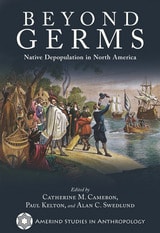
cover of Beyond Germs: Native Depopulation in North America

Beyond Germs

Native Depopulation in North America

Edited by Catherine M. Cameron, Paul Kelton, and Alan C. Swedlund

University of Arizona Press, 2015

There is no question that European colonization introduced smallpox, measles, and other infectious diseases to the Americas, causing considerable harm and death to indigenous peoples. But though these diseases were devastating, their impact has been widely exaggerated. Warfare, enslavement, land expropriation, removals, erasure of identity, and other factors undermined Native populations. These factors worked in a deadly cabal with germs to cause epidemics, exacerbate mortality, and curtail population recovery.

Beyond Germs: Native Depopulation in North America challenges the “virgin soil” hypothesis that was used for decades to explain the decimation of the indigenous people of North America. This hypothesis argues that the massive depopulation of the New World was caused primarily by diseases brought by European colonists that infected Native populations lacking immunity to foreign pathogens. In Beyond Germs, contributors expertly argue that blaming germs lets Europeans off the hook for the enormous number of Native American deaths that occurred after 1492.

Archaeologists, anthropologists, and historians come together in this cutting-edge volume to report a wide variety of other factors in the decline in the indigenous population, including genocide, forced labor, and population dislocation. These factors led to what the editors describe in their introduction as “systemic structural violence” on the Native populations of North America.

While we may never know the full extent of Native depopulation during the colonial period because the evidence available for indigenous communities is notoriously slim and problematic, what is certain is that a generation of scholars has significantly overemphasized disease as the cause of depopulation and has downplayed the active role of Europeans in inciting wars, destroying livelihoods, and erasing identities.
[more]
cover of Beyond Settler Time: Temporal Sovereignty and Indigenous Self-Determination

Beyond Settler Time

Temporal Sovereignty and Indigenous Self-Determination

Mark Rifkin

Duke University Press, 2017
What does it mean to say that Native peoples exist in the present?  In Beyond Settler Time Mark Rifkin investigates the dangers of seeking to include Indigenous peoples within settler temporal frameworks. Claims that Native peoples should be recognized as coeval with Euro-Americans, Rifkin argues, implicitly treat dominant non-native ideologies and institutions as the basis for defining time itself. How, though, can Native peoples be understood as dynamic and changing while also not assuming that they belong to a present inherently shared with non-natives? Drawing on physics, phenomenology, queer studies, and postcolonial theory, Rifkin develops the concept of "settler time" to address how Native peoples are both consigned to the past and inserted into the present in ways that normalize non-native histories, geographies, and expectations. Through analysis of various kinds of texts, including government documents, film, fiction, and autobiography, he explores how Native experiences of time exceed and defy such settler impositions. In underscoring the existence of multiple temporalities, Rifkin illustrates how time plays a crucial role in Indigenous peoples’ expressions of sovereignty and struggles for self-determination.
[more]
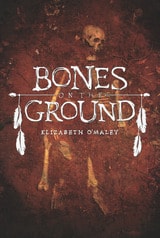
cover of Bones on the Ground

Bones on the Ground

Elizabeth O'Maley

Indiana Historical Society Press, 2014

What happened to the Indians of the Old Northwest Territory? Conflicting portraits emerge and answers often depend on who’s telling the story, with each participant bending and stretching the truth to fit their own view of themselves and the world. This volume presents biographical sketches and first-person narratives of Native Americans, Indian traders, Colonial and American leaders, and events that shaped the Indians’ struggle to maintain possession of their tribal lands in the face of the widespread advancement of white settlement. It covers events and people in the Old Northwest Territory from before the American Revolution through the removal of the Miami from Indiana in 1846. As America’s Indian policy was formed, and often enforced by the U.S. military, and white settlers pushed farther west, some Indians fought the white intruders, while others adopted their ways. In the end, most Indians were unable to hold their ground, and the evidence of their presence now lingers only in found relics and strange-sounding place names.
[more]