Results by title
338 books match the query 'Indigenous Studies' and 16 start with b
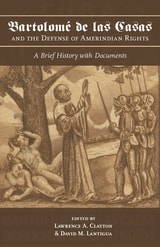
Bartolomé de las Casas and the Defense of Amerindian Rights
A Brief History with DocumentsEdited by Lawrence A. Clayton and David M. Lantigua
University of Alabama Press, 2020
The writings of a sixteenth-century advocate who challenged empire in defense of Indigenous peoples.
With the exception of Christopher Columbus, Bartolomé de las Casas is arguably the most notable figure of the Encounter Age. He is remembered principally as the creator of the Black Legend, as well as the protector of American Indians. He was one of the pioneers of the human rights movement, and a Christian activist who invoked law and Biblical scripture to challenge European colonialism in the great age of the Encounter. He was also one of the first and most thorough chroniclers of the conquest, and a biographer who saved the diary of Columbus’s first voyage for posterity by transcribing it in his History of the Indies before the diary was lost.
Bartolomé de las Casas and the Defense of Amerindian Rights: A Brief History with Documents provides the most wide-ranging and concise anthology of Las Casas’s writings, in translation, ever made available. It contains not only excerpts from his most well-known texts, but also his largely unavailable writings on political philosophy and law, and addresses the underappreciated aspects of his thought. Fifteen of the twenty-six documents are entirely new translations of Las Casas’s writings, a number of them appearing in English for the first time.
This volume focuses on his historical, political, and legal writings that address the deeply conflicted and violent sixteenth-century encounter between Europeans and indigenous peoples of the Americas. It also presents Las Casas as a more comprehensive and systematic philosophical and legal thinker than he is typically given credit for. The introduction by Lawrence A. Clayton and David M. Lantigua places these writings into a synthetic whole, tracing his advocacy for indigenous peoples throughout his career. By considering Las Casas’s ideas, actions, and even regrets in tandem, readers will understand the historical dynamics of Spanish imperialism more acutely within the social-political context of the times.
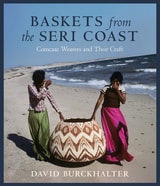
Baskets from the Seri Coast
Comcaac Weavers and Their CraftDavid Burckhalter
University of Arizona Press, 2026
Blending striking photography with reflections from years as a trader and observer of Seri culture, Burckhalter traces the evolution of Seri basketry from a utilitarian craft to a celebrated art form. The book examines how Seri weavers have navigated the influences of the craft economy, outside forces like anthropologists, and changing traditions, while preserving their unique oral history and spiritual connections. With detailed insights into the artistry, labor, and legends surrounding Seri baskets, this work is a tribute to the resilience and creativity of Seri women, whose weaving continues to be passed on to future generations.
Featuring more than two hundred color photographs and historic images, Baskets from the Seri Coast: Comcaac Weavers and Their Craft offers readers a visual feast that celebrates the intricate craftsmanship and cultural significance of a timeless art and the people who make it.
Becoming Hopi
A HistoryEdited by Wesley Bernardini, Stewart B. Koyiyumptewa, Gregson Schachner, and Leigh Kuwanwisiwma
University of Arizona Press, 2021
The Hopi and their ancestors have lived on the Hopi Mesas for more than two thousand years, a testimony to sustainable agricultural practices that supported one of the largest populations in the Pueblo world. Becoming Hopi is a truly collaborative volume that integrates Indigenous voices with more than fifteen years of archaeological and ethnographic fieldwork. Accessible and colorful, this volume presents groundbreaking information about Ancestral Pueblo villages in the greater Hopi Mesas region, making it a fascinating resource for anyone who wants to learn about the rich and diverse history of the Hopi people and their enduring connection to the American Southwest.
Contributors: Lyle Balenquah, Wesley Bernardini, Katelyn J. Bishop, R. Kyle Bocinsky, T. J. Ferguson, Saul L. Hedquist, Maren P. Hopkins, Stewart B. Koyiyumptewa, Leigh Kuwanwisiwma, Mowana Lomaomvaya, Lee Wayne Lomayestewa, Joel Nicholas, Matthew Peeples, Gregson Schachner, R. J. Sinensky, Julie Solometo, Kellam Throgmorton, Trent Tu’tsi
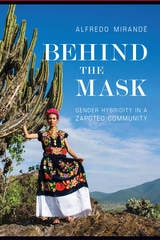
Behind the Mask
Gender Hybridity in a Zapotec CommunityAlfredo Mirandé
University of Arizona Press, 2017
After seeing a video of a muxe vela, or festival, sociologist Alfredo Mirandé was intrigued by the contradiction between Mexico’s patriarchal reputation and its warm acceptance of los muxes. Seeking to get past traditional Mexican masculinity, he presents us with Behind the Mask, which combines historical analysis, ethnographic field research, and interviews conducted with los muxes of Juchitán over a period of seven years. Mirandé observed community events, attended muxe velas, and interviewed both muxes and other Juchitán residents. Prefaced by an overview of the study methods and sample, the book challenges the ideology of a male-dominated Mexican society driven by the cult of machismo, featuring photos alongside four appendixes.
Delving into many aspects of their lives and culture, the author discusses how the muxes are perceived by others, how the muxes perceive themselves, and the acceptance of a third gender status among various North American indigenous groups. Mirandé compares traditional Mexicano/Latino conceptions of gender and sexuality to modern or Western object choice configurations. He concludes by proposing a new hybrid model for rethinking these seemingly contradictory and conflicting gender systems.
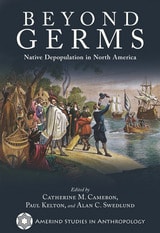
Beyond Germs
Native Depopulation in North AmericaEdited by Catherine M. Cameron, Paul Kelton, and Alan C. Swedlund
University of Arizona Press, 2015
Beyond Germs: Native Depopulation in North America challenges the “virgin soil” hypothesis that was used for decades to explain the decimation of the indigenous people of North America. This hypothesis argues that the massive depopulation of the New World was caused primarily by diseases brought by European colonists that infected Native populations lacking immunity to foreign pathogens. In Beyond Germs, contributors expertly argue that blaming germs lets Europeans off the hook for the enormous number of Native American deaths that occurred after 1492.
Archaeologists, anthropologists, and historians come together in this cutting-edge volume to report a wide variety of other factors in the decline in the indigenous population, including genocide, forced labor, and population dislocation. These factors led to what the editors describe in their introduction as “systemic structural violence” on the Native populations of North America.
While we may never know the full extent of Native depopulation during the colonial period because the evidence available for indigenous communities is notoriously slim and problematic, what is certain is that a generation of scholars has significantly overemphasized disease as the cause of depopulation and has downplayed the active role of Europeans in inciting wars, destroying livelihoods, and erasing identities.
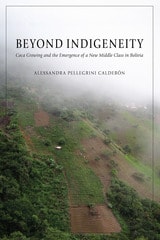
Beyond Indigeneity
Coca Growing and the Emergence of a New Middle Class in BoliviaAlessandra Pellegrini Calderón
University of Arizona Press, 2016
Beyond Indigeneity offers new analysis into indigenous identity and social mobility that changes the discourse in Latin American social anthropology. Author Alessandra Pellegrini Calderón points out that Morales’s presidency has led to heightened publicity of coca issues and an intensification of indigeneity discourse, echoing a global trend of increased recognition of indigenous peoples’ claims. The “living well” attitude (vivir bien) enshrined in the new political constitution is generally represented as an indigenous way of life, one based on harmony and reciprocity, in sharp contrast to the capitalist logic of “living better” that is based on accumulation and expansion.
In this ethnography, Pellegrini explores the positioning of coca growers in Bolivia and their reluctance to embrace the politics of indigeneity by rejecting the “indigenous peoples’ slot,” even while they emerge as a new middle class. By staying in a space between ethnic categories and also between social classes, the coca growers break with the traditional model of social mobility in Latin America and create new forms of political positioning that challenge the dominant culturalist framework about indigeneity and peasants.
Beyond Sanctuary
The Humanism of a World in MotionAnanya Roy and Veronika Zablotsky, editors
Duke University Press, 2025
Contributors. Leisy Abrego, Damon Azali-Rojas, Amy Sara Carroll, Sharad Chari, Nicholas De Genova, Ricardo Dominguez, Lorgia García-Peña, Sarah Haley, Gaye Theresa Johnson, Moon-Kie Jung, Maria Kaika, Saree Makdisi, Kyle T. Mays, Ananya Roy, Charles Sepulveda, SA Smythe, Vanessa E. Thompson, Charalampos Tsavdaroglou, João H. Costa Vargas, Rinaldo Walcott, Veronika Zablotsky, Maite Zubiaurre

Big Water
The Making of the Borderlands Between Brazil, Argentina, and ParaguayEdited by Jacob Blanc and Frederico Freitas; Foreword by Zephyr Frank
University of Arizona Press, 2018
From the Jesuit reductions in the seventeenth century to the flows of capital and goods accelerated by contemporary trade agreements, the Triple Frontier region has proven fundamental to the development of Brazil, Argentina, and Paraguay, as well as to the Southern Cone and South America itself. Although historians from each of these three countries have tended to construct narratives that stop at their respective borders, the contributors call for a reinterpretation that goes beyond the material and conceptual boundaries of the Triple Frontier. In offering a transnational approach, Big Water helps transcend nation-centered blind spots and approach new understandings of how space and society have developed throughout Latin America.
These essays complicate traditional frontier histories and balance the excessive weight previously given to empires, nations, and territorial expansion. Overcoming stagnant comparisons between national cases, the research explores regional identity beyond border and geopolitical divides. Thus, Big Water focuses on the uniquely overlapping character of the Triple Frontier and emphasizes a perspective usually left at the periphery of national histories.
Contributors
Shawn Michael Austin
Jacob Blanc
Bridget María Chesterton
Christine Folch
Zephyr Frank
Frederico Freitas
Michael Kenneth Huner
Evaldo Mendes da Silva
Eunice Sueli Nodari
Graciela Silvestri
Guillermo Wilde
Daryle Williams
Biopolitics, Geopolitics, Life
Settler States and Indigenous PresenceRené Dietrich and Kerstin Knopf, editors
Duke University Press, 2023
Contributors René Dietrich, Jacqueline Fear-Segal, Mishuana Goeman, Alyosha Goldstein, Sandy Grande, Michael R. Griffiths, Shona N. Jackson, Kerstin Knopf, Sabine N. Meyer, Robert Nichols, Mark Rifkin, David Uahikeaikaleiʻohu Maile
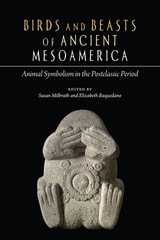
Birds and Beasts of Ancient Mesoamerica
Animal Symbolism in the Postclassic PeriodSusan Milbrath
University Press of Colorado, 2025
Representations of animal deities in Mesoamerica can be traced back at least to Middle Preclassic Olmec murals, stone carvings, and portable art such as lapidary work and ceramics. Throughout the history of Mesoamerica real animals were merged with fantastical creatures, creating zoological oddities not unlike medieval European bestiaries. According to Spanish chroniclers, the Aztec emperor was known to keep exotic animals in royal aviaries and zoos. The Postclassic period was characterized by an iconography that was shared from central Mexico to the Yucatan peninsula and south to Belize. In addition to highlighting the symbolic importance of nonhuman creatures in general, this volume focuses on the importance of the calendrical and astronomical symbolism associated with animals and birds.
Inspired by and dedicated to the work of Mesoamerican scholar Cecelia Klein and featuring imagery from painted books, monumental sculpture, portable arts, and archaeological evidence from the field of zooarchaeology, Birds and Beasts of Ancient Mesoamerica highlights the significance of the animal world in Postclassic and early colonial Mesoamerica. It will be important to students and scholars studying Mesoamerican art history, archaeology, ethnohistory, and zoology.
Birds without a Nest
A Novel: A Story of Indian Life and Priestly Oppression in PeruBy Clorinda Matto de Turner
University of Texas Press, 1996
"I love the native race with a tender love, and so I have observed its customs closely, enchanted by their simplicity, and, as well, the abjection into which this race is plunged by small-town despots, who, while their names may change, never fail to live up to the epithet of tyrants. They are no other than, in general, the priests, governors, caciques, and mayors." So wrote Clorinda Matto de Turner in Aves sin nido, the first major Spanish American novel to protest the plight of native peoples.
First published in 1889, Birds without a Nest drew fiery protests for its unsparing expose of small town officials, judicial authorities, and priests who oppressed the native peoples of Peru. Matto de Turner was excommunicated by the Catholic Church and burned in effigy. Yet her novel was strongly influential; indeed, Peruvian President Andres Avelino Caceres credited it with stimulating him to pursue needed reforms.
In 1904, the novel was published in a bowdlerized English translation with a modified ending. This edition restores the original ending and the translator's omissions. It will be important reading for all students of the indigenous cultures of South America.
Blessingway
With Three Versions of the Myth Recorded and Translated from the Navajo by Father Berard Haile, O.F.M.Leland C. Wyman
University of Arizona Press, 1970
Blue Corn Tongue
Poems in the Mouth of the DesertAmber McCrary
University of Arizona Press, 2025
In a voice that is jubilant, irreverent, sometimes scouring, sometimes heartfelt, and always unmistakably her own, Amber McCrary remaps the deserts of Arizona through the blue corn story of a young Diné woman figuring out love and life with an O’odham man. Reflecting experiences of Indigenous joy, pain, and family, these shapeshifting poems celebrate the love between two Native partners, a love that flourishes alongside the traumas they face in the present and the past. From her ethereal connection with her saguaro muse, Hosh, to the intricate tapestry of her relationships with Diné relatives and her awakening to the complex world of toxic masculinity, McCrary brings together DIY zine aesthetics, life forms of juniper and mountains, and the beauty of Diné Bizaad to tell of the enduring bonds between people and place.
Journeying from the Colorado Plateau to the Sonoran Desert and back again, Blue Corn Tongue invokes the places, plants, and people of Diné Bikéyah and O’odham jeweḍ in a deeply honest exploration of love, memory, and intimacy confronting the legacy of land violence in these desert homelands.

Borders, Human Itineraries, and All Our Relation
Dele Adeyemo, Natalie Diaz, Nadia Yala Kisukidi, and Rinaldo Walcott. With a Foreword by Christina Sharpe
Duke University Press, 2024
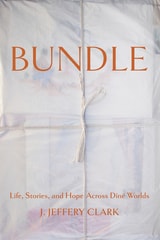
Bundle
Life, Stories, and Hope Across Díne WorldsJ. Jeffery Clark
University of Arizona Press, 2027
The stories colonizers tell about Diné people represent them as adaptors, uncontrollable, and unruly. These wounding narratives justify the displacement and dispossession of Diné people, masking the ongoing violence of settler colonialism.
Bundle: Life, Stories, and Hope Across Diné Worlds challenges and dismantles these harmful depictions. By shifting the paradigm away from anthropological lenses, this book offers an exploration of bundling: the active, physical, spiritual, and ideological practice through which Diné people assemble stories, tools, and knowledge. From world shifts detailed in oral narratives to the present deadly structures of colonization, Diné people have long relied on their bundled knowledge systems to sustain their presence across worlds and time.
Bundle is a must-read for anyone seeking to understand Diné resistance, hope, and worlding. Rather than studying Diné life from the outside, it prioritizes Diné ways of knowing and being to develop bundling as a theory of continuance. For readers invested in decolonization, place-making, and storytelling, Bundle provides an indispensable roadmap for how Diné people continue even in the face of domination.
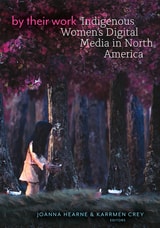
By Their Work
Indigenous Women's Digital Media in North AmericaJoanna Hearne
University of Minnesota Press, 2025
A first-of-its-kind collection to transform our understanding of digital media from Indigenous women creators
Indigenous women form a vital force in digital media production now and have over the past several decades—in fact, nearly three quarters of the projects at the 2017 imagineNATIVE Film and Media Arts Festival were created by women. By Their Work highlights the prismatic nature of Indigenous women’s digital media, connecting the digital arts with their creative labor and adaptive activism.
Joanna Hearne and Karrmen Crey bring together a collection of essays and interviews to highlight the voices of powerful and important media makers, from Indigenous video game creators to animators to social media influencers and from theorists of early Indigenous digital media to current practitioners, including trans and nonbinary creators often left out of public narratives about the digital. Creating a space to hear critical voices on Indigenous media history, theory, and production, the contributors share stories, genealogies, and practices behind Indigenous women’s power and presence in the digital world.
Focusing on the history of digital media as a whole, this collection presents a compelling case for Indigenous women’s crucial roles across the history of digital forms and platforms. In doing so, By Their Work transforms digital Indigenous studies in the twenty-first century.
Contributors: Nanobah Becker; Reilley Bishop-Stall, McGill U; Meagan Byrne; Tawny Trottier Cale; Dana Claxton; Crystal Harrison Collin; Elizabeth Day; Kristin L. Dowell, Florida State U; Miranda Due; Heid E. Erdrich; Marcella Ernest, U of New Mexico; Marisa Erven; David Gaertner, U of British Columbia; Carol Geddes; Faye Ginsburg, New York U; Patuk N. Glenn; Lisa Jackson; Jacqueline Land, William Jewell College; Jason Edward Lewis, Concordia University, Montreal; Joshua D. Miner, U of Kansas; Salma Monani, Gettysburg College; Jas M. Morgan, Simon Fraser U; Archer Pechawis, York U; Mikhel Proulx, Queen’s U Canada; Ryan Rice; Jolene Rickard, Cornell U; Channette Romero, U of Georgia; Wendi Sierra, Texas Christian U; Skawennati.